GRADE & PURITYMoligand™?Moligand™ — Aladdin's line of ligands and bioactive small molecules. Use for receptor, pathway, and binding studies needing defined small-molecule tools.≥97%
Moligand™, ≥97% Moligand™ for sensitive chromatographic and analytical workflows requiring minimal baseline interference.
🌡
Storage & shipping
Store at -20°C Ships Ice chest + Ice pads Check lot-specific COA for exact specifications.
📋
Quality documents
SDS, COA, datasheet, and spec sheet available for download. Lot-specific COA accessible via lot number lookup.
📚
Literature proof
Cited in 0 peer-reviewed publications across chromatography, organic synthesis, and cross-coupling reactions.
Visão geral
Information
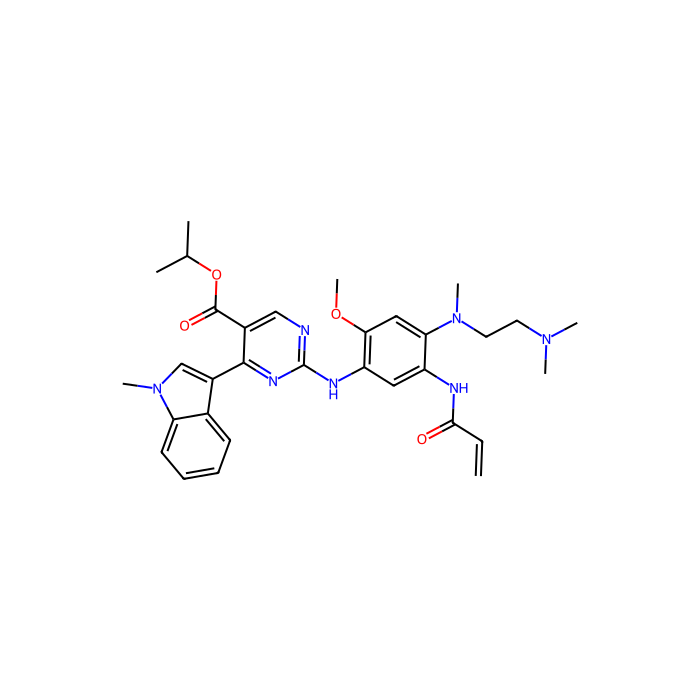
Mobocertinib (TAK788, AP32788), an investigational TKI, is a potent, selective preclinical inhibitor ofepidermal growth factor receptor (EGFR)andHER2mutations. Mobocertinib (TAK788) is an antineoplastic agent.
Mobocertinib (TAK788, AP32788), an investigational TKI, is a potent, selective preclinical inhibitor of epidermal growth factor receptor (EGFR) and HER2 mutations. Mobocertinib (TAK788) is an antineoplastic agent.
Condições de armazenamento de armazenamento
Store at -20°C
Enviado em
Ice chest + Ice pads
Este produto requer transporte de cadeia fria. Serviços terrestres e outros serviços econômicos não estão disponíveis.
This compound belongs to the class of organic compounds known as 2'-aminoanilides. These are organic compounds containing an anilide moieties that carries an amino group at the 2-position of the benzene ring.
External Descriptors
Not available
1. Djoumbou Feunang Y, Eisner R, Knox C, Chepelev L, Hastings J, Owen G, Fahy E, Steinbeck C, Subramanian S, Bolton E, Greiner R, and Wishart DS. ClassyFire: Automated Chemical Classification With A Comprehensive, Computable Taxonomy. Journal of Cheminformatics, 2016, 8:61.
Determine the necessary mass, volume, or concentration for preparing a solution.
Dilution Calculator
Determine the dilution needed to prepare a stock solution.
Reconstitution Calculator
Revisões
Avaliações dos Clientes
Application Protocols
Item-specific (from Product Data)
Tested applications, recommended concentrations/dilutions, positive controls: Not specified for this item.
General protocols for small-molecule tool compounds (guidance; optimize locally)
Stock preparation: Dissolve in anhydrous DMSO to a convenient concentration (e.g., 10 mM), vortex/sonicate, and filter if necessary using low-binding membranes after confirming stability.
Storage of stocks: Aliquot into low-binding tubes, flush headspace with inert gas if practical, and store at -20 °C. Avoid repeated freeze–thaw; thaw on ice and keep exposure time minimal.
Working solutions: Prepare immediately before use by diluting into assay buffer or media, ensuring final DMSO ≤0.5–1% v/v unless your system tolerates more. Include vehicle controls at matching DMSO content.
Documentation: Record lot number, preparation date, solvent, and concentration; periodically re-qualify by LC–MS to confirm integrity.
Biological Roles
Item-specific (from Product Data)
No biological role(s) are specified for this product. It is supplied strictly for research use only.
General context (no clinical/therapeutic claims)
Small-molecule tool compounds are widely used in discovery biology to interrogate signaling pathways, assess structure–activity relationships, and benchmark assay performance. They can support studies such as target engagement, pathway modulation, and phenotypic screening in non-clinical research settings.
For rigorous interpretation, pair the compound with orthogonal controls (inactive analogs or unrelated chemotypes) and include counter-screens to evaluate selectivity within the biological panel relevant to your study.
Ensure compound quality (identity, purity, and salt form) and solution stability are verified under your assay conditions to avoid artifactual readouts (e.g., aggregation, redox cycling, photoreactivity).
Buffer Applications
Not typically applicable
This item is a discrete small-molecule research compound, not a buffering agent. It does not define pH or buffer capacity in aqueous systems.
Practical notes (general)
When introducing hydrophobic small molecules into aqueous buffers, pre-dissolve in DMSO or ethanol and keep final organic content within assay-tolerated limits (commonly ≤0.5–1% v/v DMSO).
Verify stability in the chosen buffer (pH, ionic strength, excipients) by short stability studies (e.g., LC–MS after incubations at assay temperature).
Green Alternatives
Applicability
This SKU is a discrete research compound rather than a bulk solvent or auxiliary reagent. “Green alternative” discussions are typically more relevant to solvent and reagent selection during synthesis or formulation rather than to the compound itself.
Greener lab practices around this item (general guidance)
Solvent choices: Prefer DMSO/water systems over higher-toxicity polar aprotics (e.g., NMP/DMF) when feasible for stock preparation and assay dilutions.
Minimize waste: Use small-volume, high-concentration master stocks with careful aliquoting to reduce expired material and solvent consumption.
Energy footprint: Store at -20 °C as required, but avoid unnecessary deep-cold storage cycles; consolidate freezers and maintain defrost/door-open-time discipline.
Safer analytics: For LC–MS, consider MeOH/water mobile phases with volatile buffers (ammonium formate/acetate) rather than nonvolatile salts.
Procurement: Order only the quantity needed for near-term studies to limit long-term cold storage and eventual disposal.
Pharmaceutical Uses
Not applicable for this catalog listing
Supplied strictly for research use only; not for human or veterinary use, not for diagnostic or therapeutic applications.
General formulation/development context (non-clinical)
In preclinical research settings, small-molecule reference compounds are sometimes formulated for in vitro or ex vivo studies using co-solvent systems (e.g., DMSO→aqueous dilution, or co-solvent/surfactant vehicles). Any such procedures should be developed de novo for your laboratory needs and do not imply suitability of this item for clinical use.
If oral or parenteral simulation studies are performed in animals under approved protocols, verify the compound’s stability and compatibility with the selected vehicle; none of these parameters are specified for this item and must be established experimentally.
Physical Properties
Item-specific (from Product Data)
Appearance: Not specified for this item; refer to CoA/Spec Sheet.
Literature/general values (for orientation only; verify for this lot/spec)
Melting point, boiling point, density, logP, pKa, refractive index: Not specified for this item; refer to CoA/Spec Sheet or SDS. Do not assume typical values.
General guidance for handling small-molecule research compounds (general knowledge)
Many drug-like heteroaromatic solids are sparingly soluble in water and soluble in polar aprotic organic solvents (e.g., DMSO, DMF, NMP). Actual solubility for this item is not specified—determine experimentally.
Practical solubility check: start with anhydrous DMSO at room temperature, add in small increments with vortexing/sonication. If needed, gently warm (≤40 °C) briefly to aid dissolution, then cool to ambient before use.
Hygroscopicity/polymorphism: Not specified for this item; if critical for your application, request the CoA/Spec Sheet and perform a small-lot pretest.
Stability in solution: As a general practice, prepare single-use aliquots, store frozen, and minimize freeze–thaw cycles to preserve integrity.
Quality and Grades
Item-specific (from Product Data)
Grade/Purity: Moligand™ (as stated for this catalog item). Specific assay/purity percentage and related analytical limits are not specified for this item; refer to CoA/Spec Sheet.
What Moligand™ typically implies (general description of catalog grade; not a specification)
A research-only small-molecule ligand/reference compound grade intended for screening, target validation, and medicinal chemistry research. Lots are commonly accompanied by basic identity confirmation (e.g., 1H NMR/LC–MS) and a purity metric suitable for discovery workflows. For this SKU, consult the CoA for exact test methods and acceptance criteria.
Quality considerations for professional use (general guidance)
Identity: Confirm by LC–MS and an orthogonal method (e.g., 1H NMR) upon receipt when results are binding (SAR, PK, crystallography).
Purity/impurities: If UV detection is used downstream, review chromatographic purity traces and potential co-eluting aromatics. Metal content, residual solvents, water, and salt form are Not specified for this item; refer to CoA/Spec Sheet.
Form and counterion: Verify whether the material is free base vs. salt; not specified here. Counterions significantly affect solubility and assay behavior.
Documentation: For regulated or GLP-like contexts, request batch-specific CoA/SDS and any available spectra.
Reaction and Applications
Item-specific (from Product Data)
Manufacturer Applications: Not specified beyond listing; this item is provided for research use only.
How this compound class is typically used (general research context; not item-specific performance claims)
Reference/tool compound: Frequently employed as a positive control or comparator in biochemical or cell-based assays during target validation, SAR benchmarking, or pathway interrogation in kinase-focused discovery programs.
Profiling: Suitable for inclusion in small-molecule libraries to assess assay robustness, dynamic range, and potential off-target interactions when run alongside test series.
Biophysical studies: Can support target engagement methodologies (e.g., thermal shift, CETSA, SPR, MST) provided solubility and stability are validated in the chosen buffers.
Analytical development: Serves as a test article for LC–MS method development, stability-indicating chromatography, and impurity tracking under forced-degradation experiments (acid/base, oxidative, thermal, photolytic) to map susceptibility and design storage controls.
Practical tips (general)
Confirm salt form and polymorph, as these affect dissolution rate and assay potency readouts.
Establish a compound management workflow: dry inert handling, DMSO stock preparation, aliquoting, barcode tracking, and periodic requalification by LC–MS to detect degradation.
Reaction Conditions
Not applicable
As a finished small-molecule research compound, this item is not intended for use as a reagent or catalyst that defines reaction conditions.
General analytical/stability testing conditions (for characterization only)
Forced degradation studies (acid/base, oxidative, thermal, photolytic) can be performed to map degradation pathways for internal quality tracking. Select conditions conservatively (e.g., 0.1–0.5 M acid/base, 0.1–3% H2O2, 40–60 °C) and analyze by LC–MS to establish stability-indicating methods. These are general literature-style practices and not item-specific recommendations.
Safety and Handling
Item-specific (from Product Data)
GHS classification, signal word, pictograms, H-statements: Not specified for this item; refer to the product SDS.
Storage conditions: Store at -20°C.
Shipping: Ice chest + ice pads.
General safety guidance (always defer to SDS as authoritative)
PPE: laboratory coat, suitable chemical-resistant gloves (e.g., nitrile), safety glasses or splash goggles. Handle in a fume hood to avoid inhalation of dust or aerosols.
Avoid: ingestion, inhalation, skin/eye contact. Prevent environmental release; dispose of contents/container according to institutional hazardous waste procedures.
Incompatibilities: Strong oxidizers and strong acids/bases may cause degradation for many nitrogen/heteroatom-containing organics; verify specifics on SDS.
First aid (overview):
Skin/eye contact: Rinse with plenty of water for at least 15 minutes; remove contaminated clothing; seek medical attention if irritation persists.
Inhalation: Move to fresh air; seek medical attention if symptoms occur.
Ingestion: Rinse mouth; do not induce vomiting; seek medical attention.
Fire safety: Many organic solids are combustible. Use CO2, dry chemical, or foam. Combustion may produce COx/NOx; firefighters should wear self-contained breathing apparatus.
Handling tips: Weigh in a balance enclosure or hood to limit dusting. Use antistatic precautions when transferring fine powders.
Solvent Selection
Item-specific (from Product Data)
Specific solubility data: Not specified for this item; refer to CoA/Spec Sheet.
General selection guidance for hydrophobic small-molecule research compounds (general knowledge)
Primary solvent: Anhydrous DMSO is often preferred for stock solutions (e.g., 10–20 mM), owing to broad solubilizing power and compatibility with biochemical assays at low final DMSO percentages (≤0.5–1%).
Secondary options: DMF, NMP, or mixtures such as DMSO:water or DMSO:buffer for intermediate dilutions. If aqueous delivery is required, consider co-solvent strategies (DMSO or ethanol ≤1–2% v/v) or inclusion of solubilizing excipients (cyclodextrins, surfactants) as appropriate to the assay.
Polarity/miscibility profile (general):
DMSO: polar aprotic, fully miscible with water and most organics; facilitates serial dilutions.
DMF/NMP: polar aprotic, high boiling; use caution with biological systems and ensure thorough dilution.
Ethanol/IPA: protic alternatives with assay-dependent tolerability.
Practical tips:
Filter sterilize only after ensuring compound stability to membranes/solvents.
Prepare concentrated DMSO master stocks, aliquot, and store at -20 °C to reduce freeze–thaw cycles and water uptake.
Pre-wet pipette tips with DMSO to improve volumetric accuracy at microliter scales.
Storage and Reconstitution
Item-specific (from Product Data)
Storage conditions: Store at -20°C.
Shipping: Ice chest + ice pads.
Appearance: Not specified for this item; refer to CoA/Spec Sheet.
Stabilizers/additives: Not specified for this item; refer to CoA/Spec Sheet.
General guidance (for small-molecule research compounds)
Protect from light and moisture. After opening, allow the vial to equilibrate to room temperature in a desiccator before unsealing to minimize moisture condensation.
Reconstitution: If solid, first bring to room temperature in a desiccated environment. Dissolve in anhydrous DMSO to prepare a concentrated master stock. Actual solubility for this item is not specified—determine empirically.
Aliquoting: Prepare single-use aliquots in low-binding tubes; backfill with inert gas if feasible. Label with concentration, solvent, date, and lot.
Freeze–thaw: Avoid repeated cycles. Thaw on ice, mix gently, and promptly return unused portion to -20 °C. Discard aliquots showing precipitation, discoloration, or LC–MS evidence of degradation.
Retest/expiry: If no retest period is provided on the CoA, implement an internal requalification schedule (e.g., LC–MS every 3–6 months for solutions; annual check for solids).
Structure and Identity
Item-specific (from Product Data)
Product name: Mobocertinib (TAK788)
SKU: M413646
CAS: 1847461-43-1
PubChem CID: 118607832
InChIKey: 19152 (as provided; format appears truncated—verify on CoA/SDS)
SMILES: Not specified for this item; refer to CoA/Spec Sheet.
Molecular formula: Not specified for this item; refer to CoA/Spec Sheet.
Molecular weight: Not specified for this item; refer to CoA/Spec Sheet.
General chemistry notes (literature/general)
Compound type: small-molecule organic compound, commonly used as a reference/tool compound in kinase-focused discovery workflows.
Structural features (high level, no structure disclosed here): drug-like heteroatom-containing aromatic scaffold with multiple ring systems and amide/heteroaryl linkages are typical in this class of research compounds. Exact functional groups for this item should be confirmed against the CoA/Spec Sheet.
2D structure description: Not provided in this listing. For exact atom connectivity and stereochemical descriptors (if any), consult the CoA/Spec Sheet or authoritative databases (CAS, PubChem) using the identifiers above.
Synthetic Utility
Limited applicability
This SKU represents a finished small-molecule research compound. It is not generally used as a synthetic building block.
General considerations (if derivatization is contemplated in a research setting)
Without an item-specific structure disclosure here, functional-group compatibility and derivatization strategies cannot be advised. Consult the CoA/Spec Sheet and primary literature for functional group presence and protection/deprotection requirements.
If analog generation is desired, typical approaches include late-stage diversification of peripheral substituents or linker installation for probe development, but feasibility is entirely structure-dependent and must be designed based on the verified structure.
Target Specificity
Item-specific (from Product Data)
Target, pathway, selectivity profile, species reactivity: Not specified for this item.
Note
If your research requires a defined target profile, consult the literature using the CAS or PubChem CID and verify against your internal standards. Do not infer specificity for this SKU without confirming the lot’s identity, salt form, and purity on the supplied CoA.
Need help choosing the grade?
Our grade selection guide covers purity, stabilizer status, and application suitability for all variants in our catalog.
We use cookies to ensure the website functions properly and, where permitted, to improve your experience. You can manage your preferences at any time in Settings. Learn more in our Cookie Policy.
Shall we send you a message when we have discounts available?
Remind me later
Thank you! Please check your email inbox to confirm.
Products are supplied to verified businesses, institutions, and qualified professionals for research and development use only. Not for use in humans, animals, diagnosis, or therapy.

 C2304763