Information
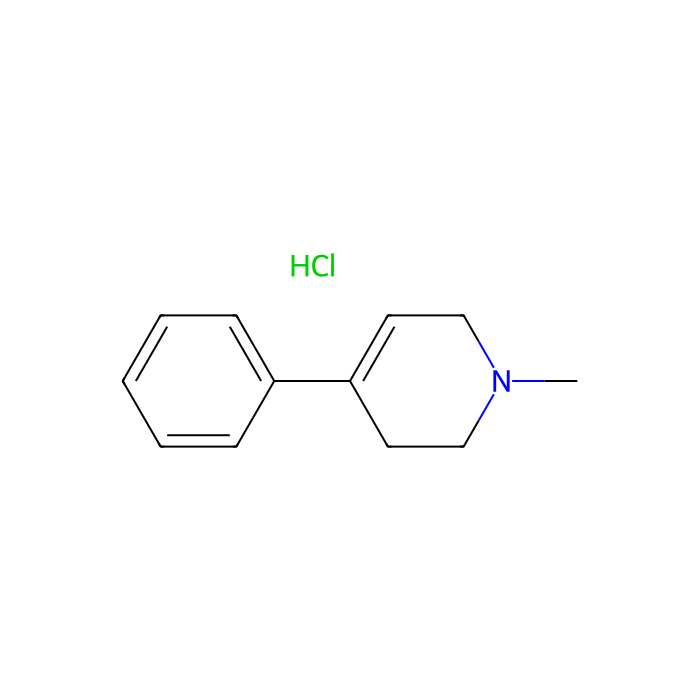
MPTP hydrochloride is a dopaminergicneurotoxinand cause selective destruction of dopaminergic neurons in animal models of parkinsonism. MPTP hydrochloride inducesapoptosis.
In vitro
The morphology of N2AB-1 and glioma cells was unaltered when these cells were exposed to all doses of MPTP. And, C6 glioma cell proliferation was also unaffected by MPTP treatment[3]. MPTP Promotes Apoptosis and Tau Phosphorylation in Human Neuroblastoma M17 Cells. MPTP significantly promotes Tau phosphorylation at Ser262 in human neuroblastoma M17 cells. MPTP caused a dose-dependent increase in the intracellular α-synuclein level in our M17 human neuroblastoma cells. MPTP appears to promote Tau phosphorylation in the brain by activating both PKA and GSK3β[4].\n
In vivo
The number of tyrosine hydroxylase-positive neurons was decreased in the substantia nigra pars compacta of MPTP-treated mice. MPTP decreased thioredoxin reductase 1 expression and thioredoxin reductase activity in the mouse midbrain, reduced the number of thioredoxin reductase 1-positive cells in the substantia nigra pars compacta of mice. Administration of the toxin MPTP can cause neurochemical, behavioral and histopathological alterations in human and nonhuman primates that are similar to those observed in Parkinsonian patients. Compared with primates, rodents are insensitive to MPTP. MPTP can be administered by various routes, such as gavage and stereotactic injection, but the most common and reproducible route is systemic administration, including subcutaneous, intravenous, intraperitoneal and intramuscular injection. MPTP is a lipophilic protoxin that can rapidly cross the blood-brain barrier following systemic injection. Once it enters the brain, MPTP is converted to 1-methyl-4-phenylpyridine by monoamine oxidase B[1]. MPTP has been shown to be toxic to dopaminergic neurons of the nigrostriatal system in humans, monkeys, and mice and to produce long-lasting depletion of DA and its metabolites in the striatum[2].
Cell Data
cell lines:
Concentrations:', 'Concentrations': '
47.7, 4.77 and 0.477 μM Incubation Time: Powder Purity:
|