GRADE & PURITYMoligand™?Moligand™ — Aladdin's line of ligands and bioactive small molecules. Use for receptor, pathway, and binding studies needing defined small-molecule tools.10 mM in DMSO
Determine the necessary mass, volume, or concentration for preparing a solution.
Dilution Calculator
Determine the dilution needed to prepare a stock solution.
Reconstitution Calculator
Revisões
Avaliações dos Clientes
Application Protocols
No vendor-validated protocols or tested applications are specified for this item. The following are general, non-binding guidelines for small-molecule screening compounds.
Stock solution preparation:
Weigh compound quickly under low light. Dissolve in anhydrous DMSO to 10–50 mM if soluble. Vortex/sonicate briefly. Filter through 0.22 μm if needed.
Verify concentration by LC-UV against a standard curve or by qNMR if reference is available.
Plate handling:
Aliquot into low-bind, amber 96/384-well plates. Seal (heat or solvent-resistant adhesive). Store at −80 °C. Avoid repeated freeze–thaw; use single-use aliquots.
Assay dosing:
Thaw on ice and keep protected from light. Pre-dilute in DMSO if necessary. Add to assay media to achieve desired concentrations, keeping final DMSO constant across wells.
Include vehicle controls and, if available, positive control compounds relevant to the target class.
Artifact checks:
Assess precipitation/solubility in assay buffer. Screen for fluorescence interference and redox/aggregation artifacts (e.g., detergent-sensitive activity).
Data integrity:
Record lot number, storage history, and plate map. Confirm identity/purity post-study if unexpected results occur.
These steps are provided as general guidance only; optimize for your assay system.
Biological Roles
Item-specific biological function or target class for PD 174265 is not provided in this listing. The following guidance outlines how small molecules of this class are typically used in research settings.
Putative role: Research-only small molecule used as a ligand or probe candidate in biochemical or cellular studies. No specific target or pathway is claimed here.
Assay contexts: Enzyme modulation (inhibition/activation), receptor binding, pathway perturbation, and phenotypic screening to elucidate mechanisms of action.
Data required for characterization: Determine potency (IC50/EC50), mode of action (competitive/noncompetitive; orthosteric/allosteric), and selectivity against relevant off-target panels. Use orthogonal assays to confirm hits and mitigate artifacts.
ADME profiling (research context): Basic stability and permeability assessments (e.g., microsomal stability, PAMPA/Caco-2, plasma protein binding) can help interpret cellular potency versus biochemical potency. These are not provided for this item and must be generated by the user if needed.
Spectral/assay interference: Evaluate for intrinsic fluorescence or redox activity that can confound readouts (e.g., ROS generation, PAINS-like behaviors). No item-specific flags are provided here; validate experimentally.
Important note: No medical, diagnostic, or therapeutic use is intended or implied. For research use only, as stated in the product data.
Buffer Applications
This product is not a pH buffer reagent. However, it is commonly dosed into biological buffers for assays. Practical guidance is provided for preparing dosing solutions; no item-specific buffer pKa/pH ranges are available.
Stock preparation: Prepare a concentrated stock in DMSO (e.g., 10–50 mM if soluble) under low light. Filter if necessary.
Dilution into buffer: Add the DMSO stock to pre-warmed assay buffer (e.g., PBS, HBSS, Tris-buffered saline, or cell culture medium) with vigorous mixing. Maintain a constant final DMSO percentage across control and treated samples.
Precipitation control: If cloudiness appears, reduce the dilution factor stepwise (e.g., 100× to 50× to 10×), increase mixing time, or add a minimal co-solvent compatible with your assay.
Adsorption minimization: Use low-bind polypropylene tubes/plates; precondition plasticware with buffer containing vehicle to reduce nonspecific binding.
pH considerations: Some small molecules show pH-dependent solubility and stability. Verify pH of your buffer post-dosing and avoid extremes unless required by the assay.
Note: No compound-specific buffer system or pKa values are provided for this item; consult CoA/Spec Sheet or generate empirical data for your experimental conditions.
Green Alternatives
While PD 174265 is used in small quantities for discovery research, solvent choices and handling practices can improve the environmental profile of your workflow.
Greener handling considerations (general):
Minimize DMSO volume: Prepare higher-concentration master stocks (within solubility limits) to reduce solvent usage and shipping/handling footprint.
Solvent choice: If DMSO is not essential, ethanol or water-miscible bio-based co-solvents may be considered where compatible with the assay and compound stability.
Micro-scale formats: Use low-dead-volume plates and sealed storage to reduce waste and evaporation, limiting the need for frequent re-preparation.
Comparison of common vehicles (general; not item-specific):
DMSO: Highest solvency; good assay compatibility at low %; petroleum-derived; high boiling point simplifies handling but complicates waste removal.
PEG 400/propylene glycol: Useful for in vivo formulation research (if applicable to your institution’s non-clinical studies); high viscosity may affect liquid handling.
Operational improvements:
Use amber, re-sealable vials to extend solution life and reduce repeat preparations.
Consolidate shipments on dry ice to lower logistic emissions when possible.
Note: The compound-specific degradants, peroxide sensitivity, or stabilizer needs are Not specified for this item; adjust practices after your stability assessment.
Pharmaceutical Uses
No pharmacopeial status, excipient role, or clinical use is provided for this item. PD 174265 is supplied strictly for laboratory research use only.
Research and preclinical discovery context (general):
Chemical probe candidate: May be incorporated into target validation studies after internal profiling confirms activity and selectivity in relevant models.
Screening library member: Suitable for inclusion in HTS or focused library panels to identify structure–activity relationships (SAR) and benchmark assay performance.
Formulation for research dosing: If non-clinical in vivo studies are undertaken within institutional guidelines, typical vehicles might include mixtures such as DMSO/PEG400/saline or Captisol-based systems; however, no item-specific formulation guidance is provided here and must be developed de novo.
Compliance notes:
Not for human or veterinary use. Not for diagnostic procedures. No clinical or therapeutic claims are made or implied.
For any regulated studies, generate and archive full analytical characterization, stability data, and method validations appropriate to the study design.
Physical Properties
Item-specific physicochemical specifications are not provided in this listing. Do not treat any values below as specifications for QC acceptance; they are general guidance only.
Appearance: Not specified for this item; refer to CoA/Spec Sheet.
Molecular weight (item-specific): Not specified for this item; refer to CoA/Spec Sheet.
Molecular formula (item-specific): Not specified for this item; refer to CoA/Spec Sheet.
Melting point: Not specified for this item; refer to CoA/Spec Sheet.
Boiling point: Not applicable/rarely used for solid bioactives; Not specified for this item; refer to CoA/Spec Sheet.
Density: Not specified for this item; refer to CoA/Spec Sheet.
Refractive index: Not applicable to solids; Not specified for this item; refer to CoA/Spec Sheet.
LogP/logD, pKa, and aqueous solubility: Not specified for this item; consult CoA or determine experimentally for your assay matrix.
Practical dissolution guidance (general best practices for small-molecule screening compounds; literature/practice-based):
Primary solvent: Anhydrous DMSO is typically used to prepare 10–50 mM master stocks; confirm solubility empirically and avoid exceeding the kinetic solubility limit.
Secondary vehicles: If required, dilute DMSO stocks into assay buffer (e.g., PBS, HBSS, or cell culture media) maintaining final DMSO ≤0.1–0.5% v/v for cell-based assays, unless your system tolerates higher.
Filtration: If precipitation is observed after dilution, pass through a 0.22 μm PTFE or PVDF filter and re-verify concentration by UV/LC.
Light/temperature sensitivity: Store and handle cold and protected from light as specified under Storage & Reconstitution.
Quality and Grades
Item grade: Moligand™ (per product data). This denotes a screening/ligand-discovery grade suitable for biochemical and cellular assays, hit validation, and SAR workflows.
What Moligand™ implies (general guidance):
Intended use: Research-only ligand/probe discovery. Material is typically provided with analytical identity/purity confirmation appropriate for screening campaigns (e.g., HPLC/UPLC purity trace, MS/NMR identity). Always verify with the lot CoA.
Purity: Numerical purity thresholds, residual solvent limits, metal content, water, and stabilizers are Not specified for this item; refer to CoA/Spec Sheet.
UV/Fluorescence behavior: Not specified for this item; obtain UV-vis profile from CoA or run a quick spectrum if the assay is optical.
Lot-to-lot considerations:
For screening reproducibility, we recommend verifying concentration by quantitative NMR or LC-UV against standards, especially after long-term storage.
If you are building a reference deck, request consistent lot numbers or re-qualify new lots to your internal acceptance criteria.
Documentation and traceability:
CoA/SDS available upon request. For GLP-like documentation packs (chromatograms, spectra), contact Technical Support with the SKU and lot.
Stabilizers/Salts:
Any salt form, counterions, or stabilizers are Not specified for this item; refer to CoA/Spec Sheet.
Reaction and Applications
This item is positioned as a bioactive small molecule for screening rather than as a preparative synthetic reagent. Accordingly, the emphasis is on discovery workflows rather than named organic reactions.
Research applications (general, non-clinical):
Biochemical screening: Evaluate ligand interactions in enzyme or receptor assays (binding, inhibition/activation), using DMSO stock solutions and appropriate controls.
Cell-based phenotypic assays: Probe pathway responses and cellular phenotypes; maintain consistent final vehicle concentration across conditions.
SAR and profiling: Use as a reference compound or as part of a focused library to generate structure–activity relationships and cross-target selectivity profiles.
Biophysical characterization: Apply in thermal shift assays (DSF), microscale thermophoresis (MST), ITC, or SPR to quantify binding, provided the compound’s optical properties are compatible.
Chemical biology: Utilize for target deconvolution workflows (e.g., chemoproteomics) after verifying functional activity in a relevant system.
Practical tips:
Solubility checks: Determine kinetic vs equilibrium solubility in your assay buffer. Perform serial dilution with vigorous mixing; inspect for haze/precipitate.
Concentration verification: Use LC-UV or qNMR to confirm stock concentration after preparation and periodically during storage.
Interference controls: Assess autofluorescence, inner-filter effects, or redox reactivity to avoid assay artifacts.
Note: No item-specific activity or target profile is provided in this listing; users should establish performance characteristics in their specific assays.
Reaction Conditions
Not typically applicable. PD 174265 is provided as a research compound for biological assays rather than as a reagent for named organic transformations.
If you plan to modify the scaffold (user-driven medicinal chemistry):
Reaction media: Choose dry, oxygen-free organic solvents (e.g., DMF, DMSO, NMP, toluene, MeCN) as dictated by the functional groups present—unknown for this item.
Temperatures/catalysts: Conditions depend entirely on the undisclosed structure; develop small-scale scouting reactions and monitor by LC-MS.
Workup/purification: Standard aqueous workups followed by silica gel chromatography or preparative HPLC for polar/ionizable scaffolds.
Because no structure or reactivity profile is provided here, no specific conditions, yields, or named-reaction guidance can be responsibly given. Refer to the CoA/Spec Sheet and literature for the exact scaffold once identified.
Safety and Handling
Safety details specific to this item are limited in this listing. Always consult the Safety Data Sheet (SDS) for authoritative information before use.
GHS classification: Not specified for this item; refer to SDS.
Signal word / H-statements / pictograms: Not specified for this item; refer to SDS.
General hazard expectations (general guidance for research bioactives): May present hazards typical of heteroaromatic organics (irritation; potential acute toxicity). Avoid inhalation, ingestion, and skin/eye contact.
Personal protective equipment (PPE):
Lab coat, safety glasses, and appropriate chemically resistant gloves (e.g., nitrile). Use a certified chemical fume hood for weighing, dissolving, and aliquoting.
Handling and hygiene:
Avoid dust/aerosol generation. Use antistatic precautions for fine powders. Do not mouth-pipette. Wash hands and exposed skin after handling.
Storage incompatibilities and conditions:
Protect from light. Store at −80 °C as directed. Keep container tightly closed and desiccated. Avoid repeated freeze–thaw of solutions; aliquot into light-resistant vials.
Incompatibilities: Strong oxidizers and strong acids/bases may degrade many aromatic small molecules; segregate accordingly.
First-aid overview (general):
Inhalation: Move to fresh air; seek medical attention.
Skin/eye contact: Rinse with water for ≥15 minutes; remove contaminated clothing; seek medical attention.
Ingestion: Rinse mouth; do not induce vomiting; get medical attention.
Waste disposal:
Dispose according to institutional chemical waste procedures; do not release to drains. Triple-rinse DMSO vials before solvent waste.
Solvent Selection
This product is a research small molecule typically used as a solution in an organic vehicle for in vitro assays.
Primary stock solvent (practice-based): Anhydrous DMSO is the default for discovery compounds due to broad solubilizing power and biochemical compatibility at ≤0.1–0.5% v/v in most assays. Verify solubility and stability experimentally.
Alternative stock solvents: DMF or ethanol can sometimes be used, but confirm assay tolerance and compound stability. For aqueous delivery, pre-dissolve in DMSO and dilute into buffer with vigorous mixing to minimize precipitation.
Miscibility and handling (general):
DMSO is miscible with water and many organics; upon aqueous dilution, some hydrophobic compounds may precipitate—evaluate turbidity and use co-solvents or surfactants (e.g., 0.01–0.05% Tween 80) if assay-compatible.
Avoid basic aqueous media for base-labile chemotypes and strong oxidants that may degrade aromatic scaffolds (general caution).
Comparison guidance (general):
DMSO vs ethanol: DMSO offers higher solvating power for polar/apolar chemotypes; ethanol may be preferable for enzyme assays sensitive to DMSO. Validate enzyme tolerance.
DMSO vs DMF: Similar solvency; DMSO is typically less toxic and better characterized in bioassays. DMF can plasticize labware; use glass vials.
Quality notes:
Water content and peroxides in solvents can impact stability for some chemotypes. Use fresh, inhibitor-free solvents. For light-sensitive compounds, use amber vials and work under low-light conditions.
Storage and Reconstitution
Storage conditions (per product data): Protect from light. Store at −80 °C.
Shipping (per product data): Shipped on dry ice packs + cold packs to maintain frozen/cold chain integrity.
Reconstitution (general guidance for research small molecules):
Upon receipt: Keep sealed and cold. Allow vials to equilibrate to room temperature inside a desiccator before opening to prevent moisture condensation.
Stock solutions: Prepare concentrated stocks in anhydrous DMSO under low light. Mix thoroughly and inspect for particulates. If needed, clarify by brief sonication and sterile filtration (0.22 μm PTFE/PVDF).
Aliquoting: Dispense into single-use, amber vials or low-bind plates to avoid freeze–thaw cycles. Clearly label with concentration, solvent, lot, and preparation date.
Freeze–thaw: Avoid repeated cycles. If thawing is necessary, thaw on ice, keep shielded from light, and refreeze promptly after use.
Stability: Item-specific stability in solid state or in solution is Not specified for this item; refer to CoA/Spec Sheet and confirm empirically by LC over time.
Disposal and housekeeping:
Store segregated from oxidizers and moisture sources. Maintain an inventory log including opening dates and aliquot locations to ensure traceability and timely requalification if needed.
Research use note: For research use only; not for human or veterinary use.
Structure and Identity
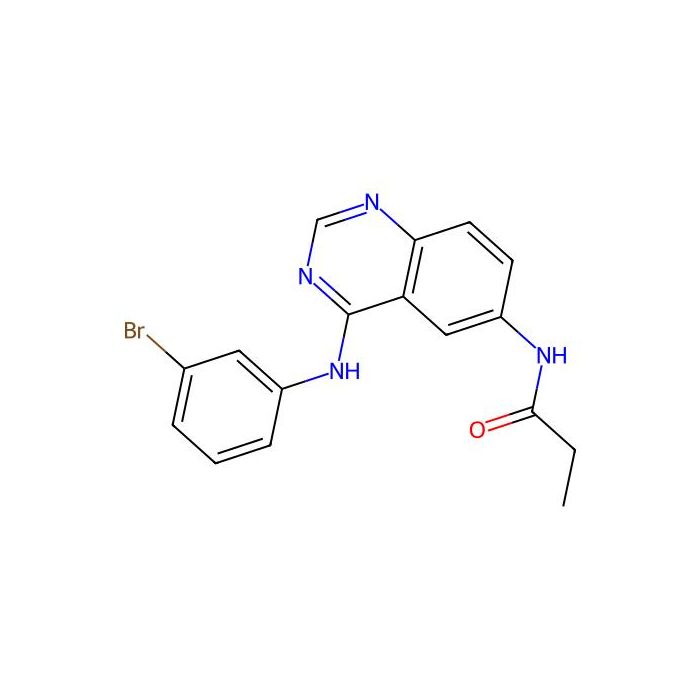
Brief overview: PD 174265 is listed in our Moligand™ screening collection as a research-only small molecule. Structural identifiers are limited in the current listing; consult the CoA/Spec Sheet for definitive structure-specific data.
SKU: P1494623
Product name: PD 174265 (research chemical; not a therapeutic)
CAS: 216163-53-0 (per product data)
PubChem CID: 4709 (per product data)
InChIKey: Not specified for this item; refer to CoA/Spec Sheet.
SMILES: Not specified for this item; refer to CoA/Spec Sheet.
Molecular formula: Not specified for this item; refer to CoA/Spec Sheet.
Molecular weight: Not specified for this item; refer to CoA/Spec Sheet.
Structural features (general notes):
Specific functional groups, ring systems, and stereochemistry are not disclosed in this listing. If you require exact 2D/3D structure, stereochemical assignments, or supplier-confirmed tautomeric form, request the lot-specific CoA and structural confirmation package.
2D description in words: Not available in this listing. If the compound is used for SAR or docking, obtain the vendor-confirmed canonical SMILES/InChI before model building.
Identity assurance and traceability:
Grade: Moligand™ (see Quality & Grades for context). This denotes suitability for screening/ligand-discovery workflows.
For unequivocal identification (NMR, HRMS, HPLC purity chromatogram), refer to the lot CoA/SDS or contact Technical Support for a data pack.
Synthetic Utility
This product is offered as a finished small-molecule research compound rather than as a synthetic building block. Consequently, it is not typically used as a reagent or intermediate in multi-step synthesis.
Building-block relevance: Functional-group content, protecting-group compatibility, and cross-coupling handles are Not specified for this item; refer to CoA/Spec Sheet if you plan derivatization.
Derivatization for probes: If converting into an affinity probe or a labelled analog, determine positions tolerant to modification via SAR, then introduce linkers (e.g., alkyl/PEG) through chemoselective handles if available. Without a disclosed structure, such modifications require de novo route scouting.
Analytical support: If derivatization is pursued, confirm structure by NMR (1H/13C/HSQC/HMBC), HRMS, and purity by HPLC/UPLC. Establish stability-indicating methods if the scaffold is prone to hydrolysis/oxidation (unknown here).
Summary: Use this item primarily as received for screening and chemical biology assays. For synthetic applications or scaffold modification, obtain the complete structural information and pursue standard medicinal chemistry workflows.
Target Specificity
No target, pathway, or selectivity information is provided in the product data for PD 174265.
Target class: Not specified for this item; refer to CoA/Spec Sheet or internal assay data.
Species reactivity/orthologs: Not specified for this item.
Binding site/epitope/mechanism: Not specified for this item.
Guidance for users:
Establish target engagement using orthogonal assays (biochemical and cellular). Quantify potency (IC50/Ki/EC50) and mode of action (competitive/allosteric) where applicable.
Run a diversity panel for off-target liability appropriate to your discovery stage (e.g., kinome, GPCR panel, ion channels) to define a preliminary selectivity profile.
Note: For research use only. No claims are made regarding mechanism, efficacy, or selectivity.
Need help choosing the grade?
Our grade selection guide covers purity, stabilizer status, and application suitability for all variants in our catalog.
We use cookies to ensure the website functions properly and, where permitted, to improve your experience. You can manage your preferences at any time in Settings. Learn more in our Cookie Policy.
Shall we send you a message when we have discounts available?
Remind me later
Thank you! Please check your email inbox to confirm.
Products are supplied to verified businesses, institutions, and qualified professionals for research and development use only. Not for use in humans, animals, diagnosis, or therapy.