GRADE & PURITYMoligand™?Moligand™ — Aladdin's line of ligands and bioactive small molecules. Use for receptor, pathway, and binding studies needing defined small-molecule tools.10 mM in DMSO
Moligand™, 10 mM in DMSO Moligand™ for sensitive chromatographic and analytical workflows requiring minimal baseline interference.
🌡
Storage & shipping
Store at -80°C Ships Dry ice packs + Cold packs Check lot-specific COA for exact specifications.
📋
Quality documents
SDS, COA, datasheet, and spec sheet available for download. Lot-specific COA accessible via lot number lookup.
📚
Literature proof
Cited in 0 peer-reviewed publications across chromatography, organic synthesis, and cross-coupling reactions.
Visão geral
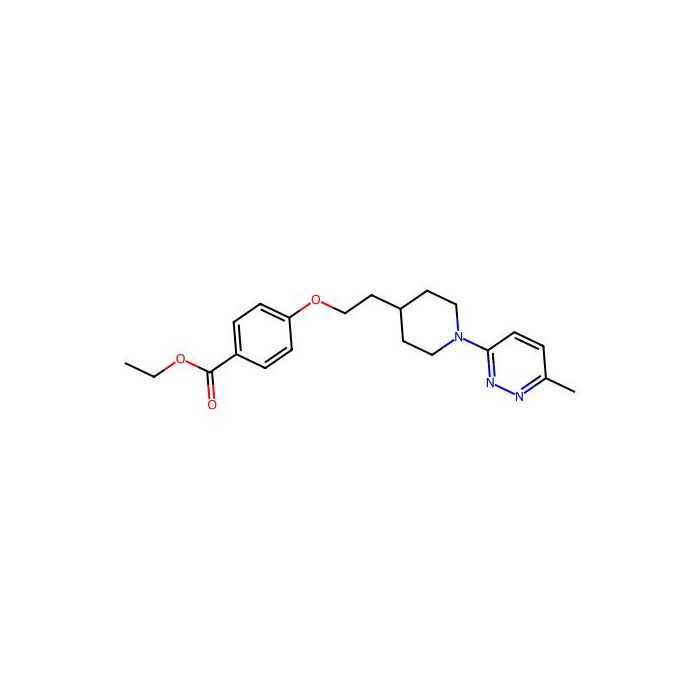
Pirodavir is a potent, broad-spectrum picornavirus inhibitor, and is highly active against both group A and group B rhinovirus serotypes. Pirodavir is very potent in a virus yield reduction assay (IC 90 =2.3 nM).
Specifications
Especificações e pureza
Moligand™, 10 mM in DMSO
Condições de armazenamento de armazenamento
Store at -80°C
Enviado em
Dry ice packs + Cold packs
Este produto requer transporte de cadeia fria. Serviços terrestres e outros serviços econômicos não estão disponíveis.
Determine the necessary mass, volume, or concentration for preparing a solution.
Dilution Calculator
Determine the dilution needed to prepare a stock solution.
Reconstitution Calculator
Revisões
Avaliações dos Clientes
Application Protocols
No tested applications, assay conditions, or recommended dilutions are provided in the Product Data for this SKU.
Item-specific protocols: Not specified for this item; refer to CoA/Spec Sheet.
General suggestions (not product specifications):
Stock solution handling: Prepare single-use aliquots in anhydrous DMSO under dry, inert conditions if feasible. Label aliquots with concentration, lot, and preparation date.
Cell-based assays: Titrate across a broad concentration range with matched vehicle controls. Include cytotoxicity counterscreens to identify off-target or nonspecific effects.
Biophysical assays: For DSF, SPR, or ITC, filter and degas buffers; verify compound solubility and absence of aggregates (e.g., by DLS or detergent controls) before kinetic/thermodynamic measurements.
Note: The above are general laboratory practices and do not represent validated, product-specific protocols.
Biological Roles
General/literature context (research only; no medical/clinical claims):
Pirodavir is widely cited as a capsid-binding tool compound for picornaviruses in basic research. Compounds in this class bind a hydrophobic pocket in the VP1 protein of the viral capsid, stabilizing the capsid and impeding conformational changes associated with uncoating and RNA release during early stages of infection (mechanistic model based on literature for this chemical class).
As a research ligand, Pirodavir has been used to explore structure–activity relationships (SAR) governing pocket occupancy, hydrophobic packing, and hydrogen-bonding patterns in the VP1 canyon region. These studies inform probe design and deepen understanding of entry/uncoating mechanisms.
In biochemical and cellular experiments, such ligands enable: (a) benchmarking of assay systems (e.g., thermal shift of capsid particles), (b) competitive displacement measurements with new analogs, and (c) mode-of-action validation via resistance mapping when used in evolutionary or mutational studies (e.g., VP1 substitutions diminishing pocket binding).
Off-target considerations: As with many hydrophobic ligands, nonspecific membrane or protein binding can occur and should be controlled for by including appropriate DMSO-only controls, cytotoxicity counterscreens, and orthogonal readouts to exclude assay interference.
Item-specific biological data (potency, selectivity, spectrum): Not specified for this item; refer to the CoA/Spec Sheet and primary literature for quantitative parameters under defined assay conditions.
Buffer Applications
This product is a small-molecule research ligand and is not a buffering agent. Therefore, conventional buffer system guidance (e.g., phosphate, Tris, HEPES preparation and pKa windows) does not apply directly.
Practical notes for assay buffers (general):
Vehicle control: When dosing from DMSO stocks, maintain a constant final DMSO concentration across wells (commonly ≤0.5–1% v/v) to avoid solvent-driven artifacts.
Surfactants: If precipitation upon aqueous dilution is observed, a small amount of non-ionic surfactant (e.g., 0.01–0.05% Tween-20) can aid solubilization; verify effects on the biological system.
Protein carriers: Serum albumin or cyclodextrins can modulate apparent solubility and free fraction; use with caution and document binding effects.
Item-specific buffer compatibility, pKa, and solubility: Not specified for this item; confirm empirically under your assay conditions.
Green Alternatives
Because this item is a discrete bioactive small molecule and not a process solvent or reagent, "green alternatives" largely concern handling and formulation choices rather than substituting the active itself.
Greener handling strategies (general):
Prefer greener stock solvents when feasible: Ethanol or isopropanol can sometimes replace DMF/NMP; DMSO remains common due to performance but consider minimizing final assay % v/v.
Reduce solvent use: Prepare concentrated stocks and use acoustic dispensing or low-volume pipetting to minimize waste in HTS.
Avoid chlorinated solvents for routine dissolution unless necessary for analytics; if required, use microscale volumes and ensure proper waste segregation.
Energy-efficient storage: Maintain ultra-cold storage (-80°C as specified) but minimize door-open time and consolidate aliquots to reduce freeze–thaw cycles that drive waste.
Illustrative comparison (general; not item-specific):
DMSO vs DMF/NMP: DMSO offers lower toxicity and better biodegradability than DMF/NMP while maintaining broad solvency.
Ethanol/IPA vs Acetonitrile: For some analytics or dilutions, ethanol/IPA may reduce environmental burden, though acetonitrile remains superior for many LC methods; choose based on performance.
Caveat: Substituting solvents may change solubility and assay behavior. For this SKU, solubility/stability are Not specified—conduct a small design-of-experiments (DoE) screen to balance performance and sustainability.
Pharmaceutical Uses
No therapeutic or clinical claims are made. The following relates to formulation and analytical roles in research and development settings only.
Potential roles in R&D workflows (general):
Reference standard: Employed as a chemical reference material for method development and validation in analytical labs (e.g., LC–MS quantification, stability-indicating assays), including forced-degradation studies to establish specificity.
Formulation research tool: Used to evaluate solubilization strategies (e.g., co-solvents, cyclodextrin inclusion, lipid-based carriers) and to study compound–excipient interactions relevant to delivery science in preclinical research.
Permeability and transporter studies: Can serve as a test article in in vitro ADME assays (e.g., PAMPA, Caco-2) to understand physicochemical drivers of absorption in a comparative context with other capsid-binding chemotypes.
Regulatory status and pharmacopeia listings: Not specified for this item.
Excipient content, residual solvents, and stabilizers: Not specified for this item; consult the CoA/Spec Sheet for lot-specific details.
Important: This product is designated For research use only and is not intended for human or veterinary use, diagnostic procedures, or as an active pharmaceutical ingredient.
Physical Properties
Only item-specific properties provided by the product data are listed as such; additional values below are literature/general and must not be treated as specifications for this SKU.
Item-specific (from Product Data):
Appearance: Not specified for this item; refer to CoA/Spec Sheet.
Molecular weight: Not specified for this item; refer to CoA/Spec Sheet.
Commonly consulted physicochemical parameters (literature/general – NOT item specifications):
Physical state for screening ligands such as Pirodavir is often a solid at ambient temperature; exact melting point, polymorph, and crystal habit are publication-dependent and should be verified with primary sources.
Solubility behavior for tool compounds of this class often favors high solubility in polar aprotic solvents (e.g., DMSO, DMF) with variable solubility in alcohols and water. Actual solubility for this item is Not specified; verify experimentally.
pKa/logP/logD and refractive index are useful for assay planning and LC method development; these values for Pirodavir should be taken from curated databases or measured under your conditions. Not specified for this item.
UV–vis characteristics (λmax/ε) are commonly used for quantitation in DMSO or MeOH; specific values for this item are Not specified.
Practical notes (general):
For analytical development, determine solubility and extinction coefficient in your intended solvent system. Perform small-scale solubility screens (e.g., DMSO→aqueous dilution) to mitigate precipitation during bioassays.
Hygroscopicity and thermal behavior are not specified; handle under dry conditions until verified.
Quality and Grades
Item-specific quality designation:
Grade/Purity: Moligand™ (as listed for this SKU). No additional numerical purity or stabilizer information is provided here; refer to CoA/Spec Sheet for assay, residual solvents, and impurity profile.
What Moligand™ implies (general explanation):
The Moligand™ designation is used for small-molecule ligands supplied for discovery research and screening applications. Such materials are typically prepared to support HTS/fragment/SAR workflows with a focus on identity confirmation and practical handling in DMSO stocks. While analytical characterization (e.g., NMR, MS, HPLC/UPLC) is commonly performed for this class, specific acceptance criteria for this item are Not specified; consult the CoA.
Key considerations for professional users:
Identity & traceability: Confirm by orthogonal techniques (e.g., LC–MS and 1H NMR) prior to critical studies. Request batch-specific CoA to verify identity and purity for your lot.
UV background for bioassays/HPLC: If LC–UV quantitation is anticipated, check UV cutoff/λmax; Not specified for this item.
Stabilizers/salts: Counter-ion content, solvate/hydrate status, and stabilizers are Not specified for this item; verify before quantitative work.
Reformatting for screening: If receiving as a dry solid, consider preparing single-use DMSO aliquots under dry conditions to minimize freeze–thaw and hydrolysis. If supplied in solution, document concentration by weight-in/weight-out and confirm by quantitative NMR where feasible.
Reaction and Applications
This product is supplied as a ready-to-use research ligand rather than a synthetic reagent. Consequently, it is not typically employed as a substrate, catalyst, or solvent in preparative organic reactions. Instead, Pirodavir is primarily used as a tool compound in molecular and biochemical research.
Research applications (literature/general):
Capsid-binding studies: Utilized as a reference ligand in in vitro assays probing the hydrophobic pocket of picornavirus capsid proteins (e.g., VP1 pocket engagement). Suitable for competitive binding assays, thermal shift (DSF), and biophysical profiling (e.g., SPR, ITC) when solubility permits.
Cell-based assay controls: Serves as a positive control in cell-based infectivity or entry/uncoating assays for picornaviruses in basic research settings. Ensure appropriate DMSO controls and cytotoxicity counterscreens.
Analytical method development: Acts as a reference material for LC–MS/MS bioanalytical method development, stability-indicating assays, and recovery studies.
Practical tips (general):
Prepare concentrated DMSO stocks and store as single-use aliquots at low temperature to minimize degradation and adsorption losses.
Validate compound integrity after storage by LC–MS (check for hydrolysis/oxidation products) prior to critical experiments.
When benchmarking activity, include orthogonal readouts (e.g., phenotypic assay plus biophysical binding) to deconvolute assay interference.
Note: No manufacturer-verified application data are provided for this SKU; the above are literature/general research uses and not guaranteed product performance specifications.
Reaction Conditions
Not typically applicable. This product is not supplied as a reagent for carrying out named reactions or catalysis, and no manufacturer-provided synthetic reaction conditions are associated with its use.
If employing the compound in assays or analytics (general guidance):
Stock preparation: Dissolve in anhydrous DMSO to a convenient concentration (e.g., 10–50 mM), vortex/sonicate briefly, and filter if needed using low-binding PTFE filters. Actual solubility for this item is Not specified—confirm empirically.
Assay dosing: Dilute stocks into assay buffer with thorough mixing to minimize precipitation. Maintain consistent vehicle concentration across wells/tubes.
Stability checks: Verify integrity by LC–MS before and after experiments, especially after freeze–thaw or extended exposure to ambient/light.
Conditions such as temperature, catalysts, stoichiometry, and yields for chemical reactions do not apply to this SKU in normal use. For any chemical transformations you may attempt on this scaffold (e.g., for derivatization in a research setting), consult the primary literature for the specific synthetic route and conditions.
Safety and Handling
Safety information specific to this SKU is limited in the Product Data; default to the official SDS for authoritative guidance.
Item-specific hazard data:
Signal word: Not specified for this item; refer to SDS.
H-Statements: Not specified for this item; refer to SDS.
GHS classification: Not specified for this item; refer to SDS.
Pictograms: Not specified for this item; refer to SDS.
General laboratory handling (research use only):
PPE: Wear lab coat, safety glasses/goggles, and appropriate chemical-resistant gloves. Use a certified chemical fume hood for weighing, dissolution, and aliquoting to avoid inhalation of dust/aerosols.
Storage incompatibilities: Until specific data are confirmed, avoid strong oxidizers and strong acids/bases. Keep away from ignition sources and moisture; protect from light if stability is unknown.
First-aid overview: In case of skin contact, wash with soap and water. For eye contact, rinse cautiously with water for several minutes; remove contact lenses if present. If inhaled, move to fresh air. If ingested, rinse mouth; do not induce vomiting; seek medical attention. Always follow your institution’s SOPs.
Spill response: Avoid creating dust. Cover with inert absorbent (e.g., silica, vermiculite), collect for disposal in accordance with local regulations.
Waste: Dispose of as organic laboratory waste following institutional and regulatory requirements.
Special risks/notes:
No specific reactivity or sensitization information is provided for this item. Conduct a small-scale handling risk assessment before large-scale preparation or aerosol-generating procedures.
Solvent Selection
Item-specific solubility data are not provided. The guidance below reflects common practices for small-molecule ligands used in screening and biochemical assays.
Primary stock solvent (general): Anhydrous DMSO is typically preferred for preparing concentrated stocks of discovery ligands due to broad solvency and assay compatibility. Start with 10–50 mM stock solutions, then dilute into assay buffers with vigorous mixing to minimize precipitation.
Alternative organic solvents: DMF, NMP, or ethanol can be used when DMSO is problematic; compatibility with biological systems varies (ethanol often tolerated at ≤1–2% v/v). Confirm stability/solubility experimentally.
Aqueous media: Direct dissolution in water or buffers may be limited for hydrophobic ligands; co-solvent strategies (DMSO≤1% v/v or ethanol≤2% v/v) and surfactants (e.g., 0.01–0.05% Tween-20) can aid delivery. Verify effects on the assay readout.
Polarity and dielectric considerations (general): Polar aprotic solvents (DMSO, DMF) enhance solubility of mixed-polarity scaffolds and are compatible with LC method development. For normal-phase chromatography, use chlorinated or hydrocarbon solvents as required; ensure compound stability.
Comparative note:
DMSO: Broad solvency; high bp; low volatility; widely used in HTS.
DMF/NMP: Strong solvency; higher toxicity concerns; harder to remove.
Ethanol/IPA: Greener, volatile; limited solvency for highly lipophilic scaffolds.
Important: Solubility, stability, and extinction coefficients for this item are Not specified; determine empirically under your conditions.
Storage and Reconstitution
Item-specific conditions (from Product Data):
Storage Conditions: Store at -80°C.
Shipped In: Dry ice packs + Cold packs.
Additional item-specific details:
Appearance: Not specified for this item; refer to CoA/Spec Sheet.
Recommended reconstitution solvent/concentration: Not specified for this item; refer to CoA/Spec Sheet.
General best practices (not product specifications):
Upon receipt: Keep the product at -80°C. Allow shipping vials to equilibrate to room temperature in a desiccator before opening to minimize condensation.
Aliquoting: If supplied as a solid, prepare single-use aliquots (e.g., DMSO stocks) to avoid repeated freeze–thaw. If supplied in solution, avoid multiple freeze–thaw cycles; store aliquots tightly sealed to limit moisture and oxygen ingress.
Light/moisture: Protect from light and humidity until stability is verified.
Stability confirmation: Verify compound integrity by LC–MS or HPLC before critical experiments and after prolonged storage.
Research Use Note: For research use only.
Structure and Identity
Concise overview: Pirodavir is a small-molecule research ligand commonly used as a tool compound in picornavirus capsid-binding studies (literature). Item-specific identifiers provided below are limited to what is specified for this SKU.
SKU: P1496621
Product Name: Pirodavir
CAS: 124436-59-5
PubChem CID: 71345 (literature identifier)
InChIKey: Not specified for this item; refer to CoA/Spec Sheet.
SMILES: Not specified for this item; refer to CoA/Spec Sheet.
Molecular formula: Not specified for this item; refer to CoA/Spec Sheet.
Molecular weight: Not specified for this item; refer to CoA/Spec Sheet.
Structural features (general/literature information):
Pirodavir is described in the literature as a capsid-binding small molecule for picornaviruses; these agents typically present a hydrophobic pharmacophore complemented by polar/ionizable features to engage the VP1 hydrophobic pocket of the viral capsid. Exact functional groups and stereochemistry for this item are not specified here; consult primary literature or the CoA/Spec Sheet for resolved structure.
2D structure description (general):
As a member of the capsid-pocket binders class, the 2D scaffold generally comprises an aromatic/hydrophobic core and pendant groups that confer solubility and pocket fit. The precise ring systems, heteroatoms, and substitution pattern for this product should be confirmed from the official structural record (Not specified for this item; refer to CoA/Spec Sheet).
Synthetic Utility
This SKU is supplied as a defined small-molecule ligand (end-use tool compound) rather than a building block or reagent. Consequently, its direct use as a synthon, catalyst, or solvent is uncommon.
Where it can be relevant to synthesis (general/literature):
SAR and analog synthesis: Pirodavir serves as a chemotype reference for exploring structure–activity relationships around the picornavirus capsid pocket. Synthetic chemists may design and prepare analogs by modifying defined regions of the scaffold (e.g., hydrophobic core, polar substituents) to balance potency, solubility, and metabolic stability. The parent compound thus has conceptual value for retrosynthetic planning and pharmacophore mapping, but not as a reagent.
Analytical benchmarking: In medicinal chemistry workflows, the compound can be used to benchmark new analogs across standardized assays (LC–MS response factors, chromatographic retention vs. lipophilicity surrogates), assisting in method transfer and comparison.
Item-specific functional groups, protecting-group strategies, and named-reaction relevance: Not specified for this item; consult primary structural data and literature for detailed synthetic routes to the scaffold.
Bottom line: Treat this product as a reference ligand or positive control in research, not as a general-purpose synthetic intermediate.
Target Specificity
Only target information provided in the Product Data may be listed here.
Target/antigen: Not specified for this item.
Species reactivity/selectivity profile: Not specified for this item.
Binding constants, potency, or EC50/IC50: Not specified for this item.
Clone/isotype (if applicable): Not applicable.
For research planning, users may consult peer-reviewed literature on Pirodavir for mechanistic insights; however, no manufacturer-verified target specificity is provided for this SKU. Refer to the CoA/Spec Sheet for any lot-specific information that may be available.
Need help choosing the grade?
Our grade selection guide covers purity, stabilizer status, and application suitability for all variants in our catalog.
We use cookies to ensure the website functions properly and, where permitted, to improve your experience. You can manage your preferences at any time in Settings. Learn more in our Cookie Policy.
Shall we send you a message when we have discounts available?
Remind me later
Thank you! Please check your email inbox to confirm.
Products are supplied to verified businesses, institutions, and qualified professionals for research and development use only. Not for use in humans, animals, diagnosis, or therapy.