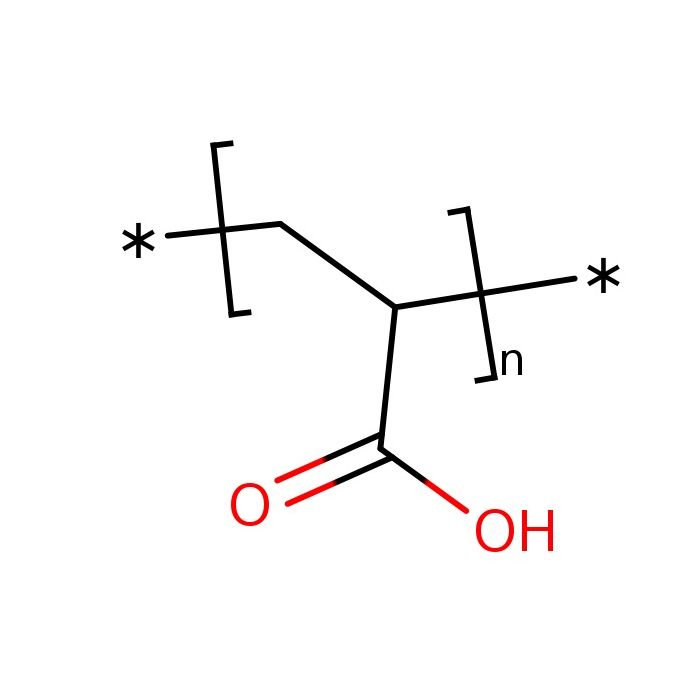
Poly(acrylic acid)(PAA) - Approx Mw 4,000,000 , CAS No.9003-01-4

CAS: 9003-01-4 Cat. No.: P639633 Fórmula: (C3H4O2)n Beilstein Registry Number: MFCD00084394 Número CE: 920-377-3
Disponível para encomenda
GRAU & PUREZA Approx Mw 4,000,000
Synonyms
Glacial acrylic acid | XPA | 2-Propenoic acid | ACRYLIC ACID [IARC] | RCRA waste number U008 | Carbopol 934 (TN) | Carbopol 940 (TN) | EINECS 201-177-9 | Jurimer AC 10P | Versicol E 7 | Viscon 103 | ACRYLIC ACID (IARC) | Aron A 10H | Acroleic acid | Arald
Storage
Room temperature
Shipped In
Normal
★
Tamanho
Alemanha (EU)
USA*
Preço
Qtd
25g
P639633-25g
—
3 Em stock

248,09€

290,61€
Gravar 42,52 € (14.63%)
100g
P639633-100g
—
3 Em stock

818,19€

956,16€
Gravar 137,97 € (14.43%)
Enter a quantity for the sizes you want to add.
🧪
Por que este grau

Approx Mw 4,000,000 para fluxos de trabalho cromatográficos e analíticos sensíveis que exigem interferência mínima da linha de base.

🌡

Armazenamento e envio

Room temperature Envio Normal. Consulte o COA específico do lote para obter as especificações exatas.

📋

Documentos de qualidade

SDS, COA, ficha técnica e folha de especificações disponíveis para download. COA específico do lote acessível por meio de pesquisa por número de lote.

📚

Comprovação documental

Citado em 720 publicações revisadas por pares nas áreas de cromatografia, síntese orgânica e reações de acoplamento cruzado.

Visão geral

Poly (acrylic acid) (PAA) is hygroscopic, brittle and colorless in nature with Tg at nearly 106oC. At temperatures above 200 to 250oC, it loses water and becomes an insoluble crosslinked polymer anhydride. Solubility of dried PAA in water increases with rise in temperatures. Concentrated solutions of PAA in water is thixotropic in nature.
Applications of PAA may include: · to study solute diffusion in Polyvinyl alcohol/PAA copolymer hydrogel · synthesizing poly(N-isopropylacrylamide)-block-PAA copolymer which responds to both temperature and pH stimuli · in preparing block copolymer of oligo (methyl methacrylate)/PAA for micellar delivery of hydrophobic drugs · as thickening agent for adhesives

Especificações

Sinónimos
Glacial acrylic acid | XPA | 2-Propenoic acid | ACRYLIC ACID [IARC] | RCRA waste number U008 | Carbopol 934 (TN) | Carbopol 940 (TN) | EINECS 201-177-9 | Jurimer AC 10P | Versicol E 7 | Viscon 103 | ACRYLIC ACID (IARC) | Aron A 10H | Acroleic acid | Arald
Especificações e pureza
Approx Mw 4,000,000
Condições de armazenamento de armazenamento
Room temperature
Enviado em
Normal
Nomes e identificadores
Pubchem Sid
Sorrisos canónicos
C=CC(=O)O
IUPAC Name
prop-2-enoic acid
InChIKey
NIXOWILDQLNWCW-UHFFFAOYSA-N
INCHI
1S/C3H4O2/c1-2-3(4)5/h2H,1H2,(H,4,5)
SMILES isoméricas
C=CC(=O)O
WGK Alemanha
1
RTECS
AT4680000
Beilstein
MFCD00084394
Reaxy-Rn
635743
Reaxys-RN_link_address
https://www.reaxys.com/reaxys/secured/hopinto.do?context=S&query=IDE.XRN=635743&ln=

Documentação

📋 Ficha de dados de segurança (FDS)

Documento abrangente sobre perigos, manuseamento, armazenamento e conformidade regulamentar.

<<<<<<< HEAD Baixar SDS → ======= Baixar SDS → >>>>>>> release248-p3

✅ Certificado de análise (COA)

Dados de qualidade específicos do lote. Introduza o número de lote para obter o COA exato.

Consultar COA →

📊 Ficha técnica

Resumo de referência rápida das especificações e aplicações do produto.

Ver ficha técnica →

🔬 Folha de especificações

Atributos de qualidade completos e critérios de aceitação para este grau.

Ver folha de especificações →

Dados avançados

Taxonomic Classification

Taxonomy Tree

KingdomOrganic compounds
SuperclassOrganic acids and derivatives
ClasseCarboxylic acids and derivatives
SubclassAcrylic acids and derivatives
Intermediate Tree Nodes Not available
Direct ParentAcrylic acids
Alternative Parents Monocarboxylic acids and derivatives  Carboxylic acids  Organic oxides  Hydrocarbon derivatives  Carbonyl compounds  
Molecular FrameworkAliphatic acyclic compounds
Substituents Acrylic acid - Monocarboxylic acid or derivatives - Carboxylic acid - Organic oxygen compound - Organic oxide - Hydrocarbon derivative - Organooxygen compound - Carbonyl group - Aliphatic acyclic compound
DescriçãoThis compound belongs to the class of organic compounds known as acrylic acids. These are organic compounds containing acrylic acid CH2=CHCO2H.
External Descriptors Unsaturated fatty acids
Estrutura 3D
Modelo de Estrutura Química Interativa


Alvos associados (humanos)
CHAT Tchem Choline acetylase (63 Activities)
Activity TypeRelationActivity valueUnitsAction TypeJournalPubMed IddoiAssay Aladdin ID
EHMT2 Tchem Histone-lysine N-methyltransferase, H3 lysine-9 specific 3 (93046 Activities)
Activity TypeRelationActivity valueUnitsAction TypeJournalPubMed IddoiAssay Aladdin ID
LMNA Tbio Prelamin-A/C (36751 Activities)
Activity TypeRelationActivity valueUnitsAction TypeJournalPubMed IddoiAssay Aladdin ID
Alvos associados (não humanos)
Hdac6 Histone deacetylase 6 (222 Activities)
Activity TypeRelationActivity valueUnitsAction TypeJournalPubMed IddoiAssay Aladdin ID
Mus musculus (284745 Activities)
Activity TypeRelationActivity valueUnitsAction TypeJournalPubMed IddoiAssay Aladdin ID
Mecanismos de ação
Certificados(CoA,COO,BSE/TSE e Mapa de Análise)
C of A & Other Certificates(BSE/TSE, COO):
Analytical Chart:

Find and download the COA for your product by matching the lot number on the packaging.

6 results found

Lot NumberCertificate TypeDataItem
I2621175I2621175Certificate of AnalysisDec 25, 2023 P639633
J2509041J2509041Certificate of AnalysisDec 25, 2023 P639633
L2313108L2313108Certificate of AnalysisDec 25, 2023 P639633
L2313109L2313109Certificate of AnalysisDec 25, 2023 P639633
L2313110L2313110Certificate of AnalysisDec 25, 2023 P639633
L2313111L2313111Certificate of AnalysisDec 25, 2023 P639633
Propriedades químicas e físicas
Ponto de ebulição (°C)116℃
Peso molecular72.060 g/mol
XLogP30.300
Hydrogen Bond Donor Count1
Hydrogen Bond Acceptor Count2
Rotatable Bond Count1
Exact Mass72.0211 Da
Monoisotopic Mass72.0211 Da
Topological Polar Surface Area37.300 Ų
Heavy Atom Count5
Formal Charge0
Complexity55.900
Isotope Atom Count0
Defined Atom Stereocenter Count0
Undefined Atom Stereocenter Count0
Defined Bond Stereocenter Count0
Undefined Bond Stereocenter Count0
The total count of all stereochemical bonds0
Covalently-Bonded Unit Count1
FAQs e artigos
Panorama Guide to Lithium-Ion Battery Electrode Materials: Working Principles, Materials Map, and Selection Navigation (incl. Tables 1–4)
Materials Can “Switch”: How Smart Polymers Respond to Temperature, pH, and Light (with Experimental Selection Tips & Product Navigation)
Understanding Hydrophilic Polymers in Aqueous Systems: Hydration Mechanisms, Structural Knobs, and Task-Oriented Selection Guide (Including Tables 1–3)
How Organic Acids “Stabilize a System”: Selection Logic via the pH Window, Salt Forms, and Metal-Ion Management (with a navigation guide to Tables A–E)
Research Value of Polyelectrolyte Multilayers: Layer-by-Layer Design of Interfacial Composition, Mass Transport, and Function
Key Judgments in Medical Hydrogel R&D: From Polymer Source and Crosslinking Strategy to Sterilization Planning, Scale-Up Feasibility, and Quality Control
When Should You Choose Silicone Resin? Selection Comparison with Epoxy, Acrylic, Polyurethane, Fluororesin, and Other Coating Resins
Applications and Selection of Acrylic Resins in Coatings: Analysis of Architectural, Industrial, and Supporting Materials
Waterborne Resin Technology Explained: Waterborne Forms, Performance Balance, and a Technology Map
Resin Polarity in Coating Formulations: From Molecular Structure to Dissolution, Compatibility, Interfacial Interactions, and Formulation Design
The Role, Selection, and Validation of Chelating Agents in Daily Chemical Formulations
From Structure to Rheology: How Carbomer Forms Gel Structures and Enables Thickening, Suspension, and Auxiliary Emulsion Stabilization
What Is the Difference Between Triethanolamine and Diethanolamine: Understanding Their Formulation Functions, Application Differences, and Selection Logic from a Molecular-Structure Perspective
AES (Fatty Alcohol Polyoxyethylene Ether Sulfate) in Personal and Home-Care Cleansing Formulations: An Analysis of Structure, Performance, and Low-Temperature Flowability
From Structure to Rheology: Thickening, Stabilization, and Selection Logic of Cellulose Ethers for Personal Care Applications
How to Select Thickeners for Strongly Acidic Cleaning Systems: Comparison of Thickening Mechanisms and Application Considerations for Fatty Amine Ethoxylates
How Can Sodium Tripolyphosphate (STPP) Be Replaced? From Detergency Mechanisms to Formulation Choices for Low-Phosphorus/Phosphorus-Free Builder Systems
Why Are Daily Chemical Products Prone to Viscosity Thinning in Summer? Core Mechanisms, Troubleshooting Methods, and Solutions
Key Variable in the Long-Term Stability of Waterborne Pigment Concentrates: How Dispersant Molecular Weight Distribution (MWD) Affects Pigment Dispersion, Surface Adsorption-Layer Formation, and Storage Stability
How to Select Binding/Gel Materials for Neutral Wall Putty? A Comparison of Pregelatinized Starch, PVA, and Redispersible Polymer Powder Based on Four Application Trials
Dispersants, Anti-Redeposition Agents, and Scale-Control Materials in Household Cleaning Formulations: Mechanisms of Action, Selection Logic, and Representative Products
Mechanism of Action of Tranexamic Acid in Pigmentation Care: From the Plasmin System to Regulation of Inflammation-Driven Pro-Melanogenic Signaling
Citations of This Product
Calculadoras de soluções
Revisões

Avaliações dos Clientes

Deseja que lhe enviemos uma mensagem quando tivermos descontos disponíveis?

Lembrar-me mais tarde

Obrigado! Por favor, verifique a sua caixa de entrada de e-mail para confirmar.

Ops! As notificações estão desativadas.