Determine the necessary mass, volume, or concentration for preparing a solution.
| Activity Type | Relation | Activity value | Units | Action Type | Journal | PubMed Id | doi | Assay Aladdin ID |
|---|

≥98%(T) for sensitive chromatographic and analytical workflows requiring minimal baseline interference.
Store at 2-8°C,Protected from light Ships Wet ice Check lot-specific COA for exact specifications.
SDS, COA, datasheet, and spec sheet available for download. Lot-specific COA accessible via lot number lookup.
Cited in 38 peer-reviewed publications across chromatography, organic synthesis, and cross-coupling reactions.
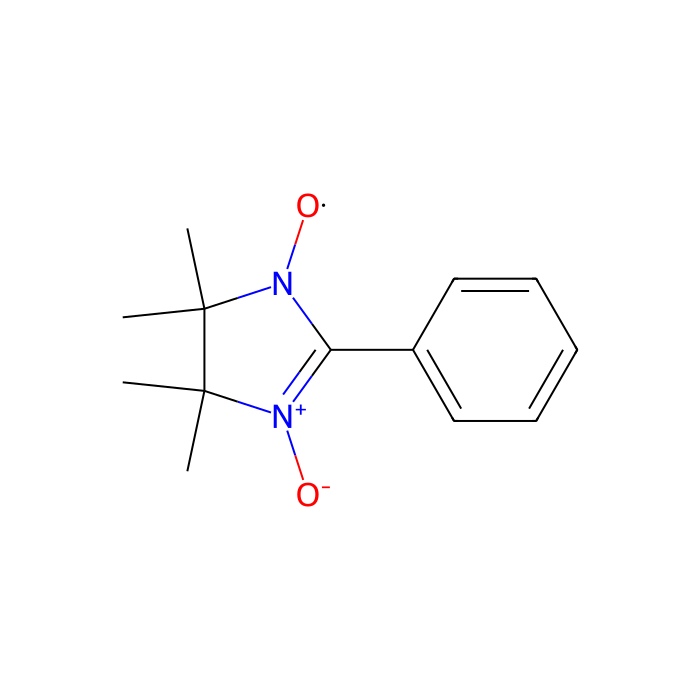
2-phenyl-4, 4, 5, 5,-tetramethylimidazoline-1-oxyl 3-oxide (PTIO) has been used as a nitric oxide (NO) scavenger.
| Pubchem Sid | 504761011 |
|---|---|
| Pubchem Sid Url | https://pubchem.ncbi.nlm.nih.gov/substance/504761011 |
| Sorrisos canónicos | CC1(C([N+](=C(N1[O])C2=CC=CC=C2)[O-])(C)C)C |
| InChIKey | DYUUGILMVYJEHY-UHFFFAOYSA-N |
| INCHI | 1S/C13H17N2O2/c1-12(2)13(3,4)15(17)11(14(12)16)10-8-6-5-7-9-10/h5-9H,1-4H3 |
| SMILES isoméricas | CC1(C([N+](=C(N1[O])C2=CC=CC=C2)[O-])(C)C)C |
| PubChem CID | 2733513 |
| Peso molecular | 233.29 |
| Reaxy-Rn | 13743042 |
Comprehensive hazard, handling, storage, and regulatory compliance document.
Download SDS →Lot-specific quality data. Enter your lot number to retrieve the exact COA.
Look up COA →Full quality attributes and acceptance criteria for this grade.
View spec sheet →Taxonomy Tree
| Kingdom | Organic compounds |
|---|---|
| Superclass | Benzenoids |
| Classe | Benzene and substituted derivatives |
| Subclass | Not available |
| Intermediate Tree Nodes | Not available |
| Direct Parent | Benzene and substituted derivatives |
| Alternative Parents | Imidazolines Nitrones Propargyl-type 1,3-dipolar organic compounds Azacyclic compounds Organopnictogen compounds Organonitrogen compounds Organic oxides Hydrocarbon derivatives |
| Molecular Framework | Aromatic heteromonocyclic compounds |
| Substituents | Monocyclic benzene moiety - 2-imidazoline - Nitrone - Azacycle - Organoheterocyclic compound - Organic 1,3-dipolar compound - Propargyl-type 1,3-dipolar organic compound - Allyl-type 1,3-dipolar organic compound - Organic nitrogen compound - Organic oxygen compound - Organopnictogen compound - Organic oxide - Hydrocarbon derivative - Organonitrogen compound - Aromatic heteromonocyclic compound |
| Descrição | This compound belongs to the class of organic compounds known as benzene and substituted derivatives. These are aromatic compounds containing one monocyclic ring system consisting of benzene. |
| External Descriptors | Not available |
| Activity Type | Relation | Activity value | Units | Action Type | Journal | PubMed Id | doi | Assay Aladdin ID |
|---|
| Activity Type | Relation | Activity value | Units | Action Type | Journal | PubMed Id | doi | Assay Aladdin ID |
|---|
| Activity Type | Relation | Activity value | Units | Action Type | Journal | PubMed Id | doi | Assay Aladdin ID |
|---|
Find and download the COA for your product by matching the lot number on the packaging.
| Lot Number | Certificate Type | Data | Item |
|---|---|---|---|
 I2604507 I2604507 | Certificate of Analysis | Aug 26, 2026 | P160514 |
| I2604529 | Certificate of Analysis | Aug 26, 2026 | P160514 |
| E2224092 | Certificate of Analysis | Mar 11, 2026 | P160514 |
| H2527490 | Certificate of Analysis | Jul 25, 2025 | P160514 |
| H2527491 | Certificate of Analysis | Jul 25, 2025 | P160514 |
| F2413193 | Certificate of Analysis | Jun 03, 2024 | P160514 |
| C2310418 | Certificate of Analysis | Dec 22, 2022 | P160514 |
| A2423068 | Certificate of Analysis | Nov 25, 2022 | P160514 |
| C2310314 | Certificate of Analysis | Nov 25, 2022 | P160514 |
| C2310326 | Certificate of Analysis | Nov 25, 2022 | P160514 |
| E2529150 | Certificate of Analysis | Nov 25, 2022 | P160514 |
| E2224112 | Certificate of Analysis | May 12, 2022 | P160514 |
| K2204799 | Certificate of Analysis | May 12, 2022 | P160514 |
| K2428173 | Certificate of Analysis | May 12, 2022 | P160514 |
| D2213021 | Certificate of Analysis | Mar 22, 2022 | P160514 |
| Solubilidade | Soluble in methanol. |
|---|---|
| Sensibilidade | heat sensitive;light sensitive |
| Peso molecular | 233.290 g/mol |
| XLogP3 | 1.200 |
| Hydrogen Bond Donor Count | 0 |
| Hydrogen Bond Acceptor Count | 1 |
| Rotatable Bond Count | 1 |
| Exact Mass | 233.129 Da |
| Monoisotopic Mass | 233.129 Da |
| Topological Polar Surface Area | 33.000 Ų |
| Heavy Atom Count | 17 |
| Formal Charge | 0 |
| Complexity | 316.000 |
| Isotope Atom Count | 0 |
| Defined Atom Stereocenter Count | 0 |
| Undefined Atom Stereocenter Count | 0 |
| Defined Bond Stereocenter Count | 0 |
| Undefined Bond Stereocenter Count | 0 |
| The total count of all stereochemical bonds | 0 |
| Covalently-Bonded Unit Count | 1 |
| 1. Mengge Feng, Xuelian Zeng, Quan Lin, Yunxiao Wang, Hongjiang Wei, Shanyi Yang, Guangwei Wang, Xingyu Chen, Mengqin Guo, Xin Yang, Jun Hu, Yangge Du, Yanbing Zhao, Yufeng Zhang, Xiangliang Yang. (2023) Characterization of Chitosan-Gallic Acid Graft Copolymer for Periodontal Dressing Hydrogel Application. Advanced Healthcare Materials, [PMID:38041691] [10.1002/adhm.202302877] |
| 2. Yiping Wu, Lulu Du, Xiaoning Xu, Yuhan Hu, Jia Liu, Jingwei Zhang, Lei Lei, Wenfang He, Zihao Sheng, Yuanao Ni, Jia Qu, Xingyi Li, Jun Jiang. (2023) Nano Self-Assemblies of Caffeic Acid–Fibronectin Mimic a Peptide Conjugate for the Treatment of Corneal Epithelial Injury. MOLECULAR PHARMACEUTICS, [PMID:37871179] [10.1021/acs.molpharmaceut.3c00861] |
| 3. Lin Zhao, Jing Zhang, Jun Ma. (2023) PTIO as a redox mediator to enhance organic contaminants oxidation by permanganate. WATER RESEARCH, [PMID:37633207] [10.1016/j.watres.2023.120500] |
| 4. Zhi-Tong Zhang, Yue Jiang, Yali Qi, Huanhuan Guan, Lei Bai, Pan Chen, Wufeng Gao, Guo-Dong Zhuang, Tulin Lu, Guojun Yan. (2023) Comparative study on Angelica sinensis after different processing with yellow rice wine in color, aromas, chemical components, and antioxidant activities. Food Chemistry-X, [PMID:37780300] [10.1016/j.fochx.2023.100822] |
| 5. Si-Yu Gui, Xin-Chen Wang, Zhi-Hao Huang, Mei-Mei Li, Jia-Hao Wang, Si-Yin Gui, Gan-Hua Zhang, Yao Lu, Li-Ming Tao, Hai-Sheng Qian, Zheng-Xuan Jiang. (2023) Nanoscale Coordination Polymer Fe-DMY Downregulating Poldip2-Nox4-H2O2 Pathway and Alleviates Diabetic Retinopathy. Journal of Pharmaceutical Analysis, [PMID:38174114] [10.1016/j.jpha.2023.05.002] |
| 6. Huitong Luo, Zetao Wang, Zhichao He, Zemin Ling, Hao Wang, Jiayi Zhu, Jingjun Nie, Dafu Chen, Qi Feng, Xiaodong Cao. (2023) Injectable chondroitin sulfate-grafted self-antioxidant hydrogels ameliorate nucleus pulposus degeneration against overactive inflammation. Biomaterials Science, 11 (10): (3629-3644). [PMID:37010367] [10.1039/D3BM00359K] |
| 7. Qiongdan Hu, Ruyu Ma, Xinxing Tang, Rui Long, Qi Wang, Chaomei Fu, Rui Li, Hang Xiao. (2022) Self-assembled nanoparticles of curcuminoids and soluble dietary fibers: Characterization and mechanism. LWT-FOOD SCIENCE AND TECHNOLOGY, [PMID:] [10.1016/j.lwt.2022.114375] |
| 8. Zuyu He, Yunhao Liu, Hui Wang, Puwang Li, Yu Chen, Chao Wang, Chuang Zhou, Shuhui Song, Shaohua Chen, Guocong Huang, Ziming Yang. (2022) Dual-grafted dextran based nanomicelles: Higher antioxidant, anti-inflammatory and cellular uptake efficiency for quercetin. INTERNATIONAL JOURNAL OF BIOLOGICAL MACROMOLECULES, [PMID:36306905] [10.1016/j.ijbiomac.2022.10.222] |
| 9. Jun Cheng, Qun Liu, Yucang Zhang, Zhifen Wang, Mengmeng Gao, Siyuan Li. (2021) Preparation and properties of antibacterial and antioxidant mango peel extract/polyvinyl alcohol composite films. JOURNAL OF FOOD PROCESSING AND PRESERVATION, 46 (1): (e16206). [PMID:] [10.1111/jfpp.16206] |
| 10. Jun Cheng, Xiaotong Lin, Xialing Wu, Qun Liu, Shoumei Wan, Yucang Zhang. (2021) Preparation of a multifunctional silver nanoparticles polylactic acid food packaging film using mango peel extract. INTERNATIONAL JOURNAL OF BIOLOGICAL MACROMOLECULES, [PMID:34343590] [10.1016/j.ijbiomac.2021.07.161] |
| 11. Danwei Yue, Weirong Cai, Bole Ding, Han Zhu, Jingjing Li, Yin Zhu. (2021) Separation and preparation of the main flavonoids in Flos Dolichoris Lablab and their antioxidant activity. FOOD SCIENCE AND TECHNOLOGY RESEARCH, [PMID:] [10.3136/fstr.27.429] |
| 12. Juanjuan Yao, Huiying Zhang, Longfu Chen, Wei Liu, Naiyun Gao, Shiyi Liu, Xiangyu Chen, Fanghui Rao. (2020) The Roles of Sono-induced Nitrosation and Nitration in the Sono-degradation of Diphenylamine in Water: Mechanisms, Kinetics and Impact Factors. JOURNAL OF HAZARDOUS MATERIALS, [PMID:33254758] [10.1016/j.jhazmat.2020.123720] |
| 13. Jumin Yang, Wenguang Liu, Wei Wang. (2024) A supramolecular hydrogel leveraging hierarchical multi-strength hydrogen-bonds hinged strategy achieving a striking adhesive-mechanical balance. Bioactive Materials, [PMID:39318637] [10.1016/j.bioactmat.2024.09.014] |
| 14. Fanyi Guo, Jianfeng Li, Ziyu Chen, Tianxiao Wang, Ruyu Wang, Tianyao Wang, Yifeng Bian, Yifei Du, Hua Yuan, Yongchu Pan, Jianliang Jin, Huijun Jiang, Feng Han, Jiandong Jiang, Fan Wu, Yuli Wang. (2024) An Injectable Black Phosphorus Hydrogel for Rapid Tooth Extraction Socket Healing. ACS Applied Materials & Interfaces, [PMID:38727024] [10.1021/acsami.4c03278] |
| 15. Liping Yu, Wang Cheng, Meifen Tian, Zhigang Wu, Xiaoli Wei, Xing Cheng, Mingwei Yang, Xuan Ma. (2024) Antioxidant Activity and Volatile Oil Analysis of Ethanol Extract of Phoebe zhennan S. Lee et F. N. Wei Leaves. Forests, 15 (2): (236). [PMID:] [10.3390/f15020236] |
| 16. Bin Cheng, Jie Zhou, Xu Wang, Zihan He, Zhengyi Xu, Jian Wang, Junyu Chen, Zhou Zhu, Weifeng Zhao, Qianbing Wan, Xibo Pei. (2024) Dual-responsive metal polyphenol network nanosheets for diabetic wound healing. CHEMICAL ENGINEERING JOURNAL, [PMID:] [10.1016/j.cej.2024.153071] |
| 17. Ziwen Wang, Dongdong Wang, Jiaxuan Fang, Zixin Song, Jiman Geng, Jianfei Zhao, Yifan Fang, Changtao Wang, Meng Li. (2024) Green and efficient extraction of flavonoids from Perilla frutescens (L.) Britt. leaves based on natural deep eutectic solvents: Process optimization, component identification, and biological activity. FOOD CHEMISTRY, [PMID:38733681] [10.1016/j.foodchem.2024.139508] |
| 18. Xiang Li, Wenli Han, Gao He, Jiahao Yang, Jing Li, Hongxia Ma, Shige Wang. (2024) Hydrogel-Transformable Antioxidant Poly-γ-Glutamic Acid/Polyethyleneimine Hemostatic Powder for Efficient Wound Hemostasis. Gels, 10 (1): (68). [PMID:38247790] [10.3390/gels10010068] |
| 19. Gang Feng, Yifan Wu, Xinzi He, Tingting Ye, Shang Chi, Xiaoxiao Ji, Jiawei Kang, Kaicheng Xu, JinFeng Zhou, Zhihui Xiang, Wei Wang, Yaping Li, Yiying Qi. (2025) Lubricated hydrogel with STING-inhibiting EXOs protect the osteoarthritis by suppressing the senescent microenvironment. Nano Today, [PMID:] [10.1016/j.nantod.2025.102688] |
| 20. Zhiqing Liu, Tianlong Wang, Lei Zhang, Yiping Luo, Jinhui Zhao, Yixing Chen, Yao Wang, Wentao Cao, Xinyu Zhao, Bingqiang Lu, Feng Chen, Zifei Zhou, Longpo Zheng. (2024) Metal–Phenolic Networks-Reinforced Extracellular Matrix Scaffold for Bone Regeneration via Combining Radical-Scavenging and Photo-Responsive Regulation of Microenvironment. Advanced Healthcare Materials, [PMID:38319101] [10.1002/adhm.202304158] |
| 21. Zhibin Ren, Xiaoying Liu, Guanghao Lv, Xiaiting Wang, Jingli Wang, Wei Wu, Xingyi Li, Jiaqing Wang. (2025) Mitochondrial Localization of Antioxidant Nanodrug Suppresses Ocular Inflammation by Alleviating Oxidative Stress on Cells. CHEMISTRY-A EUROPEAN JOURNAL, [PMID:39833114] [10.1002/chem.202402441] |
| 22. Shun Xiao, Xiaozhi Sun, Chong Wang, Jianlie Wu, Kun Zhang, Mingjin Guo, Bing Liu. (2024) Nanomicrosphere sustained-release urokinase systems with antioxidant properties for deep vein thrombosis therapy. RSC Advances, 14 (10): (7195-7205). [PMID:38419677] [10.1039/D3RA07221E] |
| 23. Liya Fan, Xiaoxuan Xi, Xiaoyan Zhao, Xiao Zhu. (2024) Preparation of composite hydrogel with mechanical stability and temperature response for tea polyphenol release. COLLOIDS AND SURFACES A-PHYSICOCHEMICAL AND ENGINEERING ASPECTS, [PMID:] [10.1016/j.colsurfa.2024.135831] |
| 24. Enhui Xu, Hainan Yu, Wei Wu, Bolin Ji, Xueling Feng, Hong Xu, Yi Zhong, Bijia Wang, Zhiping Mao. (2024) Preparation of high antioxidant nanolignin and its application in cosmetics. INTERNATIONAL JOURNAL OF BIOLOGICAL MACROMOLECULES, [PMID:38797295] [10.1016/j.ijbiomac.2024.132635] |
| 25. Wenjing Ma, Mingjun Tang, Siying Li, Yongqun Ma, Min Ling, Wenqian Sheng. (2024) The effect of hydrogen bonding strength in natural deep eutectic solvents on the extraction efficiency of polyphenols. MICROCHEMICAL JOURNAL, [PMID:] [10.1016/j.microc.2024.112379] |
| 26. Mingjun Tang, Min Ling, Wenjing Ma, Wenqian Sheng, Wenjun Yan. (2025) The Elucidation of the Critical Role of HLB value in Microemulsions Formulation. ChemNanoMat, [PMID:] [10.1002/cnma.202400554] |
| 27. Yi Wang, Xuemei Liao, Qinglong Guo, Heng Zhang, Lei Ye, Liangchen Yu, Xiaoming Kong, Yicheng Jiang, Peng Zhao, Kaiyong Cai, Hongwei Cheng. (2025) Dual-pathway targeted therapy for Parkinson's disease: Biomimetic nanosomes inhibit ferroptosis and pyroptosis through NLRP3 inflammasome regulation. Bioactive Materials, [PMID:40678266] [10.1016/j.bioactmat.2025.06.033] |
| 28. Xinting Feng, Zhiwen Luo, Wei Zhang, Renwen Wan, Yisheng Chen, Fangqi Li, Yanwei He, Zhiheng Lin, James Hoipo Hui, João Conde, Shiyi Chen, Zhijie Zhao, Xianwen Wang. (2025) Zn-DHM Nanozymes Enhance Muscle Regeneration Through ROS Scavenging and Macrophage Polarization in Volumetric Muscle Loss Revealed by Single-Cell Profiling. ADVANCED FUNCTIONAL MATERIALS, [PMID:] [10.1002/adfm.202506476] |
| 29. Xiaoli Qin, Yan Lu, Yawen Luo, Yafang Cui, Kai Zhao, Yang He, Muhammad Aziz ur Rahman, Shengnan Min, Wenfang Wang, Fuyu Yang, Binghai Cao, Huawei Su. (2025) Alfalfa Flavonoids Mitigate Salmonella-Induced Colitis via the Keap1-Nrf2 and TLR4/NF-κB/COX-2 Pathways. Food Frontiers, [PMID:] [10.1002/fft2.70036] |
| 30. Xiaoyi Zheng, Yijie Xie, Linlin Zhao, Xiaojuan Huang, Shige Wang, Yongkang Lai, Peng Fan, Yanbo Zeng, Jiulong Zhao, Zhaoshen Li. (2025) Chitosan-sodium tripolyphosphate-zinc nanogel for synergistic hydrogen and ion release to eradicate Helicobacter pylori and promote gastric mucosal healing. INTERNATIONAL JOURNAL OF BIOLOGICAL MACROMOLECULES, [PMID:41274475] [10.1016/j.ijbiomac.2025.149171] |
| 31. Shuo Tan, Hua Zeng, Wenshuya Li, Haibo Liu, Xuefeng Gu, Xiong Luo, Xinyu Zhao. (2025) Copper Nanocluster-Decorated Magnesium Silicate-Based Microneedle Enhances Antimicrobial Effects and Tissue Remodeling for Diabetic Wounds. Small Science, [PMID:41537187] [10.1002/smsc.202500442] |
| 32. Zheng Cheng, Jikang Cao, Haobo Lin, Yuchen Wang, Ran Qin, Yuhao Ruan, Xinyu Hu, Jingxuan Cang, Chang Sun, Dong Qiu, Yifeng Bian, Yifei Du, Yongchu Pan. (2025) Cu–Fe3O4 Nanozyme Reverses Age-Impaired Alveolar Healing via Reactive Oxygen–Nitrogen Species Scavenging and Mitophagy Reactivation. LANGMUIR, [PMID:41347738] [10.1021/acs.langmuir.5c04365] |
| 33. Zhang Liu, Zile Shen, Hengli Lu, Bingqiang Lu, Peng Zhang, Wenhao Chen, Guowei Huang, Xinyu Qu, Zhen Yu, Feng Chen, Wangfu Zang. (2025) Muscle-Targeted Nanocomposite Therapy Alleviates Age-Related Sarcopenia via Antioxidant and Metabolic Reprogramming. ACS Nano, [PMID:41468174] [10.1021/acsnano.5c18226] |
| 34. Yongkang Lai, Yongliang Ouyang, Xiaojing Yin, Tao Yu, Jianhua Wan, Xueyang Li, Yi Hu, Xu Shu, Huan Wang. (2026) Engineered Targeted Ce-Based MOF Nanozymes for ROS Scavenging and Inflammatory Reprogramming in Chronic Pancreatitis. Materials Today Bio, [PMID:41660130] [10.1016/j.mtbio.2026.102811] |
| 35. Dong Liu, Songkai Zhu, Jiayang Li, Yuexing Zhang, Yu Xia, Yong Liang, Bolei Chen. (2026) Generation of Nitrite from Residual Urea on Leafy Vegetables Caused by Water Vapor Condensation. ENVIRONMENTAL SCIENCE & TECHNOLOGY, [PMID:41746764] [10.1021/acs.est.5c16384] |
| 36. Jia Chen, Minghui He, Junxiao Li, Yunqi Shen, Xinkun Shen, Min Lai. (2026) Mn-TA nanoparticle-reinforced hydrogel coating on TiO2 nanotube implants for enhanced osseointegration via antioxidant, anti-inflammatory, and osteogenic activities. Biomaterials Advances, [PMID:41871519] [10.1016/j.bioadv.2026.214824] |
| 37. Zizhao Wang, Yang Yang, Hongxin Sun, Peng Fan, Xiaoqing Jia, Liang Zhang, Ting Wang, Jiulong Zhao, Qian Chen, Shige Wang. (2026) A Perioperative Hydrogel Platform for Integrated Endoscopic Submucosal Dissection Management. ACS Applied Materials & Interfaces, [PMID:41879622] [10.1021/acsami.6c01648] |
| 38. Mengting Yin, Yu Zhang, Xinyu Qu, Jiayi Liu, Zhongyi Sun, Haibo Liu, Ziyan Chen, Jing Ru, Jingwen Han, Bingqiang Lu, Yan Lu, Yan Wang, Xinyu Zhao, Feng Chen. (2026) Stage-Adaptive Janus Microneedle System for Redox-Immune Regulation and Mitochondrial Protection in Infected Diabetic Wound Healing. Advanced Science, [PMID:42524713] [10.1002/advs.202600076] |
| 39. Lin Huang, Fengxiao He, Tao Wu, Jinghao Fan, Lei Liu, Xiang Zhang, Jiangchen Liu, Shiqian Huang, Decheng Wu, Waruna Lakmal Dissanayaka. (2026) An asymmetric Janus PCL/chitosan bilayer membrane harmonizing mechanical integrity and Osteo-immunomodulatory bioactivity for periodontal regeneration. CHEMICAL ENGINEERING JOURNAL, [PMID:] [10.1016/j.cej.2026.180573] |
No validated application protocols, assay dilutions, or use instructions are provided in the Product Data for this item. Please refer to primary literature and your laboratory’s standard operating procedures when designing experiments with PTIO.
For authoritative, item-specific instructions (if available), consult the lot-specific CoA and SDS, or contact Technical Support with your application details.
No biological function is assigned to PTIO itself in living systems; it is a synthetic nitronyl nitroxide used as a research tool. The statements below describe common research uses and underlying chemical biology without implying therapeutic application.
Research role (literature):
Mechanistic notes (literature):
Practical considerations for bio-experiments (literature):
Research Use Only: As stated in the Product Data, this product is for research use only and is not intended for use in humans or for clinical/diagnostic purposes.
PTIO is not a buffering agent and does not define a useful conjugate acid/base pair for pH control. Consequently, it is not typically used to prepare buffer solutions.
For pH control and buffering capacity, select conventional buffers (e.g., phosphate, HEPES, Tris) appropriate to your system; PTIO should be treated as an additive rather than a buffer component.
From a green chemistry standpoint, considerations focus on solvent choice, reagent selectivity, and waste minimization rather than altering PTIO’s core reactivity.
Solvent choices (literature):
Alternative NO scavengers (literature comparison):
| Reagent | Water solubility | Selectivity to NO | Notes | | --- | --- | --- | --- | | PTIO | Limited | High (established) | Strong EPR signal; requires organic co-solvent in aqueous systems | | cPTIO (carboxy-PTIO) | Improved | High | Better for aqueous media; similar mechanism; potentially less organic solvent use | | Hemoproteins (e.g., oxyHb) | Aqueous | High (binding) | Biogenic but protein waste stream; possible side reactions | | TEMPO derivatives | Variable | Lower for NO | Useful radicals but not NO-specific; may not replace PTIO mechanistically |
Operational greening (general):
Note: Selection should prioritize data quality and safety; greener alternatives must preserve the mechanistic validity of NO scavenging for your system.
No pharmaceutical or clinical uses are claimed or supported for this catalog item. It is supplied strictly for research use only, as noted in the Product Data.
Formulation/excipient status: PTIO is not a common excipient and is not recognized as a compendial ingredient in pharmacopeias for formulation purposes.
Research/formulation context (literature):
Manufacturing/handling note: If PTIO-containing solutions are prepared in a laboratory manufacturing setting (e.g., for in vitro kit reagents), quality controls should focus on radical integrity (EPR), concentration verification (UV-Vis/EPR), and absence of reducing contaminants that could quench activity.
No therapeutic, diagnostic, or clinical claims should be inferred from the presence of PTIO in any research system.
Item-specific specifications are not provided in the Product Data; consult the CoA/Spec Sheet for definitive values.
Literature/general information (for context only; not product specifications):
Note: Do not treat the above literature values as specifications for this catalog item; always verify relevant properties and suitability for your application experimentally and via the product’s CoA/SDS.
Item-specific grade/purity: Not specified for this item; refer to CoA/Spec Sheet. In the absence of a declared grade (e.g., ≥98%, HPLC, or ReagentPlus), users should verify assay and impurity profile via the CoA and, where critical, confirm by independent QC (e.g., 1H/13C NMR, HRMS, EPR for nitroxide signal, and chromatographic purity).
What grade means (general guidance):
PTIO-specific quality considerations (general):
Always consult the lot-specific CoA/Spec Sheet for definitive assay, residual solvent, and impurity data.
This compound is primarily employed as a nitric oxide (NO) scavenger and as a paramagnetic probe in radical chemistry and EPR spectroscopy.
NO scavenging (literature):
Radical chemistry probe (literature):
Practical tips:
Related tools: carboxy-PTIO (more hydrophilic NO scavenger), TEMPO derivatives (general nitroxides, less NO-selective), and metal–porphyrin NO binders (different selectivity profile).
No item-specific reaction protocols are provided in the Product Data. The following are general literature-based conditions relevant to PTIO’s common uses; adapt to your system and consult primary sources.
NO scavenging in solution (literature):
Redox control experiments (literature):
Workup/compatibility:
These guidelines are conceptual starting points; optimize concentrations, timing, and detection methods for each assay or chemical system.
Authoritative safety information must be taken from the SDS. Product Data for this item does not list GHS or H-statements.
GHS/CLP (item-specific):
Known hazard considerations (literature/general):
Handling practices (general laboratory):
First aid (general):
Fire response: Use CO2, dry chemical, or foam. Combustion may produce NOx; firefighters should wear self-contained breathing apparatus.
PTIO is a moderately polar organic radical that is typically dissolved in polar aprotic solvents; aqueous solubility is limited relative to carboxylated analogs.
Practical solubility guidance (literature):
Polarity and behavior (literature):
Choosing vs alternatives (literature perspective):
Working tips:
Item-specific storage (from Product Data):
Stability considerations (general/literature):
Reconstitution/stock preparation (general):
Inspection before use:
Always defer to the lot-specific CoA/SDS for binding guidance on storage limits and conditions.
PTIO is widely recognized in the literature as 2-phenyl-4,4,5,5-tetramethylimidazoline-1-oxyl 3-oxide, a nitronyl nitroxide radical used as a nitric oxide (NO) scavenger and spin probe.
Item-specific identifiers (Product Data):
Structural class and features (literature):
Naming (literature): often abbreviated PTIO; distinct from carboxy-PTIO (cPTIO), a carboxylated, more water-soluble analog.
Although PTIO is primarily a functional probe rather than a generic building block, it occupies a distinct niche in synthesis and mechanistic chemistry due to its persistent nitroxide character.
Functional groups and reactivity (literature):
Applications in synthesis/mechanistic studies (literature):
Retrosynthetic relevance: Limited, since PTIO is not commonly transformed into other scaffolds in stepwise syntheses; however, its controlled redox conversion (radical ↔ hydroxylamine) allows access to reference materials useful for calibration and control experiments.
Practical notes:
This product is a small-molecule nitroxide, not a biological macromolecule or antibody. There are no antigen/epitope or species-specific attributes.
Item-specific data: Not applicable; no target-binding specificity is provided in the Product Data.
Functional selectivity (literature): PTIO is used as a chemical scavenger for nitric oxide (NO) in solution. While relatively selective for NO compared with many radicals, it can participate in broader radical chemistry under certain conditions; appropriate controls are necessary to attribute effects specifically to NO scavenging.