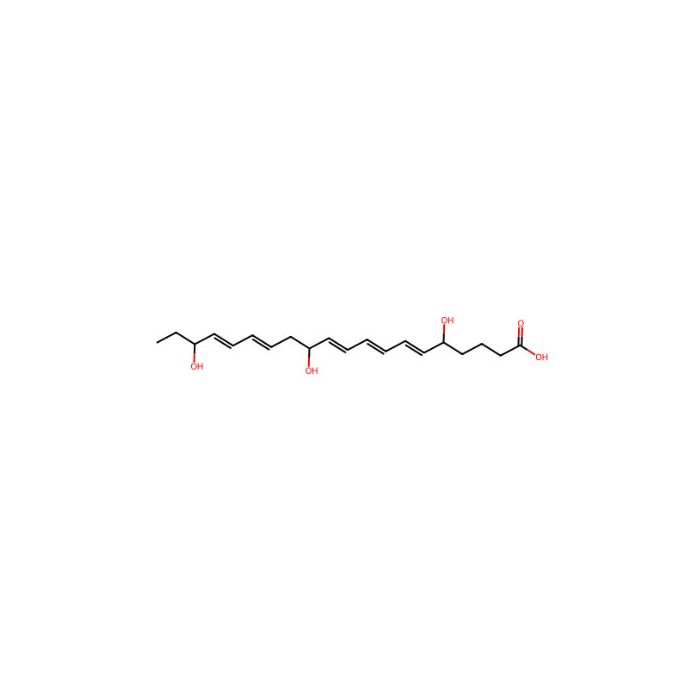
Resolvin E1 - Moligand™, ≥95%, 100 µg/mL in ethanol , Agonist of chemerin receptor 1, CAS No.552830-51-0, Agonist of chemerin receptor 1

CAS: 552830-51-0 Cat. No.: R613158 PubChem CID: 10473088
Disponível para encomenda
GRAU & PUREZA Moligand™ ? Moligand™ — Aladdin's line of ligands and bioactive small molecules. Use for receptor, pathway, and binding studies needing defined small-molecule tools. ≥95% 100 µg/mL in ethanol
Synonyms
RvE1|(5S,12R,18R)-trihydroxy-(6Z,8E,10E,14Z,16E)-icosapentaenoic acid|5S,12R,18R-trihydroxy-6Z,8E,10E,14Z,16E-eicosapentaenoic acid|6,8,10,14,16-Eicosapentaenoic acid, 5,12,18-trihydroxy-, (5S,6Z,8E,10E,12R,14Z,16E,18R)-|(5S,6Z,8E,10E,12R,14Z,16E,18R)-5,12,18-Trihydroxy-6,8,10,14,16-eicosapentaenoic acid|5S,12R,18R-trihydroxy-6Z,8E,10E,14Z,16E-EPA|Resolvin E1|(5S,12R,18R)-trihydroxy-(6Z,8E,10E,14Z,16E)-eicosapentaenoic acid|RX-10001|(5S,6Z,8E,10E,12R,14Z,16E,18R)-5,12,18-trihydroxyicosa-6,8,10,14,16-pentaenoic acid|(6Z,8E,10E,14Z,16E)-5,12,18-trihydroxyicosa-6,8,10,14,16-pentaenoic acid
Storage
Store at -80°C
Shipped In
Dry ice packs + Cold packs
★
Tamanho
Alemanha (EU)
USA*
Preço
Qtd
10μg
R613158-10μg
Sob encomenda · 8–12 semanas
676,75€
25μg
R613158-25μg
Sob encomenda · 8–12 semanas

991,74€

1526,27€
Gravar 534,53 € (35.02%)
Enter a quantity for the sizes you want to add.

Visão geral

Resolvin E1 (RvE1), a potent endogenous pro-resolving mediator of inflammation, is derived from omega-3 fatty acid eicosapentaenoic acid (EPA). Resolvin E1 is endogenously biosynthesized from EPA in the presence of Aspirin during the spontaneous resolution phase of acute inflammation, where specific cell-cell interactions occur. Resolvin E1 possesses unique counterregulatory actions that inhibit polymorphonuclear leukocyte (PMN) transendothelial migration. Resolvin E1 also acts as a potent inhibitor of leukocyte infiltration, dendritic cell migration, and IL-12 production.

Especificações

Sinónimos
RvE1 | (5S,12R,18R)-trihydroxy-(6Z,8E,10E,14Z,16E)-icosapentaenoic acid | 5S,12R,18R-trihydroxy-6Z,8E,10E,14Z,16E-eicosapentaenoic acid | 6,8,10,14,16-Eicosapentaenoic acid, 5,12,18-trihydroxy-, (5S,6Z,8E,10E,12R,14Z,16E,18R)- | (5S,6Z,8E,10E,12R,14Z,16E,18R)-5,12,18-Trihydroxy-6,8,10,14,16-eicosapentaenoic acid | 5S,12R,18R-trihydroxy-6Z Show more
Especificações e pureza
Moligand™, ≥95%, 100 µg/mL in ethanol
Condições de armazenamento de armazenamento
Store at -80°C
Enviado em
Dry ice packs + Cold packs
Este produto requer transporte de cadeia fria. Serviços terrestres e outros serviços econômicos não estão disponíveis.
Grau
Moligand™
Tipo de ação
AGONIST
Mecanismo de ação
Agonist of chemerin receptor 1
Pureza
≥95%
Nomes e identificadores
SMILES
CCC(C=CC=CCC(C=CC=CC=CC(CCCC(=O)O)O)O)O
IUPAC Name
(5S,6Z,8E,10E,12R,14Z,16E,18R)-5,12,18-trihydroxyicosa-6,8,10,14,16-pentaenoic acid
InChIKey
AOPOCGPBAIARAV-OTBJXLELSA-N
InChI
1S/C20H30O5/c1-2-17(21)11-8-5-9-14-18(22)12-6-3-4-7-13-19(23)15-10-16-20(24)25/h3-9,11-13,17-19,21-23H,2,10,14-16H2,1H3,(H,24,25)/b4-3+,9-5-,11-8+,12-6+,13-7-/t17-,18+,19-/m1/s1
SMILES isoméricas
CC[C@H](/C=C/C=C\C[C@H](/C=C/C=C/C=C\[C@H](CCCC(=O)O)O)O)O
CAS alternativo
552830-51-0
PubChem CID
10473088
Termos de entrada MeSH
5S,12R,18R-trihydroxy-6Z,8E,10E,14Z,16E-eicosapentaenoic acid;5S,12R,18R-trihydroxy-6Z,8E,10E,14Z,16E-EPA;Resolvin E1;RvE1

Dados avançados

Taxonomic Classification

Taxonomy Tree

KingdomOrganic compounds
SuperclassLipids and lipid-like molecules
ClasseFatty Acyls
SubclassEicosanoids
Intermediate Tree Nodes Not available
Direct ParentHydroxyeicosapentaenoic acids
Alternative Parents Long-chain fatty acids  Hydroxy fatty acids  Unsaturated fatty acids  Secondary alcohols  Polyols  Monocarboxylic acids and derivatives  Carboxylic acids  Organic oxides  Hydrocarbon derivatives  Carbonyl compounds  
Molecular FrameworkAliphatic acyclic compounds
Substituents Hydroxyeicosapentaenoic acid - Long-chain fatty acid - Hydroxy fatty acid - Fatty acid - Unsaturated fatty acid - Secondary alcohol - Carboxylic acid derivative - Carboxylic acid - Monocarboxylic acid or derivatives - Polyol - Organic oxide - Organic oxygen compound - Hydrocarbon derivative - Carbonyl group - Organooxygen compound - Alcohol - Aliphatic acyclic compound
DescriçãoThis compound belongs to the class of organic compounds known as hydroxyeicosapentaenoic acids. These are eicosanoic acids with an attached hydroxyl group and five CC double bonds.
External Descriptors Hydroxy/hydroperoxyeicosapentaenoic acids
Estrutura 3D
Modelo de Estrutura Química Interativa


Alvos associados (humanos)
CMKLR1 Tchem Chemokine-like receptor 1 (1 Activities)
Activity TypeActivity Value -log(M)Mechanism of ActionActivity ReferencePublications (PubMed IDs)
Mecanismos de ação
Certificados(CoA,COO,BSE/TSE e Mapa de Análise)
C of A & Other Certificates(BSE/TSE, COO):
Analytical Chart:

Find and download the COA for your product by matching the lot number on the packaging.

1 results found

Lot NumberCertificate TypeDataItem
K2519642K2519642Certificate of AnalysisSep 29, 2025 R613158
Propriedades químicas e físicas
Peso molecular350.4
XLogP32.400
Hydrogen Bond Donor Count4
Hydrogen Bond Acceptor Count5
Rotatable Bond Count13
Exact Mass350.209 Da
Monoisotopic Mass350.209 Da
Topological Polar Surface Area98.000 Ų
Heavy Atom Count25
Formal Charge0
Complexity488.000
Isotope Atom Count0
Defined Atom Stereocenter Count3
Undefined Atom Stereocenter Count0
Defined Bond Stereocenter Count5
Undefined Bond Stereocenter Count0
The total count of all stereochemical bonds5
Covalently-Bonded Unit Count1
Calculadoras de soluções
Revisões

Avaliações dos Clientes

Application Protocols

No tested applications or protocols are provided in the Product Data for this item. The following notes describe only general handling steps and do not constitute a validated protocol for this specific lot.

  • Item-specific applications

    • Not specified for this item; refer to CoA/Spec Sheet.
  • General handling (literature/practice)

    • Equilibrate vial to low temperature before opening to limit condensation; work quickly under dim light.
    • Prepare DMSO stock (e.g., 1–10 mM) in amber glass, flush with N2/Ar, aliquot, and store at −80°C.
    • For cell assays, dilute into prewarmed buffer/media to the desired concentration, keeping final DMSO ≤0.1% v/v.
    • Include vehicle controls and, where appropriate, internal standards for LC–MS verification of exposure.
  • Documentation

    • Record lot number, stock concentration, and number of freeze–thaw cycles; discard aliquots showing discoloration or unexpected LC–MS impurities.
Biological Roles

The following describes literature/general biological roles of Resolvin E1; these are provided to inform research planning and do not constitute medical or clinical claims.

  • Origin and biosynthesis (literature/general)

    • Derived enzymatically from eicosapentaenoic acid (EPA) via sequential oxygenation (e.g., 15‑LOX and 5‑LOX pathways), yielding the 5S,12R,18R‑trihydroxy‑pentaenoic acid mediator known as RvE1.
  • Molecular pharmacology (literature/general)

    • Acts as an endogenous ligand in pro‑resolving signaling. Reported receptor interactions include ChemR23/ERV1 and modulatory effects at BLT1 pathways in leukocytes, guiding experiments in immune signaling and inflammation resolution biology.
  • Cellular actions observed in research (literature/general)

    • Modulates neutrophil trafficking and reduces excessive activation in vitro; enhances macrophage efferocytosis and clearance of cellular debris in cell‑based studies.
    • Influences cytokine and eicosanoid networks; cross‑talk with COX/LOX pathways is often assessed in multi‑omics experiments.
  • Systems biology context (literature/general)

    • Part of the specialized pro‑resolving mediators (SPMs) superfamily alongside D‑series resolvins, protectins, and maresins. Time‑resolved lipidomics typically shows RvE1 arising during the resolution phase following an inflammatory stimulus.
  • Experimental considerations (literature/general)

    • Activity is stereospecific; verify configuration and avoid isomerization during handling.
    • Effective concentrations in cell systems are commonly in the low‑nanomolar to low‑micromolar range, assay‑dependent; verify with internal titration.
  • Note: The above roles are provided for research context only; no therapeutic or clinical uses are implied.

Buffer Applications

This product is not a buffer component and is not typically used to control pH. For experimental use, it is dissolved in organic vehicles and then diluted into existing biological buffers.

  • Practical guidance (literature/general)

    • To deliver into aqueous buffer, prepare a concentrated DMSO stock and dilute into the target buffer (e.g., PBS, HBSS, HEPES‑buffered media), maintaining ≤0.1% DMSO where possible.
    • Incorporating carriers (fatty‑acid‑free BSA at 0.1–0.5%) or cyclodextrins can improve apparent solubility and reduce adsorption to plastics.
  • Buffer specifications for this item

    • Not specified for this item; refer to CoA/Spec Sheet for any formulation notes if provided.
Green Alternatives

As a defined bioactive lipid ligand used at low concentrations, Resolvin E1 does not have direct “green” substitutes in the way solvents or bulk reagents do. Nonetheless, greener handling choices can reduce environmental impact.

  • Minimizing solvent and waste (general)

    • Use concentrated DMSO stocks and small aliquots to limit repeated thawing and discards.
    • Favor LC–MS mobile phases with lower organic content when chromatographic resolution permits.
    • Employ microscale assays and high‑density plates to reduce consumables and solvent volumes.
  • Vehicle considerations (general)

    • Prefer DMSO over chlorinated solvents; target ≤0.1% DMSO in final assays.
    • For aqueous delivery, carriers such as fatty‑acid‑free BSA or cyclodextrins can reduce the need for higher solvent fractions.
  • Storage efficiency (general)

    • Batch‑prepare aliquots under inert gas to extend life and reduce waste from decomposed material.
  • Tradeoffs

    • Strongly “green” carriers or solvents may compromise solubility or biological performance; balance sustainability with data quality.
  • Item-specific greener alternative

    • Not applicable; there is no direct green substitute for this specific ligand. Any change in mediator identity (e.g., to other SPMs) alters biological readouts and should be scientifically justified.
Pharmaceutical Uses

No pharmacopeial status or excipient role is specified for this item. The following notes refer to research and development contexts only and do not imply clinical use.

  • Item-specific status

    • Pharmaceutical/clinical use: Not specified for this item; for research use only (as provided).
  • R&D and analytics (literature/general)

    • Used as a reference standard for LC–MS/MS quantitation in lipid mediator profiling.
    • Employed as a tool compound in target validation, receptor deconvolution, and pathway mapping for resolution biology.
  • Formulation research (literature/general)

    • Preclinical formulation studies may assess carriers (liposomes, cyclodextrins, albumin) and protection from oxidation; such work is exploratory and assay‑dependent.
  • Regulatory note

    • This product is supplied strictly for research use only. It is not intended for use in humans or for diagnostic or therapeutic applications.
Physical Properties

Item-specific physical specifications are not provided in the Product Data for this listing; consult the CoA/Spec Sheet for definitive values. The following are literature/general characteristics for Resolvin E1 to aid handling and method development.

  • Aggregate physical description (literature/general)

    • Physical state: colorless to pale oil/solid in microgram quantities; prone to isomerization and oxidation.
    • Molecular formula: C20H30O5 (literature)
    • Molecular weight: ~350.45 g/mol (literature)
    • Acidic functional group: monocarboxylic acid (weak acid); pKa not firmly established in the public domain; expected to be in the typical range for long‑chain polyhydroxy fatty acids (literature, qualitative).
  • Solubility profile (literature/general)

    • Soluble: DMSO, ethanol, methanol, acetonitrile; miscible with nonpolar solvents containing a polar co‑solvent.
    • Poorly soluble in neutral aqueous buffers; apparent solubility increases at basic pH via carboxylate formation or with carrier proteins (e.g., BSA) or cyclodextrins.
    • Practical practice: prepare concentrated DMSO stocks (e.g., 1–10 mM), dilute into assay buffer to ≤0.1% DMSO where compatible.
  • Stability considerations (literature/general)

    • Light/oxygen sensitive; polyene chain is susceptible to autoxidation and geometric isomerization.
    • Store under inert gas, minimize headspace, and protect from light; avoid repeated freeze–thaw.
  • Other common physico‑chemical descriptors

    • LogP/logD: not specified for this item; literature suggests lipophilic behavior consistent with long‑chain polyunsaturated acids.
    • Melting/boiling points, density, refractive index: Not specified for this item; refer to CoA/Spec Sheet.
Quality and Grades
  • Item-specific quality information

    • Grade/Purity: Moligand™ (as provided). Numerical purity, stabilizers, residual solvent limits, and analytical specs are not specified for this item; refer to the CoA/Spec Sheet.
  • About Moligand™ (general description)

    • Moligand denotes a small‑molecule ligand suitable for screening, target engagement studies, and reference-standard use in discovery workflows. While the exact acceptance criteria are product‑specific, Moligand items are typically prepared to support biochemical/biophysical assays and LC–MS quantitation in research settings.
  • What to verify on receipt (practical guidance)

    • Identity: LC–MS (accurate mass, isotope pattern), comparison to a qualified reference where available.
    • Purity: HPLC/UPLC with UV and/or MS detection; monitor for geometric isomers and oxidation products common to polyunsaturated lipids.
    • Stereochemical integrity: If biologically relevant, confirm via chiral LC or comparison to literature retention times for 5S,12R,18R configuration.
  • Stabilizers and formulation

    • Not specified for this item; refer to CoA/Spec Sheet. If none are present, consider aliquoting under inert gas with antioxidant carryover minimized to avoid interfering with assays.
  • Documentation

    • CoA, lot‑specific test methods, and release limits are the authoritative sources for this item’s quality attributes.
Reaction and Applications

This compound is primarily a bioactive lipid mediator used as a research standard or ligand, not a general synthetic reagent. Accordingly, its most relevant “applications” are in biochemical, cellular, and analytical contexts rather than as a stoichiometric reactant.

  • Research applications (literature/general)

    • GPCR ligand studies: RvE1 is widely used to interrogate endogenous resolution pathways; see also Biological Roles.
    • Cell signaling and pathway mapping: time‑course and dose–response experiments in primary immune cells or model lines.
    • Analytical reference: calibration standard in targeted lipidomics (LC–MS/MS).
  • Practical notes for use (literature/general)

    • Light/oxygen control: use amberware, work under dim light; flush vials with N2/Ar after each use.
    • Adsorption: minimize losses by using silanized glass and adding small amounts of carrier protein in aqueous systems.
    • Order of addition: premix with vehicle before contacting aqueous media to prevent local supersaturation.
  • Not typically applicable

    • Named organic reactions (e.g., cross‑couplings, Grignards) are not relevant for routine use of this product; for synthetic transformations of RvE1 itself, see Synthetic Utility for high‑level notes and consult primary literature.
Reaction Conditions

As a research ligand/standard, Resolvin E1 is not generally used in synthetic reactions. The most relevant “conditions” are those for biological assays and analytics. Values below are literature/general guidance and should be optimized per assay; they are not specifications for this item.

  • Stock solutions (literature/general)

    • 1–10 mM in anhydrous DMSO; store aliquots at −80°C under inert gas in amber vials.
  • In vitro assay dosing (literature/general)

    • Typical working ranges: ~1–1000 nM in cell‑based or biochemical assays depending on target sensitivity. Maintain DMSO ≤0.1% v/v.
    • Equilibrate vehicle and temperature before dosing to minimize precipitation.
  • LC–MS analytics (literature/general)

    • Column: C18 sub‑2 µm or 2.6 µm core‑shell; 30–60% organic gradients with water/acetonitrile or water/methanol.
    • Ionization: ESI negative; monitor characteristic fragment ions and retention versus a qualified standard.
  • Stability controls (literature/general)

    • Protect from light at all times; include antioxidant scavengers sparingly if compatible with the assay.
    • Avoid high pH (>8.5) during prolonged incubations to limit double‑bond isomerization.
  • Yield/performance expectations

    • Not applicable; this product is not used in yield‑bearing chemical reactions. For assay performance, determine internal positive controls and dynamic range empirically.
Safety and Handling

GHS classification and hazard statements are not provided in the Product Data for this item. Always consult the product‑specific SDS for authoritative safety information.

  • Item-specific safety

    • GHS Classification/Pictograms/H‑Statements/Signal Word: Not specified for this item; refer to SDS.
  • General laboratory precautions (good practice)

    • PPE: lab coat, safety glasses, and appropriate chemical‑resistant gloves (e.g., nitrile). Handle in a fume hood when weighing or preparing solutions.
    • Avoid inhalation of powders/aerosols; prevent skin and eye contact.
    • Use amber glassware/syringes where practical to limit light exposure.
  • Chemical reactivity and incompatibilities (literature/general)

    • Sensitive to oxygen, heat, and light due to polyunsaturated chain; avoid oxidizing environments and metal contaminants that can catalyze peroxidation.
    • Incompatible with strong oxidizers; strong bases will form the carboxylate salt and may accelerate E/Z isomerization of double bonds.
  • First‑aid overview (general)

    • Skin/eye contact: Rinse with water for at least 15 minutes. Remove contaminated clothing. Seek medical attention if irritation persists.
    • Inhalation: Move to fresh air; seek medical attention if symptoms occur.
    • Ingestion: Rinse mouth; do not induce vomiting; seek medical attention.
  • Spills and waste

    • Small spills: absorb with inert material, collect in a light‑protected container.
    • Disposal: Dispose of in accordance with institutional and local regulations; treat as organic chemical waste.
  • SDS

    • Obtain and review the SDS prior to first use; it supersedes any general guidance above.
Solvent Selection

Resolvin E1 is a lipophilic, polyhydroxylated long‑chain fatty acid derivative. Solvent choice should balance solubility, stability, and compatibility with the intended bioassay or analytical method.

  • Polarity and miscibility (literature/general)

    • Amphipathic acid with high overall hydrophobicity; practically insoluble in pure water at neutral pH.
    • Readily soluble in polar aprotic organics (DMSO, acetonitrile) and lower alcohols; soluble in nonpolar solvents when co‑solubilized.
  • Recommended stock preparation (practice)

    • Prepare 1–10 mM stocks in anhydrous DMSO in amber vials; sparge with nitrogen/argon, minimize headspace, and store aliquots at −80°C.
    • For aqueous studies, dilute stocks into buffer containing ≤0.1% DMSO and, if needed, 0.1–0.5% fatty‑acid‑free BSA or cyclodextrin to aid dispersion.
  • Compatibility for analytics (literature/general)

    • LC–MS: mobile phases of water/acetonitrile or water/methanol with 0.01–0.1% acetic or formic acid; avoid high pH that can induce isomerization.
    • UV detection benefits from light shielding; ESI negative mode typically preferred.
  • Quick comparison (literature/general)

    • DMSO: maximal solubility and stability; widely assay‑compatible at ≤0.1% v/v.
    • Ethanol/methanol: good solubility; consider effects on cells/enzymes at >0.2% v/v.
    • Aqueous buffers: require carriers or basic pH for dissolution; monitor for adsorption to plastics.
  • Specifications

    • Any solvent limits or stabilizers specific to this item: Not specified; refer to CoA/Spec Sheet.
Storage and Reconstitution
  • Item-specific storage and shipping (from Product Data)

    • Storage Conditions: Store at −80°C.
    • Shipped In: Dry ice packs + Cold packs.
  • Item-specific appearance

    • Appearance: Not specified for this item; refer to CoA/Spec Sheet.
  • Reconstitution guidance (literature/general)

    • Open vials at low temperature and under dim light; allow material to equilibrate briefly to prevent moisture condensation.
    • Dissolve in anhydrous, oxygen‑free DMSO to prepare a 1–10 mM stock. Mix gently; avoid vigorous vortexing that entrains air.
    • Aliquot into amber, gas‑tight microvials with minimal headspace; backfill with N2/Ar; immediately return unused material to −80°C.
  • Handling and stability (literature/general)

    • Avoid repeated freeze–thaw cycles; use single‑use aliquots.
    • Protect from light at all times; store in secondary light‑blocking containers.
    • Monitor integrity by LC–MS or HPLC prior to critical experiments; watch for oxidation products and E/Z isomerization.
  • Compatibility notes

    • Containers: Prefer silanized or low‑adsorption glass. Some plastics can adsorb lipophilic acids—verify recovery.
  • Specifications

    • Any stabilizers, solution shelf life, or water/peroxide limits: Not specified for this item; refer to CoA/Spec Sheet.
  • Research Use Note

    • For research use only.
Structure and Identity

Resolvin E1 (RvE1) is a specialized pro‑resolving lipid mediator derived biosynthetically from eicosapentaenoic acid (EPA). This item is supplied as a small‑molecule library ligand under Aladdin’s Moligand grade.

  • Item-specific identifiers (from Product Data)

    • SKU: R613158
    • Product Name: Resolvin E1
    • CAS: 552830-51-0
    • PubChem CID: 10473088
    • InChIKey: 10920 (as provided)
    • SMILES: Not specified for this item; refer to CoA/Spec Sheet.
  • Structure overview (literature/general)

    • Common systematic description: 5S,12R,18R-trihydroxy-eicosa-6Z,8E,10E,14Z,16E-pentaenoic acid.
    • Molecular formula: C20H30O5 (literature).
    • Molecular weight: ~350.45 g/mol (literature, calculated from formula).
    • Functional groups: one terminal carboxylic acid; three secondary alcohols; conjugated pentaene backbone.
    • Stereochemistry: typically 5S, 12R, 18R at the three hydroxyl-bearing stereocenters in the native mediator (literature). Commercial materials may be provided as defined stereochemistry or mixtures—verify on CoA.
    • 2D structural features (verbal): a 20‑carbon chain ending in a carboxylate; internal positions bear OH substituents; five alternating C=C bonds create an extended polyene; no rings, no heteroatoms beyond O.
  • Notes

    • Exact stereochemical specification, SMILES, and InChI for this catalog item are not provided here; consult the CoA/Spec Sheet for definitive identity data.
    • For analytical confirmation, typical methods include LC–MS/MS with negative‑ion ESI and diagnostic MRM transitions, and chiral/positional confirmation by LC with UV/MS.
Synthetic Utility

Resolvin E1 is typically the target of synthesis rather than a synthetic building block. For chemists interested in its preparation or modification, the following high‑level points summarize literature practices.

  • Retrosynthetic features (literature/general)

    • Fragmentation into carboxy terminus and ω‑end fragments enables convergent assembly.
    • Key challenges include installing the 5S,12R,18R triad and the E/Z‑defined pentaene without isomerization.
  • Representative tactics (literature/general)

    • Asymmetric aldol or Sharpless epoxidation/diol opening to set hydroxyl stereocenters.
    • Wittig/Horner–Wadsworth–Emmons or Julia–Kocienski olefinations to build the polyene with defined geometry.
    • Final global deprotection under mild, non‑acidic and non‑basic conditions to preserve double bond geometry.
  • Derivatizations for research (literature/general)

    • Isotopically labeled analogs (e.g., d5‑RvE1) for internal standards in LC–MS.
    • Bioorthogonal handles (e.g., alkyne tags) for pull‑down/proteomics, recognizing that modifications may alter biological activity.
  • Utility as a reagent

    • Not typically used as a reagent or catalyst; its primary value is as a ligand/standard in biochemical studies.
Target Specificity

Target specificity data are not provided in the Product Data for this item.

  • Item-specific target/receptor details

    • Not specified for this item; refer to CoA/Spec Sheet or manufacturer technical notes if available.
  • Note

    • While literature describes endogenous receptors for Resolvin E1, only product‑specific, provided data may be listed here. Consult primary literature to select assay targets appropriate to your research question.

Perguntas frequentes

What is the purity of this product?
This product is supplied at ≥95% purity (chemical assay). Lot-specific values are stated on the Certificate of Analysis.
How should this product be stored?
Store at ?80 °C. Ultra-low temperature storage is required to maintain the specified shelf life.
What is Moligand??
Moligand? is one of Aladdin Scientific's premium product lines, formulated for high-purity applications across multiple workflows. Compared to standard grades in the same workflow, Moligand? products typically offer tighter specifications, more rigorous QC, and stronger lot-to-lot consistency.
How is this product shipped?
This product ships frozen with dry ice and cold packs. Unpack on arrival and transfer it to the storage condition stated above; handle dry ice with insulated gloves in a ventilated area.
What are the CAS number, molecular formula and molecular weight?
The CAS Number is 552830-51-0. InChIKey AOPOCGPBAIARAV-OTBJXLELSA-N.
What documentation is provided?
Available product documentation, including Certificates of Analysis (COA), Safety Data Sheets (SDS), and specification sheets, is shown in the product document area. Document availability and access follow the current site policy.

Precisa de ajuda para escolher o grau?

O nosso guia de seleção de graus abrange pureza, estado do estabilizador e adequação à aplicação para todas as variantes do nosso catálogo.

Ver o guia de graus Moligand™ →

Deseja que lhe enviemos uma mensagem quando tivermos descontos disponíveis?

Lembrar-me mais tarde

Obrigado! Por favor, verifique a sua caixa de entrada de e-mail para confirmar.

Ops! As notificações estão desativadas.