for sensitive chromatographic and analytical workflows requiring minimal baseline interference.
🌡
Storage & shipping
Store at -20°C Ships Ice chest + Ice pads Check lot-specific COA for exact specifications.
📋
Quality documents
SDS, COA, datasheet, and spec sheet available for download. Lot-specific COA accessible via lot number lookup.
📚
Literature proof
Cited in 0 peer-reviewed publications across chromatography, organic synthesis, and cross-coupling reactions.
Visão geral
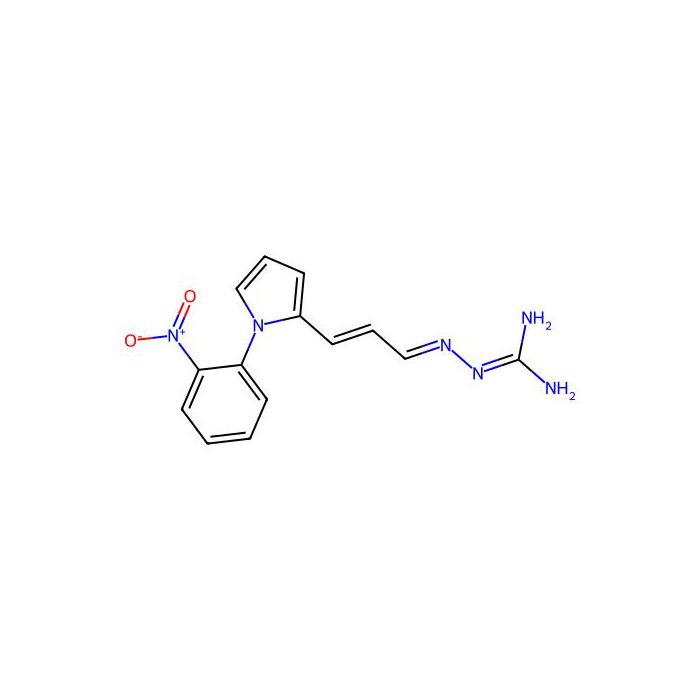
Resomelagon (AP1189) is a potent, orally active melanocortin receptor (MR) agonist about MC 1 and MC 3 . Resomelagon induces ERK1/2 phosphorylation and Ca 2+ mobilization. Resomelagon has anti-inflammatory activity. Resomelagon can be used for obesity and chronic inflammation research
In Vitro
Resomelagon (0-1000 μM; 8 min; HEK293A cells) promotes melanocortin signal transduction through ERK1/2 phosphorylation and Ca 2+ mobilization. Resomelagon (1 nM; 30 min; peritoneal macrophages) has anti-inflammatory activity and inhibits TNF-α release and efferocytosis. MCE has not independently confirmed the accuracy of these methods. They are for reference only. Western Blot AnalysisCell Line: HEK293A cells Concentration: 0-1000 μM Incubation Time: 8 minutes Result: Increased the expression of ERK1/2 phosphorylation in a dose-dependent manner.
In Vivo
Resomelagon (0-10 mg/kg; i.p., i.v. and p.o.; for 24 h; male C57BL/6J wild-type (WT) and BALB/c mice) promotes resolution of acute inflammation in vivo . Resomelagon (25-50 mg/kg; p.o.; daily, for 8 d; male C57BL/6J wild-type (WT) and BALB/c mice) reduces arthritis in mice . MCE has not independently confirmed the accuracy of these methods. They are for reference only. Animal Model: Male C57BL/6J wild-type (WT) and BALB/c mice Dosage: 0, 0.1, 1 and 10 mg/kg Administration: Oral administration, intraperitoneal injection and intravenous injection; for 24 hours Result: Inhibited neutrophil and monocyte infiltration in a dose-dependent manner. Animal Model: Male C57BL/6J wild-type (WT) and BALB/c mice Dosage: 25 and 50 mg/kg Administration: Oral administration; daily; for 8 days Result: Reduced all signs of arthritis measured, including clinical score (-42%), paw swelling (-87%), proportion of animals with all four paws affected (-50%), and the severity of the inflammation (-70%).
Form:Solid
IC50& Target:MC1R MC3R
Specifications
Mecanismos bioquímicos e fisiológicos
Resomelagon (AP1189) is a potent, orally active melanocortin receptor (MR) agonist about MC 1 and MC 3 . Resomelagon induces ERK1/2 phosphorylation and Ca 2+ mobilization. Resomelagon has anti-inflammatory activity. Resomelagon can be used for obesity and
Condições de armazenamento de armazenamento
Store at -20°C
Enviado em
Ice chest + Ice pads
Este produto requer transporte de cadeia fria. Serviços terrestres e outros serviços econômicos não estão disponíveis.
Determine the necessary mass, volume, or concentration for preparing a solution.
Dilution Calculator
Determine the dilution needed to prepare a stock solution.
Reconstitution Calculator
Revisões
Avaliações dos Clientes
Application Protocols
No tested application protocols (e.g., WB, IHC, IF, FC) apply to this small-molecule product, and none were provided in the Product Data.
General handling protocol for small-molecule tool compounds (for in vitro research)
Stock preparation: Dissolve in anhydrous DMSO to 10–50 mM. Vortex/sonicate gently. If needed, warm to 25–40°C briefly.
Working solutions: Dilute stocks into assay buffer or media to desired concentrations, keeping final DMSO ≤0.1–1% v/v. Mix thoroughly and use promptly.
Filtration: If particulate is observed, pass through a 0.2 µm PTFE or PES filter compatible with your solvent system.
Documentation: Record lot number, stock concentration, solvent, and preparation date. Store aliquots to minimize freeze–thaw.
For cell-based assays
Include vehicle controls matching the highest DMSO percentage.
These are generic best practices; adapt to your experimental platform. No item-specific validated protocols are claimed.
Biological Roles
Item-specific biological function or target information for Resomelagon is not provided in the Product Data. No claims are made here regarding mechanism of action, selectivity, or in vivo relevance.
General guidance for researchers
If using as a tool compound, consult peer-reviewed literature and authoritative databases corresponding to CAS 1809420-71-0 or PubChem CID 23728926 to understand any reported targets, pathways, or physicochemical properties. Verify that such data align with your lot via CoA.
Establish orthogonal confirmation of activity in your hands (e.g., biochemical assay plus cellular readout) before relying on the compound as a probe.
Consider potential liabilities that often affect small molecules in biological systems, including solubility limits, off-target binding, efflux, and metabolic instability. Design controls accordingly (vehicle controls, inactive analogs, concentration-response testing).
Non-clinical use only
As supplied, this product is designated for research use only. It is not approved for diagnostic, therapeutic, or veterinary applications.
Documentation
Record batch/lot, exact solvent vehicle, storage history, and freeze–thaw cycles. These factors can materially affect observed biological activity and reproducibility.
For precise biological role characterization of this compound, rely on the SDS/CoA and primary literature tied to the provided CAS/CID; do not extrapolate from unrelated compounds.
Buffer Applications
This product is a research small molecule and is not a buffering reagent. No specific buffer system or pKa information is provided.
Practical notes
When preparing assay solutions, use established biological buffers (e.g., PBS, HEPES, Tris) suitable for your system, and dissolve the compound first in an appropriate co-solvent (commonly DMSO), then dilute into buffer to the desired working concentration, keeping final organic content low (typically ≤0.1–1% v/v) to maintain cell/assay compatibility.
If the compound possesses ionizable groups (consult literature/CoA), pH can influence solubility and stability; verify by small-scale tests.
For buffer recipes and pH ranges, refer to standard buffer preparation resources. No item-specific buffering guidance applies to this compound.
Green Alternatives
In the absence of defined structure and solvent requirements, green chemistry improvements should focus on solvent selection, energy use, and waste minimization during handling, analysis, and any formulation or reconstitution steps.
Greener dissolution and analytics (general guidance)
Prefer water and aqueous buffers whenever feasible, assisted by minimal percentages of bio-based co-solvents (e.g., ethanol) over petrochemical solvents.
If an aprotic polar solvent is required, consider propylene carbonate or Cyrene (dihydrolevoglucosenone) as greener alternatives to DMF/NMP where compatible with your assays and analytics.
For LC separations, reduce organic consumption by optimizing gradients and using higher-efficiency columns to shorten runs. Methanol (renewable routes available) may be favored over acetonitrile when chromatographic performance allows.
Greener options: Ethanol, isopropanol, water-adjusted systems, propylene carbonate, Cyrene — improved safety and sustainability; may have solubility or compatibility limits.
Operational practices
Work at ambient temperature where possible; avoid unnecessary heating/evaporation steps.
Scale small, reduce rinse volumes, and use closed systems to minimize fugitive emissions.
Segregate and recycle solvent waste when infrastructure permits.
Note: Validate analytical baselines when switching solvents to ensure compound stability and assay fidelity.
Pharmaceutical Uses
No excipient role, pharmacopeial monograph, or formulation specification is provided for this item. This product is supplied strictly for research use and is not intended for human or veterinary administration.
General formulation considerations for research studies (non-clinical)
For in vitro assays, prepare concentrated stocks in DMSO and dilute into assay media, maintaining low final DMSO to avoid confounding effects.
For exploratory in vivo research performed under appropriate institutional approvals, vehicles are chosen based on compound solubility and stability (e.g., aqueous buffer with surfactant, PEG400/saline mixtures, or cyclodextrin inclusion complexes). Validate compatibility and stability; adhere to institutional and regulatory guidelines.
Quality and compliance notes
Absent a cGMP designation or pharmacopeial listing, this material should not be used in clinical manufacturing or as an API/excipient.
If translation to regulated settings is anticipated, early evaluation of impurity profile, residual solvents, and solid-state form (salt/solvate/polymorph) is advisable—consult the CoA and perform orthogonal characterization.
Reminder
No therapeutic claims are made or implied. All uses should remain within laboratory research contexts.
Physical Properties
Item-specific properties
Appearance: Not specified for this item; refer to CoA/Spec Sheet.
Molecular weight: Not specified for this item; refer to CoA/Spec Sheet.
Molecular formula: Not specified for this item; refer to CoA/Spec Sheet.
Melting point (MP): Not specified for this item; refer to CoA/Spec Sheet.
Boiling point (BP): Not specified for this item; refer to CoA/Spec Sheet.
Density: Not specified for this item; refer to CoA/Spec Sheet.
Refractive index: Not applicable/unknown for solids; Not specified for this item; refer to CoA/Spec Sheet.
pKa / logP: Not specified for this item; refer to CoA/Spec Sheet.
Solubility: Not specified for this item; refer to CoA/Spec Sheet.
General guidance (literature/practice; not item specifications)
Many drug-like small molecules show good solubility in polar aprotic organic solvents such as DMSO, DMF, or NMP, and limited aqueous solubility unless formulated with co-solvents or buffers at specific pH.
If the structure contains basic nitrogens, solubility may improve in mildly acidic aqueous media; acidic groups may dissolve better in basic media. Verify compatibility prior to scaling.
For analytical methods (HPLC/LC–MS), a typical starting mobile phase is water (0.1% formic acid) and acetonitrile or methanol, adjusting gradients to retention.
Important
Do not treat the above as specifications. For exact physical constants, solubility and analytical parameters applicable to this lot, consult the CoA/Spec Sheet and SDS.
Quality and Grades
Item-specific quality information
Grade/Purity: Not specified for this item; refer to CoA/Spec Sheet.
How to interpret grade (general guidance)
Research-grade small molecules are intended for laboratory R&D use and are not manufactured under cGMP for human or veterinary use. Typical controls include identity by NMR/LC–MS and purity by HPLC/UPLC, but acceptance criteria vary by supplier and lot.
If a “HPLC grade” claim appears, it pertains to solvents, not solids. For small molecules, purity is usually stated as area% by HPLC at a given detection wavelength and method; confirm method details in the CoA.
Where stabilizers or counterions are present (e.g., TFA salt), they will be explicitly listed. None are specified for this item; confirm on the CoA if a salt form is supplied.
What is specific to this item
With Grade/Purity not listed in the Product Data, the definitive source of truth for identity, purity, and residual solvents/metals is the batch CoA.
Best practices
Request the CoA/Spec Sheet for your lot prior to critical experiments.
Verify purity method (UV vs ELSD), detection wavelength, and reported reference standards.
If you require high-purity material (e.g., for bioassays), consider in-house repurification or orthogonal purity checks (qNMR, HRMS, HPLC with multiple mobile phases).
Reaction and Applications
This product is positioned as a finished research small molecule rather than a commodity reagent or catalyst. Consequently, it is not typically employed as a stoichiometric reagent or transform in classical synthetic methodologies.
How it is commonly used in research (general, non-therapeutic)
Employed as a reference tool compound, screening hit, or library member in biochemical, cellular, or physicochemical studies, depending on its target class (not specified here). Applications should be designed around the compound’s verified identity and purity from the CoA.
If derivatization is desired
Without a disclosed structure, strategy cannot be prescribed. In general, late-stage functionalization or bioconjugation feasibility depends on the presence of modifiable handles (e.g., phenols, anilines, amides, halogens). Consult structural data tied to CAS 1809420-71-0 before planning routes.
Analytical considerations
Establish a stability-indicating HPLC/UPLC method (reverse phase C18 is a common start) and LC–MS for identity tracking during any manipulation.
Practical tips
Run pilot solubility and stability screens across relevant pH, temperature, and light conditions before committing to broader studies.
Document lot numbers, storage history, and thaw cycles to maintain data integrity across replicates.
Note: No manufacturer-specific application notes were provided for this item; design studies accordingly and verify compatibility with your assay systems.
Reaction Conditions
No specific reaction conditions apply because this product is not positioned as a reagent or catalyst and its structure/functionality are not disclosed in the Product Data.
General guidance if conducting any manipulation or formulation
Dissolution: Begin with DMSO at room temperature with gentle sonication. If insoluble, trial DMF, NMP, ethanol, or mixed aqueous–organic systems. Record exact conditions.
Stability scouting: Assess stability at ambient and 37°C, across pH 2–9, and under light/dark to identify constraints. Use LC–MS to monitor for degradation.
Purification (if needed): Reverse-phase preparative HPLC with water/acetonitrile (0.1% formic acid or ammonium bicarbonate, as appropriate) is a standard starting point. Adjust gradients to retention.
Drying: If isolating solids from solution, avoid high temperatures unless stability is confirmed. Use vacuum drying at ambient or mild heat.
Expected yields/timelines
Not applicable; no reactions are prescribed for this material.
Note
For any chemical transformation, consult the chemical structure tied to CAS 1809420-71-0 and adapt conditions accordingly. Without structural insight, prescriptive reaction guidance would be unreliable.
Safety and Handling
Authoritative source: Always consult the product’s SDS for definitive hazard classifications, first aid, and handling instructions.
Item-specific hazard data
Signal word: Not specified for this item; refer to SDS.
H-statements: Not specified for this item; refer to SDS.
GHS classification: Not specified for this item; refer to SDS.
Pictograms: Not specified for this item; refer to SDS.
General laboratory precautions (good practice for research small molecules)
Personal protective equipment: lab coat, safety glasses, and appropriate chemical-resistant gloves (e.g., nitrile). Use a certified chemical fume hood to avoid inhalation of dusts or vapors.
Avoid ingestion, inhalation, and skin/eye contact. Do not pipette by mouth. Wash hands thoroughly after handling.
Storage incompatibilities: Until structural hazards are known, segregate from strong oxidizers, strong acids/bases, and reducing agents. Keep container tightly closed, protected from moisture and light as applicable.
Spill response: For solids, gently cover with inert absorbent, avoid dust generation, and collect in appropriate waste. For solutions, absorb with inert material. Ventilate area. Dispose per institutional and local regulations.
First aid overview: If inhaled—move to fresh air; if on skin—wash with soap and water; if in eyes—rinse cautiously with water for several minutes; if swallowed—rinse mouth. Seek medical attention as needed. Provide SDS to responders.
Environmental and waste
Prevent release to the environment. Collect all residues/solutions in labeled hazardous waste. Follow your institution’s chemical hygiene plan.
Special notes
Unknown sensitization or toxicity profiles warrant conservative handling. Perform small-scale pilot work before larger preparations.
Solvent Selection
Because the detailed structure is not provided, begin with a conservative, broadly applicable dissolution strategy to rapidly identify a suitable vehicle for assay use.
General workflow (practical guidance; not item specifications)
Primary stock solvent: Dimethyl sulfoxide (DMSO) is the default for many small molecules due to strong solvating power and bioassay compatibility at ≤0.1–1% v/v final. Prepare a 10–50 mM stock unless solubility dictates otherwise.
Alternative polar aprotics: DMF, NMP, or DMAc can be used for recalcitrant compounds; note higher cytotoxicity and handling requirements relative to DMSO.
Protic alcohols: Methanol or ethanol can aid dissolution; consider co-solvent systems (e.g., 10–50% MeOH/H2O) for analytical work. Ensure compatibility with target assays and plastics.
Volatile solvents for film-casting: Acetonitrile, methanol, or isopropanol are suitable to deposit a thin film for subsequent reconstitution in aqueous buffer+DMSO.
Aqueous media: If the compound carries ionizable groups, pH-adjusted buffers (e.g., acetate, phosphate) may improve solubility; test small-scale and avoid extremes that risk degradation.
Comparison notes (literature-general)
DMSO vs DMF: DMSO is lower volatility and often better tolerated in biological assays; DMF may better solvate some highly lipophilic scaffolds.
ACN vs MeOH for LC: ACN typically yields lower backpressure and sharper peaks; MeOH can enhance MS ionization for some analytes.
Tips
Warm gently (25–40°C) and sonicate to assist dissolution. Avoid prolonged heating.
Filter 0.2 µm if particulate persists. Record exact vehicles and concentrations for reproducibility.
Storage and Reconstitution
Item-specific storage and shipping
Storage conditions: Store at -20°C (per Product Data). Keep container tightly closed in a dry, well-ventilated place. Protect from moisture; protect from light if the compound is photosensitive (check CoA/SDS).
Shipping: Shipped in an ice chest with ice pads to maintain a low temperature during transit.
Reconstitution guidance (general best practice; not item specifications)
Solvent choice: Begin with anhydrous DMSO for stock solutions. Typical stock concentrations are 10–50 mM, adjusted to observed solubility and assay needs.
Technique: Allow vial to warm briefly to room temperature before opening to minimize condensation. Weigh quickly if solid; for solutions, mix gently before aliquoting.
Aliquoting: Prepare single-use aliquots in inert, solvent-compatible tubes to avoid repeated freeze–thaw. Clearly label with compound name, lot, concentration, solvent, and date.
Storage of solutions: Store DMSO stocks at -20°C or below. Avoid frost-free freezers that cycle temperatures. Minimize exposure to air and moisture; consider using desiccants or inert atmosphere if hygroscopic or air-sensitive (verify on CoA/SDS).
Stability checks: Periodically verify integrity by HPLC/LC–MS, especially after 3–6 months or multiple thaw cycles.
Disposal
Dispose of unused material and solvent waste in accordance with institutional, local, and national regulations.
Note
Where precise solubility, stability, or light sensitivity is critical, consult the CoA/Spec Sheet for lot-specific instructions and any provided reconstitution solvent recommendations.
Structure and Identity
Overview: Resomelagon (SKU R649427) is supplied as a research-use small molecule. Item-specific structural identifiers are not fully provided in the product data.
Item-specific facts (from Product Data)
Product name: Resomelagon
CAS: 1809420-71-0
PubChem CID: 23728926
InChIKey: Not specified for this item; refer to CoA/Spec Sheet.
SMILES: Not specified for this item; refer to CoA/Spec Sheet.
Molecular formula: Not specified for this item; refer to CoA/Spec Sheet.
Molecular weight: Not specified for this item; refer to CoA/Spec Sheet.
Structural features (general guidance)
Functional groups, ring systems, and stereochemistry cannot be described without a structure. Please consult the CoA/SDS or the referenced PubChem CID for definitive structural information.
How to describe the 2D structure in words (general)
When available, summarize: heteroatoms present (N, O, S, halogens), ring count (aryl, heteroaryl, aliphatic rings), linker types (amide, ether, sulfonamide), and any stereocenters or E/Z geometry.
Best practices
For cheminformatics workflows, obtain the canonical SMILES/InChI from the CoA or trusted databases corresponding to CAS 1809420-71-0 to ensure correct indexing and registration.
If performing LC–MS or NMR confirmation, use the structure-specific spectral data from the CoA or literature associated with the provided CAS/CID for unambiguous identity verification.
Synthetic Utility
Resomelagon is supplied as a finished small molecule, not as a general-purpose reagent. Without disclosed structure or functional group information, its role in synthesis cannot be defined.
General considerations if derivatization is contemplated
Access the full structure (via CoA or databases for CAS 1809420-71-0) to identify modifiable handles (e.g., aryl halides, anilines, phenols, carboxylic acids, amides, sulfonamides, heteroaryl nitrogens).
Evaluate chemoselectivity and stability under common transformations (e.g., cross-couplings, amide couplings, SNAr) by small-scale screens. Sensitive motifs (nitroarenes, aldehydes, activated heterocycles) may limit conditions.
Consider protecting-group strategies only after confirming that such modifications do not abolish the intended research activity if the molecule is used as a probe.
Analytical control
Employ LC–MS and NMR to confirm integrity after any modification. Develop a stability-indicating HPLC method to distinguish parent from derivatives and degradation products.
Conclusion
In the absence of structural detail, this product has limited defined synthetic utility. Treat it as a target molecule or tool compound unless and until structural data support a derivatization program.
Target Specificity
No target, binding profile, or selectivity data are provided for this product. Consequently, no claims are made regarding molecular targets, potency, or off-target spectrum.
Guidance for users
If the compound is intended as a tool molecule, obtain peer-reviewed data corresponding to CAS 1809420-71-0 or CID 23728926 and replicate key findings under your assay conditions. Confirm identity/purity for your lot via CoA.
Employ appropriate controls (negative/vehicle controls, unrelated chemotypes) and concentration–response analyses to infer specificity within your experimental system.
Note
This section is intentionally conservative to avoid over-interpretation in the absence of item-specific target information.
Perguntas frequentes
How should this product be stored?
Store at ?20 °C. Freezer storage is required to maintain the specified shelf life.
How is this product shipped?
This product ships in an insulated container with ice pads. Unpack on arrival and transfer it to the storage condition stated above.
What are the CAS number, molecular formula and molecular weight?
The CAS Number is 1809420-71-0, the molecular formula is C14H14N6O2, and the molecular weight is 298.30 g/mol.
What documentation is provided?
Available product documentation, including Certificates of Analysis (COA), Safety Data Sheets (SDS), and specification sheets, is shown in the product document area. Document availability and access follow the current site policy.
Usamos cookies para garantir o funcionamento adequado do site e, quando permitido, para melhorar a sua experiência. Você pode gerenciar suas preferências a qualquer momento nas Configurações. Saiba mais em nossa Política de Cookies.
Deseja que lhe enviemos uma mensagem quando tivermos descontos disponíveis?
Lembrar-me mais tarde
Obrigado! Por favor, verifique a sua caixa de entrada de e-mail para confirmar.
Products are supplied to verified businesses, institutions, and qualified professionals for research and development use only. Not for use in humans, animals, diagnosis, or therapy.