GRADE & PURITYMoligand™?Moligand™ — Aladdin's line of ligands and bioactive small molecules. Use for receptor, pathway, and binding studies needing defined small-molecule tools.10 mM in DMSO
Moligand™, 10 mM in DMSO Moligand™ for sensitive chromatographic and analytical workflows requiring minimal baseline interference.
🌡
Storage & shipping
Store at -80°C Ships Dry ice packs + Cold packs Check lot-specific COA for exact specifications.
📋
Quality documents
SDS, COA, datasheet, and spec sheet available for download. Lot-specific COA accessible via lot number lookup.
📚
Literature proof
Cited in 0 peer-reviewed publications across chromatography, organic synthesis, and cross-coupling reactions.
Visão geral
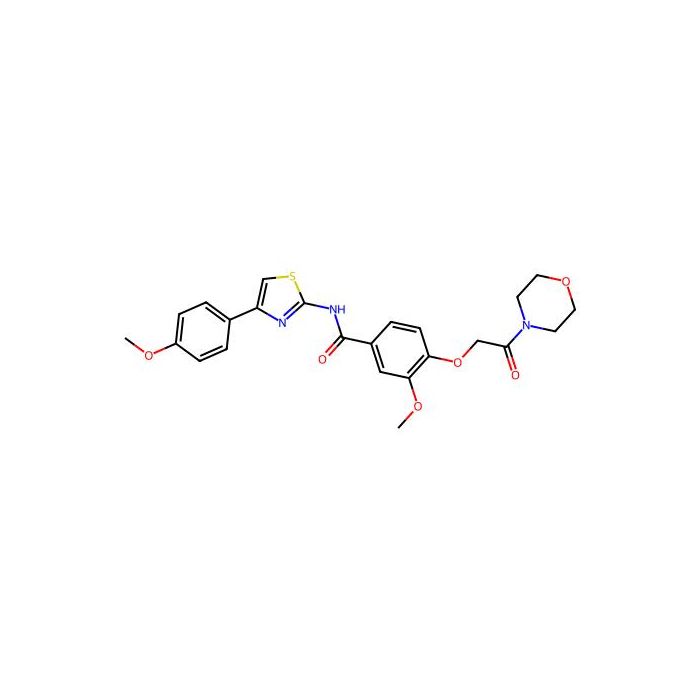
SBI-477 is a chemical probe stimulated insulin signaling by deactivating the transcription factor MondoA , leading to reduced expression of the insulin pathway suppressors thioredoxin-interacting protein (TXNIP) and arrestin domain–containing 4 (ARRDC4). SBI-477 coordinately inhibits triacylglyceride (TAG) synthesis and enhances basal glucose uptake in human skeletal myocytes.
Specifications
Especificações e pureza
Moligand™, 10 mM in DMSO
Condições de armazenamento de armazenamento
Store at -80°C
Enviado em
Dry ice packs + Cold packs
Este produto requer transporte de cadeia fria. Serviços terrestres e outros serviços econômicos não estão disponíveis.
Determine the necessary mass, volume, or concentration for preparing a solution.
Dilution Calculator
Determine the dilution needed to prepare a stock solution.
Reconstitution Calculator
Revisões
Avaliações dos Clientes
Application Protocols
No tested applications or protocol recommendations are provided in the Product Data for SBI-477.
Recommended dilutions, positive controls, and validated assay formats: Not specified for this item; refer to CoA/Spec Sheet.
General planning note: Prior to large studies, perform a small pilot to establish solubility limits, dose–response behavior, and assay compatibility at the intended vehicle percentage. Document lot number, stock concentration, and dilution scheme in your ELN to support reproducibility.
Biological Roles
Item-specific biological target, pathway, and mode-of-action information for SBI-477 are not provided in the Product Data. Therefore, no claims are made here about specific biochemical roles.
General considerations for small-molecule research ligands:
Pathway interrogation: Such compounds are commonly used to perturb signaling cascades or enzyme activities to infer causal relationships in cell biology. Proper controls (vehicle, inactive analogs) and orthogonal readouts are essential to confirm on-target effects.
Selectivity profiling: Off-target interactions can confound phenotypes. Use counter-screens and broad profiling panels when available to quantify selectivity.
Cell permeability and efflux: Potency in biochemical assays may not translate to cellular activity due to uptake, efflux transporters, or metabolism; measure intracellular exposure where possible.
Stability: Chemical and metabolic stability in assay media, microsomes, or cell lysate can impact effective concentration-time profiles.
No clinical or therapeutic claims are associated with this product. It is supplied strictly for research use only.
Buffer Applications
SBI-477 is not a buffering reagent and is not used to set or maintain solution pH.
Practical assay buffer guidance (general):
Stock preparation: Prepare concentrated stocks in anhydrous DMSO; add to the assay buffer under vigorous mixing to achieve the desired final concentration with consistent vehicle percentage across all wells/samples.
Common assay buffers:
Enzyme assays: HEPES or Tris (pH 7.0–7.5) with salt and cofactors as required by the target system.
Cell assays: Culture medium supplemented as appropriate; consider serum protein binding which can reduce free compound.
Solubility aids: 0.01–0.1% non-ionic surfactant or 0.1% BSA can mitigate precipitation for hydrophobic ligands (verify no assay interference).
Adsorption control: Include low protein binding plastics or glass vials to reduce compound loss at low nM–µM concentrations.
Item-specific buffer compatibility or pH stability data are not provided; consult the CoA/Spec Sheet and perform small-scale compatibility checks.
Green Alternatives
For small-molecule ligands used in bioassays, environmental impact primarily arises from solvent selection, plasticware usage, and waste management rather than the compound itself.
Greener handling strategies (general guidance):
Reduce DMSO load: Keep final DMSO ≤0.1–0.5% v/v where assay-tolerant; consolidate dose ranges to minimize stock volumes and waste.
Alternative solubilization: Consider aqueous carriers (e.g., hydroxypropyl-β-cyclodextrin) to reduce organic content in working solutions when compatible with the biology.
Microformat assays: Use miniaturized plate formats (384/1536-well) to lower solvent consumption and chemical waste.
Solvent choices for cleaning: Prefer ethanol/isopropanol over chlorinated solvents for bench cleanup where feasible.
Illustrative comparison (general):
DMSO (standard) vs HP-β-CD complexation (greener aqueous):
Pros (HP-β-CD): reduces organic solvent, can enhance apparent solubility and reduce precipitation in aqueous buffers.
Cons: potential interference with certain targets, may alter free concentration; requires control experiments.
Item-specific green metrics (E-factor, solvent recovery, or degradability) are not available. For scale-up or high-throughput use, coordinate with EH&S to optimize solvent capture and waste segregation.
Pharmaceutical Uses
This product is supplied for research use only and is not intended for human or veterinary use, diagnostic procedures, or clinical applications.
Potential roles in pharmaceutical R&D workflows (general, non-clinical):
Tool compound: May be employed as a probe in target validation, pathway mapping, or mechanism-of-action studies.
Assay development control: Could serve as a positive/negative control in biochemical or cell-based assays after internal qualification.
Reference standard (analytical): With appropriate characterization, can be used to develop LC–MS/MS quantitation methods in matrices for exposure or stability studies.
Regulatory notes:
No pharmacopeial monograph or excipient status is indicated for this item. Any use in regulated studies requires internal qualification and documentation of identity, purity, and stability using the lot-specific CoA and supplemental testing as needed.
Item-specific formulation roles, dosage forms, or stability-in-formulation data are not provided.
Physical Properties
Item-specific physicochemical parameters were not provided in the Product Data.
Appearance: Not specified for this item; refer to CoA/Spec Sheet.
Molecular Weight: Not specified for this item; refer to CoA/Spec Sheet.
Molecular Formula: Not specified for this item; refer to CoA/Spec Sheet.
Melting point / Boiling point: Not specified for this item; refer to CoA/Spec Sheet.
Density / Refractive index: Not specified for this item; refer to CoA/Spec Sheet.
pKa / LogP / LogD: Not specified for this item; refer to CoA/Spec Sheet.
Solubility: Not specified for this item; refer to CoA/Spec Sheet. For practical handling of bioactive ligands, anhydrous DMSO is commonly used for concentrated stocks (e.g., 10–50 mM), followed by dilution into aqueous assay buffers containing carrier protein (0.1–0.5% BSA) or surfactant as needed to mitigate precipitation (general guidance).
General laboratory considerations (literature/practice):
When exact solubility is unknown, perform a quick micro-solubility check: prepare a small DMSO stock, titrate into buffer to the intended top assay concentration at ≤1% DMSO v/v, and visually inspect for turbidity/precipitation after mixing and brief incubation (15–30 min).
If hydrophobic behavior is suspected, consider co-solvents (≤0.5–1% ethanol), cyclodextrin complexation, or tween-based surfactants in screening buffers (general guidance).
Quality and Grades
Grade/Purity (item-specific): Moligand™.
About Moligand™ (general description):
Moligand™ denotes a research-ligand grade suitable for discovery biology workflows (e.g., target validation, biochemical assays, and phenotypic screens). Lots are typically verified for identity by spectrometric methods (e.g., LC–MS, 1H NMR) and assessed for purity suitable for screening applications. Exact analytical methods and pass criteria vary by compound and are documented on the CoA/Spec Sheet.
What this means for your experiments:
For high-sensitivity studies (SPR, ITC, crystallography), you may require additional polishing or analytical confirmation (e.g., quantitative NMR, HRMS, chiral purity if relevant). Check the lot-specific CoA for the measured purity and any residual solvent content.
UV cutoff, water content, and trace metal limits are not applicable or not routinely specified for small-molecule ligands; consult the CoA if such parameters are critical for your assay design.
Item-specific clarifications:
Purity value, stabilizers, residuals: Not specified for this item; refer to CoA/Spec Sheet.
Analytical traceability: For regulated or GLP-like contexts, archive the CoA with your study records and record lot numbers in ELNs to ensure experimental reproducibility.
Reaction and Applications
This product is a life-science research ligand rather than a synthetic reagent. Consequently, classical synthetic reaction use cases (e.g., cross-couplings, Grignard chemistry) are not typically applicable.
Relevant applications in discovery biology (general guidance):
Biochemical assays: Enzyme activity/inhibition or binding studies with purified targets; determine IC50/Ki/Kd where applicable. Maintain consistent final DMSO content across controls and test wells.
Cell-based assays: Phenotypic screening, pathway reporter assays, or viability/proliferation measurements. Conduct preliminary cytotoxicity and solubility checks to define a safe concentration range.
Target engagement studies: Thermal shift (DSF), CETSA, or SPR/ITC (if solubility allows) to characterize binding.
Mechanistic profiling: Time-course studies, washout experiments, and concentration-response curves to establish potency and reversibility.
Orthogonal analytics: LC–MS-based cellular uptake and stability measurements to confirm exposure and metabolic stability in the biological matrix.
Item-specific manufacturer application notes were not provided. When designing assays, consult the CoA for any guidance on solubility, recommended solvents, or stability that would influence dose preparation and assay windows.
Reaction Conditions
Classical preparative reaction conditions are not applicable to SBI-477 in its role as a bioactive research ligand. No item-specific reaction parameters or chemical reactivity data are provided.
Stock solutions: Prepare in anhydrous DMSO (e.g., 10–50 mM) under inert atmosphere if sensitivity is suspected; store as single-use aliquots at −80°C.
Working concentrations: Common screening ranges are 0.1 nM–50 µM depending on target class and assay format; verify solubility and absence of aggregation (e.g., using detergent controls).
Temperature and time: Follow the biological assay’s requirements (e.g., 10–60 min pre-incubation for enzyme assays; 24–72 h for cell phenotypes). Protect plates from light if the compound or readout is photosensitive.
Controls: Maintain constant vehicle concentration across all wells/tubes; include positive controls where available and counter-screens to detect assay interference.
No yields, catalysts, or named chemical reaction conditions are reported for this item.
Safety and Handling
Authoritative safety information is provided in the product SDS; always consult the SDS before use.
GHS classification (item-specific): Not specified for this item; refer to SDS.
Signal Word / H-Statements / Pictograms: Not specified for this item; refer to SDS.
General laboratory safety (good practice for small-molecule ligands):
PPE: Lab coat, safety glasses, and appropriate chemically resistant gloves (e.g., nitrile). Avoid inhalation, ingestion, and skin contact. Handle powders and aliquoting in a fume hood.
Storage incompatibilities: Keep away from strong oxidizers and strong acids/bases unless compatibility is known. Protect from moisture and light as a precaution.
Cryostorage risks: Product is stored at ultra-low temperature (−80°C). Use cryo-resistant gloves; avoid frostbite. Thaw only what is needed; minimize freeze–thaw cycles to prevent degradation.
Hygroscopic/photo/oxidative sensitivity: Not specified for this item; as a precaution, work under dry air or nitrogen when preparing stock solutions, and store aliquots in amber vials to limit light exposure (general guidance).
First aid (overview): In case of skin/eye contact, rinse with water for at least 15 minutes; remove contaminated clothing. If inhaled, move to fresh air. If ingested or in any exposure incident, seek medical attention and show the SDS.
Waste disposal: Dispose according to institutional chemical waste procedures and local regulations; avoid drain disposal unless explicitly permitted by EH&S.
Solvent Selection
As a bioactive small-molecule ligand, SBI-477 is commonly handled as a concentrated stock in polar aprotic organic solvent and then diluted into assay buffers.
Primary stock solvent (practice): Anhydrous DMSO is the default for many screening ligands due to broad solubilizing power and buffer compatibility at ≤0.1–1% v/v (general guidance).
Secondary solvents: Ethanol or DMF can be used for pre-dissolution when DMSO solubility is limited; ensure assay compatibility and maintain low final solvent content.
Aqueous dilution: Add stock solution slowly to vigorously mixed buffer to avoid local supersaturation. Include carriers (e.g., 0.1% BSA) or gentle surfactants if precipitation is observed.
Material compatibility: Use solvent-resistant plastics (polypropylene, FEP) or glass for DMSO stocks; avoid polystyrene where adsorption/leaching can occur.
Comparison (general considerations):
DMSO vs ethanol: DMSO offers broader solubility but can affect certain enzyme activities at >1% v/v. Ethanol may be preferred for alcohol-tolerant assays but has higher volatility and different extraction into plastics.
DMSO vs DMF: DMF is harsher and less biocompatible; prefer DMSO unless compelling solubility gains are demonstrated.
Item-specific solubility, partitioning (logP/logD), and pKa are not provided; perform a small-scale solubility/turbidity test in your relevant buffer to confirm working concentrations.
Storage and Reconstitution
Storage conditions (item-specific): Store at −80°C.
Shipping (item-specific): Shipped on dry ice packs + cold packs.
Appearance: Not specified for this item; refer to CoA/Spec Sheet.
Reconstitution and handling (general guidance for small-molecule ligands):
Allow the container to equilibrate to room temperature in a desiccator before opening to prevent condensation ingress.
Prepare concentrated stock solutions in anhydrous DMSO (typical 10–50 mM). Vortex and, if needed, sonicate briefly. If insoluble, consider gentle warming (≤40°C) and re-check upon cooling.
Pass solutions through a PTFE syringe filter (0.22 µm) only if particulate is observed and the compound is known to be stable; be mindful of potential adsorption losses at low concentrations.
Aliquot stocks into amber, solvent-resistant vials or PCR tubes to minimize headspace and freeze–thaw cycles. Store aliquots at −80°C.
Avoid repeated freeze–thaw; thaw an aliquot immediately before use and keep on ice during assay setup.
Working solutions in aqueous buffers are typically prepared fresh and used the same day. If short-term storage is necessary, validate stability at 4°C and protect from light as appropriate.
Item-specific stability, hygroscopicity, and light sensitivity: Not specified for this item; refer to CoA/Spec Sheet.
Structure and Identity
Brief overview: SBI-477 is a small-molecule research ligand supplied under Aladdin’s Moligand™ line for life-science research.
Product identifiers (item-specific):
SKU: S1495598
Product Name: SBI-477
CAS: 781628-99-7
PubChem CID: 2469116
InChIKey: Not specified for this item; refer to CoA/Spec Sheet.
SMILES: Not specified for this item; refer to CoA/Spec Sheet.
Molecular Formula: Not specified for this item; refer to CoA/Spec Sheet.
Molecular Weight: Not specified for this item; refer to CoA/Spec Sheet.
Structure description:
A 2D/3D structure depiction and functional-group annotation are not available in the provided Product Data. Consult the CoA/Spec Sheet or the cited PubChem CID for structural visuals when planning analytical methods (e.g., LC–MS transitions, chromatographic selection).
Stereochemistry/tautomerism:
Not specified for this item; refer to CoA/Spec Sheet.
Notes for identity confirmation (general guidance):
Typical identity confirmation for small-molecule ligands includes LC–MS (ESI±), 1H/13C NMR, and HRMS where applicable. If you intend to develop new analytical methods, acquire a reference spectrum set from the CoA or request additional data from Technical Support.
Synthetic Utility
SBI-477 is offered as a finished small-molecule ligand for biological research, not as a synthetic building block.
As a reagent or intermediate: Not typically applicable; no functional-group guidance or protecting-group strategy is provided for this item.
Derivatization: If analog synthesis or biotin/fluorophore tagging is desired for assay development, obtain structural details (CoA or primary literature associated with the CAS/CID) to design appropriate linkers and maintain activity.
Analytical characterization: For any derivatization work, confirm identity and purity by LC–MS and NMR, and reassess biological activity to ensure modifications have not disrupted target engagement.
Item-specific functional groups, reactive handles, or synthetic transformations are not specified; consult structural references linked to CAS 781628-99-7 or PubChem CID 2469116 if synthetic campaigns are planned.
Target Specificity
Item-specific target, pathway, or binding data for SBI-477 are not provided in the Product Data.
Antigen/target name: Not specified for this item; refer to CoA/Spec Sheet.
Mechanism or mode of action: Not specified for this item; refer to CoA/Spec Sheet.
Species reactivity/selectivity: Not specified for this item; refer to CoA/Spec Sheet.
For experimental planning (general guidance):
Establish putative targets from primary literature associated with CAS 781628-99-7 or PubChem CID 2469116, then qualify activity in-house with biochemical and cellular assays.
Incorporate orthogonal target-engagement methods (e.g., CETSA, DSF, SPR/ITC) and counter-screens to assess selectivity and off-target liabilities.
Need help choosing the grade?
Our grade selection guide covers purity, stabilizer status, and application suitability for all variants in our catalog.
We use cookies to ensure the website functions properly and, where permitted, to improve your experience. You can manage your preferences at any time in Settings. Learn more in our Cookie Policy.
Shall we send you a message when we have discounts available?
Remind me later
Thank you! Please check your email inbox to confirm.
Products are supplied to verified businesses, institutions, and qualified professionals for research and development use only. Not for use in humans, animals, diagnosis, or therapy.