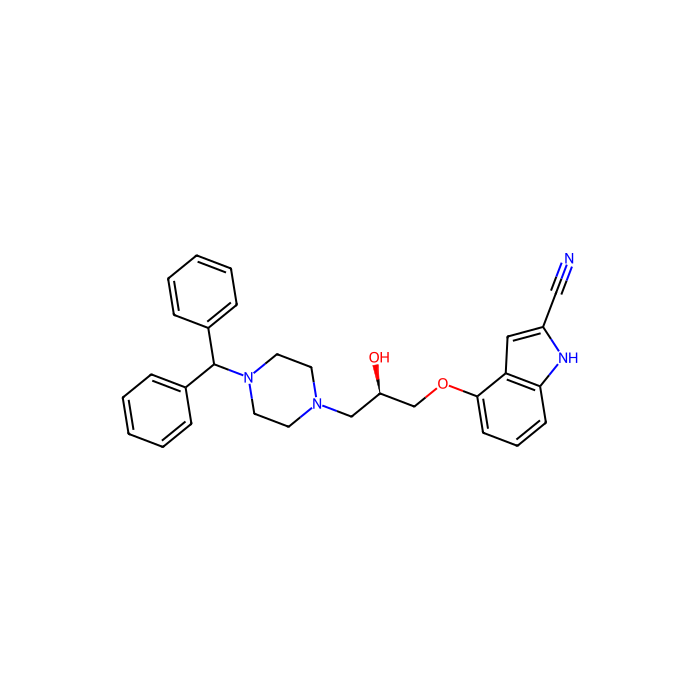
Soluble in DMSO (25 mg/ml), and ethanol (10 mg/ml).
Índice de refração
n20D1.69 (Predicted)
Ponto de ebulição (°C)
702.59° C at 760 mmHg (Predicted)
Ponto de fusão (°C)
282.96° C (Predicted)
Calculadoras de soluções
Molarity Calculator
Determine the necessary mass, volume, or concentration for preparing a solution.
Dilution Calculator
Determine the dilution needed to prepare a stock solution.
Reconstitution Calculator
Revisões
Avaliações dos Clientes
Application Protocols
No manufacturer-tested application protocols are provided for this SKU.
General guidance for small-molecule screening (not item-specific):
Stock preparation: Make 10–50 mM DMSO stocks; aliquot into low-bind tubes or 96/384-well source plates. Store frozen to avoid repeated freeze–thaw.
Serial dilutions: Perform in DMSO for the top few steps to maintain accuracy, then dilute into assay buffer to achieve final solvent ≤0.5–1% v/v.
Controls: Include vehicle controls and, if available, literature reference compounds. Validate assay window and Z′ factor prior to full runs.
Plate handling: Minimize edge effects (equilibrate plates to room temperature, use humidified incubators). Gently mix after addition to avoid precipitation.
Data integrity: Track lot numbers, preparation dates, and concentrations. Confirm identity and purity by LC/LC-MS before critical experiments.
Biological Roles
Item-specific biological roles and targets are not provided for this SKU. No medical or clinical claims are made; this material is supplied strictly for research use only.
General/literature context (not item-specific):
SDZ-201106 has been cited in the literature as a bioactive small molecule used in neuropharmacology and receptor/ion-channel studies. The exact molecular targets, potency, and selectivity can vary by enantiomer and study; consult peer-reviewed sources for details relevant to your application and verify that they correspond to the (+) enantiomer when that is required.
Enantioselectivity: The biological activity of many chiral small molecules is enantiomer-dependent due to chiral recognition at protein binding sites. If your experimental design depends on a specific stereochemical configuration, confirm enantiomeric purity by chiral HPLC and, where applicable, by optical rotation.
ADME/stability in vitro: For mechanistic cell-based studies, pre-validate stability in assay media (protein binding, serum presence, and pH) and check for adsorption to plastics. These are system-dependent and should be empirically determined.
Recommendation:
Define a stability-indicating analytical method before biological testing. Include vehicle controls and consider testing both racemate and resolved enantiomers if literature data are racemate-based.
Buffer Applications
This compound is not a buffering agent and is not typically used to prepare buffer systems. For biological assays, it is usually introduced as a DMSO stock and then diluted into pre-made buffers appropriate to the assay (e.g., HEPES, PBS, Tris). Ensure the final organic solvent content (DMSO/EtOH/ACN) is within assay tolerance and does not perturb buffer pH or ionic strength.
Practical tips (general):
Prepare high-concentration DMSO stocks (e.g., 10–50 mM) to minimize the volume added to buffers.
Pre-warm buffers to room temperature to reduce precipitation on dilution.
If precipitation occurs, adjust dilution order (add compound stock to buffer slowly with mixing) or incorporate a small amount of co-solvent compatible with the assay.
Green Alternatives
This product is a discrete small molecule rather than a solvent or reagent class with obvious greener surrogates. Green chemistry considerations still apply to how you handle and formulate it in the lab:
Greener dissolution strategies:
Use the minimum DMSO necessary for solubilization; target ≤0.5–1% DMSO in final assay wells to reduce solvent burden.
Favor ethanol or water-miscible bio-based co-solvents where compatible with assay biology. Validate stability before substitution.
Waste minimization:
Prepare right-sized aliquots to minimize expired stock disposal.
Use 384-/1536-well formats to reduce per-assay mass consumption when screening.
Safer analytics:
Employ LC-MS mobile phases with lower organic content where feasible; consider ACN over MeOH for reduced energy in solvent recovery (tradeoffs exist).
Supply chain and documentation:
Retain CoA/SDS and stability data to avoid unnecessary re-synthesis or re-ordering due to avoidable degradation.
Tradeoffs (general):
DMSO is often unavoidable for hydrophobic probes; while not “green,” its high boiling point and low vapor pressure reduce inhalation exposure but complicate rinsing and waste treatment. Balance with assay needs and institutional green-lab initiatives.
Pharmaceutical Uses
No pharmacopeial/excipient role or formulation monograph is provided for this SKU. This product is offered strictly for research use only and is not intended for human or veterinary use, diagnostic procedures, or as a drug substance/excipient.
General considerations for researchers engaged in pre-formulation studies (not item-specific):
Solubility profiling: Determine kinetic and thermodynamic solubility across pH 2–9 and in common biorelevant media if your research requires it.
Solid form: If multiple solid forms exist (free base vs. salt, polymorphs), characterize via XRPD/DSC/TGA. This listing does not specify a particular form.
Stability: Conduct forced-degradation screens (light, heat, oxidative, pH) to understand intrinsic stability and to guide storage/handling during experiments.
Vehicles for in vivo research are outside the scope of this catalog entry; follow institutional IACUC and regulatory requirements and consult primary literature for any solvent/vehicle system selections.
Physical Properties
Item-specific numerical properties:
Molecular weight: Not specified for this item; refer to CoA/Spec Sheet.
Molecular formula: Not specified for this item; refer to CoA/Spec Sheet.
Appearance: Not specified for this item; refer to CoA/Spec Sheet.
Melting point: Not specified for this item; refer to CoA/Spec Sheet.
Boiling point: Not specified for this item; refer to CoA/Spec Sheet.
Density: Not specified for this item; refer to CoA/Spec Sheet.
Solubility: Not specified for this item; refer to CoA/Spec Sheet.
LogP, pKa, refractive index, UV cutoff: Not specified for this item; refer to CoA/Spec Sheet.
General/literature guidance (not item-specific):
Many bioactive small molecules similar to SDZ-201106 dissolve well in polar aprotic solvents (DMSO, DMF) and variably in alcohols or acetonitrile. Water solubility is often limited unless salt forms are used.
If the compound is crystalline, a sharp melting point can aid identity confirmation; polymorphism may broaden transitions.
For assay preparation, determine practical solubility by incremental DMSO addition and mild sonication; avoid heating above 40–50 C to prevent decomposition unless stability is documented.
If UV-visible characterization is needed, record a spectrum in MeOH or acetonitrile; report λmax values and extinction coefficients as measured for your lot.
Notes on chirality:
The (+) designation implies a positive optical rotation under specified conditions; always match solvent, temperature, and concentration when comparing with literature or CoA values.
Quality and Grades
Grade/purity: Not specified for this item; refer to CoA/Spec Sheet.
How to interpret quality for this SKU (general guidance for screening compounds):
For small-molecule libraries, quality is typically supported by: (a) HPLC purity (UV/ELSD) with chromatograms, (b) 1H NMR (and often 13C NMR), (c) HRMS or accurate mass, and (d) water/volatiles by KF/TGA if hygroscopicity is a concern.
For chiral items labeled as (+), enantiomeric purity should be provided (chiral HPLC or SFC) and, where applicable, an optical rotation with full conditions. Because the CAS given corresponds to the racemate (97730-95-5), confirm that the supplied batch has the stated enantiomeric form and ee.
If a stabilizer or salt form is used to improve handling or stability, it should be disclosed on the CoA. No stabilizer is specified for this item.
Recommended acceptance criteria (example framework; consult your QC SOPs):
Identity match by NMR/HRMS.
Purity ≥95% by HPLC at two wavelengths (literature expectation for screening-grade materials; actual spec may differ — defer to CoA).
Enantiomeric excess documented for the (+) form.
Low-UV or LCMS-grade solvents should be used for analytical verification to avoid artefacts.
Reaction and Applications
This SKU is offered as a bioactive small-molecule research tool, not primarily as a synthetic reagent. No manufacturer reaction applications are provided for this item.
General research uses (literature-level, non-item-specific):
SDZ-201106 and related analogs have been used as probe molecules in receptor/ion-channel pharmacology and neurochemical studies (consult primary literature for the exact target profile and enantiomer-specific data). Because this listing denotes the (+) form while the CAS is racemic, activity may be enantioselective; verify which enantiomer is intended for your study.
Typical workflows: preparation of DMSO stocks (e.g., 10 mM), serial dilution in assay buffer, and evaluation in plate-based functional or binding assays. Ensure final DMSO is within assay-tolerated limits (commonly ≤0.5–1% v/v).
Analytical support: establish a stability-indicating LC method to monitor purity during storage and assay incubation (time-course sampling at 0, 2, 4, 24 h at ambient and 37 C).
Controls: include vehicle controls and, where available, literature tool comparators. If literature provides the racemate potency, assess both enantiomers when feasible.
Notes on handling:
Avoid repeated freeze-thaw of stock plates; aliquot into single-use portions.
Verify compound identity and enantiomeric composition for each lot received before key experiments.
Reaction Conditions
No reaction conditions are specified for this SKU, as it is offered as a research probe rather than a reagent for carrying out chemical transformations.
If your project involves preparing solutions or conducting derivatization (general guidance; not item-specific):
Stock solution preparation: Dissolve to 10–50 mM in anhydrous DMSO under ambient conditions; sonicate gently if needed. Filter through 0.22–0.45 µm PTFE if particulate is observed.
Stability checks: Evaluate solution stability at room temperature and 4–8 C over 24–72 h by HPLC/LC-MS. For longer-term storage, keep aliquots at −20 C protected from light (general practice for small molecules; confirm with your stability data).
Avoid strong acids/bases and oxidants unless the scaffold is known to be stable. Where derivatization is planned, select conditions that do not racemize chiral centers.
Assay execution (general):
Typical incubation temperatures: ambient to 37 C; time from minutes to hours, depending on assay design. Always include solvent controls matching the highest vehicle percentage used.
Safety and Handling
Item-specific hazard information:
GHS classification: Not specified for this item; refer to SDS.
Signal word: Not specified for this item; refer to SDS.
H-statements/Pictograms: Not specified for this item; refer to SDS.
General laboratory safety (non-clinical, research use only):
Handle in a chemical fume hood wearing appropriate PPE: lab coat, safety glasses, and disposable nitrile gloves. Avoid inhalation of dust/aerosols and contact with skin/eyes.
Prevent ingestion; this bioactive small molecule should be treated as acutely toxic until data indicate otherwise. Do not pipette by mouth. Wash thoroughly after handling.
Incompatibilities: Avoid strong oxidizers and reducing agents unless stability is documented. Keep away from heat, sparks, and open flame when using organic solvents.
First aid (overview; defer to SDS): If inhaled, move to fresh air; seek medical attention if symptoms persist. On skin contact, wash with soap and water. On eye contact, rinse cautiously with water for several minutes and remove contact lenses if present and easy to do; seek medical advice. If swallowed, rinse mouth; do not induce vomiting unless directed by medical personnel.
Spill response: Absorb with inert material (vermiculite, diatomaceous earth). Clean area with suitable solvent while maintaining ventilation.
Waste: Dispose of as organic hazardous waste per institutional and local regulations.
Solvent Selection
This product is a bioactive small molecule rather than a solvent. The following guidance addresses dissolving and handling for screening and stock preparation (general/literature guidance; not item-specific):
Primary solvent: DMSO is typically preferred for preparing concentrated stocks (e.g., 10–50 mM), given broad solvating power and assay compatibility at low final percentages.
Co-solvents: If DMSO alone is insufficient, consider DMF or NMP for primary dissolution, followed by dilution with aqueous buffers containing small percentages of DMSO/ethanol. Acetonitrile or ethanol can aid in intermediate dilutions.
Aqueous buffers: Direct water solubility may be limited. Use mixed solvent systems (e.g., 1–5% DMSO in buffer) and surfactants (0.01–0.1% Tween-80) if compatible with the assay.
pH adjustment: If ionizable groups are present (check CoA/literature), modest pH adjustment can enhance solubility. Avoid extreme pH unless the compound’s stability is established.
Filtration: Use PTFE or PVDF syringe filters (0.22–0.45 µm). Avoid adsorptive membranes (nylon, PES) for highly lipophilic compounds.
Light/adsorption: Use amber vials and minimize contact with untreated polystyrene. Glass or low-bind PP recommended.
Ethanol/MeOH: good for intermediate dilutions; volatility may complicate plate uniformity.
Acetonitrile: miscible; often used in LC; cytotoxicity can limit biological assays.
Storage and Reconstitution
Storage conditions (from Product Data): Store at room temperature. Ship under normal conditions.
Container: Keep tightly closed in a dry, well-ventilated place. Use amber vials if the compound is light-sensitive (confirm with your stability data).
Stability: Not specified for this item; refer to CoA/Spec Sheet. Establish an internal re-test date based on periodic purity checks by HPLC/LC-MS.
Reconstitution and working solutions (general guidance; not item-specific):
Reconstitution solvent: DMSO is typically suitable for initial dissolution; target 10–50 mM stocks. If needed, use DMF or NMP, then back-dilute into aqueous buffers.
Filtration: If particulates are present, filter through a 0.22–0.45 µm PTFE syringe filter.
Aliquoting: Prepare single-use aliquots to avoid freeze–thaw cycles. Label with concentration, solvent, date, and lot.
Short-term handling: Keep working solutions at ambient temperature only as long as necessary for dispensing. Protect from prolonged light exposure if chromophoric.
Long-term storage of stocks: Commonly −20 C in DMSO with desiccation and light protection; verify stability for your lot experimentally.
Note: All unspecified attributes (appearance, purity grade, exact identity parameters) should be taken from the batch-specific CoA/Spec Sheet and SDS.
Structure and Identity
Product name: SDZ-201106 (+)
CAS: 97730-95-5 (racemic) — note: the listed CAS corresponds to the racemate; this SKU name indicates the (+) enantiomer. Verify enantiomeric assignment on the CoA.
CID: 10389826 (literature identifier for SDZ-201106 family; confirm exact isomer in the CoA/Spec Sheet).
Molecular formula: Not specified for this item; refer to CoA/Spec Sheet.
Molecular weight: Not specified for this item; refer to CoA/Spec Sheet.
InChIKey: Not specified for this item; refer to CoA/Spec Sheet.
SMILES: Not specified for this item; refer to CoA/Spec Sheet.
Structural notes (general/literature):
SDZ-201106 is reported in the literature as a chiral, small organic molecule used as a bioactive research tool. The exact 2D scaffold and stereocenter configuration should be confirmed against the provided CoA.
Because this listing denotes the (+) enantiomer while the CAS given is racemic, users should rely on: (a) enantiomeric excess (ee) by chiral HPLC, (b) optical rotation sign and magnitude, and (c) NMR/HRMS structural confirmation in the batch-specific CoA.
Recommended orthogonal checks: 1H/13C NMR, HRMS, HPLC purity, and chiral HPLC for enantioenrichment. If an optical rotation is reported, confirm solvent, temperature, and concentration conditions.
For plate-based screening libraries, barcode/lot traceability and identity reconfirmation on receipt are good practice.
Synthetic Utility
This item is supplied as a finished bioactive small molecule and is not primarily intended as a general-purpose synthetic reagent or building block. No functional-group–specific reactivity or named-reaction roles are provided in the product data.
General guidance if derivatization is contemplated (not item-specific):
Confirm the exact structure and functional groups from the CoA before planning analog synthesis (e.g., positions amenable to substitution, presence of heteroatoms, or handles for amide/carbamate formation).
Protect stereochemistry: For a chiral scaffold labeled as (+), plan routes that preserve configuration (use mild conditions, avoid racemization) or intentionally provide access to both enantiomers for SAR.
Analytics: Implement chiral HPLC/SFC to monitor enantiopurity throughout synthesis. Establish a stability-indicating LC method to track impurities and oxidative byproducts.
If scaling up, perform a solvent/temperature sensitivity assessment to avoid decomposition and to optimize yields.
For routine synthesis tasks, consider purchasing the appropriate intermediates or starting materials instead of modifying this finished compound.
Target Specificity
No target, pathway, or specificity data are provided for this catalog item. If you require a specific target engagement profile for SDZ-201106 (+), consult the primary literature and verify that the reported data correspond to the same enantiomer and lot. Consider performing your own profiling (e.g., receptor panel, ion-channel assays, or enzymatic screens) with proper controls and confirmatory orthogonal readouts.
We use cookies to ensure the website functions properly and, where permitted, to improve your experience. You can manage your preferences at any time in Settings. Learn more in our Cookie Policy.
Shall we send you a message when we have discounts available?
Remind me later
Thank you! Please check your email inbox to confirm.
Products are supplied to verified businesses, institutions, and qualified professionals for research and development use only. Not for use in humans, animals, diagnosis, or therapy.