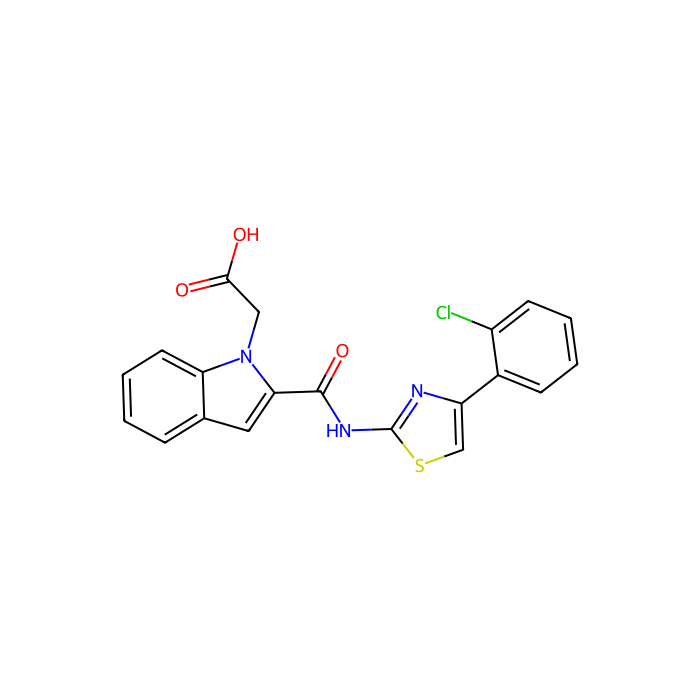
SR 27897 (Lintitript) - Moligand™, ≥98% , Antagonist of CCK 1 receptor, CAS No.136381-85-6, Antagonist of CCK 1 receptor

CAS: 136381-85-6 Cat. No.: S276166 Fórmula: C20H14ClN3O3S Peso molecular: 411.86 PubChem CID: 122077
Disponível para encomenda
GRADE & PURITY Moligand™ ? Moligand™ — Aladdin's line of ligands and bioactive small molecules. Use for receptor, pathway, and binding studies needing defined small-molecule tools. ≥98%
Synonyms
SCHEMBL27123 | Lintitript | NSC_122077 | SR 27897 | AKOS024456979 | Tox21_112581 | SR27897 | SR-27897 | HY-101764 | Empimin op70 | CCG-221891 | HMS3742K11 | DB04867 | E98664 | 1H-Indole-1-aceticacid,2-[[[4-(2-chlorophenyl)-2-thiazolyl]amino]carbonyl]- | H
Storage
Store at -20°C
Shipped In
Ice chest + Ice pads
★
Size
Alemanha (EU)
USA*
Price
Qty
1mg
S276166-1mg
—
3 Em stock

104,04€

156,11€
Gravar 52,06 € (33.35%)
5mg
S276166-5mg
—
3 Em stock

275,85€

413,82€
Gravar 137,97 € (33.34%)
10mg
S276166-10mg
—
2 Em stock

433,78€

650,72€
Gravar 216,93 € (33.34%)
25mg
S276166-25mg
—
2 Em stock

868,52€

1303,26€
Gravar 434,74 € (33.36%)
50mg
S276166-50mg
—
2 Em stock

1444,70€

2167,53€
Gravar 722,83 € (33.35%)
Enter a quantity for the sizes you want to add.
🧪
Why this grade

Moligand™, ≥98% Moligand™ for sensitive chromatographic and analytical workflows requiring minimal baseline interference.

🌡

Storage & shipping

Store at -20°C Ships Ice chest + Ice pads Check lot-specific COA for exact specifications.

📋

Quality documents

SDS, COA, datasheet, and spec sheet available for download. Lot-specific COA accessible via lot number lookup.

📚

Literature proof

Cited in 0 peer-reviewed publications across chromatography, organic synthesis, and cross-coupling reactions.

Visão geral

Explanation:

Lintitript (SR 27897) is a highly potent, selective, orally active, competitive and non-peptide cholecystokinin (CCK1) receptor antagonist with an EC50 of 6 nM and a Ki of 0.2 nM. Lintitript displays > 33-fold selectivity more selective for CCK1 than CCK2 receptors (EC50 value of 200 nM). Lintitript increases plasma concentration of leptin and food intake as well as plasma concentration of insulin。

Specifications

Sinónimos
SCHEMBL27123 | Lintitript | NSC_122077 | SR 27897 | AKOS024456979 | Tox21_112581 | SR27897 | SR-27897 | HY-101764 | Empimin op70 | CCG-221891 | HMS3742K11 | DB04867 | E98664 | 1H-Indole-1-aceticacid,2-[[[4-(2-chlorophenyl)-2-thiazolyl]amino]carbonyl]- | H
Especificações e pureza
Moligand™, ≥98%
Mecanismos bioquímicos e fisiológicos
Highly potent, selective, competitive, non-peptide CCK 1 receptor antagonist (K i = 0.2 nM). Increases plasma leptin levels. Shows central effects. Stimulates food intake in vivo. Orally active.
Condições de armazenamento de armazenamento
Store at -20°C
Enviado em
Ice chest + Ice pads
Este produto requer transporte de cadeia fria. Serviços terrestres e outros serviços econômicos não estão disponíveis.
Grau
Moligand™
Tipo de ação
ANTAGONIST
Mecanismo de ação
Antagonist of CCK 1 receptor
Nota
Wherever possible, you should prepare and use solutions on the same day. However, if you need to make up stock solutions in advance, we recommend that you store the solution as aliquots in tightly sealed vials at -20°C. Generally, these will be useable for up to one month. Before use, and prior to opening the vial we recommend that you allow your product to equilibrate to room temperature for at least 1 hour. Need more advice on solubility, usage and handling? Please visit our frequently asked questions (FAQ) page for more details.
Pureza
≥98%
Nomes e identificadores
Pubchem Sid
Pubchem Sid Url
https://pubchem.ncbi.nlm.nih.gov/substance/504756860
Sorrisos canónicos
C1=CC=C2C(=C1)C=C(N2CC(=O)O)C(=O)NC3=NC(=CS3)C4=CC=CC=C4Cl
IUPAC Name
2-[2-[[4-(2-chlorophenyl)-1,3-thiazol-2-yl]carbamoyl]indol-1-yl]acetic acid
InChIKey
ILNRQFBVVQUOLP-UHFFFAOYSA-N
INCHI
1S/C20H14ClN3O3S/c21-14-7-3-2-6-13(14)15-11-28-20(22-15)23-19(27)17-9-12-5-1-4-8-16(12)24(17)10-18(25)26/h1-9,11H,10H2,(H,25,26)(H,22,23,27)
SMILES isoméricas
C1=CC=C2C(=C1)C=C(N2CC(=O)O)C(=O)NC3=NC(=CS3)C4=CC=CC=C4Cl
PubChem CID
122077
Peso molecular
411.86

Documentation

📋 Safety Data Sheet (SDS)

Comprehensive hazard, handling, storage, and regulatory compliance document.

Download SDS →

✅ Certificate of Analysis (COA)

Lot-specific quality data. Enter your lot number to retrieve the exact COA.

Look up COA →

📊 Datasheet

Quick-reference summary of product specifications and applications.

View datasheet →

🔬 Specification Sheet

Full quality attributes and acceptance criteria for this grade.

View spec sheet →

Advanced Data

Taxonomic Classification

Taxonomy Tree

KingdomOrganic compounds
SuperclassOrganoheterocyclic compounds
ClasseIndoles and derivatives
SubclassIndolyl carboxylic acids and derivatives
Intermediate Tree Nodes Not available
Direct ParentIndolyl carboxylic acids and derivatives
Alternative Parents Alpha amino acids and derivatives  N-alkylindoles  Indoles  2,4-disubstituted thiazoles  Chlorobenzenes  Substituted pyrroles  Aryl chlorides  Heteroaromatic compounds  Propargyl-type 1,3-dipolar organic compounds  Azacyclic compounds  Monocarboxylic acids and derivatives  Carboximidic acids  Carboxylic acids  Hydrocarbon derivatives  Carbonyl compounds  Organic oxides  Organochlorides  Organonitrogen compounds  Organopnictogen compounds  
Molecular FrameworkAromatic heteropolycyclic compounds
Substituents Indolyl carboxylic acid derivative - Alpha-amino acid or derivatives - N-alkylindole - Indole - 2,4-disubstituted 1,3-thiazole - Chlorobenzene - Halobenzene - Aryl chloride - Aryl halide - Monocyclic benzene moiety - Benzenoid - Substituted pyrrole - Azole - Heteroaromatic compound - Thiazole - Pyrrole - Azacycle - Carboximidic acid - Carboximidic acid derivative - Carboxylic acid derivative - Carboxylic acid - Organic 1,3-dipolar compound - Propargyl-type 1,3-dipolar organic compound - Monocarboxylic acid or derivatives - Organopnictogen compound - Organic oxygen compound - Organic oxide - Hydrocarbon derivative - Organic nitrogen compound - Organooxygen compound - Organonitrogen compound - Carbonyl group - Organohalogen compound - Organochloride - Aromatic heteropolycyclic compound
DescriçãoThis compound belongs to the class of organic compounds known as indolyl carboxylic acids and derivatives. These are compounds containing a carboxylic acid chain (of at least 2 carbon atoms) linked to an indole ring.
External Descriptors Not available
Estrutura 3D
Modelo de Estrutura Química Interativa


Alvos associados (humanos)
CCKAR Tclin Cholecystokinin receptor type A (3 Activities)
Activity TypeActivity Value -log(M)Mechanism of ActionActivity ReferencePublications (PubMed IDs)
ABL1 Tclin Tyrosine-protein kinase ABL (18331 Activities)
Activity TypeRelationActivity valueUnitsAction TypeJournalPubMed IddoiAssay Aladdin ID
ADRB2 Tclin Beta-2 adrenergic receptor (11824 Activities)
Activity TypeRelationActivity valueUnitsAction TypeJournalPubMed IddoiAssay Aladdin ID
ADRA2A Tclin Alpha-2a adrenergic receptor (9450 Activities)
Activity TypeRelationActivity valueUnitsAction TypeJournalPubMed IddoiAssay Aladdin ID
VDR Tclin Vitamin D receptor (26531 Activities)
Activity TypeRelationActivity valueUnitsAction TypeJournalPubMed IddoiAssay Aladdin ID
AGTR1 Tclin Type-1 angiotensin II receptor (5176 Activities)
Activity TypeRelationActivity valueUnitsAction TypeJournalPubMed IddoiAssay Aladdin ID
GSK3B Tclin Glycogen synthase kinase-3 beta (11785 Activities)
Activity TypeRelationActivity valueUnitsAction TypeJournalPubMed IddoiAssay Aladdin ID
CSNK1D Tchem Casein kinase I delta (4546 Activities)
Activity TypeRelationActivity valueUnitsAction TypeJournalPubMed IddoiAssay Aladdin ID
S1PR1 Tclin Sphingosine 1-phosphate receptor Edg-1 (5806 Activities)
Activity TypeRelationActivity valueUnitsAction TypeJournalPubMed IddoiAssay Aladdin ID
CDK2 Tchem Cyclin-dependent kinase 2 (9050 Activities)
Activity TypeRelationActivity valueUnitsAction TypeJournalPubMed IddoiAssay Aladdin ID
GLP1R Tclin Glucagon-like peptide 1 receptor (111429 Activities)
Activity TypeRelationActivity valueUnitsAction TypeJournalPubMed IddoiAssay Aladdin ID
C5AR1 Tclin C5a anaphylatoxin chemotactic receptor (2677 Activities)
Activity TypeRelationActivity valueUnitsAction TypeJournalPubMed IddoiAssay Aladdin ID
AURKA Tchem Serine/threonine-protein kinase Aurora-A (10240 Activities)
Activity TypeRelationActivity valueUnitsAction TypeJournalPubMed IddoiAssay Aladdin ID
U2OS (164939 Activities)
Activity TypeRelationActivity valueUnitsAction TypeJournalPubMed IddoiAssay Aladdin ID
CX3CR1 Tchem C-X3-C chemokine receptor 1 (1686 Activities)
Activity TypeRelationActivity valueUnitsAction TypeJournalPubMed IddoiAssay Aladdin ID
FPR2 Tchem Lipoxin A4 receptor (3472 Activities)
Activity TypeRelationActivity valueUnitsAction TypeJournalPubMed IddoiAssay Aladdin ID
FFAR4 Tchem G-protein coupled receptor 120 (2999 Activities)
Activity TypeRelationActivity valueUnitsAction TypeJournalPubMed IddoiAssay Aladdin ID
BRD4 Tchem Bromodomain-containing protein 4 (13122 Activities)
Activity TypeRelationActivity valueUnitsAction TypeJournalPubMed IddoiAssay Aladdin ID
GPR35 Tchem G-protein coupled receptor 35 (2643 Activities)
Activity TypeRelationActivity valueUnitsAction TypeJournalPubMed IddoiAssay Aladdin ID
GMNN Tbio Geminin (128009 Activities)
Activity TypeRelationActivity valueUnitsAction TypeJournalPubMed IddoiAssay Aladdin ID
PMP22 Tbio Peripheral myelin protein 22 (699 Activities)
Activity TypeRelationActivity valueUnitsAction TypeJournalPubMed IddoiAssay Aladdin ID
USP1 Tchem Ubiquitin carboxyl-terminal hydrolase 1 (22556 Activities)
Activity TypeRelationActivity valueUnitsAction TypeJournalPubMed IddoiAssay Aladdin ID
MEN1 Tchem Menin/Histone-lysine N-methyltransferase MLL (48157 Activities)
Activity TypeRelationActivity valueUnitsAction TypeJournalPubMed IddoiAssay Aladdin ID
TRIM24 Tchem Transcription intermediary factor 1-alpha (2087 Activities)
Activity TypeRelationActivity valueUnitsAction TypeJournalPubMed IddoiAssay Aladdin ID
BRPF1 Tchem Peregrin (2217 Activities)
Activity TypeRelationActivity valueUnitsAction TypeJournalPubMed IddoiAssay Aladdin ID
HEK-293T (167025 Activities)
Activity TypeRelationActivity valueUnitsAction TypeJournalPubMed IddoiAssay Aladdin ID
Alvos associados (não humanos)
Cckar Cholecystokinin A receptor (90 Activities)
Activity TypeRelationActivity valueUnitsAction TypeJournalPubMed IddoiAssay Aladdin ID
Aplnr Apelin receptor (201 Activities)
Activity TypeRelationActivity valueUnitsAction TypeJournalPubMed IddoiAssay Aladdin ID
Mapk1 MAP kinase ERK2 (650 Activities)
Activity TypeRelationActivity valueUnitsAction TypeJournalPubMed IddoiAssay Aladdin ID
Hdac6 Histone deacetylase 6 (222 Activities)
Activity TypeRelationActivity valueUnitsAction TypeJournalPubMed IddoiAssay Aladdin ID
Fgfr3 Fibroblast growth factor receptor 3 (21 Activities)
Activity TypeRelationActivity valueUnitsAction TypeJournalPubMed IddoiAssay Aladdin ID
Plasmodium falciparum (966862 Activities)
Activity TypeRelationActivity valueUnitsAction TypeJournalPubMed IddoiAssay Aladdin ID
GCN5 Histone acetyltransferase GCN5 (89 Activities)
Activity TypeRelationActivity valueUnitsAction TypeJournalPubMed IddoiAssay Aladdin ID
Luciferin 4-monooxygenase (66902 Activities)
Activity TypeRelationActivity valueUnitsAction TypeJournalPubMed IddoiAssay Aladdin ID
rep Replicase polyprotein 1ab (378 Activities)
Activity TypeRelationActivity valueUnitsAction TypeJournalPubMed IddoiAssay Aladdin ID
Gpr119 Glucose-dependent insulinotropic receptor (270 Activities)
Activity TypeRelationActivity valueUnitsAction TypeJournalPubMed IddoiAssay Aladdin ID
SARS-CoV-2 (38078 Activities)
Activity TypeRelationActivity valueUnitsAction TypeJournalPubMed IddoiAssay Aladdin ID
Mecanismos de ação
Certificados(CoA,COO,BSE/TSE e Mapa de Análise)
C of A & Other Certificates(BSE/TSE, COO):
Analytical Chart:

Find and download the COA for your product by matching the lot number on the packaging.

5 results found

Lot NumberCertificate TypeDataItem
K2211821Certificate of AnalysisAug 04, 2026 S276166
K2211833Certificate of AnalysisAug 04, 2026 S276166
K2211860Certificate of AnalysisAug 04, 2026 S276166
K2211868Certificate of AnalysisAug 04, 2026 S276166
K2211922Certificate of AnalysisAug 04, 2026 S276166
Propriedades químicas e físicas
SolubilidadeSoluble in DMSO to 100 mM
Peso molecular411.900 g/mol
XLogP34.500
Hydrogen Bond Donor Count2
Hydrogen Bond Acceptor Count5
Rotatable Bond Count5
Exact Mass411.044 Da
Monoisotopic Mass411.044 Da
Topological Polar Surface Area112.000 Ų
Heavy Atom Count28
Formal Charge0
Complexity595.000
Isotope Atom Count0
Defined Atom Stereocenter Count0
Undefined Atom Stereocenter Count0
Defined Bond Stereocenter Count0
Undefined Bond Stereocenter Count0
The total count of all stereochemical bonds0
Covalently-Bonded Unit Count1
Calculadoras de soluções
Revisões

Avaliações dos Clientes

Application Protocols

No manufacturer-validated application protocols are provided for this item in the Product Data. The following general procedures are offered as literature-style guidance only and should be optimized by the user.

Example general protocol: preparation of DMSO stock and dosing in cells

  • Dissolve compound to 10 mM in anhydrous DMSO. Vortex and, if necessary, sonicate briefly.
  • Sterile-filter if required for cell culture compatibility (note: many hydrophobic ligands adsorb to filters; assess loss).
  • Aliquot into low-bind tubes, store at −20°C. Avoid repeated freeze–thaw cycles.
  • For dosing, dilute into prewarmed assay medium to desired concentrations, ensuring final DMSO ≤0.1–0.5% v/v. Include vehicle control.

Example general protocol: receptor binding assay (membranes)

  • Prepare membrane fractions expressing the receptor of interest.
  • Incubate with a fixed concentration of radiolabeled ligand and serial dilutions of the test compound.
  • Equilibrate at defined temperature and time; terminate by rapid filtration; wash and quantify bound radioactivity.
  • Analyze competitive binding to determine Ki (via Cheng–Prusoff) after confirming a single-site model.

These are illustrative only. Refer to your institution’s SOPs and adapt conditions to the biology and detection modality (fluorescence, BRET, radiometric, etc.).

Biological Roles

General literature context (not item-specific specifications):

  • SR 27897 (Lintitript) is described in the literature as a small-molecule tool compound used to interrogate cholecystokinin (CCK) receptor biology. Researchers have used it as a selective receptor antagonist in studies aimed at dissecting CCK-mediated signaling pathways.
  • CCK receptors (often denoted CCK1/CCK-A and CCK2/CCK-B) regulate diverse physiological processes, including gastrointestinal function and neuronal signaling. Reference ligands such as SR 27897 enable mapping of receptor subtype contribution by shifting agonist dose–response curves or blocking endogenous ligand effects.

Use in experimental biology (examples):

  • Binding assays: Competitive displacement of radiolabeled CCK analogs to quantify affinity and receptor density (Bmax/Kd) in membranes or intact cells.
  • Functional antagonism: Measurement of downstream readouts (e.g., Ca2+ mobilization, cAMP, ERK phosphorylation) to quantify pathway modulation.
  • Systems biology: Benchmarking a known antagonist facilitates network analyses and aids in validating computational predictions of receptor–ligand interactions.

Important limitations:

  • Do not infer therapeutic efficacy or safety from in vitro pharmacology; this product is for research use only.
  • Potency, selectivity, and off-target profiles can be system-dependent. Verify literature claims under your specific assay conditions and consult primary sources tied to CAS 136381-85-6.
Buffer Applications

This product is a small-molecule research ligand and is not a buffering agent. Therefore, conventional buffer formulation guidance (pKa selection, buffer capacity calculations) is not typically applicable.

Practical notes for assay buffers (general guidance):

  • When dosing from DMSO stocks, maintain consistent final cosolvent percentages across all wells/tubes (include vehicle controls).
  • Choose buffering systems compatible with the receptor/cell model (e.g., HEPES- or phosphate-buffered saline for cell assays), and avoid buffer components that may chelate or nonspecifically bind hydrophobic ligands.
  • Consider adding low levels of carrier proteins or nonionic surfactants only if needed to stabilize hydrophobic ligands, and validate that they do not interfere with binding readouts.

For precise buffer recipes or pH ranges, refer to your assay SOP. No item-specific buffer properties are provided for this product.

Green Alternatives

As a research ligand typically used in small quantities, the principal green-chemistry leverage points are solvent choices and waste minimization during assay preparation.

Greener handling strategies (general guidance):

  • Preferable solvents for cleaning and transfer: Replace chlorinated solvents with ethanol or isopropanol where feasible.
  • Stock solvent optimization: If DMSO is not strictly required, consider ethanol or water-based vehicles with solubilizers (e.g., HP-β-cyclodextrin) after confirming compound solubility and assay compatibility.
  • Miniaturization: Use low-dead-volume tips and microplate formats (384/1536-well) to reduce solvent consumption and waste.

Comparison of common vehicles (general; not item-specific):

  • DMSO: High solvency, broad assay compatibility; less green profile; hygroscopic.
  • Ethanol: Greener and biodegradable; volatility aids recovery; limited by cell sensitivity to final %.
  • PEG400 or aqueous cyclodextrin: Potentially greener, enables aqueous delivery; may alter assay kinetics or binding; requires validation.

Waste reduction:

  • Aliquot stocks to limit freeze–thaw waste and expired material.
  • Implement solvent recycling where supported (e.g., EtOH recovery in prep steps).

Note: Always verify that the chosen alternative vehicle maintains compound integrity and biological performance. Consult the CoA/Spec Sheet for any item-specific recommendations or incompatibilities.

Pharmaceutical Uses

No pharmacopeial or excipient status is provided for this item. This product is supplied strictly for research use only.

Context for discovery workflows (general, not item-specific):

  • Reference ligands like SR 27897 (Lintitript) are commonly used as internal controls or comparators during hit validation, mechanism-of-action studies, and receptor deconvolution campaigns.
  • In preformulation-type experiments, such ligands may support permeability assessments (e.g., PAMPA, Caco-2) or metabolic stability panels as benchmarks. These experiments inform discovery decisions but do not constitute approved pharmaceutical use.

Compliance reminders:

  • Not intended for human or veterinary applications.
  • Do not use in diagnostic procedures without appropriate validation and regulatory authorization.
  • For GLP/GMP environments, obtain and retain the lot-specific CoA and ensure that your internal quality system approves the material for its intended nonclinical research purpose.
Physical Properties

Item-specific physical constants are not provided in the Product Data for this listing.

  • Appearance: Not specified for this item; refer to CoA/Spec Sheet.
  • Molecular Weight: Not specified for this item; refer to CoA/Spec Sheet.
  • Molecular Formula: Not specified for this item; refer to CoA/Spec Sheet.
  • Melting point (MP): Not specified for this item; refer to CoA/Spec Sheet.
  • Boiling point (BP): Not specified for this item; refer to CoA/Spec Sheet.
  • Density: Not specified for this item; refer to CoA/Spec Sheet.
  • Refractive index: Not specified for this item; refer to CoA/Spec Sheet.
  • LogP, pKa: Not specified for this item; refer to CoA/Spec Sheet.
  • Solubility: Not specified for this item; refer to CoA/Spec Sheet.

General literature guidance for small-molecule screening ligands (not item-specific):

  • Many GPCR-targeted ligands are moderately to highly lipophilic and are commonly prepared as concentrated stocks in anhydrous DMSO (e.g., 10–50 mM) for biochemical or cell-based assays.
  • Typical working dilutions into aqueous buffers require careful control of final DMSO content (often 0.1–0.5% v/v in cellular assays) to avoid solvent effects.
  • If the compound contains basic centers, aqueous solubility may improve with mild acidification; conversely, acidic motifs can be solubilized via mild basification. Verify compatibility with assay biology.

Important: For any quantitative property (solubility limits, pKa, logP, UV cutoff), consult the product’s CoA/Spec Sheet or primary literature tied explicitly to CAS 136381-85-6. Do not use generalized values for method validation.

Quality and Grades

Grade: Moligand™

  • Item-specific purity and analytical specifications: Not specified for this item; refer to CoA/Spec Sheet for assay purity, residual solvents, and any stabilizers.

About Moligand™ (general description of the grade in our catalog):

  • Moligand™ designates small-molecule ligands and screening compounds intended for discovery research and assay development. Typical expectations for this grade include suitability for biochemical binding studies, cell-based functional assays, and chemoinformatics workflows. Exact acceptance criteria (e.g., HPLC assay %, identity confirmation by NMR/MS, allowable water or residual-solvent content) are defined per item in the CoA.

What this means for end users:

  • Identity confirmation: Verify with CoA instrumentation data (commonly LC–MS and/or NMR). Use the provided CAS registry and structure (on the CoA) to register internally.
  • Assay reproducibility: For potency/selectivity studies, confirm compound integrity and concentration via your in-house QC (e.g., qNMR or LC–MS) upon receipt, especially when establishing reference curves.
  • Stabilizers: None are listed in the Product Data. If present for this lot, stabilizers will be explicitly noted on the CoA/Spec Sheet.

Documentation:

  • For regulated environments or archival needs, request the current lot CoA prior to use. Retain chromatograms/spectra with your project records for traceability.
Reaction and Applications

This product is offered as a research ligand rather than a synthetic reagent. Accordingly, its principal applications are in pharmacological and biochemical studies rather than as a transformable building block.

Research applications (general literature context for SR 27897/Lintitript):

  • Frequently used as a reference antagonist/ligand in receptor binding and functional assays related to cholecystokinin (CCK) receptor pharmacology. Typical use cases include radioligand displacement, second-messenger functional readouts, and pathway interrogation.
  • Employed in SAR benchmarking, assay validation, and as a comparator in screening cascades for novel modulators of CCK signaling. When setting up dose–response curves, verify concentration by qNMR or calibrated LC–MS.

Assay setup considerations (general, not item-specific):

  • Prepare concentrated DMSO stocks (e.g., 10 mM), aliquot, and store at −20°C. Avoid repeated freeze–thaw cycles.
  • Include vehicle controls and, where available, orthogonal reference ligands to triangulate target engagement.
  • For membrane or whole-cell assays, pre-incubation time, temperature, and serum content can affect apparent potency. Standardize pre-incubation (e.g., 15–30 min) and maintain consistent protein binding conditions.

Note: If you intend to use SR 27897 in synthetic elaboration (e.g., bioconjugation), obtain the definitive structural information from the CoA and confirm functional group compatibility before planning transformations.

Reaction Conditions

This item is not typically used as a reagent in chemical synthesis; thus, specific reaction conditions are not applicable.

If you plan chemical transformations (general advice):

  • Solvents: Employ dry, oxygen-free conditions if the scaffold contains air- or moisture-sensitive motifs. DMSO, DMF, MeCN, and THF are common polar aprotic media for small-molecule manipulations, but confirm compatibility with the ligand’s functional groups.
  • Temperatures: Begin with mild conditions and monitor by LC–MS or TLC to assess stability; many bioactive scaffolds degrade under strong acidic/basic or oxidative conditions.
  • Workup and purification: Use minimal exposure to high temperatures/vacuum if volatility or thermal lability is suspected; preparative HPLC may be preferred to protect labile functionalities.

For any concrete synthetic plan, first consult the CoA/Spec Sheet for the verified structure and confirm reactivity by small-scale scouting experiments.

Safety and Handling

Safety overview for SR 27897 (Lintitript):

  • GHS classification: Not specified for this item; refer to SDS.
  • Signal word, hazard statements, pictograms: Not specified for this item; refer to SDS.
  • Intended use: For research use only (per Product Data). Not for human or veterinary use.

General laboratory handling recommendations (good practice; not a substitute for SDS):

  • Personal protective equipment: laboratory coat, safety glasses, and appropriate chemically resistant gloves. Handle powders/solids in a fume hood to minimize inhalation of particulates.
  • Avoid ingestion, inhalation, and skin/eye contact. Wash thoroughly after handling. Prevent environmental release.
  • Incompatibilities: Absent item-specific data, segregate from strong oxidizers and strong acids/bases until compatibility is verified. Avoid prolonged exposure to light and moisture unless stability data indicate otherwise.
  • First aid (general): In case of contact, rinse thoroughly with water; remove contaminated clothing. If inhaled, move to fresh air. If ingested or in case of any adverse symptoms, seek medical attention. Always follow the guidance in the SDS.

Thermal and storage cautions:

  • Storage condition provided: Store at −20°C.
  • Minimize freeze–thaw cycles by aliquoting upon first opening (see Storage & Reconstitution tab). Allow vials to equilibrate to room temperature in a desiccated environment before opening to reduce moisture uptake.

Consult the SDS for authoritative hazard, toxicological, and disposal information specific to this item.

Solvent Selection

Item-specific solubility is not provided. The following guidance reflects common practice for lipophilic research ligands and should be verified experimentally for this item.

  • Primary stock solvent (general practice):
    • Anhydrous DMSO is typically preferred for small hydrophobic ligands due to broad solvating power and compatibility with bioassays.
  • Aqueous use:
    • Dilute DMSO stocks into assay buffer immediately before use. Maintain final DMSO at or below your platform’s tolerance (commonly 0.1–0.5% v/v for cellular assays; up to 1–2% for some biochemical assays). Include DMSO-matched vehicle controls.
  • Alternative cosolvents (as needed):
    • Ethanol or methanol can be used for initial dissolution, followed by dilution with buffer containing solubilizing excipients (e.g., 0.01–0.1% nonionic surfactant). Confirm biological compatibility.
    • For challenging solubility, consider PEG400 or HP-β-cyclodextrin vehicles for in vivo/ex vivo work (verify protocol alignment and compound stability).

Comparison (general, not item-specific):

  • DMSO: Best-in-class solvency; widely assay-compatible; less green; possible freeze-point issues above ~18–19°C.
  • Ethanol: More volatile and greener; can perturb membranes/cells at >0.5–1%.
  • 2-MeTHF/EtOAc: Useful for synthetic or prep steps, not typical for bioassay dosing.

Note: Determine actual solubility and stability for SR 27897 (Lintitript) under your assay conditions. Consult the CoA for any item-specific solvent recommendations.

Storage and Reconstitution

Item-specific storage (from Product Data):

  • Storage conditions: Store at −20°C.
  • Shipping: Shipped in ice chest with ice pads.

Reconstitution guidance (general, not item-specific specifications):

  • Initial dissolution: Prepare a concentrated stock in anhydrous DMSO (e.g., 10–50 mM), unless your CoA specifies a preferred solvent. Mix thoroughly; gentle warming (≤37°C) and brief sonication can assist dissolution. Record exact concentration by mass and, if needed, confirm by qNMR or LC–MS.
  • Aliquoting: Immediately aliquot into single-use vials/tubes to avoid repeated freeze–thaw cycles. Use low-bind plastics or amber glass to minimize adsorption and light exposure.
  • Working solutions: Prepare fresh on the day of use by diluting the DMSO stock into assay buffer/media. Keep final DMSO within validated limits for your system.
  • Stability: Not specified for this item; refer to CoA/Spec Sheet for shelf life, solution stability, and any light/moisture sensitivities.

Handling tips:

  • Allow frozen vials to equilibrate to room temperature in a desiccator before opening to reduce condensation uptake.
  • Reseal tightly under dry inert gas if feasible for hygroscopic/oxidation-sensitive compounds.

Always defer to the lot-specific CoA and SDS for authoritative instructions regarding storage, handling, and solution stability.

Structure and Identity

Brief overview: SR 27897 (Lintitript) is listed in our Small Molecule & Compound Library catalog as a research-use ligand under the Moligand™ grade.

  • Item-specific identifiers (from Product Data):

    • CAS: 136381-85-6
    • Product Name: SR 27897 (Lintitript)
    • SKU: S276166
    • CID: 122077 (literature database identifier)
    • InChIKey: Not specified for this item; refer to CoA/Spec Sheet. (Product Data shows a placeholder “144151”, which is not a standard InChIKey.)
    • SMILES: Not specified for this item; refer to CoA/Spec Sheet.
    • Molecular Formula: Not specified for this item; refer to CoA/Spec Sheet.
    • Molecular Weight: Not specified for this item; refer to CoA/Spec Sheet.
  • Structural features (general literature context, not item-specific specs):

    • SR 27897 is reported in the literature as a synthetic small-molecule receptor ligand used to probe cholecystokinin (CCK) receptor pharmacology. Exact functional groups, ring systems, and stereochemistry should be confirmed from a definitive structure record (e.g., CoA or authoritative database) corresponding to CAS 136381-85-6.
  • 2D structure description (general guidance):

    • Without a verified SMILES/InChI, a precise 2D description cannot be provided for this catalog item. Please consult the product CoA/Spec Sheet for the definitive structure entry and use that for cheminformatics or registration purposes.

Note: Always reconcile the CAS and structure with your internal registration or ELN before initiating studies.

Synthetic Utility

SR 27897 (Lintitript) is offered as a finished research ligand, not as a synthetic intermediate or building block. In the absence of a confirmed structure in the Product Data, specific functional group–based reactivity cannot be described for this catalog entry.

General considerations (if chemical modification is contemplated):

  • Obtain definitive structural information from the CoA/Spec Sheet (or an authoritative database for CAS 136381-85-6) before planning any derivatization.
  • Evaluate liabilities common to drug-like scaffolds: sensitivity to strong acids/bases, oxidative conditions, photolability, and potential for amide/ester hydrolysis if present.
  • If bioconjugation is desired (e.g., linker installation for affinity chromatography or fluorescent tagging), identify suitable attachment points that do not abrogate target binding; use SAR literature to avoid pharmacophore disruption.

Because this item’s value is primarily as a bioactive reference ligand, users generally deploy it as received rather than incorporating it into multistep syntheses.

Target Specificity

Item-specific target and selectivity data are not provided in the Product Data.

  • Target, subtype selectivity, Ki/IC50, and off-target panels: Not specified for this item; refer to CoA/Spec Sheet and primary literature associated with CAS 136381-85-6.

Note: Although SR 27897 (Lintitript) is discussed in the literature in the context of cholecystokinin receptor pharmacology, Aladdin supplies this item without a target guarantee beyond what is documented on the CoA for the specific lot. Users should confirm activity and selectivity under their own assay conditions.

Perguntas frequentes

What is the purity of this product?
This product is supplied at ≥98% purity (chemical assay). Lot-specific values are stated on the Certificate of Analysis.
What is Moligand??
Moligand? is one of Aladdin Scientific's premium product lines, formulated for high-purity applications across multiple workflows. Compared to standard grades in the same workflow, Moligand? products typically offer tighter specifications, more rigorous QC, and stronger lot-to-lot consistency.
How should this product be stored?
Store at ?20 °C. Freezer storage is required to maintain the specified shelf life.
How is this product shipped?
This product ships in an insulated container with ice pads. Unpack on arrival and transfer it to the storage condition stated above.
What are the CAS number, molecular formula and molecular weight?
The CAS Number is 136381-85-6, the molecular formula is C20H14ClN3O3S, and the molecular weight is 411.86 g/mol. InChIKey ILNRQFBVVQUOLP-UHFFFAOYSA-N.
What documentation is provided?
Available product documentation, including Certificates of Analysis (COA), Safety Data Sheets (SDS), and specification sheets, is shown in the product document area. Document availability and access follow the current site policy.

Need help choosing the grade?

Our grade selection guide covers purity, stabilizer status, and application suitability for all variants in our catalog.

View Moligand™ grade guide →

Deseja que lhe enviemos uma mensagem quando tivermos descontos disponíveis?

Lembrar-me mais tarde

Obrigado! Por favor, verifique a sua caixa de entrada de e-mail para confirmar.

Ops! As notificações estão desativadas.