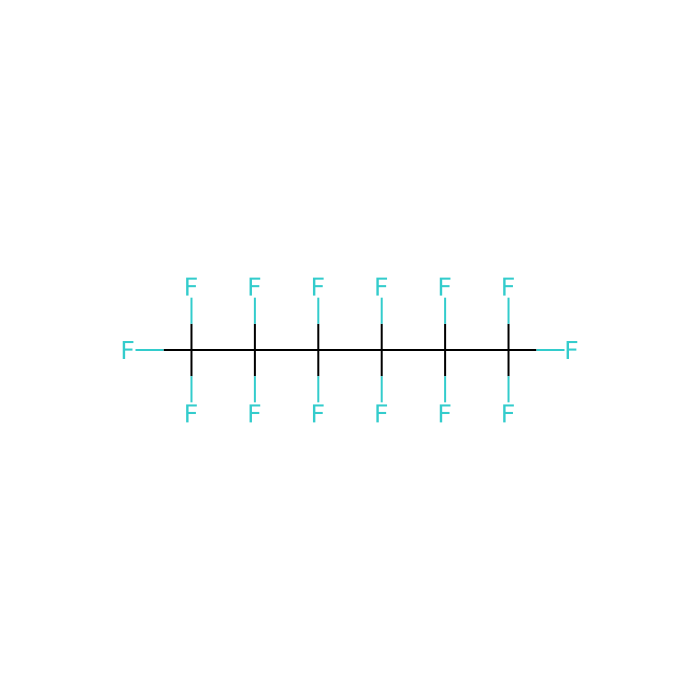
Tetradecafluorohexane - ≥95%, mixture of isomers , CAS No.355-42-0

CAS: 355-42-0 Cat. No.: T478344 Fórmula: C6F14 Peso molecular: 338.04 Número CE: 206-585-0 PubChem CID: 9639
Disponível para encomenda
GRADE & PURITY ≥95% mixture of isomers
Synonyms
CHEBI:39427 | AF0150 | AF-0150 | Tetradecafluorohexane, 99% | Fluorinert FC72Fluorinert FC72 | fluorinert(r) fc-72 | Flutec PP1 | Perflexane (USAN/INN) | Tox21_112328 | AFO150 | Perflexane [USAN:INN] | ZJIJAJXFLBMLCK-UHFFFAOYSA- | 1,1,1,2,2,3,3,4,4,5,5,6,
Storage
Store at 2-8°C,Argon charged
Shipped In
Wet ice
★
Size
Alemanha (EU)
USA*
Price
Qty
10ml
T478344-10ml
—
3 Em stock
25,08€
50ml
T478344-50ml
—
2 Em stock
86,69€
250ml
T478344-250ml
—
2 Em stock
305,36€
Enter a quantity for the sizes you want to add.
🧪

Why this grade

≥95%, mixture of isomers for sensitive chromatographic and analytical workflows requiring minimal baseline interference.

🌡

Storage & shipping

Store at 2-8°C,Argon charged Ships Wet ice Check lot-specific COA for exact specifications.

📋

Quality documents

SDS, COA, datasheet, and spec sheet available for download. Lot-specific COA accessible via lot number lookup.

📚

Literature proof

Cited in 34 peer-reviewed publications across chromatography, organic synthesis, and cross-coupling reactions.

Visão geral

Description

Tetradecafluorohexane in the gas phase reacts spontaneously with lithium amalgam, to give a solid and intimate mixture of lithium fluoride and elemental polymeric carbon with a small amount of superstoichiometric lithium.Tetradecafluorohexane may be used as a fluorocarbon organic solvent in the preparation of temperature-induced phase-separation solution.

Specifications

Sinónimos
CHEBI:39427 | AF0150 | AF-0150 | Tetradecafluorohexane, 99% | Fluorinert FC72Fluorinert FC72 | fluorinert(r) fc-72 | Flutec PP1 | Perflexane (USAN/INN) | Tox21_112328 | AFO150 | Perflexane [USAN:INN] | ZJIJAJXFLBMLCK-UHFFFAOYSA- | 1,1,1,2,2,3,3,4,4,5,5,6,
Especificações e pureza
≥95%, mixture of isomers
Condições de armazenamento de armazenamento
Store at 2-8°C,Argon charged
Enviado em
Wet ice
Este produto requer transporte de cadeia fria. Serviços terrestres e outros serviços econômicos não estão disponíveis.
Nota
Contains perfluorocyclohexane
Pureza
≥95%
Propriedades do produto
ALogP5.1
Nomes e identificadores
Pubchem Sid504751855
Pubchem Sid Urlhttps://pubchem.ncbi.nlm.nih.gov/substance/504751855
Sorrisos canónicosC(C(C(C(F)(F)F)(F)F)(F)F)(C(C(F)(F)F)(F)F)(F)F
IUPAC Name1,1,1,2,2,3,3,4,4,5,5,6,6,6-tetradecafluorohexane
InChIKeyZJIJAJXFLBMLCK-UHFFFAOYSA-N
INCHI1S/C6F14/c7-1(8,3(11,12)5(15,16)17)2(9,10)4(13,14)6(18,19)20
SMILES isoméricas C(C(C(C(F)(F)F)(F)F)(F)F)(C(C(F)(F)F)(F)F)(F)F
WGK Alemanha 2
RTECS MO4310000
PubChem CID 9639
Peso molecular 338.04

Documentation

📋 Safety Data Sheet (SDS)

Comprehensive hazard, handling, storage, and regulatory compliance document.

Download SDS →

✅ Certificate of Analysis (COA)

Lot-specific quality data. Enter your lot number to retrieve the exact COA.

Look up COA →

📊 Datasheet

Quick-reference summary of product specifications and applications.

View datasheet →

🔬 Specification Sheet

Full quality attributes and acceptance criteria for this grade.

View spec sheet →

Advanced Data

Taxonomic Classification

Taxonomy Tree

KingdomOrganic compounds
SuperclassOrganohalogen compounds
ClasseOrganofluorides
SubclassNot available
Intermediate Tree Nodes Not available
Direct ParentOrganofluorides
Alternative Parents Hydrocarbon derivatives  Alkyl fluorides  
Molecular FrameworkAliphatic acyclic compounds
Substituents Hydrocarbon derivative - Organofluoride - Alkyl halide - Alkyl fluoride - Aliphatic acyclic compound
DescriçãoThis compound belongs to the class of organic compounds known as organofluorides. These are compounds containing a chemical bond between a carbon atom and a fluorine atom.
External Descriptors fluoroalkane - fluorocarbon
Estrutura 3D
Modelo de Estrutura Química Interativa


Certificados(CoA,COO,BSE/TSE e Mapa de Análise)
C of A & Other Certificates(BSE/TSE, COO):
Analytical Chart:

Find and download the COA for your product by matching the lot number on the packaging.

8 results found

Lot NumberCertificate TypeDataItem
H2318426Certificate of AnalysisJun 08, 2026 T478344
H2318427Certificate of AnalysisJun 08, 2026 T478344
H2318765Certificate of AnalysisJun 08, 2026 T478344
E2618176Certificate of AnalysisAug 23, 2023 T478344
F2509047Certificate of AnalysisAug 23, 2023 T478344
F2510164Certificate of AnalysisAug 23, 2023 T478344
G2315070Certificate of AnalysisJul 21, 2023 T478344
G2315064Certificate of AnalysisJul 21, 2023 T478344
Propriedades químicas e físicas
SensibilidadeAir sensitive
Índice de refração1.252
Ponto de ebulição (°C)58-60 °C
Ponto de fusão (°C)-74°C
Peso molecular338.040 g/mol
XLogP35.100
Hydrogen Bond Donor Count0
Hydrogen Bond Acceptor Count14
Rotatable Bond Count3
Exact Mass337.978 Da
Monoisotopic Mass337.978 Da
Topological Polar Surface Area0.000 Ų
Heavy Atom Count20
Formal Charge0
Complexity319.000
Isotope Atom Count0
Defined Atom Stereocenter Count0
Undefined Atom Stereocenter Count0
Defined Bond Stereocenter Count0
Undefined Bond Stereocenter Count0
The total count of all stereochemical bonds0
Covalently-Bonded Unit Count1
Citations of This Product
Referências
1. Chuang Wu, Hanqi Jia, Haithm Yahya Mohammed Almuaalemi, A. S. M. Muhtasim Fuad Sohan, Binfeng Yin.  (2023)  Preparation and Analysis of Structured Color Janus Droplets Based on Microfluidic 3D Droplet Printing.  Micromachines,  14  (10): (1911).  [PMID:37893348] [10.3390/mi14101911]
2. Jumin Yang, Xin Jin, Wenguang Liu, Wei Wang.  (2023)  A Programmable Oxygenation Device Facilitates Oxygen Generation and Replenishment to Promote Wound Healing.  ADVANCED MATERIALS,      [PMID:37695102] [10.1002/adma.202305819]
3. Ming-Yue Yang, Yi-Fan Tu, Ke-Ke Feng, Meng-Die Yin, Yi-Fan Fang, Jing-Qing Le, Bang-Yue Luo, Xia-Rong Tan, Jing-Wei Shao.  (2023)  A erythrocyte-platelet hybrid membrane coated biomimetic nanosystem based on ginsenosides and PFH combined with ultrasound for targeted delivery in thrombus therapy.  COLLOIDS AND SURFACES B-BIOINTERFACES,      [PMID:37515961] [10.1016/j.colsurfb.2023.113468]
4. Ai Chen, Sun Xiao, Xiao Shan, Guo Lu, Shang Mengmeng, Shi Dandan, Meng Dong, Zhao Yading, Wang Xiaoxuan, Li Jie.  (2023)  CAFs targeted ultrasound-responsive nanodroplets loaded V9302 and GLULsiRNA to inhibit melanoma growth via glutamine metabolic reprogramming and tumor microenvironment remodeling.  JOURNAL OF NANOBIOTECHNOLOGY,  21  (1): (1-20).  [PMID:37420266] [10.1186/s12951-023-01979-z]
5. Xia Ou, Zhong Zhang, Li Lin, Yan Du, Yu Tang, Yaotai Wang, Jianzhong Zou.  (2023)  Tumor-homing bacterium-adsorbed liposomes encapsulating perfluorohexane/doxorubicin enhance pulsed-focused ultrasound for tumor therapy.  RSC Advances,  13  (28): (19065-19078).  [PMID:37362333] [10.1039/D3RA01876H]
6. Wang Yaotai, Zhang Zhong, Ren Li, Luo Yong, Wang Qi, Zou Jianzhong.  (2023)  Dual mode imaging guided multi-functional bio-targeted oxygen production probes for tumor therapy.  JOURNAL OF NANOBIOTECHNOLOGY,  21  (1): (1-19).  [PMID:37120558] [10.1186/s12951-023-01901-7]
7. Rui Liu, Dandan Shi, Lu Guo, Shan Xiao, Mengmeng Shang, Xiao Sun, Dong Meng, Yading Zhao, Xiaoxuan Wang, Jie Li.  (2023)  Ultrasound-Targeted Microbubble Disruption with Key Nanodroplets for Effective Ferroptosis in Triple-Negative Breast Cancer Using Animal Model.  International Journal of Nanomedicine,      [PMID:37155504] [10.2147/IJN.S400495]
8. Yu Tang, Chun Chen, Binglei Jiang, Lu Wang, Fujie Jiang, Disen Wang, Yaotai Wang, Haiyan Yang, Xia Ou, Yan Du, Qi Wang, Jianzhong Zou.  (2023)  Bifidobacterium bifidum-Mediated Specific Delivery of Nanoparticles for Tumor Therapy.  International Journal of Nanomedicine,      [PMID:34267516] [10.2147/IJN.S315650]
9. Shan Xiao, Lu Guo, Chen Ai, Mengmeng Shang, Dandan Shi, Dong Meng, Xiao Sun, Xiaoxuan Wang, Rui Liu, Yading Zhao, Jie Li.  (2023)  pH-/Redox-Responsive Nanodroplet Combined with Ultrasound-Targeted Microbubble Destruction for the Targeted Treatment of Drug-Resistant Triple Negative Breast Cancer.  ACS Applied Materials & Interfaces,      [PMID:36757913] [10.1021/acsami.2c20478]
10. Zhao Yading, Shi Dandan, Guo Lu, Shang Mengmeng, Sun Xiao, Meng Dong, Xiao Shan, Wang Xiaoxuan, Li Jie.  (2023)  Ultrasound targeted microbubble destruction-triggered nitric oxide release via nanoscale ultrasound contrast agent for sensitizing chemoimmunotherapy.  JOURNAL OF NANOBIOTECHNOLOGY,  21  (1): (1-17).  [PMID:36717899] [10.1186/s12951-023-01776-8]
11. Pengying Wu, Zhen Ya, Yan Li, Mingting Zhu, Lei Zhang, Yujin Zong, Shifang Guo, Mingxi Wan.  (2022)  Focused Acoustic Vortex-Regulated Composite Nanodroplets Combined with Checkpoint Blockade for High-Performance Tumor Synergistic Therapy.  ACS Applied Materials & Interfaces,      [PMID:35699948] [10.1021/acsami.2c02137]
12. Xiangmei Liu, Ruhua Li, Yanli Zhou, Wen Lv, Shujuan Liu, Qiang Zhao, Wei Huang.  (2021)  An all-in-one nanoplatform with near-infrared light promoted on-demand oxygen release and deep intratumoral penetration for synergistic photothermal/photodynamic therapy.  JOURNAL OF COLLOID AND INTERFACE SCIENCE,      [PMID:34742072] [10.1016/j.jcis.2021.10.082]
13. Li Ke, Li Ruyue, Zhou Baona, Chen Jing, Lan Kai, Zhan Wenhua, Chen Di, Zhang Tao, Li Xueping.  (2021)  Cascade Release Nanocarriers for the Triple-Negative Breast Cancer Near-Infrared Imaging and Photothermal-Chemo Synergistic Therapy.  Frontiers in Oncology,      [PMID:34604092] [10.3389/fonc.2021.747608]
14. Yongjie Wang, Yingyan Jiang, Wei Wang.  (2019)  Determining the Subnanometer Thickness of the Water-Depletion Layer at the Interface between Water and the Hydrophobic Substrate.  ANALYTICAL CHEMISTRY,      [PMID:31424925] [10.1021/acs.analchem.9b02240]
15. Huanan Li, Chenhao Yu, Jingni Zhang, Qianyan Li, Hai Qiao, Zhigang Wang, Deping Zeng.  (2018)  pH-sensitive pullulan-doxorubicin nanoparticles loaded with 1,1,2-trichlorotrifluoroethane as a novel synergist for high intensity focused ultrasound mediated tumor ablation.  INTERNATIONAL JOURNAL OF PHARMACEUTICS,      [PMID:30543892] [10.1016/j.ijpharm.2018.12.006]
16. Xiaoxuan Wang, Fangxuan Li, Jialu Zhang, Lu Guo, Mengmeng Shang, Xiao Sun, Shan Xiao, Dandan Shi, Dong Meng, Yading Zhao, Chao Jiang, Jie Li.  (2024)  A combination of PD-L1-targeted IL-15 mRNA nanotherapy and ultrasound-targeted microbubble destruction for tumor immunotherapy.  JOURNAL OF CONTROLLED RELEASE,      [PMID:38246204] [10.1016/j.jconrel.2024.01.039]
17. Na Chen, Jing Xi, Tianpei He, Ruichen Shen, Rui Zhao, Haoming Chi, Jia Yao, Na Du, Lilei Yu, Yun Zhang, Tianyou Peng, Tiangang Liu, Quan Yuan.  (2025)  Beyond natural synthesis via solar-decoupled biohybrid photosynthetic system.  Chem,      [PMID:] [10.1016/j.chempr.2024.11.019]
18. Hongwei Xiang, Bin Shen, Chunmei Zhang, Rui Li.  (2024)  Bioactive Nanoliposomes for Enhanced Sonodynamic-Triggered Disulfidptosis-Like Cancer Cell Death via Lipid Peroxidation.  International Journal of Nanomedicine,      [PMID:39246429] [10.2147/IJN.S464178]
19. Minghui Sun, Muthu Murugananthan, Zhiming Zhou, Yan Shen, Yanrong Zhang, Xiaoguang Wang.  (2024)  Hydrophobic covalent organic frameworks utilized Fluorocarbon/Water system for efficient hydrogen peroxide photosynthesis.  CHEMICAL ENGINEERING JOURNAL,      [PMID:] [10.1016/j.cej.2024.150245]
20. Zhiyan Li, Xianghui Li, Yanjun Lu, Xudong Zhu, Wenxuan Zheng, Kai Chen, Xingzhou Wang, Tao Wang, Wenxian Guan, Zhi Su, Song Liu, Jinhui Wu.  (2024)  Novel Photo-STING Agonists Delivered by Erythrocyte Efferocytosis-Mimicking Pattern to Repolarize Tumor-Associated Macrophages for Boosting Anticancer Immunotherapy.  ADVANCED MATERIALS,      [PMID:39380354] [10.1002/adma.202410937]
21. Jie Yang, Min Liao, Zhenru Wu, Xiaodi Liu, Zhiwen Zheng, Wenhui Wang, Zhe Wu, Qiang Lu.  (2025)  Perfluorohexane nanodroplet-assisted mechanical high intensity focused ultrasound cavitation: A strategy for hepatocellular carcinoma treatment.  Acta Biomaterialia,      [PMID:39894325] [10.1016/j.actbio.2025.01.061]
22. Linrui Dong, Weihao Jin, Guoliang Zhang, Wanzhen Li, Jun Wang, Ping Song, Yugui Tao, Weiwei Zhang, Liangjun Yang, Fei Ge.  (2024)  Performance and Mechanism of Self-Oxygenated Perfluorohexane Nanosystem for Combined Photothermal/Photodynamic Bacterial Inhibition.  ACS Applied Nano Materials,      [PMID:] [10.1021/acsanm.3c06027]
23. Dongjie Yang, Lan Zhang, Jiang Ni, Yang Ding, Anam Razzaq, Zaheer Ullah Khan, Haroon Iqbal, Yasmene Falah Alanazi, Naveed Ullah Khan, Rong Wang.  (2024)  Stimuli-sensitive biomimetic nanoparticles for the inhibition of breast cancer recurrence and pulmonary metastasis.  International Journal of Pharmaceutics-X,      [PMID:38766479] [10.1016/j.ijpx.2024.100252]
24. Lin Lin, Ba Zhaojing, Tian Hao, Qin Haoxiang, Chen Xi, Zhou Xin, Zhao Shanlan, Li Lang, Xue Fangchao, Li Hong, He Lang, Li Xiaochen, Du Jiahui, Zhou Zhenhua, Zeng Wen.  (2024)  Ultrasound-responsive theranostic platform for the timely monitoring and efficient thrombolysis in thrombi of tPA resistance.  Nature Communications,  15  (1): (1-17).  [PMID:39098904] [10.1038/s41467-024-50741-y]
25. Ren Li, Wang Yaotai, Tang Yu, Wang Fang, Du Yan, Ou Xia, Lin Li, Zhang Zhong, Ding Yan, Wu Meixian, Zhou Yijun, Zhang Mingyang, Wang Qi, Zou Jianzhong.  (2024)  US/PA/MR multimodal imaging-guided multifunctional genetically engineered bio-targeted synergistic agent for tumor therapy.  JOURNAL OF NANOBIOTECHNOLOGY,  22  (1): (1-22).  [PMID:39385196] [10.1186/s12951-024-02868-9]
26. Weiwei Zhang, Yongqi Yang, Xuanjun Zhang, Ping Song, Xiaokuo Shen, Lin Gui, Longbao Zhu, Dongdong Sun, Fei Ge, Wanzhen Li.  (2025)  Research on the Combined Antibacterial and Wound-Healing Effects of Oxygen-Carrying Hydrogel Photodynamic and Photothermal Therapy-Targeting Biofilms.  ACS Applied Materials & Interfaces,      [PMID:40854094] [10.1021/acsami.5c11868]
27. Jialu Zhang, Xiaoxuan Wang, Lu Guo, Shan Xiao, Dong Meng, Mengmeng Shang, Xiao Sun, Dandan Shi, Yading Zhao, Rui Liu, Shuting Huang, Xinyu Zeng, Jie Li.  (2025)  Dual-responsive nanoscale ultrasound contrast agent as an oxidative stress amplifier for enhanced DNA damage in BRCA-proficient ovarian cancer.  Materials Today Bio,      [PMID:40270892] [10.1016/j.mtbio.2025.101761]
28. Ying Xu, Xiaojun Cai, Jianrong Wu, Yuanyi Zheng, Yaotai Wang.  (2025)  Colonization of Engineered Bacteria Enhanced Lipid Nanomedicine Accumulation in Tumors for Sonodynamic Immunotherapy,.  Materials Today Bio,      [PMID:40585038] [10.1016/j.mtbio.2025.101943]
29. Xia Ou, Yu Tang, Haiyan Yang, Yan Du, Zhong Zhang, Li Lin, Qi Wang, Jianzhong Zou.  (2025)  Evaluation of multimodal imaging guided multifunctional bio-targeted reactive oxygen species production synergists: a preliminary study.  Frontiers in Materials,      [PMID:] [10.3389/fmats.2025.1550323]
30. Di Huang, Ying Zhang, Zhuoxun Huang, Xiaoyue Chen, Yifei Yang, Yang Cheng, Yifan Qiu, Yixuan Zhu, Jie Dong, Haoxiong Guan, Yannan Shi, Qing Yao.  (2026)  Perfluorohexane/hemoglobin nano-oxygen carriers enhance transplanted islet graft survival via hypoxia alleviation and mitochondrial repair.  JOURNAL OF CONTROLLED RELEASE,      [PMID:41565185] [10.1016/j.jconrel.2026.114646]
31. Ning Cong, Lu Guo, Xiaoxuan Wang, Yading Zhao, Ting Zhao, Shuting Huang, Rui Liu, Song Ning, Xiaoying Zhou, Suyun Li, Yuye Fu, Jie Li.  (2026)  Ultrasound-activated metal-polyphenol nanodroplets for tumor cuproptosis.  BIOMATERIALS,      [PMID:41576479] [10.1016/j.biomaterials.2026.124013]
32. Qiangyuan Zhu, Shenglan Liu, Lei Chen, Xin Wang, Jiayi Liu, Cen Gao, Rongbing Tang.  (2026)  Nanocollision promotes locomotion of dendritic cells for tumor therapy.  Science Advances,  12  (6):   [PMID:41637521] [10.1126/sciadv.aeb7714]
33. Jiaxing Li, Chenyang Chu, Lijun Zhu, Zhong Du, Yaqi Cui, Jiabao Xiong, Chi Zhang, Yuxiang Gao, Biao Dong, Nuernisha Alifu.  (2026)  NIR-activated dual-mode oxygen-generating and -delivering nanoplatform for enhanced photodynamic therapy of cervical cancer.  Journal of Materials Chemistry B,      [PMID:41738075] [10.1039/D5TB02652K]
34. Zhao Ting, Guo Lu, Cong Ning, Zhao Yading, Wang Xiaoxuan, Zeng Xinyu, Li Suyun, Liu Rui, Huang Shuting, Fu Yuye, Li Jie.  (2026)  Ultrasound and ROS-responsive nanodroplets inhibit TCA cycle in hepatocellular carcinoma.  JOURNAL OF NANOBIOTECHNOLOGY,  24  (1): (317).  [PMID:] [10.1186/s12951-026-04190-y]
Calculadoras de soluções
Revisões

Avaliações dos Clientes

Application Protocols

No antibody/assay application protocols apply to this small-molecule solvent. For practical use, consider the following general handling procedures (literature/general):

  • Fluorous biphasic reaction setup: Combine organic phase and perfluorohexane in an appropriate ratio (e.g., 1:1 v/v as a starting point), add fluorous-tagged catalyst to the PFC phase, and stir under temperature control. After completion, cool, allow phases to separate, and recover catalyst-containing PFC phase.
  • Degassing/gas loading: To load O2, sparge the liquid with oxygen for 15–30 min under chilled conditions with a gas dispersion tube; cap under argon after loading to control headspace.
  • Recovery and reuse: Distill perfluorohexane through a short Vigreux column with a dry ice condenser to remove volatile impurities; collect the 56 °C fraction under inert atmosphere.

For validated, item-specific protocols or method suitability, consult the product CoA/SDS and perform pilot trials.

Biological Roles

This product is supplied strictly for research use only. No medical or clinical claims are made.

  • General biochemistry context (literature)
    • Biological activity: Perfluorohexane is chemically and biologically inert; it does not participate in metabolic pathways.
    • Gas transport: Exhibits high solubility for respiratory gases (O2, CO2, N2), which underpins its use in research on oxygen delivery systems, acoustic contrast agents, and microbubble formulations.
    • Cell and tissue interfacing: As an immiscible, dense overlay, PFCs can be used in vitro to modulate gas transfer to cell cultures without direct solvent mixing; the liquid serves as a physical barrier with high O2 permeability.
    • Imaging research: PFC microdroplets/bubbles are investigated as ultrasound and 19F-MRI tracers in preclinical settings; perfluorohexane’s volatility and density influence droplet stability and acoustic responses.

Note: These roles are provided as general literature context for perfluorocarbons and are not product performance claims.

Buffer Applications

Not typically applicable. Tetradecafluorohexane is a hydrophobic, fluorous liquid and is immiscible with aqueous buffers. For laboratory work involving buffers, use conventional aqueous buffer systems (e.g., PBS, Tris, HEPES). Where gas transfer modulation is desired, a perfluorocarbon overlay can be applied above an aqueous buffer phase to enhance oxygen availability without mixing.

Green Alternatives

Perfluorohexane provides exceptional inertness but raises environmental considerations due to persistence and high global warming potential (GWP). Selection should balance performance and sustainability.

  • Environmental profile (general)
    • Persistence: Very high; resistant to biodegradation and atmospheric breakdown.
    • GWP: High for perfluorocarbons; minimize emissions and implement closed-loop recovery.
  • Potential alternatives (application-dependent; literature/general)
    • Hydrofluoroethers (HFEs, e.g., HFE-7100): Lower GWP, somewhat organic-miscible, good volatility. Tradeoff: less chemically inert and may show mild solvency toward organics.
    • Silicone fluids (e.g., PDMS oils): Thermally stable, recyclable heat-transfer media with lower volatility. Tradeoff: higher viscosity, potential surface contamination (siloxane residues).
    • Hydrocarbon solvents (heptane, isopar solvents): Lower environmental persistence; flammable and chemically more reactive; unsuitable where nonflammability/inertness is critical.
    • Supercritical CO2: Green medium for extractions/processing; requires high-pressure equipment; limited compatibility for some reactions.
  • Comparison snapshot
    • PFCs: maximal inertness, nonflammable, biphasic with most media; environmental persistence high.
    • HFEs: intermediate inertness, better cleanup, lower GWP; may not replicate all fluorous partitioning effects.
  • Good practices
    • Use condensers, cold traps, and recovery systems to minimize atmospheric release.
    • Evaluate fluorous-tag loading to reduce solvent volumes or switch to solid-supported fluorous phases where feasible.
Pharmaceutical Uses

For research use only. No therapeutic claims.

  • General formulation/processing roles (literature context)
    • Emulsion component (R&D): Perfluorocarbons, including perfluorohexane, are used in research-stage emulsions for studying oxygen transport and imaging contrast; emulsification requires suitable surfactants and high-shear processing.
    • Aerosol/propellant research: Investigated as inert carrier phases or as part of propellant systems where nonflammability is valued.
    • Device/processing aid: As an inert, dense cleaning or displacement fluid for microfabrication or medical-device component processing where residue-free drying is essential.
  • Practical considerations
    • Regulatory monographs are uncommon for neat perfluorohexane; any use in regulated products would require thorough extractables/leachables and residual-solvent assessments.
    • Emulsions demand control of droplet size distribution, surfactant selection, and gas loading; stability is influenced by temperature relative to the ~56 °C boiling point.
Physical Properties

Only item-specific specifications listed on this page should be used for QC release. Values below are literature/computed references for professional use and method development.

  • Item-specific specs from Product Data
    • Appearance: Not specified for this item; refer to CoA/Spec Sheet.
    • Grade/Purity: Not specified for this item; refer to CoA/Spec Sheet.
  • Literature values (typical for tetradecafluorohexane; not item specifications)
    • State at RT: Colorless, dense liquid; essentially odorless
    • Boiling point: ~56 °C at 1 atm (literature)
    • Melting point: ~−90 to −95 °C (literature)
    • Density: ~1.68 g/mL at 20 °C (literature)
    • Refractive index (n20 D): ~1.252 (literature)
    • Vapor pressure: ~0.27–0.35 bar at 25 °C (literature)
    • Solubility: Practically insoluble in water; immiscible with most hydrocarbons and common organic solvents; miscible with perfluorinated/fluorous solvents and some hydrofluoroethers (literature)
    • Dielectric constant (ε, 20–25 °C): ~1.9 (literature; very low polarity)
    • LogP/logS: Not conventionally defined for perfluoroalkanes; exhibits strong fluorophilicity and poor solubility in both water and hydrocarbon media (general note)
  • Notes for practitioners
    • Extremely low surface energy and high gas solubility (notably O2, CO2) are characteristic of perfluorocarbons.
    • High chemical and thermal stability under neutral, non-reducing/non-oxidizing conditions.
Quality and Grades
  • Item-specific quality details
    • Grade/Purity: Not specified for this item; refer to CoA/Spec Sheet.
    • Stabilizers/Inhibitors: Not specified for this item; refer to CoA/Spec Sheet.
  • Guidance on grades for this compound class (general information for planning)
    • High-purity/low-nonvolatile grades are preferred for physical chemistry measurements, vapor-liquid equilibrium studies, and microfluidics, where trace nonfluorous residues impact interfacial properties.
    • Low-UV absorbance grades are advantageous for spectroscopic applications (UV/Vis cells filled with PFCs for optical referencing) and chromatographic interfacing.
    • Water content and dissolved-gas control: Although PFCs dissolve minimal water, dissolved gases can be substantial. For gas-transport or photochemical work, suppliers may offer gas-stripped or specified dissolved-oxygen content.
  • Practical notes
    • For reactions using fluorous biphasic catalysis or phase-vanishing methods, trace hydrocarbon or ionic contaminants can disrupt phase behavior. Review the CoA for nonvolatile residue, acidity/alkalinity, and GC assay when available.
    • This listing specifies storage under argon at 2–8 °C, indicating emphasis on maintaining headspace inertness and product cleanliness during storage.
Reaction and Applications

Applications leverage the unique phase behavior and inertness of perfluorohexane.

  • Fluorous-phase chemistry (literature/general)
    • Fluorous biphasic catalysis (FBC): Fluorinated ligands/catalysts dissolve in the PFC phase at reaction temperature, then partition back for recycling upon cooling. Common with Rh, Pd, and other transition-metal systems using perfluoroalkylated phosphines.
    • Phase-vanishing reactions: A fluorous layer separates reagent and substrate phases; diffusion-controlled delivery occurs through the PFC medium, facilitating controlled halogenations or oxidations.
  • Physical and analytical uses
    • Gas delivery/media: High O2 and CO2 solubility supports oxygenation studies, photochemistry requiring O2, and microbubble generation.
    • Ultrasonic/sonochemical medium: Distinct cavitation properties can alter radical generation profiles.
    • Density-based separations: As a non-miscible, dense underlayer for partitioning and rapid phase disengagement.
  • Practical tips
    • Use fluorinated stir bars/tubing or confirm compatibility; PFCs often wet PTFE well and poorly wet glass/steel.
    • Drying is typically unnecessary (very low water solubility), but degassing (freeze–pump–thaw or inert sparge) controls dissolved gases where needed.
    • For catalyst recycling, maintain clean interfaces; trace surfactants or organics can stabilize emulsions—minimize vigorous agitation when phase clarity is required.
  • Limitations
    • Poor solubility for non-fluorinated reactants; consider tagging strategies or co-solvents (HFEs) if some miscibility is required.
Reaction Conditions

Guidance below reflects literature practice for perfluorocarbon media and fluorous biphasic chemistry; adapt to your system via small-scale trials.

  • Fluorous biphasic catalysis (general)
    • Typical temperature: 40–90 °C (often near or modestly above room temperature; avoid exceeding the ~56 °C bp without reflux/pressure control).
    • Catalysts: Fluorous-tagged Pd, Rh, Ru complexes (e.g., perfluoroalkylated phosphine ligands). Catalyst recovery by phase separation on cooling.
    • Solvent pairing: Perfluorohexane with an organic phase (e.g., toluene, acetonitrile, alcohol) that remains immiscible.
    • Agitation: Gentle to moderate stirring to promote interfacial transfer while limiting emulsion formation.
  • Phase-vanishing halogenations/oxidations
    • Setup: Substrate in organic phase; reagent (e.g., Br2, NBS) on opposite side; fluorous interlayer controls diffusion.
    • Temperature: Ambient to 40 °C; monitor to avoid volatilization of perfluorohexane.
  • Gas–liquid photochemistry/sonochemistry
    • Rationale: High O2 solubility supports aerobic oxidations or singlet-oxygen generation when illuminated or sonicated.
    • Conditions: Use efficient gas sparging or pre-saturation; maintain condenser; consider quartzware for photochemistry.
  • Workup tips
    • Allow complete phase disengagement; separate fluorous underlayer with a bottom-drain separatory funnel.
    • Recover perfluorohexane by cold trapping or simple distillation; reuse after drying/filtration if purity is maintained.
Safety and Handling

Always consult the product SDS for authoritative, up-to-date safety information.

  • Item-specific hazard information
    • GHS classification/Pictograms/Signal word/H-statements: Not specified for this item; refer to SDS.
  • General safety characteristics of perfluorohexane (literature/industry practice)
    • Flammability: Generally considered nonflammable and non-explosive under ambient conditions.
    • Acute hazards: Inert, but high vapor concentrations can displace oxygen and pose an asphyxiation risk in confined spaces.
    • Thermal decomposition: At elevated temperatures (e.g., hot surfaces, open flames), may decompose to form toxic/irritant fluorinated byproducts (e.g., HF, perfluoroisobutylene). Avoid thermal abuse.
    • Chronic/environmental: Highly persistent and bioaccumulative potential is low but environmental persistence is high; minimize releases.
  • Incompatibilities and materials to avoid (general)
    • Strong Lewis acids at high temperature, alkali metals, reactive reducing metals; avoid contact with hot, reactive surfaces.
  • Recommended PPE and engineering controls
    • PPE: Chemical-resistant gloves (e.g., fluoroelastomer when splash risk), safety goggles, lab coat. Use in a well-ventilated area; local exhaust if vapor exposure possible.
    • Handling tips: Prevent aerosol formation. Use closed systems when feasible. Because of low surface tension, spills spread rapidly—use compatible absorbents designed for fluorinated liquids.
  • First-aid overview (general)
    • Inhalation: Move to fresh air. If symptoms of asphyxiation occur, seek medical attention.
    • Skin/eyes: Rinse with water if contacted. Seek medical advice if irritation persists.
    • Ingestion: Rinse mouth; do not induce vomiting; obtain medical attention.
Solvent Selection

Tetradecafluorohexane is a classic fluorous solvent: highly inert, very low polarity, and largely immiscible with both water and common organic solvents.

  • Polarity and miscibility (literature/general)
    • Polarity: Extremely low (ε ~1.9). Practically non-coordinating.
    • Miscibility: Immiscible with water and most hydrocarbons/ethers/esters; miscible with other perfluorocarbons and certain hydrofluoroethers. Forms distinct biphasic systems with many organic reaction media.
    • Solvation profile: Preferentially solvates fluorinated solutes and “fluorous-tagged” reagents, enabling phase separation strategies.
  • Selection scenarios
    • Choose for fluorous biphasic catalysis, phase-vanishing reactions, and gas–liquid mass transfer studies (high O2/CO2/N2 solubility).
    • Useful as an inert heat-transfer fluid or for ultrasound/sonochemistry where cavitation behavior in dense, low-surface-tension media is desired.
    • Not suitable for dissolving typical organic solutes; if solubility of organics is required, consider hydrocarbons, ethers, or chlorinated solvents instead.
  • Quick comparison (general)
    • vs. n-Hexane: PFC is nonflammable, denser, immiscible with hexane; hexane is better for dissolving nonpolar organics.
    • vs. Perfluorohexyl-substituted HFEs (e.g., HFE-7100): HFEs offer some organic miscibility and lower GWP but reduced chemical inertness compared to perfluoroalkanes.
Storage and Reconstitution
  • Item-specific storage conditions (from Product Data)
    • Storage: Store at 2–8 °C.
    • Headspace: Argon charged.
    • Shipping: Shipped on wet ice.
  • Practical guidance
    • Keep container tightly closed to prevent contamination. Although chemically inert, perfluorocarbons can absorb atmospheric gases and trace volatiles; inert headspace helps preserve consistency.
    • Store in compatible containers (PTFE-lined caps recommended). Avoid elastomers that may swell in fluorinated liquids.
    • If cold storage causes pressure changes, allow the container to equilibrate to room temperature before opening to minimize condensation and pressure differential.
  • Reconstitution
    • Not applicable; supplied as a neat liquid. If solidification occurs at very low temperatures, warm gently to ambient and mix to ensure homogeneity.
  • Stability
    • Chemically stable under neutral conditions. Avoid prolonged exposure to high heat or open flames to prevent thermal decomposition. For long-term reuse, consider distillation through clean, inert glassware to maintain purity.
Structure and Identity

Brief overview: Tetradecafluorohexane (perfluorohexane) is a fully fluorinated linear alkane consisting of six carbon atoms with all hydrogens replaced by fluorine.

  • Item-specific identifiers (from Product Data)
    • SKU: T478344
    • CAS: 355-42-0
    • Product Name: Tetradecafluorohexane
    • InChIKey (as provided): 458591
    • Storage note: Store at 2–8 °C, argon charged; shipped on wet ice
  • Literature/computed identity details (for reference; not item-specific specs)
    • Synonym: Perfluorohexane; n-C6F14
    • Molecular formula (literature): C6F14
    • Molecular weight (literature): ~338.04 g/mol
    • SMILES (literature): FC(F)(F)C(F)(F)C(F)(F)C(F)(F)C(F)(F)C(F)(F)F (one of several equivalent representations)
    • InChI (literature): InChI=1S/C6F14/c7-1(8,9)2(10,11)3(12,13)4(14,15)5(16,17)6(18,19)20
  • Structural features (general description)
    • Backbone: Linear, saturated C6 chain, completely fluorinated (a perfluoroalkane)
    • Functional groups: None beyond C–F bonds; no heteroatoms other than fluorine; no unsaturation or ring systems
    • Stereochemistry: Not applicable (no stereocenters in fully fluorinated n-alkane)
    • 2D structure (descriptive): A straight-chain of six sp3 carbons, each bearing enough fluorine substituents to satisfy valency; terminal carbons are CF3 groups, internal carbons are CF2 units: CF3–(CF2)4–CF3.
Synthetic Utility

Perfluorohexane is not a reactive building block; its synthetic value arises from medium effects and separations.

  • Fluorous tagging and separations (literature/general)
    • Fluorous tags (perfluoroalkyl chains) appended to catalysts or reagents confer selective solubility in the PFC phase, enabling catalyst recycling and simplified product isolation.
    • Biphasic catalysis: Facilitates partition-controlled reactions; catalysts reside in the fluorous phase while substrates remain in an organic phase.
  • Operational roles
    • Inert diluent/heat sink: High heat capacity and non-reactivity make it a safe diluent for exothermic processes where miscibility is not required.
    • Phase-vanishing platform: Mediates diffusion-limited reagent delivery, sometimes improving selectivity in halogenations/oxidations.
  • Compatibility notes
    • Compatible with PTFE, FEP, PFA, many perfluorinated elastomers; verify with seals and tubing. Avoid highly reactive metals or Lewis acids at high temperature.
    • Minimal solvation of ions and polar reagents; consider co-solvent strategies (e.g., HFEs) if limited miscibility is acceptable.
Target Specificity

Not applicable to this product type. Tetradecafluorohexane is a small-molecule fluorous solvent and does not have antigen/epitope specificity, clone information, or species reactivity. Refer instead to the sections on Reaction & Applications and Synthetic Utility for relevant technical guidance.

Shall we send you a message when we have discounts available?

Remind me later

Thank you! Please check your email inbox to confirm.

Oops! Notifications are disabled.