GRAU & PUREZAMoligand™?Moligand™ — Aladdin's line of ligands and bioactive small molecules. Use for receptor, pathway, and binding studies needing defined small-molecule tools.10 mM in DMSO
Moligand™, 10 mM in DMSO Moligand™ para fluxos de trabalho cromatográficos e analíticos sensíveis que exigem interferência mínima da linha de base.
🌡
Armazenamento e envio
Store at -80°C Envio Dry ice packs + Cold packs. Consulte o COA específico do lote para obter as especificações exatas.
📋
Documentos de qualidade
SDS, COA, ficha técnica e folha de especificações disponíveis para download. COA específico do lote acessível por meio de pesquisa por número de lote.
📚
Comprovação documental
Citado em 0 publicações revisadas por pares nas áreas de cromatografia, síntese orgânica e reações de acoplamento cruzado.
Visão geral
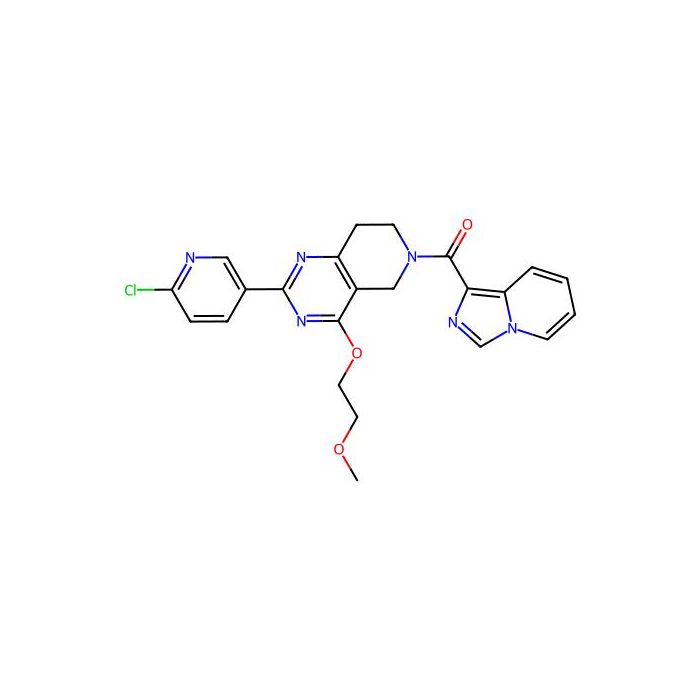
THPP-1, a SGC chemical probe, is a potent and orally bioavailable phosphodiesterase 10A (PDE10A) inhibitor, with K i values of 1 nM and 1.3 nM for human and rat PDE10A, respectively. THPP-1 has excellent pharmacokinetic properties in preclinical species.
Especificações
Especificações e pureza
Moligand™, 10 mM in DMSO
Condições de armazenamento de armazenamento
Store at -80°C
Enviado em
Dry ice packs + Cold packs
Este produto requer transporte de cadeia fria. Serviços terrestres e outros serviços econômicos não estão disponíveis.
Determine the necessary mass, volume, or concentration for preparing a solution.
Dilution Calculator
Determine the dilution needed to prepare a stock solution.
Reconstitution Calculator
Revisões
Avaliações dos Clientes
Application Protocols
No validated application protocols are specified for THPP-1 in this listing. The following outlines general practices for small-molecule screening in biochemical or cell-based assays.
Typical workflow (general):
Stock solution: Prepare 10–50 mM in anhydrous DMSO. Store single-use aliquots at −80°C. Thaw once immediately before use.
Dose–response: Perform serial dilutions (e.g., 10-point, 1:3 or 1:2 series) maintaining constant vehicle (DMSO) across wells.
Assay controls: Include positive control (known modulator), negative control (vehicle), and, if available, an inactive analog.
Readouts: Choose orthogonal detection methods where possible (fluorescence vs. luminescence vs. label-free) to avoid compound interference.
Use appropriate plate types (low-binding, black/clear bottom for optical assays), edge effect mitigation, and replicate design (n≥3 technical; biological replicates as needed).
Normalize to controls; fit curves with appropriate models (4PL/variable slope) and report confidence intervals.
Item-specific recommended dilutions, incubation times, and positive controls: Not specified for this item; refer to CoA/Spec Sheet or develop empirically.
Biological Roles
Item-specific biological targets or pathways for THPP-1 are not provided. The following guidance addresses typical roles of small-molecule ligands in research. No medical or clinical claims are made.
Potential research roles (general):
Chemical probes: Investigate biochemical pathways by modulating enzyme/receptor function; confirm on-target effects via orthogonal assays and structure–activity relationships.
Tool compounds: Serve as positive/negative controls in cell signaling, metabolism, epigenetics, or protein–protein interaction studies, provided target specificity is established.
Target engagement: Evaluate binding in cells (e.g., CETSA, NanoBRET) or in vitro (e.g., SPR, ITC) to quantify affinity and residence time.
Assay development considerations:
Avoid assay interference: Screen for fluorescence/absorbance overlap, redox activity, and colloidal aggregation using recommended panels (e.g., PAINS filters, detergent controls).
Permeability/stability: Assess Caco-2/MDCK permeability, microsomal stability, and plasma protein binding as needed for cell-based work. Values are not specified for this item and must be determined experimentally if relevant.
Documentation:
Target specificity, mode of action, and potency parameters (IC50, KD, EC50) are not specified for this item; consult CoA or internal profiling data if available.
Research use only:
This product is designated for laboratory research use only and not for any diagnostic or therapeutic application.
Buffer Applications
THPP-1 is a small-molecule ligand; it is not a buffering reagent. Consequently, buffer formulation guidance is not typically applicable.
Practical notes for assay buffers (general):
Vehicle control: Maintain constant DMSO (or other solvent) percentage across wells (e.g., 0.1–1% v/v) to avoid solvent-driven artifacts.
Common buffers: PBS, HEPES, or Tris are typically used depending on enzyme/cell assay needs; select pH and ionic strength appropriate for the biological system.
Additives: Include 0.01–0.05% nonionic detergent (e.g., Tween 20) or 0.01% Triton X-100 in biochemical assays to mitigate aggregation artifacts if compatible with the target.
Protein binding: Add BSA or other carriers judiciously to reduce nonspecific binding, recognizing potential shifts in apparent potency.
Item-specific buffer compatibility, pKa, and stability: Not specified for this item; refer to CoA/Spec Sheet and perform pilot compatibility tests.
Green Alternatives
Greener handling largely concerns solvent choice during stock preparation, purification, and analytics, since the compound-specific synthesis and lifecycle data are not provided.
Solvent considerations (general):
Prefer lower-toxicity, lower-VOC solvents where feasible for preparative work (e.g., ethanol, isopropanol, ethyl acetate) over chlorinated solvents.
For assay stocks, DMSO is standard; however, consider glycerol–water or ethanol–water cosolvent systems for robust, nonreactive molecules—only after verifying stability and assay compatibility.
For chromatography, use heptane/ethyl acetate or supercritical CO2 (if accessible) instead of hexane/dichloromethane where separation allows.
Comparison (general guidance):
Conventional: DMSO, DMF, ACN
Greener alternatives: DMSO (acceptable, reusable if managed), ethanol or IPA for compatible chemotypes; 2-MeTHF/EtOAc for workups
Trade-offs:
Ethanol/IPA may reduce solubility for hydrophobic ligands; ACN offers superior LC–MS performance but higher waste impact.
2-MeTHF can improve EHS profile versus THF but may affect solubility and UV background.
Operational tips:
Minimize solvent volumes via concentrated stocks and precise dispensing.
Implement solvent recycling where institutional infrastructure exists.
Document solvent selections and justifications to support green chemistry metrics (e.g., PMI, E-factor) in method reports.
Pharmaceutical Uses
No pharmacopeial status, excipient role, or manufacturing application is specified for THPP-1. This product is provided strictly for research use only.
General considerations for small-molecule ligands (non-clinical, non-therapeutic context):
Preformulation screening for research models: If used in preclinical assay development, evaluate solubility in biorelevant media, chemical stability, and formulation vehicles suitable for in vivo research only if permitted by your institution and approvals. Such uses fall outside this catalog entry’s scope and require additional documentation.
Excipient compatibility: Not specified. If formulating for in vitro assays, confirm compatibility with common excipients (e.g., PEGs, cyclodextrins) only as method-development aids for laboratory studies.
Regulatory note:
Not intended as an API, excipient, or reference standard for regulated manufacturing. No USP/EP/JP monograph applicability is indicated.
Any item-specific pharmaceutical attributes (particle size, residual solvents, elemental impurities, polymorph): Not specified for this item; refer to CoA/Spec Sheet if available.
Physical Properties
Item-specific physicochemical data have not been supplied in the listing. Where applicable, consult the lot-specific CoA and SDS.
Appearance: Not specified for this item; refer to CoA/Spec Sheet.
Molecular weight: Not specified for this item; refer to CoA/Spec Sheet.
Molecular formula: Not specified for this item; refer to CoA/Spec Sheet.
Melting point: Not specified for this item; refer to CoA/Spec Sheet.
Boiling point: Not specified for this item; refer to CoA/Spec Sheet.
Density: Not specified for this item; refer to CoA/Spec Sheet.
Refractive index: Not specified for this item; refer to CoA/Spec Sheet.
pKa/logP/logD: Not specified for this item; refer to CoA/Spec Sheet.
Aqueous/organic solubility: Not specified for this item; refer to CoA/Spec Sheet.
Practical handling guidance (general, literature-based for small-molecule library members):
Many screening ligands are supplied as powders or films intended for DMSO stock preparation (e.g., 10–50 mM). If no solubility is provided, begin with anhydrous DMSO, then consider co-solvents (DMF, ethanol) as needed.
For water compatibility, evaluate incremental aqueous dilution into buffered media containing ≤1–2% DMSO while monitoring for precipitation or turbidity.
Light/air/moisture sensitivity varies by chemotype. Store aliquots at the specified temperature (here: −80°C) and minimize freeze–thaw cycles to preserve integrity.
Always verify actual physicochemical values from the CoA for your lot before method development.
Quality and Grades
Grade/Purity: Moligand™
What Moligand™ signifies:
Intended use: Research-only small-molecule ligand/probe candidates designed for screening, target engagement, and SAR exploration. Not for use in humans or diagnostics.
Documentation: Each lot is typically accompanied by identity and purity information (e.g., NMR/LC–MS/HPLC) appropriate for screening applications. For exact tests/limits for this catalog number, see the CoA/Spec Sheet.
UV/Fluorescence behavior, metal content, residual solvents, water content, stabilizers: Not specified for this item; refer to CoA/Spec Sheet.
Implications for method development:
Chromatography: Moligand™ materials are generally compatible with bioassay work; however, if you require low-UV absorbance solvent backgrounds (e.g., for HPLC quantitation), verify UV cutoff and purity data on the CoA.
Bioassay stocks: Verify identity/purity by LC–MS before critical screens. Prepare single-use aliquots to avoid freeze–thaw.
Comparisons to other grades (general guidance):
Research/bulk grade: Suitable for synthetic use; assay suitability may vary.
Screening/probe (Moligand™): Emphasizes structural integrity and purity consistent with HTS/SAR workflows.
Reference standard grade: Adds metrological traceability and tighter analytical limits; use where regulatory or quantitative bioanalysis demands it.
Disclaimer:
This product is for research use only. All item-specific specifications not listed here are “Not specified for this item; refer to CoA/Spec Sheet.”
Reaction and Applications
Primary use case: As a Moligand™ small-molecule library member, THPP-1 is intended for discovery biology (biochemical or cell-based screening), target engagement, and SAR studies rather than as a synthetic reagent.
Applications in research workflows (general guidance):
Target identification/validation: Employ in panel screens to probe activity across enzyme families, receptors, or pathways. Use thermal shift (DSF), CETSA, SPR, or biolayer interferometry for binding assessment where appropriate.
Phenotypic screening: Evaluate cellular phenotypes across concentration ranges; follow up with orthogonal target engagement assays to deconvolute MoA.
SAR expansion: If analog series are available, compare activity profiles to delineate pharmacophores and liabilities (solubility, permeability, cytotoxicity windows).
Chemical biology controls: Use inactive analogs or enantiomeric controls (when available) to strengthen mechanistic conclusions.
Not typically applicable:
Named synthetic reactions or catalyst roles are not the focus for this product, given the lack of disclosed functional groups/chemotype.
Good practices:
Confirm identity/purity by LC–MS/NMR prior to critical assays.
Prepare fresh or single-use aliquots to control for degradation.
Include vehicle controls and assess assay interference (fluorescence/absorbance overlap, redox reactivity, aggregation) using counterscreens such as detergent-supplemented assays or light-scattering checks.
Reaction Conditions
This product is not positioned as a reagent or catalyst, and specific chemical reaction conditions are not applicable without structural disclosure.
General guidance when handling small-molecule ligands in laboratory workflows:
Stock preparation: Dissolve in anhydrous DMSO (typical 10–50 mM). Warm gently (≤40°C) and sonicate if necessary. Filter only after confirming no adsorption/degradation.
Assay incubation: For biochemical assays, typical compound incubation ranges from 5–60 minutes at 20–37°C; for cellular assays, exposure may span 2–72 hours. Optimize per target biology.
Light/air sensitivity: If the CoA/SDS indicates sensitivity, work under inert gas and/or reduced light. Use amber vials and pre-chilled blocks for plate setup.
Not provided for this item:
Named reaction conditions, catalysts, equivalents, or temperature windows for chemical synthesis. Refer to the CoA/structure if attempting derivatization.
Safety and Handling
Safety data specific to this item are not included in the listing and must be obtained from the SDS.
GHS classification: Not specified for this item; refer to SDS.
Signal word / Pictograms / H-Statements: Not specified for this item; refer to SDS.
General laboratory precautions for small-molecule ligands:
PPE: Use lab coat, safety glasses, and suitable chemically resistant gloves (e.g., nitrile). Handle powders in a fume hood to avoid inhalation of dust/aerosols.
Avoid ingestion, inhalation, and skin/eye contact. Prevent environmental release into drains. Wash thoroughly after handling.
Storage incompatibilities: Until specific chemistry is known, segregate from strong oxidizers and acids/bases. Keep container tightly closed, under inert atmosphere if recommended by SDS/CoA.
Thermal/light sensitivity: Store as directed (here: −80°C). Protect from light if indicated on the label/CoA. Use amber vials when in doubt.
First aid (overview; defer to SDS): If inhaled—move to fresh air; seek medical attention if symptoms occur. Skin contact—wash with soap/water; remove contaminated clothing. Eye contact—rinse cautiously with water for several minutes; seek medical advice. Ingestion—rinse mouth; do not induce vomiting; seek medical attention.
Waste disposal:
Dispose of contents/container according to institutional hazardous waste procedures and local regulations. Deface labels on emptied containers and triple-rinse only if permitted by EHS.
Authoritative source:
Always consult the product-specific SDS for definitive hazard classification, exposure controls, and emergency measures.
Solvent Selection
Without structural and solubility data, solvent selection should follow a staged, risk-managed approach suitable for small-molecule screening compounds.
Recommended workflow:
Primary stock solvent: Begin with anhydrous DMSO (common for HTS). Attempt 10–50 mM stocks, warming gently (≤40°C) and vortex/sonicate as needed.
Co-solvents if needed: DMF or ethanol (absolute) can assist dissolution. Avoid high-boiling amides in biological assays unless justified; ensure compatibility with downstream assays.
Aqueous dilution: Titrate into assay buffer to a final DMSO content typically ≤0.1–1% v/v, monitoring for precipitation. Include vehicle controls.
Less polar options: If highly hydrophobic, screen acetone, acetonitrile, isopropanol, or ethyl acetate for analytical/sample prep, not necessarily for biological assays.
Miscibility and polarity (general references):
DMSO: polar aprotic, fully miscible with water and most organics; widely tolerated in cell assays at ≤0.1–0.5% v/v.
DMF/ACN: polar aprotic, good for LC–MS sample preparation; verify assay tolerance.
EtOH/IPA: protic, often tolerated in biochemical assays at low percentages.
Practical tips:
Filter stocks only if chemical stability is verified with the membrane material; many small molecules adsorb to nylon/PTFE/PVDF.
For LC–MS quantitation, prepare calibration curves in matched matrix with the same DMSO percentage to minimize solvent effects.
Document lot-specific solubility from the CoA where available before committing to assay plate-making.
Storage and Reconstitution
Storage Conditions (as provided): Store at −80°C.
Shipping: Shipped on dry ice packs + cold packs to maintain low temperature during transit.
Appearance: Not specified for this item; refer to CoA/Spec Sheet.
Reconstitution (general guidance for small-molecule ligands):
Solvent: Use anhydrous DMSO for initial reconstitution unless the CoA specifies otherwise. Typical stock concentrations: 10–50 mM.
Technique: Allow vial to equilibrate to room temperature in a desiccator before opening to minimize condensation. Add solvent directly to the vial, vortex/sonicate to dissolve fully.
Filtration: Only if necessary and chemically compatible; verify no adsorption to the membrane. Use 0.2 µm PTFE or PVDF cautiously.
Aliquoting and stability:
Prepare single-use aliquots in inert, airtight vials or PCR tubes. Minimize headspace; purge with inert gas if sensitivity is suspected.
Freeze–thaw: Avoid repeated cycles. Thaw rapidly at room temperature or on a cool block; refreeze unused aliquots promptly.
Light protection: Use amber containers if photosensitivity is possible; store in secondary light-protective packaging.
Shelf-life and retest date:
Not specified for this item; refer to CoA/Spec Sheet.
Research Use Note:
For research use only. Not for human or veterinary use. Always consult the SDS for safe handling and disposal.
Structure and Identity
Brief overview: THPP-1 (SKU T1495085) is listed in our small-molecule/compound library under the Moligand™ grade, intended as a research ligand/probe candidate. Item-specific structural identifiers are limited in the provided data.
SKU: T1495085
Product Name: THPP-1
CAS: 1257051-63-0
PubChem CID (literature identifier): 49821991
InChIKey: Not specified for this item; refer to CoA/Spec Sheet.
SMILES: Not specified for this item; refer to CoA/Spec Sheet.
Molecular formula: Not specified for this item; refer to CoA/Spec Sheet.
Molecular weight: Not specified for this item; refer to CoA/Spec Sheet.
Structural features (general guidance):
Functional groups, ring systems, stereochemistry, and other structural attributes are not provided in the current listing. Refer to the product CoA/SDS or contact Technical Support for the definitive structure and stereochemical information for this CAS/CID.
As a Moligand™ library member, THPP-1 is intended for target engagement studies, biochemical/cell-based screening, and SAR exploration once structural details and purity documentation are in hand.
2D-structure description (general placeholder):
Without a provided SMILES/InChI, a reliable line-bond description cannot be given here. Please consult the CoA or structure file supplied with your lot for an accurate 2D representation and atom-level annotation (heteroatoms, substitution pattern, and any chiral centers).
Synthetic Utility
THPP-1 is offered as a Moligand™ screening compound. In the absence of disclosed structure/functional groups, its role as a synthetic reagent or building block cannot be defined.
General notes (when repurposing library compounds in synthesis):
If the structure is known from CoA, consider whether distinct handles (e.g., halides, boronates, amines, carboxylates) enable diversification via cross-coupling, amidation, or nucleophilic substitution.
Stability concerns: Heteroaromatic nitrogens, electron-rich rings, or benzylic positions may be oxidation-sensitive; protect from air/light during transformations if applicable.
Purification: Library members often contain lipophilic motifs; normal-phase vs. reverse-phase chromatography should be chosen based on polarity; LC–MS-guided fraction collection is recommended.
However, for this catalog item, synthetic use is not the intended application. Refer to Reaction & Applications for discovery-biased usage and consult the CoA for any structure-driven synthetic planning.
Target Specificity
Item-specific target(s), epitope details, or selectivity profiles are not provided for THPP-1.
Target/Pathway: Not specified for this item; refer to CoA/Spec Sheet or internal screening data.
Potency metrics (IC50, EC50, KD, KI): Not specified for this item; refer to CoA/Spec Sheet.
Selectivity panel data: Not specified for this item; refer to assay reports.
Guidance for establishing specificity (general):
Use orthogonal assays (e.g., biochemical vs. cellular readouts) and counterscreens to detect assay interference.
Employ genetic controls (knockdown/knockout/overexpression) to corroborate on-target effects.
Test close analogs or negative controls to delineate SAR and reduce false positives.
Note: For robust conclusions, pair THPP-1 data with reference standards and appropriate vehicle controls under identical conditions.
Precisa de ajuda para escolher o grau?
O nosso guia de seleção de graus abrange pureza, estado do estabilizador e adequação à aplicação para todas as variantes do nosso catálogo.
Usamos cookies para garantir o funcionamento adequado do site e, quando permitido, para melhorar a sua experiência. Você pode gerenciar suas preferências a qualquer momento nas Configurações. Saiba mais em nossa Política de Cookies.
Deseja que lhe enviemos uma mensagem quando tivermos descontos disponíveis?
Lembrar-me mais tarde
Obrigado! Por favor, verifique a sua caixa de entrada de e-mail para confirmar.
Products are supplied to verified businesses, institutions, and qualified professionals for research and development use only. Not for use in humans, animals, diagnosis, or therapy.