GRADE & PURITYMoligand™?Moligand™ — Aladdin's line of ligands and bioactive small molecules. Use for receptor, pathway, and binding studies needing defined small-molecule tools.10 mM in DMSO
Determine the necessary mass, volume, or concentration for preparing a solution.
Dilution Calculator
Determine the dilution needed to prepare a stock solution.
Reconstitution Calculator
Revisões
Avaliações dos Clientes
Application Protocols
No tested or validated application protocols are provided in the current listing for this SKU.
Recommended assay types, working concentrations, and positive controls are Not specified for this item; refer to CoA/Spec Sheet.
For in‑house protocol development, standard practices apply: prepare fresh serial dilutions from concentrated DMSO stock; include vehicle controls; confirm solubility at the highest test concentration; and document plate maps and solvent percentages. These are general research practices and are not item‑specific recommendations.
If you require protocol suggestions tailored to your assay format, contact our technical support with target details and solvent constraints.
Biological Roles
Item‑specific biological targets, pathways, or modes of action are not provided in the current listing.
General considerations for small‑molecule ligands in discovery research:
Potential roles: enzyme or receptor modulators, pathway probes, chemical starting points for structure–activity relationship (SAR) development, or tool compounds for target validation.
Assay strategy: establish concentration–response curves (typically ≥8–10 points) with appropriate vehicle and positive/negative controls; pre‑screen for cytotoxicity and pan‑assay interference behaviors (PAINS) when relevant.
Off‑target evaluation: implement orthogonal assays and counterscreens (e.g., detergent controls, redox/fluorescence interference panels) to confirm on‑target effects.
ADME profiling (discovery stage): basic solubility, stability in assay buffer/serum, and microsomal stability can inform follow‑up work, but such data are not provided here for this item.
Important limitations:
No therapeutic, diagnostic, or clinical claims are made. This material is supplied strictly for research use only.
Without a disclosed structure or target, treat this compound as an unlabeled screening ligand; annotate any discovered activities with full experimental context for reproducibility.
For definitive biological role or target mapping of this SKU, consult the lot‑specific CoA/Spec Sheet or contact us with your application details.
Buffer Applications
This product is a small‑molecule ligand supplied for screening and chemical biology research. It is not a buffering agent and is not typically used to prepare buffer systems.
No designated buffer pKa/pH range is provided.
When dosing into buffers, maintain minimal organic co‑solvent (e.g., DMSO ≤0.5–1% v/v for biochemical assays, as permitted) and verify that the buffer composition prevents precipitation or adsorption.
Common assay buffers (HEPES, Tris, PBS) may be used depending on target biology; ensure compatibility with any sensitive targets (e.g., metal‑dependent enzymes) and avoid components that could chelate or react with the compound.
Item‑specific buffer recommendations are Not specified for this item; refer to CoA/Spec Sheet.
Green Alternatives
“Green alternatives” typically refer to substituting hazardous solvents or reagents with lower‑impact options. For this SKU—supplied as a research ligand/small molecule rather than a reaction solvent or bulk reagent—green considerations focus on solvent choices for dissolution and assay preparation.
Guidance (general practice):
Prefer aqueous buffers with minimal organic co‑solvent where solubility allows. Keep DMSO or other organics at the lowest concentration compatible with assay performance (often ≤0.5–1% v/v in biochemical assays; verify for cells).
If DMSO is not essential, consider ethanol or isopropanol at low percentages for certain biophysical assays, acknowledging potential impacts on protein stability.
Use micro‑scale operations (low volumes, miniaturized plates) to reduce solvent consumption and waste.
Implement closed‑cap handling and cold‑room preparation to reduce vapor emissions from volatile organics.
Illustrative comparison (general; item‑agnostic):
DMSO: Excellent solvency; low volatility; readily biodegradable but can enhance dermal absorption—use care.
Ethanol/IPA: Renewable feedstocks available; higher volatility; may perturb proteins and membranes.
Acetonitrile/DMF: Effective solvents but higher EHS footprint; limit use and ensure appropriate waste segregation.
Because no item‑specific solvent requirements are provided, select the lowest‑hazard solvent system that achieves reliable solubilization and assay integrity.
Pharmaceutical Uses
No pharmacopeial status, dosage form role, or excipient function is provided for this SKU. It is not offered for clinical, diagnostic, or therapeutic use.
Research/manufacturing context (general):
Discovery screening: Employed as a research ligand in early‑stage screening, hit validation, and SAR exploration.
Reference standard: May serve as an internal standard or spike‑in control in analytical method development within research, if identity/purity are verified internally.
Preformulation studies (non‑clinical): Solubility and stability scouting in various media can support discovery workflows; such data are not provided here and should be generated in‑house as needed.
Important: This material is provided strictly “For research use only.” It is not intended for use in humans or animals for therapeutic or diagnostic purposes and should not be incorporated into any GMP manufacturing without prior qualification and appropriate documentation.
Physical Properties
Item‑specific physicochemical constants are not provided in the current listing.
Appearance: Not specified for this item; refer to CoA/Spec Sheet.
Melting point (literature/computed): Not specified for this item; refer to CoA/Spec Sheet.
Boiling point (literature/computed): Not specified for this item; refer to CoA/Spec Sheet.
Density: Not specified for this item; refer to CoA/Spec Sheet.
LogP/logD, pKa, refractive index: Not specified for this item; refer to CoA/Spec Sheet.
Aqueous/organic solubility: Not specified for this item; refer to CoA/Spec Sheet.
General guidance for Moligand screening compounds (literature/practice):
Initial dissolution is commonly performed in anhydrous DMSO (e.g., 10–50 mM stocks), then diluted into assay buffer with attention to final DMSO content (often ≤0.5–1% v/v for biochemical assays).
If DMSO solubility is limited, co‑solvent options include DMF or ethanol, followed by immediate dilution into buffer containing carrier protein or nonionic surfactant to mitigate precipitation (general practice; verify compatibility with your assay).
Hygroscopicity, polymorphism, or light sensitivity can vary among library members; minimize exposure to ambient humidity and light until item‑specific data are confirmed from the CoA.
Always consult the lot-specific CoA/Spec Sheet for definitive physical property values and handling notes.
Quality and Grades
Grade: Moligand™ (as listed). This denotes inclusion in a curated research ligand/small‑molecule collection intended for screening, target characterization, and SAR exploration.
What Moligand™ typically implies (general description; not a specification for this item):
Identity confirmation by orthogonal analytical methods (e.g., LC–MS, NMR) at time of lot release.
Purity suitable for discovery research and screening workflows. Exact assay/purity thresholds and analytical methods are lot‑dependent and reported on the CoA/Spec Sheet. For this specific item, purity and impurities are Not specified for this item; refer to CoA/Spec Sheet.
Packaging optimized for minimal adsorption and compatibility with DMSO stock preparation.
Practical quality considerations for library compounds:
UV absorbance background and fluorescence can impact readouts; check CoA for any advisory notes before optical assays.
Salts vs. free base/acid: Confirm salt form on the CoA to calculate accurate molarity and to anticipate pH effects on solubility.
Batch tracking: Retain lot number and analytical attachments for data integrity in HTS/secondary assays.
If you require specific grade attributes (e.g., water content, metal analysis, residual solvents, enantiomeric excess), request the current CoA/Spec Sheet for this SKU. Where a particular assay purity or stabilizer is essential, specify upfront so we can match available lots.
Reaction and Applications
This product is supplied as a research ligand/small molecule for screening and target exploration rather than as a synthetic reagent or bulk solvent.
Research applications (general, non‑exhaustive):
High‑throughput screening (HTS) and focused screening in biochemical or biophysical assays (e.g., enzyme inhibition/activation, receptor binding, thermal shift/DSF, SPR, MST). Specific target annotations for this item are Not specified for this item; refer to CoA/Spec Sheet.
Phenotypic screening in cells or organisms at carefully controlled solvent percentages and concentration ranges; include vehicle controls and evaluate cytotoxicity/assay interference.
Chemical biology studies, including probe development, if structure and SAR become available through your program.
Practical tips:
Prepare concentrated DMSO stocks, aliquot to single‑use vials or microtubes, and minimize freeze–thaw cycles.
Assess compound aggregation risk (e.g., using detergent-supplemented counterscreens or dynamic light scattering) to avoid false positives.
Evaluate redox activity, metal chelation, and fluorescence/absorbance interference using orthogonal assays when relevant to your readout.
This SKU is not positioned for named synthetic reactions (e.g., cross‑couplings, Grignard, etc.). If you require a preparative quantity or building‑block form, contact us with your specifications to explore custom sourcing.
Reaction Conditions
Not applicable. This product is not offered as a reagent for synthetic transformations, and no item‑specific reaction conditions are provided.
General note for research use:
If the compound is employed as a substrate or inhibitor in biochemical reactions, define temperature (often ambient to 37 °C), incubation time, and solvent composition empirically for your target system and record final DMSO/organic percentages. These parameters are assay‑specific and are not specified for this item.
For chemical synthesis conditions (e.g., coupling, substitution), no guidance can be given without structural disclosure. Refer to the CoA/Spec Sheet for any structure information, or contact us to discuss needs.
Safety and Handling
GHS classification and hazard statements are not provided in the current product data for this item.
Signal word: Not specified for this item; refer to SDS.
GHS pictograms/H‑statements: Not specified for this item; refer to SDS.
General lab safety recommendations for small‑molecule screening compounds:
PPE: Wear lab coat, safety glasses, and appropriate chemically resistant gloves. Handle powders/films in a fume hood to avoid inhalation/ingestion.
Avoid skin contact; many bioactive small molecules are readily soluble in DMSO and may traverse skin. Change gloves frequently when working with DMSO stocks.
Incompatibilities: Until specific data are known, avoid strong oxidizers/reducers and sources of ignition. Keep away from aqueous bases/acids if hydrolyzable functions are suspected.
First aid (overview; defer to SDS): In case of skin contact, wash with soap and water. For eye exposure, rinse with water for several minutes and seek medical attention. If inhaled, move to fresh air. If swallowed, rinse mouth; do not induce vomiting—seek medical attention.
Spill response: Absorb small spills with inert material (e.g., vermiculite), collect for disposal as hazardous chemical waste. For DMSO solutions, prevent spread and decontaminate surfaces.
Waste: Dispose according to institutional hazardous waste procedures; do not discharge to drains.
Always consult the Safety Data Sheet (SDS) provided with your shipment for authoritative hazard and handling information.
Solvent Selection
Because item‑specific solubility parameters are not disclosed, select solvents using a conservative, tiered approach suitable for small‑molecule screening compounds.
Recommended workflow (general practice):
Primary stock solvent: DMSO is the default due to broad solvency and assay compatibility. Start at 10 mM (or lower if solubility limits); warm gently (≤40 °C) and vortex/sonicate as needed. Avoid prolonged heating.
Secondary options: If DMSO is inadequate, evaluate DMF, ethanol, isopropanol, or acetonitrile. Verify downstream assay tolerance for each co‑solvent.
Aqueous delivery: Dilute concentrated organic stock into buffer with vigorous mixing to a final organic content typically ≤0.5–1% v/v (biochemical) or ≤0.1–0.5% v/v (cellular), as permissible.
pH strategy: For ionizable compounds, adjust buffer pH to favor solubilized species (acidic compounds in basic buffer; basic compounds in slightly acidic buffer). Because pKa is unknown for this item, perform small‑scale scouts and visually inspect for precipitation.
Additives: Nonionic surfactants (e.g., 0.01–0.05% Tween‑20 or Pluronic F‑68) or 0.1% BSA can mitigate aggregation/adsorption in biochemical assays. Confirm that additives do not interfere with your readout.
Comparison snapshot (general):
DMSO: Highest solvency; biologically well‑tolerated at ≤0.5–1% v/v.
DMF/Acetonitrile: Good solvency; check cytotoxicity and plastic compatibility.
Ethanol/IPA: Moderate solvency; often suitable for spectroscopic controls.
Document final solvent composition alongside dose–response data for reproducibility.
Storage and Reconstitution
Storage conditions (from product data): Store at −80 °C.
Shipping (from product data): Shipped on dry ice packs + cold packs to maintain low temperature during transit.
Best practices for receipt and inventory:
Upon arrival, inspect packaging integrity and allow any dry‑ice‑cooled vials to warm to approximately 0 to 4 °C in a sealed secondary container to minimize condensation ingress before opening.
Record lot number and immediately return unopened vials to −80 °C for long‑term storage. For working inventory, −20 °C storage in a desiccated, light‑protected container is commonly used between uses (general practice; verify your stability tests).
Reconstitution (general guidance for screening compounds; item‑specific instructions are not provided):
Equilibrate the closed vial to room temperature before opening to prevent moisture condensation.
Prepare concentrated stock solutions in anhydrous DMSO (e.g., 10–50 mM as solubility allows). If needed, gently warm (≤40 °C) and vortex/sonicate to assist dissolution. Filter through a low‑binding 0.22 µm membrane only if compatible with your assay.
Aliquot stock solutions into single‑use portions to avoid repeated freeze–thaw. Store aliquots tightly sealed at −20 to −80 °C, desiccated, and protected from light. Track freeze–thaw cycles; discard if precipitation, discoloration, or potency drift is observed.
Item‑specific stability, hygroscopicity, light sensitivity, and solubility are Not specified for this item; refer to CoA/Spec Sheet.
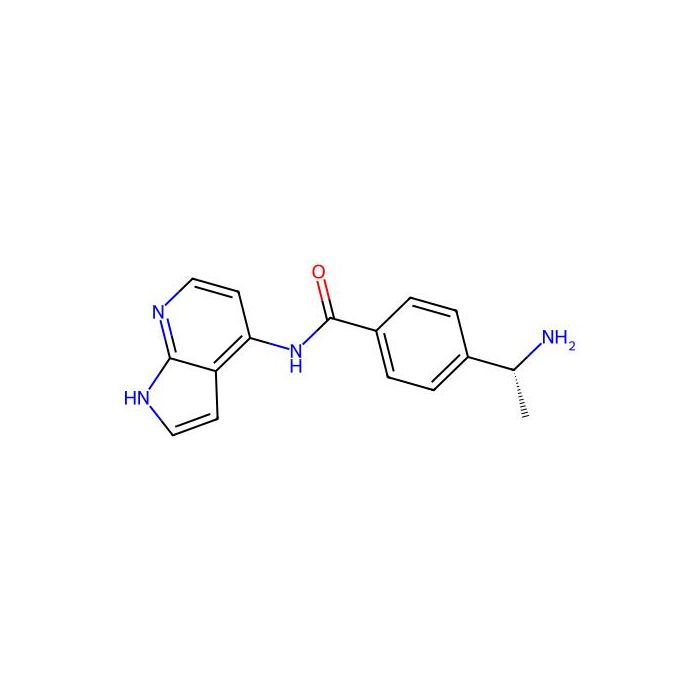
Structure and Identity
This item is supplied as part of Aladdin’s Moligand small‑molecule/ligand collection. Specific structural identifiers for this SKU are not disclosed in the product data.
SKU: Y1493184 (Product Name: Y-33075)
CAS: 199433-58-4
PubChem CID: 9810884
InChIKey: Not specified for this item; refer to CoA/Spec Sheet.
SMILES: Not specified for this item; refer to CoA/Spec Sheet.
Molecular formula: Not specified for this item; refer to CoA/Spec Sheet.
Molecular weight: Not specified for this item; refer to CoA/Spec Sheet.
Structural features (general guidance for Moligand library items):
Small organic ligand suitable for screening/biochemical assay use.
May contain heteroatoms (N/O/S/halogens) and common medicinal chemistry motifs; exact functional groups for this item are not provided in the current listing.
2D depiction and stereochemical assignment (if any) are provided on the Certificate of Analysis (CoA) for lot-specific verification.
Notes for identity confirmation in your lab (general best practice):
Verify identity by LC–MS and 1H NMR against the CoA-provided structure, if supplied with your shipment.
Recordkeeping: link CAS and internal inventory ID to avoid mix‑ups across screening plates.
Where chirality is relevant, confirm enantiomeric or diastereomeric purity per your assay sensitivity (no stereochemical data are provided here).
Synthetic Utility
This SKU is supplied as a finished small‑molecule ligand for screening and is not positioned as a synthetic building block.
Building‑block use: Not typically applicable. Without disclosed functional groups, no guidance can be given on cross‑coupling, protection/deprotection, or other transformations for this item.
Reference/control material: In synthetic methodology development or analytical assays, the compound could serve as a control analyte once its structure is confirmed from the CoA.
Derivatization: If your program requires analog generation (e.g., for SAR), consider custom synthesis services or procurement of related analogs rather than modifying this lot, since structural data and reactivity are not provided here.
Item‑specific reactivity, protecting group strategies, and named‑reaction compatibility are Not specified for this item; refer to CoA/Spec Sheet. If you need a precursor or functionalized analog, contact us with target specifications for sourcing.
Target Specificity
Target/epitope specificity is not provided for this SKU.
Target name/class: Not specified for this item; refer to CoA/Spec Sheet.
Species reactivity or selectivity panel: Not specified for this item; refer to CoA/Spec Sheet.
Mechanism of action or binding mode: Not specified for this item; refer to CoA/Spec Sheet.
This product is part of a small‑molecule/ligand library and is suitable for unbiased or focused screening where the biological target is defined by the user’s assay.
Need help choosing the grade?
Our grade selection guide covers purity, stabilizer status, and application suitability for all variants in our catalog.
We use cookies to ensure the website functions properly and, where permitted, to improve your experience. You can manage your preferences at any time in Settings. Learn more in our Cookie Policy.
Shall we send you a message when we have discounts available?
Remind me later
Thank you! Please check your email inbox to confirm.
Products are supplied to verified businesses, institutions, and qualified professionals for research and development use only. Not for use in humans, animals, diagnosis, or therapy.