for sensitive chromatographic and analytical workflows requiring minimal baseline interference.
🌡
Storage & shipping
Room temperature,Desiccated,Cool Ships Normal Check lot-specific COA for exact specifications.
📋
Quality documents
SDS, COA, datasheet, and spec sheet available for download. Lot-specific COA accessible via lot number lookup.
📚
Literature proof
Cited in 0 peer-reviewed publications across chromatography, organic synthesis, and cross-coupling reactions.
Descripción general
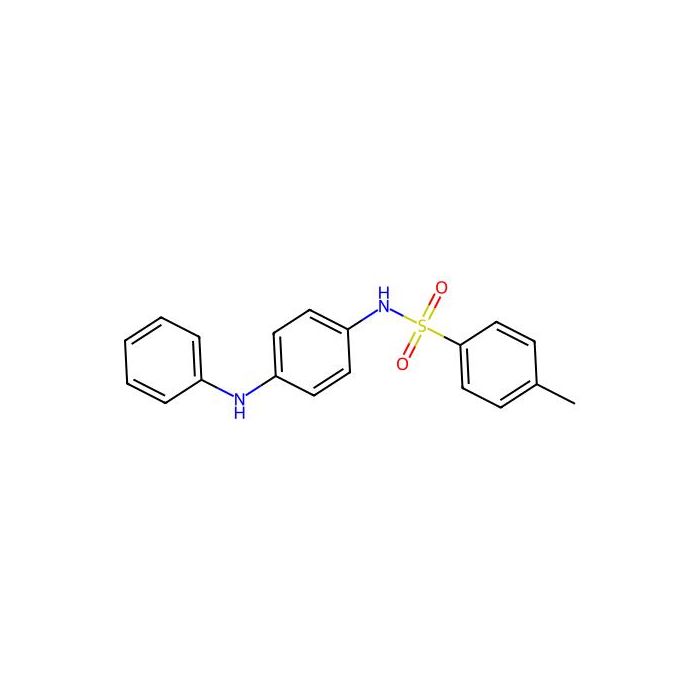
The product is a gray powder, non-toxic, with a relative density of 1.32 and a melting point of not less than 135°C. It is soluble in acetone, slightly soluble in dichloroethane, benzene, hot water, and hot alkaline solutions, and insoluble in gasoline and water. It exhibits good storage stability.
Function and Applications
Used as an antioxidant for neoprene rubber, natural rubber, polybutadiene rubber, styrene-butadiene rubber, and their latexes. It provides excellent protection against ozone and oxygen aging, and effectively inhibits copper and manganese catalyzed degradation. Particularly suitable for preventing chlorine released during neoprene aging from damaging fibrous materials. The product is easily dispersed and can be directly incorporated into rubber or added to latex in the form of an aqueous dispersion. When used in neoprene rubber, optimal heat resistance is achieved when combined with antioxidant ODA; it also reduces the plasticity of unsulfurized neoprene, lowering shrinkage during calendaring and thereby aiding in dimensional control of semi-finished products. Primarily used in the manufacture of rubberized fabrics, electrical insulating products, and light-colored industrial goods. Typical dosage in neoprene rubber: 1–2 parts per hundred rubber (phr).
This compound belongs to the class of organic compounds known as p-toluenesulfonamides. These are aromatic heterocyclic compounds containing a toluene that is p-substituted with a sulfonamide group.
External Descriptors
Not available
1. Djoumbou Feunang Y, Eisner R, Knox C, Chepelev L, Hastings J, Owen G, Fahy E, Steinbeck C, Subramanian S, Bolton E, Greiner R, and Wishart DS. ClassyFire: Automated Chemical Classification With A Comprehensive, Computable Taxonomy. Journal of Cheminformatics, 2016, 8:61.
We use cookies to ensure the website functions properly and, where permitted, to improve your experience. You can manage your preferences at any time in Settings. Learn more in our Cookie Policy.
Shall we send you a message when we have discounts available?
Remind me later
Thank you! Please check your email inbox to confirm.
Products are supplied to verified businesses, institutions, and qualified professionals for research and development use only. Not for use in humans, animals, diagnosis, or therapy.

 C2626593