
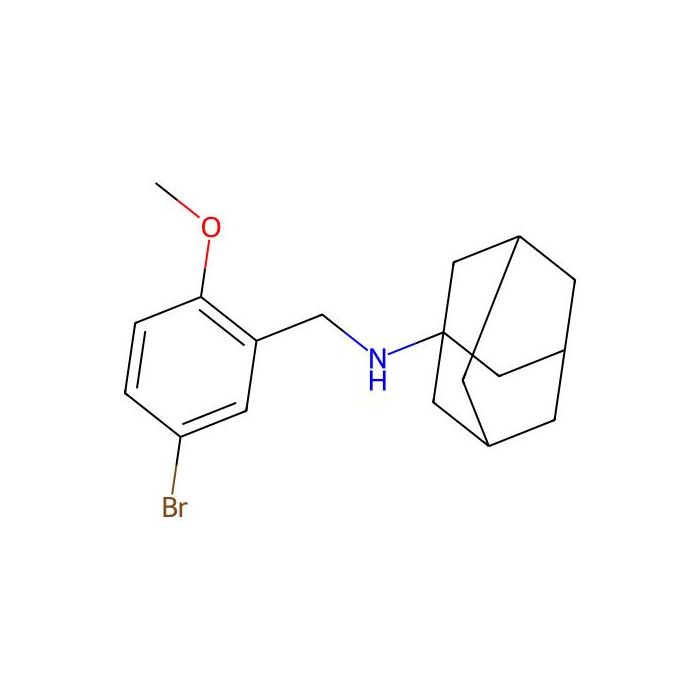
Determine the necessary mass, volume, or concentration for preparing a solution.
ABMA - 10mM in DMSO , CAS No.332108-65-3
Disponible para pedir
GRADE & PURITY 10mM in DMSO
Storage
Store at -80°C
Shipped In
Dry ice packs + Cold packs
10mM in DMSO for sensitive chromatographic and analytical workflows requiring minimal baseline interference.
Store at -80°C Ships Dry ice packs + Cold packs Check lot-specific COA for exact specifications.
SDS, COA, datasheet, and spec sheet available for download. Lot-specific COA accessible via lot number lookup.
Cited in 0 peer-reviewed publications across chromatography, organic synthesis, and cross-coupling reactions.
ABMA is a broad-spectrum inhibitor of intracellular toxins and pathogens. ABMA efficiently protects cells against various toxins and pathogens including viruses , intracellular bacteria and parasite . ABMA selectively acts at host cell late endosomes rather than targeting toxin or pathogen itself. ABMA has broad-spectrum anti-infection activity
In Vitro
ABMA protects cells against four bacterial toxins ( Corynebacterium diphtheriae (DT; EC 50 of 62.9 μM), Bacillus anthracis (LT), Clostridium difficile toxin B (TcdB; EC 50 of 73.3 µM), Clostridium sordellii lethal toxin (TcsL; EC 50 of 86.7 μM)), three viruses (Ebola (EC 50 of 3.3 µM), rabies (EC 50 of 19.4 µM), dengue-4 virus ( EC 50 of 8.2 µM)), two species of Chlamydiales intracellular bacteria ( Simkania negevensis and Chlamydia trachomatis ), and the parasite Leishmania infantum (EC 50 of 7.1 µM) at micromolar level. In A549 cells, ABMA treatment induces a decrease in ricin cytotoxicity with an EC 50 of 3.8 µM, and a protection factor (R) at 30 µM ranging from 5 to 10. ABMA retained almost 100% of its biological activity against ricin-induced cytotoxicity up to six days. MCE has not independently confirmed the accuracy of these methods. They are for reference only.
In Vivo
ABMA (2-200 mg/kg; intraperitoneal injection; female BALB/c mice) treatment protects mice from nasal instillation of an LD 90 of ricin . MCE has not independently confirmed the accuracy of these methods. They are for reference only. Animal Model: Pathogen-free female BALB/c mice (6 week-old) with ricin Dosage: 2 mg/kg, 20 mg/kg, 200 mg/kg Administration: Intraperitoneal injection Result: A statistically significant protection according to survival curves was observed with a single ip dose of 2 mg/kg. The 20 mg/kg dose fully protected animals through to day 21. The 200 mg/kg dose resulted in 80% of protection of mice against ricin challenge with a single animal succumbing on day 15.
IC50& Target:Intracellular bacteria, Viruses, Parasite
| Isómeros SMILES | COC1=C(C=C(C=C1)Br)CNC23CC4CC(C2)CC(C4)C3 |
|---|---|
| PubChem CID | 2853512 |
| Peso molecular | 350.29 |
Comprehensive hazard, handling, storage, and regulatory compliance document.
Download SDS →Lot-specific quality data. Enter your lot number to retrieve the exact COA.
Look up COA →Full quality attributes and acceptance criteria for this grade.
View spec sheet →