
Determine the necessary mass, volume, or concentration for preparing a solution.
| Activity Type | Activity Value -log(M) | Mechanism of Action | Activity Reference | Publications (PubMed IDs) |
|---|
Moligand™, 10mM in DMSO Moligand™ for sensitive chromatographic and analytical workflows requiring minimal baseline interference.
Store at -80°C Ships Dry ice packs + Cold packs Check lot-specific COA for exact specifications.
SDS, COA, datasheet, and spec sheet available for download. Lot-specific COA accessible via lot number lookup.
Cited in 7 peer-reviewed publications across chromatography, organic synthesis, and cross-coupling reactions.
Information
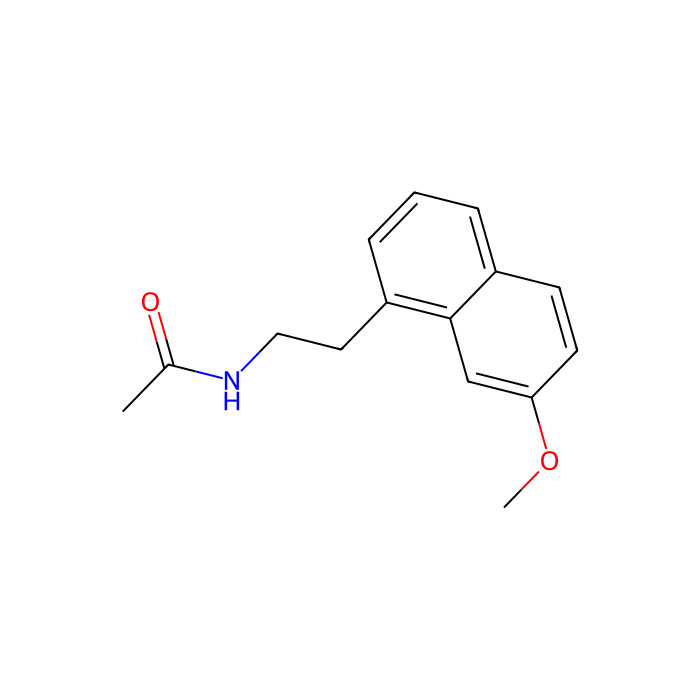
Agomelatine (S20098) is classified as a norepinephrine-dopamine disinhibitor (NDDI) due to its antagonism of the 5-HT2C receptor.
In vitro
Agomelatine completely normalizes stress-affected cell survival and partly reverses reduced doublecortin expression in the hippocampus of rats subjected to chronic footshock stress.
In vivo
Agomelatine is effective in reversing the transgenic mouse behavioural changes noted in the Porsolt forced swim test as well as in the elevated plus maze. Agomelatine also markedly accelerates readjustment of circadian cycles of temperature and activity following an induced phase shift. Agomelatine enhances cell proliferation and neurogenesis in the ventral hippocampus (VH) of adult rats, a region pertinent to mood disorders. Agomelatine increases the ratio of mature vs immature neurons and enhances neurite outgrowth of granular cells in adult rats, suggesting an acceleration of maturation. Agomelatine also activates several cellular signals (extracellular signal-regulated kinase1/2, protein kinase B, and glycogen synthase kinase 3beta) known to be modulated by antidepressants and implicated in the control of proliferation/survival. Agomelatine enhances the time devoted to active social interaction in unfamiliar pairs of rats exposed to a novel environment. Agomelatine increases cell proliferation and neurogenesis in the ventral dentate gyrus of rats, a region notably implicated in response to emotion, which is consistent with the antidepressant-anxiolytic properties of Agomelatine. Agomelatine increases survival of newly formed neurons in the entire dentate gyrus of rats.
Cell Data
cell lines:
Concentrations:
Incubation Time:
Powder Purity:≥99%
| ALogP | 2.7 |
|---|
| Isómeros SMILES | CC(=O)NCCC1=CC=CC2=C1C=C(C=C2)OC |
|---|---|
| WGK Alemania | 3 |
| Peso molecular | 243.3 |
| Reaxy-Rn | 5813634 |
| Reaxys-RN_link_address | https://www.reaxys.com/reaxys/secured/hopinto.do?context=S&query=IDE.XRN=5813634&ln= |
Comprehensive hazard, handling, storage, and regulatory compliance document.
Download SDS →Lot-specific quality data. Enter your lot number to retrieve the exact COA.
Look up COA →Full quality attributes and acceptance criteria for this grade.
View spec sheet →| Activity Type | Activity Value -log(M) | Mechanism of Action | Activity Reference | Publications (PubMed IDs) |
|---|
| Activity Type | Activity Value -log(M) | Mechanism of Action | Activity Reference | Publications (PubMed IDs) |
|---|
| Activity Type | Activity Value -log(M) | Mechanism of Action | Activity Reference | Publications (PubMed IDs) |
|---|
| Activity Type | Activity Value -log(M) | Mechanism of Action | Activity Reference | Publications (PubMed IDs) |
|---|
| Activity Type | Activity Value -log(M) | Mechanism of Action | Activity Reference | Publications (PubMed IDs) |
|---|
| Solubilidad | Solubility (25°C) In vitro DMSO: 4 mg/mL (21.72 mM); |
|---|---|
| Punto de fusión (°C) | 110 °C |
| 1. Moying Yang, Yan Yao, Haotian Shen, Fei Teng, Yunuo Liu, Yuyang Ma, Bin Di, Mengxiang Su. (2025) Detection of antidepressants in wastewater from four provinces of China by UPLC-MS/MS to assess the regional prevalence of depression. MICROCHEMICAL JOURNAL, [PMID:] [10.1016/j.microc.2025.114446] |
| 2. Zhao Ruolin, Tang Yujie, Zhang Yingbing, Liu Jinwang, Zhong Changsheng, Ji Bozhen, Song Weijia, Zhang Chengtu, Su Jianmin. (2025) Agomelatine alleviates palmitic acid-induced mouse oocyte meiosis defects by restoring mitochondrial function. INTERNATIONAL JOURNAL OF OBESITY, [PMID:40721860] [10.1038/s41366-025-01825-2] |
| 3. Lan Tian, Wu Yuhan, Zhang Yulei, Li Shuhan, Zhu Zhanpeng, Wang Liyan, Mao Xueqin, Li Ye, Fan Cuiqin, Wang Wenjing, Yu Shu Yan. (2022) Agomelatine rescues lipopolysaccharide-induced neural injury and depression-like behaviors via suppression of the Gαi-2-PKA-ASK1 signaling pathway. Journal of Neuroinflammation, 19 (1): (1-14). [PMID:35610704] [10.1186/s12974-022-02479-x] |
| 4. Yang Xiao-bo, Zu Heng-bing, Zhao Yong-fei, Yao Kai. (2022) Agomelatine Prevents Amyloid Plaque Deposition, Tau Phosphorylation, and Neuroinflammation in APP/PS1 Mice. Frontiers in Aging Neuroscience, [PMID:35153715] [10.3389/fnagi.2021.766410] |
| 5. Xiujuan Chen, Shuiqing Zheng, Jian Le, Zheyuan Qian, Runsheng Zhang, Zhanying Hong, Yifeng Chai. (2017) Ultrasound-assisted low-density solvent dispersive liquid–liquid microextraction for the simultaneous determination of 12 new antidepressants and 2 antipsychotics in whole blood by gas chromatography–mass spectrometry. JOURNAL OF PHARMACEUTICAL AND BIOMEDICAL ANALYSIS, [PMID:28494335] [10.1016/j.jpba.2017.04.032] |
| 6. Wei Zhang, Xingwang Ji, Qianyanqiu Zhao, Jinyao Qi, Wen Guo, Gaoshuo Zhang, Yujing Guan, Shenglong Li, Yuling Mao. (2025) Nanoodor Particles Deliver Drugs to Central Nervous System via Olfactory Pathway. Advanced Science, [PMID:39998409] [10.1002/advs.202408908] |
| 7. Yan Zhu, Ye Li, Zhaoying Yu, Xiao Chen, Tian Lan, Meijian Wang, Shuyan Yu. (2025) Agomelatine Alleviates Depressive-like Behaviors by Suppressing Hippocampal Oxidative Stress in the Chronic Social Defeat Stress Model. Antioxidants, 14 (4): (410). [PMID:40298761] [10.3390/antiox14040410] |
Our grade selection guide covers purity, stabilizer status, and application suitability for all variants in our catalog.
View Moligand™ grade guide →