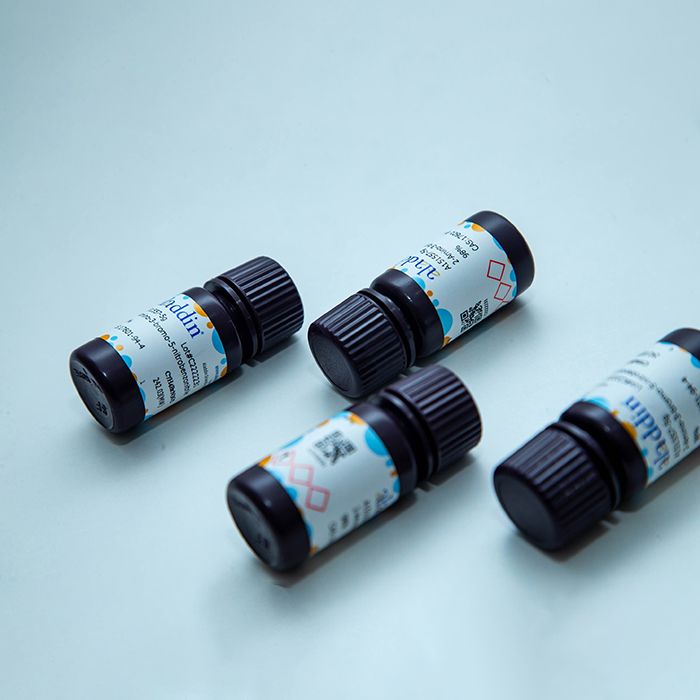
for sensitive chromatographic and analytical workflows requiring minimal baseline interference.
🌡
Storage & shipping
Store at 2-8°C Ships Wet ice Check lot-specific COA for exact specifications.
📋
Quality documents
SDS, COA, datasheet, and spec sheet available for download. Lot-specific COA accessible via lot number lookup.
📚
Literature proof
Cited in 0 peer-reviewed publications across chromatography, organic synthesis, and cross-coupling reactions.
Descripción general
Product introduction:
Coupling Catalyst decreases reaction times and increases aldehyde-hydrazide coupling efficiency, resulting in greater than 90% coupling of glycoproteins in 4 hours.
Features of the GlycoLink Coupling Catalyst:
• Optimized—catalyzes aldehyde-hydrazide and aldehyde-alkoxyamine conjugation reaction • Efficient—maximizes coupling efficiency and decreases required coupling reaction incubation time • Gentle—does not interfere with protein function and is easily removed by desalting or dialysis
The GlycoLink Coupling Catalyst is a two component kit composed of aniline and sodium acetate buffer. The catalyst accelerates the coupling rate of hydrazide and alkoxyamine moieties with reactive aldehydes that have been generated by periodate-oxidation of cis-diols in glycoproteins. The GlycoLink Coupling Catalyst increases the coupling efficiency of these reactions, decreasing the molar excess amounts of labeling reagents that are required for conjugation reactions. The catalyst is also useful for increasing the binding efficiency of oxidized glycoproteins or other carbohydrate-containing molecules to hydrazide resins.
Applications • Labeling aldehyde-containing molecules with alkoxyamine-biotins • Labeling aldehyde-containing molecules with hydrazide-biotins • Increase coupling efficiency of aldehyde-containing molecules to hydrazide resin
Producing reactive aldehydes via sodium meta-periodate oxidation of cis-diols in glycoproteins is a useful technique for variety of protein labeling and detection methods. The GlycoLink Coupling Catalyst (aniline) increases the efficiency of these reactions by acting as a nucleophilic catalyst that accelerates bond formation through a Schiff base intermediate. The catalyst also reduces the amount (molar excess) of hydrazide or alkoxyamine required in labeling reactions, thereby eliminating the need for DMSO to solubilize high concentrations of labeling reagent.
More Product Data •Improved immobilization and conjugation of glycoproteins
• Form:Liquid
Specifications
Condiciones de almacenamiento de almacenamiento
Store at 2-8°C
Enviado en
Wet ice
Este producto requiere envío en cadena de frío. Los servicios terrestres y otros servicios económicos no están disponibles.
Documentation
📋 Safety Data Sheet (SDS)
Comprehensive hazard, handling, storage, and regulatory compliance document.
We use cookies to ensure the website functions properly and, where permitted, to improve your experience. You can manage your preferences at any time in Settings. Learn more in our Cookie Policy.
Shall we send you a message when we have discounts available?
Remind me later
Thank you! Please check your email inbox to confirm.
Products are supplied to verified businesses, institutions, and qualified professionals for research and development use only. Not for use in humans, animals, diagnosis, or therapy.