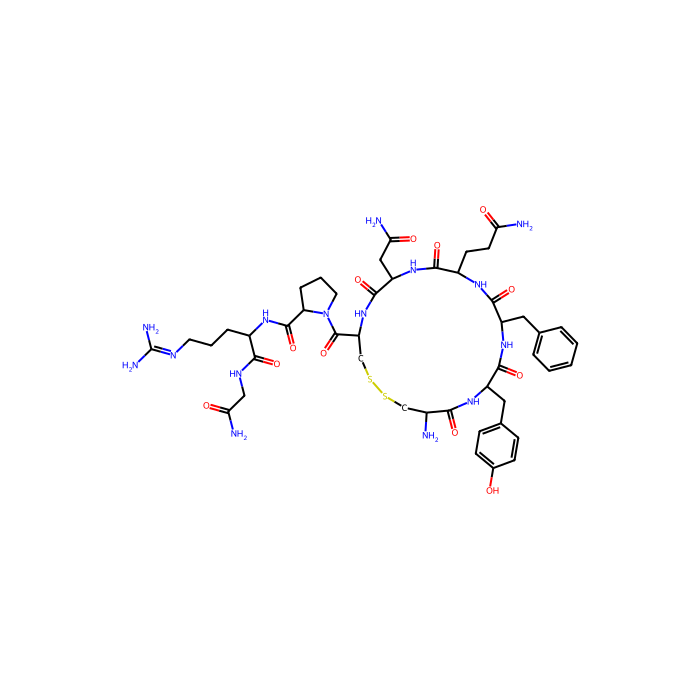
Argipressin - ≥98% , ADH/AVP receptor agonist, CAS No.113-79-1, ADH/AVP receptor agonist

CAS: 113-79-1 Cat. No.: A302232 Fórmula: C46H65N15O12S2 Peso molecular: 1084.23 Número EC: 204-035-4
Disponible para pedir
GRADE & PURITY ≥98%
Synonyms
UNII-Y4907O6MFD | (2S)-1-[(4R,7S,10S,13S,16S,19R)-19-amino-7-(2-amino-2-oxoethyl)-10-(3-amino-3-oxopropyl)-16-[(4-hydroxyphenyl)methyl]-6,9,12,15,18-pentaoxo-13-(phenylmethyl)1,2-dithia-5,8,11,14,17-pentazacycloicosane-4-carbonyl]-N-[(2S)-1-[(2-amino-2-ox
Storage
Store at -20°C,Argon charged
Shipped In
Ice chest + Ice pads
★
Size
USA
Alemania (EU)*
Price
Qty
5mg
A302232-5mg
2 Disponible
—
50,90US$
25mg
A302232-25mg
Fabricado bajo pedido · 8–12 semanas
115,90US$
100mg
A302232-100mg
Fabricado bajo pedido · 8–12 semanas
219,90US$
Enter a quantity for the sizes you want to add.
🧪
Why this grade

≥98% for sensitive chromatographic and analytical workflows requiring minimal baseline interference.

🌡

Storage & shipping

Store at -20°C,Argon charged Ships Ice chest + Ice pads Check lot-specific COA for exact specifications.

📋

Quality documents

SDS, COA, datasheet, and spec sheet available for download. Lot-specific COA accessible via lot number lookup.

📚

Literature proof

Cited in 1 peer-reviewed publications across chromatography, organic synthesis, and cross-coupling reactions.

Descripción general

Argpressin Acetate is a neurohypophysial hormone found in most mammals. It acts as a neurotransmitter at synapses in the brain, increases [Ca2+]i in cultured rat hippocampal neurons.Amino-acid Sequence
Cys-Tyr-Phe-Gln-Asn-Cys-Pro-Arg-Gly-NH2(Cys1-Cys6)

Specifications

Sinónimos
UNII-Y4907O6MFD | (2S)-1-[(4R,7S,10S,13S,16S,19R)-19-amino-7-(2-amino-2-oxoethyl)-10-(3-amino-3-oxopropyl)-16-[(4-hydroxyphenyl)methyl]-6,9,12,15,18-pentaoxo-13-(phenylmethyl)1,2-dithia-5,8,11,14,17-pentazacycloicosane-4-carbonyl]-N-[(2S)-1-[(2-amino-2-ox
Especificaciones y pureza
≥98%
Mecanismos bioquímicos y fisiológicos
Endogenous peptide neurotransmitter, involved in water regulation and vasodepression.
Condiciones de almacenamiento de almacenamiento
Store at -20°C,Argon charged
Enviado en
Ice chest + Ice pads
Este producto requiere envío en cadena de frío. Los servicios terrestres y otros servicios económicos no están disponibles.
Tipo de acción
AGONIST
Mecanismo de acción
ADH/AVP receptor agonist
Nota
Wherever possible, you should prepare and use solutions on the same day. However, if you need to make up stock solutions in advance, we recommend that you store the solution as aliquots in tightly sealed vials at -20°C. Generally, these will be useable for up to one week. Before use, and prior to opening the vial we recommend that you allow your product to equilibrate to room temperature for at least 1 hour. Need more advice on solubility, usage and handling? Please visit our frequently asked questions (FAQ) page for more details.
Pureza
≥98%
Propiedades del producto
ALogP
-4.8
Nombres e identificadores
Pubchem Sid
Pubchem Sid Url
https://pubchem.ncbi.nlm.nih.gov/substance/504759759
Sonrisas canónicas
C1CC(N(C1)C(=O)C2CSSCC(C(=O)NC(C(=O)NC(C(=O)NC(C(=O)NC(C(=O)N2)CC(=O)N)CCC(=O)N)CC3=CC=CC=C3)CC4=CC=C(C=C4)O)N)C(=O)NC(CCCN=C(N)N)C(=O)NCC(=O)N
IUPAC Name
(2S)-1-[(4R,7S,10S,13S,16S,19R)-19-amino-7-(2-amino-2-oxoethyl)-10-(3-amino-3-oxopropyl)-13-benzyl-16-[(4-hydroxyphenyl)methyl]-6,9,12,15,18-pentaoxo-1,2-dithia-5,8,11,14,17-pentazacycloicosane-4-carbonyl]-N-[(2S)-1-[(2-amino-2-oxoethyl)amino]-5-(diaminomethylideneamino)-1-oxopentan-2-yl]pyrrolidine-2-carboxamide
InChIKey
KBZOIRJILGZLEJ-LGYYRGKSSA-N
INCHI
1S/C46H65N15O12S2/c47-27-22-74-75-23-33(45(73)61-17-5-9-34(61)44(72)56-28(8-4-16-53-46(51)52)39(67)54-21-37(50)65)60-43(71)32(20-36(49)64)59-40(68)29(14-15-35(48)63)55-41(69)31(18-24-6-2-1-3-7-24)58-42(70)30(57-38(27)66)19-25-10-12-26(62)13-11-25/h1-3,6-7,10-13,27-34,62H,4-5,8-9,14-23,47H2,(H2,48,63)(H2,49,64)(H2,50,65)(H,54,67)(H,55,69)(H,56,72)(H,57,66)(H,58,70)(H,59,68)(H,60,71)(H4,51,52,53)/t27-,28-,29-,30-,31-,32-,33-,34-/m0/s1
Isómeros SMILES
C1C[C@H](N(C1)C(=O)[C@@H]2CSSC[C@@H](C(=O)N[C@H](C(=O)N[C@H](C(=O)N[C@H](C(=O)N[C@H](C(=O)N2)CC(=O)N)CCC(=O)N)CC3=CC=CC=C3)CC4=CC=C(C=C4)O)N)C(=O)N[C@@H](CCCN=C(N)N)C(=O)NCC(=O)N
Peso molecular
1084.23
Reaxy-Rn
25737583
Reaxys-RN_link_address
https://www.reaxys.com/reaxys/secured/hopinto.do?context=S&query=IDE.XRN=25737583&ln=

Documentation

📋 Safety Data Sheet (SDS)

Comprehensive hazard, handling, storage, and regulatory compliance document.

Download SDS →

✅ Certificate of Analysis (COA)

Lot-specific quality data. Enter your lot number to retrieve the exact COA.

Look up COA →

📊 Datasheet

Quick-reference summary of product specifications and applications.

View datasheet →

🔬 Specification Sheet

Full quality attributes and acceptance criteria for this grade.

View spec sheet →

Advanced Data

Taxonomic Classification

Taxonomy Tree

KingdomOrganic compounds
SuperclassOrganic acids and derivatives
ClaseCarboxylic acids and derivatives
SubclassAmino acids, peptides, and analogues
Intermediate Tree Nodes Peptides
Direct ParentOligopeptides
Alternative Parents Cyclic peptides  Proline and derivatives  Macrolactams  N-acyl-alpha amino acids and derivatives  Alpha amino acid amides  Pyrrolidinecarboxamides  N-acylpyrrolidines  1-hydroxy-2-unsubstituted benzenoids  Benzene and substituted derivatives  N-acyl amines  Tertiary carboxylic acid amides  Secondary carboxylic acid amides  Primary carboxylic acid amides  Lactams  Guanidines  Organic disulfides  Propargyl-type 1,3-dipolar organic compounds  Carboximidamides  Azacyclic compounds  Organopnictogen compounds  Monoalkylamines  Hydrocarbon derivatives  Carbonyl compounds  Organic oxides  
Molecular FrameworkAromatic heteromonocyclic compounds
Substituents Alpha-oligopeptide - Cyclic alpha peptide - Proline or derivatives - N-acyl-alpha amino acid or derivatives - Macrolactam - Alpha-amino acid amide - N-substituted-alpha-amino acid - Alpha-amino acid or derivatives - N-acylpyrrolidine - Pyrrolidine carboxylic acid or derivatives - Pyrrolidine-2-carboxamide - 1-hydroxy-2-unsubstituted benzenoid - Phenol - Monocyclic benzene moiety - N-acyl-amine - Fatty acyl - Fatty amide - Benzenoid - Pyrrolidine - Tertiary carboxylic acid amide - Guanidine - Organic disulfide - Primary carboxylic acid amide - Amino acid or derivatives - Secondary carboxylic acid amide - Lactam - Carboxamide group - Azacycle - Organoheterocyclic compound - Organic 1,3-dipolar compound - Propargyl-type 1,3-dipolar organic compound - Carboximidamide - Amine - Organopnictogen compound - Organic oxygen compound - Organic nitrogen compound - Carbonyl group - Hydrocarbon derivative - Organic oxide - Primary amine - Primary aliphatic amine - Organooxygen compound - Organonitrogen compound - Aromatic heteromonocyclic compound
DescripciónThis compound belongs to the class of organic compounds known as oligopeptides. These are organic compounds containing a sequence of between three and ten alpha-amino acids joined by peptide bonds.
External Descriptors vasopressin
Estructura 3D
Modelo de Estructura Química Interactiva


Objetivos asociados (humanos)
F2 Tclin Thrombin (11687 Activities)
Activity TypeRelationActivity valueUnitsAction TypeJournalPubMed IddoiAssay Aladdin ID
ESR1 Tclin Estrogen receptor alpha (17718 Activities)
Activity TypeRelationActivity valueUnitsAction TypeJournalPubMed IddoiAssay Aladdin ID
PGR Tclin Progesterone receptor (8562 Activities)
Activity TypeRelationActivity valueUnitsAction TypeJournalPubMed IddoiAssay Aladdin ID
CHRM2 Tclin Muscarinic acetylcholine receptor M2 (10671 Activities)
Activity TypeRelationActivity valueUnitsAction TypeJournalPubMed IddoiAssay Aladdin ID
HTR1A Tclin Serotonin 1a (5-HT1a) receptor (14969 Activities)
Activity TypeRelationActivity valueUnitsAction TypeJournalPubMed IddoiAssay Aladdin ID
ADRA2A Tclin Alpha-2a adrenergic receptor (9450 Activities)
Activity TypeRelationActivity valueUnitsAction TypeJournalPubMed IddoiAssay Aladdin ID
AR Tclin Androgen Receptor (11781 Activities)
Activity TypeRelationActivity valueUnitsAction TypeJournalPubMed IddoiAssay Aladdin ID
CHRM1 Tclin Muscarinic acetylcholine receptor M1 (12690 Activities)
Activity TypeRelationActivity valueUnitsAction TypeJournalPubMed IddoiAssay Aladdin ID
VDR Tclin Vitamin D receptor (26531 Activities)
Activity TypeRelationActivity valueUnitsAction TypeJournalPubMed IddoiAssay Aladdin ID
GABRA1 Tclin GABA receptor alpha-1 subunit (399 Activities)
Activity TypeRelationActivity valueUnitsAction TypeJournalPubMed IddoiAssay Aladdin ID
MAOA Tclin Monoamine oxidase A (11911 Activities)
Activity TypeRelationActivity valueUnitsAction TypeJournalPubMed IddoiAssay Aladdin ID
DRD1 Tclin Dopamine D1 receptor (9720 Activities)
Activity TypeRelationActivity valueUnitsAction TypeJournalPubMed IddoiAssay Aladdin ID
ACHE Tclin Acetylcholinesterase (18204 Activities)
Activity TypeRelationActivity valueUnitsAction TypeJournalPubMed IddoiAssay Aladdin ID
PTGS1 Tclin Cyclooxygenase-1 (9233 Activities)
Activity TypeRelationActivity valueUnitsAction TypeJournalPubMed IddoiAssay Aladdin ID
SLC6A2 Tclin Norepinephrine transporter (10102 Activities)
Activity TypeRelationActivity valueUnitsAction TypeJournalPubMed IddoiAssay Aladdin ID
AVPR2 Tclin Vasopressin V2 receptor (2912 Activities)
Activity TypeRelationActivity valueUnitsAction TypeJournalPubMed IddoiAssay Aladdin ID
ADORA1 Tclin Adenosine A1 receptor (17603 Activities)
Activity TypeRelationActivity valueUnitsAction TypeJournalPubMed IddoiAssay Aladdin ID
OXTR Tclin Oxytocin receptor (1962 Activities)
Activity TypeRelationActivity valueUnitsAction TypeJournalPubMed IddoiAssay Aladdin ID
SLC6A4 Tclin Serotonin transporter (12625 Activities)
Activity TypeRelationActivity valueUnitsAction TypeJournalPubMed IddoiAssay Aladdin ID
ADRA1A Tclin Alpha-1a adrenergic receptor (8359 Activities)
Activity TypeRelationActivity valueUnitsAction TypeJournalPubMed IddoiAssay Aladdin ID
OPRM1 Tclin Mu opioid receptor (19785 Activities)
Activity TypeRelationActivity valueUnitsAction TypeJournalPubMed IddoiAssay Aladdin ID
DRD3 Tclin Dopamine D3 receptor (14368 Activities)
Activity TypeRelationActivity valueUnitsAction TypeJournalPubMed IddoiAssay Aladdin ID
AVPR1A Tclin Vasopressin V1a receptor (5412 Activities)
Activity TypeRelationActivity valueUnitsAction TypeJournalPubMed IddoiAssay Aladdin ID
AVPR1B Tclin Vasopressin V1b receptor (1301 Activities)
Activity TypeRelationActivity valueUnitsAction TypeJournalPubMed IddoiAssay Aladdin ID
SLC6A3 Tclin Dopamine transporter (10535 Activities)
Activity TypeRelationActivity valueUnitsAction TypeJournalPubMed IddoiAssay Aladdin ID
KCNH2 Tclin HERG (29587 Activities)
Activity TypeRelationActivity valueUnitsAction TypeJournalPubMed IddoiAssay Aladdin ID
PDE3A Tclin Phosphodiesterase 3A (3309 Activities)
Activity TypeRelationActivity valueUnitsAction TypeJournalPubMed IddoiAssay Aladdin ID
HTR2B Tclin Serotonin 2b (5-HT2b) receptor (10323 Activities)
Activity TypeRelationActivity valueUnitsAction TypeJournalPubMed IddoiAssay Aladdin ID
TBXA2R Tclin Thromboxane A2 receptor (5717 Activities)
Activity TypeRelationActivity valueUnitsAction TypeJournalPubMed IddoiAssay Aladdin ID
PDE4A Tclin Phosphodiesterase 4A (1943 Activities)
Activity TypeRelationActivity valueUnitsAction TypeJournalPubMed IddoiAssay Aladdin ID
ADORA3 Tchem Adenosine A3 receptor (15931 Activities)
Activity TypeRelationActivity valueUnitsAction TypeJournalPubMed IddoiAssay Aladdin ID
HRH3 Tclin Histamine H3 receptor (10389 Activities)
Activity TypeRelationActivity valueUnitsAction TypeJournalPubMed IddoiAssay Aladdin ID
KDR Tclin Vascular endothelial growth factor receptor 2 (20924 Activities)
Activity TypeRelationActivity valueUnitsAction TypeJournalPubMed IddoiAssay Aladdin ID
Homo sapiens (32628 Activities)
Activity TypeRelationActivity valueUnitsAction TypeJournalPubMed IddoiAssay Aladdin ID
Caco-2 (12174 Activities)
Activity TypeRelationActivity valueUnitsAction TypeJournalPubMed IddoiAssay Aladdin ID
ABCC2 Tchem Canalicular multispecific organic anion transporter 1 (1191 Activities)
Activity TypeRelationActivity valueUnitsAction TypeJournalPubMed IddoiAssay Aladdin ID
ABCB11 Tchem Bile salt export pump (2311 Activities)
Activity TypeRelationActivity valueUnitsAction TypeJournalPubMed IddoiAssay Aladdin ID
ABCC3 Tbio Canalicular multispecific organic anion transporter 2 (718 Activities)
Activity TypeRelationActivity valueUnitsAction TypeJournalPubMed IddoiAssay Aladdin ID
PMP22 Tbio Peripheral myelin protein 22 (699 Activities)
Activity TypeRelationActivity valueUnitsAction TypeJournalPubMed IddoiAssay Aladdin ID
ABCC4 Tchem Multidrug resistance-associated protein 4 (785 Activities)
Activity TypeRelationActivity valueUnitsAction TypeJournalPubMed IddoiAssay Aladdin ID
Objetivos asociados (no humanos)
Plasmodium falciparum (966862 Activities)
Activity TypeRelationActivity valueUnitsAction TypeJournalPubMed IddoiAssay Aladdin ID
Gallus gallus (1187 Activities)
Activity TypeRelationActivity valueUnitsAction TypeJournalPubMed IddoiAssay Aladdin ID
Canis familiaris (36305 Activities)
Activity TypeRelationActivity valueUnitsAction TypeJournalPubMed IddoiAssay Aladdin ID
Rattus norvegicus (775804 Activities)
Activity TypeRelationActivity valueUnitsAction TypeJournalPubMed IddoiAssay Aladdin ID
Serum (58 Activities)
Activity TypeRelationActivity valueUnitsAction TypeJournalPubMed IddoiAssay Aladdin ID
Avpr1b Vasopressin V1 receptor (358 Activities)
Activity TypeRelationActivity valueUnitsAction TypeJournalPubMed IddoiAssay Aladdin ID
Avpr1b Vasopressin receptor (377 Activities)
Activity TypeRelationActivity valueUnitsAction TypeJournalPubMed IddoiAssay Aladdin ID
Mecanismos de acción
Certificados (CoA, COO, BSE/TSE y tabla de análisis)
C of A & Other Certificates(BSE/TSE, COO):
Analytical Chart:

Find and download the COA for your product by matching the lot number on the packaging.

3 results found

Lot NumberCertificate TypeFechaArticulo
D2109083Certificate of AnalysisFeb 05, 2024 A302232
D2109084Certificate of AnalysisFeb 05, 2024 A302232
D2109091Certificate of AnalysisFeb 05, 2024 A302232
Propiedades químicas y físicas
Sensibilidadlight sensitive;heat sensitive
Peso molecular1084.200 g/mol
XLogP3-4.800
Hydrogen Bond Donor Count14
Hydrogen Bond Acceptor Count16
Rotatable Bond Count19
Exact Mass1083.44 Da
Monoisotopic Mass1083.44 Da
Topological Polar Surface Area515.000 Ų
Heavy Atom Count75
Formal Charge0
Complexity2070.000
Isotope Atom Count0
Defined Atom Stereocenter Count8
Undefined Atom Stereocenter Count0
Defined Bond Stereocenter Count0
Undefined Bond Stereocenter Count0
The total count of all stereochemical bonds0
Covalently-Bonded Unit Count1
Preguntas frecuentes y artículos
Citations of This Product
Calculadoras de soluciones
Reseñas

Reseñas de cliente

Application Protocols

No item-specific, validated application protocols were provided for this SKU. Refer to the CoA/Spec Sheet for any batch-specific instructions.

General literature-style starting points (to be optimized by the user):

  • Stock preparation: Dissolve the lyophilized peptide in sterile water or 0.01–0.1 M HCl to 1–5 mg/mL. Vortex gently and, if needed, sonicate briefly. Aliquot and store at −20°C or below.
  • Working solutions: Dilute stocks into assay buffer or culture medium immediately before use. Include 0.1% BSA to reduce nonspecific adsorption if required by your assay.
  • Receptor activation assays: Prepare serial dilutions spanning pM to μM; measure Ca2+ flux (V1a/V1b) or cAMP (V2) as appropriate. Use appropriate positive/negative controls and replicate conditions.
  • LC–MS reference standard: Prepare calibration curves in surrogate matrix; add 0.1% formic acid to improve peak shape. Keep samples on ice and analyze promptly to limit degradation.

These are general suggestions from the literature and are not validated for this product. Always perform pilot experiments to refine conditions.

Biological Roles

Literature overview (biochemical context; not a therapeutic claim):

  • Endogenous identity: Argipressin (arginine vasopressin, AVP) is a mammalian neurohypophyseal nonapeptide produced in the hypothalamus and released from the posterior pituitary.
  • Receptors: Acts via G protein–coupled receptors AVPR1A (V1a), AVPR1B (V1b), and AVPR2 (V2), coupling predominantly to Gq/11 (V1A/V1B) and Gs (V2).
  • Signaling: Engagement triggers phospholipase C activation (IP3/DAG → Ca2+ mobilization) for V1 subtypes and adenylyl cyclase activation (↑cAMP/PKA) for V2, leading to diverse cellular outcomes.
  • Physiological roles: Regulates water homeostasis, vascular smooth muscle tone, ACTH release modulation, and social/behavioral circuits in various models (all literature context). In epithelial cells, V2 activation modulates aquaporin‑2 trafficking.
  • Structure–function: The Cys1–Cys6 disulfide and aromatic residues (Tyr/Phe) are critical for receptor affinity/efficacy; C‑terminal amidation is essential for native potency (literature findings from peptide SAR studies).

Research implications:

  • Benchmark ligand: Serves as a standard in pharmacological profiling of vasopressin/oxytocin receptor ligands.
  • Comparative biology: Enables cross-species receptor characterization and study of receptor polymorphisms/variants.

Note: The above reflects general biological knowledge for AVP and is provided to frame typical research uses. It does not constitute a product-specific performance claim.

Buffer Applications

Not typically applicable: Argipressin is an analyte/ligand, not a buffering agent. It does not constitute a classical buffer system.

Practical preparation notes (literature/general for peptide stock solutions):

  • Stock solution: Dissolve in sterile water or dilute acid (e.g., 0.01–0.1 M HCl or 1–5% acetic acid) to make a concentrated stock (e.g., 0.1–10 mg/mL), then dilute into assay buffer.
  • Working buffer: Use physiologically relevant buffers (e.g., PBS, HEPES) at neutral pH; include 0.1% BSA or a nonionic surfactant to reduce adsorption if needed.
  • Filtration: 0.22 μm sterile filtration is recommended for cell-based work.

For actual buffer capacity and recipes, refer to established buffering agents (phosphate, HEPES, Tris), not this product.

Green Alternatives

Context: As a peptide analyte/reagent, argipressin is not a process solvent or bulk auxiliary. “Greener alternatives” pertain to formulation and handling choices that minimize hazardous components and waste.

Greener handling strategies (literature/general):

  • Prefer aqueous buffers over organic cosolvents whenever feasible.
  • Use acetate or phosphate buffers instead of TFA-containing media for routine work; exchange TFA counterions if necessary via lyophilization from acetate.
  • Prepare concentrated stock solutions to reduce packaging and cold‑chain footprint; aliquot to avoid repeated freeze–thaw and waste.
  • Employ low‑adsorption labware to limit the need for surfactants.

Illustrative comparison (general):

  • TFA-containing buffer: Improves solubility and HPLC handling but introduces persistence and toxicity concerns; can suppress MS signals.
  • Acetate/phosphate buffer: More benign, MS‑friendly, broadly biocompatible; may require brief acidification during initial dissolution.

Sustainability notes:

  • Cold-chain optimization: Coordinate shipments and storage to minimize dry ice/ice packs while maintaining product integrity per instructions.
  • Waste reduction: Use minimal volumes, and quench/deactivate solutions before disposal according to institutional guidance.

These are general principles; they do not alter the item’s required storage conditions or composition. Always adhere to the specific Storage Conditions provided for this SKU.

Pharmaceutical Uses

Scope: This product is provided strictly for research use (per Product Data: For research use only). No clinical or diagnostic use is intended or implied.

Relevant R&D roles (literature/general):

  • Reference standard: Used as a system suitability/identity standard for analytical methods (HPLC/LC‑MS) targeting vasopressin and analogs in pharmaceutical development labs.
  • Bioassay control: Positive control ligand in cell-based potency assays for AVPR subtypes, aiding method qualification and inter‑assay comparability.
  • Formulation research: Model peptide for studying stability, adsorption to primary packaging, and mitigation strategies (pH optimization, counterion selection, stabilizers).

Regulatory note: No pharmacopeial compliance or monograph conformity is stated for this item. If pharmacopeial grade or GMP documentation is required, consult the product’s CoA/Spec Sheet or contact technical support for availability of higher-grade materials.

Physical Properties

Item-specific specifications:

  • Appearance: Not specified for this item; refer to CoA/Spec Sheet.
  • Grade/Purity: Not specified for this item; refer to CoA/Spec Sheet.

General/literature physical information for arginine vasopressin (for context; not item specifications):

  • Physical state: Typically supplied as a lyophilized solid or film; peptides are non-volatile.
  • Solubility: Readily soluble in water and aqueous buffers; often soluble in dilute acids (e.g., 0.1% TFA, 0.01–0.1 M HCl). Limited solubility in most organic solvents; DMSO can dissolve at high concentrations if needed.
  • pI/pKa (qualitative): Contains a strongly basic guanidinium (Arg); overall peptide exhibits cationic character at physiological pH (literature).
  • UV absorbance: Strong absorbance near 274–280 nm due to Tyr and Phe (literature); useful for concentration determination via A280 using an appropriate extinction coefficient determined experimentally.
  • Hygroscopicity: Lyophilized peptides may be moderately hygroscopic; moisture uptake can impact handling and weighing (general observation for peptides).

Do not treat these literature descriptors as product specifications; consult the product’s CoA/Spec Sheet for any guaranteed values (e.g., exact solubility limits, water content, UV cutoff, or residual solvent levels).

Quality and Grades

Item-specific grade/purity:

  • Grade/Purity: Not specified for this item; refer to CoA/Spec Sheet.

Interpreting grades for peptide reagents (general guidance):

  • Research grade peptide: Typically purified by preparative HPLC with mass identity confirmation (e.g., ESI/HRMS) and sequence verification (e.g., MS/MS). Purity may be reported as % area by HPLC at specific detection wavelengths (usually 214 or 220 nm, and 280 nm for aromatic residues). Absent an explicit grade/purity, rely on the product CoA for guaranteed specifications and analytical methods used.
  • Counterion/form: Many peptides are supplied as acetate or trifluoroacetate salts following HPLC purification. The counterion influences TFA content, pH of solutions, and bioassay background; consult CoA for salt identity if critical for your application.
  • Residuals and QC: Typical peptide CoAs may include water content (Karl Fischer), residual solvents, trifluoroacetate/acetate content, endotoxin/bioburden (if tested), and metal content—none are specified here; refer to CoA/Spec Sheet.

Implications for use:

  • Chromatography/bioassays: For quantitative work (binding assays, receptor activation), confirm purity and counterion to calculate accurate molarity and to understand potential assay interferences (e.g., TFA).
  • Replicability: Use the batch-specific CoA for exact MW (including salt and hydration state) when preparing molar solutions.
Reaction and Applications

Scope: This product is a biologically active peptide reagent rather than a synthetic solvent or building block. Applications center on receptor pharmacology, signaling, and peptide–receptor interactions, not on chemical transformations.

Research applications (literature, for context):

  • Receptor studies: Tool agonist for vasopressin receptors (AVPR1A/V1a, AVPR1B/V1b, AVPR2/V2) in binding assays, second‑messenger readouts (e.g., Ca2+ flux for V1a/V1b, cAMP accumulation for V2), and biased signaling investigations.
  • Physiology models: Modulation of water transport pathways (AQP2 trafficking) and vascular smooth muscle signaling in ex vivo systems; evaluation of GPCR desensitization/internalization pathways.
  • Structure–activity: Benchmark ligand in SAR studies with vasopressin/oxytocin analogs; helps delineate selectivity via position‑specific substitutions and backbone constraints.
  • Analytical: Reference standard for LC–MS method development and peptide stability studies (oxidation of Met—if present in analogs; here, disulfide integrity; deamidation of Asn/Gln; Tyr modifications).

Chemical reactivity considerations (literature):

  • Disulfide sensitivity: Reducing agents will open the Cys1–Cys6 disulfide, altering activity. Oxidants or high pH can promote scrambling.
  • Adsorption: Basic Arg and aromatic residues can drive surface binding; mitigate with carriers or siliconized ware.

Note: No manufacturer-specific application claims were provided for this item. Use is strictly for research; select concentrations and exposure conditions empirically for your system.

Reaction Conditions

Chemical reactions are not the primary use case for this product. Nonetheless, for researchers performing peptide derivatization or redox manipulation, the following general, literature-based conditions are often used (not item specifications):

  • Disulfide reduction: 5–50 mM DTT or 1–10 mM TCEP in denaturing buffer (e.g., 6 M guanidine HCl, pH 7–8) at room temperature to 37°C for 0.5–2 h. Exclude oxygen for complete reduction.
  • Disulfide re-oxidation: Air oxidation at pH 7.5–8.3 (0.1 M ammonium bicarbonate) at μM concentrations; or iodine in methanol/water at 0–4°C with careful quench (ascorbate/Na2S2O3). Monitor by RP‑HPLC/MS.
  • Tyrosine labeling: Mild diazonium coupling or enzymatic methods; avoid harsh conditions that cause backbone cleavage or deamidation.
  • Stability considerations: Avoid prolonged exposure to pH >8 (accelerates Asn/Gln deamidation) or strong light/oxidants (affects Tyr and disulfide). Store diluted solutions on ice and use fresh.

Assay-related conditions (typical literature examples):

  • Cell-based receptor assays: Prepare working solutions in serum‑free medium or buffered saline with ≤0.1% carrier protein; final ligand concentrations often in the pM–nM range for potency assessments. Validate for your specific cell line and receptor expression.

All values above are general literature guidance to assist planning; optimize empirically for your system.

Safety and Handling

Item-specific safety data provided:

  • GHS Classification: Not specified for this item; refer to SDS.
  • Signal Word: Not specified for this item; refer to SDS.
  • Hazard (H) Statements: Not specified for this item; refer to SDS.
  • Pictograms: Not specified for this item; refer to SDS.

General laboratory handling guidance (peptide research reagents):

  • Avoid inhalation of dust/aerosols and contact with skin/eyes. Use in a chemical fume hood or biosafety cabinet when preparing solutions or weighing fine powders.
  • PPE: Lab coat, safety glasses, and disposable nitrile gloves. Change gloves frequently when handling solutions. Avoid generating aerosols.
  • First aid (general): In case of contact, rinse skin/eyes with water for 15 minutes; remove contaminated clothing. If inhaled, move to fresh air. If ingested, rinse mouth with water. Seek medical attention according to SDS guidance.
  • Incompatibilities: Strong oxidizing or reducing agents can degrade peptides; thiol/disulfide chemistry is sensitive—avoid reducing agents (e.g., DTT, β‑ME) unless intentionally manipulating the disulfide state. Avoid prolonged exposure to elevated temperature, light, and high pH.
  • Sensitization: Some peptides can be allergenic upon repeated exposure; minimize skin contact and inhalation.
  • Waste: Dispose of aqueous peptide solutions and contaminated consumables according to institutional chemical/biological waste protocols.

Always consult the product’s SDS for authoritative hazard classification and response measures.

Solvent Selection

Applicability: As a hydrophilic cyclic nonapeptide, argipressin is best handled in aqueous media. Solvent choice influences stability, aggregation, and assay compatibility.

General/literature guidance (not item specifications):

  • Primary solvents: Water (Milli‑Q), physiological buffers (PBS, HBSS), and low‑ionic buffers (e.g., HEPES, phosphate) are preferred. Initial dissolution in a small volume of water or dilute acid (e.g., 0.01–0.1 M HCl) can aid solubilization, followed by dilution into assay buffer.
  • Acidic modifiers: 0.1% TFA or acetic acid can improve solubility and minimize adsorption to plastics/glass. For sensitive bioassays, minimize TFA carryover or exchange to volatile acetate.
  • Organic cosolvents: DMSO can be used to prepare concentrated stocks if aqueous solubility is limiting, but keep final assay DMSO ≤0.1–1% to preserve biological activity.
  • Adsorption minimization: Include low levels of carrier protein (e.g., 0.1% BSA) or polysorbates in working buffers to reduce surface losses; validate for your assay.

Comparison (literature, typical for peptides):

  • Water/buffer: Highest biocompatibility; may need acidification to aid dissolution.
  • Dilute HCl or acetic acid: Facilitates rapid dissolution; adjust pH after dilution.
  • DMSO: Maximizes solubility for stock solutions; assess potential effects on cells/enzymes.

Tip: Filter-sterilize solutions (0.22 μm) if sterility is required for cell-based assays; avoid prolonged exposure to basic pH (>8), which accelerates deamidation (Asn/Gln) and disulfide scrambling.

Storage and Reconstitution

Item-specific conditions (from Product Data):

  • Storage Conditions: Store at −20°C, argon charged.
  • Shipped In: Ice chest + Ice pads.
  • Research Use Note: For research use only.

General/literature best practices for peptides (complementary guidance; not item specifications):

  • Upon receipt: Allow the sealed container to equilibrate to room temperature before opening to avoid moisture condensation on the product. If lyophilized, briefly centrifuge to collect material at the bottom.
  • Reconstitution: Use sterile water, buffer, or dilute acid (e.g., 0.01–0.1 M HCl or 1–5% acetic acid) to prepare a concentrated stock (e.g., 0.1–10 mg/mL). Gentle vortexing and brief sonication can assist dissolution. Adjust pH after dilution into buffer if needed.
  • Aliquoting: Dispense single‑use aliquots to avoid repeated freeze–thaw. Consider low‑adsorption tubes; adding 0.1% BSA may reduce losses for very dilute solutions.
  • Storage of solutions: Store aliquots at −20°C or −80°C for longer-term stability; keep working solutions on ice and use within the same day. Avoid multiple freeze–thaw cycles and prolonged exposure to light.
  • Integrity monitoring: Verify identity and integrity by analytical HPLC and MS as appropriate; monitor for deamidation, oxidation, or disulfide scrambling over time.

Always defer to the product’s CoA and SDS for any batch-specific instructions and safety information.

Structure and Identity

Brief overview: Argipressin (also known as arginine vasopressin, AVP) is a cyclic nonapeptide hormone featuring a disulfide-linked ring and a C‑terminal amide. It is widely used as a research reagent for vasopressin receptor biology and peptide signaling studies.

Item-specific identifiers (from Product Data):

  • SKU: A302232
  • CAS: 113-79-1
  • PubChem CID: 644077
  • InChIKey: 176130 (as provided)
  • SMILES: Not specified for this item; refer to CoA/Spec Sheet.

Item-specific composition:

  • Molecular Formula: Not specified for this item; refer to CoA/Spec Sheet.
  • Molecular Weight: Not specified for this item; refer to CoA/Spec Sheet.

Structural features (literature description):

  • Sequence: Cys–Tyr–Phe–Gln–Asn–Cys–Pro–Arg–Gly–NH2 (CYFQNCPRG-NH2)
  • Disulfide bridge: Intramolecular S–S between Cys1 and Cys6, forming a 6-residue ring; residues 7–9 comprise the tail terminating in a C‑terminal amide.
  • Functional groups: Phenolic tyrosine, guanidinium of arginine, peptide amide backbone, lactam side chains (Gln, Asn), and a terminal primary amide.
  • Stereochemistry: All proteinogenic L-amino acids (literature, typical for native AVP).

2D structure in words (literature):

  • A bicyclic-like topology: a cyclic hexapeptide core closed by a Cys–Cys disulfide, appended to a tripeptide tail (Pro–Arg–Gly) ending in –CONH2. Side chains project alternately above/below the peptide plane; Tyr presents a para‑phenol, Phe a phenyl ring, and Arg a terminal guanidinium, contributing to receptor binding and aqueous solubility.
Synthetic Utility

Not a typical synthetic building block: Argipressin is an end-product peptide ligand. It is not commonly used as a reagent or intermediate in small‑molecule synthesis.

Relevant chemistry considerations for researchers handling the peptide (literature/general):

  • Disulfide chemistry: The Cys1–Cys6 disulfide defines the cyclic core. Reductive opening (e.g., DTT/TCEP) yields a linear dithiol peptide; re‑oxidation under controlled conditions (air, iodine, DMSO, or glutathione buffers) can reform the native disulfide. Disulfide status critically affects receptor activity.
  • Chemical modifications: Tyrosine can undergo iodination/nitration; N‑terminal and Lys/Arg residues (here Arg) can be targets for acylation or PEGylation in derivatization studies. Such modifications are used in SAR and probe development.
  • Solid‑phase peptide synthesis (SPPS) reference: AVP serves as a canonical example for on‑resin disulfide cyclization and C‑terminal amidation strategies (Fmoc/tBu SPPS), useful for method benchmarking in peptide labs.

If your use case involves custom analog synthesis or conjugation, consult primary literature for conditions that preserve the native fold and activity. These are literature-oriented notes and do not constitute specifications or guarantees for this SKU.

Target Specificity

Product-specific target data: Not specified for this item; refer to CoA/Spec Sheet.

General biological context (literature; not an item claim):

  • Primary targets: Vasopressin receptors AVPR1A (V1a), AVPR1B (V1b), and AVPR2 (V2), which differ in tissue distribution and G‑protein coupling. Binding affinity and efficacy depend on assay conditions and species variants.

Because no manufacturer-verified specificity profile is provided for SKU A302232, users should establish target engagement and selectivity under their own experimental conditions.

Preguntas frecuentes

What is the purity of this product?
This product is supplied at ≥98% purity (chemical assay). Lot-specific values are stated on the Certificate of Analysis.
How should this product be stored?
Store at ?20 °C under argon. It is supplied under an argon blanket; reseal under inert gas after each use.
How is this product shipped?
This product ships in an insulated container with ice pads. Unpack on arrival and transfer it to the storage condition stated above.
What are the CAS number, molecular formula and molecular weight?
The CAS Number is 113-79-1, the molecular formula is C46H65N15O12S2, and the molecular weight is 1084.23 g/mol. InChIKey KBZOIRJILGZLEJ-LGYYRGKSSA-N.
What documentation is provided?
Available product documentation, including Certificates of Analysis (COA), Safety Data Sheets (SDS), and specification sheets, is shown in the product document area. Document availability and access follow the current site policy.

Shall we send you a message when we have discounts available?

Remind me later

Thank you! Please check your email inbox to confirm.

Oops! Notifications are disabled.