GRADE & PURITYBioReagent?BioReagent grade — tested suitable for life-science and molecular-biology use. Use for cell culture, assays, and biochemical work needing biological compatibility.Biological Stain?Biological stain grade — dyes characterized for staining cells and tissues. Use in histology and microscopy where staining consistency matters.for Fluorescence analysis?Fluorescence-analysis grade — very low fluorescent impurities for clean spectra. Use in fluorescence assays where background interferes.for Microscopy?Microscopy grade — reagents/stains suited to sample prep and imaging. Use in microscopy where clarity and low background are needed.≥98%
BioReagent,for microscopy,Biological Stain,for fluorescence analysis,≥98% Biological Stain,BioReagent,for Fluorescence analysis,for Microscopy for sensitive chromatographic and analytical workflows requiring minimal baseline interference.
🌡
Storage & shipping
Protected from light,Store at -20°C,Avoid repeated freezing and thawing Ships Ice chest + Ice pads Check lot-specific COA for exact specifications.
📋
Quality documents
SDS, COA, datasheet, and spec sheet available for download. Lot-specific COA accessible via lot number lookup.
📚
Literature proof
Cited in 0 peer-reviewed publications across chromatography, organic synthesis, and cross-coupling reactions.
Descripción general
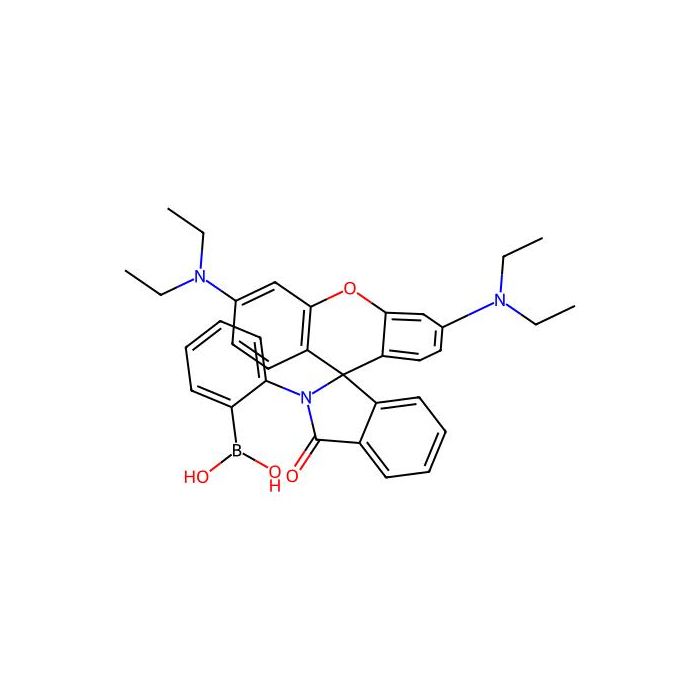
ATP-Red 1 is a multisite-binding switchable fluorescent probe, and can selectively and rapidly responds to intracellular concentrations of ATP in living cells.
BioReagent, for microscopy, Biological Stain, for fluorescence analysis, ≥98%
Mecanismos bioquímicos y fisiológicos
ATP-Red 1 is a multisite-binding switchable fluorescent probe, and can selectively and rapidly responds to intracellular concentrations of ATP in living cells.
Estabilidad y almacenamiento
Store at -20℃ long term (36 months). Store in the dark. Avoid freeze/thaw cycle.
Condiciones de almacenamiento de almacenamiento
Protected from light, Store at -20°C, Avoid repeated freezing and thawing
Enviado en
Ice chest + Ice pads
Este producto requiere envío en cadena de frío. Los servicios terrestres y otros servicios económicos no están disponibles.
Grado
Biological Stain, BioReagent, for Fluorescence analysis, for Microscopy
This compound belongs to the class of organic compounds known as xanthenes. These are polycyclic aromatic compounds containing a xanthene moiety, which consists of two benzene rings joined to each other by a pyran ring.
External Descriptors
Not available
1. Djoumbou Feunang Y, Eisner R, Knox C, Chepelev L, Hastings J, Owen G, Fahy E, Steinbeck C, Subramanian S, Bolton E, Greiner R, and Wishart DS. ClassyFire: Automated Chemical Classification With A Comprehensive, Computable Taxonomy. Journal of Cheminformatics, 2016, 8:61.
We use cookies to ensure the website functions properly and, where permitted, to improve your experience. You can manage your preferences at any time in Settings. Learn more in our Cookie Policy.
Shall we send you a message when we have discounts available?
Remind me later
Thank you! Please check your email inbox to confirm.
Products are supplied to verified businesses, institutions, and qualified professionals for research and development use only. Not for use in humans, animals, diagnosis, or therapy.