
Determine the necessary mass, volume, or concentration for preparing a solution.
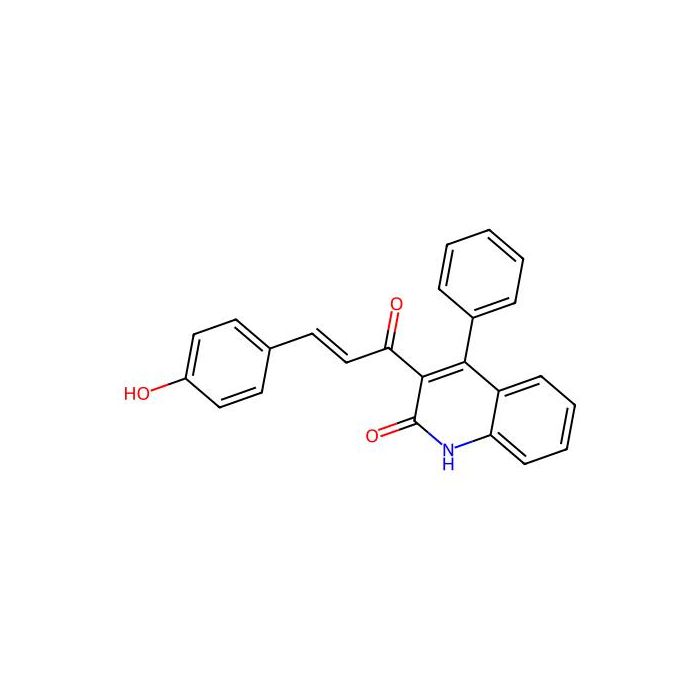
Ceranib-2 - ≥99% , CAS No.1402830-75-4
Disponible para pedir
GRADE & PURITY ≥99%
Storage
Store at -20°C
Shipped In
Ice chest + Ice pads
≥99% for sensitive chromatographic and analytical workflows requiring minimal baseline interference.
Store at -20°C Ships Ice chest + Ice pads Check lot-specific COA for exact specifications.
SDS, COA, datasheet, and spec sheet available for download. Lot-specific COA accessible via lot number lookup.
Cited in 0 peer-reviewed publications across chromatography, organic synthesis, and cross-coupling reactions.
Ceranib-2 is a potent and nonlipid ceramidase inhibitor that inhibits cellular ceramidase activity with an IC 50 of 28 μM in SKOV3 cells. Ceranib-2 induces the accumulation of multiple ceramide species, decreases levels of sphingosine and sphingosine-1-phosphate (S1P) , and induces cell apoptosis . Anticancer activity
In Vitro
Ceranib-2 (10 nM-10 µM; 72 hours; SKOV3 cells) treatment inhibits cell proliferation and/or survival with an IC 50 value of 0.73 μM. Ceranib-2 (0.75-1.5 µM; 48 hours; SKOV3 cells) treatment causes accumulation of cells in the sub-G1 (apoptosis), G2 and S (0.75 μM only) phases of the cell cycle, concomitant with reductions in the number of cells in G1 phase. Ceranib-2 produces a dose-dependent decrease in ceramidase activity, with 50% inhibition at 28 μM, induces the accumulation of multiple ceramide species, and decreases levels of sphingosine and S1P. MCE has not independently confirmed the accuracy of these methods. They are for reference only. Cell Proliferation AssayCell Line: SKOV3 cells Concentration: 10 nM-10 µM Incubation Time: 72 hours Result: Cell proliferation and/or survival were inhibited with an IC 50 value of 0.73 μM for Ceranib-2. Cell Cycle AnalysisCell Line: SKOV3 cells Concentration: 0.75 μM, or 1.5 μM Incubation Time: 48 hours Result: Induced cell-cycle arrest and cell death.
In Vivo
Ceranib-2 (20-50 mg/kg; intraperitoneal injection; daily for 5 days per week; for 3 weeks; female Balb/c mice) treatment delays tumor growth in a syngeneic tumor model without hematologic suppression or overt signs of toxicity . Intraperitoneal administration of 50 mg/kg Ceranib-2 results in progressive increases in its circulating levels, reaching a peak plasma concentration of approximately 40 μM at the 2 hr time point. Ceranib-2 appears to be cleared with a half-life of less than 2 hr . MCE has not independently confirmed the accuracy of these methods. They are for reference only. Animal Model: Female Balb/c mice injected with JC murine mammary adenocarcinoma cells Dosage: 20 mg/kg or 50 mg/kg Administration: Intraperitoneal injection; daily for 5 days per week; for 3 weeks Result: Delayed tumor growth in a syngeneic tumor model.
Form:Solid
IC50& Target:IC50: 28 μM (Ceramidase)
| Sonrisas canónicas | C1=CC=C(C=C1)C2=C(C(=O)NC3=CC=CC=C32)C(=O)C=CC4=CC=C(C=C4)O |
|---|---|
| IUPAC Name | 3-[(E)-3-(4-hydroxyphenyl)prop-2-enoyl]-4-phenyl-1H-quinolin-2-one |
| InChIKey | QUJIMYXGRCETPJ-NTCAYCPXSA-N |
| INCHI | 1S/C24H17NO3/c26-18-13-10-16(11-14-18)12-15-21(27)23-22(17-6-2-1-3-7-17)19-8-4-5-9-20(19)25-24(23)28/h1-15,26H,(H,25,28)/b15-12+ |
| WGK Alemania | 3 |
| PubChem CID | 122388991 |
| Peso molecular | 367.4 |
Comprehensive hazard, handling, storage, and regulatory compliance document.
Download SDS →Lot-specific quality data. Enter your lot number to retrieve the exact COA.
Look up COA →Full quality attributes and acceptance criteria for this grade.
View spec sheet →Taxonomy Tree
| Kingdom | Organic compounds |
|---|---|
| Superclass | Organoheterocyclic compounds |
| Clase | Quinolines and derivatives |
| Subclass | Phenylquinolines |
| Intermediate Tree Nodes | Not available |
| Direct Parent | Phenylquinolines |
| Alternative Parents | Phenylpyridines Hydroxycinnamic acids and derivatives Quinolones and derivatives Hydroxyquinolines Styrenes Aryl ketones Hydroxypyridines 1-hydroxy-2-unsubstituted benzenoids Vinylogous acids Heteroaromatic compounds Enones Acryloyl compounds Azacyclic compounds Organopnictogen compounds Organonitrogen compounds Organic oxides Hydrocarbon derivatives |
| Molecular Framework | Aromatic heteropolycyclic compounds |
| Substituents | Phenylquinoline - 4-phenylpyridine - Hydroxycinnamic acid or derivatives - Quinolone - Hydroxyquinoline - Aryl ketone - Styrene - 1-hydroxy-2-unsubstituted benzenoid - Hydroxypyridine - Phenol - Benzenoid - Pyridine - Monocyclic benzene moiety - Heteroaromatic compound - Vinylogous acid - Alpha,beta-unsaturated ketone - Enone - Acryloyl-group - Ketone - Azacycle - Organic nitrogen compound - Organic oxygen compound - Organopnictogen compound - Organic oxide - Hydrocarbon derivative - Organooxygen compound - Organonitrogen compound - Aromatic heteropolycyclic compound |
| Descripción | This compound belongs to the class of organic compounds known as phenylquinolines. These are heterocyclic compounds containing a quinoline moiety substituted with a phenyl group. |
| External Descriptors | Not available |
| Solubilidad | DMSO : 50 mg/mL (131.09 mM; Need ultrasonic) |
|---|