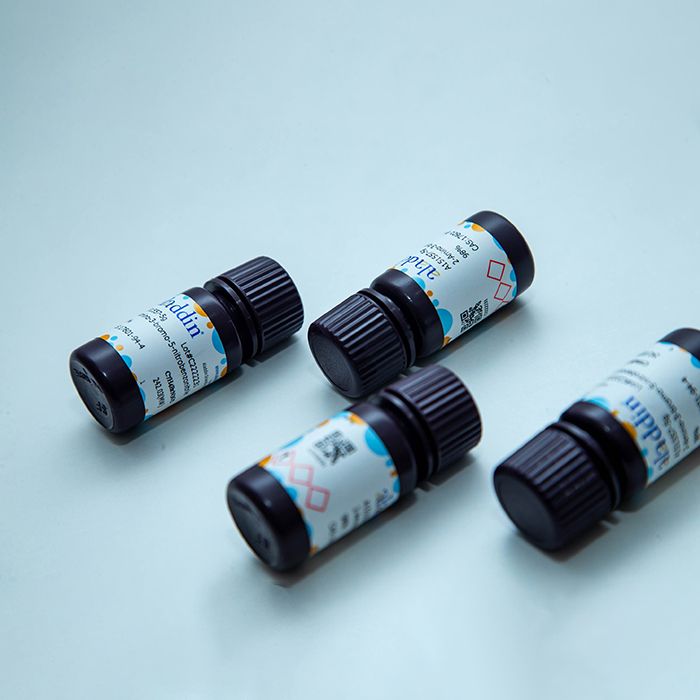
for sensitive chromatographic and analytical workflows requiring minimal baseline interference.
🌡
Storage & shipping
Protected from light,Store at -20°C,Desiccated Ships Ice chest + Ice pads Check lot-specific COA for exact specifications.
📋
Quality documents
SDS, COA, datasheet, and spec sheet available for download. Lot-specific COA accessible via lot number lookup.
📚
Literature proof
Cited in 0 peer-reviewed publications across chromatography, organic synthesis, and cross-coupling reactions.
Descripción general
DyLight 488 Amine-Reactive Dye is an NHS ester-activated derivative of high-performance DyLight 488 for fluorescent labeling of antibodies and other proteins to be used as molecular probes for cellular imaging and other fluorescence detection methods.
has high fluorescence intensity over a broad pH range (pH 4-9) and is more photostable than Cy2™, AF488, FITC and LI-COR™ dyes in many applications. The high water solubility of DyLight Fluors allows a high dye-to-protein ratio to be achieved without causing precipitation of the conjugates. DyLight 488 Amine-Reactive Dye is also available as part of two antibody labeling kit sizes.
Features of the DyLight 488 NHS Ester:
• High performance— DyLight 488 is comparable to AF 488 and brighter than FITC and Cy2 • Specific— NHS ester-activated dye labels proteins and other molecules at primary amines (-NH2) • Optimized procedure— following the standard protocol results in antibodies with excellent dye:protein ratios and recovery rates for optimum activity and fluorescence labeling
Applications: • Primary antibody labeling for immunofluorescence microscopy, immunohistochemistry (IHC), Western blotting or ELISA assay • Target protein labeling for in vitro and in vivo fluorescent detection strategies
DyLight 488 Amine-Reactive Dye is activated with an N-hydroxysuccinimide (NHS) ester moiety to react with exposed N-terminal α-amino groups or the ε-amino groups of lysine residues to form stable amide bonds. Learn more aboutNHS ester chemistry.
Typical labeling reactions require the dye to first be dissolved in anhydrous dimethyl formamide (DMF) or another suitable organic solvent before adding a specific molar amount of dye to an amine-free buffer containing the protein to be labeled. However, the high solubility of DyLight Fluors permits protein solutions to be added directly to specific amounts of the labeling reagent. This feature allows DyLight 488 Amine-Reactive Dye to be provided in multiple formats with flexible protocols to achieve efficient degrees of labeling.
We also offer Standard and Microscale DyLight 488 Antibody Labeling Kits for fast and efficient fluorescent labeling of antibodies for use in fluorescence methods.The standard size kit contains all necessary components to perform three separate labeling reactions using 1 mg of IgG or similar quantities of other proteins. The microscale kit contains all of the necessary components to perform five separate labeling reactions using 100 µg of IgG. Both kit sizes include the Amine-Reactive DyLight 488 NHS-ester in convenient single-use vials as well as purification resin and spin columns for the preparation of ready-to-use conjugate.
• Labeling Target:Proteins
Specifications
Condiciones de almacenamiento de almacenamiento
Protected from light, Store at -20°C, Desiccated
Enviado en
Ice chest + Ice pads
Este producto requiere envío en cadena de frío. Los servicios terrestres y otros servicios económicos no están disponibles.
Propiedades del producto
Reactividad
Amine
Documentation
📋 Safety Data Sheet (SDS)
Comprehensive hazard, handling, storage, and regulatory compliance document.
We use cookies to ensure the website functions properly and, where permitted, to improve your experience. You can manage your preferences at any time in Settings. Learn more in our Cookie Policy.
Shall we send you a message when we have discounts available?
Remind me later
Thank you! Please check your email inbox to confirm.
Products are supplied to verified businesses, institutions, and qualified professionals for research and development use only. Not for use in humans, animals, diagnosis, or therapy.