
Bakuchiol Is Not “Plant Retinol”: Chemical Structure, Anti-Aging Mechanisms, and Functional Similarities and Differences Compared with Retinol
Bakuchiol Is Not “Plant Retinol”: Chemical Structure, Anti-Aging Mechanisms, and Functional Similarities and Differences Compared with Retinol
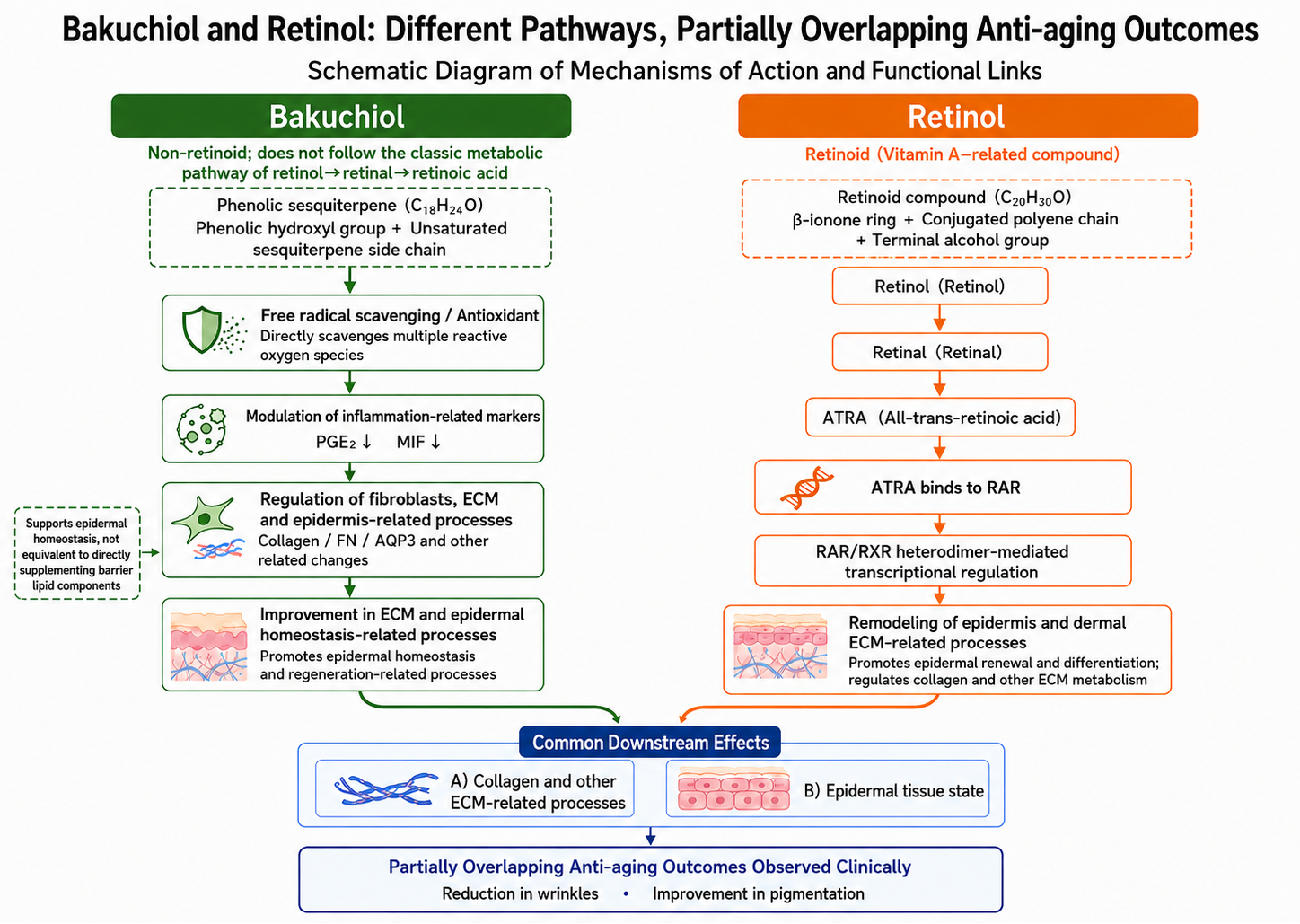
Bakuchiol and retinol have distinctly different chemical structures and do not belong to the same class of active ingredients. Bakuchiol is a phenolic meroterpenoid, whereas retinol belongs to the retinoid family. The reason the two are frequently compared mainly stems from a meaningful research observation: different molecular structures and mechanisms of action can converge on certain anti-aging outcomes involving the extracellular matrix, epidermal condition, wrinkles, and pigmentation.[1][3][10]
1. What Fundamental Properties Are Determined by the Structure of Bakuchiol?
1.1 Bakuchiol Is a Phenolic Meroterpenoid Molecule
Bakuchiol has the molecular formula C₁₈H₂₄O. Its structure contains an aromatic ring bearing a phenolic hydroxyl group and a hydrophobic terpenoid side chain containing multiple unsaturated bonds.[1] In comparison, retinol has the molecular formula C₂₀H₃₀O and possesses the characteristic retinoid structure consisting of a cyclic moiety, a conjugated polyene chain, and a terminal hydroxyl group.
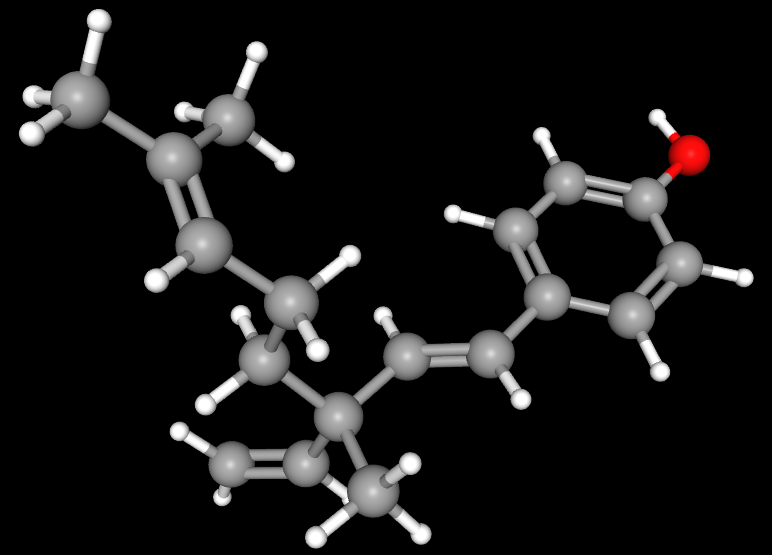
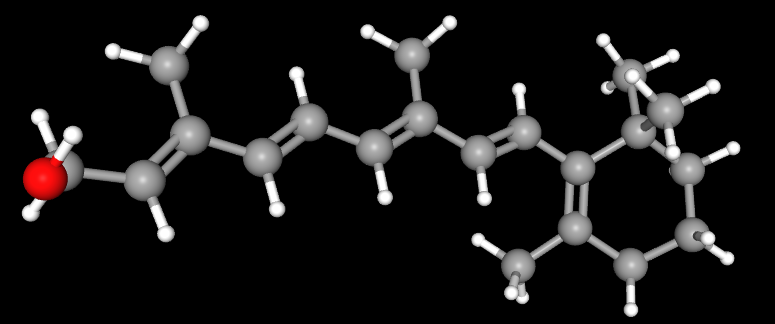
1.2 The Phenolic Structure Enables Bakuchiol to Participate Directly in Free-Radical Reactions
The phenolic hydroxyl group of bakuchiol can donate hydrogen to certain free radicals, converting highly reactive radicals into relatively stable products; the resulting phenoxyl radical can, in turn, be stabilized to some extent through electron delocalization.
This process can be simplified as:
Bakuchiol–OH + R· → Bakuchiol–O· + RH
A structure–activity study by Adhikari et al. showed that bakuchiol can scavenge multiple types of oxidative free radicals and reduce lipid and protein oxidation in experimental systems. The study also suggested that its unsaturated terpenoid chain contributes to the stabilization of radical intermediates.[2]
2. How Does Bakuchiol Exert Anti-Aging Effects?
Existing studies indicate that the skin-related effects of bakuchiol mainly involve three interconnected aspects: oxidative and inflammation-related responses, extracellular matrix homeostasis, and epidermal tissue homeostasis.[3][4]
2.1 Reducing Oxidative Stress and Modulating Inflammation-Related Responses
External factors such as ultraviolet (UV) radiation can increase oxidative stress in the skin and activate a series of inflammation- and matrix degradation-related signaling processes. When these changes occur repeatedly over prolonged periods, they can affect cellular function and the stability of the dermal extracellular matrix.[5]
On the one hand, bakuchiol has direct free-radical-scavenging activity. On the other hand, experimental models including human dermal fibroblasts have also shown that it can reduce inflammation-related markers such as prostaglandin E₂ (PGE₂) and macrophage migration inhibitory factor (MIF).[2][4]
This is one of the ways in which bakuchiol differs from a simple antioxidant: experimental data indicate that it not only has the chemical ability to participate in free-radical reactions, but can also influence biological processes at the cellular level.[4]
2.2 The Core of Its Anti-Wrinkle Effects Lies in Improving ECM Homeostasis Rather Than Simply “Increasing Collagen”
The extracellular matrix (ECM) forms an important structural foundation of the dermis and includes collagen, elastic fibers, fibronectin, glycosaminoglycans, and other components.
During skin photoaging, the ECM does not simply undergo a static decline. Instead, the dynamic balance among its synthesis, degradation, and repair becomes disrupted.
Human skin studies have shown that UV exposure can induce increases in multiple matrix metalloproteinases (MMPs), promoting degradation of ECM structures such as collagen and elastic fibers. If ECM damage caused by repeated UV exposure is not adequately repaired, it can gradually accumulate.[5]
Skin anti-aging can therefore be understood in terms of the following dynamic relationship:
ECM synthesis and reconstruction ⇄ ECM degradation and damage
When degradation persistently exceeds effective reconstruction, the integrity of the collagen network and the structural support provided by the dermis decline, gradually manifesting as wrinkles and changes in skin structure.
Bakuchiol acts on this balance.
A 2014 comparative study showed that, in gene-expression analyses using a full-thickness skin substitute model, bakuchiol and retinol exhibited similar regulatory trends for certain genes related to skin aging. Bakuchiol upregulated expression associated with type I and type IV collagen; in a mature fibroblast model, increased production of type III collagen was also observed.[3]
Another study using normal human dermal fibroblasts (ESF-1) found that bakuchiol increased mRNA expression of type I collagen, type III collagen, and tissue inhibitor of metalloproteinases-1 and -2 (TIMP-1/TIMP-2), while reducing MMP-1 mRNA expression. Because this was an in vitro cell study, these findings are primarily useful for illustrating potential mechanisms of ECM regulation.[12]
A 2022 study further found that bakuchiol could affect the type I collagen-related protein COL1A1, the type VII collagen-related protein COL7A1, and fibronectin (FN), while also exhibiting effects associated with the promotion of epidermal regeneration.[4]
2.3 Bakuchiol and the Skin Barrier
The skin permeability barrier is located primarily in the stratum corneum and is formed by corneocytes together with the highly organized intercellular lipids surrounding them. Ceramides, cholesterol, and free fatty acids are important components of this barrier.
Bakuchiol itself is not one of these structural lipids. Current research is also insufficient to demonstrate that topical bakuchiol can directly reconstruct the lamellar lipid structure of the stratum corneum in the same manner as supplementation with barrier lipids such as ceramides.
The more clearly established links between bakuchiol and barrier function are mainly related to epidermal water transport and epidermal tissue homeostasis.
A 2014 study observed that bakuchiol increased aquaporin-3 (AQP3)-related expression.[3] AQP3 is primarily expressed in keratinocytes of the viable epidermis and can transport water and glycerol. AQP3-deficient mice exhibit reduced glycerol levels in the stratum corneum, decreased skin hydration and elasticity, and delayed recovery following barrier disruption; glycerol supplementation can improve these abnormalities.[6]
At the same time, a 2022 skin-model study observed that bakuchiol promoted processes associated with epidermal regeneration and re-epithelialization.[4]
The barrier-related effects of bakuchiol can be further distinguished as follows:
Level of Action | Current Evidence |
Direct supplementation of barrier lipids such as ceramides and cholesterol | Lacks direct evidence |
Direct reconstruction of the lamellar lipid structure of the stratum corneum | Lacks sufficient human evidence |
Increased AQP3-related expression; AQP3 participates in water/glycerol transport | Supported by experimental studies |
Support for keratinocytes and epidermal homeostasis | Supported by experimental models |
Support for epidermal regeneration | Supported by experimental models |
3. How Does the Mechanism of Retinol Differ from That of Bakuchiol?
3.1 Retinol Undergoes Metabolic Conversion to Receptor-Active Retinoic Acid
Retinol belongs to the retinoid family. In human keratinocytes, retinol can undergo enzymatic oxidation to form retinal, which is then further oxidized to retinoic acid. Relevant studies have shown that retinal is an important intermediate in the conversion of retinol to retinoic acid.[7]
The classical metabolic relationship is:
Retinol → Retinal → Retinoic acid
Keratinocyte studies have further shown that part of the biological activity of retinol depends on its metabolic conversion to all-trans retinoic acid (ATRA), which subsequently regulates cellular responses through nuclear retinoid receptor signaling.[8] The classical action of retinol therefore has a clear metabolic conversion–nuclear receptor regulation characteristic.
3.2 All-Trans Retinoic Acid Regulates Gene Transcription Through RAR/RXR Heterodimers
An important target of all-trans retinoic acid (ATRA) is the retinoic acid receptor (RAR). RAR can form heterodimers with retinoid X receptor (RXR) and recognize retinoic acid response elements (RAREs) in DNA, thereby regulating transcription of relevant genes.[9]
Studies in adult human keratinocytes have shown that RAR/RXR heterodimers are important functional forms mediating retinoid signaling. In this process, ATRA primarily binds to RAR, after which the RAR/RXR heterodimer regulates transcriptional activity of the corresponding genes.[9]
The classical pathway of retinol action can be summarized as:
Retinol → Retinal → All-trans retinoic acid (ATRA) → ATRA binds to retinoic acid receptor (RAR) → RAR/RXR heterodimers regulate gene transcription → Remodeling of epidermal and dermal tissues
This process can influence keratinocyte proliferation and differentiation and participate in the metabolic regulation of extracellular matrix (ECM) components such as collagen, providing an important mechanistic basis for the effects of retinoids on skin photoaging.[5][8][9]
4. Core Differences Between Bakuchiol and Retinol: How Can Different Mechanisms Produce Partially Similar Outcomes?
4.1 Human Studies Show Similarities in Certain Anti-Aging Outcomes
In 2019, the British Journal of Dermatology published a randomized, double-blind clinical study involving 44 participants over a 12-week period. The bakuchiol group used 0.5% bakuchiol twice daily, while the retinol group used 0.5% retinol once daily.[10]
The results showed that after 12 weeks, both groups demonstrated significant improvements from baseline in wrinkle surface area and pigmentation, with no statistically significant difference between the two groups in the magnitude of improvement in these two measures. In terms of tolerability, more skin scaling and stinging were reported in the retinol group.[10]
This study indicates that, under the dosing regimens and observation period used in the study, both bakuchiol and retinol improved facial wrinkles and pigmentation, while bakuchiol demonstrated better skin tolerability.[10]
4.2 A Controlled Human Study Further Supports the Anti-Aging Effects of Bakuchiol
A randomized, double-blind, vehicle-controlled clinical study published in 2026 enrolled 73 Chinese participants. The treatment group used 0.5% bakuchiol twice daily for 84 days, while the control group used the same vehicle formulation without bakuchiol.[11]
The results showed that, compared with the vehicle-control group, the bakuchiol group achieved significant improvements in wrinkle severity, pigmentation, skin radiance, and pore appearance, further supporting the ability of bakuchiol itself to improve certain manifestations of facial aging.[11]
Taken together with cell- and skin-model studies, the existing evidence shows mutually supportive trends: experimental studies indicate that bakuchiol can affect oxidative stress, inflammation-related responses, collagen and other extracellular matrix components, and epidermal tissue homeostasis, while human studies have further observed improvements in wrinkles and certain manifestations of photoaging.[3][4][10][11]
Improvement in pigmentation with bakuchiol is likewise supported by clinical studies.[10][11] However, research on the specific molecular mechanisms underlying pigmentation regulation in human skin remains relatively limited. At present, it is therefore more appropriate to regard improvement in pigmentation as an effect supported by existing clinical evidence.
4.3 Differences Between Bakuchiol and Retinol
Bakuchiol and retinol show similarities in certain anti-aging outcomes, but they differ substantially in chemical structure, metabolic pathways, and cellular mechanisms of action.
Comparison Dimension | Bakuchiol | Retinol |
Chemical class | Phenolic meroterpenoid | Retinoid |
Core structural features | Phenolic hydroxyl group, aromatic ring, and unsaturated terpenoid side chain | β-Ionone ring, conjugated polyene chain, and terminal hydroxyl group |
Belongs to the retinoid family | No | Yes |
Main characteristics of action | Has direct antioxidant activity and can influence inflammation-related responses, fibroblast function, the extracellular matrix, epidermal regeneration, and other processes | Forms active metabolites through retinoid metabolism and influences epidermal and dermal tissues through nuclear receptor-mediated regulation of gene transcription |
Relationship with retinoic acid | Does not participate in this metabolic pathway | Can be further metabolized through retinal to form retinoic acid |
Nuclear receptor activity | There is currently no evidence that it reproduces the classical RAR pathway of retinol | The all-trans retinoic acid formed binds to retinoic acid receptors and regulates transcription of related genes through retinoic acid receptor/retinoid X receptor heterodimers |
Effects on the extracellular matrix | Can affect multiple types of collagen, fibronectin, and other extracellular matrix-related processes | Regulates the synthesis, degradation, and tissue remodeling of collagen and other extracellular matrix components through retinoid signaling |
Epidermal effects | Experimental evidence supports changes in aquaporin-3-related expression and promotion of epidermal regeneration | Can affect keratinocyte proliferation and differentiation as well as epidermal structure |
Direct antioxidant activity | Has a relatively well-defined structural basis and experimental evidence | Direct antioxidant activity is not a major component of its classical anti-photoaging mechanism |
Clinical anti-aging evidence | Human studies support improvements in wrinkles, pigmentation, and other parameters | Has a longer history of accumulated human, histological, and mechanistic evidence |
Tolerability | Less scaling and stinging in the 2019 direct comparative study | More scaling and stinging were reported in the same study |
5. Why Can Different Mechanisms of Action Produce Partially Similar Anti-Aging Outcomes?
The comparison between bakuchiol and retinol demonstrates that similar skincare outcomes do not require identical molecular structures or mechanisms of action.
Skin aging is not determined by a single pathway. Rather, it results from the long-term combined effects of multiple changes, including epidermal cell status, oxidative stress, inflammatory responses, and extracellular matrix synthesis and degradation. Wrinkles, roughness, and changes in tissue architecture are the integrated manifestations of these biological processes at the level of skin tissue.
Different ingredients can intervene at different points in this process.
Retinol is metabolized to retinoic acid, which regulates gene transcription through retinoic acid receptors and thereby influences remodeling of epidermal and dermal tissues. Bakuchiol does not enter this retinoid metabolic pathway; instead, it influences skin tissue status through its intrinsic antioxidant properties and through modulation of inflammation-related responses, cellular functions, and extracellular matrix-related processes.[2][3][4][8][9]
The two pathways are not the same, but both can ultimately act on common tissue-level foundations involved in skin aging—epidermal status and extracellular matrix homeostasis. When these downstream processes are improved, the resulting changes in wrinkles, skin texture, and certain pigmentation-related manifestations may occur in similar directions.[3][10][11]
This also explains the true meaning of describing bakuchiol as a “functional analogue” of retinol: the similarities lie in certain downstream functions and clinical manifestations, rather than in molecular structure or mechanism of action.
Bakuchiol and retinol have different starting points of action and different regulatory pathways, yet some of their tissue-level effects and anti-aging outcomes converge.
6. Representative Chemicals Related to Research on Bakuchiol, Retinoids, and Skin Barrier Mechanisms
Table 1. Bakuchiol and Constituents Derived from Psoralea corylifolia
Category | CAS No. | Aladdin Cat. No. | Name | Grade or Purity | Product Features and Applications |
Bakuchiol experimental solution | 10309-37-2 | Bakuchiol | 10 mM in DMSO | Pre-prepared solution at a defined concentration; used in studies of bakuchiol cellular activity, oxidative stress, inflammation-related responses, fibroblasts, and extracellular matrix-related processes. | |
Bakuchiol analytical standard | 10309-37-2 | Bakuchiol | Analytical standard | Used for qualitative and quantitative analysis of bakuchiol, chromatographic method development, content determination, purity evaluation, and analysis of Psoralea corylifolia-derived samples. | |
Linear furanocoumarin | 66-97-7 | Psoralen | ≥98% | Representative linear furanocoumarin derived from Psoralea corylifolia; used for identification and quantification of source constituents and for studies of photosensitivity and UV-induced photochemical reactions. | |
Angular furanocoumarin | 523-50-2 | Angelicin | Moligand™, ≥98% | Angular furanocoumarin derived from Psoralea corylifolia; used for comparison with psoralen isomers, source-constituent analysis, photochemical characterization, and UV-response studies. | |
Coumestan-type natural product | 18642-23-4 | Psoralidin | ≥98% (HPLC) | Coumestan-type constituent derived from Psoralea corylifolia; used for natural-product profiling, chromatographic quantification, structural identification, and comparative studies of bioactive constituents derived from Psoralea corylifolia. |
Table 2. Retinoid Metabolic Pathway, Retinoic Acids, and Ester Derivatives
Category | CAS No. | Aladdin Cat. No. | Name | Grade or Purity | Product Features and Applications |
Alcohol-form retinoid—retinoid metabolic precursor | 68-26-8 | Retinol | Moligand™, ≥95% | Representative alcohol-form component of the retinoid metabolic pathway; used for studies of retinol metabolism, keratinocyte responses, epidermal remodeling, and comparisons of anti-aging mechanisms between retinol and bakuchiol. | |
Aldehyde-form retinoid—metabolic intermediate | 116-31-4 | All-trans-retinal | Moligand™, ≥98% | Aldehyde intermediate in the conversion of retinol to retinoic acid; used for studies of retinoid metabolic conversion, biological activity of aldehyde-form retinoids, and skin-cell responses. | |
All-trans-retinoic acid—retinoic acid receptor ligand | 302-79-4 | Retinoic acid | Moligand™, ≥98% | Representative compound for studies of retinoic acid receptor signaling; used for research on nuclear receptor-mediated transcriptional regulation, keratinocyte differentiation, and extracellular matrix remodeling. | |
9-cis-retinoic acid—dual receptor ligand | 5300-03-8 | 9-cis-Retinoic acid | Moligand™, ≥98% (HPLC) | Capable of binding to retinoic acid receptors and retinoid X receptors; used for studies of retinoic acid isomers, receptor-ligand selectivity, and nuclear receptor-mediated transcriptional regulation. | |
Short-chain retinyl acetate ester | 127-47-9 | Vitamin A acetate | PharmPure™, USP, European Pharmacopoeia (Ph. Eur.) | Pharmacopoeial-grade retinyl acetate; used for retinoid ester quality studies, content determination, stability evaluation, and ester hydrolysis/conversion studies. | |
Short-chain retinyl propionate ester | 7069-42-3 | Retinyl propionate | ≥98%, mixture of isomers, stabilized with BHT, ~2500 U/mg | Stabilized mixture of retinyl propionate isomers; used for studies of retinoid ester stability, monitoring of isomerization and degradation, and comparison of different retinyl ester structures. | |
Long-chain retinyl palmitate ester | 79-81-2 | Vitamin A palmitate | 1,700,000 USP units/g | Lipid-soluble long-chain retinyl ester; used for studies of retinoid ester storage forms, ester hydrolysis and conversion, stability in oil-phase systems, and comparison of vitamin A derivatives. | |
Retinoic acid ester derivative | 893412-73-2 | Hydroxypinacolone retinoate | ≥99% | Esterified retinoic acid derivative; used for studies of structure–activity relationships of retinoic acid derivatives, cellular anti-aging markers, stability, and formulation delivery. |
Table 3. Stratum Corneum Lipids and Epidermal Barrier-Related Components
Category | CAS No. | Aladdin Cat. No. | Name | Grade or Purity | Product Features and Applications |
Phytosphingosine-type ceramide | 34354-88-6 | N-Stearoyl phytosphingosine | ≥98% | Ceramide-class stratum corneum lipid; used for studies of ceramide molecular organization, lipid lamellar structures, stratum corneum models, and barrier-lipid reconstruction. | |
Sphingoid long-chain base—phytosphingosine | 554-62-1 | D-ribo-Phytosphingosine | ≥98% | Ceramide-related sphingoid long-chain base; used for studies of sphingolipid metabolism, ceramide-related processes, keratinocyte maturation, and epidermal barrier formation. | |
Stratum corneum sterol lipid | 57-88-5 | Cholesterol | For cell culture, ≥99% (GC) | One of the major lipid classes in the stratum corneum; used in ceramide–cholesterol–free fatty acid composite systems and for studies of lipid phase behavior and skin barrier models. | |
C16 saturated free fatty acid | 57-10-3 | Palmitic acid | BioReagent, ≥99% | C16 saturated fatty acid; used for studies of stratum corneum free fatty acid composition, fatty-acid chain-length effects, lipid organization, and barrier models. | |
C18 saturated free fatty acid | 57-11-4 | Stearic acid | Moligand™, C18: 65% | C18 saturated fatty acid; used for studies of long-chain free fatty acid composition, the relationship between carbon-chain length and lipid phase behavior, and stratum corneum lipid models. | |
ω-6 polyunsaturated essential fatty acid | 60-33-3 | Linoleic acid | Moligand™, ≥99% (GC) | C18 dienoic essential fatty acid; used for studies of acylceramide-related metabolism, epidermal lipid metabolism, lipid homeostasis in skin models, and barrier formation. |
Note: The products listed above are representative Aladdin products related to scientific research. Their specific applications should be determined according to product specifications, batch COAs, and the intended reaction or evaluation system. Additional information on product specifications, grades, and COAs can be searched on the Aladdin website using the “product name/CAS number/catalog number.”
References
[1] National Center for Biotechnology Information. PubChem Compound Summary: (+)-Bakuchiol, CID 5468522; Retinol, CID 445354. PubChem, National Library of Medicine.
[2] Adhikari S, Joshi R, Patro BS, et al. Antioxidant activity of bakuchiol: experimental evidences and theoretical treatments on the possible involvement of the terpenoid chain. Chemical Research in Toxicology. 2003;16(9):1062-1069. doi:10.1021/tx034082r.
[3] Chaudhuri RK, Bojanowski K. Bakuchiol: a retinol-like functional compound revealed by gene expression profiling and clinically proven to have anti-aging effects. International Journal of Cosmetic Science. 2014;36(3):221-230. doi:10.1111/ics.12117.
[4] Bluemke A, Ring AP, Immeyer J, et al. Multidirectional activity of bakuchiol against cellular mechanisms of facial ageing—Experimental evidence for a holistic treatment approach. International Journal of Cosmetic Science. 2022;44(3):377-393. doi:10.1111/ics.12784.
[5] Fisher GJ, Datta SC, Talwar HS, et al. Molecular basis of sun-induced premature skin ageing and retinoid antagonism. Nature. 1996;379(6563):335-339. doi:10.1038/379335a0.
[6] Hara M, Verkman AS. Glycerol replacement corrects defective skin hydration, elasticity, and barrier function in aquaporin-3-deficient mice. Proceedings of the National Academy of Sciences of the United States of America. 2003;100(12):7360-7365. doi:10.1073/pnas.1230416100.
[7] Siegenthaler G, Saurat JH, Ponec M. Retinol and retinal metabolism. Relationship to the state of differentiation of cultured human keratinocytes. Biochemical Journal. 1990;268(2):371-378. doi:10.1042/bj2680371.
[8] Kurlandsky SB, Xiao JH, Duell EA, Voorhees JJ, Fisher GJ. Biological activity of all-trans retinol requires metabolic conversion to all-trans retinoic acid and is mediated through activation of nuclear retinoid receptors in human keratinocytes. Journal of Biological Chemistry. 1994;269(52):32821-32827.
[9] Xiao JH, Durand B, Chambon P, Voorhees JJ. Endogenous retinoic acid receptor (RAR)-retinoid X receptor (RXR) heterodimers are the major functional forms regulating retinoid-responsive elements in adult human keratinocytes. Journal of Biological Chemistry. 1995;270(7):3001-3011. doi:10.1074/jbc.270.7.3001.
[10] Dhaliwal S, Rybak I, Ellis SR, et al. Prospective, randomized, double-blind assessment of topical bakuchiol and retinol for facial photoageing. British Journal of Dermatology. 2019;180(2):289-296. doi:10.1111/bjd.16918.
[11] Khan ZEH, Chaudhuri RK, Dulai A, et al. Prospective, Double-Blind, Vehicle-Controlled Assessment of Topical Bakuchiol on Photoaging in a Chinese Population. Journal of Cosmetic Dermatology. 2026;25(6):e71000. doi:10.1111/jocd.71000.
[12] Yu Q, Zou HM, Wang S, Xu YM, Li JM, Zhang N. [Regulative effect of bakuchiol on ESF-1 cells anti-aging gene]. Zhong Yao Cai. 2014;37(4):632-635. PMID:25345139.
For more related articles, see below:
Antioxidant Mechanisms, Stability, and Delivery Strategies of Resveratrol in Skincare Research
Beneath the Skin: Protein- and Peptide-Based Actives in Skincare and Aesthetic Medicine
Hyaluronidase: Unlocking a “Magic Enzyme” in Biomedicine
Trehalose: Physicochemical Characteristics, Manufacturing Processes, and Application Guidelines
Sources, Biological Functions, Isolation/Characterization, and Emerging Applications of Exosomes
Applicability Comparison of Vitronectin, Laminin and Fibronectin in Cell Culture Coating Systems
Ferulic Acid: Structural Features, Preparation Routes, and Key Points for Research Applications
Role of Sphingolipid Metabolic Remodeling in Apoptotic and Inflammatory Signaling
How to decipher the whitening code?
Niacin (Vitamin B3): Structural Features, Metabolic Roles, and Application Landscape
The "Six Key Checkpoints" of Skin Lightening
Tyrosinase: a key regulatory enzyme in melanin synthesis and its biological and applied significance