
Natural Pigment Safflower Yellow
Natural Pigment Safflower Yellow
In the field of natural colorants, safflower yellow holds an important position by virtue of its distinctive advantages. It is a natural water-soluble pigment extracted from the dried flowers of Carthamus tinctorius L. (Asteraceae), with an application history that can be traced back to ancient times. Today, as the demand for natural and safe raw materials continues to grow, the value of safflower yellow has become increasingly prominent. As a colorant that combines visual appeal with practical functionality, it not only imparts a soft yet bright yellow tone to a wide range of food products—supporting consumers’ pursuit of “clean label” formulations—but also shows broad application prospects in cosmetics, pharmaceuticals, and other cross-sector fields. Its stable physicochemical properties, relatively low allergenicity, and good formulation compatibility make it an important choice in the development of natural products across various industries.
I. Source and Chemical Composition of Safflower Yellow
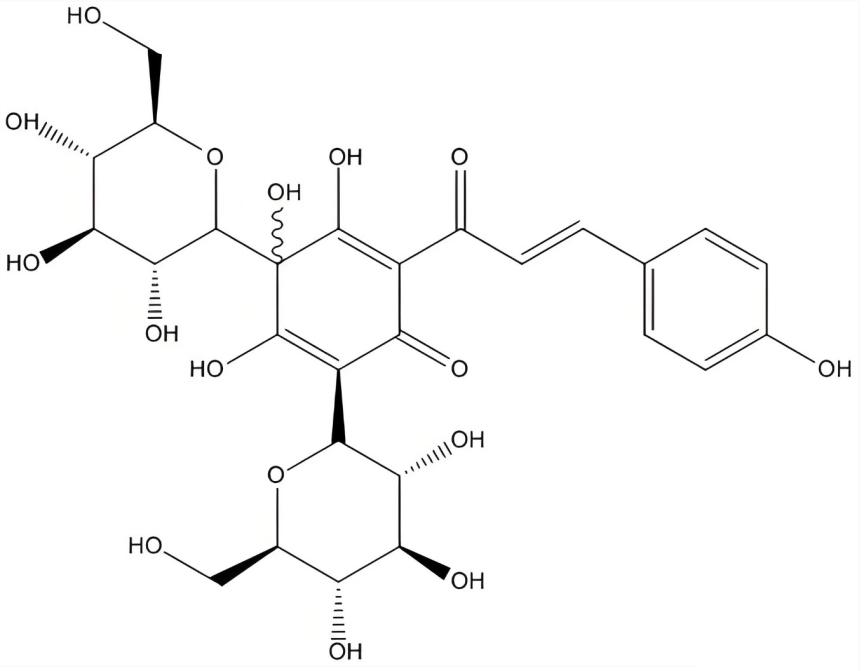
Figure 1 Chemical structure of safflower yellow
1.1 Botanical source
Safflower yellow is derived from the dried flowers of Carthamus tinctorius L. (family Asteraceae). The flowers are harvested in summer when their color turns from yellow to red, and then processed by shade-drying or sun-drying. Safflower has a long cultivation history in China and is mainly produced in Henan, Hebei, Zhejiang, Sichuan, Yunnan, and Xinjiang, with extensive resource distribution that provides a sufficient raw-material basis for the industrial production of safflower yellow. The quality of safflower medicinal material is critical to the quality of safflower yellow. The Chinese Pharmacopoeia has established stringent quality standards for safflower, including limits such as not more than 2% foreign matter, not more than 13.0% moisture, and not more than 15.0% total ash.
1.2 Chemical composition and molecular structure
The principal chromophoric components of safflower yellow are flavonoid compounds, including safflomin A and safflomin B, among which hydroxysafflor yellow A is an important active component and a key quality-control marker. Hydroxysafflor yellow A has the molecular formula C₂₇H₃₂O₁₆, while safflower yellow pigments have the molecular formula C₂₁H₂₂O₁₁ and are registered under CAS No. 1401-20-3. These flavonoids exhibit a yellow color owing to the conjugated double-bond systems in their molecular structures, and such structural features determine the solubility, stability, and other physicochemical properties of safflower yellow. In addition to pigment components, safflower yellow extracts may contain impurities such as carbohydrates, salts, and proteins originating from the raw material, and commercial safflower yellow products are often formulated with carriers such as dextrin to facilitate drying and powder formation.
II. Physicochemical Properties and Color Characteristics
Safflower yellow is an orange-yellow to golden-yellow powder or concentrated liquid that is readily soluble in water and slightly soluble or insoluble in most nonpolar organic solvents.
In aqueous solution:
- It appears yellow to orange-yellow, with maximal absorption mostly located in the blue region of the visible spectrum; the exact λmax varies slightly depending on the proportion of individual components.
- Its color is relatively stable in the pH range of 2–7, and under acidic conditions the hue is generally more vivid.
- Under alkaline conditions it readily undergoes structural changes or fading, making it unsuitable as a primary colorant for high-pH systems.
Safflower yellow exhibits a certain degree of hydrophilicity and protein affinity, allowing it to be well distributed in protein beverages, dairy products, and colloidal systems, with relatively mild effects on system turbidity and interfacial properties.
III. Extraction and Preparation Processes of Safflower Yellow and Factors Affecting Its Stability
3.1 Extraction and Preparation Processes
In industrial production, safflower yellow is usually obtained by extraction with water or aqueous alcohol, followed by purification and drying, as outlined below:
- Raw material pretreatment: Dried safflower petals are selected, impurities are removed, and the material is milled to an appropriate particle size to improve extraction efficiency.
- Extraction and separation: Hot water or ethanol–water mixed solvents are commonly used for extraction, with temperature, pH, and time carefully controlled to balance pigment yield and thermal stability. After coarse filtration or centrifugation to remove insoluble impurities, the extract is further subjected to de-sugaring, deproteinization, and concentration using techniques such as adsorption resins, membrane separation, or precipitation.
- Concentration and drying: The purified and concentrated pigment solution can be spray-dried to obtain powdered safflower yellow, or formulated as liquid colorant preparations of defined strength. Depending on the intended application, carriers or excipients (such as maltodextrin) may be added to improve flowability and dispersibility.
3.2 Stability and Influencing Factors
- Effect of pH: Safflower yellow shows good stability in the pH range of 2–7 and is therefore suitable for most acidic and near-neutral beverages and foods. Under strongly alkaline or prolonged mildly alkaline conditions, it tends to undergo discoloration or degradation, and long-term use in high-pH formulations should be avoided.
- Light and temperature: Intense light exposure and prolonged high temperatures accelerate oxidation and degradation of safflower yellow, leading to fading or darkening of the color. In practical formulations, products should be protected from light and stored at low temperature; when necessary, antioxidants and light-shielding packaging can be used in combination.
- Metal ions and redox environment: Certain metal ions may form complexes with safflower yellow or catalyze oxidative processes, thereby affecting its color and stability. In high-oxygen environments or in the presence of strong oxidizing agents, the risk of pigment degradation increases; oxygen exposure should therefore be minimized and co-use with strongly oxidizing ingredients avoided.
- Matrix effects: Matrix components such as proteins, emulsifiers, polysaccharides, and lipids can influence the distribution, color expression, and stability of safflower yellow in the system. In practical applications, small-scale trials are needed to optimize the dosage and sequence of addition in order to achieve stable and predictable color performance.
IV. Applications in the food field
As a food colorant, safflower yellow is widely used in the food industry. According to GB 2760-2024, it may be used in fruit-flavored beverages at a maximum level of 0.2 g/kg, calculated on the ready-to-drink basis, with the corresponding amount in solid beverage concentrates increased proportionally according to the dilution factor. In addition, safflower yellow can be used in a variety of foods, including beverages (especially those with high vitamin content), formulated alcoholic drinks, ice cream, ice pops, confectionery, decorative coloring on baked goods, candied shredded fruits and vegetables, canned foods, pickled green plums, jellies, preserved fruits, and similar products, with a maximum usage level of 0.2 g/kg. In practical applications, to improve the heat and light resistance of safflower yellow, it can be used in combination with L-ascorbic acid. The use of safflower yellow in foods not only imparts a bright yellow color to the products, but also meets consumer demand for natural and safe food additives and enhances product market competitiveness; its main advantages include:
1)Stability advantages
In pH 2–7, particularly in mildly acidic systems (such as fruit juice beverages, fermented milk, yogurt drinks, etc.), it is resistant to fading, making it suitable as a primary or auxiliary yellow-tone colorant for acidic drinks and water-rich desserts.
2)Low allergenicity and formulation friendliness
Compared with some synthetic colorants (such as carmine), safflower yellow carries relatively lower risks of allergenicity and potential adverse reactions. It is therefore more suitable for products requiring “mildness,” such as children’s foods, snacks, and dairy products.
3)"Clean label" and market trends
Derived from plants, safflower yellow aligns with market demands for “natural colorants” and “traceable sources.” It is commonly used in ice cream, candies, baked goods, yogurt, and beverages to provide yellow–orange to warm color tones, helping brands promote claims such as “less additives” and “non-synthetic colorants.”
V. Cross-field applications: cosmetics and daily-care products
Safflower yellow also has promising application prospects in the cosmetics industry, mainly in skincare and color cosmetics. In skincare products, it can be incorporated into creams, lotions, and toners to impart a natural yellow tone and enhance the visual texture and appeal of the formulation; some of its components may also exhibit antioxidant and other beneficial activities, providing potential skin-care benefits. For example, when added to whitening creams, it can soften the stark white appearance of the base, giving a gentler color that visually aligns with the whitening concept. In color cosmetics, safflower yellow is used as a natural yellow colorant in products such as eyeshadows, blushes, and lipsticks, offering a broad range of color options. Its natural and safe characteristics fit well with current consumer expectations for makeup products and add to the market appeal—for instance, in yellow-toned eyeshadows, it can deliver a bright and long-lasting yellow shade. With the growing demand for natural cosmetics, the application of safflower yellow in this field is expected to further expand, mainly due to the following characteristics:
1)Antioxidant potential
The hydroxyl chalcone structures in safflower yellow exhibit some free-radical scavenging ability. In formulations, it can help slow oxidation of oils and certain sensitive ingredients, improving shelf-life stability (usually used in combination with other antioxidant systems).
2)Color tone and skin-tone matching
Safflower yellow provides soft warm yellow or orange-yellow tones and can be used to adjust color in lipsticks, eyeshadows, blush, and liquid base makeups. Some studies and applications in Japan and other Asian regions indicate that its hue transitions more naturally with Asian skin and lip tones, offering advantages in “natural makeup” formulations.
3)Formulation compatibility
As a water-soluble pigment, safflower yellow is suitable for aqueous or emulsion systems, with good process adaptability in lotions, gels, sprays, and certain makeup products.
VI. Applications in the Pharmaceutical Industry
In the pharmaceutical industry, safflower yellow is widely used as an excipient because of its high safety and stable color. In sugar-coated tablets and capsule manufacture, safflower yellow can serve as a colorant to make the appearance of medicines more attractive and easier to distinguish, while meeting the stringent standards applied to pharmaceutical excipients. For example, the sugar coating of traditional Chinese patent medicines or capsule shells can be colored with safflower yellow pigment to give a more standardized and uniform appearance. In liquid preparations, safflower yellow is used to adjust the color of oral solutions and syrups so that they appear even and visually pleasing, thereby improving patient acceptance. In particular, when added to pediatric cough syrups, it can give the product a bright yellow color and increase children’s willingness to take the medicine.Its application value in the pharmaceutical field is mainly reflected in the following characteristics:
1)Medical-grade safety and compliance
After multiple purification steps, safflower yellow can meet the standards for pharmaceutical excipients, with indices such as heavy-metal residues and microbiological limits complying with Good Manufacturing Practice (GMP) requirements. Compared with some synthetic pharmaceutical colorants, its low allergenicity and lack of potential genotoxicity make it more suitable for long-term medications for chronic diseases, pediatric preparations, and traditional Chinese medicine products, thereby reducing the risk of adverse reactions caused by excipients.
2)Stability in the formulation environment
Within the pH range commonly encountered in pharmaceutical formulations (pH 3–8) and under typical storage conditions (protected from light, ambient temperature), safflower yellow is not prone to degradation or fading and can maintain a stable color in the dosage form, avoiding misjudgment of product quality due to color changes. This is especially important for oral liquid preparations, where its light resistance, combined with light-shielding packaging, can further extend shelf life and ensure consistency between the external appearance and internal quality of the medicine.
3)Contribution to drug identification
In the pharmaceutical field, different drugs or different strengths of the same drug are often distinguished by color. Safflower yellow can provide a clear and uniform yellow hue, helping healthcare professionals to quickly identify product specifications and reduce medication errors. At the same time, its soft natural yellow tone can improve the dull appearance that some traditional Chinese medicine preparations may have due to their raw materials, enhancing patients’ psychological acceptance of the medicine and indirectly improving medication adherence.
VII. Safety and usage considerations
"Natural" does not mean “absolutely safe,” and safflower yellow must still be used in accordance with relevant intake and exposure limits.
1)Regulatory and toxicological safety
Safflower yellow has been classified as GRAS (Generally Recognized As Safe) by agencies such as the FDA and the EU. Within specified usage scopes and doses, it is considered safe for the general population. However, formulation design should still refer to domestic and international regulations and evaluation opinions, ensuring usage remains within recommended intake or application levels.
2)Intake control
Literature and regulatory guidance generally recommend keeping average daily intake within safety-assessment ranges (weight-adjusted). During formulation design and scale-up, both the additive amount per product and cumulative intake across multiple products should be considered to avoid long-term high exposure.
3)Allergy and individual differences
Safflower belongs to the Asteraceae family. Individuals with histories of allergy to Asteraceae pollens or plants should be cautious when consuming foods or using topical products containing safflower yellow. If adverse reactions such as rash, itching, or respiratory discomfort occur, discontinue use promptly and seek medical evaluation.
VIII. Aladdin-related products for safflower yellow
Product Name | Catalog No. | CAS | Grade and Purity |
Safflower yellow | 36338-96-2 | 10 mM in DMSO | |
Safflower yellow | 36338-96-2 | -- | |
Hydroxysafflor yellow A | 78281-02-4 | 10 mM in DMSO | |
Hydroxysafflor yellow A | 78281-02-4 | Analytical standard, ≥98% | |
Hydroxysafflor yellow A | 78281-02-4 | Moligand™ ,≥95% |
Safflower yellow, as a natural water-soluble pigment with a soft hue, good stability, and low toxicity, has found cross-sector applications in the food, cosmetics, and pharmaceutical industries, meeting the demand of various fields for natural and safe raw materials while aligning with prevailing market consumption trends. In the future, its application boundaries may be further expanded through process optimization, formulation blending studies, and exploration of biological activities. Under strict compliance with regulatory safety requirements, safflower yellow is expected to continue supporting product upgrading across multiple sectors and to demonstrate greater market value and development potential.
Aladdin: https://www.aladdinsci.com/