CALIDAD & PUREZAMoligand™?Moligand™ — Aladdin's line of ligands and bioactive small molecules. Use for receptor, pathway, and binding studies needing defined small-molecule tools.10mM in DMSO
Moligand™, 10mM in DMSO Moligand™ para flujos de trabajo cromatográficos y analíticos sensibles que requieren una interferencia mínima de la línea base.
🌡
Almacenamiento y envío
Store at -80°C Envío Dry ice packs + Cold packs. Consulte el COA específico del lote para conocer las especificaciones exactas.
📋
Documentos de calidad
SDS, COA, ficha técnica y hoja de especificaciones disponibles para descargar. COA específico del lote accesible mediante búsqueda por número de lote.
📚
Prueba documental
Citado en 0 publicaciones revisadas por pares sobre cromatografía, síntesis orgánica y reacciones de acoplamiento cruzado.
This compound belongs to the class of organic compounds known as secondary alkylarylamines. These are secondary alkylarylamines with the general formula HN(R)R' (R = alkyl, R' = aryl).
External Descriptors
Not available
1. Djoumbou Feunang Y, Eisner R, Knox C, Chepelev L, Hastings J, Owen G, Fahy E, Steinbeck C, Subramanian S, Bolton E, Greiner R, and Wishart DS. ClassyFire: Automated Chemical Classification With A Comprehensive, Computable Taxonomy. Journal of Cheminformatics, 2016, 8:61.
Certificados (CoA, COO, BSE/TSE y tabla de análisis)
C of A & Other Certificates(BSE/TSE, COO):
Analytical Chart:
Propiedades químicas y físicas
Peso molecular
407.400 g/mol
XLogP3
1.500
Hydrogen Bond Donor Count
2
Hydrogen Bond Acceptor Count
8
Rotatable Bond Count
5
Exact Mass
407.141 Da
Monoisotopic Mass
407.141 Da
Topological Polar Surface Area
112.000 Ų
Heavy Atom Count
29
Formal Charge
0
Complexity
641.000
Isotope Atom Count
0
Defined Atom Stereocenter Count
2
Undefined Atom Stereocenter Count
0
Defined Bond Stereocenter Count
0
Undefined Bond Stereocenter Count
0
The total count of all stereochemical bonds
0
Covalently-Bonded Unit Count
1
Calculadoras de soluciones
Molarity Calculator
Determine the necessary mass, volume, or concentration for preparing a solution.
Dilution Calculator
Determine the dilution needed to prepare a stock solution.
Reconstitution Calculator
Reseñas
Reseñas de cliente
Application Protocols
No tested application protocols are specified for this item in our catalog. The following non-prescriptive guidance reflects common practices for small-molecule tool compounds; validate locally.
DMSO stock preparation (general)
Equilibrate vial to room temperature in a desiccated environment before opening to avoid moisture condensation.
Add dry DMSO to achieve a target concentration (e.g., 10–50 mM) based on the exact molecular weight from the CoA. Vortex and sonicate briefly if needed to dissolve. Filter through 0.2 µm PTFE for sterile or particulate-sensitive applications.
Aliquot into low-bind microtubes; store at −80 °C. Avoid repeated freeze–thaw cycles.
Cell-based assay setup (example framework)
Maintain constant final DMSO (e.g., 0.1% v/v) across vehicle and treated wells.
Prepare a 10-point half-log dilution series; include intra-plate technical replicates (n≥3) and inter-plate controls.
Quantify response with an orthogonal readout (e.g., ELISA/Western for pathway biomarkers, luminescent kinase assays) to confirm on-target effects.
LC–MS method development (reference standard)
Start with reverse-phase C18, water/MeCN + 0.1% formic acid, gradient 5→95% MeCN over 5–10 min; adjust as needed. Confirm ionization mode (ESI+/−) empirically.
All parameters above are general guidance only; item-specific conditions are not provided.
Biological Roles
This item is supplied as a small-molecule research ligand for pathway interrogation and target engagement in discovery biology (research use only). Item-specific target annotations are Not specified for this item; refer to your experimental design and primary literature keyed to the CAS/CID for deeper context.
General context for small-molecule ligands in cell signaling (background)
Tool compounds are often used to modulate enzyme or receptor function (e.g., kinases, GPCRs, epigenetic regulators) to probe signaling cascades such as PI3K–AKT–mTOR, MAPK, or JAK–STAT.
Typical experimental objectives include establishing on-target cellular potency, selectivity across related family members, and pathway biomarker response (e.g., changes in phosphorylation states, transcriptional outputs).
In vitro ADME profiling (permeability, microsomal stability, protein binding) and in-cell target engagement (e.g., CETSA, NanoBRET, CETSA MS) are common to characterize functional exposure and specificity.
Practical considerations
Ensure that vehicle controls match solvent composition to isolate on-target effects from solvent artifacts.
Use orthogonal readouts (biochemical IC50, cellular EC50, and phenotypic endpoints) to triangulate mechanism.
For irreversible or covalent ligands, washout and time-dependence studies are recommended; for reversible ligands, perform kinetic profiling (kon/koff) where feasible.
Note: Definitive biological role and primary target for this specific catalog entry are not provided here and should be confirmed from the CoA/Spec Sheet or peer-reviewed sources matching the CAS/CID.
Buffer Applications
This product is a small-molecule ligand, not a buffering agent. It is not typically used to set or maintain pH.
Practical notes for assay buffers (general guidance)
Prepare compound stocks in DMSO (or another validated solvent) and dilute into a biological buffer system appropriate for your assay (e.g., HEPES, Tris, PBS). Maintain a constant vehicle percentage across control and treated samples.
Include reducing agents (e.g., 0.5–2 mM DTT/TCEP) and protein carriers (e.g., 0.1% BSA) where compatible to stabilize proteins and reduce nonspecific binding of hydrophobic ligands.
Filter-sterilize working buffers and pre-equilibrate to assay temperature to minimize drift during kinetic measurements.
For precise buffer formulations supporting this item, refer to your assay’s standard operating procedures and validate compound stability in the selected medium.
Green Alternatives
Green chemistry considerations for this product primarily concern solvent handling and waste minimization during assay preparation, as the compound itself is a fixed structure.
Preferred solvent practices (general)
Use DMSO at the lowest feasible final concentration to reduce solvent burden; where compatible, ethanol/water cosolvent systems can reduce reliance on dipolar aprotic solvents.
Implement microscale assay formats (e.g., 384- or 1536-well plates) to minimize reagent and solvent consumption without compromising data quality.
Waste management
Consolidate DMSO/DMF/MeCN waste streams for downstream solvent recovery where facilities exist. Avoid halogenated solvents unless analytically necessary.
Packaging and handling
Opt for single-use aliquots to prevent repeated thawing; this reduces the need for repeated solvent redissolution cycles and associated waste.
Comparison (general guidance)
DMSO vs ethanol as stock solvent
DMSO: superior solvency and stability for many hydrophobic ligands; may permeate gloves and affect some biological systems at higher %.
Ethanol: greener profile and easier waste handling; limited solvency and potential biological effects at lower thresholds. Validate for your target system.
Note: No item-specific green certifications or solvent alternatives are specified for this SKU.
Pharmaceutical Uses
For research use only. This SKU is not an active pharmaceutical ingredient, not a GMP material, and not for diagnostic or clinical use.
Relevant laboratory uses in a pharmaceutical R&D context (non-clinical)
Reference standard for analytical method development (HPLC/UPLC–UV, LC–MS/MS) in support of DMPK, permeability, and stability studies.
Control article in in vitro pharmacology (e.g., pathway benchmarking, target engagement assays) and medicinal chemistry SAR campaigns.
Tool compound in formulation screening for preclinical enabling studies (e.g., assessing solubilization systems and their impact on in vitro activity). Any such work must be confined to non-clinical research settings.
Regulatory and quality notes
No pharmacopeial monograph is assigned to this research-grade item (USP/EP/JP: not applicable).
If use within a regulated workflow is contemplated (e.g., GLP bioanalysis), perform full in-house qualification of identity, purity, and stability, and maintain a reference standard qualification file linked to this SKU/lot.
Ensure chain-of-custody and storage records (−80 °C) are maintained to support data integrity.
Physical Properties
Item-specific physicochemical data
Appearance: Not specified for this item; refer to CoA/Spec Sheet.
Melting point (MP): Not specified for this item; refer to CoA/Spec Sheet.
Boiling point (BP): Not applicable for most high-MW bioactive solids; item-specific value not specified.
Density: Not specified for this item; refer to CoA/Spec Sheet.
Solubility: Not specified for this item; refer to CoA/Spec Sheet.
logP/logD, pKa, refractive index: Not specified for this item; refer to CoA/Spec Sheet.
General considerations for small-molecule tool compounds (literature/practice)
Many kinase-tool small molecules are sparingly soluble in water and are commonly handled as concentrated DMSO stocks (e.g., 10–50 mM) then diluted into aqueous assay buffers; verify this item’s actual solubility with the CoA.
For quantitative solution prep, determine exact molecular weight from the lot documentation and adjust for salt form or solvate content if relevant.
If hygroscopic or polymorphic behavior is suspected (common with aromatic heterocycles), minimize atmospheric exposure and record conditions to ensure reproducibility.
Note: Definitive values for this catalog item are not specified here. For experimental design (e.g., stock concentration, extinction coefficient, assay medium compatibility), consult the CoA/Spec Sheet and your internal validation data.
Quality and Grades
Supplied grade: Moligand™
Description: Moligand™ denotes a screening/ligand-grade small molecule intended for discovery biology, assay development, and medicinal chemistry research. Lots are produced and packaged to support reproducible bioassay work.
What Moligand™ typically implies (general guidance)
Purity control: LC/UV (and/or LC–MS) based profiling suitable for biochemical screening. Numerical purity or residual solvent/metals are Not specified for this item; refer to CoA/Spec Sheet.
Identity confirmation: Orthogonal ID (e.g., HRMS and/or NMR) per internal QC procedures. The specific methods used for this lot are Not specified for this item; refer to CoA/Spec Sheet.
Form: Solid or film-in-vial formats may be used to minimize freeze–thaw; exact physical form Not specified for this item; refer to CoA/Spec Sheet.
What this means for your work
For screening: Ready for hit validation, target engagement assays, and MoA studies after your in-house qualification.
For quantitative studies: Verify counterion/salt form, residual solvents, and water content from the CoA to compute exact molarities.
For regulated use: Product is for research use only; not for human or veterinary applications, diagnostics, or clinical manufacturing.
Reaction and Applications
This SKU is offered as a ready-to-use research tool compound rather than a synthetic reagent or building block.
Primary application domain
Use in biochemical, cellular, and target-engagement studies as a small-molecule ligand in discovery research (research use only). Typical use cases include reference control, pathway interrogation, and SAR benchmarking in medicinal chemistry workflows.
Analytical applications
Serves as a reference standard for developing LC–MS/MS or HPLC-UV quantitation in complex matrices (e.g., microsomal stability, permeability assays). Establish retention behavior and response factors under your method conditions.
Not typically applied to synthetic transformations
This compound is not commonly used as a reagent in named organic reactions (e.g., cross-couplings, condensations) and is generally not selected as a functional-group donor/acceptor in synthesis.
Practical tips
Prepare single-use aliquots to avoid freeze–thaw and concentration drift.
Qualify activity in your assay system with a fresh dose–response curve after receipt and after any long-term storage.
When comparing to literature data, match formulation (solvent, surfactant, protein carry) and incubation time to minimize artifactual differences.
Reaction Conditions
Not typically applicable. This SKU is not intended for use as a reagent in named organic reactions. No item-specific reaction conditions are provided.
General analytical/handling conditions (for laboratory use)
Stock preparation: Commonly prepared in anhydrous DMSO at 10–50 mM, filtered if necessary through 0.2 µm PTFE. Actual solubility and concentration limits must be verified experimentally for this item.
Working solutions: Dilute into assay buffer immediately prior to use to minimize adsorption and precipitation; maintain constant vehicle percentage across all wells/samples.
Stability checks: Verify concentration by UV or LC–MS at time zero and after typical assay incubation to ensure no significant degradation or adsorption losses under your specific conditions.
If chemical modification is attempted for probe development, determine compatible conditions empirically with small-scale screens and orthogonal analytics (LC–MS, 1H NMR) rather than relying on generic synthetic recipes.
Safety and Handling
Authoritative guidance is provided in the SDS for this SKU. The following summarizes best practice for research handling of bioactive small molecules.
GHS classification, signal word, hazard statements, pictograms: Not specified for this item; consult SDS.
Storage conditions (from Product Data): Store at −80 °C. Shipments are made with dry ice packs + cold packs to maintain ultra-low temperature.
General hazards (practical guidance)
Potent bioactive small molecules may present risks upon inhalation, ingestion, or skin contact. Handle in a chemical fume hood or ventilated enclosure.
Avoid aerosolization and dust formation; weigh with antistatic tools and local capture.
PPE
Lab coat, safety glasses, and disposable nitrile gloves (double-glove for spill-prone steps). Change gloves frequently when handling DMSO solutions due to skin permeation concerns.
Incompatibilities (general)
Avoid strong oxidants and strong acids/bases unless required by a controlled synthetic step. Prevent contact with reactive metals if DMSO is used as solvent with bases.
First-aid overview (non-exhaustive; defer to SDS)
Skin/eye contact: Rinse with water for ≥15 min; remove contaminated clothing; seek medical evaluation.
Ingestion/inhalation: Move to fresh air; rinse mouth; obtain medical attention.
Waste
Collect solutions and contaminated disposables as hazardous organic waste; label with solvent/compound identity. Deactivate/neutralize only if validated by institutional EHS.
Solvent Selection
Item-specific solubility data are Not specified for this item; refer to CoA/Spec Sheet. The following guidance reflects common practice for lipophilic research tool compounds.
Primary stock solvent
DMSO is typically preferred due to broad solvency and assay compatibility at ≤0.1–1% v/v final concentration.
Co-solvent strategies (general)
If aqueous solubility is limited, prepare a DMSO concentrate (e.g., 10–50 mM), then dilute into buffer containing 0.01–0.1% nonionic surfactant (e.g., Tween-20 or Pluronic F-68) to mitigate precipitation; validate for your assay.
Alternative organics for intermediate stock or pre-wet: DMF or ethanol; confirm target/assay tolerance.
Buffer compatibility
Many kinase and enzyme assays employ HEPES or PBS at pH 7.2–7.5 with 0.5–2 mM DTT/TCEP. Ensure the final DMSO fraction is within the tolerance window of the biological system.
Adsorption and loss
Low-solubility, aromatic-rich molecules may adsorb to plastics. Use low-binding polypropylene or glass vials, and include carrier protein (0.1% BSA) if compatible to reduce sticking.
Note: Determine actual maximum soluble concentration (kinetic and equilibrium) for your lot by small-scale titration with visual inspection and LC/UV confirmation.
Storage and Reconstitution
Storage
As provided: Store at −80 °C (per Product Data). Maintain temperature during handling; minimize time at ambient conditions.
Shipping: Supplied on dry ice packs + cold packs to preserve ultra-low temperature.
Stability: Item-specific shelf-life and stability data are Not specified for this item; refer to CoA/Spec Sheet. As general practice, avoid repeated freeze–thaw cycles and prolonged exposure to moisture and light.
Solvent: Dry DMSO is commonly used for initial dissolution of hydrophobic small molecules. Ethanol or DMF may be alternatives if compatible with downstream assays.
Procedure: Allow vial to reach room temperature in a desiccator, briefly centrifuge contents, add measured solvent volume to achieve the desired concentration based on the lot-specific molecular weight, then vortex/sonicate to fully dissolve.
Aliquoting: Prepare single-use aliquots in low-bind tubes; flush headspace with inert gas if long-term storage is anticipated; refreeze at −80 °C immediately after preparation.
Working solutions: Dilute DMSO stocks into pre-warmed assay buffer immediately prior to use. Maintain consistent vehicle concentration across controls and treatments.
Always consult the lot-specific CoA/Spec Sheet for any item-specific recommendations that supersede the general guidance above.
Structure and Identity
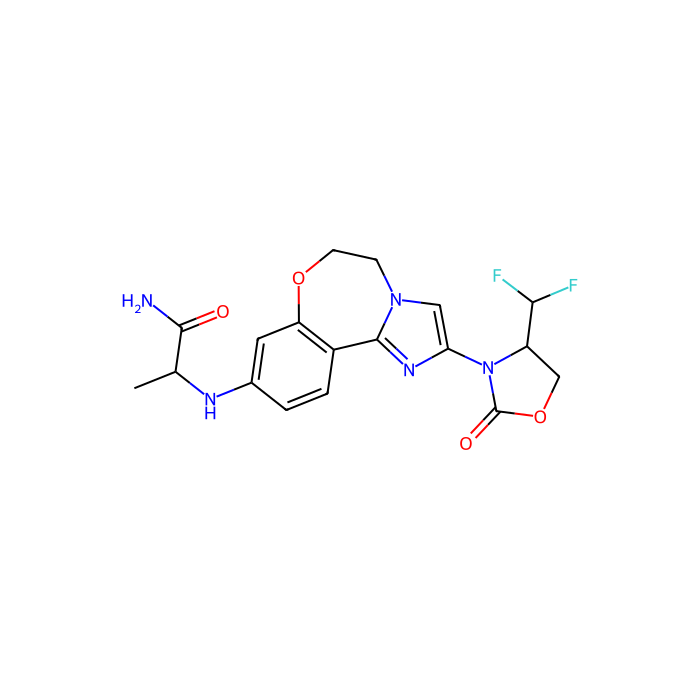
GDC-0077 is supplied as a research-only small-molecule entry in our Moligand™ collection, intended as a biochemical tool compound.
SMILES: Not specified for this item; refer to CoA/Spec Sheet.
Composition
Molecular formula: Not specified for this item; refer to CoA/Spec Sheet.
Molecular weight: Not specified for this item; refer to CoA/Spec Sheet.
Structural notes
Item-specific structural features (ring systems, stereochemistry, functional groups): Not specified for this item; refer to CoA/Spec Sheet.
General guidance for users
If you require a fully resolved structure (2D/3D), please consult the lot-specific CoA/Spec Sheet or authoritative databases keyed to the CAS/CID above to confirm exact atom connectivity, stereochemistry, and tautomeric form prior to quantitative work (e.g., molarity calculations, MS method development).
Synthetic Utility
This product is supplied as a finished small-molecule research tool, not as a synthetic intermediate or reagent.
As a substrate or synthon: Not typically employed as a building block in routine organic synthesis due to its elaborated scaffold and potential sensitivity of functional groups.
Derivatization: If structural analogs or probes (e.g., biotinylated or fluorophore-tagged variants) are desired, users generally start from earlier-stage intermediates or perform late-stage functionalization guided by medicinal chemistry design. Any such efforts should be informed by an authenticated structure (consult CAS/CID-linked literature) and careful protection of sensitive motifs.
Stability considerations for manipulation (general)
Aromatic heterocycles and sulfonamide/amide-containing scaffolds (common in bioactives) may exhibit limited stability under strong acidic or basic conditions, and can show poor solubility in many reaction media. Pilot studies and LC–MS monitoring are recommended.
Given the role of this SKU in screening/assay contexts, most users deploy it as received, focusing on biological evaluation rather than chemical transformation.
Target Specificity
Item-specific target, mode of action, and selectivity data are Not specified for this item; refer to CoA/Spec Sheet and primary literature keyed to the CAS (2060571-02-8) or CID (124173720).
Guidance for users
When deploying as a tool compound, confirm target engagement using at least two orthogonal assays (e.g., biochemical potency vs. cellular pathway readout) and include close analog controls if available.
If profiling across target families (e.g., kinases), adopt a standardized panel and report full selectivity metrics (e.g., S-score, off-target IC50s) alongside your primary endpoint.
Preguntas frecuentes
What is Moligand??
Moligand? is one of Aladdin Scientific's premium product lines, formulated for high-purity applications across multiple workflows. Compared to standard grades in the same workflow, Moligand? products typically offer tighter specifications, more rigorous QC, and stronger lot-to-lot consistency.
How should this product be stored?
Store at ?80 °C. Ultra-low temperature storage is required to maintain the specified shelf life.
How is this product shipped?
This product ships frozen with dry ice and cold packs. Unpack on arrival and transfer it to the storage condition stated above; handle dry ice with insulated gloves in a ventilated area.
What are the CAS number, molecular formula and molecular weight?
The CAS Number is 2060571-02-8, the molecular formula is C18H19F2N5O4, and the molecular weight is 407.37 g/mol. InChIKey SGEUNORSOZVTOL-CABZTGNLSA-N.
What documentation is provided?
Available product documentation, including Certificates of Analysis (COA), Safety Data Sheets (SDS), and specification sheets, is shown in the product document area. Document availability and access follow the current site policy.
¿Necesita ayuda para elegir la calidad?
Nuestra guía de selección de calidades cubre la pureza, el estado del estabilizador y la idoneidad de la aplicación para todas las variantes de nuestro catálogo.
Utilizamos cookies para garantizar el correcto funcionamiento del sitio web y, cuando esté permitido, para mejorar su experiencia. Puede gestionar sus preferencias en cualquier momento en Configuración. Más información en nuestra Política de Cookies.
¿Quieres que te enviemos un mensaje cuando tengamos descuentos disponibles?
Recordármelo más tarde
¡Gracias! Por favor, revisa tu bandeja de entrada de correo electrónico para confirmar.
Products are supplied to verified businesses, institutions, and qualified professionals for research and development use only. Not for use in humans, animals, diagnosis, or therapy.