
Determine the necessary mass, volume, or concentration for preparing a solution.
| Activity Type | Activity Value -log(M) | Mechanism of Action | Activity Reference | Publications (PubMed IDs) |
|---|
Moligand™, ≥98%, sum of trans and cis Moligand™ for sensitive chromatographic and analytical workflows requiring minimal baseline interference.
Protected from light,Store at -20°C Ships Ice chest + Ice pads Check lot-specific COA for exact specifications.
SDS, COA, datasheet, and spec sheet available for download. Lot-specific COA accessible via lot number lookup.
Cited in 0 peer-reviewed publications across chromatography, organic synthesis, and cross-coupling reactions.
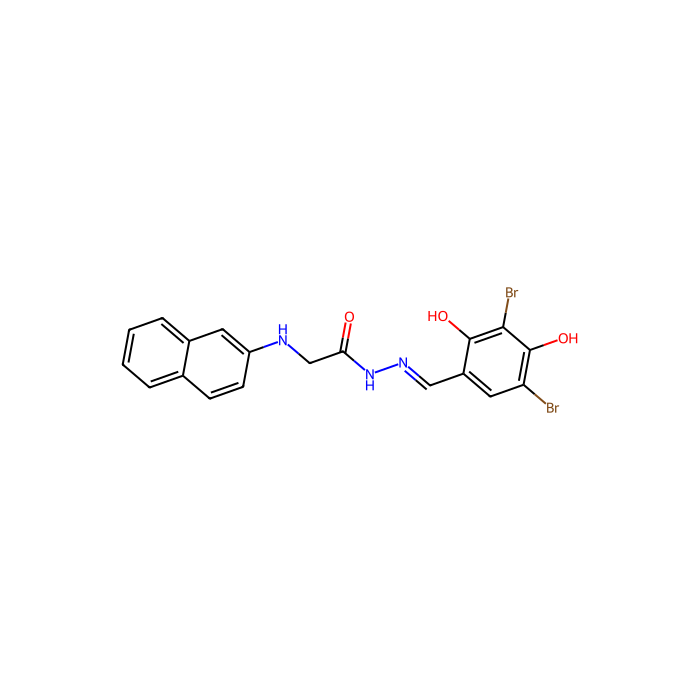
A cell-permeable glycinyl hydrazone compound that acts as a potent, selective and reversible open-channel blocker of CFTR with intermediate speed (<1 min; 95% inhibition at 50 µM; Ki = 4.3 µM in CFTR-expressing FRT cells for apical membrane Cl- current) and exhibits desirable aqueous solubility. Shown to produce inwardly rectifying CFTR Cl- currents with reduced mean channel open time and suggested to directly interact with the channel pore at the extracellular side of the membrane. Displays minimal effects on P-glycoprotein and non-CFTR-mediated Cl- currents, and is effective in nasal and intestinal epithelia in vivo. Also available as a 25 mM solution in DMSO .
A cell-permeable glycinyl hydrazone compound that acts as a potent, selective and reversible open-channel blocker of CFTR with intermediate speed (<1 min; 95% inhibition at 50 µM; Ki = 4.3 µM in CFTR-expressing FRT cells for apical membrane Cl- current) and exhibits desirable aqueous solubility. Shown to produce inwardly rectifying CFTR Cl- currents with reduced mean channel open time and suggested to directly interact with the channel pore at the extracellular side of the membrane. Displays minimal effects on P-glycoprotein and non-CFTR-mediated Cl- currents, and is effective in nasal and intestinal epithelia in vivo.
| Sonrisas canónicas | C1=CC=C2C=C(C=CC2=C1)NCC(=O)NN=CC3=CC(=C(C(=C3O)Br)O)Br |
|---|---|
| IUPAC Name | N-[(E)-(3,5-dibromo-2,4-dihydroxyphenyl)methylideneamino]-2-(naphthalen-2-ylamino)acetamide |
| InChIKey | RMBDLOATEPYBSI-NUGSKGIGSA-N |
| INCHI | 1S/C19H15Br2N3O3/c20-15-8-13(18(26)17(21)19(15)27)9-23-24-16(25)10-22-14-6-5-11-3-1-2-4-12(11)7-14/h1-9,22,26-27H,10H2,(H,24,25)/b23-9+ |
| Isómeros SMILES | C1=CC=C2C=C(C=CC2=C1)NCC(=O)N/N=C/C3=CC(=C(C(=C3O)Br)O)Br |
| Peso molecular | 493.15 |
| Reaxy-Rn | 19522958 |
| Reaxys-RN_link_address | https://www.reaxys.com/reaxys/secured/hopinto.do?context=S&query=IDE.XRN=19522958&ln= |
Comprehensive hazard, handling, storage, and regulatory compliance document.
Download SDS →Lot-specific quality data. Enter your lot number to retrieve the exact COA.
Look up COA →Full quality attributes and acceptance criteria for this grade.
View spec sheet →Taxonomy Tree
| Kingdom | Organic compounds |
|---|---|
| Superclass | Benzenoids |
| Clase | Naphthalenes |
| Subclass | Not available |
| Intermediate Tree Nodes | Not available |
| Direct Parent | Naphthalenes |
| Alternative Parents | Alpha amino acids and derivatives Resorcinols P-bromophenols O-bromophenols Secondary alkylarylamines Bromobenzenes Aryl bromides Organobromides Organic oxides Hydrocarbon derivatives Carbonyl compounds |
| Molecular Framework | Aromatic homopolycyclic compounds |
| Substituents | N-substituted-alpha-amino acid - Alpha-amino acid or derivatives - Naphthalene - 4-halophenol - 2-halophenol - 2-bromophenol - Resorcinol - 4-bromophenol - Bromobenzene - Halobenzene - Secondary aliphatic/aromatic amine - Phenol - Aryl bromide - Aryl halide - Monocyclic benzene moiety - Amino acid or derivatives - Secondary amine - Carboxylic acid derivative - Organohalogen compound - Organic oxygen compound - Carbonyl group - Organic nitrogen compound - Organic oxide - Hydrocarbon derivative - Amine - Organobromide - Organonitrogen compound - Organooxygen compound - Aromatic homopolycyclic compound |
| Descripción | This compound belongs to the class of organic compounds known as naphthalenes. These are compounds containing a naphthalene moiety, which consists of two fused benzene rings. |
| External Descriptors | Not available |
| Activity Type | Activity Value -log(M) | Mechanism of Action | Activity Reference | Publications (PubMed IDs) |
|---|
Find and download the COA for your product by matching the lot number on the packaging.
| Lot Number | Certificate Type | Fecha | Articulo |
|---|---|---|---|
 F2220461 F2220461 | Certificate of Analysis | Apr 03, 2025 | G288753 |
| F2220462 | Certificate of Analysis | Apr 03, 2025 | G288753 |
| F2220465 | Certificate of Analysis | Apr 03, 2025 | G288753 |
| F2220474 | Certificate of Analysis | Apr 03, 2025 | G288753 |
| F2220505 | Certificate of Analysis | Apr 03, 2025 | G288753 |
| Solubilidad | Solvent:DMSO, Max Conc. mg/mL: 49.31, Max Conc. mM: 100 |
|---|---|
| Sensibilidad | light & Moisture sensitive |
| Peso molecular | 493.100 g/mol |
| XLogP3 | 4.800 |
| Hydrogen Bond Donor Count | 4 |
| Hydrogen Bond Acceptor Count | 5 |
| Rotatable Bond Count | 5 |
| Exact Mass | 492.946 Da |
| Monoisotopic Mass | 490.948 Da |
| Topological Polar Surface Area | 94.000 Ų |
| Heavy Atom Count | 27 |
| Formal Charge | 0 |
| Complexity | 536.000 |
| Isotope Atom Count | 0 |
| Defined Atom Stereocenter Count | 0 |
| Undefined Atom Stereocenter Count | 0 |
| Defined Bond Stereocenter Count | 1 |
| Undefined Bond Stereocenter Count | 0 |
| The total count of all stereochemical bonds | 1 |
| Covalently-Bonded Unit Count | 1 |
Our grade selection guide covers purity, stabilizer status, and application suitability for all variants in our catalog.
View Moligand™ grade guide →