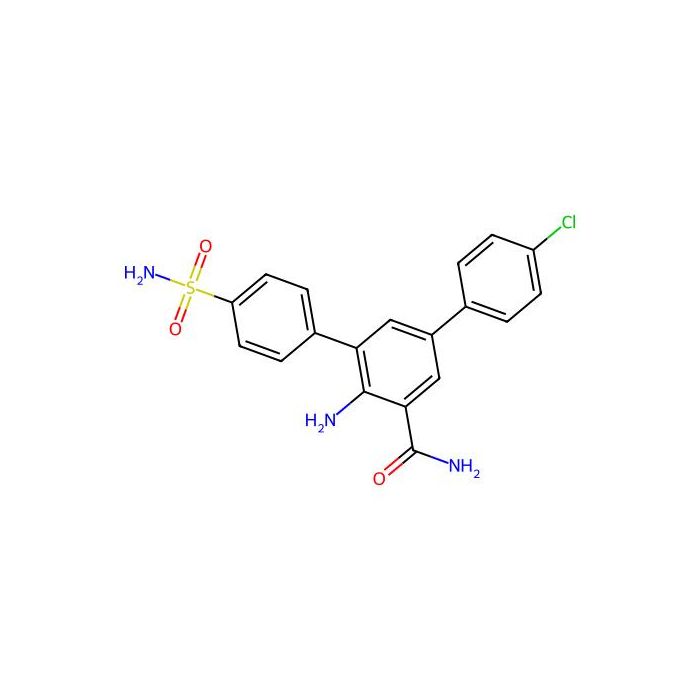
≥98% for sensitive chromatographic and analytical workflows requiring minimal baseline interference.
🌡
Storage & shipping
Store at -20°C Ships Ice chest + Ice pads Check lot-specific COA for exact specifications.
📋
Quality documents
SDS, COA, datasheet, and spec sheet available for download. Lot-specific COA accessible via lot number lookup.
📚
Literature proof
Cited in 0 peer-reviewed publications across chromatography, organic synthesis, and cross-coupling reactions.
Descripción general
HPN-01 is a potent and selective IKK inhibitor, with pIC 50 values of 6.4, 7.0 and <4.8 for IKK-α , IKK-β and IKK-ε, respectively. HPN-01 displays greater 50-fold selectivity over a panel of more than 50 other kinases, including ALK5 , CDK-2, EGFR , ErbB2, GSK3β, PLK1 , Src , and VEGFR-2
In Vitro
HPN-01 effectively suppress LPS-stimulated secretion of TNF-α, IL-1β, and IL-6 from human PBMCs (pIC 50 =6.1, 6.4, and 5.7, respectively). HPN-01 also inhibits TNF-α-induced NF-κB nuclear translocation in human lung fibroblast cells (pIC 50 =5.7). HPN-01 inhibits the expression of SREBP-1and SREBP-2 in cultured primary human hepatocytes with IC 50 s of 1.71 μΜ and 3.43 μΜ, respectively. HPN-01 is being development for the treatment of nonalcoholic fatty liver disease (NAFLD). MCE has not independently confirmed the accuracy of these methods. They are for reference only.
HPN-01 is a potent and selective IKK inhibitor, with pIC 50 values of 6.4, 7.0 and <4.8 for IKK-α , IKK-β and IKK-ε, respectively. HPN-01 displays greater 50-fold selectivity over a panel of more than 50 other kinases, including ALK5 , CDK-2, EGFR , ErbB2
Condiciones de almacenamiento de almacenamiento
Store at -20°C
Enviado en
Ice chest + Ice pads
Este producto requiere envío en cadena de frío. Los servicios terrestres y otros servicios económicos no están disponibles.
This compound belongs to the class of organic compounds known as m-terphenyls. These are terphenyls with a structure containing the 1,3-diphenylbenzene skeleton.
External Descriptors
Not available
1. Djoumbou Feunang Y, Eisner R, Knox C, Chepelev L, Hastings J, Owen G, Fahy E, Steinbeck C, Subramanian S, Bolton E, Greiner R, and Wishart DS. ClassyFire: Automated Chemical Classification With A Comprehensive, Computable Taxonomy. Journal of Cheminformatics, 2016, 8:61.
Certificados (CoA, COO, BSE/TSE y tabla de análisis)
C of A & Other Certificates(BSE/TSE, COO):
Analytical Chart:
Propiedades químicas y físicas
Solubilidad
DMSO : 100 mg/mL (248.84 mM; Need ultrasonic)
Peso molecular
401.900 g/mol
XLogP3
3.100
Hydrogen Bond Donor Count
3
Hydrogen Bond Acceptor Count
5
Rotatable Bond Count
4
Exact Mass
401.06 Da
Monoisotopic Mass
401.06 Da
Topological Polar Surface Area
138.000 Ų
Heavy Atom Count
27
Formal Charge
0
Complexity
623.000
Isotope Atom Count
0
Defined Atom Stereocenter Count
0
Undefined Atom Stereocenter Count
0
Defined Bond Stereocenter Count
0
Undefined Bond Stereocenter Count
0
The total count of all stereochemical bonds
0
Covalently-Bonded Unit Count
1
Calculadoras de soluciones
Molarity Calculator
Determine the necessary mass, volume, or concentration for preparing a solution.
Dilution Calculator
Determine the dilution needed to prepare a stock solution.
Reconstitution Calculator
Reseñas
Reseñas de cliente
Application Protocols
Validated application protocols are not provided for this item.
General screening workflow (not item-specific):
Stock preparation: Dissolve to 10–50 mM in anhydrous DMSO. Vortex/sonicate as needed. Filter through 0.22 µm if particulates persist.
Plate handling: Aliquot into low-binding 96/384-well plates. Seal to minimize evaporation. Store frozen to maintain integrity.
Assay setup: Dilute into assay buffer to reach desired final concentration, keeping DMSO at ≤1%. Include vehicle controls and, if available, positive controls.
Data quality: Use duplicates/triplicates; include inter-plate controls; check for precipitation or optical interference (inner-filter effect) where relevant.
Please consult the CoA/SDS and your internal SOPs for definitive, experiment-specific protocols.
Biological Roles
Item-specific biological role or target information for HPN-01 is not provided in this listing.
Target/Pathway: Not specified for this item; refer to CoA/Spec Sheet or primary literature for CAS 928655-63-4.
Mechanism of action: Not specified for this item; refer to CoA/Spec Sheet.
General context for small-molecule library members (not item-specific):
Compounds in discovery libraries are frequently curated to explore diverse chemotypes and bioactive space; they may engage enzymes, receptors, ion channels, or protein–protein interfaces.
Biological roles can only be assigned after target deconvolution and orthogonal validation (e.g., proteomics pull-downs, CETSA/DSF, genetic rescue experiments).
When moving beyond preliminary hits, confirm selectivity against related targets and off-target liability using counterscreens and ADME profiling.
Important note:
All statements herein are for laboratory research use only. No medical, diagnostic, or therapeutic inferences should be drawn without definitive structural and biological data specific to this product.
Buffer Applications
This product is a small-molecule library compound and is not a buffering agent. No dedicated buffer-system application is expected.
Practical notes (general, not item-specific):
For aqueous assays, dissolve the compound in DMSO stock and dilute into the desired biological buffer (e.g., PBS, HEPES, Tris) while keeping final DMSO typically ≤1%.
Verify compatibility with buffer components (e.g., avoid reactive nucleophiles if the compound may contain electrophilic motifs; unknown here).
For actual buffer formulation guidance, refer to standard buffering agents (e.g., HEPES pH 6.8–8.2, Tris pH 7–9, MOPS pH 6.5–7.9) rather than this product.
Green Alternatives
Because item-specific solvent and handling parameters are not provided, the following green chemistry considerations are general (not item-specific) and focus on preparation of screening stocks and assay solutions.
Greener choices for dissolution/dilution (general):
Prefer aqueous buffers with minimal organic cosolvent where solubility permits.
If an organic stock is needed, DMSO is broadly accepted and has relatively low vapor pressure and low flammability compared with many aprotic solvents.
When alternative cosolvents are viable, prioritize ethanol or isopropanol over chlorinated solvents; keep totals ≤1–2% in assays.
Small comparison (general):
DMSO vs DMF/MeCN: DMSO avoids high VOC emissions and is less volatile; DMF has regulatory scrutiny and potential reproductive toxicity—minimize DMF where possible.
Ethanol vs Methanol: Ethanol is generally preferable for safety and regulatory reasons; methanol is more toxic.
Operational practices:
Use microscale aliquots to cut solvent waste.
Employ closed-well plates and adhesive seals to limit solvent evaporation and exposure.
Consolidate analytical runs (LC–MS/UPLC) to reduce solvent consumption; opt for water-rich gradients when compatible with the analyte.
Trade-offs:
Some hydrophobic compounds may require stronger aprotic solvents; in such cases, document the rationale and pursue minimal effective volumes and robust ventilation.
Pharmaceutical Uses
No pharmaceutical or excipient use is claimed or supported for this item.
Regulatory status: Not specified for this item; no pharmacopeial monograph indicated.
Formulation role: Not applicable—this product is supplied strictly for research use and discovery screening.
General note (not item-specific):
If a research team evaluates this compound in pre-formulation studies, ensure compliance with institutional review and handle strictly as a research chemical, not for human or veterinary use.
Any development-oriented work (salt screening, polymorph assessment) would require full structural disclosure and characterization, which are not provided here.
Physical Properties
Item-specific physicochemical data are not provided in the current listing.
Appearance: Not specified for this item; refer to CoA/Spec Sheet.
Melting point (MP): Not specified for this item; refer to CoA/Spec Sheet.
Boiling point (BP): Not applicable/rarely reported for solid screening compounds; Not specified for this item; refer to CoA/Spec Sheet.
Density: Not specified for this item; refer to CoA/Spec Sheet.
Refractive index: Not applicable for solids; Not specified for this item; refer to CoA/Spec Sheet.
Solubility: Not specified for this item; refer to CoA/Spec Sheet.
LogP/logD, pKa: Not specified for this item; refer to CoA/Spec Sheet.
General/literature guidance for small-molecule screening solids (not item-specific):
Typical dissolution vehicles include DMSO (100% stock at 10–50 mM), with subsequent dilutions into assay buffers containing 0.1–1% DMSO.
Many discovery compounds show improved solubility with co-solvents (DMSO:water, DMSO:buffer), or by adding small percentages of surfactant (e.g., 0.01–0.05% Tween-20) where assay-compatible.
If logP is high, consider using cosolvent systems (DMSO:MeOH:buffer) and sonication. For ionizable compounds, pH adjustment near pKa can aid dissolution.
Please consult the CoA/SDS or contact Aladdin Scientific for definitive, item-specific property data.
Quality and Grades
The listing does not provide an explicit grade or assay purity for HPN-01.
Grade/Purity: Not specified for this item; refer to CoA/Spec Sheet.
Guidance on grades (general, not item-specific):
Screening/Discovery grade compounds are typically provided with a certificate of analysis (CoA) including identity confirmation (e.g., NMR/LC–MS) and purity by HPLC/UPLC.
If labeled HPLC grade (solvents) or >98% purity (solids), these terms indicate low UV background (for solvents) or high chromatographic purity, respectively; however, no such designation is provided here.
Quality considerations and recommendations:
Request the CoA for batch-specific identity (LC–MS, 1H NMR, HRMS), purity, and water/volatile content (e.g., KF, TGA) where applicable.
If working in cell-based assays or biophysical screening, consider confirming endotoxin is not relevant (usually not for small molecules) and ensure residual solvents meet your internal acceptance criteria.
For SAR work, verify lot-to-lot consistency via LC–MS retention time and purity profile; archive a sample of the received lot as a reference standard.
Contact Aladdin Scientific to obtain the latest CoA and any available specification sheet for this SKU (H648948).
Reaction and Applications
This product is categorized under “small molecules and compound libraries,” and is primarily intended for use as a screening compound or reference standard rather than as a synthetic reagent.
Applications (general, not item-specific):
Biochemical and cell-based screening: Formation of DMSO stocks and serial dilutions for HTS, dose–response curves, and mechanism-of-action follow-up studies.
Biophysical assays: Evaluation in thermal shift (DSF), SPR, ITC, or NMR binding assays to identify target engagement (target for HPN-01 not specified in this listing).
Analytical method development: Use as a matrix spike, retention-time marker, or internal reference once identity is confirmed (LC–MS/UPLC).
Not typically applicable (without structure):
Detailed synthetic reactivity, named-reaction participation, or functional-group–specific chemistry cannot be outlined without a defined structure/SMILES.
Practical tips:
Verify identity and purity by LC–MS before critical studies.
Establish a solubility window in your assay buffers to avoid precipitation artifacts.
When profiling in cells, confirm vehicle control effects (DMSO) and perform counter-screens to flag aggregation or redox interferences (e.g., with detergent controls or light scattering tests).
Please refer to the CoA/Spec Sheet or contact us for any target- or pathway-specific guidance if available for this CAS/CID.
Reaction Conditions
Not applicable: This product is offered as a small-molecule library member for screening rather than as a reagent for performing chemical transformations.
Without a disclosed structure or functional groups, we cannot recommend reaction temperatures, catalysts, or conditions for transformations involving this compound.
General lab guidance (not item-specific):
If performing analytical characterization, standard LC–MS and UPLC conditions with water/acetonitrile (0.1% formic acid) gradients are commonly suitable for small organic molecules; adjust based on observed retention and ionization.
For stability checks, consider short stress tests (light, heat, pH extremes) on small aliquots to inform handling during assays.
Safety and Handling
Safety information is incomplete in the listing; always consult the SDS before use.
GHS Classification: Not specified for this item; refer to SDS.
Signal Word: Not specified for this item; refer to SDS.
Hazard (H) Statements: Not specified for this item; refer to SDS.
Pictograms: Not specified for this item; refer to SDS.
Intended use: For research use only (not for human or veterinary use).
General handling guidance for small organic research compounds (not item-specific):
Wear appropriate PPE: lab coat, safety glasses, and nitrile gloves. Handle in a fume hood to avoid inhalation of dust or solvent vapors.
Avoid skin/eye contact and inhalation of powders or aerosols. Prevent ingestion.
If the substance is moisture- or light-sensitive (unknown here), minimize exposure using amber vials, desiccant, and inert gas as appropriate.
Incompatibilities are structure-dependent; conservatively avoid strong oxidizers, acids/bases, and sources of ignition until SDS confirms details.
First-aid overview (general):
Inhalation: Move to fresh air; seek medical attention if symptoms persist.
Skin/Eye contact: Rinse thoroughly with water for at least 15 minutes; remove contaminated clothing; seek medical attention if irritation persists.
Ingestion: Rinse mouth; do not induce vomiting; seek medical advice.
Waste disposal: Collect as organic laboratory waste per institutional and local regulations. Defer to SDS for authoritative guidance.
Solvent Selection
Item-specific solubility data are not provided. The following guidance reflects common practice for small-molecule screening solids (general, not item-specific):
Primary stock solvent: DMSO is typically preferred, enabling stable 10–50 mM stock solutions. Filter (0.22 µm) if particulates persist.
Aqueous dilution: Most assays tolerate 0.1–1% DMSO. Pre-warm and vortex to minimize precipitation on dilution.
Alternative organic solvents: For hydrophobic compounds, trial DMF, acetonitrile, or MeOH. For base-labile motifs, avoid strong alcoholysis; for acid-labile groups, avoid acidic media.
pH-assisted solubilization: If the compound is weakly basic/acidic (unknown here), dissolve in a minimal volume of buffered medium adjusted near the expected pKa, then back-dilute.
Small comparison (general):
DMSO: Excellent solvating power; higher viscosity; broadly assay-compatible at ≤1%.
DMF/MeCN: Lower viscosity, fast mixing; may impact certain bioassays; verify tolerance.
MeOH/EtOH: Convenient but can perturb membrane assays; keep ≤1–2% where applicable.
Practical tips:
Prepare aliquots to avoid repeated freeze–thaw of DMSO stocks.
Use amber vials if chromophores are suspected; minimize light exposure during handling.
Confirm solubility at working concentration by visual inspection and, if critical, by nephelometry or analytical LC.
Storage and Reconstitution
Item-specific storage is provided; reconstitution details are general for small-molecule solids/liquids.
Storage Conditions (as provided): Store at -20°C.
Shipped In:Ice chest + Ice pads.
Appearance: Not specified for this item; refer to CoA/Spec Sheet.
General reconstitution and handling (not item-specific):
For solids: Equilibrate to room temperature in a desiccated environment before opening to prevent moisture uptake. Dissolve in anhydrous DMSO to prepare 10–50 mM stocks. If needed, pass through a 0.22 µm PTFE filter.
For solutions: Thaw on ice or at room temperature; vortex gently. Avoid strong heating. If precipitate forms, warm to ambient and sonicate briefly, or adjust solvent composition.
Aliquot stocks into single-use volumes to avoid repeated freeze–thaw. Store working DMSO stocks at -20°C in amber vials; minimize headspace or backfill with inert gas if oxidation sensitivity is suspected.
Stability/shelf-life: Not specified for this item; verify by periodic LC–MS/HPLC purity checks and compare with initial CoA.
Always defer to the CoA/SDS for any item-specific stability, hygroscopicity, or light-sensitivity notes.
Structure and Identity
Brief overview: HPN-01 is listed as a small-molecule library member intended for research screening. Item-specific structural identifiers are largely not provided in the current listing.
Product Name: HPN-01
SKU: H648948
CAS: 928655-63-4 (as provided)
PubChem CID: 15979284 (as provided)
InChIKey: 419538 (as provided; note that typical InChIKeys are 27-character strings—please verify on the CoA/SDS)
SMILES: Not specified for this item; refer to CoA/Spec Sheet.
Molecular Formula: Not specified for this item; refer to CoA/Spec Sheet.
Molecular Weight: Not specified for this item; refer to CoA/Spec Sheet.
Structural features (general guidance, not item-specific):
Library compounds commonly contain one or more aromatic/heteroaromatic rings, H-bond donors/acceptors, and drug-like motifs to meet diversity and Lipinski-like space; however, no specific functional groups can be assigned to this item without the SMILES or structure.
2D structure description:
Not available for this item. Please consult the product CoA/Spec Sheet or SDS for the definitive structural representation (SMILES/SDF/Molfile).
Synthetic Utility
Synthetic applications cannot be described without a defined structure/functional group set.
Because SMILES, structure, and functional groups are not provided, we cannot discuss reactivity patterns, protective-group strategies, or named-reaction compatibility for HPN-01.
General recommendation:
If you intend to use this item as a building block or intermediate, please obtain the complete structural information (SMILES/SDF), and consult the CoA for identity and purity. With that in hand, Aladdin Scientific can advise on suitable transformations, stability, and handling during synthesis.
Target Specificity
No target binding or selectivity information is provided for HPN-01 in this listing.
Primary target: Not specified for this item; refer to CoA/Spec Sheet or primary literature for CAS 928655-63-4.
Selectivity profile: Not specified for this item; refer to CoA/Spec Sheet.
Assay-validated potency (IC50/Ki/Kd): Not specified for this item; refer to CoA/Spec Sheet.
If a target association becomes available, we recommend documenting:
Assay format and conditions (e.g., biochemical vs cell-based),
Reference controls and counter-screens,
Any known off-targets or safety pharmacology flags.
Until then, treat this item as an uncharacterized screening compound.
We use cookies to ensure the website functions properly and, where permitted, to improve your experience. You can manage your preferences at any time in Settings. Learn more in our Cookie Policy.
Shall we send you a message when we have discounts available?
Remind me later
Thank you! Please check your email inbox to confirm.
Products are supplied to verified businesses, institutions, and qualified professionals for research and development use only. Not for use in humans, animals, diagnosis, or therapy.