
Determine the necessary mass, volume, or concentration for preparing a solution.
| Activity Type | Relation | Activity value | Units | Action Type | Journal | PubMed Id | doi | Assay Aladdin ID |
|---|
≥98% for sensitive chromatographic and analytical workflows requiring minimal baseline interference.
Store at -20°C Ships Ice chest + Ice pads Check lot-specific COA for exact specifications.
SDS, COA, datasheet, and spec sheet available for download. Lot-specific COA accessible via lot number lookup.
Cited in 0 peer-reviewed publications across chromatography, organic synthesis, and cross-coupling reactions.
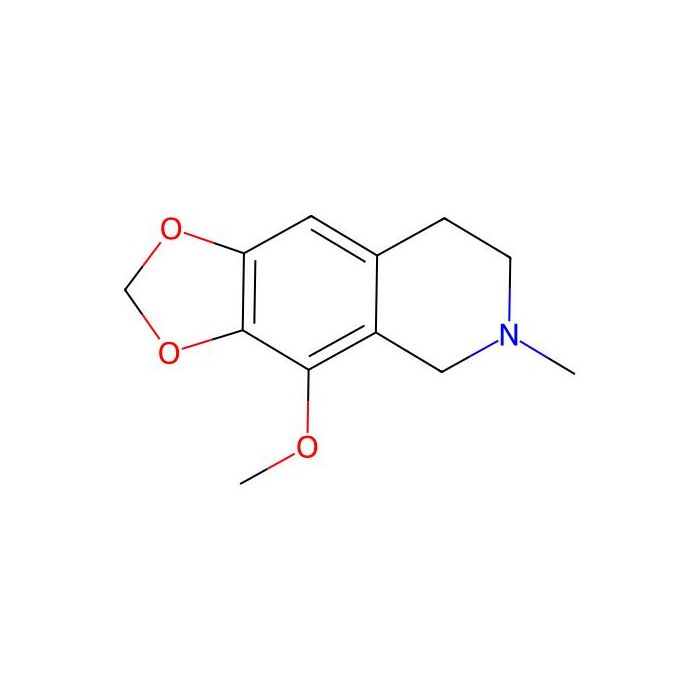
Hydrocotarnine is a Cbl inhibitor, and results in inflammasome-mediated IL-18 secretion in colitis. Hydrocotarnine increases expression of GLUT1 and cellular glucose uptake in glycolytic metabolism. Hydrocotarnine acts as an agent that provides analgesic effect in cancer research
In Vitro
Hydrocotarnine is an analgesic agent (CRIN-2), with the patent ID of WO2011160016A2. Hydrocotarnine (10 μM; 1 h) elevates the secretion of IL-1β and IL-18, and (0.1-10 μM; 1 h) increases the global level of tyrosine-phosphorylated proteins in THP-1 cells. Hydrocotarnine (50 μM; 0-100 min) increases the glycolytic capacity and glycolytic reserve capacity in THP-1-derived macrophages. Hydrocotarnine (50 μM; 16 h) inhibits Cbl and increases the total GLUT1 protein in THP-1-derived macrophages. Hydrocotarnine is known to enhance the analgesic effect of opioids, and alleviates cancer pain. MCE has not independently confirmed the accuracy of these methods. They are for reference only. Western Blot AnalysisCell Line: THP-1 cells Concentration: 0.1, 1, 10 μM Incubation Time: 1 hour Result: Induced p-Pyk2 loss and increased the level of tyrosine-phosphorylated proteins in a dose-dependent manner.
In Vivo
Hydrocotarnine (10 mg/kg/d; i.p.; 9 d) shows inhibitory effect on Cbl and results in increasing IL-18 levels, indicating that NLRP3 inflammasome activation is enhanced in mice . Hydrocotarnine (10 mg/kg/d; i.p.; 9 d) protects mice from DSS-induced colitis, with low scores of pathological evaluation of inflammation, epithelial defects, and crypt atrophy . MCE has not independently confirmed the accuracy of these methods. They are for reference only. Animal Model: DSS-induced colitis model in C57BL/6 mice (6-9 weeks old) Dosage: 10 mg/kg Administration: Intraperitoneal injection; once daily; 9 days while 2.5% DSS treatment began on day 1 and ended on day 7 Result: Significantly attenuated the weight loss of DSS-induced colitis mice compared to PBS-treated control mice, indicating that decreasing negative regulation of the NLRP3 inflammasome activation could attenuate colitis in an animal model.
Form:Solid
IC50& Target:Cbl
| Sonrisas canónicas | CN1CCC2=CC3=C(C(=C2C1)OC)OCO3 |
|---|---|
| IUPAC Name | 4-methoxy-6-methyl-7,8-dihydro-5H-[1,3]dioxolo[4,5-g]isoquinoline |
| InChIKey | XXANNZJIZQTCBP-UHFFFAOYSA-N |
| INCHI | 1S/C12H15NO3/c1-13-4-3-8-5-10-12(16-7-15-10)11(14-2)9(8)6-13/h5H,3-4,6-7H2,1-2H3 |
| Isómeros SMILES | CN1CCC2=CC3=C(C(=C2C1)OC)OCO3 |
| CAS alternativo | 550-10-7 |
| PubChem CID | 3646 |
| Términos de entrada MeSH | hydrocotarnine;hydrocotarnine hydrobromide;hydrocotarnine hydrochloride;hydrocotarnine hydrochloride monohydrate |
| Peso molecular | 221.25 |
Comprehensive hazard, handling, storage, and regulatory compliance document.
Download SDS →Lot-specific quality data. Enter your lot number to retrieve the exact COA.
Look up COA →Full quality attributes and acceptance criteria for this grade.
View spec sheet →Taxonomy Tree
| Kingdom | Organic compounds |
|---|---|
| Superclass | Organoheterocyclic compounds |
| Clase | Tetrahydroisoquinolines |
| Subclass | Not available |
| Intermediate Tree Nodes | Not available |
| Direct Parent | Tetrahydroisoquinolines |
| Alternative Parents | Benzodioxoles Anisoles Aralkylamines Alkyl aryl ethers Trialkylamines Oxacyclic compounds Azacyclic compounds Acetals Organopnictogen compounds Hydrocarbon derivatives |
| Molecular Framework | Aromatic heteropolycyclic compounds |
| Substituents | Tetrahydroisoquinoline - Benzodioxole - Anisole - Alkyl aryl ether - Aralkylamine - Benzenoid - Tertiary amine - Tertiary aliphatic amine - Ether - Acetal - Oxacycle - Azacycle - Organopnictogen compound - Organic nitrogen compound - Organic oxygen compound - Organooxygen compound - Organonitrogen compound - Hydrocarbon derivative - Amine - Aromatic heteropolycyclic compound |
| Descripción | This compound belongs to the class of organic compounds known as tetrahydroisoquinolines. These are tetrahydrogenated isoquinoline derivatives. |
| External Descriptors | Not available |
| Activity Type | Relation | Activity value | Units | Action Type | Journal | PubMed Id | doi | Assay Aladdin ID |
|---|
| Activity Type | Relation | Activity value | Units | Action Type | Journal | PubMed Id | doi | Assay Aladdin ID |
|---|
| Activity Type | Relation | Activity value | Units | Action Type | Journal | PubMed Id | doi | Assay Aladdin ID |
|---|
| Activity Type | Relation | Activity value | Units | Action Type | Journal | PubMed Id | doi | Assay Aladdin ID |
|---|
| Activity Type | Relation | Activity value | Units | Action Type | Journal | PubMed Id | doi | Assay Aladdin ID |
|---|
| Activity Type | Relation | Activity value | Units | Action Type | Journal | PubMed Id | doi | Assay Aladdin ID |
|---|
| Activity Type | Relation | Activity value | Units | Action Type | Journal | PubMed Id | doi | Assay Aladdin ID |
|---|
| Solubilidad | DMSO : ≥ 100 mg/mL (451.98 mM) |
|---|---|
| Peso molecular | 221.250 g/mol |
| XLogP3 | 1.600 |
| Hydrogen Bond Donor Count | 0 |
| Hydrogen Bond Acceptor Count | 4 |
| Rotatable Bond Count | 1 |
| Exact Mass | 221.105 Da |
| Monoisotopic Mass | 221.105 Da |
| Topological Polar Surface Area | 30.900 Ų |
| Heavy Atom Count | 16 |
| Formal Charge | 0 |
| Complexity | 261.000 |
| Isotope Atom Count | 0 |
| Defined Atom Stereocenter Count | 0 |
| Undefined Atom Stereocenter Count | 0 |
| Defined Bond Stereocenter Count | 0 |
| Undefined Bond Stereocenter Count | 0 |
| The total count of all stereochemical bonds | 0 |
| Covalently-Bonded Unit Count | 1 |