Potente derivado neurogénico y neuroprotector de la curcumina. Mejora la neuropatía diabética periférica en modelos animales.
Condiciones de almacenamiento de almacenamiento
Conservar a -20°C
Enviado en
Hielera + almohadillas de hielo
Nota
Consulte la SDS para obtener más información ¿Necesita más consejos sobre solubilidad, uso y manipulación? Visite nuestra página de preguntas frecuentes (FAQ) para obtener más información.
This compound belongs to the class of organic compounds known as anilides. These are organic heterocyclic compounds derived from oxoacids RkE(=O)l(OH)m (l not 0) by replacing an OH group by the NHPh group or derivative formed by ring substitution.
External Descriptors
Not available
1. Djoumbou Feunang Y, Eisner R, Knox C, Chepelev L, Hastings J, Owen G, Fahy E, Steinbeck C, Subramanian S, Bolton E, Greiner R, and Wishart DS. ClassyFire: Automated Chemical Classification With A Comprehensive, Computable Taxonomy. Journal of Cheminformatics, 2016, 8:61.
Determine the necessary mass, volume, or concentration for preparing a solution.
Dilution Calculator
Determine the dilution needed to prepare a stock solution.
Reconstitution Calculator
Reseñas
Reseñas de cliente
Application Protocols
No tested applications or recommended protocols are provided in the Product Data for this SKU.
Validated uses (WB, IHC, IF, FC, enzymatic assays, etc.): Not specified for this item.
Recommended concentrations/dilutions: Not specified for this item.
User guidance
Develop application-specific protocols internally, beginning with small pilot studies to set concentration ranges, exposure times, and vehicle tolerances.
Document lot numbers and solution handling (e.g., solvent, concentration, date prepared, freeze–thaw count) alongside assay outcomes to ensure reproducibility.
Biological Roles
This catalog entry is supplied for research use only; no biological activity, targets, or mechanisms are specified in the Product Data.
Known/putative roles: Not specified for this item; refer to primary literature and your internal validation data.
Pathways and targets: Not specified for this item.
Guidance for research use (general, non-clinical)
Use as a well-defined chemical probe candidate in exploratory studies only after confirming identity and purity for your lot.
Perform concentration–response profiling across multiple assay formats to identify potential off-target effects and to flag assay interference (e.g., intrinsic fluorescence, redox activity, colloidal aggregation). Counter-screen with detergents (e.g., 0.01% Triton X-100) or dynamic light scattering where appropriate.
ADME/stability checks: If relevant to your program, assess microsomal stability, aqueous solubility, and permeability using standard in vitro panels. All such data are user-generated; none are provided here by the manufacturer.
Compliance note
This product is for research use only and is not intended for diagnostic, therapeutic, or clinical applications.
Buffer Applications
This item is a discrete small molecule and is not a buffering reagent.
Buffer capacity/recipes: Not applicable.
pH range and ionic strength considerations: Not applicable.
Practical note
When dosing into buffered systems, consider the vehicle’s effect on buffer capacity (e.g., final DMSO ≤0.1–1% v/v) and confirm that the compound remains in solution at working pH and ionic strength.
If precipitation occurs on dilution, increase the proportion of co-solvent slightly, warm gently, or prepare more concentrated intermediate stocks for stepwise dilution.
Green Alternatives
While this product is a finished small molecule rather than a process reagent, greener choices can be made in how it is handled, dissolved, and analyzed.
Greener solvent considerations (general guidance)
Stock solutions: DMSO is widely accepted and relatively benign compared with chlorinated solvents; use it in preference to DMF or NMP when compatible.
Dilution solvents: Prefer ethanol or water (with minimal co-solvent) over acetonitrile or DMF for routine dilutions if solubility and assay design allow.
Workup/cleanup: For analytical sample prep, prioritize MeOH/H2O mixtures over acetonitrile when possible, and minimize solvent volumes through microplate-based workflows.
Comparison snapshot (general)
DMSO vs DMF: DMSO has a better EHS profile and lower volatility; DMF is a reproductive toxin—avoid unless necessary.
Ethanol vs acetonitrile: Ethanol is bio-based and less hazardous; acetonitrile offers stronger elution but has supply chain and toxicity considerations.
Operational practices
Use smaller aliquots to reduce waste from degraded/expired solutions.
Adopt closed-vial sonication/heating to limit evaporative losses and lab emissions.
Evaluate LC methods that reduce acetonitrile consumption (shallower gradients, UHPLC, or MeOH-based methods) while ensuring adequate resolution.
Note: No greener “substitute compound” applies because this SKU is itself the research target, not a solvent or reagent.
Pharmaceutical Uses
No pharmacopeial status, excipient role, or formulation use is specified for this item in the Product Data.
Regulatory/compendial listings: Not specified for this item; refer to CoA/Spec Sheet.
Intended use: For research use only (product data). Not for human or veterinary use.
Laboratory formulation context (general guidance, not a claim of suitability)
Preformulation screens: If conducting research formulation studies, evaluate solubility in biorelevant media, DMSO cosolvent systems, or inclusion complexes (e.g., HP-β-CD) as appropriate for in vitro assays.
Stability: Establish solution and solid-state stability (temperature, light, oxidative conditions) using validated analytical methods before any extended studies.
Dose vehicle development for in vivo research (if applicable under your institution’s approvals): Optimize cosolvent/surfactant systems to minimize irritation and maximize compound stability—this is user-derived work; no recommendations are provided by the manufacturer for this SKU.
Physical Properties
The Product Data provided does not include physicochemical constants for this item.
Appearance: Not specified for this item; refer to CoA/Spec Sheet.
Melting point: Not specified for this item; refer to CoA/Spec Sheet.
Boiling point: Not applicable/unknown for a discrete organic solid; Not specified for this item; refer to CoA/Spec Sheet.
Density: Not specified for this item; refer to CoA/Spec Sheet.
Solubility: Not specified for this item; refer to CoA/Spec Sheet. (General lab practice for small-molecule screening compounds is to prepare concentrated DMSO stocks, then dilute into assay media with attention to final DMSO percentage.)
logP/logD, pKa, refractive index: Not specified for this item; refer to CoA/Spec Sheet.
General laboratory considerations (general guidance, not item-specific specifications)
Stock solutions: Many screening compounds are dissolved at 10–50 mM in anhydrous DMSO and aliquoted to minimize freeze–thaw cycles.
Solubility troubleshooting: If solubility is limited in DMSO, gentle warming (≤40 °C) and brief sonication can help; avoid prolonged heating or light exposure until stability is verified.
Analytical characterization: LC–MS compatible solvents (MeCN/H2O with 0.1% formic acid) are typically suitable for purity checks and retention time methods; verify UV–vis absorbance characteristics from CoA before setting detection wavelengths.
Quality and Grades
Grade/Purity: Not specified for this item; refer to CoA/Spec Sheet.
Interpretation and best practices
Library/screening compounds are typically supplied at high chemical purity suitable for discovery research (often ≥95% by HPLC), but the exact acceptance criteria, assay conditions (e.g., HPLC method, UV detection wavelength, or MS purity), and residual solvent limits must be confirmed on the lot-specific CoA.
If UV transparency is relevant (analytical detection or photolysis studies), request the UV–vis spectrum or cutoff from the CoA.
Stabilizers/inhibitors: Not specified for this item. If present in a given lot, stabilizers will be listed on the CoA and may influence downstream assays (e.g., radical scavengers impacting oxidative readouts).
Batch traceability: Record the lot number with all experimental data to ensure reproducibility across follow-up orders.
Fit-for-purpose testing: Depending on your end-use (e.g., phenotypic screening, biochemical assays, LC–MS reference), consider orthogonal purity checks (qNMR, evaporative LC–MS) and confirm identity by HRMS and NMR in your matrix of interest.
What to expect in the CoA/Spec Sheet
Assay purity (HPLC/UPLC conditions), identity confirmation (MS, NMR), water/volatile content (e.g., KF, residual solvents) if applicable, and storage guidance. Any unspecified values here should be verified against the provided lot documentation.
Reaction and Applications
This product is supplied as a finished small-molecule research compound rather than a synthetic intermediate. Consequently, its primary use is as a reference/tool compound in discovery workflows rather than as a reagent.
Research applications (non-clinical; general guidance)
Phenotypic screening: Evaluate as a discrete chemical entity in cell-based or biochemical assays to probe pathways of interest. Maintain meticulous records of concentration, vehicle percentage, and exposure time.
SAR follow-up: Use as a comparator in structure–activity relationship studies when synthesizing or purchasing close analogs.
Analytical reference: Calibrate LC–MS or HPLC retention times and develop stability-indicating methods under your assay conditions.
Assay setup considerations
Dosing: Prepare fresh DMSO stock (e.g., 10 mM) and dilute into assay media while keeping final DMSO at or below the tolerance of the biological system.
Controls: Include vehicle-only controls and, where applicable, orthogonal readouts to deconvolute fluorescence interference or aggregation artifacts.
Stability checks: Assess freeze–thaw stability and short-term bench stability by LC–MS; include antioxidant or light protection only if verified necessary.
Note: No manufacturer-provided synthetic or mechanistic applications are listed for this SKU. Any use in named reactions or as a coupling partner is atypical and not recommended unless independently validated.
Reaction Conditions
Not typically applicable. This SKU is supplied as a finished small molecule for screening and analytical use rather than as a reagent in chemical transformations.
Reaction temperature/solvents/catalysts: Not specified for this item; refer to CoA/Spec Sheet if any stability constraints might impact your assay preparation (e.g., heat or light sensitivity).
General laboratory handling (for solution preparation)
Dissolution: Start with anhydrous DMSO at room temperature; if needed, brief sonication or mild warming (≤40 °C) may aid dissolution.
Dilution: Titrate into assay buffer or media while maintaining acceptable final co-solvent levels; verify absence of precipitation by visual inspection and analytical HPLC.
Stability check: Confirm short-term solution stability under your assay conditions by LC–MS before long incubations or high-throughput screening.
Safety and Handling
Safety data specific to this item are not included in the provided Product Data. Always review the official SDS for authoritative guidance prior to use.
GHS classification: Not specified for this item; refer to SDS.
Signal word and H-statements: Not specified for this item; refer to SDS.
Pictograms: Not specified for this item; refer to SDS.
General laboratory precautions (good practice for small organic solids)
Engineering controls: Handle in a fume hood or well-ventilated area; avoid dust generation and inhalation.
Personal protective equipment: Safety glasses, lab coat, and suitable chemical-resistant gloves (e.g., nitrile). Consider double-gloving for extended handling.
Hygiene: Avoid contact with skin, eyes, and clothing. Wash thoroughly after handling.
Incompatibilities: Until specific reactivity is known, segregate from strong oxidizers and strong acids/bases. Avoid moisture ingress for materials stored frozen.
First aid overview: If inhaled—move to fresh air; if on skin—wash with soap and water; if in eyes—rinse cautiously with water for several minutes; if ingested—rinse mouth and seek medical attention. Always follow SDS instructions.
Spill/accidental release: Avoid dust, collect solids with non-sparking tools, and place in appropriate waste container. Decontaminate area per institutional EHS procedures.
Waste disposal: Dispose in accordance with local regulations for organic laboratory waste; do not discharge to drains.
Note: This product is for research use only (product data). Not for human or veterinary use.
Solvent Selection
Given the absence of item-specific solubility data, selection should follow standard practices for small-molecule research compounds.
Primary stock solvent (general): Anhydrous DMSO is commonly used for concentrated stocks (e.g., 10–50 mM), enabling precise dosing into aqueous assays while keeping final DMSO ≤0.1–1% v/v.
Alternative organic solvents: DMF, ethanol, or isopropanol can be considered when DMSO is incompatible with the assay system. Verify compound stability in alcohols if long incubations are planned.
Aqueous media: Direct dissolution into water or buffers may be limited for hydrophobic compounds; use co-solvent plus surfactant (e.g., ≤0.5% Tween-20) or cyclodextrin complexation only after compatibility checks.
Dielectric/polarity context (general): DMSO (ε ~47), DMF (ε ~37), ethanol (ε ~25), acetonitrile (ε ~37) offer broad solvation for polar and moderately lipophilic scaffolds; MTBE and hexanes are rarely suitable for dosing but may be useful in workup.
Practical tips
Perform a micro-solubility screen: 10 mM targets in DMSO, EtOH, and DMF with brief sonication and visual inspection; verify by analytical HPLC.
Adsorption mitigation: Pre-rinse plastic labware with dilute DMSO or use glass to reduce non-specific binding of hydrophobic molecules.
Light/heat sensitivity: Until verified, minimize exposure to strong light and temperatures >40 °C during dissolution.
Note: Item-specific solubility, UV cutoff, and pKa are Not specified for this item; refer to CoA/Spec Sheet.
Storage and Reconstitution
Storage
Store at −20 °C (product data).
Shipped in an ice chest with ice pads (product data) to maintain a low-temperature chain.
Protect from moisture and avoid frequent temperature cycling. Light sensitivity is not specified; consider storing in amber vials until verified.
Reconstitution
Reconstitution/solvent: Not specified for this item; refer to CoA/Spec Sheet. General research practice is to prepare concentrated stocks in anhydrous DMSO, then aliquot.
Aliquoting: Prepare single-use aliquots to minimize freeze–thaw events; record concentration, solvent, and date.
Freeze–thaw: Not specified for this item; as general practice, avoid repeated cycles. Thaw at room temperature and mix gently before use.
Stability
Shelf life and solution stability: Not specified for this item; confirm by periodic LC–MS/HPLC.
Labeling
Clearly label vials with SKU (J302241), CAS, lot number, concentration (if in solution), solvent, and preparation date.
Note
For research use only (product data). Consult the CoA and SDS for any additional, lot-specific storage or handling instructions.
Structure and Identity
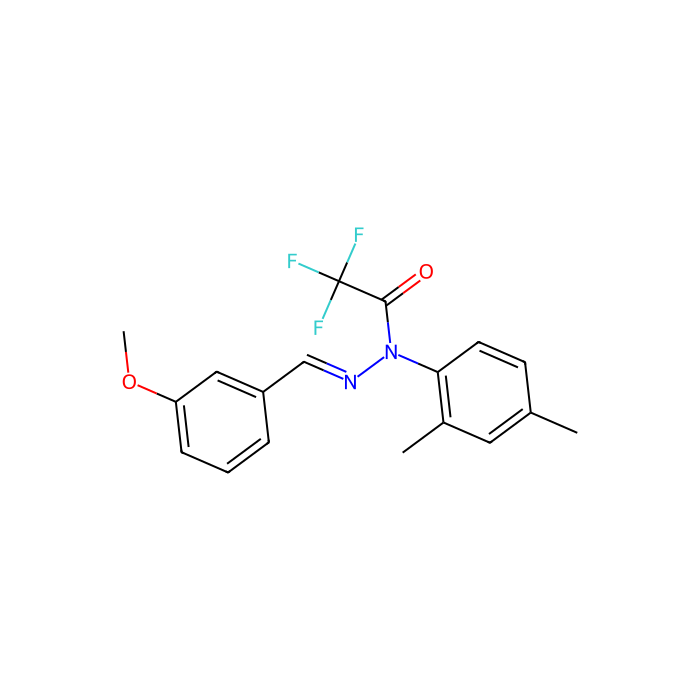
Brief overview: J-147 is a single-entity small molecule offered for research screening and chemical biology use. The precise structural identifiers for this catalog entry are not fully specified in the Product Data provided here.
SKU: J302241
Product Name: J-147
CAS: 1146963-51-0 (product data)
PubChem CID: 25229652 (product data)
InChIKey: 134395 (as provided; note that typical InChIKeys are 27 characters—consult CoA/SDS for confirmation)
SMILES: Not specified for this item; refer to CoA/Spec Sheet.
Molecular formula: Not specified for this item; refer to CoA/Spec Sheet.
Molecular weight: Not specified for this item; refer to CoA/Spec Sheet.
Structural features
Functional groups, ring systems, and stereochemistry: Not specified in this listing. Without a verified structural diagram or SMILES, detailed description of ring systems and substituents cannot be asserted here.
Identity guidance
For unequivocal identity confirmation, please consult the item’s Certificate of Analysis (CoA) for batch-specific structural identifiers (SMILES, InChI, NMR, HRMS) and compare against independent reference databases as part of your internal qualification.
If you intend to use orthogonal ID testing, consider 1H/13C NMR in DMSO-d6 or CDCl3, LC–MS with exact mass confirmation, and a reference chromatographic retention time method developed from the supplied lot.
Synthetic Utility
This product is offered as a final, defined small molecule for research use rather than as a general synthetic building block.
Use as a reagent/transformable handle: Not typically applicable. No reactive handles, protection strategies, or named-reaction roles are specified in the Product Data.
Retrosynthetic relevance: Not applicable in routine synthesis planning unless you are preparing analogs for SAR; in that case, treat this compound as a reference standard while synthesizing derivatives.
Practical notes for chemists (general)
If you intend to prepare analogs, establish a robust analytical suite around this item (NMR, HRMS, UPLC) to benchmark identity, purity, and stability versus your synthesized candidates.
When scaling analytical methods, develop orthogonal quantitation (e.g., qNMR vs. external-standard LC–MS) to avoid bias from UV response variability.
Conclusion
No manufacturer-provided synthetic transformations involve this SKU. Treat it primarily as a tool/reference compound in discovery and analytical workflows.
Target Specificity
No target, binding partner, or selectivity profile is provided in the Product Data for this SKU.
Target(s): Not specified for this item; refer to CoA/Spec Sheet and primary literature if applicable.
Species selectivity or off-targets: Not specified for this item.
Note: This section only reports manufacturer-provided information. Users should generate their own target engagement and selectivity data under their specific assay conditions.
Preguntas frecuentes
What is the purity of this product?
This product is supplied at ≥98% purity (chemical assay). Lot-specific values are stated on the Certificate of Analysis.
How should this product be stored?
Store at ?20 °C. Freezer storage is required to maintain the specified shelf life.
How is this product shipped?
This product ships in an insulated container with ice pads. Unpack on arrival and transfer it to the storage condition stated above.
What are the CAS number, molecular formula and molecular weight?
The CAS Number is 1146963-51-0, the molecular formula is C18H17F3N2O2, and the molecular weight is 350.33 g/mol. InChIKey HYMZAYGFKNNHDN-SSDVNMTOSA-N.
What documentation is provided?
Available product documentation, including Certificates of Analysis (COA), Safety Data Sheets (SDS), and specification sheets, is shown in the product document area. Document availability and access follow the current site policy.
Utilizamos cookies para garantizar el correcto funcionamiento del sitio web y, cuando esté permitido, para mejorar su experiencia. Puede gestionar sus preferencias en cualquier momento en Configuración. Más información en nuestra Política de Cookies.
¿Quieres que te enviemos un mensaje cuando tengamos descuentos disponibles?
Recordármelo más tarde
¡Gracias! Por favor, revisa tu bandeja de entrada de correo electrónico para confirmar.
Products are supplied to verified businesses, institutions, and qualified professionals for research and development use only. Not for use in humans, animals, diagnosis, or therapy.

 L2402579