This compound belongs to the class of organic compounds known as phenyl-1,2,4-triazoles. These are organic compounds containing a 1,2,4-triazole substituted by a phenyl group.
External Descriptors
Not available
1. Djoumbou Feunang Y, Eisner R, Knox C, Chepelev L, Hastings J, Owen G, Fahy E, Steinbeck C, Subramanian S, Bolton E, Greiner R, and Wishart DS. ClassyFire: Automated Chemical Classification With A Comprehensive, Computable Taxonomy. Journal of Cheminformatics, 2016, 8:61.
Determine the necessary mass, volume, or concentration for preparing a solution.
Dilution Calculator
Determine the dilution needed to prepare a stock solution.
Reconstitution Calculator
Reseñas
Reseñas de cliente
Application Protocols
No tested applications, protocols, or recommended dilutions are provided in the product data for this SKU.
General considerations for small-molecule probes (non-validated guidance):
Prepare aliquoted DMSO stocks to avoid repeated freeze–thaw cycles.
Include vehicle controls and, where possible, orthogonal readouts to confirm on-target effects.
Verify solubility and absence of precipitation at working concentrations in your specific medium or buffer.
Please consult primary literature for protocol exemplars relevant to your system and validate conditions in-house. This product is for research use only.
KPT-185 is widely cited within the SINE (Selective Inhibitor of Nuclear Export) chemical series that target exportin-1 (XPO1/CRM1), the principal karyopherin mediating nuclear export of proteins bearing leucine-rich nuclear export signals (NES). SINE-class compounds are reported to form a covalent adduct with a reactive cysteine in XPO1, thereby blocking cargo binding and nuclear egress.
Consequences of XPO1 inhibition in cell models include nuclear retention of key transcription factors and tumor suppressor proteins, perturbation of ribosomal subunit export, and modulation of stress responses. These effects are assay- and context-dependent and should be validated in each biological system.
Chemical probe positioning: KPT-185 is often used alongside related analogs to dissect structure–activity relationships, target engagement, and cellular pharmacology of nuclear export inhibition.
Important notes:
The above roles are literature-based and provided for general scientific context; this listing does not constitute validation of activity for any specific batch or application.
No medical or clinical claims are made. This product is for research use only.
Buffer Applications
This item is a small-molecule probe, not a buffering agent. Conventional buffer system design (pKa-windowed acid/base pairs) is not typically applicable.
Practical lab guidance (general):
When using KPT-185 in biochemical or cell assays, select a biologically appropriate buffer (e.g., HEPES, PBS, or Tris-based systems at pH 7.2–7.6) and introduce the compound via a concentrated DMSO stock to keep final DMSO ≤0.1–0.5% v/v.
Avoid buffers containing reactive nucleophiles or strong oxidants that could (in principle) react with electrophilic motifs common to SINE-class compounds. Validate stability by monitoring activity or recovery over the assay time course.
Item-specific buffer compatibility and stability are not specified for this product; consult the CoA/Spec Sheet and perform pilot tests in your experimental matrix.
Green Alternatives
Green chemistry considerations are typically applied to solvents and bulk reagents. KPT-185 is a specialized bioactive small molecule used at very low quantities; “greener alternative” analysis focuses on handling and solvent choices rather than replacing the molecule itself.
Solvent choices (greener practice): Prefer DMSO or ethanol over DMF or dichloromethane for solution preparation when biologically compatible. Use minimal effective solvent volumes and maintain low final solvent percentages in aqueous assays.
Process minimization: Scale experiments to the minimum necessary amounts; adopt microscale assay formats (96–384 well) to reduce chemical consumption and waste.
Workup/disposal: Consolidate organic waste streams; avoid chlorinated solvents during analytics when non-chlorinated options (MeCN, MeOH) suffice.
Supply chain: Store effectively to maximize shelf life and reduce reordering frequency (see Storage & Reconstitution).
Suitability of alternatives:
Replacing the probe with a different molecule changes biological selectivity; therefore, alternative “green” probes should only be considered if they answer the same mechanistic question with comparable specificity. Such substitutions require literature due diligence and experimental validation.
Pharmaceutical Uses
No pharmacopeial status, excipient role, or manufacturing specifications are provided for this item.
Context for researchers (general, non-clinical):
KPT-185 is supplied for research use only as a chemical probe. It is not approved for use as an active pharmaceutical ingredient (API) or excipient and should not be used in humans or for clinical applications.
In preclinical research workflows, such small molecules may be formulated into DMSO-based vehicles for in vitro or ex vivo studies. Any in vivo formulation, dosing, or toxicology considerations are outside the scope of this listing and must follow institutional approval and literature guidance.
For any development-oriented work, detailed CMC data (polymorph, impurity profile, residual solvents, stability, specification limits) would be required; such data are not provided here and must be generated or sourced independently.
Physical Properties
Item-specific physicochemical specifications have not been provided for this SKU.
Appearance: Not specified for this item; refer to CoA/Spec Sheet.
Melting point (MP): Not specified for this item; refer to CoA/Spec Sheet.
Boiling point (BP): Not applicable/reported for solids; Not specified for this item; refer to CoA/Spec Sheet.
Density: Not specified for this item; refer to CoA/Spec Sheet.
Solubility: Not specified for this item; refer to CoA/Spec Sheet.
LogP/logD: Not specified for this item; refer to CoA/Spec Sheet.
pKa(s): Not specified for this item; refer to CoA/Spec Sheet.
Refractive index: Not applicable for solids; Not specified for this item; refer to CoA/Spec Sheet.
General, literature-based use guidance for small-molecule probes of this class (non-specification):
Stock solution practices: Many researchers prepare concentrated stocks in anhydrous DMSO (e.g., 10–50 mM) due to the typically lipophilic character of SINE-class inhibitors. Aqueous working media are then made by serial dilution into assay buffer or culture medium, keeping final DMSO ≤0.1–0.5% v/v to limit solvent effects. Actual solubility limits for this item are not established here.
Solid-state handling: Hygroscopicity and polymorphism can affect apparent solubility; use consistent weighing practices and allow materials to equilibrate to room temperature in a desiccator before opening to minimize moisture uptake. Confirm specifics on the CoA/Spec Sheet.
Quality and Grades
Grade/Purity: Not specified for this item; refer to CoA/Spec Sheet.
Interpretation and context (general guidance):
Research-grade small molecules are commonly qualified by identity (NMR/HRMS), purity (HPLC/UPLC area %), and residual solvent/volatile content. UV profiles may be provided when intended for bioassay use.
If designated “HPLC grade” or similar for solvents, that denotes low UV background; for bioactives like KPT-185, an assay-grade designation usually emphasizes high chemical purity and low related-substance content. No such designation is specified here.
Stabilizers: Not specified for this item; refer to CoA/Spec Sheet. Absence/presence of stabilizers (e.g., antioxidants) can influence long-term stability and should be reviewed on the CoA.
Lot-to-lot control: For quantitative biology, verify purity and identity of the received lot (e.g., analytical HPLC trace and 1H NMR). Record storage and handling to preserve specification over shelf life.
What is specific to this listing:
Storage recommendation is provided: Store at -20°C (see Storage & Reconstitution). Other quality-defining parameters (purity %, water, residual solvents, metals, UV cutoff) are not specified and must be taken from the CoA/Spec Sheet.
Reaction and Applications
This product is primarily used as a chemical biology probe rather than as a synthetic reagent. No manufacturer application notes are provided for this SKU.
General applications (literature, class-level for SINE compounds):
Mechanistic studies of nuclear–cytoplasmic transport via inhibition of exportin-1 (XPO1/CRM1). SINE-class molecules are reported to covalently engage a reactive cysteine in XPO1, stabilizing nuclear localization of cargo proteins in cellular models.
Chemical probe in cell-based assays to interrogate nuclear export–dependent signaling, transcription factor localization, and stress response pathways.
Tool compound for target engagement and structure–activity relationship (SAR) studies alongside related SINE analogs.
Practical tips (general):
Prepare fresh DMSO stock solutions under dry, inert conditions if long-term stability in solution is uncertain; aliquot and freeze to minimize freeze–thaw.
Confirm activity window and assay compatibility empirically (e.g., assess precipitation, adsorption to plastics, and DMSO tolerance of the system). Include vehicle controls.
For imaging-based localization assays, pre-validate timing and washout parameters; monitor compound persistence and nonspecific fluorescence if applicable.
Note: No specific reaction chemistry (e.g., as a reagent, catalyst, or building block) is associated with this product in the manufacturer’s data.
Reaction Conditions
This product is not positioned as a reagent for performing organic reactions; thus, no synthetic reaction conditions are specified.
Stock solutions: Often prepared in anhydrous DMSO (e.g., 10–50 mM). Filter sterilization through 0.22 µm PTFE may be employed for cell work if compatible. Exact solubility and stability for this item are not established here.
Working solutions: Dilute stocks into pre-warmed buffer or culture medium with vigorous mixing to prevent precipitation. Maintain low final DMSO (≤0.1–0.5% v/v) unless your system tolerates more.
Temperature and light: Room temperature handling is common during preparation; minimize light exposure if the compound or assay is light-sensitive (not specified for this item—validate experimentally).
For any use as a synthetic substrate or reagent, develop conditions de novo; there are no manufacturer-provided reaction parameters for this item.
Safety and Handling
Hazard classification details are not provided for this item.
GHS classification: Not specified for this item; refer to SDS.
Signal word / H-statements / Pictograms: Not specified for this item; refer to SDS.
General laboratory safety guidance (non-authoritative; defer to the SDS):
PPE: Wear a lab coat, safety glasses, and appropriate chemically resistant gloves (e.g., nitrile). Handle powders in a fume hood to avoid inhalation of dust/aerosols.
Avoid exposure: Prevent skin contact and ingestion; avoid generating dust. Use closed containers for weighing and dissolve under local exhaust ventilation.
Incompatibilities: Until specific data are available, segregate from strong oxidizers and bases/acids as a prudent practice for organic small molecules. Avoid prolonged exposure to light, moisture, and heat.
First aid (overview): If inhaled—move to fresh air; if on skin—wash with soap and water; if in eyes—rinse cautiously with water for several minutes; if ingested—rinse mouth and seek medical attention. Always consult the product SDS for definitive instructions.
Waste: Collect organic solutions and contaminated disposables as hazardous waste in accordance with institutional and local regulations.
Special risks: Bioactive small molecules may have potent cellular effects at low concentrations; minimize exposure and implement good microdosing/containment practices (dedicated tools, lined trays, spill kits).
Solvent Selection
This compound is a hydrophobic small-molecule probe. Item-specific solubility data are not provided.
General solvent strategy for bioactive small molecules (non-specification, literature-informed):
Primary solvent: Anhydrous DMSO is typically the first choice for making concentrated stocks due to broad solvency for lipophilic heteroaromatics and amide-containing warheads.
Secondary solvents: DMF or ethanol can be used where compatible with biology workflows. Methanol may be acceptable for analytical preparations. Acetonitrile is useful for chromatographic workups.
Aqueous media: Prepare final working solutions by diluting DMSO stocks into buffer or culture media; maintain low final DMSO content (≤0.1–0.5% v/v commonly targeted in cell assays). Employ surfactant-free conditions unless otherwise validated.
pH considerations: Without pKa data, avoid strong acid/base; neutral pH buffers (HEPES/Tris/Phosphate, pH 7–7.5) are commonly used for dilution of DMSO stocks.
Quick comparison (general):
DMSO: Highest solvency, biologically compatible in small percentages; hygroscopic.
DMF: High solvency; more toxic; less preferred in live-cell contexts.
Ethanol: Acceptable in some assays but can perturb membranes; maintain low %.
Aqueous buffer only: Not recommended unless solubility is explicitly demonstrated for this item.
Storage and Reconstitution
Item-specific instructions from Product Data:
Storage conditions: Store at -20°C.
Shipping: Shipped in ice chest with ice pads.
Additional handling guidance (general; not item-specific specifications):
Protect from moisture and light. Keep container tightly closed. Before opening, allow vial to equilibrate to room temperature in a desiccator to prevent condensation.
For solution stocks, prepare in anhydrous DMSO where appropriate; distribute into single-use aliquots and store at -20°C or below. Avoid repeated freeze–thaw. Confirm solution stability empirically (e.g., analytical HPLC after storage).
If precipitation occurs upon dilution into aqueous media, warm gently and mix thoroughly, or reduce the stock concentration to improve dispersion; do not use if insoluble particulates persist in assays where clarity is essential.
Reconstitution details such as exact solvent, concentration, and stability are not specified for this item; refer to the CoA/Spec Sheet and verify experimentally in your application.
Structure and Identity
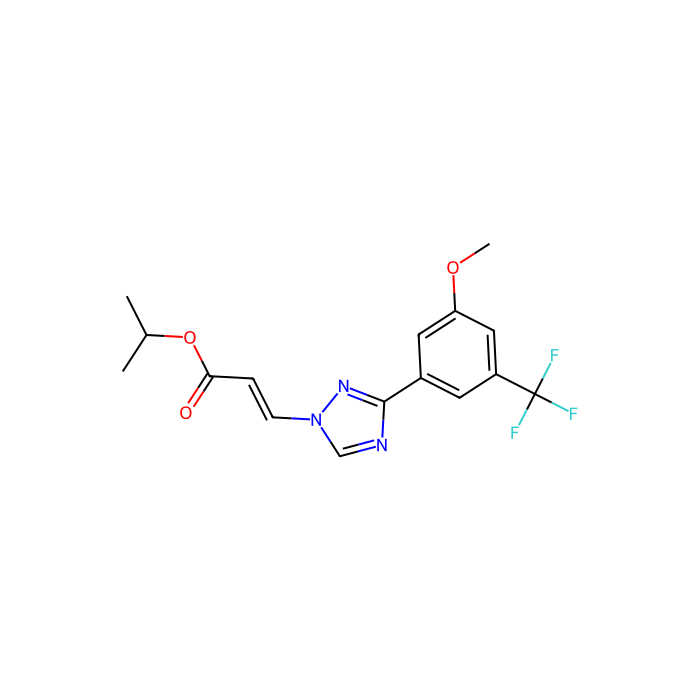
KPT-185 is a small-molecule research compound widely referenced in the chemical biology literature as a selective inhibitor of nuclear export (SINE) class member targeting the exportin-1 (XPO1/CRM1) pathway.
SKU: K129656
Product name: KPT-185
CAS: 1333151-73-7 (literature identifier)
PubChem CID: 53495165 (literature identifier)
InChIKey: Not specified for this item; refer to CoA/Spec Sheet.
SMILES: Not specified for this item; refer to CoA/Spec Sheet.
Molecular formula: Not specified for this item; refer to CoA/Spec Sheet.
Molecular weight: Not specified for this item; refer to CoA/Spec Sheet.
Structural features (general, literature):
Reported in the SINE chemical series that covalently engages a reactive cysteine in XPO1. Members of this class commonly contain an electrophilic Michael acceptor motif and aryl substituents configured to recognize the NES-binding groove of XPO1 (literature, class-level description).
Stereochemistry: Not specified for this item; refer to CoA/Spec Sheet.
2D structural description (general, class-level):
Typically an aryl–heteroatom–alkenyl/amide framework presenting an electrophilic center aligned for covalent capture; exact atom connectivity for KPT-185 is not specified here and should be taken from the CoA/Spec Sheet.
Synthetic Utility
KPT-185 is a finished, bioactive probe and is not typically employed as a reagent, catalyst, or building block in routine organic synthesis.
General observations (class-level):
Molecules in the SINE class incorporate multiple functional elements (e.g., aryl systems, heterocycles, amide/ester motifs, and an electrophilic warhead) that are optimized for target engagement rather than for downstream derivatization.
While medicinal chemistry teams may use KPT-185 as a reference standard for analytical benchmarking or as a comparator in SAR panels, it is not commonly adapted as a synthon in stepwise synthesis.
If derivatization is desired (research/custom work):
Map liabilities and potential handles (e.g., amide N-substitutions or aryl substituent swaps) using literature precedents; however, such modifications typically affect target affinity and selectivity and should be undertaken as de novo analog synthesis, not as late-stage diversification of the purchased material.
No manufacturer-specified synthetic transformations involving KPT-185 are provided for this SKU.
Target Specificity
No target specificity or assay validation data are provided for this product in the manufacturer’s listing. Therefore, no claims are made regarding biochemical targets, binding constants, or selectivity profiles for this SKU.
Note: While the broader literature discusses SINE-class compounds in the context of exportin-1 (XPO1/CRM1) inhibition, target information specific to this item and lot must be established independently by the end user. Refer to peer-reviewed sources for background and perform in-house confirmation studies where required.
Utilizamos cookies para garantizar el correcto funcionamiento del sitio web y, cuando esté permitido, para mejorar su experiencia. Puede gestionar sus preferencias en cualquier momento en Configuración. Más información en nuestra Política de Cookies.
¿Quieres que te enviemos un mensaje cuando tengamos descuentos disponibles?
Recordármelo más tarde
¡Gracias! Por favor, revisa tu bandeja de entrada de correo electrónico para confirmar.
Products are supplied to verified businesses, institutions, and qualified professionals for research and development use only. Not for use in humans, animals, diagnosis, or therapy.
 B2217061
