CALIDAD & PUREZAMoligand™?Moligand™ — Aladdin's line of ligands and bioactive small molecules. Use for receptor, pathway, and binding studies needing defined small-molecule tools.≥98%
Determine the necessary mass, volume, or concentration for preparing a solution.
Dilution Calculator
Determine the dilution needed to prepare a stock solution.
Reconstitution Calculator
Reseñas
Reseñas de cliente
Application Protocols
No tested application protocols, recommended dilutions, or control conditions are provided for this item.
Protocols: Not specified for this item; refer to CoA/Spec Sheet or request technical support for any available internal test methods.
Validation: Users should develop and validate their own protocols (e.g., for DSF, SPR, enzymology, or cell assays) consistent with institutional QA requirements.
Biological Roles
Item‑specific biological targets and mechanisms are not provided for LEDGIN6 in this listing. In general, LEDGIN‑class compounds in the literature have been explored as small molecules that modulate protein–protein interactions, notably involving lens epithelium‑derived growth factor (LEDGF/p75) and partner proteins in biochemical systems. The following points are general and should not be treated as specifications for this item:
Molecular pharmacology (literature, general):
Small molecules can bind allosteric pockets on enzymes or adaptor proteins to influence their interaction surfaces or conformations, altering complex assembly or activity.
For PPI‑focused ligands, assays typically quantify disruption or stabilization of a defined interface.
System‑level considerations:
Target engagement in cells depends on permeability, efflux susceptibility, and intracellular binding partners; these are ligand‑ and cell‑type specific.
Assay implementation:
Use orthogonal methods (biophysical + functional assay) to de‑risk artifacts (e.g., colloidal aggregation, redox cycling). Include counterscreens against unrelated proteins.
Off‑target assessment:
Profiling across panels (e.g., thermal proteome profiling or commercial target panels) can help identify secondary interactions.
Important: The specific binding target, affinity, and cellular profile of LEDGIN6 (CAS 957890‑42‑5) are Not specified for this item; consult the CoA, internal validation data, or primary literature before drawing mechanistic conclusions.
Buffer Applications
Not typically applicable. LEDGIN6 is a small‑molecule research ligand and not a buffering agent. For assay work:
Choose assay buffers (e.g., HEPES, Tris, PBS) based on your protein/system requirements.
Maintain consistent vehicle (e.g., 0.1–1% DMSO) across controls and treated samples.
If solubility is limited, titrate pH around any ionizable moieties only after confirming such groups exist for this specific compound (not specified here).
Green Alternatives
For small‑molecule ligands like LEDGIN6, environmental impact arises primarily from solvent choices in stock preparation, assay workflows, and analytics. While item‑specific green metrics are not available, you can improve sustainability through solvent selection and process design.
Greener solvent substitutions (general guidance):
DMSO vs alternatives:
DMSO remains standard for screening stocks due to low toxicity and high boiling point. If DMSO is problematic, consider:
Ethanol (anhydrous) for polar compounds (confirm stability and assay tolerance).
Prefer acetonitrile over dichloromethane/THF for many LC methods; optimize gradients to reduce solvent use.
Replace halogenated solvents where feasible with ethyl acetate, 2‑MeTHF, or CPME in any synthesis or cleanup steps (if applicable to your workflow).
Waste minimization:
Use microscale assay formats (384/1536‑well) to lower solvent and compound consumption.
Implement on‑plate dilutions to reduce intermediate vials and rinses.
Trade‑offs:
2‑MeTHF and CPME improve safety/greenness but may have higher UV background or water uptake than ACN/MeOH in analytics.
Ethanol can perturb some biological assays; validate vehicle effects.
Note: No process chemistry is implied for this item; guidance focuses on downstream handling of the research ligand.
Pharmaceutical Uses
Not applicable to regulated pharmaceutical formulation. This product is designated For Research Use Only and is not an excipient, API, or clinical material.
Pharmacopeial status: Not specified for this item; no compendial monograph is indicated.
Formulation role: Not applicable. Any vehicle information herein pertains solely to laboratory assays.
Preclinical development: If used in discovery research, generate internally controlled stability, solubility, and permeability datasets. Do not infer developability properties from this listing.
Compliance note: Use strictly in research settings following institutional guidelines. No claims are made regarding therapeutic suitability, safety, or efficacy.
Physical Properties
Item-specific physicochemical data are not provided in this listing. Do not treat any value below as a product specification.
Appearance: Not specified for this item; refer to CoA/Spec Sheet.
Melting/boiling point: Not specified for this item; refer to CoA/Spec Sheet.
Density: Not specified for this item; refer to CoA/Spec Sheet.
Solubility: Not specified for this item; refer to CoA/Spec Sheet. (General note: small‑molecule screening ligands are commonly supplied for dissolution in anhydrous DMSO or DMF; aqueous solubility depends on scaffold polarity and ionizable groups.)
logP/logD, pKa, refractive index: Not specified for this item; refer to CoA/Spec Sheet.
General laboratory guidance (non‑spec):
Prepare a small DMSO stock (e.g., 10–50 mM) and assess clarity and stability at intended storage temperature.
For aqueous assays, determine the maximum tolerated DMSO percentage for your biological system and pre‑screen for precipitation upon dilution.
If the compound contains acid/base handles (unknown here), Henderson–Hasselbalch calculations can help tune buffer pH to favor solubility (literature guidance only).
Quality and Grades
Grade: Moligand™ (as listed). Moligand™ denotes Aladdin’s curated small‑molecule ligand and compound‑library line intended for research screening, target engagement studies, and medicinal chemistry exploration. It emphasizes:
High chemical purity suitable for discovery workflows (exact assay/purity metrics Not specified for this item; refer to CoA/Spec Sheet).
Packaging under inert atmosphere (argon charged, per Product Data) and cold‑chain shipment to preserve chemical integrity.
Traceability by CAS/CID and batch documentation.
What this means for your workflow:
Analytical expectations: Each lot should be accompanied by CoA data (e.g., HPLC area % purity, LC–MS) when available. Use the CoA as your acceptance criterion; do not infer purity from this page.
Chromatography readiness: Moligand™ items are typically compatible with LC‑MS bioanalytical methods; however, UV cutoff, residual solvents, water content, and counterion identity are Not specified for this item.
Stabilizers/additives: Not specified for this item; refer to CoA/Spec Sheet. If none are indicated, assume neat material.
Regulatory: For research use only (RUO). Not for human or veterinary use, clinical diagnostics, or household purposes.
Recommended incoming QC (customer):
Verify mass by LC–MS; assess purity by HPLC or UPLC; confirm identity by NMR if structural decisions depend on the compound. Record batch and expiry/retention conditions aligned to −20 °C, light protection, and argon storage.
Reaction and Applications
This product is positioned as a small‑molecule research ligand rather than a synthetic reagent. Consequently, its most relevant “applications” are in biochemical/biophysical assays, chemical biology, and screening.
Typical research uses (general, RUO):
Target engagement studies (e.g., thermal shift/DSF, CETSA) to confirm binding to a protein of interest.
Affinity/kinetic profiling by SPR, BLI, MST, or ITC.
Enzymology or PPI modulation assays to explore allostery or interface binding (target not specified for this item).
Cell‑based pathway reporter assays to establish functional consequences of binding (validate cytotoxicity and DMSO tolerance separately).
Sample preparation:
Prepare concentrated DMSO stocks (10–50 mM). Confirm chemical stability over time at −20 °C and during assay at ambient/37 °C.
Protect from light as listed; use amberware and minimize bench exposure.
Analytical characterization:
Track purity by LC–MS before critical experiments; degradation or isomerization can confound results.
If aggregators are a concern, include detergent controls and counterscreens.
Note: No specific biological target, potency, or selectivity data are provided for LEDGIN6 in this listing. If you intend to study a particular pathway or protein complex, procure and review primary literature or contact technical support for any available references corresponding to CAS 957890-42-5.
Reaction Conditions
Not typically applicable. LEDGIN6 is provided as a research ligand rather than a reagent or catalyst.
For assay and analytical workflows instead (general guidance; not item‑specific specifications):
Stock solutions: 10–50 mM in dry DMSO; store at −20 °C, protected from light, under inert gas as per Product Data.
Working solutions: Prepare fresh dilutions into assay buffer, maintaining consistent vehicle (e.g., ≤0.1–1% DMSO).
Stability checks: Monitor by LC–MS/HPLC after multiple freeze–thaw cycles or extended incubations (e.g., 37 °C) to exclude degradation.
Adsorption/precipitation: Use low‑bind plastics or glass; include a brief centrifugation step before plate dispensing if turbidity is observed.
If you intended to use this compound in chemical reactions, please note that no reaction conditions, catalysts, or yields are specified or implied for LEDGIN6.
Safety and Handling
Safety data specific to this item are not listed here; always consult the product SDS.
GHS classification, pictograms, signal word, H‑statements: Not specified for this item; refer to SDS.
General PPE: Lab coat, safety glasses, and appropriate chemical‑resistant gloves (e.g., nitrile). Handle in a fume hood when weighing or preparing solutions.
Storage conditions (from Product Data): Store at −20 °C, protected from light, under argon. Minimize headspace oxygen and moisture. Keep container tightly closed.
Incompatibilities (general): Avoid strong oxidizers and strong acids/bases unless compatibility is known. Prevent prolonged exposure to air/humidity which may degrade sensitive heteroaromatics or salts (unknown for this item).
Handling tips:
Warm sealed vial to room temperature before opening to minimize moisture condensation.
If provided as a film or powder, quickly re‑cap under inert gas after aliquoting.
Prepare single‑use aliquots to reduce freeze–thaw cycles.
First aid (overview; defer to SDS): In case of skin/eye contact, rinse with water for 15 minutes; remove contaminated clothing. If inhaled, move to fresh air. If ingested, rinse mouth; seek medical attention in all cases.
Waste: Dispose of solutions and solids as organic hazardous waste following institutional and governmental regulations.
Solvent Selection
LEDGIN6 is supplied as a small‑molecule research ligand; item‑specific solubility is not provided. Use this decision framework to select solvents while keeping DMSO stocks standard for screening.
Primary stock solvent (typical for library compounds):
DMSO (anhydrous) for 10–50 mM stocks. Pros: broad solubilizing power, assay‑compatible at ≤0.1–1% v/v. Cons: hygroscopic; potential biological effects at higher %.
Secondary solvents (as needed):
DMF or NMP for difficult scaffolds (ensure assay compatibility).
Acetonitrile or methanol for HPLC/UPLC sample prep; may aid co‑solvent dilution into buffers.
1:1 DMSO:water or DMSO:buffer as a stepping stone to reduce precipitation when making aqueous working solutions.
Aqueous media:
Use buffer systems compatible with your assay (e.g., HEPES, PBS). Include 0.01–0.1% nonionic surfactant (e.g., Tween‑20) only if validated to prevent adsorption/precipitation.
Practical tips:
Perform a small‑scale solubility screen at intended temperatures and pH.
Filter 0.22 µm if particulate forms and the compound is not adsorptive; otherwise, centrifuge‑clarify.
Track final DMSO percentage in assays; include a vehicle control.
Note: No item‑specific solubility numbers or UV cutoff are provided for LEDGIN6; consult the CoA or determine empirically.
Light sensitivity: Protect from light (use amber vials/foil wrap).
Shipping: Ice chest + ice pads (cold‑chain).
Research Use: For research use only.
Reconstitution guidance (general, not a specification):
Allow vial to equilibrate to room temperature before opening to prevent moisture condensation.
Prepare a concentrated stock in anhydrous DMSO (e.g., 10–50 mM) unless the CoA specifies an alternative solvent. Vortex and, if needed, sonicate briefly to aid dissolution.
Aliquot into single‑use volumes in inert‑gas–flushed, amber vials or PCR tubes. Refreeze promptly at −20 °C.
Avoid repeated freeze–thaw cycles; thaw on ice or at room temperature, mix gently, and use immediately.
For aqueous working solutions, dilute into buffer with rigorous mixing to avoid local supersaturation; maintain a consistent vehicle percentage across samples.
Stability notes:
Item‑specific shelf life and solution stability are Not specified for this item; consult CoA/Spec Sheet and confirm empirically by LC–MS/HPLC over your intended storage horizon.
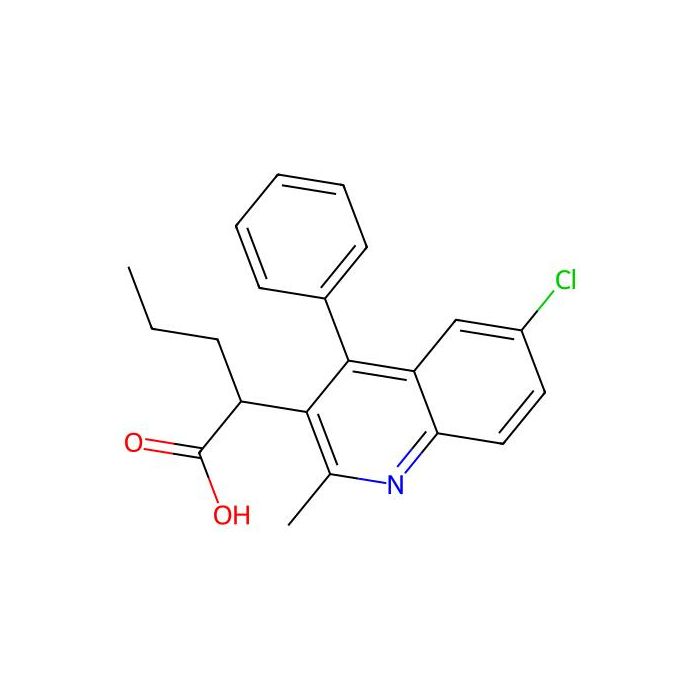
Structure and Identity
A small‑molecule research ligand supplied under Aladdin’s Moligand™ line, typically intended for target engagement and screening assays.
Product name: LEDGIN6 (SKU: L647727)
CAS: 957890-42-5
PubChem CID: 24800940
InChIKey: Not specified for this item; refer to CoA/Spec Sheet.
SMILES: Not specified for this item; refer to CoA/Spec Sheet.
Molecular formula: Not specified for this item; refer to CoA/Spec Sheet.
Molecular weight: Not specified for this item; refer to CoA/Spec Sheet.
Structural features (general description):
Item-specific 2D/3D structure is not disclosed in this listing. LEDGIN-class compounds are generally designed as small-molecule ligands for protein–protein interaction (PPI) interfaces, but the exact scaffold and functional group array for LEDGIN6 should be confirmed from the Certificate of Analysis (CoA), Structure Sheet, or vendor SDS.
Identity verification best practices (general):
Confirm by LC–MS (exact mass), 1H/13C NMR, and HPLC purity in your lab if required by your QA system.
Match CAS and catalog identifiers when integrating into screening libraries.
Where available, verify with HRMS and, for chiral entities, chiral HPLC or optical rotation (not specified for this item).
Synthetic Utility
LEDGIN6 is supplied as a finished small‑molecule ligand for screening; it is not positioned as a synthetic building block. As such, direct use in preparative organic synthesis is uncommon.
If derivatization is desired for SAR or probe development (general guidance only):
Map potential modification points by consulting the structure (not provided here). Common strategies include:
Isosteric substitution on peripheral aryl/heteroaryl rings to tune potency and solubility.
Bioisosteres for heteroatom linkers to adjust polarity and metabolic liability.
Introduction of a solubilizing side chain or handle (e.g., amine, ether) for conjugation.
Attach reporter tags:
Incorporate alkynes/azides for click chemistry, or amine/carboxyl motifs for biotin/fluorophore coupling—only if compatible with the binding pharmacophore.
Protect the core pharmacophore:
Retain key H‑bond donors/acceptors and ring planarity if literature SAR indicates their importance (not specified for this item).
Note: No reactivity profile, functional groups, or protecting‑group guidance can be provided without the disclosed structure. Consult the CoA/structure sheet before planning any synthetic modifications.
Target Specificity
Item‑specific biological target(s), binding mode, and selectivity data are not provided in this listing.
Target(s): Not specified for this item; refer to CoA/Spec Sheet or primary literature corresponding to CAS 957890‑42‑5.
Assay‑validated applications: Not specified for this item.
Off‑target profile: Not specified for this item.
Note: Any association of the term “LEDGIN” with particular protein–protein interactions in the literature should not be assumed for this material without confirming batch‑specific data.
Preguntas frecuentes
What is the purity of this product?
This product is supplied at ≥98% purity (chemical assay). Lot-specific values are stated on the Certificate of Analysis.
What is Moligand??
Moligand? is one of Aladdin Scientific's premium product lines, formulated for high-purity applications across multiple workflows. Compared to standard grades in the same workflow, Moligand? products typically offer tighter specifications, more rigorous QC, and stronger lot-to-lot consistency.
How should this product be stored?
Store at ?20 °C, protected from light, under argon. It is supplied under an argon blanket; reseal under inert gas after each use.
How is this product shipped?
This product ships in an insulated container with ice pads. Unpack on arrival and transfer it to the storage condition stated above.
What are the CAS number, molecular formula and molecular weight?
The CAS Number is 957890-42-5, the molecular formula is C21H20ClNO2, and the molecular weight is 353.84 g/mol.
What documentation is provided?
Available product documentation, including Certificates of Analysis (COA), Safety Data Sheets (SDS), and specification sheets, is shown in the product document area. Document availability and access follow the current site policy.
¿Necesita ayuda para elegir la calidad?
Nuestra guía de selección de calidades cubre la pureza, el estado del estabilizador y la idoneidad de la aplicación para todas las variantes de nuestro catálogo.
Utilizamos cookies para garantizar el correcto funcionamiento del sitio web y, cuando esté permitido, para mejorar su experiencia. Puede gestionar sus preferencias en cualquier momento en Configuración. Más información en nuestra Política de Cookies.
¿Quieres que te enviemos un mensaje cuando tengamos descuentos disponibles?
Recordármelo más tarde
¡Gracias! Por favor, revisa tu bandeja de entrada de correo electrónico para confirmar.
Products are supplied to verified businesses, institutions, and qualified professionals for research and development use only. Not for use in humans, animals, diagnosis, or therapy.

 K2602580