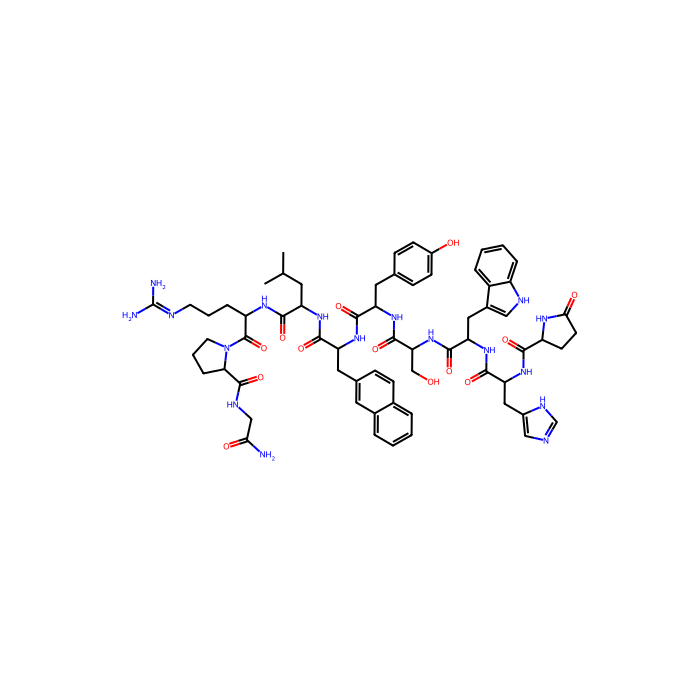
Nafarelin, Agonist of GnRH 1 receptor, CAS No.76932-56-4, Agonist of GnRH 1 receptor

CAS: 76932-56-4 Cat. No.: N287275 Fórmula: C66H83N17O13•xC2H4O2 Peso molecular: 1322.47+x(60.05) Número EC: 686-425-8
Disponible para pedir
GRADE & PURITY Moligand™ ? Moligand™ — Aladdin's line of ligands and bioactive small molecules. Use for receptor, pathway, and binding studies needing defined small-molecule tools. ≥98%
★
Size
USA
Alemania (EU)*
Price
Qty
1mg
N287275-1mg
6 Disponible
—
12,90US$
5mg
N287275-5mg
4 Disponible
—
30,90US$
25mg
N287275-25mg
2 Disponible
—
102,90US$
100mg
N287275-100mg
3 Disponible
—
282,90US$
250mg
N287275-250mg
1 Disponible
—
575,90US$
500mg
N287275-500mg
1 Disponible
—
1.028,90US$
Enter a quantity for the sizes you want to add.
🧪
Why this grade

Moligand™, ≥98% Moligand™ for sensitive chromatographic and analytical workflows requiring minimal baseline interference.

🌡

Storage & shipping

Store at -20°C,Desiccated Ships Ice chest + Ice pads Check lot-specific COA for exact specifications.

📋

Quality documents

SDS, COA, datasheet, and spec sheet available for download. Lot-specific COA accessible via lot number lookup.

📚

Literature proof

Cited in 0 peer-reviewed publications across chromatography, organic synthesis, and cross-coupling reactions.

Specifications

Product Name
Nafarelin, Agonist of GnRH 1 receptor, CAS No.76932-56-4
Sinónimos
1X0094V6JV | EPA Pesticide Chemical Code 071401 | Nafarelinum | HS-2018 | NAFARELIN [MI] | NAFARELIN | Nafarelina | Nafarelinum (Latin) | CCG-270673 | Nafareline | (S)-1-(((R)-2-((S)-2-((S)-2-((S)-2-((S)-3-(1H-imidazol-4-yl)-2-((S)-5-oxopyrrolidine-2-carb
Grado
Moligand™
Especificaciones y pureza
Moligand™, ≥98%
Mecanismos bioquímicos y fisiológicos
Synthetic gonadotropin-releasing hormone (GnRH) agonist that stimulates secretion of luteinizing hormone (LH) and follicle-stimulating hormone (FSH). Repeated administration causes desensitization of pituitary GnRH receptors resulting in inhibition of gon
Secuencia
XEHWSYXLRPG(Modifications: X-1 = Glp, X-2 = 2-Nal, Gly-10 = C-terminal amide)
Tipo de acción
AGONIST
Mecanismo de acción
Agonist of GnRH 1 receptor
CAS
76932-56-4
Tipo de molécula
Peptide
Almacenamiento y envío
Condiciones de almacenamiento de almacenamiento
Store at -20°C,Desiccated
Enviado en
Ice chest + Ice pads

Documentation

📋 Safety Data Sheet (SDS)

Comprehensive hazard, handling, storage, and regulatory compliance document.

Download SDS →

✅ Certificate of Analysis (COA)

Lot-specific quality data. Enter your lot number to retrieve the exact COA.

Look up COA →

📊 Datasheet

Quick-reference summary of product specifications and applications.

View datasheet →

🔬 Specification Sheet

Full quality attributes and acceptance criteria for this grade.

View spec sheet →

Advanced Data

Taxonomic Classification

Taxonomy Tree

KingdomOrganic compounds
SuperclassOrganic Polymers
ClasePolypeptides
SubclassNot available
Intermediate Tree Nodes Not available
Direct ParentPolypeptides
Alternative Parents Peptides  Tyrosine and derivatives  Phenylalanine and derivatives  Histidine and derivatives  Leucine and derivatives  N-acyl-alpha amino acids and derivatives  Proline and derivatives  Alpha amino acid amides  Serine and derivatives  Tryptamines and derivatives  Amphetamines and derivatives  Naphthalenes  3-alkylindoles  N-acylpyrrolidines  Pyrrolidinecarboxamides  1-hydroxy-2-unsubstituted benzenoids  Pyrrolidine-2-ones  Substituted pyrroles  N-acyl amines  Tertiary carboxylic acid amides  Heteroaromatic compounds  Imidazoles  Secondary carboxylic acid amides  Guanidines  Primary carboxylic acid amides  Lactams  Propargyl-type 1,3-dipolar organic compounds  Carboximidamides  Azacyclic compounds  Hydrocarbon derivatives  Primary alcohols  Carbonyl compounds  Organopnictogen compounds  Organic oxides  
Molecular FrameworkAromatic heteropolycyclic compounds
Substituents Polypeptide - Alpha peptide - Tyrosine or derivatives - Phenylalanine or derivatives - Histidine or derivatives - Leucine or derivatives - N-acyl-alpha amino acid or derivatives - Proline or derivatives - Alpha-amino acid amide - Triptan - Serine or derivatives - 3-alkylindole - N-substituted-alpha-amino acid - Naphthalene - Amphetamine or derivatives - Alpha-amino acid or derivatives - Indole - Indole or derivatives - N-acylpyrrolidine - Pyrrolidine carboxylic acid or derivatives - Pyrrolidine-2-carboxamide - Phenol - 1-hydroxy-2-unsubstituted benzenoid - Fatty amide - N-acyl-amine - Monocyclic benzene moiety - Fatty acyl - Benzenoid - Pyrrolidone - 2-pyrrolidone - Substituted pyrrole - Pyrrole - Tertiary carboxylic acid amide - Heteroaromatic compound - Pyrrolidine - Imidazole - Azole - Primary carboxylic acid amide - Secondary carboxylic acid amide - Guanidine - Lactam - Carboxamide group - Carboximidamide - Organoheterocyclic compound - Propargyl-type 1,3-dipolar organic compound - Carboxylic acid derivative - Azacycle - Organic 1,3-dipolar compound - Organic nitrogen compound - Organic oxide - Hydrocarbon derivative - Carbonyl group - Alcohol - Organonitrogen compound - Organopnictogen compound - Organic oxygen compound - Organooxygen compound - Primary alcohol - Aromatic heteropolycyclic compound
DescripciónThis compound belongs to the class of organic compounds known as polypeptides. These are peptides containing ten or more amino acid residues.
External Descriptors Not available
Estructura 3D
Modelo de Estructura Química Interactiva


Objetivos asociados (humanos)
GNRHR Tclin Gonadotropin-releasing hormone receptor (0 Activities)
Activity TypeActivity Value -log(M)Mechanism of ActionActivity ReferencePublications (PubMed IDs)
Certificados (CoA, COO, BSE/TSE y tabla de análisis)
C of A & Other Certificates(BSE/TSE, COO):
Analytical Chart:

Find and download the COA for your product by matching the lot number on the packaging.

13 results found

Lot NumberCertificate TypeFechaArticulo
E2626152Certificate of AnalysisJun 04, 2026 N287275
F2308032Certificate of AnalysisMay 05, 2023 N287275
F2308777Certificate of AnalysisMay 05, 2023 N287275
F2308779Certificate of AnalysisMay 05, 2023 N287275
F2308780Certificate of AnalysisMay 05, 2023 N287275
F2308781Certificate of AnalysisMay 05, 2023 N287275
F2308782Certificate of AnalysisMay 05, 2023 N287275
F2308783Certificate of AnalysisMay 05, 2023 N287275
F2308854Certificate of AnalysisMay 05, 2023 N287275
F2308855Certificate of AnalysisMay 05, 2023 N287275
F2308856Certificate of AnalysisMay 05, 2023 N287275
F2308857Certificate of AnalysisMay 05, 2023 N287275
F2308858Certificate of AnalysisMay 05, 2023 N287275
Información genética
Alternate Names1X0094V6JV | EPA Pesticide Chemical Code 071401 | Nafarelinum | HS-2018 | NAFARELIN [MI] | NAFARELIN | Nafarelina | Nafarelinum (Latin) | CCG-270673 | Nafareline | (S)-1-(((R)-2-((S)-2-((S)-2-((S)-2-((S)-3-(1H-imidazol-4-yl)-2-((S)-5-oxopyrrolidine-2-carb
Reference
  • 1. Kinetics and inhibition of recombinant human cystathionine gamma-lyase. Toward the rational control of transsulfuration., The Journal of biological chemistry, Steegborn, C C and 7 more authors.
  • 2. Generation and initial analysis of more than 15,000 full-length human and mouse cDNA sequences., Proceedings of the National Academy of Sciences of the United States of America, Strausberg, Robert L RL and 83 more authors.
  • 3. Genomic basis of cystathioninuria (MIM 219500) revealed by multiple mutations in cystathionine gamma-lyase (CTH)., Human genetics, Wang, Jian J and Hegele, Robert A RA.
  • 4. Cloning and nucleotide sequence of human liver cDNA encoding for cystathionine gamma-lyase., Biochemical and biophysical research communications, Lu, Y Y, O'Dowd, B F BF, Orrego, H H and Israel, Y Y.
  • 5. Single nucleotide polymorphism in CTH associated with variation in plasma homocysteine concentration., Clinical genetics, Wang, J J, Huff, A M AM, Spence, J D JD and Hegele, R A RA.
  • 6. Cystathionine gamma-lyase overexpression inhibits cell proliferation via a H2S-dependent modulation of ERK1/2 phosphorylation and p21Cip/WAK-1., The Journal of biological chemistry, Yang, Guangdong G, Cao, Kun K, Wu, Lingyun L and Wang, Rui R.
  • 7. The status, quality, and expansion of the NIH full-length cDNA project: the Mammalian Gene Collection (MGC)., Genome research, Gerhard, Daniela S DS and 115 more authors.
  • 8. Towards a proteome-scale map of the human protein-protein interaction network., Nature, Rual, Jean-François JF and 37 more authors.
  • 9. The DNA sequence and biological annotation of human chromosome 1., Nature, Gregory, S G SG and 178 more authors.
  • 10. Polymorphisms in one-carbon metabolism and trans-sulfuration pathway genes and susceptibility to bladder cancer., International journal of cancer, Moore, Lee E LE and 14 more authors. more
Calculadoras de soluciones
Reseñas

Reseñas de cliente

Application Protocols

No item-specific, validated application protocols are provided in the Product Data.

General starting points (research use only):

  • Stock preparation: Prepare a sterile 1–10 mM stock in water with 0.1% acetic acid or in DMSO. Vortex gently; avoid foaming. Filter sterilize (0.22 µm) if aqueous and assay requires sterility.
  • Calcium flux assay (outline): Plate GnRHR-expressing cells, load with Ca2+ dye (e.g., Fluo-4 AM), stimulate with serial dilutions of ligand, record fluorescence changes in real time. Include vehicle controls to account for DMSO.
  • IP1/Second-messenger assays: Use commercial HTRF/IP-One kits following manufacturer instructions; generate concentration–response curves for EC50 estimation.
  • Radioligand binding (outline): If using radioiodinated Tyr-containing peptide, perform saturation and competition binding on membranes or intact cells at 4°C to RT, with rapid filtration through GF/C filters and gamma counting.

These are literature-style templates only; optimize conditions (ligand concentrations, incubation times, temperatures) for your specific system.

Biological Roles

General literature context (no medical/clinical claims):

  • Target: Gonadotropin-releasing hormone receptor (GnRHR), a class A GPCR predominantly coupling to Gq/11.
  • Mode of action: Nafarelin is an agonist that mimics endogenous GnRH. Acute exposure activates GnRHR, engaging PLCβ, generating IP3/DAG, mobilizing intracellular Ca2+, and activating PKC/MAPK cascades. Sustained exposure typically induces receptor desensitization and downregulation.
  • Structural pharmacology: The D-2-naphthylalanine substitution at position 6 enhances receptor affinity and confers resistance to peptidases, increasing duration of action in experimental systems.
  • Experimental uses:
    • Probe for receptor activation kinetics, internalization, and β-arrestin recruitment.
    • Benchmark ligand for antagonist/partial-agonist pharmacology profiling.
    • Tool to dissect pulsatile vs sustained GnRH signaling in endocrine cell models (e.g., pituitary gonadotrophs) by modulating exposure paradigms.
  • Downstream readouts (examples): Calcium imaging, IP1 accumulation, ERK phosphorylation, LH/FSH secretion in ex vivo pituitary preparations, gene-expression signatures of GnRH-responsive genes.

Note: All uses are for laboratory research only. Potency, efficacy, and signaling bias can vary with cell type, receptor expression level, and assay configuration.

Buffer Applications

This product is a peptide ligand and is not itself a buffer component. However, buffer choice is critical for reproducible bioassays (general guidance):

  • Common assay buffers: HEPES- or Tris-based physiological buffers (e.g., HBSS, DPBS, 10–25 mM HEPES, pH ~7.2–7.4) with Ca2+/Mg2+ for functional assays involving GPCR signaling.
  • Additives: 0.1% BSA or similar carrier proteins can reduce peptide adsorption to plastics; 0.01–0.05% non-ionic surfactant (e.g., Pluronic F-68) may help in some cell assays.
  • pH/ionic strength: Maintain near-physiological conditions unless the experiment requires otherwise; extreme pH can induce peptide degradation or aggregation.
  • Sterility: Filter working solutions through 0.22 µm membranes for cell-based assays.

Item-specific buffer recipes or stability ranges are not provided in the Product Data; consult CoA/Spec Sheet or perform small-scale pretests.

Green Alternatives

As a peptide ligand, Nafarelin is not a process solvent or bulk reagent. Green-chemistry considerations focus on dissolution media and handling (general guidance):

  • Prefer aqueous buffers over organic solvents whenever solubility and assay design permit.
  • If an organic co-solvent is required, DMSO is commonly used due to its miscibility with water and comparatively favorable safety/biodegradability profile relative to DMF or NMP.
  • Minimize solvent volumes and prepare concentrated stocks to reduce waste.
  • Use low-temperature storage and single-use aliquots to extend shelf life and reduce repeat preparations and solvent consumption.

Illustrative comparison (general):

  • DMSO vs DMF/NMP: DMSO offers lower toxicity and better environmental profile; DMF/NMP are reproductive hazards and typically avoided in bioassays.
  • Aqueous buffers with mild acid (e.g., 0.1% acetic acid) can improve initial dissolution of peptide salts, enabling predominantly water-based systems.

Waste reduction:

  • Plan experiments to use aliquoted stocks fully within stability windows, limiting disposal of expired solutions.
Pharmaceutical Uses

No pharmacopeial status or excipient role is provided in the Product Data. This product is supplied strictly for research use only.

Research/formulation context (general, non-clinical):

  • Can serve as a reference peptide in preformulation studies (solubility, stability, adsorption to containers) to develop handling practices for GnRH-like peptides.
  • May be used as a model active in device compatibility or extraction studies (e.g., interaction with elastomers, plastics) under research conditions.

Note: No therapeutic, diagnostic, or clinical uses are claimed or supported for this listing.

Physical Properties

Item-specific specifications are not provided in the Product Data. For definitive specifications, consult the CoA/Spec Sheet.

  • Appearance: Not specified for this item; refer to CoA/Spec Sheet.
  • Molecular formula: Not specified for this item; refer to CoA/Spec Sheet.
  • Molecular weight: Not specified for this item; refer to CoA/Spec Sheet.
  • Melting point: Not specified for this item; refer to CoA/Spec Sheet.
  • Solubility (general, literature guidance for GnRH peptides):
    • Often soluble in aqueous buffers (e.g., dilute acetic acid, dilute HCl, or basic buffers) and polar aprotic solvents (DMSO). High-concentration stocks are commonly prepared in DMSO or water with 0.1% acid, then diluted into assay buffer.
    • Peptide solubility may be sequence- and counterion-dependent; gentle warming and sonication may assist dissolution.
  • LogP/logD, pKa, refractive index, density: Not typically reported for peptides of this class; not specified for this item.

Notes:

  • Hygroscopicity: Peptide salts can be hygroscopic; handle rapidly at room temperature and return to cold storage to avoid moisture uptake (general peptide handling practice).
  • Counterion effects: The acetate form can influence solubility and pH upon dissolution (literature/general).
Quality and Grades
  • Grade/Purity (from Product Data): Moligand™.

Interpretation and context:

  • Moligand™ (general description): Designates materials suitable for molecular screening, ligand discovery, and chemical-biology workflows where identity and purity are controlled for research applications. It emphasizes suitability as a ligand/probe candidate rather than compliance with pharmacopoeial monographs. Exact assay purity, residual solvents, counterion content, water, and metal levels are not specified here; refer to the CoA/Spec Sheet for item-specific data.
  • Identity confirmation: For peptides, identity is typically supported by high-resolution MS and, where applicable, peptide mapping or analytical HPLC (general practice). Documentation specific to this lot should be obtained from the CoA.
  • UV/HPLC use: If intended for analytical assays (e.g., as a reference ligand), customers should verify UV background and purity by running a scouting gradient; low-UV absorbance background is not implied unless stated on the CoA.
  • Stabilizers: Not specified for this item; refer to CoA/Spec Sheet. No stabilizers should be assumed unless explicitly listed.

Recommendations:

  • Upon receipt, verify lot-specific purity/identity data on the CoA before critical experiments.
  • For screening libraries, prepare master stocks under anhydrous, sterile conditions and perform QC (LC–MS) after dissolution to confirm integrity.
Reaction and Applications

This product is supplied as a bioactive research peptide/ligand rather than a synthetic reagent. Accordingly, its primary applications are in biochemical and cell-based studies (general/literature context):

  • GPCR ligand studies: Nafarelin is a potent agonist of the gonadotropin-releasing hormone (GnRH) receptor. It is widely used as a tool compound to interrogate GnRH receptor signaling, receptor desensitization/internalization, and downstream pathways (e.g., Gq/PLC/IP3/Ca2+ mobilization) in recombinant or native systems.
  • Endocrine axis research: Employed to probe hypothalamic–pituitary–gonadal (HPG) axis mechanisms in vitro and ex vivo models, measuring LH/FSH release from pituitary cells (research context; no clinical claims).
  • Assay development: Reference agonist in radioligand binding, fluorescence-based functional assays, and label-free impedance assays to benchmark receptor activity and antagonist potency.
  • Structural/biophysical: Used to study peptide–receptor interactions via NMR, SPR, ITC, and computational docking, aided by the D-2-naphthylalanine modification that enhances hydrophobic contacts.

Notes:

  • Not typically used as a reagent in organic synthesis. If chemical modification is intended (e.g., labeling), see “Synthetic Utility” for general peptide-derivatization strategies.
Reaction Conditions

This product is not intended for use as a reagent in synthetic reactions. For laboratory handling and optional derivatization (general guidance):

  • Reconstitution (see also Storage & Reconstitution): Dissolve in sterile water, dilute acid (e.g., 0.1% acetic acid), or DMSO before further dilution into assay buffer. Gentle vortexing and brief sonication may assist dissolution.
  • Radiolabeling of Tyr (general): Iodination with Iodogen, Chloramine-T, or Bolton–Hunter reagents under mild conditions (ice-cold to room temperature, minutes) followed by rapid purification to minimize peptide oxidation.
  • Assay incubation: Functional GPCR assays commonly run at 20–37°C with ligand exposures from seconds (calcium flux) to hours (gene expression). Optimize concentration ranges empirically (e.g., 0.1 nM–1 µM) depending on system sensitivity (general literature range; not item-specific).
  • Stability considerations: Avoid prolonged exposure to strong light and oxidants; include antioxidants (e.g., 0.1 mM methionine) if compatible with the assay when iodination or photo-oxidation is a concern.

All numerical ranges above are general literature practices for peptide ligands and are not item-specific specifications.

Safety and Handling

Always consult the SDS for authoritative safety information.

  • GHS classification, signal word, H-statements, pictograms: Not specified for this item; refer to SDS.
  • Likely hazards (general peptide handling): Solid, non-volatile peptide; low inhalation volatility but avoid dust formation. May cause irritation upon contact or inhalation of dust.
  • PPE (best practice):
    • Lab coat, nitrile gloves, and safety glasses as minimum PPE.
    • Handle powders in a clean, low-draft area; for weighing, use a fume hood or balance enclosure to minimize airborne particulates.
  • Handling guidance:
    • Avoid repeated freeze–thaw of reconstituted solutions; prepare single-use aliquots.
    • Use sterile, low-binding polypropylene tubes to reduce adsorption.
    • For bioassays, filter sterilize (0.22 µm) when compatible.
  • Incompatibilities (general): Strong oxidizers may degrade peptides; prolonged exposure to strong acids/bases can lead to hydrolysis or side-chain modifications.
  • First-aid (general):
    • Skin/eye contact: Rinse with plenty of water for several minutes; remove contaminated clothing; seek medical attention if irritation persists.
    • Inhalation: Move to fresh air; seek medical attention if symptoms occur.
    • Ingestion: Rinse mouth; do not induce vomiting; seek medical attention.
  • Waste: Dispose of peptide-containing solutions and consumables as chemical waste per institutional and regional regulations.
  • Research use only: Not for human or veterinary use.
Solvent Selection

Application-driven solvent choices for peptide ligands (general guidance; not item-specific specifications):

  • Polarity class: Highly polar, polyfunctional peptide; typically favors protic or strongly polar aprotic media.
  • Common solvent systems (literature/practice):
    • Water or aqueous buffers, often with 0.1% acetic acid or 0.1 M HCl for initial dissolution of acetate salts; adjust to assay buffer post-dissolution.
    • DMSO for concentrated stock solutions (e.g., 10–50 mM), then dilute into aqueous buffers just before use to limit DMSO in assays (<0.1–1% v/v).
    • Minimal volumes of DMF can assist dissolution before aqueous dilution if required.
  • Miscibility/compatibility:
    • DMSO is miscible with water; avoid high DMSO fractions that can affect cell-based assays.
    • High ionic strength and extreme pH may induce peptide aggregation or hydrolysis; optimize buffer composition.
  • When to choose which:
    • Bioassays: Prefer aqueous physiological buffers (PBS, HBSS, HEPES) with carrier proteins (e.g., 0.1% BSA) to reduce surface adsorption when compatible.
    • Biophysical assays (SPR/ITC): Use degassed buffers with low surfactant; include minimal DMSO matching between sample/reference if DMSO is present.
  • Practical tips:
    • Filter sterilize final working solutions (0.22 µm) where sterility is required.
    • Prepare fresh before use or utilize single-use aliquots to avoid freeze–thaw degradation.
Storage and Reconstitution
  • Storage conditions (from Product Data): Store at -20°C, desiccated. Shipments are made in an ice chest with ice pads.

  • General handling recommendations for peptides (literature/best practice):

    • Upon arrival, allow the sealed container to equilibrate to room temperature before opening to prevent condensation.
    • For long-term storage, keep dry and protected from light. For storage beyond several months, consider -80°C for reconstituted aliquots.
    • Avoid repeated freeze–thaw cycles. Prepare single-use aliquots immediately after first dissolution.
  • Reconstitution (general guidance; item-specific solvent not specified):

    • Use sterile water, 0.1% acetic acid, or DMSO to prepare a concentrated stock. Target concentration depends on planned use; Not specified for this item; refer to CoA/Spec Sheet.
    • Mix gently; brief sonication may help dissolution. If required, filter sterilize aqueous solutions through a 0.22 µm filter.
    • For working solutions, dilute into assay buffer immediately before use. Include carrier protein (e.g., 0.1% BSA) to minimize adsorption when compatible.
  • Stability after reconstitution: Not specified for this item; refer to CoA/Spec Sheet. As a precaution, use freshly prepared solutions or store aliquots at -20 to -80°C and use within a few weeks, monitoring for loss of activity by assay readout.

  • Research Use Note: For research use only.

Structure and Identity

Overview: Nafarelin is a synthetic decapeptide gonadotropin-releasing hormone (GnRH) receptor agonist commonly supplied as the acetate salt. It features an N-terminal pyroglutamyl residue and a C-terminal glycinamide, with a D-2-naphthylalanine (D-Nal(2)) substitution at position 6 that enhances receptor affinity and metabolic stability.

  • Item-specific identifiers (from Product Data):

    • SKU: N287275
    • Product name: Nafarelin
    • CAS: 76932-56-4 (commonly associated with Nafarelin acetate)
    • CID: 25077405
    • InChIKey: 327789 (as provided; non-standard format—consult CoA/SDS for definitive identifier)
    • SMILES: Not specified for this item; refer to CoA/Spec Sheet.
    • Molecular formula: Not specified for this item; refer to CoA/Spec Sheet.
    • Molecular weight: Not specified for this item; refer to CoA/Spec Sheet.
  • Structural features (general peptide-chemistry description; literature):

    • Sequence motif: pGlu–His–Trp–Ser–Tyr–D-2-Nal–Leu–Arg–Pro–Gly–NH2 (GnRH analog with D-2-naphthylalanine at position 6)
    • Functional groups: multiple secondary amide bonds (peptide backbone), N-terminal cyclic lactam (pyroglutamyl), phenolic hydroxyl (Tyr), guanidinium (Arg), indole (Trp), and a naphthyl aromatic system (D-Nal).
    • Stereochemistry: L-configuration for natural residues; D-configuration at position 6 (D-Nal), contributing to proteolytic stability.
    • 2D description: a linear decapeptide capped N-terminus (lactam ring of pGlu), backbone of alternating amide carbonyl and NH linkages, with side chains including indole (Trp), phenol (Tyr), bulky naphthyl (D-Nal), aliphatic (Leu, Pro), basic guanidinium (Arg), and terminal primary amide (Gly–NH2).
Synthetic Utility

As provided, Nafarelin functions as a bioactive peptide ligand rather than a general synthetic building block. Nevertheless, for chemical-biology derivatization (general literature guidance):

  • Labeling opportunities:
    • Tyrosine phenol: amenable to electrophilic radioiodination (I-125/I-131) or oxidative coupling strategies; also possible to install reporter tags via carbonate/carbamate chemistry in specialized workflows.
    • N-terminus is cyclized to pyroglutamyl (lactam), and C-terminus is amidated; these termini are not directly available for standard amide-coupling. Site-selective labeling typically targets side chains or proceeds via introduced linkers.
    • Arginine guanidinium is generally not used for covalent conjugation without prior protection/derivatization.
  • Conjugation strategies:
    • Oxidative iodination for tracer generation in binding assays (radioligand studies).
    • Non-covalent immobilization on sensor chips (e.g., via amine-capture of a preinstalled linker or through hydrophobic capture) for SPR.
    • If analogs with additional handles (e.g., Lys or azido/alkyne tags) are synthesized, standard NHS-ester coupling or CuAAC can be used for fluorophore/biotin attachment.

Caveat: Site-selective modification of native Nafarelin requires careful method development to preserve receptor activity; verify activity post-derivatization.

Target Specificity

Item-specific, experimentally verified target details are not provided in the Product Data.

General literature context:

  • Primary target: Gonadotropin-releasing hormone receptor (GnRHR; GNRHR). Nafarelin acts as an agonist at this receptor in mammalian systems.
  • Off-targets: Comprehensive off-target profiling data for this specific item/lot are not provided; users should verify selectivity in their assay context.

For definitive, lot-specific potency/selectivity information, consult the CoA, internal validation data, or perform in-house profiling.

Preguntas frecuentes

What is the purity of this product?
This product is supplied at ≥98% purity (chemical assay). Lot-specific values are stated on the Certificate of Analysis.
What is Moligand??
Moligand? is one of Aladdin Scientific's premium product lines, formulated for high-purity applications across multiple workflows. Compared to standard grades in the same workflow, Moligand? products typically offer tighter specifications, more rigorous QC, and stronger lot-to-lot consistency.
How should this product be stored?
Store at ?20 °C, desiccated. Keep the container tightly closed with desiccant — the material is moisture-sensitive.
How is this product shipped?
This product ships in an insulated container with ice pads. Unpack on arrival and transfer it to the storage condition stated above.
What are the CAS number, molecular formula and molecular weight?
The CAS Number is 76932-56-4. InChIKey RWHUEXWOYVBUCI-ITQXDASVSA-N.
What documentation is provided?
Available product documentation, including Certificates of Analysis (COA), Safety Data Sheets (SDS), and specification sheets, is shown in the product document area. Document availability and access follow the current site policy.

Need help choosing the grade?

Our grade selection guide covers purity, stabilizer status, and application suitability for all variants in our catalog.

View Moligand™ grade guide →

¿Quieres que te enviemos un mensaje cuando tengamos descuentos disponibles?

Recordármelo más tarde

¡Gracias! Por favor, revisa tu bandeja de entrada de correo electrónico para confirmar.

¡Vaya! Las notificaciones están desactivadas.