≥98% for sensitive chromatographic and analytical workflows requiring minimal baseline interference.
🌡
Storage & shipping
Store at -20°C Ships Ice chest + Ice pads Check lot-specific COA for exact specifications.
📋
Quality documents
SDS, COA, datasheet, and spec sheet available for download. Lot-specific COA accessible via lot number lookup.
📚
Literature proof
Cited in 0 peer-reviewed publications across chromatography, organic synthesis, and cross-coupling reactions.
Descripción general
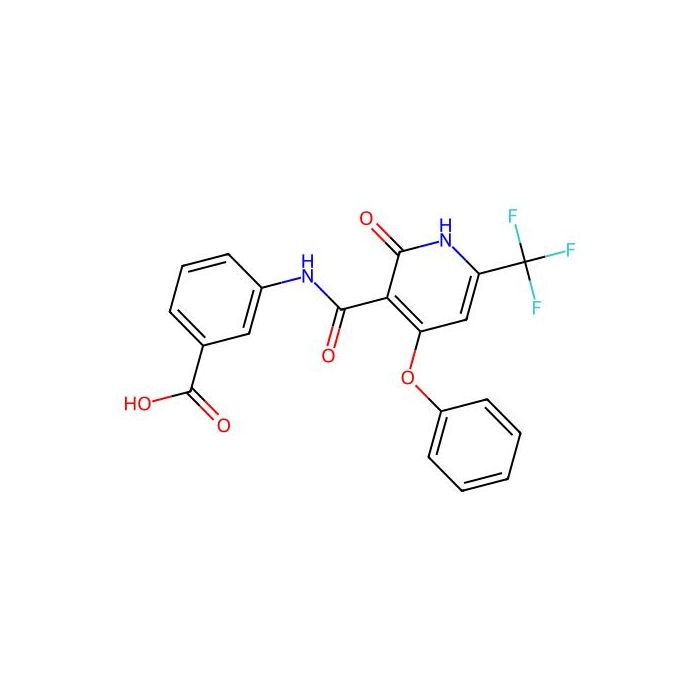
NRX-2663 is an enhancer of the interaction between β-catenin , and its cognate E3 ligase , SCF β-TrCP . NRX-2663 enhances the binding of β-catenin peptide for β-TrCP with an EC 50 of 22.9 µM and a K d of 54.8 nM
In Vitro
NRX-2663 displays both improved potency in the binding assay with pSer33/Ser37 β-catenin (EC 50 of 80 µM) and cooperativity of binding (13-fold). NRX-2663 also markedly enhances the ubiquitylation of the pSer33/Ser37 β-catenin peptide, with ubiquitin chain formation at ligand concentrations of 16 μM and above resembling ubiquitin chain formation on wild-type pSer33/pSer37 β-catenin peptide. MCE has not independently confirmed the accuracy of these methods. They are for reference only.
NRX-2663 is an enhancer of the interaction between β-catenin , and its cognate E3 ligase , SCF β-TrCP . NRX-2663 enhances the binding of β-catenin peptide for β-TrCP with an EC 50 of 22.9 µM and a K d of 54.8 nM.
Condiciones de almacenamiento de almacenamiento
Store at -20°C
Enviado en
Ice chest + Ice pads
Este producto requiere envío en cadena de frío. Los servicios terrestres y otros servicios económicos no están disponibles.
Tipo de acción
INHIBITOR
Pureza
≥98%
Nombres e identificadores
Peso molecular
418.32
Documentation
📋 Safety Data Sheet (SDS)
Comprehensive hazard, handling, storage, and regulatory compliance document.
Certificados (CoA, COO, BSE/TSE y tabla de análisis)
C of A & Other Certificates(BSE/TSE, COO):
Analytical Chart:
Calculadoras de soluciones
Molarity Calculator
Determine the necessary mass, volume, or concentration for preparing a solution.
Dilution Calculator
Determine the dilution needed to prepare a stock solution.
Reconstitution Calculator
Reseñas
Reseñas de cliente
Application Protocols
No item-specific tested applications or protocols are provided.
General best practices for handling small-molecule stocks in screening (non-item-specific):
Prepare a concentrated master stock in dry DMSO; aliquot into single-use portions to avoid repeated freeze–thaw.
Thaw on ice or at ambient temperature, mix thoroughly, and inspect for particulates before dilution.
Perform serial dilutions in DMSO or assay buffer as appropriate; include vehicle controls matching the highest solvent content.
Validate solubility and absence of precipitation at working concentrations by visual check and, if critical, by LC/UV quantitation.
For detailed, validated protocols (e.g., specific assay formats, incubation times, detection methods), refer to your laboratory SOPs or assay development reports. Only item-specific validated protocols can be considered authoritative.
Biological Roles
No biological target, pathway, or mechanism is provided for NRX-2663 in the product data.
General guidance for characterizing biological roles of screening compounds:
Target deconvolution: Pair primary activity with orthogonal biochemical assays, counterscreens against close homologs, and cell-based phenotypic assays. Use chemoproteomics or photoaffinity/biotinylated probes when feasible (after SAR exploration) to identify binding partners.
Liability profiling: Early assessment against common off-targets (e.g., CYP450s, hERG current in electrophysiology assays, pan-assay interference structures where applicable) helps triage artifacts.
ADME in vitro: Evaluate microsomal stability, permeability (PAMPA/MDCK), and solubility/aggregation behavior to contextualize potency.
Artifact controls: Include redox cycling, metal chelation, detergent-sensitive activity, autofluorescence, and colloidal aggregation controls to rule out non-specific effects.
Note: All uses are for research purposes only; no clinical or diagnostic applications are implied.
Buffer Applications
This product is not a buffering agent. No buffer system parameters are provided.
Practical notes for assay buffers with small-molecule stocks (general):
Vehicle compatibility: Verify that the final DMSO (or chosen solvent) level is tolerated by your buffer and biological system; include matched vehicle controls.
Precipitation management: Add compound stock last to well-mixed buffer; consider adding at ≥5–10× the final dilution factor to minimize local supersaturation. If needed, include non-ionic surfactants at low levels compatible with the assay.
Adsorption and stability: Use low-bind plastics for hydrophobic compounds; confirm stability in buffer at assay temperature and time by LC/UV.
For precise buffer recipes, pH ranges, and ionic strength, use conditions validated for your particular target/assay as this item has no buffer-related specifications.
Green Alternatives
Without structural and use-context details, compound-specific greener alternatives cannot be recommended.
General green-chemistry practices relevant to handling small-molecule screening compounds:
Solvent stewardship: Use the minimum DMSO percentage compatible with assay performance; consider greener cosolvents for analytics (e.g., ethanol, water-rich mobile phases) where feasible while maintaining data quality.
Process minimization: Employ microplate formats (low volumes) and miniaturized workflows to reduce solvent and compound consumption.
Waste reduction: Consolidate compatible waste streams; prefer aqueous mobile phases and avoid halogenated solvents when not analytically necessary.
Energy and stability: Store at the recommended temperature to avoid degradation and re-synthesis. Plan batching of assays to minimize repeated thawing and disposal of expired solutions.
Trade-offs (general):
Greener cosolvents may reduce solubilizing power versus DMSO or DMF; validate solubility and assay tolerance case-by-case.
Higher water content can accelerate hydrolysis for labile chemotypes; perform stability checks when adjusting vehicles.
Pharmaceutical Uses
No pharmacopeial status, excipient role, or formulation use is provided for this item.
Context for researchers (general):
NRX-2663 is supplied for research use only and is not intended for human or veterinary use.
If a screening hit progresses, preformulation assessments (solubility, stability vs. pH, solid-state form, hygroscopicity) are typically performed to guide subsequent research-grade formulations for in vivo exploratory studies conducted under appropriate governance—outside the scope of this listing.
Do not reference this material for any clinical application, dosage, or therapeutic claim. No compendial monograph or GMP status is provided.
Physical Properties
Item-specific physicochemical properties are not provided.
Appearance: Not specified for this item; refer to CoA/Spec Sheet.
Melting point: Not specified for this item; refer to CoA/Spec Sheet.
Boiling point: Not specified for this item; refer to CoA/Spec Sheet.
Density: Not specified for this item; refer to CoA/Spec Sheet.
Solubility: Not specified for this item; refer to CoA/Spec Sheet.
LogP / cLogP: Not specified for this item; refer to CoA/Spec Sheet.
pKa: Not specified for this item; refer to CoA/Spec Sheet.
Refractive index: Not applicable for solids; not specified otherwise.
General considerations for small-molecule library compounds (literature/practice):
Initial dissolution is commonly performed in anhydrous DMSO to create a primary stock (e.g., 10–50 mM), followed by aqueous dilution into assay buffers with gentle mixing to minimize precipitation.
If solubility is uncertain, perform a small-scale solubility screen across DMSO, DMF, ethanol, and buffered aqueous mixtures containing 0.1–1% DMSO; monitor by visual inspection and UV/LC.
Hygroscopic or light-sensitive behavior should be assessed experimentally; protect from light and moisture as a precaution until specific data are available.
Quality and Grades
Item-specific grade/purity information is not provided in the product data.
Grade/Purity: Not specified for this item; refer to CoA/Spec Sheet.
Guidance for small-molecule library compounds (general):
Typical QC packages include HPLC/UPLC purity, MS confirmation of molecular ion, and, where applicable, 1H NMR to confirm identity and assess integrity (e.g., residual solvents, major impurities). Some libraries also confirm salt form, water content (Karl Fischer), and counterion stoichiometry.
For screening reliability, a purity of ≥95% by HPLC is commonly targeted (literature practice), though assay tolerance varies by application. Confirm the acceptance criteria relevant to your workflow.
If a stabilizer or specific form (free base/acid vs. salt; hydrate/solvate) is used, this influences solubility and concentration calculations—verify on the CoA.
Batch-specific documentation: Request the lot CoA, Spec Sheet, and if needed, an extended analytical package (LC-MS chromatogram, NMR spectrum) to support regulatory or data integrity needs in screening cascades.
Reaction and Applications
This product is categorized as a small-molecule/library compound intended for research screening and discovery workflows rather than as a synthetic reagent.
Applicable research uses (general):
Biochemical and cell-based screening: preparation of concentration–response curves, primary/secondary assays, and orthogonal counterscreens to validate activity and assess selectivity.
Analytical characterization: LC-MS method development, stability-indicating assays, and purity tracking during storage/use.
Not typically applicable:
Named reactions or stoichiometric/catalytic reagent roles cannot be assigned without structural information and are not the intended use of library compounds.
Practical tips:
Prepare fresh working solutions from a frozen DMSO master aliquot to minimize freeze–thaw cycles.
Filter or centrifuge diluted assay solutions if precipitates form; document the actual soluble concentration (e.g., by UV/LC quantitation) before interpreting biological data.
Track potential adsorption to plastics by comparing glass vs polypropylene handling where low nominal concentrations are used.
Reaction Conditions
Not applicable. NRX-2663 is provided as a small-molecule screening compound; no synthetic or catalytic use conditions are supplied, and no structure is available to infer reaction behavior.
Guidance for researchers (general):
If employing the compound in stability or degradation studies, design conditions based on the eventual identified chemotype (acid/base stress, oxidative stress, photostability) and monitor by LC-MS.
For any derivatization or conjugation work, obtain the full structural information to select appropriate reaction conditions and protective-group strategies.
Safety and Handling
Hazard classification for this specific item is not provided in the product data.
Signal word: Not specified for this item; refer to SDS.
Hazard statements (H-codes): Not specified for this item; refer to SDS.
GHS classification/pictograms: Not specified for this item; refer to SDS.
General laboratory precautions for research chemicals of unknown hazard profile:
Use in a chemical fume hood. Wear appropriate PPE: lab coat, safety glasses, and disposable nitrile gloves; upgrade to chemically resistant gloves if handling large quantities or spills.
Avoid inhalation of dust/aerosols and contact with skin/eyes. Prevent environmental release; collect waste according to institutional hazardous waste procedures.
Incompatibilities are structure-dependent; until defined, store away from strong oxidizers, acids/bases, and ignition sources. Do not heat or aerosolize unless hazard data support such handling.
First aid (overview; defer to SDS): in case of skin/eye contact, rinse with water for at least 15 minutes; remove contaminated clothing. If inhaled, move to fresh air. If ingested, rinse mouth; do not induce vomiting unless directed by medical personnel. Seek medical attention for any exposure.
Note: Always consult the item-specific SDS for authoritative safety, toxicology, and regulatory information before first use.
Solvent Selection
Because the structure and polarity are not provided, solvent choice must be established empirically.
Practical starting points (general for screening compounds):
Primary stock solvent: Anhydrous DMSO is the default due to broad solvency, chemical compatibility with many assays, and low volatility.
Cosolvent strategies: For aqueous assay media, dilute DMSO stocks into buffer while maintaining a low final DMSO fraction (commonly ≤0.1–1% v/v, assay-dependent). If precipitation occurs, consider minimal amounts of ethanol, PEG-400, or surfactants compatible with the assay system (validate to exclude vehicle effects).
Alternative organic solvents for method development: DMF and acetonitrile may aid solubilization for analytics (HPLC/LC-MS). Use water-miscible choices to simplify handling and minimize phase separation.
Selection workflow:
Run a tiered solubility screen (visual + LC/UV) across DMSO, DMF, MeCN, and buffered mixtures.
Check stability over time and temperature in the chosen solvent (e.g., monitor by LC-MS for degradation, adducts).
For bioassays, confirm that the vehicle does not affect readouts (perform vehicle controls at the highest intended solvent percentage).
Storage and Reconstitution
Storage and shipping (item-specific):
Storage Conditions: Store at -20°C (per product data).
General guidance (non-item-specific) for small-molecule library compounds:
Upon receipt, allow the sealed container to equilibrate to room temperature before opening to prevent moisture condensation. If supplied as a solid, promptly reseal under dry inert gas if available; consider desiccation.
Reconstitution: If no solvent guidance is provided, dissolve an initial test portion in anhydrous DMSO to prepare a master stock. Vortex and, if necessary, gently warm (avoid prolonged heating) to aid dissolution. Do not force dissolution beyond solubility; undissolved solids indicate the need for a lower target concentration or alternative solvent.
Aliquoting: Dispense into single-use vials or plate wells to minimize freeze–thaw cycling. Protect from light if the structure is unknown or suspected to be photosensitive.
Stability: Track storage time and number of freeze–thaw events. Periodically re-check purity by HPLC/LC-MS to confirm integrity.
If the product is a salt or hydrate, account for counterion/water of crystallization in concentration calculations; consult the CoA/Spec Sheet for definitive form and any item-specific reconstitution notes.
Structure and Identity
Brief overview: NRX-2663 (SKU N649316) is listed as a small-molecule library compound; detailed structural identifiers are not provided in the product data.
CAS: 2763260-34-8
Chemical name: Not specified for this item; refer to CoA/Spec Sheet.
Molecular formula: Not specified for this item; refer to CoA/Spec Sheet.
Molecular weight: Not specified for this item; refer to CoA/Spec Sheet.
SMILES: Not specified for this item; refer to CoA/Spec Sheet.
InChIKey: Not specified for this item; refer to CoA/Spec Sheet.
2D/functional features: Not specified. Without a structure, functional groups, ring systems, or stereochemistry cannot be described.
Notes for researchers (general):
For assay registration and data integrity, obtain the full identity package (structure, stereochemistry, salt/solvate form) from the CoA/Spec Sheet prior to screening or hit-to-lead work.
If the material is a salt or solvate, document the counterion and stoichiometry to correctly calculate assay concentrations and interpret activity.
Synthetic Utility
Specific functional groups and reactivity cannot be described because no structure is provided for NRX-2663. As listed, it is intended as a screening compound rather than a synthetic reagent or building block.
General considerations if synthetic follow-up is anticipated:
Identity confirmation: Obtain and archive full characterization (HPLC, HRMS, NMR; salt/counterion identification) to support resynthesis and SAR.
Form selection: Determine whether the supplied form is free base/acid or a salt; for SAR programs, a consistent form simplifies interpretation of solubility and activity.
Scalability: If scale-up is needed for expanded studies, request or develop a synthetic route and impurity profile; consider polymorph/solid-state screening when relevant.
Derivatization: Once the scaffold is known, conventional medicinal chemistry tactics (bioisosteres, heteroatom scans, linker installs) can be applied; however, no scaffold-specific guidance is possible here without structure.
Target Specificity
No target, pathway, or selectivity profile is provided for NRX-2663.
Target/epitope: Not specified for this item; refer to CoA/Spec Sheet or internal screening data.
Species reactivity/orthologs: Not specified for this item; refer to screening results.
Note: If activity data exist internally, report primary vs. counter-target IC50/EC50 values, mode of action (competitive, allosteric), and any known liabilities (e.g., PAINS flags) alongside assay conditions for reproducibility.
We use cookies to ensure the website functions properly and, where permitted, to improve your experience. You can manage your preferences at any time in Settings. Learn more in our Cookie Policy.
Shall we send you a message when we have discounts available?
Remind me later
Thank you! Please check your email inbox to confirm.
Products are supplied to verified businesses, institutions, and qualified professionals for research and development use only. Not for use in humans, animals, diagnosis, or therapy.