for sensitive chromatographic and analytical workflows requiring minimal baseline interference.
🌡
Storage & shipping
Store at -20°C Ships Ice chest + Ice pads Check lot-specific COA for exact specifications.
📋
Quality documents
SDS, COA, datasheet, and spec sheet available for download. Lot-specific COA accessible via lot number lookup.
📚
Literature proof
Cited in 0 peer-reviewed publications across chromatography, organic synthesis, and cross-coupling reactions.
Descripción general
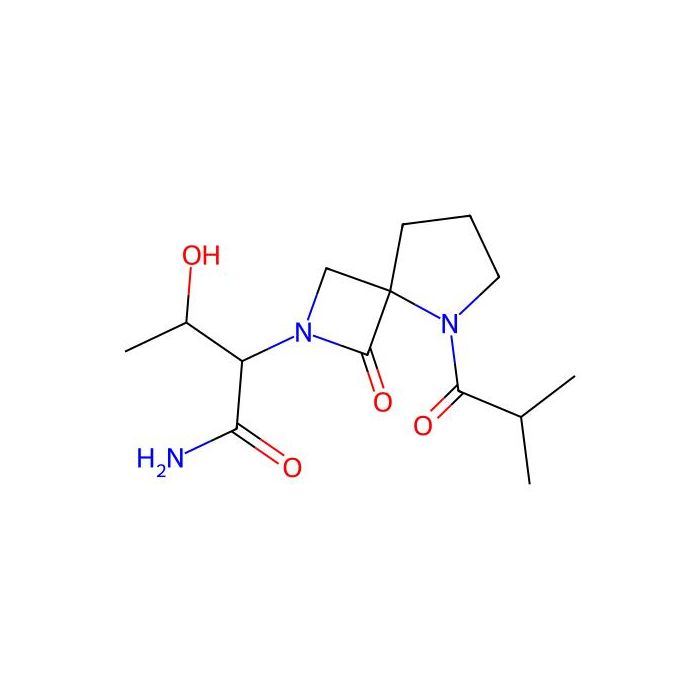
NYX-2925 is an orally active NMDAR modulator. NYX-2925 restores levels of activated Src and Src phosphorylation sites on GluN2A and GluN2B in the mPFC. NYX-2925 shows no effect on CAMKII, and any addictive or sedative/ataxic side effects. NYX-2925 can be used for research of a variety of NMDA receptor-mediated central nervous system disorders
NYX-2925 is an orally active NMDAR modulator. NYX-2925 restores levels of activated Src and Src phosphorylation sites on GluN2A and GluN2B in the mPFC. NYX-2925 shows no effect on CAMKII, and any addictive or sedative/ataxic side effects. NYX-2925 can be
Condiciones de almacenamiento de almacenamiento
Store at -20°C
Enviado en
Ice chest + Ice pads
Este producto requiere envío en cadena de frío. Los servicios terrestres y otros servicios económicos no están disponibles.
This compound belongs to the class of organic compounds known as dipeptides. These are organic compounds containing a sequence of exactly two alpha-amino acids joined by a peptide bond.
External Descriptors
Not available
1. Djoumbou Feunang Y, Eisner R, Knox C, Chepelev L, Hastings J, Owen G, Fahy E, Steinbeck C, Subramanian S, Bolton E, Greiner R, and Wishart DS. ClassyFire: Automated Chemical Classification With A Comprehensive, Computable Taxonomy. Journal of Cheminformatics, 2016, 8:61.
Certificados (CoA, COO, BSE/TSE y tabla de análisis)
C of A & Other Certificates(BSE/TSE, COO):
Analytical Chart:
Calculadoras de soluciones
Molarity Calculator
Determine the necessary mass, volume, or concentration for preparing a solution.
Dilution Calculator
Determine the dilution needed to prepare a stock solution.
Reconstitution Calculator
Reseñas
Reseñas de cliente
Application Protocols
No manufacturer-verified application protocols are provided for NYX-2925 in this listing.
General guidance for small-molecule handling in assays
Stock solutions: Prepare at 10–50 mM in DMSO. Vortex, sonicate, and verify clarity. Record final concentration based on actual mass and purity (from CoA) if available.
Serial dilutions: Use low-binding plates/tips. Maintain constant DMSO across wells (commonly 0.1–1% v/v) to control for vehicle effects.
Plate management: Minimize freeze–thaw cycles by aliquoting. Store working plates at −20°C, desiccated, and protect from light; limit time at ambient conditions.
QC check: Run an LC–MS snap shot on fresh and post-assay samples to verify integrity. Document any precipitation or adsorption observed during the run.
If your workflow requires specific protocols (e.g., binding assays, enzymology, cell-based readouts), validate parameters for this compound de novo, as no item-specific, tested conditions are available from the manufacturer.
Biological Roles
No biological function, target annotation, or pathway role is provided in this catalog entry for NYX-2925. The compound is supplied strictly for research use, and no clinical or therapeutic claims are made.
General research context (non-claiming)
For small molecules in discovery workflows, typical investigations include: target binding in biochemical assays, phenotypic responses in cell-based screens, and ADME/stability profiling. Any biological role or mechanism must be established by the end user using validated assays and appropriate controls.
If the public registry (e.g., PubChem CID: 122594417) contains mechanistic annotations, these should be confirmed independently for your batch/lot and experimental context. Do not extrapolate across forms (free base vs. salt) without verification.
Practical notes
Prepare dose–response curves over a wide concentration range to detect partial activity and off-target effects. Confirm compound integrity (LC–MS) before and after assays to rule out decomposition-driven artifacts.
Account for vehicle effects: limit DMSO to ≤0.5–1% v/v in sensitive cellular assays and include vehicle controls.
Item-specific biological role statements are not available in this listing; consult primary literature and validate experimentally in your system of interest.
Buffer Applications
No dedicated buffer system is specified for this item. For typical small-molecule assay use, the following general guidance applies.
Stock preparation
Prepare concentrated stocks in DMSO (e.g., 10–50 mM). Verify complete dissolution by visual inspection and, if needed, by UV or HPLC.
Aqueous assay buffers (general)
Common buffers: PBS (pH 7.2–7.4), HEPES (pH 6.8–8.2), Tris (pH 7–9), or Acetate/Citrate (pH 4–6). Choose based on target biology and compound ionization once known.
To minimize precipitation on dilution, pre-mix buffer with 0.1–1% compatible co-solvent (DMSO or ACN) and add compound last under mixing.
For poorly soluble compounds, consider cosolvent levels up to 2% DMSO in biochemical assays (verify tolerance). Surfactants (0.01–0.05% Tween-20/80) can reduce non-specific binding.
Quality checks
After dilution, inspect for turbidity and measure at 600–700 nm to quantify scattering if needed. Filter (0.22 µm) if compatible with the application.
Item-specific buffer recipes, pH ranges, and ionic strengths are not provided in this listing; tailor to your assay and validate stability/activity over the experimental time course.
Green Alternatives
This listing is for a discrete small-molecule compound rather than a process solvent or bulk reagent. The concept of a greener substitute is therefore not directly applicable to the molecule itself.
Context and options (general)
If your workflow involves significant volumes of organic solvents for dissolution, chromatography, or crystallization of this compound, consider greener solvent choices where compatible: water-buffered systems, ethanol, isopropanol, 2-MeTHF or CPME (for extractions), and supercritical CO₂ for certain purifications.
For LC method development, evaluate aqueous-rich gradients and ethanol or isopropanol as partial substitutes for acetonitrile where viscosity/pressure permit.
Implement microscale operations for screening to reduce solvent usage, and reuse conditioned silica where validated.
Trade-offs
Greener solvents may affect solubility, selectivity, or assay compatibility. Validate recovery, stability, and analytical performance before full adoption.
Bottom line
While the compound itself has no greener “analog,” greener process choices around its handling and analysis can significantly reduce environmental footprint.
Pharmaceutical Uses
No pharmacopeial status, excipient role, or manufacturing use is provided for this item. It is supplied strictly for research use only and is not intended for human or veterinary use.
General considerations for formulation research (non-clinical)
If used in pre-formulation studies, characterize solid form (XRPD/DSC/TGA), hygroscopicity, and salt/ionization behavior to inform selection of enabling formulations (e.g., amorphous dispersions, lipid-based systems) — all strictly in vitro or ex vivo research contexts.
Evaluate compatibility with common formulation vehicles used in research (e.g., PEG-400, Captisol, polysorbates) while adhering to institutional policies for non-clinical materials.
Regulatory note
This listing does not claim compliance with USP/EP/JP monographs or GMP production. For any work requiring regulated-grade materials, obtain appropriate documentation and grade from qualified suppliers.
Bottom line
No pharmaceutical or clinical use is stated or implied. Limit all activities to laboratory research and method development.
Physical Properties
Only item-specific facts from the product data are listed as such. All other property fields are unreported in this catalog entry.
Item-specific (from this listing)
Appearance: Not specified for this item; refer to CoA/Spec Sheet.
Storage: Store at −20°C (item-specific)
Shipping: Ice chest + ice pads (item-specific)
Common physicochemical parameters (not provided here)
Melting/Boiling Point, Density, Refractive Index, pKa, logP/logD, UV–vis λmax/ε, Water/organic solubility, Hygroscopicity: Not specified for this item; refer to CoA/Spec Sheet.
Practical guidance when properties are unknown (general best practices)
Begin with a small solubility screen (1–10 mg) in DMSO, DMF, methanol, ethanol, acetonitrile, and water (with/without mild base or acid as appropriate once functional groups are known from a validated structure).
For analytical characterization, develop a scouting LC method (e.g., C18, 5–95% acetonitrile/water with 0.1% formic acid) to assess purity and detect multiple protomers/tautomers if applicable.
If the compound is potentially light- or air-sensitive, handle under reduced light and inert atmosphere until stability is confirmed by HPLC/LC–MS.
If crystalline, a DSC/TGA scan can reveal melting behavior and solvent of crystallization; Karl Fischer and headspace GC can quantify residual solvents/water if required by your QA system.
Quality and Grades
Quality indicators in this specific listing are limited.
Item-specific
Grade/Purity: Not specified for this item; refer to CoA/Spec Sheet.
Appearance: Not specified for this item; refer to CoA/Spec Sheet.
Interpreting typical grades (general guidance)
Research-grade small molecules are commonly supplied with an HPLC or LC–MS purity value (e.g., ≥95% area percent) and may include NMR identity confirmation. If grade is unspecified, request the CoA to confirm assay method, solvent system, and detection wavelength.
For screening collections, low-UV-impurity and salt form information (free base vs. HCl, etc.) are important for assay reproducibility and solubility. Confirm counterion content and residual solvent levels if your application is sensitive.
Stabilizers are sometimes added to oxidation- or light-sensitive compounds. This listing does not indicate a stabilizer; verify on the CoA/SDS. Absence of a listed stabilizer does not guarantee none is present.
Recommendations
Request the latest CoA for: identity confirmation (NMR/HRMS), chromatographic purity (HPLC/UPLC method details), water/residual solvent (KF/GC), counterion assay (if salt), and any polymorph/solvate information.
If lot-to-lot consistency is critical, retain reference spectra/chromatograms and perform a brief incoming QC (rapid LC–MS). Document any form changes (hydrate/solvate) that can affect mass assay.
Reaction and Applications
This product is listed under a small-molecule/compound library category and is typically used as a test article or reference compound in research settings. No specific synthetic role is claimed for this catalog item.
Typical research applications (general, non-clinical)
As a screening compound in biochemical or biophysical assays to probe target engagement, mechanism-of-action hypotheses, or structure–activity relationships (SAR).
As an analytical reference for method development (e.g., LC–MS retention time lock, ionization behavior, fragmentation pattern) when authentic standards are desired.
In physicochemical profiling workflows: solubility, permeability (PAMPA/MDCK), stability (pH, microsomal), logD determination, and solid-form screening.
Practical tips
Prepare concentrated DMSO stocks (e.g., 10–20 mM), then perform serial dilutions to reduce precipitation risk upon transfer to aqueous systems. Verify final organic content compatibility with the assay platform.
Track adsorption losses on plastics for hydrophobic compounds; pre-condition tips/plates with dilute DMSO solutions if needed.
For stability studies, run time-course LC–MS in your selected media (pH 2–9, with/without reducing agents) to detect hydrolysis/oxidation pathways before committing to extensive assays.
Note: No manufacturer-supplied application claims are provided in this listing. All uses are for research only.
Reaction Conditions
No reaction conditions are specified for NYX-2925 in this listing, and the compound is not positioned here as a reagent or catalyst.
General guidance (if experimental manipulation is required)
Dissolution: Prepare stock solutions in DMSO or another validated solvent. Gentle warming (25–40°C) and sonication can aid dissolution. Avoid prolonged heating until thermal stability is confirmed by DSC/TGA.
Stability scouting: Test in representative media (acidic pH ~2–3, neutral pH ~7, basic pH ~9–10; 25–40°C) and monitor by LC–MS to define suitable handling windows.
Light/air sensitivity: When unknown, protect from light (amber glass) and minimize air exposure. If instability is observed, handle under inert gas.
Workup/purification (if needed): Use reversed-phase flash/semiprep HPLC as the default for polar/ionizable molecules; normal-phase silica for nonpolar systems. Validate recovery and integrity after isolation.
Expected yields, catalysts, and specific temperatures are not applicable here due to the absence of a defined synthetic role and undisclosed structure. For any transformation, derive conditions from verified literature on the authenticated scaffold.
Safety and Handling
Safety information specific to this item is limited in the listing. Always consult the SDS for authoritative guidance before use.
Item-specific
GHS Classification / Signal Word / H-Statements / Pictograms: Not specified for this item; refer to SDS.
Storage: Store at −20°C (item-specific). Shipments are supplied cold (ice chest + ice pads). Allow package to equilibrate before opening to minimize condensation.
General laboratory precautions (good practice for small molecules of unknown hazard)
Wear appropriate PPE: lab coat, safety glasses, and chemically resistant gloves (e.g., nitrile). Work in a certified chemical fume hood to avoid inhalation exposure during weighing and solution prep.
Avoid dust/aerosol generation. Use antistatic tools for fine powders; wet down with suitable solvent when practical.
Assume unknown toxicity: prevent skin/eye contact and ingestion; avoid inhalation of dust or vapors.
Incompatibilities are unknown; segregate from strong oxidizers, strong acids/bases, and reactive reducing agents until compatibility is established.
First aid (overview; defer to SDS): in case of eye/skin contact, rinse with water for ≥15 minutes; if inhaled, move to fresh air; if ingested, rinse mouth and seek medical attention. Provide SDS to responders.
Waste: collect in a compatible container and dispose according to institutional hazardous waste procedures and local regulations. Decontaminate surfaces with an appropriate solvent followed by detergent/water.
Solvent Selection
With no disclosed structure, choose solvents using an empirical, tiered screen suitable for small-molecule libraries.
General strategy
Start with a high-boiling polar aprotic solvent for stock prep: DMSO is the standard for biochemical screening (10–50 mM stocks). Consider DMF, NMP, or PEG-400 if DMSO solubility is insufficient (verify assay compatibility).
For analytical and synthetic workups, test MeOH, EtOH, ACN, THF, and buffered aqueous media (pH 2–9) to map solubility vs. pH where ionizable groups are suspected.
If the compound is hydrophobic, evaluate co-solvent systems (e.g., 5–20% DMSO or ACN in buffer) and surfactant-assisted dissolution (0.01–0.1% Tween-80 or Pluronic) for biochemical assays.
Comparison snapshot (general)
DMSO: highest solvency for diverse scaffolds; broadly assay-compatible ≤1–2% v/v final.
ACN/MeOH: excellent for LC and sample cleanup; rapid evaporation for dry-downs.
EtOH: good biological compatibility; slightly lower solvency than DMSO/MeOH.
Buffers: choose after pKa is known; avoid precipitating upon dilution from organic stocks by pre-mixing a small % of co-solvent.
Tips
Warm gently (25–40°C) and sonicate to aid dissolution. Filter 0.22 µm before analytical injections to protect columns.
Document solubility outcomes for your lot, as form (salt/free base, polymorph) can change apparent solubility even for the same CAS.
Storage and Reconstitution
Item-specific conditions and practical guidance for long-term integrity.
Item-specific
Storage: Store at −20°C.
Shipping: Ice chest + ice pads.
Best practices (general)
Upon receipt, allow the sealed container to equilibrate to room temperature before opening to avoid moisture condensation. If the compound may be hygroscopic (unknown here), consider handling in a dry box or under inert gas.
Keep tightly closed in a desiccated environment, protected from light. Use amber vials for light-sensitive materials until stability is confirmed.
Reconstitution: Prepare concentrated stocks in dry DMSO (typ. 10–50 mM). If water solubility is anticipated based on structure (not provided here), verify by small-scale trials. Filter sterilize (0.22 µm) only if required and compatible.
Aliquot stocks to single-use portions to minimize freeze–thaw. Store aliquots at −20°C or below. Avoid more than 3–5 freeze–thaw cycles.
Document the exact solvent, concentration, lot number, and date. For long-term storage (>6 months), periodically re-check purity by HPLC/LC–MS.
Unavailable item-specific details
Appearance, stabilizers, salt form, water/peroxide/metal limits, UV cutoff: Not specified for this item; refer to CoA/Spec Sheet.
Always defer to the product’s SDS and CoA for authoritative handling and stability information.
Structure and Identity
Concise identity overview based on the available catalog record. Item-specific fields not listed below are not disclosed in this listing.
InChIKey: 237512 (as provided; note this does not follow the usual 27-character InChIKey format; verify against CoA/SDS)
SMILES: Not specified for this item; refer to CoA/Spec Sheet.
Molecular Formula: Not specified for this item; refer to CoA/Spec Sheet.
Molecular Weight: Not specified for this item; refer to CoA/Spec Sheet.
Structural features
The specific 2D structure, functional groups, ring systems, and stereochemistry are not provided in this catalog entry. If structural elucidation is needed, consult the Certificate of Analysis (CoA), Safety Data Sheet (SDS), or the cited PubChem record (CID: 122594417) for a literature structure.
Descriptive 2D structure (general guidance)
Without an explicit structure, a text description cannot be provided. For internal documentation, include: (a) heteroatoms and functional group classes (e.g., amide, indole, nitrile), (b) overall ring count, (c) formal charge at neutral pH, and (d) known stereocenters — sourced from a verified reference only.
Synthetic Utility
NYX-2925 is offered as a discrete small-molecule research compound rather than a synthetic building block. Without a disclosed structure, specific functional-group reactivity and named-reaction participation cannot be described.
General considerations (when using library compounds in synthesis)
If derivatization is intended (e.g., for probe development), first obtain an authenticated structure and assess available handles (amines, acids, halides, alcohols). Map chemoselectivity and protect/labile groups before route planning.
Conduct microscale scouting reactions to gauge stability toward bases/acids, oxidants/reductants, and transition metals. Monitor by LC–MS to detect minor pathways.
For bioconjugation or tagging (e.g., fluorophores, affinity tags), confirm that attachment points do not abolish the property of interest.
Because structure and reactive motifs are not provided in this listing, no item-specific synthetic guidance can be given. Consult CoA/SDS and verified literature before attempting chemical transformations.
Target Specificity
Target annotations, selectivity profiles, and binding constants are not provided in this catalog entry.
Item-specific statement
No tested biological targets or selectivity data are supplied for NYX-2925 in this listing. Any target engagement claims must be established independently by the end user.
Guidance for users (general)
If target specificity is to be determined, employ orthogonal assays (biochemical binding vs. functional response), counter-screens for common off-targets, and concentration–response studies to distinguish potency from assay artifacts.
Confirm compound identity/purity and monitor stability throughout the assay to avoid attributing effects to impurities or degradation products.
For authoritative information, consult the SDS, CoA, and peer-reviewed literature, and validate in your own system. This product is for research use only.
Preguntas frecuentes
How should this product be stored?
Store at ?20 °C. Freezer storage is required to maintain the specified shelf life.
How is this product shipped?
This product ships in an insulated container with ice pads. Unpack on arrival and transfer it to the storage condition stated above.
What are the CAS number, molecular formula and molecular weight?
The CAS Number is 2012536-16-0, the molecular formula is C14H23N3O4, and the molecular weight is 297.35 g/mol. InChIKey NFXPEHLDVKVVKA-ISTVAULSSA-N.
What documentation is provided?
Available product documentation, including Certificates of Analysis (COA), Safety Data Sheets (SDS), and specification sheets, is shown in the product document area. Document availability and access follow the current site policy.
Utilizamos cookies para garantizar el correcto funcionamiento del sitio web y, cuando esté permitido, para mejorar su experiencia. Puede gestionar sus preferencias en cualquier momento en Configuración. Más información en nuestra Política de Cookies.
¿Quieres que te enviemos un mensaje cuando tengamos descuentos disponibles?
Recordármelo más tarde
¡Gracias! Por favor, revisa tu bandeja de entrada de correo electrónico para confirmar.
Products are supplied to verified businesses, institutions, and qualified professionals for research and development use only. Not for use in humans, animals, diagnosis, or therapy.