PerCP-Cy5.5 Conjugation Kit uses a simple and quick process for PerCP-Cy5.5 conjugation of antibodies. The kit provides all the reagents, purification columns needed to label to 1 mg of antibody, as well as a detailed step-by-step protocol.
The PerCP-Cy5.5 Conjugation Kit is a SH-reactive labeling kit. The kit provides a Conjugation Reagent that reacts with primary amines (-NH₂) to introduce a SH group onto the antibody. Subsequently, Modified PerCP-Cy5.5 and sulfhydryl group on the antibody form a covalent bond during conjugation.

Fig. 1 PerCP-Cy5.5 Conjugation Kit (P1491981) Labeling Principle Schematic
Instruction for use
Antibody sulfhydryl modification
To add sulfhydryls to antibodies: Use Conjugation Reagent, which modify primary amines. Ensure antibodies have a free sulfhydryl to react with the maleimide group of SMCC Activated PerCP-Cy5.5.
1.1 Add Conjugation Buffer to dissolve the antibody to achieve a concentration of 3–5 mg/mL. A higher protein concentration is preferred. If less than 3 mg/mL, the antibody should be concentrated. If the IgG is not salt-free or if it is already in solution, the antibody must be transferred to the Conjugation Buffer via concentration exchange or dialysis.
1.2 Add 1 mL of purified water to the Conjugation Reagent and mix thoroughly. Note: The Conjugation Reagent solution must be prepared fresh before each use.
1.3 Add 9.17 µL of prepared Conjugation Reagent per 1 mg of antibody solution, briefly vortex to mix.
1.4 During the incubation prepare a desalting column.
1.4.1 Suspend the Desalting Resin by repeated inversion of the apped bottle.
1.4.2 Assembly of the desalting column: Open the Empty Spin Column and transfer the Desalting Resin slurry into the column. Allow the resin to settle as the buffer drains. Then add 2 mL of Conjugation Buffer to the original resin bottle to resuspend any residual resin, and transfer the resulting suspension into the Empty Spin Column. The desalting column is now fully assembled. Note: The Desalting Resin is supplied as a slurry in 20% ethanol, with a resin-to-ethanol volume ratio of 3:1 (v/v).
1.4.3 Place the desalting column into the matching collection tube. Open the column cap and centrifuge for 2 min at 1000×g. Discard eluate.
Note: When using a fixed-angle rotor, place a mark on the side of the column that faces away from the rotor center. For all subsequent centrifugation steps, place the column in the microcentrifuge with the mark facing away from the rotor center.
1.4.4 Apply 2 mL of Conjugation Buffer and centrifuge for 2 min at 1000×g. Discard eluate.
1.4.5 Repeat step 1.4.4 for two additional times. Add Conjugation Buffer for the third wash but wait to centrifuge until immediately prior to proceeding to step.
1.4.6 After the third wash check there is no solution in the column, if required briefly centrifuge until no solution remains.
1.5 Insert prepared desalting column into the matching Collection Tube and apply the entire sample from step 1.3 to the column. Note: Before adding the sample, ensure that no residual eluate remains in the collection tube.
1.6 Centrifuge at 1000 x g for 2 min. Retain the eluate, which is the processed antibody.
2. Conjugate with SMCC activated PerCP-Cy5.5
2.1 Prepare PerCP-Cy5.5 solution (5 mg/mL): Add 200 μL of purified water to SMCC Activated PerCP-Cy5.5. Vortex gently until the solution is homogenous. Note: The Reconstituted SMCC Activated PerCP solution must be prepared fresh before each use.
2.2 Add the prepared antibody from step 1.6 to the prepared PerCP solution. Incubate the mixture at room temperature for 1 hour and keep away from light.
2.3 Block excess free thiols
2.3.1 Add 500 µL of DMSO into the Quencher Reagent. Note: The Quencher Reagent solution must be prepared fresh before each use.
2.3.2 Add 4 µL of prepared Quencher Reagent into conjugation mixture from Step 2.2 and mix completely. Incubate at room temperature for 20 min and keep away from light.
2.4 Conjugation is complete. The reaction mixture should contain mostly the PerCP-Cy5.5-antibody conjugate, with small amounts of free PerCP-Cy5.5 and antibody. Unconjugated PerCP-Cy5.5 should not interfere with the assay.
Storage
1. Store the PerCP-Cy5.5-antibody conjugate at concentration > 0.5 mg/mL or add 1-10 mg/mL of BSA as a stabilizer.
2. Add preservative (e.g. 0.05% proclin 300).
3. Store the conjugate solution at 4°C in the dark for two months. DO NOT FREEZE.
4. If there is aggregation in the conjugate solution, centrifuge briefly for 30 sec and use the supernatant only.
Matters needing attention
1. Any primary amines in the IgG solution (e.g., Tris or glycine) will interfere with conjugation. If necessary, dialyze or desalt samples into an appropriate buffer, before use.
2. Before formal experimentation, the reagents must be returned to room temperature and centrifuged before use. Both lower temperatures and reagent residue on the centrifuge tube walls may impair conjugation efficiency.
3. Do not reuse the purification resin.
4. The reactive dyes should be protected from prolonged exposure to light.
5. During operation, always wear a lab coat, disposable gloves, and protective equipment.
6. All products are for research use only.

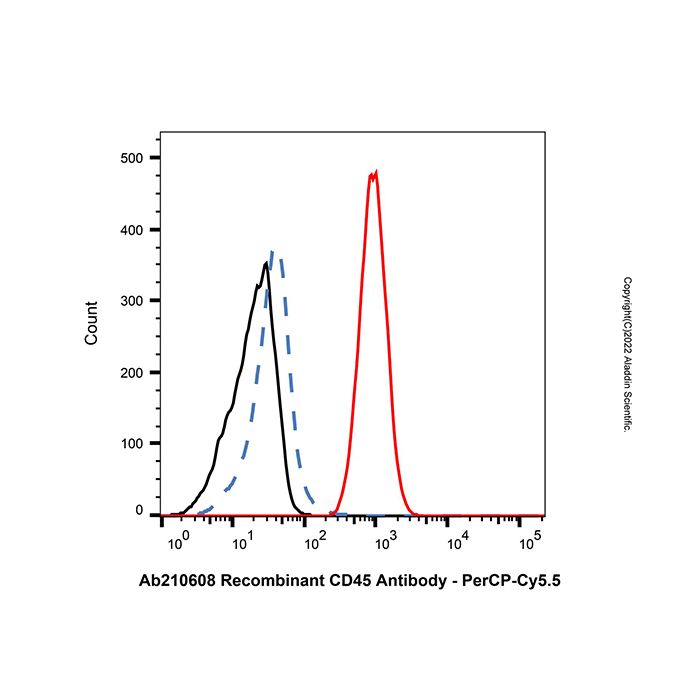
 ZJ26F0332715