GRADE & PURITYBioReagent?BioReagent grade — tested suitable for life-science and molecular-biology use. Use for cell culture, assays, and biochemical work needing biological compatibility.for Cell culture?Cell-culture grade — low endotoxin and contaminants to support viable cell growth. Use in mammalian/other cell culture media and supplements.γ-irradiated?Gamma-irradiated — sterilized by gamma radiation for assured sterility. Use for single-use bioprocess and culture items needing terminal sterilization.mol wt 70,000-150,000, lyophilized powder
γ-irradiated, BioReagent, for cell culture, mol wt 70,000-150,000, lyophilized powder BioReagent,for Cell culture,γ-irradiated for sensitive chromatographic and analytical workflows requiring minimal baseline interference.
🌡
Storage & shipping
Store at -20°C Ships Ice chest + Ice pads Check lot-specific COA for exact specifications.
📋
Quality documents
SDS, COA, datasheet, and spec sheet available for download. Lot-specific COA accessible via lot number lookup.
📚
Literature proof
Cited in 1 peer-reviewed publications across chromatography, organic synthesis, and cross-coupling reactions.
Descripción general
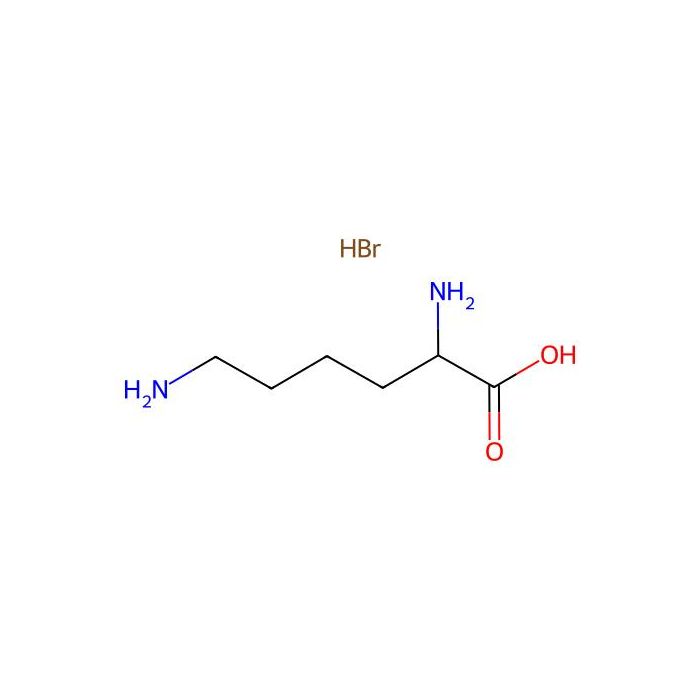
Poly-D-lysine hydrobromide has been used:
as a coating for plates used in culturing rat glial precursor cells (RGPCS).
in coating flasks and plates in culturing tanycytes
in preparing the surface of coverslips for facilitating cell attachment
Poly-D-lysine polymers can be used in preparing surfaces for cell attachment. The D-lysine polymers can also be used with cells that digest poly-L-lysine polymers and cause an excessive uptake of L-lysine.
This product is recommended as a cell culture substratum when using 0.5 - 1.0 mL of a 0.1 mg/mL solution to coat 25 cm2. Lower molecular weight versions of the product are less viscous, but high more molecular weight versions provide more attachment sites per molecule.
Poly-D-lysine (PDL) hydrobromide is a nonspecific attachment factor for cells useful in promoting cell adhesion to solid substrates by enhancing electrostatic interaction between negatively charged ions of the cell membrane and the culture surface. After
Condiciones de almacenamiento de almacenamiento
Store at -20°C
Enviado en
Ice chest + Ice pads
Este producto requiere envío en cadena de frío. Los servicios terrestres y otros servicios económicos no están disponibles.
This compound belongs to the class of organic compounds known as d-alpha-amino acids. These are alpha amino acids which have the D-configuration of the alpha-carbon atom.
External Descriptors
Not available
1. Djoumbou Feunang Y, Eisner R, Knox C, Chepelev L, Hastings J, Owen G, Fahy E, Steinbeck C, Subramanian S, Bolton E, Greiner R, and Wishart DS. ClassyFire: Automated Chemical Classification With A Comprehensive, Computable Taxonomy. Journal of Cheminformatics, 2016, 8:61.
1.Hai-Mu Ye, Shu-Fang Yao. (2017) Supernucleating Role of Poly(ω-pentadecalactone) during the Crystallization of Poly(ε-caprolactone) Composites. INDUSTRIAL & ENGINEERING CHEMISTRY RESEARCH, [PMID:][10.1021/acs.iecr.7b03322]
Calculadoras de soluciones
Molarity Calculator
Determine the necessary mass, volume, or concentration for preparing a solution.
Dilution Calculator
Determine the dilution needed to prepare a stock solution.
Reconstitution Calculator
Reseñas
Reseñas de cliente
Need help choosing the grade?
Our grade selection guide covers purity, stabilizer status, and application suitability for all variants in our catalog.
We use cookies to ensure the website functions properly and, where permitted, to improve your experience. You can manage your preferences at any time in Settings. Learn more in our Cookie Policy.
Shall we send you a message when we have discounts available?
Remind me later
Thank you! Please check your email inbox to confirm.
Products are supplied to verified businesses, institutions, and qualified professionals for research and development use only. Not for use in humans, animals, diagnosis, or therapy.