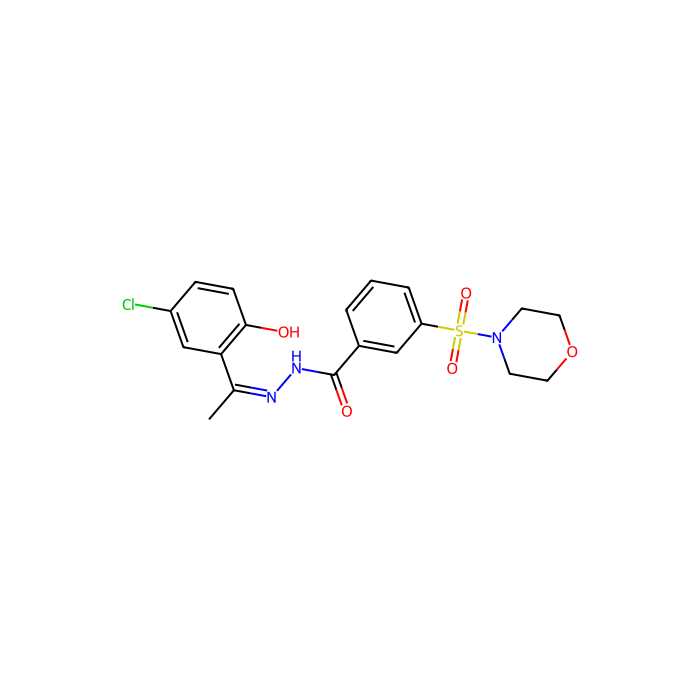
SP-2509 - ≥98% , CAS No.1423715-09-6

CAS: 1423715-09-6 Cat. No.: S275384 Fórmula: C19H20ClN3O5S Peso molecular: 437.9 PubChem CID: 135743577
Disponible para pedir
GRADE & PURITY ≥98%
Synonyms
N-[(E)-1-(5-Chloro-2-hydroxyphenyl)ethylideneamino]-3-morpholin-4-ylsulfonylbenzamide | BHC110 Inhibitor VII | Histone Lysine Demethylase Inhibitor XIV | KIAA1718 Inhibitor VII, LSD Inhibitor VII | SP-2509 | LSD1 Inhibitor VII | (E)-N'-(1-(5-chloro-2-hydr
Storage
Protected from light,Store at -20°C
Shipped In
Ice chest + Ice pads
★
Size
USA
Alemania (EU)*
Price
Qty
5mg
S275384-5mg
1 Disponible
—

24,90US$

37,90US$
Guardar 13,00 US$ (34.30%)
10mg
S275384-10mg
2 Disponible
—

44,90US$

67,90US$
Guardar 23,00 US$ (33.87%)
25mg
S275384-25mg
1 Disponible
—

70,90US$

106,90US$
Guardar 36,00 US$ (33.68%)
50mg
S275384-50mg
Fabricado bajo pedido · 8–12 semanas

119,90US$

179,90US$
Guardar 60,00 US$ (33.35%)
100mg
S275384-100mg
Fabricado bajo pedido · 8–12 semanas

202,90US$

304,90US$
Guardar 102,00 US$ (33.45%)
Enter a quantity for the sizes you want to add.
🧪
Why this grade

≥98% for sensitive chromatographic and analytical workflows requiring minimal baseline interference.

🌡

Storage & shipping

Protected from light,Store at -20°C Ships Ice chest + Ice pads Check lot-specific COA for exact specifications.

📋

Quality documents

SDS, COA, datasheet, and spec sheet available for download. Lot-specific COA accessible via lot number lookup.

📚

Literature proof

Cited in 0 peer-reviewed publications across chromatography, organic synthesis, and cross-coupling reactions.

Descripción general

Shipped at Room Temperature. Store at -21°C long term. Please see notes section.


product description:

A cell-permeable, lysine-specific demethylase 1 (LSD1) active site-targeting phenethylidene-benzohydrazide that inhibits LSD1 activity (IC50 = 13 nM) in a reversible and substrate non-competitive (Ki = 34 nM) manner, while inhibiting CYP3A4 only at much higher concentrations (IC50 = 2.61 µM) and displaying little or no potency towards CYP1A2/2C9/2C19/2D6. MAO-A/B, D-lactate dehydrogenase, glucose oxidase, and hERG (IC50 ≥8.0 µM). Shown to enhance histone H3 Lys9 dimethylation (H3K9me2) in androgen-dependent prostate cancer VCaP cultures (1 to 10 µM) and effectively inhibits LSD1-dependent cancer growth (IC50 in nM = 329/SK-N-MC, 356/AN3 Ca, 429/HT29, 468/MIA PaCa-2, 489/BT-20, 612/HER218, 614/HCT 116, 637/MCF-7, 649/T-47D; 96 h).

A cell-permeable phenethylidene-benzohydrazide compound that acts as a potent, selective, reversible, and non-competitive inhibitor of Lysine-Specific Demethylase 1 (LSD1; IC50 = 13 nM; Ki = 31 nM). Exhibits excellent selectivity over monoamine oxidases A and B (IC50 >300 µM), lactate dehydrogenase, glucose oxidase, hERG, CYP1A2, CYP2D6 (IC50 ≥ 10 µM), CYP2C9 (IC50 = 8.04 µM) and CYP2C19 (IC50 = 9.76 µM). Inhibits CYP3A4 only at >200-fold higher concentration. Reduces the proliferation of several cancer cell lines, including AN3 Ca, BT-20, MCF-7, T-47D, HT29, MIA PaCa-2 and SK-N-MC (IC50 = 356, 489, 637, 649, 429, 468 and 329 nM, respectively).

Specifications

Sinónimos
N-[(E)-1-(5-Chloro-2-hydroxyphenyl)ethylideneamino]-3-morpholin-4-ylsulfonylbenzamide | BHC110 Inhibitor VII | Histone Lysine Demethylase Inhibitor XIV | KIAA1718 Inhibitor VII, LSD Inhibitor VII | SP-2509 | LSD1 Inhibitor VII | (E)-N'-(1-(5-chloro-2-hydr
Especificaciones y pureza
≥98%
Mecanismos bioquímicos y fisiológicos
Potent, selective\xa0(IC 50 = 13 nM) and reversible inhibitor of the histone demethylase LSD1 (KDM1A).\xa0No activity against MAO-A, MAO-B, lactate dehydrogenase and glucose oxidase.Cell permeable: yes Reversible: yes Primary Target LSD1
Condiciones de almacenamiento de almacenamiento
Protected from light,Store at -20°C
Enviado en
Ice chest + Ice pads
Este producto requiere envío en cadena de frío. Los servicios terrestres y otros servicios económicos no están disponibles.
Nota
Refer to SDS for further information. Need more advice on solubility, usage and handling? Please visit our frequently asked questions (FAQ) page for more details.
Pureza
≥98%
Nombres e identificadores
Pubchem Sid
Pubchem Sid Url
https://pubchem.ncbi.nlm.nih.gov/substance/504773435
Sonrisas canónicas
CC(=NNC(=O)C1=CC(=CC=C1)S(=O)(=O)N2CCOCC2)C3=C(C=CC(=C3)Cl)O
IUPAC Name
N-[(E)-1-(5-chloro-2-hydroxyphenyl)ethylideneamino]-3-morpholin-4-ylsulfonylbenzamide
InChIKey
NKUDGJUBIVEDTF-FYJGNVAPSA-N
INCHI
1S/C19H20ClN3O5S/c1-13(17-12-15(20)5-6-18(17)24)21-22-19(25)14-3-2-4-16(11-14)29(26,27)23-7-9-28-10-8-23/h2-6,11-12,24H,7-10H2,1H3,(H,22,25)/b21-13+
Isómeros SMILES
C/C(=N\NC(=O)C1=CC(=CC=C1)S(=O)(=O)N2CCOCC2)/C3=C(C=CC(=C3)Cl)O
PubChem CID
135743577
Peso molecular
437.9

Documentation

📋 Safety Data Sheet (SDS)

Comprehensive hazard, handling, storage, and regulatory compliance document.

Download SDS →

✅ Certificate of Analysis (COA)

Lot-specific quality data. Enter your lot number to retrieve the exact COA.

Look up COA →

📊 Datasheet

Quick-reference summary of product specifications and applications.

View datasheet →

🔬 Specification Sheet

Full quality attributes and acceptance criteria for this grade.

View spec sheet →

Advanced Data

Taxonomic Classification

Taxonomy Tree

KingdomOrganic compounds
SuperclassBenzenoids
ClaseBenzene and substituted derivatives
SubclassBenzenesulfonamides
Intermediate Tree Nodes Not available
Direct ParentBenzenesulfonamides
Alternative Parents Benzenesulfonyl compounds  Benzoic acids and derivatives  P-chlorophenols  Benzoyl derivatives  1-hydroxy-2-unsubstituted benzenoids  Chlorobenzenes  Organosulfonamides  Aryl chlorides  Morpholines  Sulfonyls  Oxacyclic compounds  Azacyclic compounds  Dialkyl ethers  Carboxylic acids and derivatives  Hydrocarbon derivatives  Organic oxides  Organochlorides  Organonitrogen compounds  
Molecular FrameworkAromatic heteromonocyclic compounds
Substituents Benzenesulfonamide - Benzenesulfonyl group - Benzoic acid or derivatives - 4-halophenol - 4-chlorophenol - Benzoyl - 1-hydroxy-2-unsubstituted benzenoid - Phenol - Halobenzene - Chlorobenzene - Organosulfonic acid amide - Aryl chloride - Oxazinane - Morpholine - Aryl halide - Organosulfonic acid or derivatives - Organic sulfonic acid or derivatives - Sulfonyl - Oxacycle - Carboxylic acid derivative - Azacycle - Dialkyl ether - Ether - Organoheterocyclic compound - Hydrocarbon derivative - Organic oxide - Organic oxygen compound - Organic nitrogen compound - Organosulfur compound - Organooxygen compound - Organohalogen compound - Organochloride - Organonitrogen compound - Aromatic heteromonocyclic compound
DescripciónThis compound belongs to the class of organic compounds known as benzenesulfonamides. These are organic compounds containing a sulfonamide group that is S-linked to a benzene ring.
External Descriptors Not available
Estructura 3D
Modelo de Estructura Química Interactiva


Objetivos asociados (humanos)
KDM1A Tchem Lysine-specific histone demethylase 1A (9 Activities)
Activity TypeActivity Value -log(M)Mechanism of ActionActivity ReferencePublications (PubMed IDs)
MAOA Tclin Monoamine oxidase A (11911 Activities)
Activity TypeRelationActivity valueUnitsAction TypeJournalPubMed IddoiAssay Aladdin ID
MAOB Tclin Monoamine oxidase B (8835 Activities)
Activity TypeRelationActivity valueUnitsAction TypeJournalPubMed IddoiAssay Aladdin ID
KCNH2 Tclin HERG (29587 Activities)
Activity TypeRelationActivity valueUnitsAction TypeJournalPubMed IddoiAssay Aladdin ID
CYP2D6 Tclin Cytochrome P450 2D6 (33882 Activities)
Activity TypeRelationActivity valueUnitsAction TypeJournalPubMed IddoiAssay Aladdin ID
CYP1A2 Tchem Cytochrome P450 1A2 (26471 Activities)
Activity TypeRelationActivity valueUnitsAction TypeJournalPubMed IddoiAssay Aladdin ID
CYP2C9 Tchem Cytochrome P450 2C9 (32119 Activities)
Activity TypeRelationActivity valueUnitsAction TypeJournalPubMed IddoiAssay Aladdin ID
CYP2C19 Tchem Cytochrome P450 2C19 (29246 Activities)
Activity TypeRelationActivity valueUnitsAction TypeJournalPubMed IddoiAssay Aladdin ID
CYP3A4 Tclin Cytochrome P450 3A4 (53859 Activities)
Activity TypeRelationActivity valueUnitsAction TypeJournalPubMed IddoiAssay Aladdin ID
AGS (1999 Activities)
Activity TypeRelationActivity valueUnitsAction TypeJournalPubMed IddoiAssay Aladdin ID
BGC-823 (3035 Activities)
Activity TypeRelationActivity valueUnitsAction TypeJournalPubMed IddoiAssay Aladdin ID
DU-145 (51482 Activities)
Activity TypeRelationActivity valueUnitsAction TypeJournalPubMed IddoiAssay Aladdin ID
HT-29 (80576 Activities)
Activity TypeRelationActivity valueUnitsAction TypeJournalPubMed IddoiAssay Aladdin ID
MCF7 (126967 Activities)
Activity TypeRelationActivity valueUnitsAction TypeJournalPubMed IddoiAssay Aladdin ID
MDA-MB-468 (9477 Activities)
Activity TypeRelationActivity valueUnitsAction TypeJournalPubMed IddoiAssay Aladdin ID
MKN-1 (175 Activities)
Activity TypeRelationActivity valueUnitsAction TypeJournalPubMed IddoiAssay Aladdin ID
MKN-45 (2102 Activities)
Activity TypeRelationActivity valueUnitsAction TypeJournalPubMed IddoiAssay Aladdin ID
NCI-N87 (850 Activities)
Activity TypeRelationActivity valueUnitsAction TypeJournalPubMed IddoiAssay Aladdin ID
PC-3 (62116 Activities)
Activity TypeRelationActivity valueUnitsAction TypeJournalPubMed IddoiAssay Aladdin ID
Raji (5516 Activities)
Activity TypeRelationActivity valueUnitsAction TypeJournalPubMed IddoiAssay Aladdin ID
SK-N-MC (815 Activities)
Activity TypeRelationActivity valueUnitsAction TypeJournalPubMed IddoiAssay Aladdin ID
SNU1 (253 Activities)
Activity TypeRelationActivity valueUnitsAction TypeJournalPubMed IddoiAssay Aladdin ID
A549 (127892 Activities)
Activity TypeRelationActivity valueUnitsAction TypeJournalPubMed IddoiAssay Aladdin ID
T47D (39041 Activities)
Activity TypeRelationActivity valueUnitsAction TypeJournalPubMed IddoiAssay Aladdin ID
NCI-H1299 (3248 Activities)
Activity TypeRelationActivity valueUnitsAction TypeJournalPubMed IddoiAssay Aladdin ID
HCT-116 (91556 Activities)
Activity TypeRelationActivity valueUnitsAction TypeJournalPubMed IddoiAssay Aladdin ID
NCI-H460 (60772 Activities)
Activity TypeRelationActivity valueUnitsAction TypeJournalPubMed IddoiAssay Aladdin ID
A2780 (11979 Activities)
Activity TypeRelationActivity valueUnitsAction TypeJournalPubMed IddoiAssay Aladdin ID
MDA-MB-435 (38290 Activities)
Activity TypeRelationActivity valueUnitsAction TypeJournalPubMed IddoiAssay Aladdin ID
MDA-MB-231 (73002 Activities)
Activity TypeRelationActivity valueUnitsAction TypeJournalPubMed IddoiAssay Aladdin ID
BT-549 (31254 Activities)
Activity TypeRelationActivity valueUnitsAction TypeJournalPubMed IddoiAssay Aladdin ID
SMMC-7721 (5516 Activities)
Activity TypeRelationActivity valueUnitsAction TypeJournalPubMed IddoiAssay Aladdin ID
KDM1A Tchem Lysine-specific histone demethylase 1 (3916 Activities)
Activity TypeRelationActivity valueUnitsAction TypeJournalPubMed IddoiAssay Aladdin ID
Objetivos asociados (no humanos)
rep Replicase polyprotein 1ab (378 Activities)
Activity TypeRelationActivity valueUnitsAction TypeJournalPubMed IddoiAssay Aladdin ID
Mecanismos de acción
Certificados (CoA, COO, BSE/TSE y tabla de análisis)
C of A & Other Certificates(BSE/TSE, COO):
Analytical Chart:

Find and download the COA for your product by matching the lot number on the packaging.

5 results found

Lot NumberCertificate TypeFechaArticulo
A2212149Certificate of AnalysisJul 03, 2026 S275384
A2212150Certificate of AnalysisJul 03, 2026 S275384
A2212486Certificate of AnalysisJul 03, 2026 S275384
A2212487Certificate of AnalysisJul 03, 2026 S275384
A2212488Certificate of AnalysisJul 03, 2026 S275384
Propiedades químicas y físicas
SolubilidadSoluble in DMSO to 50 mM
Sensibilidadlight sensitive
Peso molecular437.900 g/mol
XLogP32.100
Hydrogen Bond Donor Count2
Hydrogen Bond Acceptor Count7
Rotatable Bond Count5
Exact Mass437.081 Da
Monoisotopic Mass437.081 Da
Topological Polar Surface Area117.000 Ų
Heavy Atom Count29
Formal Charge0
Complexity705.000
Isotope Atom Count0
Defined Atom Stereocenter Count0
Undefined Atom Stereocenter Count0
Defined Bond Stereocenter Count1
Undefined Bond Stereocenter Count0
The total count of all stereochemical bonds1
Covalently-Bonded Unit Count1
Preguntas frecuentes y artículos
Calculadoras de soluciones
Reseñas

Reseñas de cliente

Application Protocols

No tested application protocols (e.g., specific assay formats, dilution factors, or plate-based procedures) are provided for this item in the Product Data.

General workflow suggestions (not item specifications)

  • Prepare a fresh serial dilution of DMSO stock in assay buffer or media immediately before use.
  • Include vehicle-only wells and, where feasible, a reference compound.
  • For cell assays, monitor cell viability in parallel to disentangle cytotoxicity from target-specific effects.
  • For biochemical assays, confirm enzyme kinetics and linear assay window with your readout method.

Please consult peer-reviewed literature and your institutional SOPs to tailor protocols to your system.

Biological Roles

Context from literature (for informational purposes; not item specifications):

  • SP-2509 is widely cited in chemical biology as a reversible inhibitor of the histone demethylase LSD1/KDM1A, a flavin-dependent amine oxidase that demethylates mono- and di-methylated H3K4 and H3K9 marks. By modulating LSD1 activity, SP-2509 is used to probe chromatin state, transcriptional regulation, and epigenetic dependencies in diverse cellular contexts.
  • Researchers employ SP-2509 to dissect corepressor complex biology (e.g., CoREST complexes) and to study crosstalk between histone methylation and other chromatin modifications.

Experimental considerations (general guidance)

  • Potency and selectivity can depend on assay format (biochemical vs cell-based), enzyme source, and readout (e.g., fluorescence, mass spectrometry). Always benchmark against appropriate controls and, where possible, use orthogonal assays to confirm on-target effects.
  • Off-target profiling and transcriptomic analyses (e.g., RNA-seq) are commonly used to corroborate mechanism in cells due to the pleiotropic effects of epigenetic perturbation.
  • Vehicle effects (DMSO) should be controlled; final DMSO is typically kept ≤0.1–1% v/v in cellular assays.

Note

  • The above reflects general literature context on SP-2509 as a research tool. This product is supplied strictly for research use only and not for any diagnostic or therapeutic use.
Buffer Applications

This product is a bioactive small molecule and is not itself a buffering agent. As such, classical buffer system recipes (e.g., phosphate, HEPES, Tris) do not apply directly.

Practical notes for assay buffers (general guidance)

  • Prepare compound stocks in DMSO, then dilute into your chosen buffer immediately before use (e.g., HEPES- or Tris-based buffers with defined salt and cofactor composition suitable for your enzyme/cell assay).
  • Maintain consistent ionic strength and pH across vehicle and treatment conditions; many epigenetic enzyme assays run near physiological pH (≈7.4), but optimize for your specific target and readout.
  • To mitigate precipitation, include low levels of carrier protein (e.g., 0.1% BSA) or non-ionic surfactant if compatible with the assay, and pre-clear solutions by low-speed spin or 0.22 μm filtration.

Item-specific buffer compatibility data are not provided; verify empirically for your protocol.

Green Alternatives

Green chemistry considerations are not typically applied to the compound itself (a defined small-molecule probe), but to the solvents and workflows used with it.

  • Prefer DMSO over DMF or NMP for stock solutions in bioassays due to lower hazard profiles and better biodegradability concerns relative to DMF/NMP (general guidance).
  • In analytics, consider water–acetonitrile gradients instead of water–methanol when ACN recovery/recycling is available; otherwise, water–ethanol systems may be explored where compatible.
  • Implement microscale assays (low-volume plates) to reduce solvent usage and hazardous waste.
  • Use amber vials and minimize light exposure to extend sample life and reduce repeat preparations.

Trade-offs (general)

  • Greener solvents may impact solubility or compound stability; always validate recovery and potency after any solvent substitution.
  • Reducing DMSO content can lessen vehicle effects but may introduce precipitation; titrate carefully and verify by visual inspection or Nephelometry.

Because SP-2509 is a target-focused probe, there are no direct “green substitute molecules” for its biological function; improvements should focus on greener assay solvents, reduced scale, and efficient waste handling.

Pharmaceutical Uses

No pharmacopeial status or excipient role is specified for this item.

  • Pharmaceutical/clinical uses are not claimed. This material is provided for research use only (e.g., as a chemical probe in preclinical laboratory studies).
  • If formulating for in vivo research, consult institutional guidelines and primary literature for acceptable vehicles and dosing formulations; such use requires independent validation of purity, identity, endotoxin levels, and stability under the intended conditions. Those parameters are not specified for this item and must be verified from the lot-specific CoA and your own qualification tests.
Physical Properties

Item-specific physico-chemical specifications have not been provided for this catalog entry.

  • Melting point: Not specified for this item; refer to CoA/Spec Sheet.
  • Boiling point: Not specified for this item; refer to CoA/Spec Sheet.
  • Density: Not specified for this item; refer to CoA/Spec Sheet.
  • Refractive index: Not applicable; solid compounds typically do not carry this spec unless stated. If liquid, not specified for this item; refer to CoA/Spec Sheet.
  • pKa / logP: Not specified for this item; refer to CoA/Spec Sheet.
  • Aqueous solubility: Not specified for this item; refer to CoA/Spec Sheet.

General guidance (literature/practice, not item specifications)

  • Small-molecule screening probes of this class are commonly formulated as concentrated DMSO stocks (e.g., 10–50 mM) and diluted into assay buffers immediately before use to minimize precipitation.
  • Water solubility for hydrophobic probes is often limited; co-solvents such as DMSO (0.1–1% v/v in final assay) are typically used (literature). Validate solubility in your specific buffer system empirically.
Quality and Grades
  • Grade/Purity: Not specified for this item; refer to CoA/Spec Sheet.

Interpretation and guidance

  • In absence of a declared “HPLC grade,” “BioUltra,” or “Screening grade,” users should consult the Certificate of Analysis (CoA) for assay purity, chromatographic profile, and any residual solvent or counter-ion information.
  • For screening applications (biochemical or cell-based), typical expectations include: high assay purity (often ≥95% by HPLC/UPLC), clear NMR/LC–MS identity confirmation, and low residual volatile content. Confirm these on a per-lot CoA.
  • If a stabilizer or salt form is used, it will be listed on the CoA. None is specified in this product entry.
  • For chromatographic detection or analytical method development, evaluate UV/Vis profile and potential fluorescence in your method matrix; item-specific UV cutoffs are not provided.

What is specific to this item

  • Storage and shipping conditions are defined: Store at −20°C, protected from light; shipped in an ice chest with ice pads to preserve integrity.
  • All other quality-defining parameters (purity %, residuals, elemental analysis) are not specified here and must be taken from the lot-specific CoA/Spec Sheet.
Reaction and Applications

This product is supplied as a bioactive small molecule for discovery research, not as a synthetic reagent. Consequently, classical synthetic reaction applications (e.g., cross-coupling, Grignard) are not typically relevant.

Research applications (general/literature, not item specifications)

  • Used as a chemical probe in epigenetics research to modulate enzyme activity in biochemical and cell-based assays. Investigators typically compare activity across concentration ranges to derive potency metrics (e.g., IC50) under their assay conditions.
  • Employed in phenotypic screening and mechanism-of-action studies, frequently alongside orthogonal probes and inactive analogs as controls.

Practical tips for assay use

  • Prepare concentrated DMSO stocks (e.g., 10–50 mM) and aliquot to avoid freeze–thaw cycles.
  • Protect from light during handling and incubation (foil-wrap plates/tubes if necessary).
  • Include vehicle controls matching the highest DMSO percentage used.
  • Confirm compound stability in your assay buffer over the experimental timeframe (pre-incubate and analyze by LC–MS if needed).

If your workflow instead requires a synthetic building block or reagent, consider searching Aladdin for functionalized intermediates more suited to chemical transformations.

Reaction Conditions

Classical synthetic reaction conditions are not applicable—this item is supplied as a bioactive probe, not a reagent.

Assay-related conditions (general guidance; literature-informed, not item specifications)

  • Stock preparation: Commonly 10–50 mM in anhydrous DMSO; store small aliquots at −20°C, protected from light.
  • Working concentrations: Users typically explore sub-micromolar to low micromolar ranges in biochemical and cellular assays. Exact concentrations, incubation times, and temperatures depend on target, cell type, and readout and should be optimized empirically.
  • Incubation: Many cell-based studies dose for 4–72 h at 37°C with 5% CO2; shorter incubations are used in biochemical assays at ambient temperature. Validate time-dependence and stability in your specific system.
  • Controls: Include vehicle controls and, where possible, orthogonal inhibitors or inactive analogs to confirm on-target effects.

These guidelines are provided to aid experimental design; consult primary literature and perform pilot titrations to establish conditions for your application.

Safety and Handling
  • GHS classification: Not specified for this item; refer to SDS.
  • Signal word / H-statements / pictograms: Not specified for this item; refer to SDS.
  • Research use: For research use only. Not for human or veterinary use.

Handling and PPE (general good lab practice)

  • Handle in a fume hood to avoid inhalation of dust or aerosols.
  • Wear lab coat, safety glasses, and appropriate chemically resistant gloves (e.g., nitrile). Avoid skin and eye contact.
  • Avoid ingestion and inhalation; prevent formation of dust. Use dedicated tools for weighing to reduce cross-contamination.

Storage and incompatibilities

  • Storage (item-specific): Store at −20°C, protected from light (per Product Data). Keep tightly closed in the original, light-protective container. Avoid repeated freeze–thaw.
  • Incompatibilities (general): Strong oxidizers and strong acids/bases may cause degradation for many organic small molecules; keep away from reactive chemicals and moisture unless data indicate stability.

First-aid overview (consult SDS for definitive instructions)

  • Inhalation: Move to fresh air; seek medical attention if symptoms persist.
  • Skin/eye contact: Rinse with plenty of water for at least 15 minutes; remove contaminated clothing; seek medical attention if irritation develops.
  • Ingestion: Rinse mouth; do not induce vomiting; seek medical attention.

Spill and waste

  • Small spill: Avoid dust, absorb/collect with inert material, and dispose of as hazardous chemical waste in accordance with institutional and local regulations.
Solvent Selection

This compound is a small-molecule screening probe. Solvent choice typically prioritizes stock solution stability and compatibility with bioassays.

  • Item-specific solubility values are not provided. The following are general practices (literature/guidance, not item specifications):
    • Primary stock solvent: DMSO is commonly used due to broad solvency and compatibility with biological assays.
    • Aqueous buffers: Dilute DMSO stocks into assay buffer immediately before use; maintain final DMSO at minimal levels (often ≤0.1–1% v/v) to limit vehicle effects on cells/enzymes.
    • Co-solvents/surfactants: For challenging solubility, 0.01–0.05% non-ionic surfactant (e.g., Tween-20) or cyclodextrin carriers may help (validate experimentally).
    • Organic analytics: For LC–MS sample prep, acetonitrile:water with 0.1% formic acid is frequently suitable; verify stability in acidic mobile phases.

Comparison (general)

  • DMSO vs DMF: DMSO is preferred for bioassays due to lower cell toxicity at small percentages and better miscibility with aqueous media. DMF is less favored in live-cell contexts.
  • Ethanol: Sometimes acceptable at ≤0.1–0.5% v/v final, but DMSO offers superior solvency for many heteroaromatic inhibitors.

Practical tips

  • Warm gently to room temperature before opening to avoid moisture condensation.
  • Sonication or brief heating (≤40°C) can aid dissolution; avoid prolonged heating or light exposure.
  • Filter through 0.22 μm PTFE/RC syringe filters for particulate removal prior to analytical injections.
Storage and Reconstitution
  • Storage conditions (item-specific): Store at −20°C, protected from light (per Product Data). Keep tightly sealed in the original container. Avoid prolonged exposure to ambient humidity and light.
  • Shipping: Ice chest with ice pads (per Product Data) to help maintain low temperature during transit.
  • Appearance: Not specified for this item; refer to CoA/Spec Sheet.

Reconstitution guidance (general; not item specifications)

  • Solvent: Prepare concentrated DMSO stock solutions (e.g., 10–50 mM) using anhydrous, oxygen-free DMSO when possible. Vortex and, if necessary, sonicate briefly to aid dissolution.
  • Filtration: If particulates are observed, clarify solutions by 0.22 μm PTFE/RC filtration.
  • Aliquoting: Dispense into single-use aliquots in amber vials or light-protective tubes to minimize freeze–thaw and photodegradation.
  • Working solutions: Prepare immediately before use by diluting the DMSO stock into the assay buffer or medium. Avoid storing aqueous working solutions unless stability is verified.

Stability notes

  • Item-specific shelf-life and solution stability are not provided; consult the CoA/Spec Sheet. As a precaution, limit freeze–thaw cycles, maintain desiccation, and protect from light at all times.
Structure and Identity
  • Item name: SP-2509 (SKU: S275384)
  • CAS: 1423715-09-6
  • PubChem CID: 135743577
  • InChIKey (provided): 241096 (Note: appears truncated; full InChIKey is not specified for this item. Refer to PubChem CID 135743577 for the canonical InChI/InChIKey.)
  • Molecular formula: Not specified for this item; refer to CoA/Spec Sheet.
  • Molecular weight: Not specified for this item; refer to CoA/Spec Sheet.
  • SMILES: Not specified for this item; refer to CoA/Spec Sheet.

Structural description

  • Item-specific 2D/functional group description is not provided in this listing. For structural drawings, tautomeric details, and stereochemical assignments, consult peer-reviewed literature or the PubChem entry (CID 135743577) (literature reference).
Synthetic Utility

SP-2509 is intended as a finished small-molecule probe rather than a synthetic intermediate or reagent.

  • It is not typically used in bond-forming reactions or as a functional group transfer reagent.
  • No item-specific functional group data or reactivity profile is provided in this listing.

If you are seeking a building block to construct analogs or to derivatize this scaffold, consider:

  • Searching Aladdin’s catalog for structurally related fragments, protected amines, or heteroaromatic cores suitable for SAR campaigns.
  • Using retrosynthetic planning tools to identify commercially available precursors and cross-coupling partners before custom synthesis.

For this product, the most relevant sections are Biological Roles, Application Protocols (if provided), and Storage & Reconstitution rather than Synthetic Utility.

Target Specificity

Item-specific target, affinity, and selectivity data are not provided in this product listing. Only data present in the Product Data may be listed here.

  • Target name: Not specified for this item; refer to CoA/Spec Sheet or primary literature.
  • Affinity/IC50/EC50: Not specified for this item; refer to CoA/Spec Sheet or primary literature.
  • Off-target panel data: Not specified for this item; refer to CoA/Spec Sheet or primary literature.

For guidance on potential biological targets explored in the literature, see the Biological Roles section.

Shall we send you a message when we have discounts available?

Remind me later

Thank you! Please check your email inbox to confirm.

Oops! Notifications are disabled.