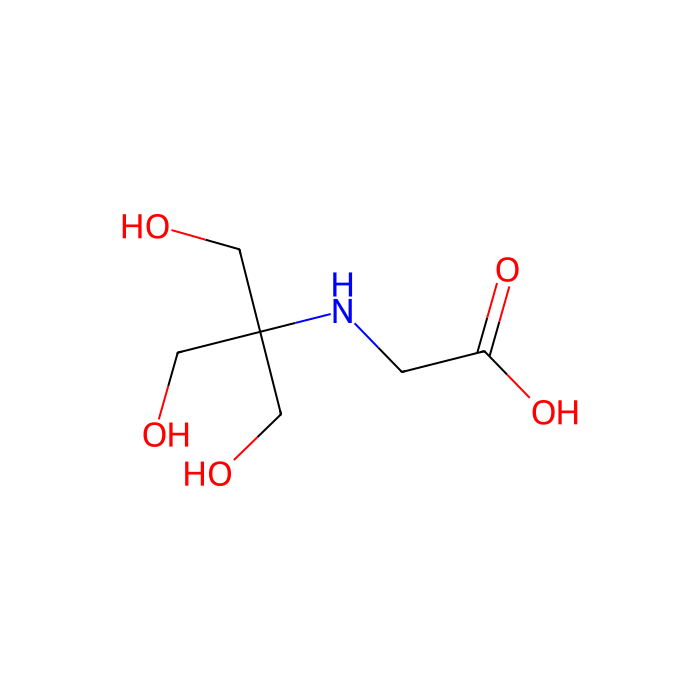
Tricine - ≥99.5% , CAS No.5704-04-1

CAS: 5704-04-1 Cat. No.: T100351 Peso molecular: 179.17 Beilstein Registry Number: 1937804 Número EC: 227-193-6 PubChem CID: 79784
Disponible para pedir
GRADE & PURITY ≥99.5%
Synonyms
2-(1,3-dihydroxy-2-(hydroxymethyl)propan-2-ylamino)acetic acid | C6H13NO5 | 2-{[1,3-dihydroxy-2-(hydroxymethyl)propan-2-yl]amino}acetic acid | N-[2-hydroxy-1,1-bis(hydroxymethyl)ethyl]glycine | AKOS015856413 | 2,6,6-Trimethyl-2-cyclohexen-1-carboxaldehyde
Storage
Room temperature
Shipped In
Normal
 ·  off list, applied to all prices below.
Size
Estado
Price
Qty
25g
T100351-25g
3
21,90US$
100g
T100351-100g
5
59,90US$
500g
T100351-500g
2
214,90US$
Enter a quantity for the sizes you want to add.
🧪

Why this grade

≥99.5% for sensitive chromatographic and analytical workflows requiring minimal baseline interference.

🌡

Storage & shipping

Room temperature Ships Normal Check lot-specific COA for exact specifications.

📋

Quality documents

SDS, COA, datasheet, and spec sheet available for download. Lot-specific COA accessible via lot number lookup.

📚

Literature proof

Cited in 15 peer-reviewed publications across chromatography, organic synthesis, and cross-coupling reactions.

Descripción general

Tricine is an organic derivative of tris and glycine used in buffer solutions. It is a zwitterionic amino acid with a useful buffering range of pH 7.4-8.8 and is one of Good's buffering agents; Good first prepared tricine to buffer chloropast reactions. A zwitterionic amino acid with a buffering range of pH 7.4-8.8. Due to a low negative charge and a high ionic strength, Tricine is very useful for electrophoretic separation of small molecular weight proteins in the range of 1 to 100 kDa. Tricine is a commonly used electrophoresis buffer and is also used in resuspension of cell pellets. It has a lower negative charge than glycine allowing it to migrate faster. In addition its high ionic strength causes more ion movement and less protein movement. This allows for low molecular weight proteins to be separated in lower percent acrylamide gels. Tricine has been documented in the separation of proteins in the range of 1 to 100 kDa by electrophoresis.[2] The tricine buffer at 25 mmol/L was found to be the most effective buffer among the ten tested for ATP assays using firefly luciferase.[3] Tricine has also been found to be an effective scavenger of hydroxyl radicals in a study of radiation-induced membrane damage. Buffer component for separation of low molecular weight peptides. A zwitterionic buffer useful in the pH range of 7.4-8.8. Has a pKa of 8.05 at 25°C.
A buffer component for separation of low molecular weight peptides.

Specifications

Sinónimos
2-(1, 3-dihydroxy-2-(hydroxymethyl)propan-2-ylamino)acetic acid | C6H13NO5 | 2-{[1, 3-dihydroxy-2-(hydroxymethyl)propan-2-yl]amino}acetic acid | N-[2-hydroxy-1, 1-bis(hydroxymethyl)ethyl]glycine | AKOS015856413 | 2, 6, 6-Trimethyl-2-cyclohexen-1-carboxaldehyde
Especificaciones y pureza
≥99.5%
Condiciones de almacenamiento de almacenamiento
Room temperature
Enviado en
Normal
Pureza
≥99.5%
Nombres e identificadores
Sonrisas canónicasC(C(=O)O)NC(CO)(CO)CO
IUPAC Name2-[[1,3-dihydroxy-2-(hydroxymethyl)propan-2-yl]amino]acetic acid
InChIKeySEQKRHFRPICQDD-UHFFFAOYSA-N
INCHI1S/C6H13NO5/c8-2-6(3-9,4-10)7-1-5(11)12/h7-10H,1-4H2,(H,11,12)
Isómeros SMILES C(C(=O)O)NC(CO)(CO)CO
WGK Alemania 3
PubChem CID 79784
Peso molecular 179.17
Beilstein 1937804
Reaxy-Rn 1937804

Documentation

📋 Safety Data Sheet (SDS)

Comprehensive hazard, handling, storage, and regulatory compliance document.

Download SDS →

✅ Certificate of Analysis (COA)

Lot-specific quality data. Enter your lot number to retrieve the exact COA.

Look up COA →

📊 Datasheet

Quick-reference summary of product specifications and applications.

View datasheet →

🔬 Specification Sheet

Full quality attributes and acceptance criteria for this grade.

View spec sheet →

Advanced Data

Taxonomic Classification

Taxonomy Tree

KingdomOrganic compounds
SuperclassOrganic acids and derivatives
ClaseCarboxylic acids and derivatives
SubclassAmino acids, peptides, and analogues
Intermediate Tree Nodes Amino acids and derivatives - Alpha amino acids and derivatives
Direct ParentAlpha amino acids
Alternative Parents Amino acids  1,2-aminoalcohols  Monocarboxylic acids and derivatives  Dialkylamines  Carboxylic acids  Primary alcohols  Organopnictogen compounds  Organic oxides  Hydrocarbon derivatives  Carbonyl compounds  
Molecular FrameworkAliphatic acyclic compounds
Substituents Alpha-amino acid - 1,2-aminoalcohol - Amino acid - Carboxylic acid - Secondary aliphatic amine - Monocarboxylic acid or derivatives - Secondary amine - Organic nitrogen compound - Primary alcohol - Organooxygen compound - Organonitrogen compound - Hydrocarbon derivative - Organic oxide - Organopnictogen compound - Carbonyl group - Amine - Organic oxygen compound - Alcohol - Aliphatic acyclic compound
DescripciónThis compound belongs to the class of organic compounds known as alpha amino acids. These are amino acids in which the amino group is attached to the carbon atom immediately adjacent to the carboxylate group (alpha carbon).
External Descriptors tricine
Estructura 3D
Modelo de Estructura Química Interactiva


Certificados (CoA, COO, BSE/TSE y tabla de análisis)
C of A & Other Certificates(BSE/TSE, COO):
Analytical Chart:

Find and download the COA for your product by matching the lot number on the packaging.

24 results found

Lot NumberCertificate TypeFechaArticulo
C2620487Certificate of AnalysisMar 07, 2026 T100351
C2620501Certificate of AnalysisMar 07, 2026 T100351
A2604563Certificate of AnalysisJan 12, 2026 T100351
A2604398Certificate of AnalysisJan 12, 2026 T100351
H2507684Certificate of AnalysisJun 25, 2025 T100351
H2507683Certificate of AnalysisJun 25, 2025 T100351
H2507517Certificate of AnalysisJun 25, 2025 T100351
C2519444Certificate of AnalysisMar 10, 2025 T100351
C2519666Certificate of AnalysisMar 10, 2025 T100351
C2519668Certificate of AnalysisMar 10, 2025 T100351
K2429506Certificate of AnalysisNov 18, 2024 T100351
K2429505Certificate of AnalysisNov 18, 2024 T100351
K2429504Certificate of AnalysisNov 18, 2024 T100351
H2427205Certificate of AnalysisAug 29, 2024 T100351
G2422510Certificate of AnalysisJul 29, 2024 T100351
H2317094Certificate of AnalysisAug 21, 2023 T100351
B2303838Certificate of AnalysisFeb 10, 2023 T100351
B2303840Certificate of AnalysisFeb 08, 2023 T100351
J2227379Certificate of AnalysisOct 14, 2022 T100351
J2227469Certificate of AnalysisOct 14, 2022 T100351
F2208116Certificate of AnalysisApr 29, 2022 T100351
F2208112Certificate of AnalysisApr 29, 2022 T100351
F2208109Certificate of AnalysisApr 29, 2022 T100351
B2223737Certificate of AnalysisDec 27, 2021 T100351

Show more ⌵

Propiedades químicas y físicas
SolubilidadSoluble in water (89.6 g/l) at 20 °C.
Punto de fusión (°C)172 °C
Peso molecular179.170 g/mol
XLogP3-5.100
Hydrogen Bond Donor Count5
Hydrogen Bond Acceptor Count6
Rotatable Bond Count6
Exact Mass179.079 Da
Monoisotopic Mass179.079 Da
Topological Polar Surface Area110.000 Ų
Heavy Atom Count12
Formal Charge0
Complexity137.000
Isotope Atom Count0
Defined Atom Stereocenter Count0
Undefined Atom Stereocenter Count0
Defined Bond Stereocenter Count0
Undefined Bond Stereocenter Count0
The total count of all stereochemical bonds0
Covalently-Bonded Unit Count1
Preguntas frecuentes y artículos
Citations of This Product
Referencias
1. Ziwei Su, Xiangxiang Zhang, Weichen Wang, Mingdong Dong, Xiaojun Han.  (2022)  Light-Harvesting Artificial Cells for the Generation of ATP and NADPH†.  CHINESE JOURNAL OF CHEMISTRY,  41  (1): (57-63).  [PMID:] [10.1002/cjoc.202200482]
2. Ping Sun, Jing Wu, Shenghong Yang, Hongli Li, Lei Zhao, Yuanhang Wang, Xiayan Wang, Qiaosheng Pu.  (2021)  Robust and easy-to-use microchip electrophoresis within sub-millimeter channels for fast and highly efficient separation.  TALANTA,      [PMID:34517615] [10.1016/j.talanta.2021.122747]
3. Yongjia Tang, Haoran Xu, Yaxue Dai, Fang Wang, Wenjing Huang, Peifei Liu, Yueqing Gu.  (2021)  A novel peptide targeting c-Met for hepatocellular carcinoma diagnosis.  Journal of Materials Chemistry B,  (22): (4577-4586).  [PMID:34047746] [10.1039/D1TB00408E]
4. Yuanbiao Tu, Ji Tao, Fang Wang, Peifei Liu, Zhihao Han, Zhaolun Li, Yi Ma, Yueqing Gu.  (2020)  A novel peptide targeting gastrin releasing peptide receptor for pancreatic neoplasm detection.  Biomaterials Science,  (9): (2682-2693).  [PMID:32266897] [10.1039/D0BM00162G]
5. Wei Zong, Xunan Zhang, Chao Li, Xiaojun Han.  (2018)  Thylakoid Containing Artificial Cells for the Inhibition Investigation of Light-Driven Electron Transfer during Photosynthesis.  ACS Synthetic Biology,      [PMID:29439569] [10.1021/acssynbio.8b00045]
6. Le Pan, Yanjie Li, Lin Zhu, Buchang Zhang, Yuhua Shen, Anjian Xie.  (2017)  A novel composite hydrogel initiated by Spinacia oleracea L. extract on Hela cells for localized photodynamic therapy.  Materials Science & Engineering C-Materials for Biological Applications,      [PMID:28415436] [10.1016/j.msec.2017.03.021]
7. Guanru Chang, Yunlong Wang, Baoyou Gong, Yazhong Xiao, Yan Chen, Shaohua Wang, Shikuo Li, Fangzhi Huang, Yuhua Shen, Anjian Xie.  (2015)  Reduced Graphene Oxide/Amaranth Extract/AuNPs Composite Hydrogel on Tumor Cells as Integrated Platform for Localized and Multiple Synergistic Therapy.  ACS Applied Materials & Interfaces,      [PMID:25978657] [10.1021/acsami.5b03907]
8. Hui Ai, Yang Wang, Bao Li, Lixin Wu.  (2014)  Synthesis and Characterization of Single-Side Organically Grafted Anderson-Type Polyoxometalates.  EUROPEAN JOURNAL OF INORGANIC CHEMISTRY,  2014  (17): (2766-2772).  [PMID:] [10.1002/ejic.201301596]
9. Ming Liu, Zhicun Liu, Xiangkai Qiao, Cheng Chen, Hongtu Guo, Hao Gu, Junbo Li, Tiedong Sun.  (2025)  An Endogenous Proton-Powered Adaptive Nanomotor for Treating Muscle Atrophy.  Materials,  18  (6): (1351).  [PMID:40141635] [10.3390/ma18061351]
10. Cong Rao, Chao Yuan, Wangjin He, Hailiang Guo, Kuitun Liu, Jianfeng Fan, Jianya Su.  (2025)  Flavin-Containing Monooxygenases Mediate Resistance to Nereistoxin Insecticides in Lepidopteran Pests: Insights into Conserved Tertiary Amine Oxidation Mechanisms.  JOURNAL OF AGRICULTURAL AND FOOD CHEMISTRY,      [PMID:40123365] [10.1021/acs.jafc.5c01818]
11. Yuxuan He, Zhiguang Guo.  (2024)  Natural polymers-based separation membrane for high-efficient separation of oil water mixture.  Nano Today,      [PMID:] [10.1016/j.nantod.2024.102367]
12. Yiren Cao, Youli Tian, Ke-Er Chen, Yixin Ma, Qiang Zhang, Weiwen Liu, Zhishen Mu, Shengpeng Su, Chengxi Cao.  (2025)  Specific glycomacropeptide detection via polyacrylamide gel electrophoresis with dual imaging and signal-fusion deep learning.  FOOD CHEMISTRY,      [PMID:39986063] [10.1016/j.foodchem.2025.143293]
13. Bang Lou, Hongzhou Liu, Weiyong Hong, Qingliang Yang, Hanbing Li, Gensheng Yang.  (2025)  Adsorption and Separation of the Biomolecular Motors of FOF1-ATPase-Embedded Chromatophores Using Titanium Dioxide Microsphere.  Biotechnology Journal,  20  (8): (e70093).  [PMID:40776535] [10.1002/biot.70093]
14. Sun Yu-Long, Ge Bing-Qiang, Li Mi-Zhuan, Wang Lei, Chen Zhong-Xiu.  (2023)  The effect of macromolecular crowding degree on the self-assembly of fatty acid and lipid hydrolysis.  npj Science of Food,  (1): (1-8).  [PMID:37495579] [10.1038/s41538-023-00213-2]
15. Chao Gao, Ye Feng, Suyi Liu, Bin Chen, Miaomiao Ding, Dailing Du, Wenjing Zhang, Daniela A. Wilson, Yingfeng Tu, Fei Peng.  (2025)  Light-Driven Artificial Cell Micromotors for Degenerative Knee Osteoarthritis.  ADVANCED MATERIALS,      [PMID:40025988] [10.1002/adma.202416349]
Calculadoras de soluciones
Reseñas

Reseñas de cliente

Shall we send you a message when we have discounts available?

Remind me later

Thank you! Please check your email inbox to confirm.

Oops! Notifications are disabled.