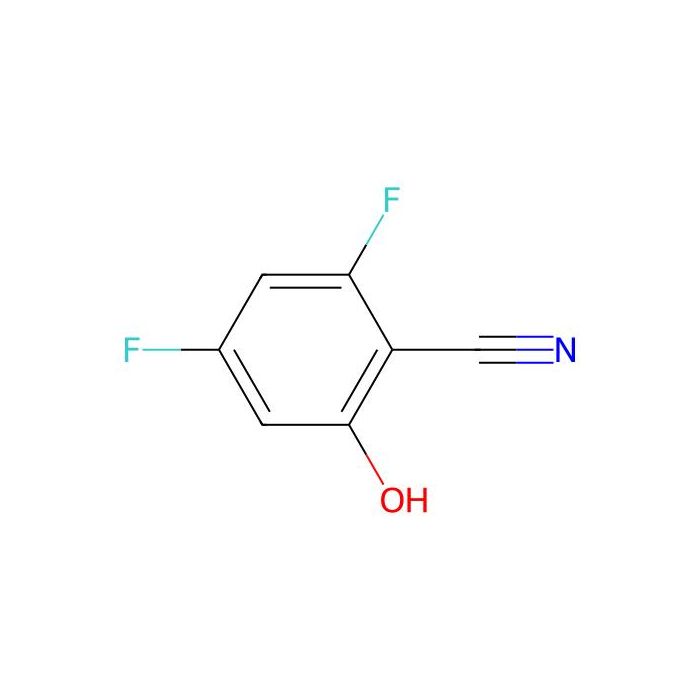
This compound belongs to the class of organic compounds known as benzonitriles. These are organic compounds containing a benzene bearing a nitrile substituent.
External Descriptors
Not available
1. Djoumbou Feunang Y, Eisner R, Knox C, Chepelev L, Hastings J, Owen G, Fahy E, Steinbeck C, Subramanian S, Bolton E, Greiner R, and Wishart DS. ClassyFire: Automated Chemical Classification With A Comprehensive, Computable Taxonomy. Journal of Cheminformatics, 2016, 8:61.
Determine the necessary mass, volume, or concentration for preparing a solution.
Dilution Calculator
Determine the dilution needed to prepare a stock solution.
Reconstitution Calculator
리뷰
고객 리뷰
Application Protocols
Not applicable. No validated biological assay protocols (e.g., WB, IHC, IF, FC) are associated with this small-molecule building block. For synthetic applications, refer to the Reaction Conditions and Synthetic Utility sections for representative procedures and parameters.
Biological Roles
This product is a small-molecule synthetic building block and is not known to have inherent biological roles.
General notes (literature):
Aryl nitriles and fluorinated phenols are common motifs in medicinal chemistry as bioisosteres or to modulate lipophilicity and metabolic stability. However, this compound is intended for research and synthetic use only.
The phenolic OH can engage in hydrogen bonding; the nitrile serves as a polar, metabolically relatively stable handle, but such considerations are context-specific for final compounds, not for this intermediate itself.
No biological function, pathway involvement, or enzymatic activity is assigned to this reagent. Any biological evaluation pertains to downstream derivatives synthesized using this building block.
Buffer Applications
Not typically applicable. This compound is a neutral/weakly acidic aromatic building block, not a buffering agent. For aqueous work, use standard buffer systems (e.g., phosphate, Tris) appropriate to your assay; dissolve this compound in a suitable co-solvent (DMSO/MeCN) before spiking into buffers if needed.
Green Alternatives
Greener practices focus on solvent and base selection; the substrate itself is a halogenated aromatic and not readily replaceable when its substitution pattern is required.
Greener solvent choices (literature guidance):
Replace DMF/DMSO with safer polar aprotics where feasible: Cyrene, propylene carbonate (PC), dimethyl carbonate (DMC), CPME, 2-MeTHF.
For SNAr with alkoxides: 2-MeTHF or CPME with phase-transfer catalysis (PTC) can sometimes replace DMF; kinetics may be slower.
Bases and reagents:
Swap NaH for milder inorganic bases (K2CO3, Cs2CO3) or organic superbases (TBD, DBU) when compatible to reduce hazards.
Employ catalytic Mitsunobu alternatives for O-alkylation when possible (e.g., green alkylation via carbonate electrophiles and base).
Comparison (qualitative):
DMF vs Cyrene: Cyrene offers lower toxicity/biodegradability benefits but may require higher temperature or different base; viscosity is higher.
DCM vs EtOAc/Me-THF: EtOAc/Me-THF reduce chlorinated solvent use in extractions and chromatography, with acceptable resolving power.
Waste minimization:
Prioritize SNAr (atom-economical) over multi-step halogen-exchange plus cross-coupling.
Recycle polar aprotic solvents via fractional distillation where permitted; neutralize and properly dispose of fluoride-containing waste from reactions/cleaning.
Pharmaceutical Uses
No excipient or pharmacopeial role is indicated for this item.
Research/manufacturing context (general):
May serve as an intermediate in the synthesis of active pharmaceutical ingredient (API) candidates or fluorinated benzamide/benzoic acid derivatives.
The nitrile group can be transformed to amides/acids; the aryl–F sites enable SNAr diversification, making it valuable in parallel medicinal chemistry.
Note: No medical or clinical claims are made. This product is for research use only.
Physical Properties
Item-specific (from Product Data):
Appearance: Not specified for this item; refer to CoA/Spec Sheet.
Molecular Formula: Not specified for this item; refer to CoA/Spec Sheet.
Molecular Weight: Not specified for this item; refer to CoA/Spec Sheet.
Literature/computed (general reference values; not item specifications):
Empirical formula (literature): C7H3F2NO
Formula weight (calculated): ~155.10 g/mol
Physical state: Typically a crystalline solid for closely related difluoro-hydroxybenzonitriles (literature)
Acidity: Phenolic pKa often ~8.5–10 for fluorinated phenols; the –CN further lowers pKa modestly (literature, qualitative)
Solubility profile (qualitative, literature):
Low in water; readily soluble in polar aprotic organics (DMF, DMSO, NMP) and moderately in acetone/MeCN; solubility in alcohols increases upon base (phenolate formation)
LogP: Fluorinated phenols of this ring size commonly exhibit moderate lipophilicity (literature, qualitative)
Boiling/melting points, density, refractive index: Not widely reported for this exact substitution pattern; consult literature or CoA if needed.
Notes:
Do not treat literature/computed values above as specifications. For exact item parameters (e.g., assay, water, metal content, UV cutoff), see the product’s CoA/Spec Sheet.
Quality and Grades
Item-specific grade/purity: Not specified for this item; refer to CoA/Spec Sheet.
Guidance on typical grades for similar building blocks:
Research/Chemical grade: Suitable for synthetic chemistry, method development, and structure–activity exploration. Assay often reported by NMR/GC/LC; residual solvents and moisture may be included on CoA.
High-purity or HPLC grade (if offered): Emphasizes low chromatographic background and low UV-absorbing impurities; useful for trace analytical or sensitive medicinal chemistry campaigns.
Stabilizers/inhibitors: None indicated for this item. Phenolic aryl nitriles generally do not require stabilizers; absence/presence should always be confirmed on the CoA when critical for your process.
What to check on receipt (best practices):
Identity by 1H/13C NMR (phenolic OH often broad/suppressed; CN carbon near ~115–120 ppm; ring C–F couplings visible), HRMS, and melting behavior if available.
Purity by HPLC/GC; water by Karl Fischer if moisture-sensitive downstream (e.g., strong-base O-alkylations).
Residual halides/metal content only if process-critical; otherwise “Not specified for this item; refer to CoA/Spec Sheet.”
Reaction and Applications
As a difluorinated phenolic benzonitrile, this substrate is a versatile handle in heteroaryl ether/amine library synthesis and as a precursor to carboxamides/acids via nitrile transformations.
The 2- and 4-fluoro positions, activated by the adjacent/para nitrile and phenol effects, are amenable to substitution by O-, N-, S-nucleophiles.
Typical uses: Installation of dialkyl/aryl ethers (RO–), anilines/alkylamines (RNH–), and thioethers (RS–) to craft diversified scaffolds.
Phenolic functionalization:
O-alkylation/acylation to form protected phenyl ethers or aryl esters (NaH/K2CO3, alkyl halide or acyl chloride/anhydride).
Carbonate/carbamate formation for pro-moieties or protecting groups.
Nitrile chemistry:
Controlled hydrolysis to amide (mild, base or acid, shorter times) or to acid (stronger conditions/longer times).
Nitrile as a directing/activating group for metalation adjacent to the ring in directed ortho-metalation (DoM) strategies.
Cross-coupling routes (strategic):
While aryl–F is generally poor in Pd-catalyzed couplings, prior SNAr or halogen-exchange (e.g., convert to Ar–Br/Ar–OTf after metalation) enables Suzuki/Negishi chemistry.
Applications (typical in research):
Synthesis of fluorinated phenyl ether/amine libraries for SAR.
Intermediates en route to benzamide/benzoic acid derivatives bearing strategic fluorination and phenoxy/arylamino substituents.
Practical tips: Work anhydrous for base-promoted steps; control exotherms upon base addition (phenol deprotonation). Monitor position selectivity in SNAr—2- vs 4-substitution can differ with nucleophile strength/temperature.
Reaction Conditions
General literature conditions for closely related difluoro-hydroxybenzonitriles (adapt as needed; verify experimentally):
SNAr – O-arylation (alkoxides):
Solvent: DMF, DMSO, or NMP
Base: K2CO3 or Cs2CO3 (2–3 equiv) or NaH (1.1–1.5 equiv) for less reactive alcohols
Temp/Time: 60–120 °C, 2–16 h
Notes: Order of addition matters—deprotonate alcohol first; exclude moisture. Monitor regioselectivity at C2 vs C4 by LC–MS/NMR.
SNAr – Amination:
Solvent: DMSO/DMF
Base: DIPEA or K2CO3; sometimes no base with neat amines (excess)
Temp/Time: 80–130 °C, 4–20 h (sealed tube favors rate)
Catalysis: Optional CuI/ligand for challenging amines, though often not required due to activation by –CN.
Yields vary with nucleophile and substitution pattern; typical isolated yields 50–85% are reported for well-optimized SNAr/alkylations (literature). Always perform small-scale scouts to map regioselectivity.
Safety and Handling
Item-specific hazard data (from Product Data):
Signal Word: Not specified for this item; refer to SDS.
H-Statements: Not specified for this item; refer to SDS.
GHS Classification/Pictograms: Not specified for this item; refer to SDS.
General safety guidance (for similar phenolic aryl nitriles; defer to SDS for authoritative data):
Likely hazards: May cause skin/eye irritation; harmful if swallowed or inhaled (general for phenolic aromatics and nitriles). Avoid dust formation and inhalation of particulates.
PPE: Wear lab coat, safety glasses or face shield, and appropriate gloves (e.g., nitrile). Use in a chemical fume hood.
Handling: Avoid contact with strong bases (forms phenoxide; exotherm possible), strong oxidizers, and strong reducing agents. Prevent exposure to high temperatures—thermal decomposition may release toxic fumes (e.g., HF/NOx under combustion of fluorinated aromatics).
First aid (overview; follow SDS/site protocol):
Skin/eye: Rinse with water for ≥15 min; remove contaminated clothing; seek medical attention if irritation persists.
Inhalation: Move to fresh air; monitor breathing; seek medical attention if symptoms occur.
Ingestion: Rinse mouth; do not induce vomiting; seek medical attention.
Spill/cleanup: Avoid breathing dust. Collect mechanically or with inert absorbent; place in suitable container for disposal according to local regulations.
Peroxide formation: Not expected (non-ether). No known self-reactive hazards.
Storage incompatibilities and stability (general): Store tightly closed, dry, at room temperature away from light and moisture. Keep separate from strong bases/oxidants.
Solvent Selection
This compound is a moderately polar, fluorinated phenolic benzonitrile. The –CN and –F substituents decrease electron density of the ring, while –OH introduces weak acidity and hydrogen bonding.
Miscibility/solubility (literature, qualitative):
Highly soluble: DMSO, DMF, NMP
Good: Acetone, acetonitrile, dichloromethane (often with gentle warming/sonication)
Limited: Ethyl acetate, toluene
Low: Water (solubility increases at basic pH via phenolate formation)
Selection guidance by task:
SNAr with amines/alkoxides: Polar aprotic solvents (DMSO, DMF, NMP) enhance anion nucleophilicity and solubilize salts.
O-alkylation/acylation: Dry DMF, DMAc, or MeCN with a non-nucleophilic base (NaH, K2CO3, Cs2CO3).
Hydrolysis of the nitrile: Aqueous ethanol or dioxane/water mixtures; basic (NaOH/KOH) or acidic media depending on amide vs acid targets.
Purification: Normal-phase silica using EtOAc/hexanes with a small MeOH modifier; or reverse-phase (MeCN/H2O with 0.1% acid) when needed.
Small comparison (literature):
DMSO vs DMF: DMSO higher polarity and often faster SNAr, but harder to remove; DMF more volatile and easier workup but can form dimethylamine under strong base/heat.
MeCN vs acetone: MeCN offers higher dielectric constant; acetone more benign but can condense with strong bases/nucleophiles.
Shipped In: Not specified for this item; refer to CoA/Spec Sheet.
General storage guidance (aromatic phenols/nitriles):
Keep tightly closed in a dry, inert atmosphere container. Store away from strong bases and oxidizers. Protect from prolonged light exposure to minimize discoloration.
If long-term storage is planned, consider desiccation (P2O5/silica gel) or inert gas backfill after opening.
Reconstitution/stock solutions (guidance for research use):
Recommended solvents: DMSO, DMF, or acetonitrile. For aqueous assays, prepare a concentrated DMSO stock and dilute into buffer with vigorous mixing; keep final DMSO ≤1–2% v/v where assay-compatible.
Typical stock concentrations: 10–100 mM in DMSO or DMF (literature practice). Filter through 0.22 µm PTFE if particulate is present.
Stability of solutions: Phenolic aryl nitriles are generally stable for days to weeks at 2–8 °C; for extended periods store aliquots at −20 °C. Avoid repeated freeze–thaw; aliquot stocks.
Note: For definitive storage limits, retest periods, and solution stability, consult the product’s CoA and SDS. This product is for research use only.
Structure and Identity
A fluorinated phenolic benzonitrile building block featuring two electron-withdrawing fluorines and a phenolic OH on a benzonitrile core.
Item-specific (from Product Data):
SKU: D1013544
Product Name: 2,4-Difluoro-6-hydroxybenzonitrile
CAS: 1261793-35-4
CID: 53952100
InChIKey: 158765 (as provided)
Storage Conditions: Room temperature
Research Use Note: For research use only
Literature/computed (for reference; not item-specific specifications):
Typical molecular formula: C7H3F2NO
Approx. molecular weight: ~155.10 g/mol (calculated from formula)
2D structural description: A benzene ring bearing a nitrile (–C≡N) at C1, fluorine atoms at C2 and C4 (relative to –CN), and a phenolic hydroxyl group at C6. The ring is highly deactivated and activated for SNAr by –CN/–F positioning, while –OH provides acidity and handles for O-functionalization.
Functional groups and features (general):
Aromatic ring with strong –I/–M substituents (F, CN) and a phenolic OH (weakly acidic)
Two C–F bonds ortho/para to the nitrile, favorable for nucleophilic aromatic substitution
One phenolic OH enabling O-alkylation/acylation and metalation chemistry
Synthetic Utility
Key reactivity arises from the interplay of –CN, –F (at 2 and 4), and –OH (at 6):
Activation pattern (literature): The nitrile exerts strong –I effects, enhancing SNAr at ortho/para positions (here F at C2 and C4). Competing substitution at these sites can be tuned by nucleophile hardness, temperature, and base.
Orthogonal handles:
Phenol: O-alkylation, acylation, carbonate formation, sulfonylation; temporary protection (e.g., benzyl, silyl) to direct SNAr at C2/C4.
Aryl–F: Displace via SNAr with RO–, RNH–, RS–; or convert after directed metalation to halides/triflates to enter cross-coupling manifolds.
Nitrile: Hydrolyze (amide/acid), reduce (to amine via BH3, LiAlH4, catalytic hydrogenation of imidates), or engage as a directing group in DoM.
Retrosynthetic value: Enables convergent introduction of diverse nucleophiles on a pre-installed CN/phenol framework; late-stage polarity and HBD/HBA tuning by toggling OH, CN, and F sites.
Selectivity strategies:
Protect OH (e.g., MOM, Bn, TBDPS) when strong bases could lead to competitive O-alkylation versus SNAr.
Stepwise SNAr: Install the less reactive nucleophile first at the more activated site; leverage temperature gradients to control second substitution.
This constellation of functional groups makes it an excellent platform for rapid library generation of fluorinated phenyl ethers, anilides, and thioethers.
Target Specificity
Not applicable. This product is a small-molecule chemical reagent, not a biological targeting agent or antibody. No antigen/epitope, species reactivity, clone, or isotype information applies.
Products are supplied to verified businesses, institutions, and qualified professionals for research and development use only. Not for use in humans, animals, diagnosis, or therapy.