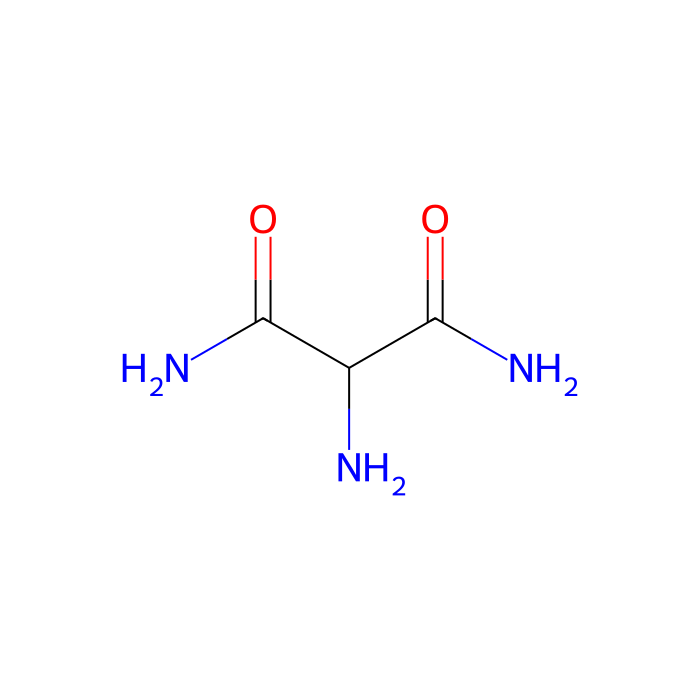
2-Aminomalonamide - ≥95% , CAS No.62009-47-6

CAS: 62009-47-6 Cat. No.: A185601 분자식: C3H7N3O2 분자량: 117.11 EC 번호: 263-370-4
주문 가능
등급 & 순도 ≥95%
Storage
Room temperature
Shipped In
Normal
★
크기
USA
독일 (EU)*
가격
수량
1g
A185601-1g
5 재고 있음
—
US$9.90
5g
A185601-5g
3 재고 있음
—
US$10.90
25g
A185601-25g
3 재고 있음
—

US$11.90

US$17.90
저장 US$6.00 (33.52%)
100g
A185601-100g
3 재고 있음
—

US$31.90

US$47.90
저장 US$16.00 (33.40%)
500g
A185601-500g
1 재고 있음
1 재고 있음

US$116.90

US$175.90
저장 US$59.00 (33.54%)
Enter a quantity for the sizes you want to add.

사양

사양 및 순도
≥95%
보관 조건
Room temperature
배송
Normal
순수함
≥95%
이름과 식별자
Pubchem Sid
Pubchem Sid Url
https://pubchem.ncbi.nlm.nih.gov/substance/488186997
SMILES
C(C(=O)N)(C(=O)N)N
IUPAC Name
2-aminopropanediamide
InChIKey
GFQBSQXXHYLABK-UHFFFAOYSA-N
InChI
1S/C3H7N3O2/c4-1(2(5)7)3(6)8/h1H,4H2,(H2,5,7)(H2,6,8)
이성체 SMILES
C(C(=O)N)(C(=O)N)N
분자량
117.11
Reaxys
1761207
Reaxys-RN_link_address
https://www.reaxys.com/reaxys/secured/hopinto.do?context=S&query=IDE.XRN=1761207&ln=

고급 데이터

Taxonomic Classification

Taxonomy Tree

KingdomOrganic compounds
SuperclassOrganic acids and derivatives
분류Carboxylic acids and derivatives
SubclassAmino acids, peptides, and analogues
Intermediate Tree Nodes Amino acids and derivatives - Alpha amino acids and derivatives
Direct ParentAlpha amino acid amides
Alternative Parents 1,3-dicarbonyl compounds  Primary carboxylic acid amides  Organopnictogen compounds  Organic oxides  Monoalkylamines  Hydrocarbon derivatives  
Molecular FrameworkAliphatic acyclic compounds
Substituents Alpha-amino acid amide - 1,3-dicarbonyl compound - Carboxamide group - Primary carboxylic acid amide - Organic nitrogen compound - Hydrocarbon derivative - Organic oxide - Organopnictogen compound - Primary amine - Organooxygen compound - Organonitrogen compound - Primary aliphatic amine - Organic oxygen compound - Carbonyl group - Amine - Aliphatic acyclic compound
설명This compound belongs to the class of organic compounds known as alpha amino acid amides. These are amide derivatives of alpha amino acids.
External Descriptors Not available
3D 구조
상호 작용 화학 구조 모델


인증서(CoA, COO, BSE/TSE 및 분석 차트)
C of A & Other Certificates(BSE/TSE, COO):
Analytical Chart:

Find and download the COA for your product by matching the lot number on the packaging.

14 results found

Lot NumberCertificate Type날짜항목
I2301020I2301020Certificate of AnalysisAug 10, 2023 A185601
I2301021I2301021Certificate of AnalysisAug 10, 2023 A185601
I2301022I2301022Certificate of AnalysisAug 10, 2023 A185601
I2301023I2301023Certificate of AnalysisAug 10, 2023 A185601
I2301024I2301024Certificate of AnalysisAug 10, 2023 A185601
I2301025I2301025Certificate of AnalysisAug 10, 2023 A185601
I2301026I2301026Certificate of AnalysisAug 10, 2023 A185601
I2301027I2301027Certificate of AnalysisAug 10, 2023 A185601
H2309287H2309287Certificate of AnalysisJul 20, 2023 A185601
H2309288H2309288Certificate of AnalysisJul 20, 2023 A185601
H2309291H2309291Certificate of AnalysisJul 20, 2023 A185601
C2308664C2308664Certificate of AnalysisJul 29, 2022 A185601
K2214312K2214312Certificate of AnalysisJul 29, 2022 A185601
K2214353K2214353Certificate of AnalysisJul 29, 2022 A185601
화학 및 물리적 특성
분자량117.11
XLogP3-2.600
Hydrogen Bond Donor Count3
Hydrogen Bond Acceptor Count3
Rotatable Bond Count2
Exact Mass117.054 Da
Monoisotopic Mass117.054 Da
Topological Polar Surface Area112.000 Ų
Heavy Atom Count8
Formal Charge0
Complexity108.000
Isotope Atom Count0
Defined Atom Stereocenter Count0
Undefined Atom Stereocenter Count0
Defined Bond Stereocenter Count0
Undefined Bond Stereocenter Count0
The total count of all stereochemical bonds0
Covalently-Bonded Unit Count1
안전 및 위험(GHS)
픽토그램(들)
신호
Warning
위험 문구

H302:Harmful if swallowed

H315:Causes skin irritation

H319:Causes serious eye irritation

H335:May cause respiratory irritation

주의 문구

P261:Avoid breathing dust/fume/gas/mist/vapors/spray.

P264:Wash hands [and …] thoroughly after handling.

P270:Do not eat, drink or smoke when using this product.

P271:Use only outdoors or in a well-ventilated area.

P280:Wear protective gloves/protective clothing/eye protection/face protection.

P321:Specific treatment (see ... on this label).

P330:Rinse mouth.

P302+P352:IF ON SKIN: wash with plenty of water.

P304+P340:IF INHALED: Remove person to fresh air and keep comfortable for breathing.

P305+P351+P338:IF IN EYES: Rinse cautiously with water for several minutes. Remove contact lenses if present and easy to do - continue rinsing.

P362+P364:Take off contaminated clothing and wash it before reuse.

P405:Store locked up.

P403+P233:Store in a well-ventilated place. Keep container tightly closed.

P501:Dispose of contents/container to an approved waste disposal plant.

P264+P265:Wash hands [and …] thoroughly after handling. Do not touch eyes.

P301+P317:IF SWALLOWED: Get medical help.

P337+P317:If eye irritation persists: Get medical help.

P332+P317:If skin irritation occurs: Get medical help.

P319:Get medical help if you feel unwell.

Reaxys
1761207
Reaxys-RN_link_address
https://www.reaxys.com/reaxys/secured/hopinto.do?context=S&query=IDE.XRN=1761207&ln=
Citations of This Product
솔루션 계산기
리뷰

고객 리뷰

Application Protocols

No application protocols (e.g., WB, IHC, IF, FC) are applicable to this small-molecule reagent. For chemical use, general handling suggestions include:

  • Solution preparation: Dissolve in water (optionally acidified), alcohols, or DMSO/DMF as dictated by your experiment. Filter if clarity is required for analytical uses.
  • Reaction setup: For acylations, pre-base the solution (e.g., DIPEA) to maintain the free amine; add acylating agent slowly at low temperature to control exotherm.
  • Workup and purification: Due to high polarity, consider precipitation/crystallization from alcohol/ether mixtures, ion-exchange resins, or reverse-phase chromatography for analytical purification.

For detailed, validated protocols, consult primary literature on condensations and acylations of α‑aminomalonamide derivatives and adapt to your substrate and scale.

Biological Roles

No specific biological roles are provided for this product. As a small, synthetic building block, 2-aminomalonamide is primarily intended for chemical research and synthesis.

General biochemical context (not item-specific, no clinical claims):

  • Structural motif: The diamide functionality with an adjacent primary amine is reminiscent of peptidomimetic fragments (amide–amine arrays) that engage in dense hydrogen-bonding networks with proteins and nucleic acids. Such motifs are frequently explored in medicinal chemistry and chemical biology as polarity-tuning fragments.
  • Ionization/solubility: Protonation of the α‑amine in physiological-like media yields a cationic species with enhanced aqueous solubility; conversely, neutralization increases nucleophilicity for derivatization (general acid–base behavior).
  • Reactivity in bio-relevant settings: Free amines can undergo acylation and imine formation with reactive carbonyls; therefore, in biological assay contexts (research use only) solutions are commonly prepared fresh, buffered, and stored cold to limit side reactions and degradation.

Important note: This product is for research use only and is not intended for diagnostic, therapeutic, or other clinical applications.

Buffer Applications

2-Aminomalonamide is not a standard biological buffer and does not have a defined buffering range like HEPES, Tris, or phosphate. Its primary use case is as a synthetic building block rather than a buffering agent.

Practical notes (if dissolution in aqueous systems is required for research workflows):

  • Solubilization: Dissolution in water is often enhanced under mildly acidic conditions (e.g., addition of acetic or hydrochloric acid) to form the corresponding ammonium salt. Adjust pH after dissolution if needed for downstream steps.
  • Compatibility: When dissolved in buffered systems, ensure that the buffer components do not acylate or otherwise react with primary amines (e.g., avoid active esters, anhydrides).

For buffer-making needs, select established systems (phosphate, acetate, citrate, Tris, MOPS, HEPES) with validated pKa values and ionic strengths appropriate to your application.

Green Alternatives

Selecting greener media for handling 2-aminomalonamide often centers on solvent choice and coupling auxiliaries, as the substrate itself is a nitrogen-rich, nonvolatile solid.

Greener solvent considerations (general):

  • Preferred first-line options: Water, ethanol, and isopropanol offer favorable EHS profiles and can dissolve/protonate the α‑amine (especially with a small amount of benign acid such as acetic acid).
  • Polar aprotic replacements: Where DMF/NMP are traditionally used, consider Cyrene (dihydrolevoglucosenone) or propylene carbonate for some condensation/protection steps, noting differences in basicity and stability.
  • Ether alternatives: If anhydrous conditions are needed, 2‑MeTHF can substitute THF for extractions or crystallizations; however, solubility of such polar solids may remain limited in ethers.

Comparison snapshot (general; not item-specific specs):

  • Water/EtOH: low toxicity, easy workup; may require salt formation to reach full solubility.
  • i-PrOH: greener than MeOH; slightly reduced solvating power.
  • MeOH: strong solvent but higher toxicity and regulatory burdens.
  • DMF/DMSO: excellent solvators; DMF has EHS concerns—use minimal quantities and recover where possible; DMSO is relatively benign but can facilitate dermal transport and is odorous.

Process-intensification ideas:

  • Run condensations in aqueous or aqueous–alcoholic media with catalytic acid, leveraging the substrate’s high polarity.
  • Employ solventless (neat) or slurry-phase acylations using solid-supported coupling reagents, minimizing high-boiling dipolar aprotics.

Always validate green substitutions with small-scale trials to confirm chemoselectivity and crystallization behavior.

Pharmaceutical Uses

No pharmacopeial status or excipient role is specified for this item. 2-Aminomalonamide is supplied for research use only.

Formulation/manufacturing context (general considerations for small polar building blocks; not item-specific claims):

  • Role in process chemistry: Diamide/amine fragments like 2-aminomalonamide are sometimes used as intermediates for assembling heterocycles or peptidomimetic motifs during API route scouting. Control of water content and salt form can be important for crystallinity and handling.
  • Salt screening: Formation of mineral acid salts (e.g., hydrochloride) can improve process solubility and enable robust crystallization, facilitating isolation and purity enhancement during intermediate stages.
  • Impurity control: Typical watch-points include hydrolysis products and over-acylated byproducts; orthogonal analytical methods (HPLC with ELSD/UV, 1H/13C NMR, FT-IR) help discriminate closely related amide impurities.

Important: This product is not approved for use as an excipient or active ingredient. It must not be used in human or veterinary applications.

Physical Properties

Item-specific specifications (this listing):

  • Appearance: Not specified for this item; refer to CoA/Spec Sheet.
  • Grade/Purity: Not specified for this item; refer to CoA/Spec Sheet.
  • Molecular Weight: Not specified for this item; refer to CoA/Spec Sheet.
  • Storage Conditions: Room temperature (Product Data).

General/literature and computed properties (for context; not item specifications):

  • Empirical formula: C3H7N3O2 (literature, consistent with 2-aminomalonamide structure).
  • Average molecular weight: ~117.11 g/mol (calculated from C3H7N3O2).
  • Monoisotopic mass: ~117.0538 g/mol (computed from exact isotopic masses).
  • Physical state: Typically a crystalline, highly polar solid; strongly hydrogen-bonding (literature expectation for a diamide bearing an extra amine).
  • Solubility: Often readily soluble in water and polar protic/strongly hydrogen-bonding solvents; limited solubility in nonpolar media (literature/structure-based expectation). Salt formation with mineral acids (e.g., HCl) can further enhance aqueous solubility.
  • Acid–base behavior: Contains one basic primary amine and two amide nitrogens (weakly basic); amide carbonyls do not significantly ionize in water. The α‑amine can be protonated under mildly acidic conditions (general organic chemistry knowledge).
  • Thermal behavior: Diamides typically exhibit high melting points and negligible vapor pressure; exact MP/BP for this item is not established here (literature values vary by sample history and hydration).

Note: For authoritative numerical specifications (mp, water content, residual solvents, elemental analysis), consult the lot-specific CoA and Specification Sheet.

Quality and Grades

Item-specific grade/purity: Not specified for this item; refer to CoA/Spec Sheet.

Guidance on grades and what to look for (general):

  • Research grade: Suitable for most synthetic and screening workflows; impurity profiles (inorganics, trace solvents, moisture) are managed for general lab use but are not tailored for ultra-trace analytics.
  • Analytical/HPLC grade (if applicable): Prioritizes low UV background and particulates for chromatographic applications; often includes tighter controls on metal ions and residual solvents. Not specified for this item.
  • Bio/Cell culture grade (if applicable): Controlled bioburden, endotoxin, and particulates; not typically relevant for small-molecule building blocks unless explicitly stated. Not specified for this item.

Stabilizers/additives:

  • Stabilizers are not typical for simple aminodiamide solids; if any anti-caking agents or residual solvents are present, they will be disclosed on the CoA. Not specified for this item.

What to check on receipt (best practices):

  • Verify identity by NMR/FT-IR and melting behavior against literature or internal reference.
  • Quantify moisture (e.g., Karl Fischer) if water content could affect stoichiometry or crystallization studies.
  • Review CoA for assay (%), loss on drying, residual solvent profile (GC), and heavy metal screening if relevant to your application.

Note: Always rely on the lot-specific CoA/Spec Sheet for authoritative purity and specification limits.

Reaction and Applications

As a compact, bifunctional nucleophile bearing an α‑amine and two amide groups, 2-aminomalonamide serves as a versatile building block for N‑acylation, condensations, and heterocycle assembly.

Representative application domains (literature/general organic chemistry):

  • Cyclocondensations to heterocycles: The juxtaposition of an α‑NH2 with vicinal carbonyl amides facilitates intramolecular condensation with carbonyl electrophiles (e.g., 1,2‑dicarbonyls) to form imidazolinone and related diamide-derived ring systems under acidic or dehydrating conditions.
  • N‑Acylation/Carbamoylation: Selective acylation of the primary amine (over amide nitrogens) provides α‑acylmalonamide derivatives, valuable intermediates toward β‑ketoamides and rigidified scaffolds.
  • Protection/derivatization strategies: Temporary protection of the α‑amine (e.g., Boc, Cbz) allows orthogonal transformations at the carbonyls (activation to imidates/anhydrides, stepwise conversions) before global deprotection.
  • Condensation with aldehydes/ketones: Formation of Schiff bases at the α‑amine followed by cyclization or reduction can elaborate the core; careful pH control is required to avoid amide hydrolysis.
  • Metal coordination/templating (research): The diamide motif offers bidentate O,O or N,O binding in polar media, enabling exploratory coordination chemistry and templated condensations.

Practical considerations:

  • Chemoselectivity: Free amine reacts preferentially with acylating agents; amide nitrogens are considerably less nucleophilic—activation (e.g., via CDI, SOCl2 to form acyl imidates or acid chlorides from carboxyl partners) may be required.
  • Solvent and pH: Mildly basic conditions keep the α‑amine unprotonated (nucleophilic), whereas mildly acidic conditions can drive salt formation and dissolution for crystallizations.
  • Water management: For dehydrative cyclizations, use azeotropic removal or dehydrating promoters (e.g., acetic anhydride) in compatible solvents.
Reaction Conditions

General conditions reported in the literature for transformations of α‑aminomalonamide motifs (guidance only; optimize for your substrate and scale):

  • N‑Acylation of the α‑amine:

    • Solvents: DCM, THF, MeCN, or DMF depending on solubility; for polar substrates, DMF or DMSO often preferred.
    • Bases: Tertiary amines (DIPEA, TEA) or NaHCO3/Na2CO3 in biphasic systems to maintain free amine.
    • Temperatures: 0–25 °C for acid chlorides/anhydrides; up to 50 °C for less reactive activated esters.
    • Workup: Acidic quench to remove base; partitioning may require addition of alcohol or brine due to product polarity.
  • Imine formation/cyclocondensation with carbonyls:

    • Solvents: EtOH, i‑PrOH, or acetic acid; alternatively, toluene with azeotropic removal of water using Dean–Stark when solubility permits.
    • Catalysis: Acetic acid or p‑TsOH promotes condensation; dehydrating agents (Ac2O) can drive cyclizations.
    • Temperatures: Reflux in chosen solvent (e.g., 78 °C in EtOH) for 2–16 h, monitoring by HPLC/LC–MS.
  • Protection of the α‑amine (Boc, Cbz):

    • Boc2O with DIPEA in MeOH/THF/DMF, 0–25 °C; overnight for full conversion due to substrate polarity.
    • Cbz‑Cl with NaHCO3 in biphasic water/EtOAc or MeCN/water systems; phase-transfer catalysts may help.
  • Amide activation for further elaboration:

    • CDI in DMF (rt to 50 °C) to form imidazolides, followed by nucleophile addition.
    • Strong chlorinating agents (e.g., SOCl2) typically require strict control and may cause side reactions; small-scale trials recommended.

Note: Given the substrate’s high polarity, co-solvents (DMSO, DMF) and salt-formation strategies often improve kinetics and handling.

Safety and Handling

Authoritative safety information is provided in the SDS. No GHS classification details are specified in the Product Data for this item.

  • GHS classification (this item): Not specified; consult the SDS.
  • Signal word / pictograms / H-statements: Not specified; consult the SDS.

General laboratory safety guidance for aminodiamides (not item-specific):

  • Expected hazards: May cause irritation to skin, eyes, and respiratory tract, particularly as dust. Low volatility but fine solid particulates can become airborne when dispensing.
  • Engineering controls: Handle powders in a fume hood or ventilated enclosure to control dust. Use weighing boats and antistatic measures to minimize dispersal.
  • PPE: Laboratory coat, safety glasses or splash goggles, and appropriate chemical-resistant gloves (e.g., nitrile). Avoid contact with skin and eyes; wash thoroughly after handling.
  • Incompatibilities: Strong oxidizing agents. Extended exposure to strong acids or bases under reflux can hydrolyze amide functions to corresponding carboxylate/amine derivatives (general organic chemistry).
  • Thermal/combustion: Organic nitrogenous solids can decompose upon heating; avoid dust accumulation near ignition sources. Combustion may produce NOx and CO/CO2.
  • First aid (overview; defer to SDS):
    • Inhalation: Move to fresh air; seek medical attention if symptoms persist.
    • Skin contact: Wash with soap and water; remove contaminated clothing.
    • Eye contact: Rinse cautiously with water for several minutes; remove contact lenses if present and easy; continue rinsing and obtain medical advice if irritation persists.
    • Ingestion: Rinse mouth; do not induce vomiting; seek medical attention.

Storage and handling (per Product Data): Store at room temperature. Keep tightly closed, in a dry place away from incompatible materials. Always refer to the SDS for definitive guidance.

Solvent Selection

2-Aminomalonamide is a highly polar, strongly hydrogen-bonding solid. Solvent choice is therefore governed by hydrogen-bond donor/acceptor capacity and ability to disrupt the diamide lattice.

General miscibility/solubility tendencies (literature/structure-based):

  • Favorable: Water, dilute aqueous acids (to protonate the α‑amine), and polar protic alcohols (MeOH, EtOH). Polar aprotics (DMSO, DMF) are also effective for stock solutions.
  • Less favorable: Weakly polar/ nonpolar solvents (EtOAc, toluene, hexanes) typically provide poor solubility.

When to choose which solvent:

  • Aqueous work: Use water or aqueous buffer adjusted mildly acidic (e.g., pH 3–6) to fully dissolve via ammonium salt formation; suitable for recrystallization or salt screens.
  • Anhydrous synthesis: DMSO or DMF for nucleophilic condensations or acylations; MeOH/EtOH for transamidation or cyclocondensations where protic media aid proton shuttling.
  • Analytical stocks: DMSO neat or DMSO:water mixtures for stability and compatibility with bioassays (research use only), filtering through 0.2 µm if needed.

Practical tips:

  • Gentle warming and sonication markedly aid dissolution in protic media.
  • For water-sensitive transformations (e.g., coupling via activated esters), dry DMF/DMSO and inert atmosphere are recommended.

Brief comparison (general):

  • Water/EtOH: green, safe, good dissolution when protonated.
  • MeOH: excellent solvent power but higher toxicity.
  • DMSO/DMF: strong solvating ability; consider downstream removal and EHS profile of DMF.

Always verify solvent compatibility with downstream steps and bases/acids used in your route.

Storage and Reconstitution

Storage (item-specific):

  • Store at room temperature (Product Data).
  • Shipped under normal conditions (Product Data).

General handling and reconstitution (guidance):

  • Container: Keep tightly closed in a dry environment to prevent caking and to maintain consistent mass for analytical weighing.
  • Solutions: Prepare solutions fresh when possible. For aqueous stock solutions, mildly acidify (e.g., with acetic or hydrochloric acid) to enhance dissolution via ammonium salt formation; adjust pH afterward if required. For anhydrous stocks, use dry DMSO or DMF and store under inert atmosphere to limit moisture uptake.
  • Storage of solutions: Refrigerate (2–8 °C) or freeze (–20 °C) small aliquots in chemically compatible containers to avoid repeated freeze‑thaw cycles. Inspect periodically for precipitation or discoloration.
  • Compatibility: Avoid prolonged exposure to strong oxidizers or strong acids/bases at elevated temperature to minimize degradation/hydrolysis.

Documentation: For lot-specific guidance on stability, moisture limits, and solution shelf life, refer to the CoA/Spec Sheet and SDS.

Research Use Note: For research use only.

Structure and Identity

A bifunctional, highly polar small molecule featuring one α-amino substituent flanked by two amide carbonyls on a three‑carbon backbone.

  • Product name: 2-Aminomalonamide (SKU: A185601)
  • CAS: 62009-47-6 (Product Data)
  • PubChem CID: 96457 (Product Data)
  • InChIKey: 100834 (Product Data)
  • SMILES: Not specified for this item; refer to CoA/Spec Sheet.
  • Molecular formula: Not specified for this item; refer to CoA/Spec Sheet. (See literature/computed note below.)
  • Molecular weight: Not specified for this item; refer to CoA/Spec Sheet. (See literature/computed note below.)

Structural features (general/literature description):

  • Core motif: a malonamide (propanediamide) framework bearing an α‑amino group at C2.
  • Functional groups: one primary amine (–NH2) and two primary carboxamides (–CONH2).
  • Hybridization: the central carbon (C2) is sp3 and bound to –NH2, –H, and two carbonyl carbons, creating a stereogenic center; commercial material is typically racemic unless otherwise specified.
  • Hydrogen-bonding: strong donor (3 NH2 groups) and acceptor (2 carbonyl oxygens) capacity.

Computed/literature identity (for reference; not item specifications):

  • Empirical formula (literature): C3H7N3O2.
  • Exact (monoisotopic) mass (computed): ~117.0538 g/mol; average MW ~117.11 g/mol.
  • Possible non-stereospecific SMILES (literature): NC(C(=O)NH2)C(=O)NH2.

2D structure in words: a three‑carbon chain where the terminal carbons are amide carbonyls; the central carbon bears one hydrogen and one exocyclic amino group, rendering the center chiral.

Synthetic Utility

Functional group set: one nucleophilic primary amine (α to two carbonyls) and two relatively inert carboxamide groups. This constellation enables orthogonal reactivity and selective derivatization.

Key synthetic maneuvers (general/literature-based):

  • Selective N-acylation at the α‑amine using acyl chlorides, anhydrides, or activated esters (e.g., EDC/NHS systems) to give α‑acylated malonamide derivatives. Amide nitrogens generally require strong activation to participate in further acylation.
  • Condensations with carbonyl compounds (aldehydes/1,2‑dicarbonyls) leading to imine formation and, under dehydrating or acidic conditions, cyclization to imidazolinone/imidazolone frameworks.
  • Protect–modify–deprotect: Protect the α‑amine (Boc, Fmoc, Cbz) to allow amide activation (e.g., CDI to imidazolides) and subsequent nucleophilic substitution without competitive amine acylation.
  • Conversion to amidoxime/guanidine-like motifs via stepwise O‑activation of amide carbonyls followed by amination (advanced transformations may require strong dehydrating/activating reagents and careful control to avoid overreaction).
  • Salt formation: Acid addition salts improve handling and enable phase-switch strategies (e.g., acid–base washes) to streamline purifications.

Retrosynthetic value:

  • The scaffold serves as a convergent junction for routes that need a dense H‑bonding donor/acceptor array. It can be introduced late to tune polarity or early to drive crystallinity.

Analytical handles:

  • FT‑IR: Strong amide C=O bands (~1650–1690 cm−1) and N–H stretches (~3200–3400 cm−1).
  • NMR: Distinct α‑CH signal (deshielded by adjacent carbonyls) and broad NH resonances; D2O exchange confirms NH/NH2 counts.
Target Specificity

Not applicable. This product is a small-molecule chemical reagent and is not an antibody, protein, or assay reagent with biological target specificity. No antigen, epitope, clone, isotype, or species reactivity information applies.

자주 묻는 질문

What is the purity of this product?
This product is supplied at ≥95% purity (chemical assay). Lot-specific values are stated on the Certificate of Analysis.
How should this product be stored?
Store at room temperature.
How is this product shipped?
This product ships under standard ambient conditions. No temperature-controlled packaging is required.
What are the CAS number, molecular formula and molecular weight?
The CAS Number is 62009-47-6, the molecular formula is C3H7N3O2, and the molecular weight is 117.11 g/mol. InChIKey GFQBSQXXHYLABK-UHFFFAOYSA-N.
What documentation is provided?
Available product documentation, including Certificates of Analysis (COA), Safety Data Sheets (SDS), and specification sheets, is shown in the product document area. Document availability and access follow the current site policy.

Shall we send you a message when we have discounts available?

Remind me later

Thank you! Please check your email inbox to confirm.

Oops! Notifications are disabled.