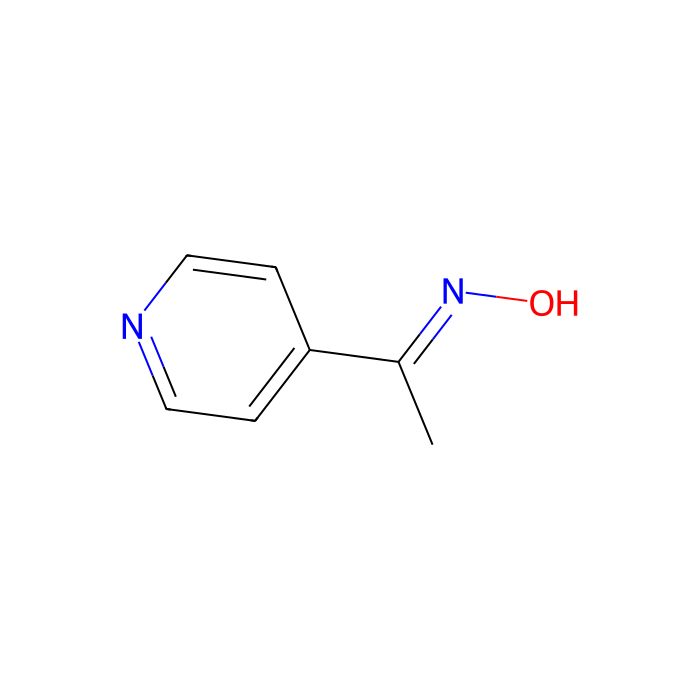
4-ACETYLPYRIDINE OXIME , CAS No.1194-99-6

CAS: 1194-99-6 Cat. No.: A166350 분자식: C7H8N2O 분자량: 136.155 EC 번호: 651-826-9
주문 가능
Synonyms
(1E)-1-(4-pyridinyl)ethanone oxime|(1Z)-1-(4-Pyridinyl)ethanone oxime #|4-Acetylpyridine, oxime|(NZ)-N-(1-pyridin-4-ylethylidene)hydroxylamine|(Z)-1-(pyridin-4-yl)ethanone oxime|4-Acetylpyridine oxime|(Z)-1-(pyridin-4-yl)ethanoneoxime|Ethanone,1-(4-pyridinyl)-,oxime,(1Z)-(9ci)|(E)-N-[1-(pyridin-4-yl)ethylidene]hydroxylamine|1-Pyridin-4-yl-ethanone oxime|4-Acetylpyridineoxime|Methyl-4-pyridylketoxime|Ethanone, 1-(4-pyridinyl)-, oxime
Storage
Room temperature
Shipped In
Normal
★
크기
USA
독일 (EU)*
가격
수량
250mg
A166350-250mg
주문제작 · 8~12주

US$85.90

US$100.90
저장 US$15.00 (14.87%)
Enter a quantity for the sizes you want to add.

사양

동의어
(1E)-1-(4-pyridinyl)ethanone oxime | (1Z)-1-(4-Pyridinyl)ethanone oxime # | 4-Acetylpyridine, oxime | (NZ)-N-(1-pyridin-4-ylethylidene)hydroxylamine | (Z)-1-(pyridin-4-yl)ethanone oxime | 4-Acetylpyridine oxime | (Z)-1-(pyridin-4-yl)ethanoneoxime | Ethanone,1-(4-pyridinyl)-,oxime,(1Z)-(9ci) | (E)-N-[1-(pyridin-4-yl)ethylidene]hydroxylamin Show more
보관 조건
Room temperature
배송
Normal
이름과 식별자
SMILES
CC(=NO)C1=CC=NC=C1
IUPAC Name
(NZ)-N-(1-pyridin-4-ylethylidene)hydroxylamine
InChIKey
OZJWWTXSMXGPMI-TWGQIWQCSA-N
InChI
1S/C7H8N2O/c1-6(9-10)7-2-4-8-5-3-7/h2-5,10H,1H3/b9-6-
이성체 SMILES
C/C(=N/O)/C1=CC=NC=C1
분자량
136.155
Reaxys
81295
Reaxys-RN_link_address
https://www.reaxys.com/reaxys/secured/hopinto.do?context=S&query=IDE.XRN=81295&ln=

고급 데이터

Taxonomic Classification

Taxonomy Tree

KingdomOrganic compounds
SuperclassOrganoheterocyclic compounds
분류Pyridines and derivatives
SubclassNot available
Intermediate Tree Nodes Not available
Direct ParentPyridines and derivatives
Alternative Parents Ketoximes  Heteroaromatic compounds  Azacyclic compounds  Organopnictogen compounds  Organic oxygen compounds  Hydrocarbon derivatives  
Molecular FrameworkAromatic heteromonocyclic compounds
Substituents Pyridine - Heteroaromatic compound - Ketoxime - Azacycle - Organic nitrogen compound - Organic oxygen compound - Organopnictogen compound - Hydrocarbon derivative - Organonitrogen compound - Aromatic heteromonocyclic compound
설명This compound belongs to the class of organic compounds known as pyridines and derivatives. These are compounds containing a pyridine ring, which is a six-member aromatic heterocycle which consists of one nitrogen atom and five carbon atoms.
External Descriptors Not available
3D 구조
상호 작용 화학 구조 모델


인증서(CoA, COO, BSE/TSE 및 분석 차트)
C of A & Other Certificates(BSE/TSE, COO):
Analytical Chart:
화학 및 물리적 특성
분자량136.15
XLogP30.800
Hydrogen Bond Donor Count1
Hydrogen Bond Acceptor Count3
Rotatable Bond Count1
Exact Mass136.064 Da
Monoisotopic Mass136.064 Da
Topological Polar Surface Area45.500 Ų
Heavy Atom Count10
Formal Charge0
Complexity128.000
Isotope Atom Count0
Defined Atom Stereocenter Count0
Undefined Atom Stereocenter Count0
Defined Bond Stereocenter Count1
Undefined Bond Stereocenter Count0
The total count of all stereochemical bonds1
Covalently-Bonded Unit Count1
안전 및 위험(GHS)
픽토그램(들)
GHS06,   GHS07
신호
Danger
위험 문구

H301:Toxic if swallowed

H315:Causes skin irritation

H319:Causes serious eye irritation

H335:May cause respiratory irritation

주의 문구

P261:Avoid breathing dust/fume/gas/mist/vapors/spray.

P264:Wash hands [and …] thoroughly after handling.

P270:Do not eat, drink or smoke when using this product.

P271:Use only outdoors or in a well-ventilated area.

P280:Wear protective gloves/protective clothing/eye protection/face protection.

P321:Specific treatment (see ... on this label).

P330:Rinse mouth.

P302+P352:IF ON SKIN: wash with plenty of water.

P304+P340:IF INHALED: Remove person to fresh air and keep comfortable for breathing.

P305+P351+P338:IF IN EYES: Rinse cautiously with water for several minutes. Remove contact lenses if present and easy to do - continue rinsing.

P362+P364:Take off contaminated clothing and wash it before reuse.

P405:Store locked up.

P403+P233:Store in a well-ventilated place. Keep container tightly closed.

P501:Dispose of contents/container to an approved waste disposal plant.

P264+P265:Wash hands [and …] thoroughly after handling. Do not touch eyes.

P301+P316:IF SWALLOWED: Get emergency medical help immediately.

P337+P317:If eye irritation persists: Get medical help.

P332+P317:If skin irritation occurs: Get medical help.

P319:Get medical help if you feel unwell.

Reaxys
81295
Reaxys-RN_link_address
https://www.reaxys.com/reaxys/secured/hopinto.do?context=S&query=IDE.XRN=81295&ln=
솔루션 계산기
리뷰

고객 리뷰

Application Protocols

Not applicable. No validated bioassay protocols (e.g., WB, IHC, IF, FC) are associated with this small molecule. For synthetic or analytical uses, refer to the Reaction Conditions and Solvent Selection sections for general laboratory guidance.

Biological Roles

No item-specific biological testing data are provided. The following are general observations about pyridine oximes in biochemical contexts; they are NOT claims for this specific product.

  • Chemical biology utility (literature)

    • Oxime ligation: Oxime formation between carbonyls and aminooxy/hydroxylamine partners is used in bioconjugation. While 4‑acetylpyridine oxime is a product of such a reaction (not a partner), it can serve as a model substrate for studying oxime stability, E/Z isomerization, and acid/base behavior under biomimetic conditions.
  • Metal binding

    • Pyridine plus oxime moieties provide N/O donor sets capable of chelating biologically relevant metal ions (e.g., Cu2+, Fe3+, Ni2+). This underpins studies of metalloenzyme mimics and redox chemistry in vitro.
  • Protonation states (literature)

    • In aqueous environments, the pyridine nitrogen can protonate (pKa of the pyridinium typically ~5–5.5 for para‑substituted systems), modulating solubility and H‑bonding—relevant to interactions with biomolecules in model systems.
  • Cautions

    • No pharmacological or toxicological roles are implied. Use strictly for research in vitro or ex vivo models.

For biological or biochemical experiments, confirm purity (including E/Z ratio and residual carbonyl precursor) and assess stability in the chosen buffer to avoid confounding outcomes.

Buffer Applications

This compound is not a standard buffering agent. While the pyridine nitrogen can be protonated (pKa of the pyridinium typically ~5–5.5, literature) and the oxime OH is weakly acidic (pKa ~10–11, literature), 4‑acetylpyridine oxime is not commonly used to formulate buffers with defined capacity.

  • Practical guidance
    • If present in buffered systems (e.g., for kinetic or binding studies), select buffers whose components do not form covalent adducts or coordinate strongly (avoid hydroxylamine-containing systems and strong chelators when studying metal complexes of the oxime).
    • Suitable background buffers (literature): acetate (pH 4–5.5), MES (pH 5.5–6.7), phosphate (pH 6–8), or carbonate (pH 9–10), chosen to avoid overlapping with the oxime’s acid/base events if constant speciation is desired.

For applications requiring buffering capacity, use established buffer systems and include this compound only as a solute/analyte.

Green Alternatives
  • Solvent choices

    • Prefer greener solvents for synthesis or workup when feasible: ethanol, isopropanol, ethyl acetate, or 2‑MeTHF in place of chlorinated solvents (literature). These often dissolve 4‑acetylpyridine oxime sufficiently for transformations like reductions or rearrangements while lowering environmental impact.
  • Reagent selection for rearrangements (literature)

    • Replace stoichiometric dehydrating halides (SOCl2/POCl3) with catalytic Brønsted acids under continuous removal of water (Dean–Stark in bio-based solvents) or with solid acids (e.g., Amberlyst, sulfated zirconia) to minimize corrosive waste.
  • Energy and workup efficiency

    • Microwave-assisted Beckmann rearrangements in ethanol or PEG-400 have been reported to reduce reaction times and improve space–time yields.
    • Use aqueous biphasic extraction strategies to limit organic solvent volumes; choose acetate/carbonate buffers compatible with the oxime’s pKa values.
  • Comparison snapshot (literature)

    • Acetonitrile vs ethanol: MeCN offers higher polarity and rate benefits but is petro-derived and toxic; ethanol is renewable, lower toxicity, and often adequate for oxime reactions.
    • DCE/DCM vs ethyl acetate/2‑MeTHF: Chlorinated solvents provide good solubility for acid-mediated rearrangements but carry higher environmental burdens; EtOAc/2‑MeTHF present safer profiles with manageable performance trade-offs.

Note: Green substitutions must be validated for yield, selectivity (E/Z isomer effects), and downstream processing. Always assess solvent/reagent compatibility with your catalyst and substrate set.

Pharmaceutical Uses

No pharmacopeial status or excipient role is provided in the Product Data. This compound is offered for research use only.

  • Research/manufacturing context (literature/general)

    • Serves as a synthetic intermediate to access 4‑pyridyl amides via Beckmann rearrangement, or 4‑ethyl/ethylamine pyridine derivatives via reductions—useful in medicinal chemistry SAR exploration.
    • As a bidentate/ambidentate ligand, it can form coordination complexes for catalysis or as analytical probes; such complexes may be evaluated in discovery chemistry workflows.
    • Can function as a reference material for studying oxime stability, E/Z isomerization, and derivatization kinetics under formulation-relevant conditions (no clinical claim intended).
  • Compliance note

    • Not intended for human or veterinary use. No claims are made for therapeutic efficacy, safety, or clinical application. For any GMP-related needs, request documentation and ensure suitability of grade, impurity profile, and residual solvents according to your quality system.
Physical Properties

Item-specific specifications were not provided in the Product Data. The following are general/literature descriptors for 4-acetylpyridine oxime; they are NOT the certificate/specification for this item.

  • Appearance: Not specified for this item; refer to CoA/Spec Sheet.
  • Melting point: Typical for pyridyl ketoximes is in the solid range; precise value for this compound varies by E/Z ratio and purity (literature values reported; consult primary sources for exact numbers).
  • Boiling point: Not commonly reported for this compound (tends to be a solid that decomposes before boiling under ambient pressure).
  • Density: Not widely tabulated (literature). Expected to be around that of typical aromatic heterocycles/oximes.
  • Solubility (qualitative, literature):
    • Good solubility in polar aprotic solvents (DMSO, DMF, acetonitrile) and in alcohols (MeOH, EtOH).
    • Limited to moderate solubility in water due to heteroatom content and hydrogen bonding; actual aqueous solubility depends on pH (increased solubility upon protonation of the pyridine nitrogen in acidic media).
  • Acid/base properties (literature):
    • Pyridine nitrogen basicity: conjugate acid pKa (pyridinium) typically ~5.0–5.5 for para-substituted pyridines.
    • Oxime hydroxyl acidity: pKa commonly ~10–11 for aryl/heteroaryl ketoximes.
  • Partitioning (qualitative, literature): LogP expected to be low-to-moderate, reflecting one ring nitrogen plus an oxime (polar, H-bonding capability).
  • Refractive index: Not applicable/typically not reported for solids.

For authoritative, lot-specific values (mp range, water or metal content, residue on ignition, etc.), consult the item’s CoA/Spec Sheet.

Quality and Grades
  • Item-specific grade/purity: Not specified for this item; refer to CoA/Spec Sheet.

  • General guidance on grades (context for this compound type)

    • Research grade: Suitable for most synthetic, coordination, and analytical method-development work. Impurity profile typically supports general laboratory applications.
    • High-purity/assay-specified grade: Preferred for mechanistic studies, catalysis, or analytical standards where trace impurities (e.g., residual ketone, E/Z isomer ratio, water content) may impact results.
    • HPLC grade (when offered for solids): Emphasizes low UV-absorbing impurities; relevant when using UV detection or photochemical studies.
  • Oxime-specific quality considerations

    • E/Z isomer ratio: Oximes exist as geometric isomers; some applications (e.g., crystallography, stereospecific rearrangements, and coordination chemistry) are sensitive to the isomeric composition. If this parameter is critical, request documentation or analytical data (NMR integration of =CH3 resonance splitting, 15N/13C shifts, or chromatographic separation) from the CoA.
    • Residual carbonyl precursor: Trace 4-acetylpyridine or aldoxime over-formation can influence reactivity; verify by GC/LC or 1H NMR.
    • Water/peroxide/metal content: Not specified for this item; refer to CoA/Spec Sheet.
  • Stabilizers: None indicated in Product Data. If present, stabilizers would be disclosed on the CoA/SDS.

Reaction and Applications

This oxime is a versatile intermediate and ligand, bridging carbonyl protection chemistry, rearrangements, reductions, and coordination.

  • Protective/derivatization chemistry

    • Oxime formation protects the ketone function of 4-acetylpyridine; hydrolyzable back to the ketone under acidic conditions.
  • Rearrangements (literature)

    • Beckmann rearrangement: Converts the ketoxime to the corresponding amide (migration of the para‑pyridyl substituent). Typical reagents include SOCl2, POCl3, P2O5, or strong acids with dehydrating conditions; catalytic sulfonic acids in green solvents have also been reported.
  • Reductions and N–O transformations (literature)

    • Catalytic hydrogenation (Raney Ni, Pd/C) or borane-mediated reductions can cleave the N–O bond, affording amines related to 4-ethylpyridine or amide/imine intermediates depending on conditions.
    • Electrophilic activation (e.g., via Mitsunobu-like or sulfonylation) can enable O‑alkylation or further elaboration.
  • Coordination/ligand chemistry

    • Bidentate/ambidentate coordination via pyridine N and oxime N/O to transition metals (e.g., Cu, Ni, Co), forming chelates useful in catalysis and materials research. E vs Z isomer can influence chelation mode and geometry.
  • Cross-coupling and further functionalization (literature)

    • The para-pyridine ring can undergo directed C–H functionalization (through oxime-directed strategies) or conventional cross-coupling after halogenation.
  • Analytical applications

    • As a derivatization reagent/standard for studying oxime formation kinetics and E/Z isomerization by NMR, UV‑vis (complexation-induced shifts), or HPLC.

Practical notes: Dry conditions limit hydrolysis; control temperature to avoid uncontrolled Beckmann rearrangement under strong acids; monitor E/Z ratio if stereochemical outcomes matter.

Reaction Conditions

Guidance below is based on literature precedents for pyridyl ketoximes and is not specific to any single protocol. Optimize for your substrate, scale, and equipment.

  • Beckmann rearrangement (to amide)

    • Typical reagents: SOCl2, POCl3, P2O5, or catalytic strong acids (e.g., TsOH) with dehydrating conditions.
    • Solvents: acetonitrile, dichloroethane, or greener options like ethanol/2‑MeTHF where compatible.
    • Temperature/time: 50–120 °C; 0.5–12 h depending on reagent strength and solvent (literature). Monitor by TLC/LC.
  • Reduction to amines (N–O cleavage)

    • Catalytic hydrogenation: Raney Ni or Pd/C in MeOH/EtOH under H2 (1–10 bar), ambient to 50 °C; hours-scale reactions (literature). Can yield corresponding amines after rearrangement/hydrogenolysis depending on conditions.
    • Borane or hydrosilane reductions: BH3·THF, polymethylhydrosiloxane (PMHS) with catalysts; aprotic solvents (THF, toluene). Control temperature (0–60 °C) to manage selectivity.
  • O-/N-alkylation of oxime

    • Bases: K2CO3, Cs2CO3, or NaH; solvents: DMF, MeCN, acetone. 0–25 °C initially, then warm as needed (literature). Regiochemistry (O vs N) influenced by base/solvent.
  • Metal complexation

    • Combine ligand with metal salts (e.g., Cu(II), Ni(II)) in alcohol/MeCN. Mild heating (30–70 °C) facilitates chelation; adjust pH to modulate binding via oxime deprotonation.

Notes: Control moisture in dehydrative steps; avoid strong acids when oxime hydrolysis is undesired. Track E/Z isomer effects on rates and selectivity.

Safety and Handling
  • Classification and labeling (item-specific)

    • GHS, Signal Word, H-statements, and pictograms: Not specified for this item; refer to SDS.
  • General hazards (class-based, literature)

    • Low volatility organic solid with heteroatoms; may cause irritation to skin, eyes, and respiratory tract upon contact with dust or solutions.
    • Oximes can be sensitizers in some cases; avoid prolonged exposure.
  • Storage and incompatibilities

    • Storage: Room temperature (as provided). Keep tightly closed in a dry, well-ventilated place.
    • Protect from strong oxidizers and strong acids/bases that can catalyze decomposition, hydrolysis, or E/Z isomerization.
    • Moisture: Hygroscopicity is typically low-to-moderate, but oxime functional groups engage in hydrogen bonding; store desiccated to maximize shelf life.
  • Handling and PPE

    • Use in a chemical fume hood; avoid inhalation of dust/aerosols.
    • Recommended PPE: lab coat, safety glasses or goggles, and appropriate chemically resistant gloves (e.g., nitrile). Use splash protection when preparing solutions.
  • First aid (overview; defer to SDS)

    • Skin/eye contact: Rinse with water for at least 15 minutes. Remove contaminated clothing. Seek medical attention if irritation persists.
    • Inhalation: Move to fresh air; monitor for respiratory irritation.
    • Ingestion: Rinse mouth; do not induce vomiting; seek medical attention.

Always consult the product’s SDS for definitive hazard classification, exposure limits, and emergency procedures.

Solvent Selection

4-Acetylpyridine oxime is a polar, hydrogen-bonding heteroaromatic solid. Solvent choice should reflect its dual donor/acceptor character and intended transformation (e.g., coordination, rearrangement, reduction).

  • Polarity and miscibility (literature/general)

    • Highly soluble in polar aprotic media: DMSO, DMF, NMP, and acetonitrile.
    • Good solubility in lower alcohols (MeOH, EtOH); moderate in ethyl acetate and acetone.
    • Limited solubility in nonpolar hydrocarbons (hexanes, heptane) and chlorinated solvents; solubility improves upon mild heating or with co-solvents.
    • Aqueous systems: Solubility increases at low pH via pyridinium formation; decreases at high pH unless the oxime is deprotonated.
  • Selection tips

    • For analytical prep and NMR: DMSO‑d6 or CD3OD provide sharp resonances and stabilize hydrogen bonding networks; CDCl3 may show reduced solubility.
    • For Beckmann rearrangements: Mixed acids (e.g., H2SO4/AcOH) or Lewis acid systems; acetonitrile or dichloroethane are common organic media when using dehydrating agents (literature).
    • For reductions to amines: Alcoholic solvents (EtOH, MeOH) with catalytic hydrogenation or borane; or EtOAc/THF mixtures for hydride reagents (literature).
    • For metal complexation studies: Alcohols, MeCN, or buffered aqueous/alcoholic media facilitate coordination via pyridine N and oxime N/O.
  • Practical comparison (literature)

    • DMSO vs MeOH: DMSO maximizes solubility and suppresses self-association; MeOH is easier to remove and supports acid-catalyzed transformations.
    • MeCN vs EtOAc: MeCN offers higher polarity and better control of ionic reactions; EtOAc is greener and facilitates workup.
Storage and Reconstitution
  • Storage (item-specific)

    • Storage Conditions: Room temperature (per Product Data).
    • Shipped In: Normal (per Product Data).
  • General handling

    • Keep container tightly closed and stored in a dry, inert atmosphere if possible. Protect from prolonged exposure to strong acids/bases and oxidants.
    • Oximes can undergo E/Z isomerization or hydrolysis under strongly acidic/basic conditions; minimize such exposures during storage.
  • Reconstitution and solution handling (general)

    • Readily dissolves in polar organic solvents (DMSO, DMF, MeOH, EtOH, MeCN). Prepare stock solutions freshly or store aliquots to limit air/moisture exposure.
    • For aqueous work: dissolve in a miscible organic solvent, then dilute into buffered water with stirring. Adjust pH cautiously to avoid hydrolysis (acid) or deprotonation-driven side reactions (base).
    • Filtration through 0.2 µm PTFE or PVDF is recommended for sterile or particulate-free solutions.
  • Stability of solutions (general)

    • Organic solutions are typically stable for days at 2–8 °C protected from light; assess by LC/NMR before critical experiments.
    • Avoid repeated freeze–thaw of DMSO stocks; prepare single-use aliquots.

For lot-specific stability, purity, and any special precautions, consult the CoA and SDS. Research use only.

Structure and Identity

A pyridine-containing ketoxime derived from 4-acetylpyridine; features a para-pyridyl ring bearing a methyl–oxime functional group.

  • Item-specific identifiers (from Product Data)

    • SKU: A166350
    • Product Name: 4-ACETYLPYRIDINE OXIME
    • CAS: 1194-99-6
    • PubChem CID: 135410031
    • InChIKey: 271501 (as provided)
    • SMILES: Not specified for this item; refer to CoA/Spec Sheet.
  • Structural description (general/literature)

    • Core scaffold: six-membered aromatic pyridine ring (one ring nitrogen at the 1-position).
    • Substitution: 4-position bears the acetyl-derived oxime group, i.e., –C(=NOH)–CH3 (ketoxime). E/Z geometric isomerism possible around the C=N–OH bond.
    • Functional groups: aromatic heteroaromatic (pyridine), oxime (C=N–OH), methyl substituent on the oxime carbon.
    • Donor/acceptor sites: pyridine nitrogen (H-bond acceptor, weak base) and oxime (N/O donors; H-bond donor via –NOH and acceptor via N/O).
  • Nominal composition and mass (literature)

    • Empirical formula (literature): C7H8N2O (ketoxime of 4-acetylpyridine)
    • Relative molecular mass (literature): ~136.15 g/mol
  • 2D description in words: A planar pyridine ring with the ring nitrogen at the “top.” Directly opposite (para) is a carbon bearing a C=N–OH moiety to which a methyl group is attached; the C=N double bond can be E or Z relative to the ring.

Synthetic Utility
  • Functional group leverage

    • Oxime (C=N–OH): platform for Beckmann rearrangement to amides, reduction to amines (via N–O bond cleavage), O‑ or N‑alkylation, and conversion to nitriles or imidoyl derivatives under dehydrating conditions (literature).
    • Pyridine nitrogen: coordination handle for transition-metal complexation and a directing site for electrophilic/nucleophilic aromatic substitution patterns typical of pyridines.
  • Retrosynthetic value

    • From 4‑acetylpyridine via hydroxylamine condensation—useful as a protecting/derivatizing step and as a branch point to amides (Beckmann) or amines (reduction).
    • Downstream diversification includes: amide formation (migratory), reduction to 4‑ethylpyridine derivatives, or conversion to 4‑cyanopyridine analogs under dehydrative conditions (literature), enabling rapid scaffold hopping in heteroaromatic series.
  • Named transformations (literature)

    • Beckmann rearrangement, Beckmann fragmentation (substrate-dependent), catalytic hydrogenation of oximes, and electrophilic activation (e.g., Burgess-type or sulfonylations) to access imidates/amide derivatives.
  • Coordination chemistry

    • Acts as an N,N- or N,O-donor ligand; E/Z configuration can alter bite angle and chelation, affecting catalytic performance and complex stability.

Analytical note: Track E/Z isomer ratios by 1H NMR (diagnostic methyl and –NOH resonances) and by 13C/15N NMR; confirm product identity post-transformation via HRMS and, where relevant, X-ray crystallography.

Target Specificity

Not applicable. This product is a small-molecule research chemical (not an antibody, enzyme, or biological probe with defined biomolecular targets). No antigen/epitope or species reactivity data are provided or expected.

자주 묻는 질문

How should this product be stored?
Store at room temperature.
How is this product shipped?
This product ships under standard ambient conditions. No temperature-controlled packaging is required.
What are the CAS number, molecular formula and molecular weight?
The CAS Number is 1194-99-6, the molecular formula is C7H8N2O, and the molecular weight is 136.155 g/mol. InChIKey OZJWWTXSMXGPMI-TWGQIWQCSA-N.
What documentation is provided?
Available product documentation, including Certificates of Analysis (COA), Safety Data Sheets (SDS), and specification sheets, is shown in the product document area. Document availability and access follow the current site policy.

Shall we send you a message when we have discounts available?

Remind me later

Thank you! Please check your email inbox to confirm.

Oops! Notifications are disabled.