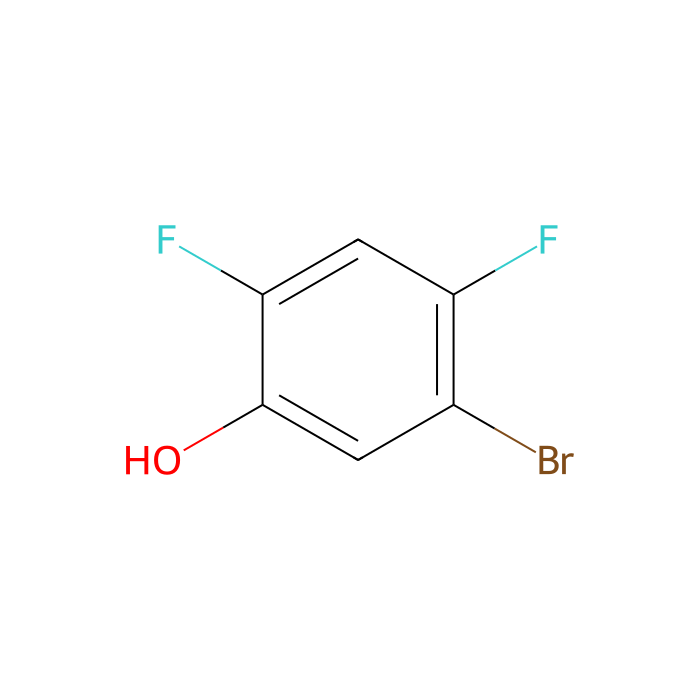
This compound belongs to the class of organic compounds known as p-fluorophenols. These are fluorophenols carrying a iodine at the C4 position of the benzene ring.
External Descriptors
Not available
1. Djoumbou Feunang Y, Eisner R, Knox C, Chepelev L, Hastings J, Owen G, Fahy E, Steinbeck C, Subramanian S, Bolton E, Greiner R, and Wishart DS. ClassyFire: Automated Chemical Classification With A Comprehensive, Computable Taxonomy. Journal of Cheminformatics, 2016, 8:61.
Determine the necessary mass, volume, or concentration for preparing a solution.
Dilution Calculator
Determine the dilution needed to prepare a stock solution.
Reconstitution Calculator
리뷰
고객 리뷰
Application Protocols
Not applicable. This listing is not an assay reagent with validated protocols (e.g., WB, IHC, IF, FC). For synthetic use, refer to the Reaction Conditions and Synthetic Utility sections for general laboratory procedures. For any bioassay stock preparation, typical practice is to dissolve in DMSO to 10–100 mM and dilute into assay buffer with final DMSO ≤1–2%.
Biological Roles
Product Data (item-specific): None provided. Research Use Note: For research use only.
General context (literature):
5-Bromo-2,4-difluorophenol is a synthetic, halogenated phenol. It is not known to have endogenous biological roles in mammalian systems.
Halogenated phenols are sometimes used as biochemical probes or as intermediates toward bioactive molecules, where the phenol can engage in hydrogen bonding and the aryl halogens tune lipophilicity and metabolic stability. Any such use should be assessed case-by-case and without implying therapeutic intent.
Phenolic compounds can exhibit non-specific protein interactions at high concentrations due to hydrogen bonding and hydrophobic effects; appropriate controls are essential in biochemical assays.
Practical notes:
If used in enzyme or receptor assays as a synthetic intermediate or reference scaffold, maintain consistent DMSO stocks and account for limited aqueous solubility.
Avoid interpreting non-specific cytotoxic or antimicrobial effects as target engagement; halophenols may display general membrane perturbation at elevated doses (general caution).
Buffer Applications
This compound is a hydrophobic phenolic building block, not a buffering reagent.
Not typically applicable: It does not constitute a defined acid/base conjugate pair suitable for buffering over a useful pH range.
Practical guidance: If dissolution in aqueous media is required for assays, prepare concentrated DMSO or ethanol stocks (e.g., 10–100 mM) and dilute into the working buffer while keeping final co-solvent ≤1–2%. Adjust pH of the buffer separately with standard buffering systems (e.g., phosphate, Tris).
Prefer lower-toxicity, recyclable solvents when feasible. For Pd-catalyzed couplings on aryl bromides, replace DMF/NMP with 2-MeTHF, ethanol/water, or propylene carbonate where compatible.
Use aqueous-micellar catalysis (e.g., TPGS-750-M) to conduct Suzuki couplings in water, minimizing organic solvent loads.
Ligand/metal economy:
Modern catalysts enable ppm-level Pd loadings for Suzuki–Miyaura, reducing metal footprint and facilitating waste treatment.
Nickel catalysis can substitute for Pd for certain couplings, especially with aryl bromides, though sensitivity to phenols may require protection.
Energy efficiency:
Apply flow or microwave heating for faster reactions and potentially lower energy per batch; consider room-temperature couplings with highly active catalysts.
Comparison table (general; not product specs):
Conventional: DMF or dioxane with inorganic base; Pd 1–5 mol%; 80–100 °C; workup with halogenated solvents.
Greener alternative: 2-MeTHF/H2O or EtOH/H2O; K3PO4 or K2CO3; Pd 100–1000 ppm with Buchwald ligands; 40–80 °C; extraction with esters (EtOAc) and minimal chlorinated solvents.
Safety/environmental notes:
Avoid chlorinated process solvents where possible (e.g., DCM) during scale-up; replace with ethyl acetate or MTBE for extractions and chromatography.
Implement solvent recycling and Pd scavenging/resins to lower metal residues in products.
Tradeoffs:
Greener solvents can alter solubility of this relatively hydrophobic, phenolic substrate; ensure adequate dissolution (co-solvents, temperature) and consider transient protection of the OH to maintain catalyst performance.
Pharmaceutical Uses
No excipient or clinical use is implied. For research use only.
General formulation/manufacturing context (literature):
Role: Synthetic intermediate/building block in medicinal chemistry campaigns. The aryl bromide facilitates late-stage diversification; the phenolic OH can be derivatized to tune solubility and permeability.
Regulatory notes: If used in a GMP setting as an intermediate, control of impurities (residual metals from Pd/Ni, residual solvents, halide content) and clear specifications are required. This listing does not provide such specifications—refer to CoA/Spec Sheet and internal quality systems.
Handling in discovery: Typically weighed as a solid, dissolved in dry organic solvent (DMSO, MeCN, THF) to prepare stocks for reaction screening or in vitro assays (as a chemical matter starting point), followed by purification and full characterization of downstream products.
Physical Properties
Product Data (item-specific):
Appearance: Not specified for this item; refer to CoA/Spec Sheet.
Molecular Weight: Not specified for this item; refer to CoA/Spec Sheet.
Literature/Computed (for reference; not specifications):
Empirical formula (literature reasoning): C6H3BrF2O
Calculated molecular weight: ~208.99 g/mol
Physical state: halogenated phenols of similar substitution typically isolate as crystalline solids or low-melting solids (literature trend).
Polarity/functionality: weakly acidic phenol (pKa of unsubstituted phenol ~10; multiple F substituents generally lower pKa; specific value for this compound not located—consult literature if critical).
Solubility (qualitative, literature general): sparingly soluble in water; soluble in polar organic solvents (acetone, acetonitrile, methanol, ethanol), moderately soluble in ethyl acetate, dichloromethane, THF; poor solubility in aliphatic hydrocarbons.
Volatility: low to moderate for phenolic solids; expected low vapor pressure at ambient conditions (literature trend for bromophenols).
Partitioning: aryl fluorides and bromide raise lipophilicity versus phenol; logP expected moderate (literature trend for halophenols), exact value not verified.
Not specified for this item; refer to CoA/Spec Sheet for any of the following if required for method development:
Melting/boiling point, density, refractive index, UV cutoff, water content, residual metals, residual solvents.
Quality and Grades
Product Data (item-specific):
Grade/Purity: Not specified for this item; refer to CoA/Spec Sheet.
Interpreting grades (general guidance):
Research/technical grade: Suitable for most synthetic applications; impurity profile sufficient for routine R&D.
High-purity/synthesis grade: Narrow impurity ranges for sensitive cross-couplings or medicinal chemistry; may include tighter limits on water, halides, metals, and residual solvents.
Chromatography/HPLC grade (if applicable to solvents): Emphasizes low UV absorbance and particulate—typically not relevant for a solid building block like this.
Phenolic building block considerations (general):
Trace inorganic halides or residual metal content can affect catalytic reactions (e.g., Pd-catalyzed couplings). For demanding applications, consult metal analysis on the CoA.
Water content can impact base-sensitive steps and coupling efficiency; Karl Fischer values, if specified on the CoA, guide drying needs.
Stabilizers: None specified for this item. If present in a lot, stabilizers would be listed on the CoA; these can influence downstream steps (e.g., need for pre-wash).
Recommendations:
Review the CoA/Spec Sheet for exact purity assay, residual solvents, and metal traces before use in catalysis or regulatory studies.
If consistent performance is required across campaigns, qualify a single lot and retain retains for comparison.
Reaction and Applications
Role in synthesis:
Aryl bromide handle enables Pd-catalyzed cross-couplings: Suzuki–Miyaura (to install aryl/alkenyl/alkyl from boron partners), Sonogashira (alkynes), Heck (alkenes), and Miyaura borylation (to make the corresponding boronate ester).
Phenolic OH enables O-functionalization: O-alkylation (Williamson ether synthesis), O-acylation (esters, carbonates), and selective protecting group strategies (silyl, benzyl, carbonate) to modulate reactivity.
Fluorine substituents modulate electronics and can influence regiochemistry and acidity; they are generally inert under many coupling conditions, preserving difluoro substitution through routes.
Practical tips (general literature guidance):
Phenolic OH can chelate or inhibit catalysts; protection (e.g., as a tert-butyldimethylsilyl ether, benzyl ether, or carbonate) often improves Pd-catalyzed couplings at the aryl bromide.
Bases: K2CO3, Cs2CO3, NaOtBu commonly used in couplings/O-alkylations. For Suzuki in biphasic media, K3PO4 or Na2CO3 in H2O with dioxane/THF is robust.
Catalyst selection: Electron-deficient aryl bromides tend to couple readily with Pd(PPh3)4 or Pd2(dba)3 with phosphine ligands (SPhos, XPhos). For steric challenges, Buchwald biaryl phosphines are effective.
Temperature: 60–100 °C typical for couplings in dioxane/DMF/MeCN; room temperature protocols possible with modern catalysts.
Workup: Neutralize/acidify to protonate phenoxide if strong base used; avoid silica deactivation by adding 0.1–1% NEt3 to chromatography solvents when the free phenol is present.
Application arenas:
Discovery chemistry and SAR where bromide-to-diverse motifs and phenolic derivatizations are required.
Materials/functional monomers where difluoro substitution tunes refractive index and thermal stability (general).
Manufacturer Applications: Not specified for this item; users commonly apply such scaffolds in cross-coupling libraries and phenolic ether/ester analogue generation.
Reaction Conditions
The following are literature-style general conditions for common transformations of aryl bromide phenols; they are not product specifications. Optimize for your specific substrates.
Notes: Generates a second coupling handle for sequential cross-couplings.
Workup/purification tips:
Quench basic phenoxide with dilute acid before extraction.
Add 0.1–1% NEt3 to silica eluent if tailing is observed with free phenols.
Safety and Handling
Product Data (item-specific):
Storage Conditions: Room temperature
Shipped In: Normal
GHS Classification / Signal Word / H-Statements / Pictograms: Not specified for this item; refer to SDS.
General safety considerations (literature/typical for halogenated phenols; defer to SDS for authoritative guidance):
Likely hazards: May cause skin and eye irritation; harmful if swallowed or inhaled; phenolic compounds can be corrosive to tissue at higher concentrations. Avoid inhalation of dust and contact with skin/eyes.
PPE: Use chemical-resistant gloves (e.g., nitrile), lab coat, safety goggles; handle in a fume hood to minimize inhalation exposure.
First aid (overview): If on skin/eyes, rinse with water for at least 15 minutes; remove contaminated clothing. If inhaled, move to fresh air. If ingested, rinse mouth; do not induce vomiting; seek medical attention. Always follow the SDS.
Fire safety: Organic solid; may burn if involved in fire. Use CO2, dry chemical, or foam. Combustion may release hydrogen halides and phenolic vapors.
Incompatibilities: Strong oxidizers (risk of reaction); strong bases can cause rapid deprotonation and may lead to exotherms; reactive metals may corrode in presence of phenols. Avoid prolonged exposure to bases if the free phenol functionality is needed.
Handling tips: Keep container tightly closed. Minimize moisture ingress to maintain material integrity. Use clean, dry tools; consider inert atmosphere for sensitive couplings.
Waste: Collect halogenated organic waste per local regulations. Do not discharge to drains.
Research Use Note: For research use only.
Solvent Selection
This compound is an aryl bromide/phenol with two fluorine substituents; solubility and reactivity considerations guide solvent choice.
General solvent behavior (literature trends):
Miscibility/solubility: Sparingly soluble in water; good solubility in acetone, acetonitrile, methanol/ethanol, DMSO, DMF, and THF; moderate in ethyl acetate and dichloromethane; poor in hexanes/heptane.
Polarity: Moderately polar due to the phenolic OH but overall hydrophobic from aryl/halogens; can hydrogen-bond as a donor.
Selection by use case:
Cross-coupling on the aryl bromide (Suzuki, Sonogashira, Buchwald–Hartwig): Mixed aqueous-organic systems (dioxane/H2O, toluene/H2O, MeCN/H2O) or polar aprotics (DMF, NMP) often give high conversions. Protect or neutralize the phenolic OH when necessary to avoid catalyst/base interactions.
Nucleophilic substitution/derivatization of the phenolic OH (O-alkylation/acylation): Use polar aprotic solvents (acetone, acetonitrile, DMF) with a base (e.g., K2CO3, Cs2CO3). For phase transfer protocols, toluene or DCM with a quaternary ammonium salt can work.
Purification: Normal-phase chromatography typically uses hexanes/EtOAc or heptane/MTBE gradients; add a small % of TEA if tailing from phenolic hydrogen bonding is observed.
Comparison (general):
DMSO/DMF: maximal solubility for high-loading reactions; challenging workup.
Dioxane/THF: good balance of solubility and ease of removal; peroxide monitoring required only for ethers (solvent concern, not the compound).
MeCN: polar, low-boiling; favorable for Pd-catalysis with inorganic bases.
Always verify solvent compatibility with bases/catalysts planned for the transformation.
Storage and Reconstitution
Product Data (item-specific):
Storage Conditions: Room temperature
Shipped In: Normal
General storage guidance (applicable to phenolic, halogenated aromatic solids):
Keep tightly capped in a cool, dry place away from direct light. Phenolic compounds can slowly discolor on prolonged air/light exposure; this is typically cosmetic but avoid when high purity is critical.
If repeated exposure to ambient humidity is expected, consider storing in a desiccator or with a desiccant pack. For moisture-sensitive reactions, dry the solid under vacuum prior to use.
Avoid prolonged contact with strong bases unless intentionally forming the phenoxide; basic conditions can lead to side reactions upon storage.
Solvents: DMSO, acetone, acetonitrile, methanol, ethanol, THF generally dissolve this class of compounds well (verify on small scale). Warm gently if needed; avoid extended heating.
Concentrated stocks: 10–100 mM in DMSO or MeCN for screening libraries. Filter through 0.2 µm PTFE if particulate is observed.
Freeze–thaw: If storing solutions, aliquot to minimize freeze–thaw cycles. Store DMSO solutions at −20 °C, protected from light, and equilibrate to room temperature before opening to prevent moisture ingress.
Shelf life: Not specified for this item; refer to CoA/Spec Sheet. Inspect periodically for solid-state changes (clumping, discoloration) and confirm purity by NMR/LC as required by your quality system.
Structure and Identity
Concise description: 5-Bromo-2,4-difluorophenol is a halogenated phenolic building block featuring an aryl bromide, two aryl fluorides, and a free phenolic hydroxyl.
Product Data (item-specific):
SKU: B183979
CAS: 355423-48-2
InChIKey: 460459 (as provided)
SMILES: Not specified for this item; refer to CoA/Spec Sheet.
Molecular Formula: Not specified for this item; refer to CoA/Spec Sheet.
Molecular Weight: Not specified for this item; refer to CoA/Spec Sheet.
Literature/Computed (for reference only; not product specifications):
Common name: 5-Bromo-2,4-difluorophenol
Expected molecular formula (structural reasoning): C6H3BrF2O
Calculated average molecular weight: ~208.99 g/mol (literature)
Structural features: monosubstituted phenol (–OH at C1), aryl bromide at C5, aryl fluorides at C2 and C4; planar aromatic ring with three electron-withdrawing substituents (Br, F, F) and one donating substituent (OH).
2D description in words: A benzene ring bearing an OH at position 1, F at positions 2 and 4, and Br at position 5; remaining ring positions (3 and 6) are C–H.
Notes:
Stereochemistry: none (achiral, planar aromatic).
The phenolic OH enables derivatization (ether/ester formation); the aryl Br serves as a versatile cross-coupling handle. Two aryl F atoms modulate electronics and can influence reactivity and lipophilicity.
Always confirm exact identifiers (SMILES/InChIKey) on the CoA/Spec Sheet for this specific lot.
Synthetic Utility
Functional groups and reactivity:
Aryl bromide: versatile electrophile for Pd/Ni-catalyzed cross-couplings (Suzuki–Miyaura, Sonogashira, Heck, Kumada, Negishi) and for Miyaura borylation to generate boronates.
Phenolic OH: serves as a nucleophile after deprotonation for ether (Williamson) and ester formation; can be protected (silyl, benzyl, carbonate) or activated (triflate) to transform into an additional cross-coupling handle.
Aryl fluorides (2,4-): strongly deactivating and typically inert under many electrophilic aromatic substitutions; they influence acidity and can steer regioselectivity in metalation and cross-coupling.
Strategic value:
Orthogonal handles: The bromide can be selectively transformed while retaining the fluorines; after coupling, the phenol can be derivatized to generate series of ethers/esters for SAR.
Aryl triflate route: Converting the phenol to its triflate provides a second coupling site, enabling sequential, regioselective bis-couplings on a difluorinated core.
Metalation: Directed ortho-metalation next to the phenol can be challenging due to competing reactivity; halogen–lithium exchange at the bromide (e.g., n-BuLi, low temperature) is a route to further elaboration, with caution regarding competing addition to the phenol unless protected.
Downstream transformations:
Oxidative couplings to biaryls, C–O couplings (Ullmann-type) after phenol activation, and late-stage sulfonation/phosphorylation of the OH for probe molecules.
Installation of linkers, prodrugs (as aryl carbonates/carbamates), or polymer anchors via the phenolic oxygen.
Target Specificity
Not applicable. This product is a small-molecule building block, not a biological targeting reagent (e.g., antibody, ligand with defined target specificity). No antigen/epitope, clone, isotype, or species reactivity information applies.
자주 묻는 질문
What is the purity of this product?
This product is supplied at ≥96% purity (chemical assay). Lot-specific values are stated on the Certificate of Analysis.
How should this product be stored?
Store at room temperature.
How is this product shipped?
This product ships under standard ambient conditions. No temperature-controlled packaging is required.
What are the CAS number, molecular formula and molecular weight?
The CAS Number is 355423-48-2, the molecular formula is C6H3BrF2O, and the molecular weight is 209 g/mol. InChIKey ZLUWZDGMZGVBGM-UHFFFAOYSA-N.
What documentation is provided?
Available product documentation, including Certificates of Analysis (COA), Safety Data Sheets (SDS), and specification sheets, is shown in the product document area. Document availability and access follow the current site policy.
We use cookies to ensure the website functions properly and, where permitted, to improve your experience. You can manage your preferences at any time in Settings. Learn more in our Cookie Policy.
Shall we send you a message when we have discounts available?
Remind me later
Thank you! Please check your email inbox to confirm.
Products are supplied to verified businesses, institutions, and qualified professionals for research and development use only. Not for use in humans, animals, diagnosis, or therapy.