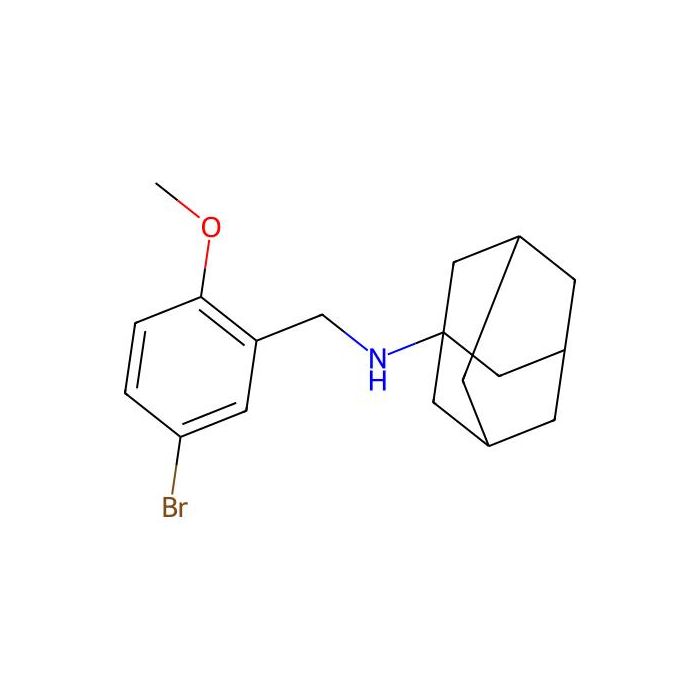
ABMA is a broad-spectrum inhibitor of intracellular toxins and pathogens. ABMA efficiently protects cells against various toxins and pathogens including viruses , intracellular bacteria and parasite . ABMA selectively acts at host cell late endosomes rather than targeting toxin or pathogen itself. ABMA has broad-spectrum anti-infection activity
In Vitro
ABMA protects cells against four bacterial toxins ( Corynebacterium diphtheriae (DT; EC 50 of 62.9 μM), Bacillus anthracis (LT), Clostridium difficile toxin B (TcdB; EC 50 of 73.3 µM), Clostridium sordellii lethal toxin (TcsL; EC 50 of 86.7 μM)), three viruses (Ebola (EC 50 of 3.3 µM), rabies (EC 50 of 19.4 µM), dengue-4 virus ( EC 50 of 8.2 µM)), two species of Chlamydiales intracellular bacteria ( Simkania negevensis and Chlamydia trachomatis ), and the parasite Leishmania infantum (EC 50 of 7.1 µM) at micromolar level. In A549 cells, ABMA treatment induces a decrease in ricin cytotoxicity with an EC 50 of 3.8 µM, and a protection factor (R) at 30 µM ranging from 5 to 10. ABMA retained almost 100% of its biological activity against ricin-induced cytotoxicity up to six days. MCE has not independently confirmed the accuracy of these methods. They are for reference only.
In Vivo
ABMA (2-200 mg/kg; intraperitoneal injection; female BALB/c mice) treatment protects mice from nasal instillation of an LD 90 of ricin . MCE has not independently confirmed the accuracy of these methods. They are for reference only. Animal Model: Pathogen-free female BALB/c mice (6 week-old) with ricin Dosage: 2 mg/kg, 20 mg/kg, 200 mg/kg Administration: Intraperitoneal injection Result: A statistically significant protection according to survival curves was observed with a single ip dose of 2 mg/kg. The 20 mg/kg dose fully protected animals through to day 21. The 200 mg/kg dose resulted in 80% of protection of mice against ricin challenge with a single animal succumbing on day 15.
ABMA is a broad-spectrum inhibitor of intracellular toxins and pathogens. ABMA efficiently protects cells against various toxins and pathogens including viruses , intracellular bacteria and parasite . ABMA selectively acts at host cell late endosomes rath
This compound belongs to the class of organic compounds known as phenylmethylamines. These are compounds containing a phenylmethtylamine moiety, which consists of a phenyl group substituted by an methanamine.
External Descriptors
Not available
1. Djoumbou Feunang Y, Eisner R, Knox C, Chepelev L, Hastings J, Owen G, Fahy E, Steinbeck C, Subramanian S, Bolton E, Greiner R, and Wishart DS. ClassyFire: Automated Chemical Classification With A Comprehensive, Computable Taxonomy. Journal of Cheminformatics, 2016, 8:61.
Determine the necessary mass, volume, or concentration for preparing a solution.
Dilution Calculator
Determine the dilution needed to prepare a stock solution.
Reconstitution Calculator
리뷰
고객 리뷰
Application Protocols
Item-specific facts (from Product Data)
No validated application protocols are provided for this item.
General guidance for small-molecule screening (general)
Stock solution: Prepare in anhydrous DMSO (e.g., 10–50 mM). Vortex/sonicate as needed; filter if particulate persists and the compound is not adsorptive.
Plate handling: Use low‑binding plates/tips; seal plates to minimize DMSO evaporation. Equilibrate plates to room temperature before opening to reduce condensation.
Assay dilution: Target final DMSO ≤0.1–1% v/v. Include vehicle controls and, where relevant, detergent to mitigate aggregation artifacts.
Data integrity: Confirm compound identity/purity post‑assay if anomalous results appear (LC–MS re‑check). Record lot numbers and preparation details.
Biological Roles
Item-specific facts (from Product Data)
No biological role, target, or pathway information is specified for this item.
Applicability note
Without confirmed structure and mechanistic data, biological functions or roles cannot be ascribed to this compound.
General guidance (general)
For compounds used in discovery biology, establish baseline properties: chemical stability in assay buffer, permeability (e.g., PAMPA/MDCK), nonspecific binding, and potential assay interferences (autofluorescence, redox activity, metal chelation).
Use orthogonal assays and counterscreens to distinguish true target engagement from nuisance mechanisms (aggregation, membrane disruption). Include detergent controls (e.g., 0.01% Triton X‑100) where appropriate.
Report exact lot numbers and concentrations (molar units) in publications for reproducibility.
Buffer Applications
Not typically applicable
ABMA is listed as a small molecule/compound library member, not a buffering reagent. No pKa or buffering capacity data are provided.
Practical note (general)
If the compound is to be used in biochemical assays, prepare stock solutions in DMSO and dilute into an established buffer system (e.g., phosphate, HEPES, Tris) appropriate for the biological target. Maintain consistent ionic strength and pH to avoid confounding effects from vehicle or precipitation.
Green Alternatives
Applicability note
Without structural identity and use context, material‑specific greener substitutes cannot be recommended. However, the environmental footprint of working with library compounds is often dominated by solvent and energy use.
Greener practice considerations (general)
Solvent hierarchy: Prefer water, then green organics (EtOH, 2‑propanol, ethyl acetate, MeTHF, CPME) where compatible. For DMSO stocks, minimize volume in downstream aqueous assays to reduce solvent load.
Miniaturization: Use microplate formats (384/1536‑well) and acoustic dispensing to reduce solvent consumption and waste generation during screening.
Energy: Store at −20 °C as required, but avoid unnecessary deep‑freeze storage of short‑term working aliquots; consolidate freezers and maintain tight door‑opening discipline to lower energy use.
Waste: Segregate halogenated vs non‑halogenated solvent waste. Explore on‑site solvent recycling for MeCN/MeOH if volumes are significant.
Procurement: Order right‑sized quantities to minimize expired inventory and disposal.
Trade‑offs
Replacing DMSO with greener solvents can compromise solubility and assay compatibility; validate alternatives empirically. Aqueous cyclodextrin formulations may enable DMSO reduction but can introduce binding artifacts.
Pharmaceutical Uses
Item-specific facts (from Product Data)
No pharmacopeial status, excipient role, or manufacturing use is specified. Research use only.
Applicability note
Without structure and regulatory characterization, this product should be treated strictly as a research chemical and not as an excipient or API component.
General considerations (general)
If evaluating as a preclinical research tool, ensure documentation of impurity profile, residual solvents, and solid form (polymorph/salt) due to their impact on reproducibility. Do not incorporate into formulations intended for administration to humans or animals.
Physical Properties
Item-specific facts (from Product Data)
Appearance: Not specified for this item; refer to CoA/Spec Sheet.
Physical constants (mp, bp, density, refractive index, UV cutoff, logP, pKa, solubility): Not specified for this item; refer to CoA/Spec Sheet.
Literature/computed values
Not provided here because the definitive structure and ionization state are not confirmed in the Product Data. For accurate property values, consult the lot-specific CoA/Spec Sheet or a validated structure in a primary database, then reference peer‑reviewed sources.
General guidance to determine properties (general)
Solubility screening workflow: test DMSO (analytical grade), MeOH, acetonitrile, ethanol, and aqueous buffer (pH 2–10) if the compound is intended for biochemical assays. Begin at 1–10 mg/mL and serial dilute; visually check for haze/precipitation.
If a free base/acid is supplied, apparent solubility can vary strongly with pH. Perform pH–solubility profiling (e.g., Britton–Robinson buffer) to map neutral/ionized regimes.
Record the exact form (free base/acid vs. salt hydrate) because molecular weight and concentration calculations depend on it.
Quality and Grades
Item-specific facts (from Product Data)
Grade/purity: Not specified for this item; refer to CoA/Spec Sheet.
How to interpret grades (general)
Research grade: suitable for discovery chemistry/biological screening; typical assays include NMR/HPLC identity and purity. UV absorbance and trace metals may not be controlled.
Analytical (AR) or HPLC grade (for solvents): tighter control of nonvolatile residue and UV background; not directly applicable unless this item is a solvent.
Screening library members: suppliers often provide LC–MS (>95% peak area) and 1H NMR identity confirmation. Verify which tests are included for this SKU.
What to check on the CoA
Identity confirmation: 1H/13C NMR, LC–MS/HRMS, and, if chiral, optical rotation or chiral HPLC.
Purity basis: report whether purity is by HPLC peak area at a specified wavelength and gradient. Note if salts/counterions are present.
Water content and residual solvents: Karl Fischer (KF) and GC residual solvent profile, if applicable.
Stabilizers/inhibitors: Not specified for this item; refer to CoA/Spec Sheet. Presence of stabilizers can influence bioassays and analytical baselines.
Lot-to-lot documentation: ensure the CoA lot matches the received container label for traceability in regulated labs.
Reaction and Applications
Item-specific facts (from Product Data)
Manufacturer Applications: Not specified for this item.
General research applications for small molecules (general)
Compound library usage: ABMA is listed under “small molecules and compound libraries,” suggesting use as a screening entity in target identification, phenotypic assays, or chemical probe development. Typical workflows include high‑throughput screening (HTS), hit confirmation by orthogonal assays, structure–activity relationship (SAR) expansion using close analogs, and preliminary ADME profiling (solubility, stability, permeability in vitro).
Assay considerations: Validate compound integrity by LC–MS before critical studies, particularly after long storage. Assess colloidal aggregation (detergent controls, dynamic light scattering) and redox or fluorescence assay interference (e.g., use counter‑screens or control dyes).
Analytical characterization: Prior to biology, confirm identity/purity via HPLC and NMR from the received lot. If stereochemistry is relevant (unknown here), determine enantiomeric/diastereomeric ratio by chiral methods.
If synthetic applications are intended: Without structural information, specific reaction roles (e.g., coupling partner, protecting group) cannot be assigned. Obtain the structural formula and functional group inventory before planning transformations or derivatizations.
Reaction Conditions
Not applicable to this item without structural information
No specific reactions, catalysts, temperatures, or yields can be recommended because the functional groups of ABMA are not provided.
General note (general)
When reaction development is intended for an unknown or proprietary structure, begin with microscale scouting across solvent, base/acid, and temperature, informed by predictive reactivity of the known functional groups. Use LC–MS to rapidly assess conversion and impurity formation.
Safety and Handling
Item-specific facts (from Product Data)
Storage conditions: Store at −20 °C.
Shipping: Ice chest + ice pads.
GHS signal word / hazard statements / pictograms: Not specified for this item; refer to SDS.
Authoritative source
Always consult the product’s Safety Data Sheet (SDS) for definitive hazard classification, exposure limits, disposal, and first‑aid measures.
General laboratory safety guidance (general)
PPE: lab coat, safety glasses, and appropriate chemically resistant gloves (e.g., nitrile). Handle powders/solid residues in a fume hood to avoid inhalation of dust/aerosols.
Avoid ingestion and skin/eye contact. Wash thoroughly after handling. Prevent environmental release; collect waste in a compatible, labeled container per institutional SOPs.
Incompatibilities: Absent structural data, avoid mixing with strong oxidizers, strong acids/bases, and reactive metals until compatibility is known. If the material is moisture/air sensitive (verify on CoA), handle under inert gas and use anhydrous solvents.
First aid (overview): Eye/skin contact—rinse with water for ≥15 min; remove contaminated clothing. Inhalation—move to fresh air. Ingestion—rinse mouth; seek medical attention. Provide SDS to responders.
Thermal sensitivity: Maintain cold chain on receipt; minimize freeze–thaw cycles by aliquoting upon first opening.
For research use only; not for diagnostic or therapeutic use.
Solvent Selection
Item-specific facts (from Product Data)
No solvent preference or solubility data are specified; refer to CoA/Spec Sheet.
General guidance for small-molecule library members (general)
Stock preparation for screening: DMSO is the default solvent due to broad solubilizing power and compatibility with biochemical assays. Prepare concentrated stocks (e.g., 10–50 mM), then dilute into aqueous assay buffer keeping final DMSO ≤0.1–1% v/v to minimize assay interference.
Solubility strategy:
Start with anhydrous DMSO; if insoluble, warm gently (≤40 °C) and vortex/sonicate.
Secondary solvents: DMF or ethanol (analytical grade) may help; for aqueous systems, co-solvent blends (DMSO/PEG400/water) can improve delivery.
For acids/bases, adjust pH of the aqueous phase to favor the ionized form to improve apparent solubility during dilution.
Analytical compatibility: For LC–MS, prefer MeCN/H2O with 0.1% formic acid or NH4OAc as needed. Avoid nonvolatile buffers that suppress ionization unless required by the method.
Precipitation checks: After diluting DMSO stocks into buffer, visually inspect and, if critical, verify by nephelometry or light scattering. Filter with low‑binding membranes (PTFE for organic, PVDF/nylon for mixed aqueous) only if the compound is not prone to adsorptive loss.
Storage and Reconstitution
Item-specific facts (from Product Data)
Storage conditions: Store at −20 °C.
Shipped in: Ice chest + ice pads.
General handling and reconstitution (general)
Upon receipt: Allow the sealed container to equilibrate to room temperature before opening to prevent condensation. If supplied as a solid, promptly subdivide into small, dry aliquots under inert gas if air/moisture sensitivity is indicated on the CoA.
Reconstitution: If solubility is unknown, start with anhydrous DMSO to prepare a concentrated stock (e.g., 10–50 mM). Mix thoroughly (vortex/brief sonication). Record exact mass and final volume to compute molarity once molecular weight is confirmed.
Aliquoting: Dispense single‑use aliquots to avoid repeated freeze–thaw. Store aliquots at −20 °C in tightly sealed, chemically compatible vials.
Stability: Not specified for this item; refer to CoA/Spec Sheet. If stability data are lacking, minimize light exposure, avoid prolonged room‑temperature storage, and test integrity periodically by LC–MS/HPLC.
Thawing: Warm sealed aliquots to room temperature before opening. After dilution into aqueous systems, use promptly; some small molecules exhibit reduced stability in water or at neutral/high pH.
Structure and Identity
Item-specific facts (from Product Data)
SKU: A650277
Product name: ABMA
CAS: 332108-65-3
PubChem CID: 2853512
InChIKey: 355894 (format not standard; refer to CoA/Spec Sheet for the definitive identifier)
SMILES: Not specified for this item; refer to CoA/Spec Sheet.
Molecular formula: Not specified for this item; refer to CoA/Spec Sheet.
Molecular weight: Not specified for this item; refer to CoA/Spec Sheet.
Interpretive notes (general)
Structural features, functional groups, ring systems, and stereochemistry cannot be described without a valid structural representation (SMILES/InChI or structure file). Please consult the product CoA/Spec Sheet or the supplier’s structure file for 2D/3D depictions and atom connectivity.
If using external databases, verify that any third-party structure retrieved for CAS 332108-65-3 or CID 2853512 matches the supplier’s material (same tautomer, counterion state, stereochemistry). Discrepancies can materially affect solubility, spectral data, and assay outcomes.
Synthetic Utility
Applicability note
Synthetic roles (e.g., electrophile/nucleophile reactivity, protecting‑group behavior, cross‑coupling compatibility) cannot be discussed without a confirmed structure and functional group inventory.
General guidance (general)
Prior to any derivatization or scale‑up, obtain the structural file (SDF/Mol) and verify by NMR and HRMS. Map reactive handles (acids, amines, halides, carbonyls) and assess chemoselectivity via small‑scale test reactions.
If ABMA is intended as a lead for SAR, consider parallel synthesis around hypothesized pharmacophores, with careful control of stereochemistry and regiochemistry if applicable. Maintain a well‑annotated ELN linking each analog to spectral data and bioactivity results.
Target Specificity
Item-specific facts (from Product Data)
No biological target, selectivity profile, or binding data are provided for this item.
Applicability note
Do not assume target specificity. Any use as a probe or inhibitor requires independent verification via primary and orthogonal assays, appropriate controls, and, if possible, biophysical confirmation (e.g., SPR, ITC, DSF) once the structure is confirmed.
자주 묻는 질문
What is the purity of this product?
This product is supplied at ≥98% purity (chemical assay). Lot-specific values are stated on the Certificate of Analysis.
How should this product be stored?
Store at ?20 °C. Freezer storage is required to maintain the specified shelf life.
How is this product shipped?
This product ships in an insulated container with ice pads. Unpack on arrival and transfer it to the storage condition stated above.
What are the CAS number, molecular formula and molecular weight?
The CAS Number is 332108-65-3, the molecular formula is C18H24BrNO, and the molecular weight is 350.29 g/mol. InChIKey UCAHJECAHMOSHI-UHFFFAOYSA-N.
What documentation is provided?
Available product documentation, including Certificates of Analysis (COA), Safety Data Sheets (SDS), and specification sheets, is shown in the product document area. Document availability and access follow the current site policy.
Products are supplied to verified businesses, institutions, and qualified professionals for research and development use only. Not for use in humans, animals, diagnosis, or therapy.