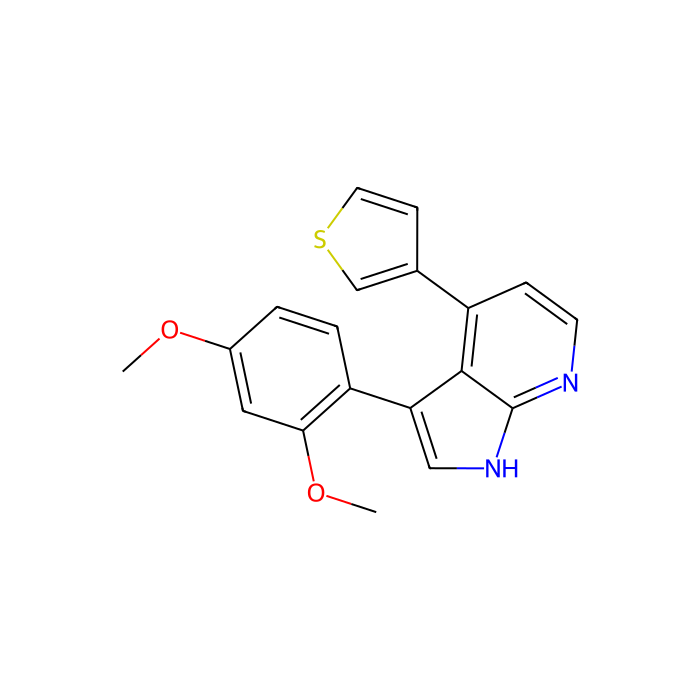
ARN-3236 - Moligand™, ≥98% , Inhibitor of salt inducible kinase 1;Inhibitor of salt inducible kinase 2;Inhibitor of SIK family kinase 3, CAS No.1613710-01-2, Inhibitor of salt inducible kinase 1;Inhibitor of salt inducible kinase 2;Inhibitor of SIK family kinase 3

CAS: 1613710-01-2 Cat. No.: A414050 분자식: C19H16N2O2S 분자량: 336.41
주문 가능
등급 & 순도 Moligand™ ? Moligand™ — Aladdin's line of ligands and bioactive small molecules. Use for receptor, pathway, and binding studies needing defined small-molecule tools. ≥98%
Storage
Store at -20°C
Shipped In
Ice chest + Ice pads
★
크기
USA
독일 (EU)*
가격
수량
1mg
A414050-1mg
주문제작 · 8~12주
US$49.90
5mg
A414050-5mg
3 재고 있음
—
US$97.90
25mg
A414050-25mg
3 재고 있음
—
US$277.90
Enter a quantity for the sizes you want to add.

개요

Information

ARN-3236 ARN-3236 is a potent, orally available and selective inhibitor of salt-inducible kinase 2 (SIK2) with IC50 of <1 nM, 21.63 nM and 6.63 nM for SIK2, SIK1 and SIK3, respectively. ARN-3236 induces apoptosis in cancer cells.


Targets

SIK2 (Cell-free assay); SIK3 (Cell-free assay); SIK1 (Cell-free assay) 1 nM; 6.63 nM; 21.63 nM


In vitro

SIK2 is overexpressed in approximately 30% of high grade serous ovarian cancers. ARN-3236 inhibits growth of 10 ovarian cancer cell lines at an IC50 of 0.8 to 2.6 μM, where the IC50 of ARN-3236 is inversely correlated with endogenous SIK2 expression (Pearson’s r = −0.642, P = 0.03). ARN-3236 enhances sensitivity to paclitaxel in 8 of 10 cell lines. In at least three cell lines a synergistic interaction is observed. ARN-3236 uncouples the centrosome from the nucleus in interphase, blocks centrosome separation in mitosis, causes prometaphase arrest and induces apoptotic cell death and tetraploidy. ARN-3236 also inhibits AKT phosphorylation and attenuates survivin expression.


In vivo

The antitumor activity of ARN-3236 is measured using ovarian cancer xenograft model in nu/nu mice. In SKOv3ip xenograft model, ARN-3236 plus paclitaxel produces greater inhibition of tumor growth than any other group and showed statistically significant difference compared to paclitaxel alone (P = 0.028). ARN-3236 also inhibits SIK2 activity and enhances paclitaxel sensitivity in OVCAR8 xenografts.


Cell Research(from reference)

Cell lines:HEY, A2780, UPN251, OVCAR3, OVCAR5, OVCAR8, ES-2, OC316, SKOv3 and IGROV1 

Concentrations:1 μM, 2 μM, 3 μM, 5 μM 

Incubation Time:16 h, 24 h, 32 h, 48 h 

사양

사양 및 순도
Moligand™, ≥98%
생화학 및 생리적 메커니즘
ARN-3236 is a potent, orally available and selective inhibitor of salt-inducible kinase 2 (SIK2) with IC50 of <1 nM, 21.63 nM and 6.63 nM for SIK2, SIK1 and SIK3, respectively. ARN-3236 induces apoptosis in cancer cells.
보관 조건
Store at -20°C
배송
Ice chest + Ice pads
이 제품은 콜드 체인 배송이 필요합니다.지상 및 기타 경제 서비스는 사용할 수 없습니다.
등급
Moligand™
작업 유형
INHIBITOR
작동 메커니즘
Inhibitor of salt inducible kinase 1;Inhibitor of salt inducible kinase 2;Inhibitor of SIK family kinase 3
순수함
≥98%
제품 특성
ALogP
3.837
hba_count
3
HBD 수
1
회전 가능한 결합
4
이름과 식별자
Pubchem Sid
Pubchem Sid Url
https://pubchem.ncbi.nlm.nih.gov/substance/504772361
정식 스마일
COC1=CC(=C(C=C1)C2=CNC3=NC=CC(=C23)C4=CSC=C4)OC
IUPAC Name
3-(2,4-dimethoxyphenyl)-4-thiophen-3-yl-1H-pyrrolo[2,3-b]pyridine
InChIKey
WEHOIIGXTMKVRG-UHFFFAOYSA-N
INCHI
1S/C19H16N2O2S/c1-22-13-3-4-15(17(9-13)23-2)16-10-21-19-18(16)14(5-7-20-19)12-6-8-24-11-12/h3-11H,1-2H3,(H,20,21)
이성체 SMILES
COC1=CC(=C(C=C1)C2=CNC3=NC=CC(=C23)C4=CSC=C4)OC
분자량
336.41
Reaxy-Rn
27004465
Reaxys-RN_link_address
https://www.reaxys.com/reaxys/secured/hopinto.do?context=S&query=IDE.XRN=27004465&ln=

고급 데이터

Taxonomic Classification

Taxonomy Tree

KingdomOrganic compounds
SuperclassOrganoheterocyclic compounds
분류Pyrroles
SubclassSubstituted pyrroles
Intermediate Tree Nodes Not available
Direct ParentPhenylpyrroles
Alternative Parents Dimethoxybenzenes  Pyrrolopyridines  Phenoxy compounds  Anisoles  Alkyl aryl ethers  Pyridines and derivatives  Thiophenes  Heteroaromatic compounds  Azacyclic compounds  Organonitrogen compounds  Hydrocarbon derivatives  
Molecular FrameworkAromatic heteropolycyclic compounds
Substituents 3-phenylpyrrole - M-dimethoxybenzene - Dimethoxybenzene - Pyrrolopyridine - Phenoxy compound - Anisole - Phenol ether - Methoxybenzene - Alkyl aryl ether - Monocyclic benzene moiety - Benzenoid - Pyridine - Heteroaromatic compound - Thiophene - Ether - Azacycle - Organonitrogen compound - Organic nitrogen compound - Hydrocarbon derivative - Organooxygen compound - Organic oxygen compound - Aromatic heteropolycyclic compound
설명This compound belongs to the class of organic compounds known as phenylpyrroles. These are polycyclic aromatic compounds containing a benzene ring linked to a pyrrole ring through a CC or CN bond.
External Descriptors Not available
3D 구조
상호 작용 화학 구조 모델


관련 대상(인간)
SIK1 Tchem Serine/threonine-protein kinase SIK1 (1 Activities)
Activity TypeActivity Value -log(M)Mechanism of ActionActivity ReferencePublications (PubMed IDs)
SIK2 Tchem Serine/threonine-protein kinase SIK2 (1 Activities)
Activity TypeActivity Value -log(M)Mechanism of ActionActivity ReferencePublications (PubMed IDs)
SIK3 Tchem Serine/threonine-protein kinase SIK3 (1 Activities)
Activity TypeActivity Value -log(M)Mechanism of ActionActivity ReferencePublications (PubMed IDs)
LCK Tclin Tyrosine-protein kinase LCK (9212 Activities)
Activity TypeRelationActivity valueUnitsAction TypeJournalPubMed IddoiAssay Aladdin ID
JAK2 Tclin Tyrosine-protein kinase JAK2 (12915 Activities)
Activity TypeRelationActivity valueUnitsAction TypeJournalPubMed IddoiAssay Aladdin ID
KDR Tclin Vascular endothelial growth factor receptor 2 (20924 Activities)
Activity TypeRelationActivity valueUnitsAction TypeJournalPubMed IddoiAssay Aladdin ID
HepG2 (196354 Activities)
Activity TypeRelationActivity valueUnitsAction TypeJournalPubMed IddoiAssay Aladdin ID
SRPK1 Tchem Serine/threonine-protein kinase SRPK1 (2359 Activities)
Activity TypeRelationActivity valueUnitsAction TypeJournalPubMed IddoiAssay Aladdin ID
SIK1 Tchem Serine/threonine-protein kinase SIK1 (1440 Activities)
Activity TypeRelationActivity valueUnitsAction TypeJournalPubMed IddoiAssay Aladdin ID
NUAK2 Tchem NUAK family SNF1-like kinase 2 (630 Activities)
Activity TypeRelationActivity valueUnitsAction TypeJournalPubMed IddoiAssay Aladdin ID
SIK2 Tchem Serine/threonine-protein kinase SIK2 (1467 Activities)
Activity TypeRelationActivity valueUnitsAction TypeJournalPubMed IddoiAssay Aladdin ID
SIK3 Tchem Serine/threonine-protein kinase SIK3 (566 Activities)
Activity TypeRelationActivity valueUnitsAction TypeJournalPubMed IddoiAssay Aladdin ID
관련 대상(비인간)
rep Replicase polyprotein 1ab (378 Activities)
Activity TypeRelationActivity valueUnitsAction TypeJournalPubMed IddoiAssay Aladdin ID
SARS-CoV-2 (38078 Activities)
Activity TypeRelationActivity valueUnitsAction TypeJournalPubMed IddoiAssay Aladdin ID
작용 메커니즘
인증서(CoA, COO, BSE/TSE 및 분석 차트)
C of A & Other Certificates(BSE/TSE, COO):
Analytical Chart:

Find and download the COA for your product by matching the lot number on the packaging.

3 results found

Lot NumberCertificate Type날짜항목
I2208471I2208471Certificate of AnalysisJun 16, 2025 A414050
I2208470I2208470Certificate of AnalysisJun 16, 2025 A414050
C2526396C2526396Certificate of AnalysisJul 01, 2022 A414050
화학 및 물리적 특성
용해성Solubility (25°C) In vitro DMSO: 67 mg/mL (199.16 mM); Ethanol: 2 mg/mL (5.94 mM); Water: Insoluble;
DMSO(mg/mL) 최대 용해도67
DMSO(mM) 최대 용해도199.161737165958
물(mg/mL) 최대 용해도<1
분자량336.400 g/mol
XLogP34.200
Hydrogen Bond Donor Count1
Hydrogen Bond Acceptor Count4
Rotatable Bond Count4
Exact Mass336.093 Da
Monoisotopic Mass336.093 Da
Topological Polar Surface Area75.400 Ų
Heavy Atom Count24
Formal Charge0
Complexity424.000
Isotope Atom Count0
Defined Atom Stereocenter Count0
Undefined Atom Stereocenter Count0
Defined Bond Stereocenter Count0
Undefined Bond Stereocenter Count0
The total count of all stereochemical bonds0
Covalently-Bonded Unit Count1
솔루션 계산기
리뷰

고객 리뷰

Application Protocols

No vendor-tested biological application protocols are provided for this item. The following general protocols are commonly used for small-molecule kinase inhibitors and should be adapted to your system.

A. Preparing DMSO stock and aliquots

  • Dissolve ARN-3236 to 10–50 mM in anhydrous DMSO.
  • Vortex/sonicate briefly; if necessary, warm to 30–40 °C.
  • Sterile-filter (0.2 μm PTFE) for cell culture use if compatible; aliquot into amber microvials; store at −20 °C.

B. Biochemical kinase assay (generic outline)

  • Buffer: 50 mM HEPES, pH 7.5; 10 mM MgCl2; 0.01% Tween-20; 1 mM DTT.
  • Prepare serial dilutions (10–12 half-log steps) in assay buffer with constant DMSO%.
  • Incubate enzyme with inhibitor (15–30 min), initiate with ATP/substrate, and quantify activity (e.g., ADP-Glo, TR-FRET, or mobility shift). Fit IC50 using 4-parameter logistic model.

C. Cell-based assay (generic outline)

  • Treat cells with inhibitor dilutions (0.03–10 μM typical starting range) with vehicle-matched controls.
  • Incubate 1–24 h depending on endpoint; harvest lysates and quantify phospho-substrate levels by Western blot or ELISA.

Note: Parameters above are general literature practices; optimize for your enzyme/cell line. No item-specific, vendor-validated conditions are claimed.

Biological Roles

Scope: The following summarizes literature/general knowledge for ARN-3236-like SIK inhibitors. Item-specific bioactivity parameters (IC50, kinome selectivity) are not specified here and should be confirmed in your assays.

  • Putative target: Salt-inducible kinases (SIKs), with notable attention to SIK2 in the literature. SIKs are AMPK-related serine/threonine kinases involved in metabolic regulation, transcriptional control (e.g., CRTCs), and cell cycle processes.
  • Mechanistic context: Inhibition of SIK activity can modulate CREB/CRTC-dependent transcription, impact microtubule dynamics and mitotic progression, and alter downstream phosphorylation of SIK substrates (general literature).
  • Cellular use: Employed as a chemical probe to interrogate SIK-dependent pathways in mammalian cells. Typical readouts include phospho-substrate Western blots, transcriptional reporter assays, and phenotypic imaging.
  • Selectivity considerations: Kinase inhibitors may display off-target activity; kinome profiling (e.g., Kd/percent inhibition at 1 μM across panels) is recommended to characterize selectivity against related AMPK family kinases and other serine/threonine kinases.
  • ADME/PK in vitro: For cellular experiments, assess permeability (e.g., PAMPA/Caco-2) and efflux liabilities, as well as metabolic stability in microsomes if studying pathway effects over extended durations (general guidance). These parameters are not specified for this item.

All statements above are for research context only. No therapeutic or diagnostic claims are made.

Buffer Applications

Applicability: ARN-3236 is not a buffering agent. This section provides practical guidance for preparing assay-compatible solutions of a hydrophobic bioactive small molecule.

General buffer practices for bioassays:

  • Stock preparation: Dissolve ARN-3236 in anhydrous DMSO to 10–50 mM. Store single-use aliquots at −20 °C.
  • Working dilutions: Add DMSO stock to pre-warmed assay buffer or culture medium with vigorous mixing to avoid precipitation. Keep final DMSO at ≤0.1–0.5% v/v unless your system tolerates more.
  • Common assay buffers (examples):
    • Enzyme assays: HEPES or Tris (25–50 mM), pH 7.4–7.5, with Mg2+/Mn2+ as required and 0.01–0.05% Tween-20 to reduce nonspecific binding.
    • Cell-based: Complete culture media (e.g., DMEM/RPMI) with serum as required. Pre-test vehicle effects at matched DMSO levels.
  • Adsorption minimization: Include low levels of nonionic surfactant (e.g., 0.01% Tween-20) in biochemical assays and use low-bind plastics or glass vials to reduce compound loss.
  • Precipitation checks: After dilution, visually inspect for turbidity; if needed, prepare intermediate dilutions in buffer:DMSO mixtures (e.g., 1:1) before the final dilute step.

Note: No item-specific buffer compatibility, pKa, or solubility values are provided; verify empirically in your assay matrix.

Green Alternatives

Context: As a bioactive small molecule, ARN-3236 is not a process solvent or bulk reagent; “green” considerations focus on solvent vehicles, assay miniaturization, and waste minimization.

Greener handling strategies (general):

  • Solvent choice: Prefer aqueous-compatible vehicles with minimal organic content. DMSO remains common for solubility; consider reducing final DMSO to ≤0.1% v/v by using concentrated stocks and low-volume additions.
  • Cosolvent alternatives: Where feasible, evaluate ethanol or propylene glycol (PG) in biochemical assays; validate protein/enzyme compatibility.
  • Miniaturization: Adopt microplate formats (384- to 1536-well) to reduce compound and solvent usage by 5–20× relative to 96-well assays.
  • Waste reduction: Pool compatible organic waste and segregate halogenated fractions. Use sealed, amber microvials to extend solution life and decrease discard frequency.
  • Energy use: Store aliquots at −20 °C (per item data) in efficient, well-managed freezers; avoid repeated freeze–thaw to reduce losses.

Illustrative comparison (vehicles; general):

  • DMSO: Highest solvating power; excellent for stock solutions; potential to enhance dermal absorption; manage with PPE.
  • Ethanol: Readily biodegradable; miscible with water; limited solubility for some heteroaromatics.
  • PEG400: Useful cosolvent; low volatility; can affect viscosity and assay readouts; more challenging to remove analytically.

Note: No item-specific green metrics (e.g., E-factor, solvent safety data) are specified for this product.

Pharmaceutical Uses

Scope and limitations:

  • This product is provided strictly for research use only. It is not intended for human or veterinary use, diagnostics, or as an active pharmaceutical ingredient.

Relevance to pharmaceutical research (general):

  • Role: ARN-3236 is recognized in the literature as a SIK-pathway inhibitor and can serve as a reference tool compound in target validation, hit-to-lead benchmarking, and translational pharmacology studies performed in preclinical settings.
  • Assay contexts: Useful in structure–activity relationship (SAR) comparisons, biochemical potency determinations, selectivity panels, and phenotypic assays. Can act as a positive control to benchmark novel SIK inhibitors.
  • Formulation research: For preclinical exploration only, solubilization strategies may include DMSO concentrates further diluted with aqueous vehicles or PEG-containing systems. Such formulations must undergo local safety and IACUC/IBC review where applicable.

Regulatory/compendial status:

  • Not a pharmacopeial-grade material; no USP/EP monograph is implied.
  • No cGMP status claimed. Grade is Moligand™ as provided.

Any clinical, therapeutic, or diagnostic applications are outside the permitted scope of this product.

Physical Properties

Item-specific properties:

  • Appearance: Not specified for this item; refer to CoA/Spec Sheet.
  • Molecular Weight: Not specified for this item; refer to CoA/Spec Sheet.
  • Molecular Formula: Not specified for this item; refer to CoA/Spec Sheet.
  • Melting point (MP): Not specified for this item; refer to CoA/Spec Sheet.
  • Boiling point (BP): Not applicable for a nonvolatile, high-MW bioactive solid; specific value not specified for this item; refer to CoA/Spec Sheet.
  • Density: Not specified for this item; refer to CoA/Spec Sheet.
  • Refractive index: Not applicable/Not specified for this item; refer to CoA/Spec Sheet.
  • LogP/logD, pKa, UV-vis properties: Not specified for this item; refer to CoA/Spec Sheet.

Practical handling (general, literature/experience-based for kinase inhibitors):

  • Solubility: Many kinase tool compounds are sparingly soluble in water and are commonly prepared as concentrated DMSO stocks (e.g., 10–50 mM) and then diluted into aqueous assay media with final DMSO ≤0.1–0.5% v/v to limit vehicle effects (literature, general guidance). Confirm ARN-3236’s actual solubility with the CoA.
  • Hygroscopicity/photostability: Bioactive heteroaromatics can be moisture/light sensitive; store as directed (see Storage tab) and minimize repeated warming.
  • Solid form: Supplied typically as an off-white to light-colored solid or film in small-quantity vials for screening; exact appearance is not specified for this item.
Quality and Grades
  • Grade/Purity: Moligand™ (as provided)

What Moligand™ signifies (general description):

  • Moligand™ denotes compounds curated for molecular recognition studies, screening, and chemical biology, emphasizing identity confirmation, and suitability for bioassay workflows. While exact purity percentage and analytical limits are not specified for this item, Moligand™ entries are typically supported by structural verification (e.g., NMR/MS/HRMS) and are intended for research screening rather than bulk synthesis.

Implications for experimental use:

  • Identity/purity: Not specified for this item; refer to CoA/Spec Sheet for batch-specific purity, identity confirmation data, and residual solvent content.
  • Stabilizers/additives: Not specified for this item; refer to CoA/Spec Sheet. Most screening compounds are shipped neat with no stabilizers unless noted.
  • UV absorbance background: Not specified; if using in HPLC/UPLC bioanalytical assays, validate detector linearity and potential co-eluting impurities with the provided CoA chromatogram (when available).

Recommended acceptance checks on receipt:

  • Inspect vial integrity and label (CAS, lot, net mass).
  • If critical to your workflow, perform incoming QC (e.g., LC–MS purity check in assay-relevant mobile phase) before large screens.

Documentation:

  • For any unlisted parameters (e.g., water content, residual metals, specific extinction coefficients), the correct statement is: “Not specified for this item; refer to CoA/Spec Sheet.”
Reaction and Applications

Primary application domain: ARN-3236 is supplied as a bioactive screening compound (Moligand™) rather than as a synthetic reagent or catalyst.

Research applications (literature/general for ARN-3236-like SIK inhibitors):

  • Chemical biology: Probe of salt-inducible kinase pathways (notably SIK2) to study roles in metabolism, mitotic spindle regulation, and cellular signaling. Enables target validation and pathway dissection in cells and lysates.
  • Assay development: Reference inhibitor in biochemical kinase assays (radiometric, mobility shift, TR-FRET) to establish dynamic range, positive controls, and selectivity profiling panels.
  • Phenotypic screening: Tool compound for evaluating pathway-dependent phenotypes; use orthogonal assays to confirm on-target effects.

Not typically applicable:

  • It is not commonly used to drive synthetic transformations (e.g., cross-coupling, oxidations) and has no established role as a reaction solvent or catalyst.

Practical notes:

  • For enzymology, determine IC50/Ki under your specific assay conditions; literature values can vary with ATP concentration and substrate. Titrate across at least 10–12 half-log points.
  • Validate target engagement in cells using orthogonal readouts (e.g., phospho-substrate levels by Western blot) and chemical genetics where feasible.
  • Include counterscreens against kinases with close homology to SIK family to assess selectivity.

All use is for research only; no clinical or diagnostic use.

Reaction Conditions

Not a reaction reagent: ARN-3236 is not generally employed to mediate or catalyze chemical reactions. Accordingly, conventional reaction parameters (temperature, catalysts, yields) are not applicable.

Assay preparation conditions (practical guidance for this compound class):

  • Stock solutions: Dissolve in anhydrous DMSO at 10–50 mM. Gentle warming (≤40 °C) and brief sonication can aid dissolution.
  • Working concentrations: For biochemical assays, typical test ranges span 0.1–30 μM; for cell assays, 0.03–10 μM are common starting points. Optimize per system. These are literature-general ranges and not item-specific recommendations.
  • Incubation times: Determine time-to-steady-state inhibition empirically; many kinase inhibitors display rapid onset in biochemical assays (<30 min). In cells, pre-incubation for 1–4 h may be used before endpoint measurements.
  • Controls: Include vehicle controls at matched DMSO%, positive controls (reference inhibitors), and counterscreens against related kinases to confirm specificity.

Stability during use:

  • Protect solutions from light and avoid repeated freeze–thaw cycles. Prepare single-use aliquots.

Note: No item-specific kinetic parameters, solubility limits, or stability constants are provided. Validate conditions in pilot experiments.

Safety and Handling

GHS/SDS:

  • Signal word: Not specified for this item; refer to SDS.
  • Hazard statements (H-statements): Not specified for this item; refer to SDS.
  • GHS classification and pictograms: Not specified for this item; refer to SDS.

General laboratory precautions (good practice for bioactive small molecules):

  • Use in a chemical fume hood; avoid inhalation of dusts/aerosols.
  • Wear appropriate PPE: lab coat, safety glasses, and nitrile gloves; change gloves regularly when handling DMSO solutions as DMSO can facilitate dermal absorption.
  • Avoid ingestion and skin/eye contact; wash thoroughly after handling.
  • Prevent environmental release; collect waste in properly labeled organic waste containers.

Incompatibilities and stability (general):

  • Avoid strong oxidizers and strong acids/bases unless specified reaction conditions are intended; most kinase inhibitors are stable under neutral to mildly basic neutral-buffered conditions for short assay durations.
  • Protect solutions from prolonged light and elevated temperatures.

First aid (overview; defer to SDS for authoritative instructions):

  • Skin/eye contact: Rinse with copious water for at least 15 minutes; remove contaminated clothing; seek medical attention if irritation persists.
  • Inhalation: Move to fresh air; seek medical attention if symptoms occur.
  • Ingestion: Rinse mouth; do not induce vomiting; seek medical advice.

Note: Always consult the product-specific SDS for definitive hazard information and response procedures.

Solvent Selection

Use context: ARN-3236 is a bioactive small molecule typically handled as concentrated organic stock solutions for biochemical or cell-based assays rather than as a reaction solvent.

Practical solvent guidance (general for kinase-tool compounds):

  • Primary vehicle: DMSO is commonly used due to broad solvating power for heteroaromatic inhibitors. Prepare 10–50 mM stocks, filter if needed (0.2 μm PTFE), and store aliquots at −20 °C.
  • Aqueous compatibility: Dilute DMSO stocks into assay buffers (e.g., PBS, HEPES-based) or cell culture media immediately before use. Maintain final DMSO ≤0.1–0.5% v/v to mitigate vehicle effects in cells/enzymes.
  • Alternative cosolvents: Ethanol or DMF can be used when DMSO is undesirable; confirm assay tolerance. For in vivo formulation research (preclinical), mixed vehicles (e.g., 10–20% PEG400 + 10% Solutol or Tween 80) are used in literature; adapt only within institutional approval and note this product is for research use only.
  • Solubility screening: If solubility is uncertain, perform small-scale solvent screens (DMSO, DMF, ethanol, DMAc) and quantify by UV/LC.

Handling tips:

  • Warm gently (25–40 °C) and vortex/sonicate to fully dissolve; avoid prolonged heating.
  • Use amber vials to limit photodegradation if the compound absorbs in the near-UV.

Note: Item-specific solubility and extinction coefficients are not specified; consult the CoA/Spec Sheet or measure empirically.

Storage and Reconstitution

Storage conditions (as provided):

  • Store at −20 °C.
  • Shipped in: Ice chest + ice pads.

General handling:

  • Upon receipt, allow the sealed container to equilibrate to room temperature before opening to minimize condensation. Reseal promptly under dry air or inert gas if feasible.
  • Keep the solid desiccated and protected from light. Avoid prolonged exposure to ambient humidity.

Reconstitution guidance (general for hydrophobic bioactives):

  • Solvent: Use anhydrous DMSO for primary stock solutions.
  • Concentration: 10–50 mM typical for screening libraries; adjust based on your solubility testing.
  • Aliquoting: Dispense single-use aliquots (e.g., 10–50 μL) in amber vials or 96-well low-bind plates; minimize headspace.
  • Freeze–thaw: Avoid repeated cycles. Thaw quickly at room temperature, use immediately, and discard leftovers.
  • Aqueous dilution: Add DMSO stock to buffer/media under vigorous mixing; maintain final DMSO ≤0.1–0.5% v/v unless validated otherwise.

Stability notes:

  • Solution stability and exact shelf life are not specified for this item; refer to CoA/Spec Sheet and confirm empirically by LC–MS/HPLC if critical to your workflow.

Research use only: Not for human or veterinary use.

Structure and Identity

Overview: ARN-3236 is a bioactive small-molecule tool compound listed in Aladdin’s Moligand™ collection. It is supplied for research use in chemical biology and screening.

  • SKU: A414050
  • Product Name: ARN-3236
  • CAS: 1613710-01-2 (literature identifier for ARN-3236)
  • PubChem CID: 74766530 (literature)
  • InChIKey: 396145 (as provided; note: this does not follow the conventional 27-character InChIKey format)
  • SMILES: Not specified for this item; refer to CoA/Spec Sheet.
  • Molecular Formula: Not specified for this item; refer to CoA/Spec Sheet.
  • Molecular Weight: Not specified for this item; refer to CoA/Spec Sheet.

Structural features (general, literature):

  • ARN-3236 is reported in the literature as a selective small-molecule inhibitor targeting salt-inducible kinase (SIK) family, with notable activity on SIK2. Detailed atom connectivity, ring systems, and functional group composition should be confirmed from the CoA/SDS or primary literature for the exact lot.

2D description (generic):

  • As a kinase-tool small molecule, ARN-3236 typically comprises a heteroaromatic core with appended substituents tailored for hinge-binding and solubility/PK tuning (literature, general). Exact ring systems, heteroatoms (N/O/S), stereochemistry, and ionization state are not specified in the provided product data and should be verified against the certificate of analysis.
Synthetic Utility

Applicability: ARN-3236 is a finished bioactive small molecule supplied for screening and chemical biology. It is not typically used as a synthetic building block or reagent.

If synthetic derivatization is desired (general considerations):

  • Late-stage diversification: Without item-specific structure, generic strategies include N-alkylation/acylation or Suzuki/amide couplings on suitably functionalized heteroaromatic scaffolds; however, the exact reactive handles for ARN-3236 are not specified here.
  • Analytical confirmation: Any derivatization should be accompanied by LC–MS and NMR characterization due to the propensity of polyheteroaromatics to form regioisomeric products.
  • Solubility in synthesis: Heteroaromatic kinase-inhibitor-like scaffolds often require polar aprotic solvents (DMF/DMAc/DMSO, or NMP) for coupling steps; carefully remove high-boiling solvents post-reaction and confirm purity by UPLC.

Bottom line: Use ARN-3236 primarily as a molecular probe. For preparative chemistry or scaffold modification, consult primary literature on ARN-3236’s structure and ensure appropriate IP/freedom-to-operate assessments.

Target Specificity

Product data do not include target annotations. The following reflects general literature for ARN-3236-like tool compounds and should be verified experimentally for your system.

  • Primary target (literature): Salt-inducible kinase 2 (SIK2), with activity across SIK family members reported in some studies.
  • Kinase family: AMPK-related serine/threonine kinases.
  • Selectivity profiling: Kinome scans or multi-kinase panels are recommended to quantify off-target interactions. Perform assays at multiple concentrations and, where available, determine Kd or IC50 values under ATP-competitive conditions.
  • Cellular biomarkers: Changes in phosphorylation of known SIK substrates (e.g., CRTC family) and downstream transcriptional signatures can indicate target engagement.
  • Resistance/orthogonal validation: Use of genetic perturbations (e.g., siRNA/CRISPR to modulate SIK expression) alongside chemical inhibition can strengthen on-target attribution.

Caution: Item-specific binding constants, selectivity heatmaps, and confirmed targets are not provided here. Users should consult primary literature and perform in-house validation with this specific lot and assay format.

Shall we send you a message when we have discounts available?

Remind me later

Thank you! Please check your email inbox to confirm.

Oops! Notifications are disabled.