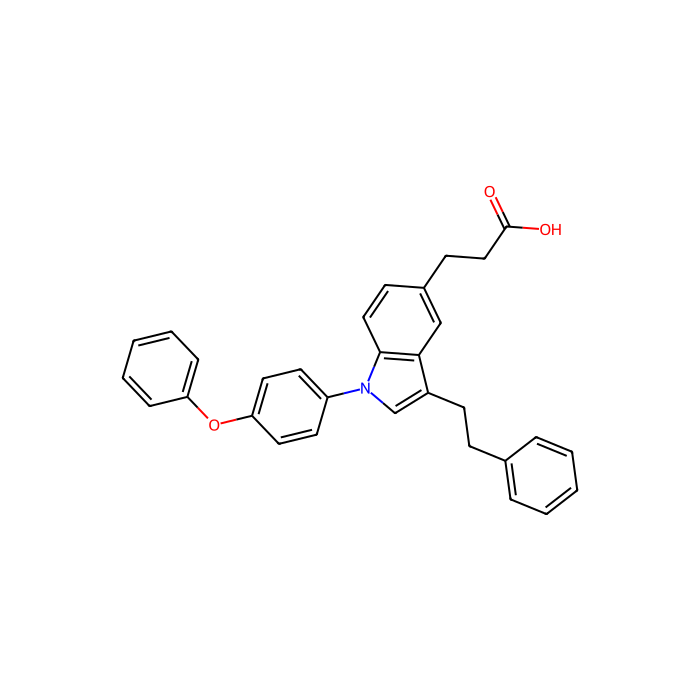
This compound belongs to the class of organic compounds known as diphenylethers. These are aromatic compounds containing two benzene rings linked to each other through an ether group.
External Descriptors
Not available
1. Djoumbou Feunang Y, Eisner R, Knox C, Chepelev L, Hastings J, Owen G, Fahy E, Steinbeck C, Subramanian S, Bolton E, Greiner R, and Wishart DS. ClassyFire: Automated Chemical Classification With A Comprehensive, Computable Taxonomy. Journal of Cheminformatics, 2016, 8:61.
Determine the necessary mass, volume, or concentration for preparing a solution.
Dilution Calculator
Determine the dilution needed to prepare a stock solution.
Reconstitution Calculator
리뷰
고객 리뷰
Application Protocols
No tested applications or protocols are provided for this item.
If ASB 14780 is a protein: Typical protocols would include reconstitution, dilution schemes, activity assays, and storage handling; parameters such as assay buffers, concentrations, and controls must be taken from the CoA or developed empirically.
If it is a small molecule: Stock preparation (often in DMSO), dilution into assay media, and control treatments (vehicle controls) are standard; exact conditions are assay-dependent and require identity confirmation.
General protocol tips (non-item-specific):
Prepare fresh aliquots to minimize freeze–thaw cycles.
Include negative/vehicle controls and, where applicable, a known positive control.
Record lot number, preparation date, and storage conditions for reproducibility.
Biological Roles
Item-specific biological function, targets, or pathways are not provided in the Product Data.
If ASB 14780 is a protein, relevant details would include sequence, species origin, post-translational modifications, biological activity, and known binding partners. None are supplied here.
If it is a small-molecule tool compound, typical information would include primary target(s), potency (IC50/Ki/EC50), selectivity profile, and cellular permeability. These are not provided.
Research-use context:
Labeled “For research use only,” with no medical or clinical claims. Any biological insights must be developed empirically in your system following verification of identity and quality via CoA/SDS.
Recommendations before biological work:
Verify endotoxin (if protein) and confirm activity with positive controls.
Establish dose–response or concentration–effect relationships in pilot studies.
Document exact lot-specific properties from CoA to ensure reproducibility.
Buffer Applications
Buffer-related uses depend on the material class and formulation, which are not specified.
If ASB 14780 is a protein: Typical buffers include PBS or Tris with defined pH and ionic strength; additions like glycerol or salts can stabilize during storage and freeze–thaw. Exact buffer composition, pH tolerance, and stability windows are not provided—consult the CoA.
If it is a small molecule: It does not function as a buffer; instead, it may be dissolved in buffers for assays. Ensure compatibility to avoid precipitation or activity loss.
Practical guidance (general):
Filter-sterilize working buffers (0.22 µm) for cell-based or protein work.
Pre-screen for surfactant sensitivity and metal ion effects if the material binds proteins or enzymes.
Document final buffer composition, including excipients, for reproducibility.
Green Alternatives
Green chemistry considerations depend strongly on material identity and use case, which are not provided for this item.
If ASB 14780 is a small-molecule reagent or solvent, greener substitutions could be evaluated (e.g., replacing high-toxicity solvents with 2-MeTHF, CPME, or bio-derived ethanol). Without knowing functional role, specific alternatives cannot be responsibly recommended.
If ASB 14780 is a protein/biologic used in assays, green alternatives are less applicable; focus instead on minimizing single-use plastics, scaling down assay volumes, and appropriate cold-chain energy management.
General green practice suggestions (non-item-specific):
Right-size reactions/assays to reduce solvent and reagent consumption.
Prefer aqueous systems when chemically and biologically compatible.
Consolidate cold shipments and use validated phase-change materials to reduce waste.
Implement solvent recovery where feasible.
Trade-offs should be assessed using metrics like E-factor, PMI, and solvent guides (CHEM21, GSK), once the role of ASB 14780 is established.
Pharmaceutical Uses
No pharmacopeial status or excipient role is provided for this item. This product is designated For research use only.
No claims are made regarding therapeutic use, clinical diagnostics, or GMP manufacturing.
If ASB 14780 is a protein, potential pharmaceutical-related research uses might include target validation, assay development, or biophysical studies—this is general context, not item-specific claims.
If it is a small-molecule tool, it may serve in discovery research (screening, MoA studies) only if identity and purity are confirmed; none are specified here.
Before any formulation research:
Obtain complete identity, purity, and impurity profile from the CoA.
Evaluate stability in intended excipient systems under ICH-like stress conditions (temperature, light, pH) as appropriate to the material class.
Physical Properties
Item-specific physico-chemical data are not provided in the Product Data. Do not assume values—verify on the CoA/Spec Sheet.
Appearance: Not specified for this item; refer to CoA/Spec Sheet.
Melting point (literature/computed): Not available for this listing.
Boiling point (literature): Not available for this listing.
Density (literature): Not available for this listing.
pKa/logP/logD (literature/computed): Not available for this listing.
Refractive index (literature): Not applicable unless liquid; not provided.
Aqueous solubility: Not specified for this item; refer to CoA/Spec Sheet.
Solubility in common solvents (DMSO, ethanol, buffers): Not specified for this item; refer to CoA/Spec Sheet.
General guidance (not specifications):
If ASB 14780 is a small molecule, a conservative first solvent for stock solutions is anhydrous DMSO (e.g., 10–50 mM), followed by dilution into assay buffer; confirm compatibility.
If it is a protein, solubility is dictated by buffer pH, ionic strength, and excipients (e.g., glycerol, salts). Start with PBS or Tris-buffered saline and adjust based on CoA guidance.
Quality and Grades
Grade/Purity: Not specified for this item; refer to CoA/Spec Sheet.
Context and implications:
Without an explicit grade (e.g., analytical, HPLC, bioactive, recombinant protein), users should consult the CoA to determine suitability for analytical work, biochemical assays, or cell-based applications.
If this is a protein product:
Typical quality markers include purity by SDS-PAGE/HPLC, endotoxin levels, host-cell protein/DNA, and activity assays. None are specified here.
If this is a small molecule:
Relevant specifications would include chemical purity (%), residual solvents, water content, and identity confirmation (NMR/LC–MS). These are not provided in the listing.
What to verify before use:
Purity method and value (e.g., HPLC area %, LC–MS purity).
Identity data (mass spectrum, NMR, sequence for proteins).
For bioassays: endotoxin (proteins) or counter-ion content/salt form (small molecules).
Stabilizers/excipients: Not specified in this listing; check if any are present, as they can affect assays and storage.
Reaction and Applications
This listing does not specify the chemical class or intended reactions. No manufacturer application text is provided. Accordingly, reaction-focused applications cannot be detailed without the CoA/Spec Sheet.
If ASB 14780 is a protein/biologic (category indicates proteins), it is generally not used as a stoichiometric reagent or solvent in chemical synthesis. Its applications would instead be in biochemical assays, binding studies, or functional analyses—details are not provided here.
If ASB 14780 is a small molecule, potential applications might include biochemical probe studies or screening. However, without structure and target information, it is not appropriate to suggest specific reaction families or mechanisms.
Practical recommendations:
Obtain full identity and intended-use notes from the CoA before designing experiments.
For biochemical assays, pre-validate solvent tolerances, concentration ranges, and assay controls.
For any chemical transformation plans (if applicable), confirm reactivity motifs from verified structure (SMILES/NMR) prior to use.
Reaction Conditions
No reaction conditions can be responsibly recommended without knowing the structure and role of ASB 14780.
For proteins/biologics: Reaction conditions are generally replaced by assay conditions (buffer, temperature, co-factors), which are not supplied here.
For small molecules: Typical parameters (solvent, temperature, catalysts) depend on functional groups and desired transformation; none can be inferred from the current data.
General advice:
Pilot small-scale tests first, recording temperature, solvent composition, and stability.
Use orthogonal analytics to monitor stability or conversion under test conditions.
Consult literature once the exact identity is confirmed (e.g., via PubChem CID) to benchmark plausible conditions.
Safety and Handling
Use standard laboratory precautions. Specific GHS information is not provided in the Product Data; defer to the SDS for authoritative safety details.
GHS classification: Not specified for this item; refer to CoA/Spec Sheet/SDS.
Signal word / H-statements / pictograms: Not specified for this item; refer to SDS.
Primary hazards: Unknown from the listing. Treat as potentially harmful by ingestion, inhalation, or skin/eye contact until SDS is reviewed.
Personal protective equipment (PPE):
Lab coat, safety glasses or face shield, and appropriate chemically resistant gloves (e.g., nitrile).
Use in a fume hood or biosafety cabinet as appropriate to the material type (chemical vs protein/biologic).
If proteinaceous, minimize foam and vortexing to reduce denaturation.
If a small molecule of unknown hazard class, avoid heating and mix on ice as needed.
Incompatibilities: Not specified; as a conservative approach, segregate from strong oxidizers/reductants and acids/bases until identity is confirmed via CoA.
First aid (general):
Skin/eye contact: Rinse with water for ≥15 minutes; remove contaminated clothing; seek medical attention.
Inhalation: Move to fresh air; medical evaluation if symptoms persist.
Ingestion: Rinse mouth; do not induce vomiting; seek medical attention.
Waste: Dispose according to institutional hazardous waste protocols; classification depends on SDS.
Shipping/storage risk: Shipped cold; maintain cold chain to preserve integrity.
Solvent Selection
No item-specific solubility data are provided. Choose solvents based on the material class (confirm via CoA).
If ASB 14780 is a small molecule (general guidance):
Primary stock solvent: DMSO due to broad solvency and assay compatibility at low final %.
Secondary options: Ethanol, methanol, acetonitrile. Validate UV cutoffs if using spectroscopic readouts.
Aqueous use: Dilute DMSO stocks into buffer with vigorous mixing; keep final DMSO ≤0.1–1% v/v as assay permits.
If ASB 14780 is a protein (general guidance):
Aqueous buffers: PBS (pH ~7.2–7.4) or Tris-buffered saline with optional 10–50% glycerol for freeze-thaw protection.
Additives: Small amounts of non-ionic detergents (e.g., 0.01% Tween-20) can reduce surface adsorption if compatible with downstream assays.
Comparison notes (general, not item-specific):
DMSO vs ethanol: DMSO offers higher polarity and solvation power but may affect certain enzymes/cells at >0.5% v/v; ethanol evaporates faster and can precipitate components upon dilution.
PBS vs Tris: PBS offers physiological ionic strength; Tris provides buffering capacity near neutral but is temperature-sensitive.
Storage and Reconstitution
Item-specific conditions provided:
Storage: Store at -20°C (Product Data)
Shipped: Ice chest + Ice pads (Product Data)
Additional guidance (general; not item-specific specifications):
Upon receipt: Verify the container integrity and immediately return to -20°C storage to maintain cold-chain continuity.
Light/moisture: In absence of specific guidance, protect from light and moisture. Use desiccation for hygroscopic solids.
Aliquoting: To avoid repeated freeze–thaw, subdivide into single-use aliquots upon first thaw. Record aliquot concentrations and dates.
Reconstitution (depends on material class; consult CoA):
If small molecule: Start with anhydrous DMSO to a convenient stock (e.g., 10–50 mM), then dilute into assay buffer immediately before use. Filter if particulate persists.
If protein: Reconstitute gently in sterile buffer (e.g., PBS or Tris with optional 5–50% glycerol) to the CoA-recommended concentration. Avoid vigorous vortexing; mix by gentle inversion. Allow to dissolve on ice.
Stability monitoring:
Inspect for precipitation, turbidity, color change, or activity loss. Discard if degradation is suspected.
Note: Where any parameter is not explicitly listed above, it is Not specified for this item; refer to CoA/Spec Sheet.
Structure and Identity
Brief overview: Limited item-specific identifiers are supplied for ASB 14780. Where missing, consult the CoA/Spec Sheet.
Product name: ASB 14780 (SKU: A286909)
CAS: 1069046-00-9 (Product Data)
PubChem CID: 25052603 (Product Data)
InChIKey: 16188 (as provided; appears incomplete—refer to CoA for full identifier)
SMILES: Not specified for this item; refer to CoA/Spec Sheet.
Molecular formula: Not specified for this item; refer to CoA/Spec Sheet.
Molecular weight: Not specified for this item; refer to CoA/Spec Sheet.
Structural features (descriptive):
2D/3D structure, ring systems, stereochemistry, and functional groups are not provided in the Product Data. Please consult the CoA, SDS, or supplier technical dossier for definitive structural depiction.
Notes:
If this material is a protein (category indicates “蛋白质”), sequence, modifications, and isoelectric point would define identity; these are not provided here.
If it is a small-molecule reagent (name suggests this possibility), exact structure (SMILES/InChI) is needed before planning solubility, assay setup, or analytical methods.
Synthetic Utility
Synthetic utility cannot be described without a defined structure or functional group information.
If ASB 14780 is a protein/biologic, it is not typically used as a synthetic building block.
If it is a small molecule, potential transformations, protecting-group strategies, or coupling chemistries hinge on its functional groups (unknown here).
Recommendations:
Acquire structural identifiers (complete InChIKey/SMILES) and spectroscopic data from the CoA prior to including this material in any synthetic route.
Plan orthogonal analytical confirmation (LC–MS, NMR, HPLC) upon receipt to verify lot-specific identity before use.
Target Specificity
Target specificity details are not provided in the Product Data and cannot be inferred.
If ASB 14780 is a protein (e.g., enzyme, ligand, antibody), information such as target, epitope, species reactivity, or activity is required—none are listed.
If it is a small-molecule tool, target class (kinase, GPCR, ion channel, etc.), affinity, and selectivity panel data would define specificity—these are not supplied.
Please consult the CoA/technical datasheet for definitive target information before experimental design.
자주 묻는 질문
What is the purity of this product, and how is it determined?
This product is supplied at ≥98% purity, determined by HPLC. Lot-specific values are stated on the Certificate of Analysis.
How should this product be stored?
Store at ?20 °C. Freezer storage is required to maintain the specified shelf life.
How is this product shipped?
This product ships in an insulated container with ice pads. Unpack on arrival and transfer it to the storage condition stated above.
What are the CAS number, molecular formula and molecular weight?
The CAS Number is 1069046-00-9, the molecular formula is C??H??NO??C?H??NO?, and the molecular weight is 582.7 g/mol. InChIKey AVSDLGNMCGTBHT-UHFFFAOYSA-N.
What documentation is provided?
Available product documentation, including Certificates of Analysis (COA), Safety Data Sheets (SDS), and specification sheets, is shown in the product document area. Document availability and access follow the current site policy.
Products are supplied to verified businesses, institutions, and qualified professionals for research and development use only. Not for use in humans, animals, diagnosis, or therapy.