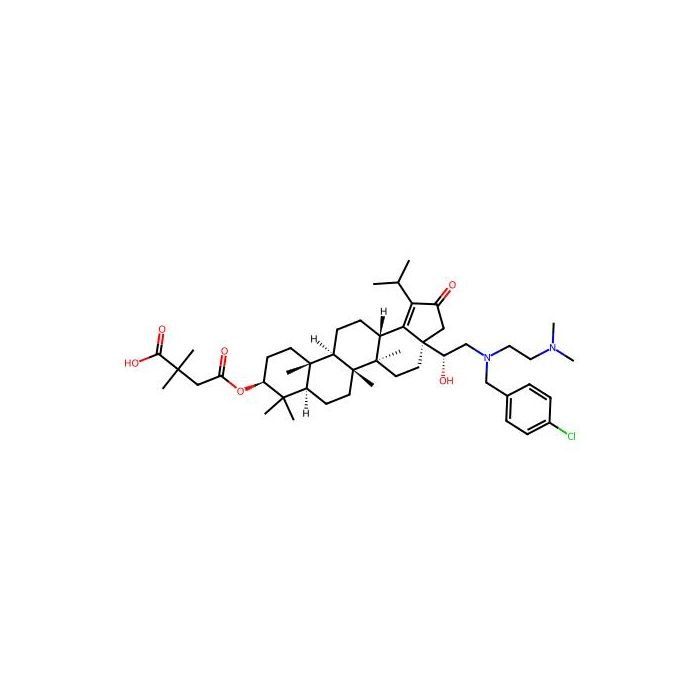
등급 & 순도Moligand™?Moligand™ — Aladdin's line of ligands and bioactive small molecules. Use for receptor, pathway, and binding studies needing defined small-molecule tools.10mM in DMSO
Determine the necessary mass, volume, or concentration for preparing a solution.
Dilution Calculator
Determine the dilution needed to prepare a stock solution.
Reconstitution Calculator
리뷰
고객 리뷰
Application Protocols
No validated application protocols are provided in the Product Data for this item. The following generic practices are commonly used for small-molecule ligands in discovery research and should be adapted after confirming solubility and stability.
Stock preparation:
Dissolve the compound in anhydrous DMSO to 10–50 mM, vortex/sonicate as needed. Filter sterilize (0.2 µm PTFE) if required for sensitive assays.
Aliquot and store at –80 °C to avoid repeated freeze–thaw cycles.
Biochemical assays:
Prepare serial dilutions in assay buffer maintaining constant DMSO (e.g., 0.1–1%). Include vehicle controls and, when relevant, detergent controls to mitigate aggregation artifacts.
Biophysical assays (DSF/MST/SPR/ITC):
Verify absence of interfering fluorescence/absorbance. For SPR/ITC, degas buffers and match DMSO content between sample and reference channels.
Cell-based assays (research use only):
Establish maximum tolerated DMSO level for the system. Confirm compound stability in media and adsorption to plastics; use low-bind consumables as needed.
All parameters must be optimized empirically for this specific compound.
Biological Roles
Item-specific biological targets, pathways, and modes of action are not provided in the Product Data. As such, no claims are made regarding its biological function. The following are general considerations for small-molecule research ligands used in discovery workflows.
Target engagement: Ligands are evaluated for binding to enzymes, receptors, or protein–protein interaction surfaces using orthogonal assays (e.g., biochemical activity, biophysical binding) to confirm on-target effects.
ADME-relevant properties (general): Permeability, metabolic stability (microsomes/S9/hepatocytes), plasma protein binding, and solubility influence observed activity in cellular systems. These properties are compound-specific and must be experimentally determined.
Off-target assessment: Profiling against panels (e.g., safety pharmacology, kinome, GPCRs) can identify potential polypharmacology; interpretation should consider concentration relative to potency and free fraction.
Aggregation/artifact risks: Some chemotypes exhibit colloidal aggregation, redox cycling, or reactive functionality that confounds assays. Employ detergent controls, counter-screens, and redox quenchers as appropriate.
Important: This product is supplied strictly for research use only and is not intended for diagnostic, therapeutic, or clinical applications. For any biological study, confirm identity, purity, counterion form, and solution stability to ensure data reliability.
Buffer Applications
This product is not a buffering agent and no pKa or buffering range is provided. Therefore, buffer preparation guidance is not directly applicable.
Practical notes for assay buffers (general, not item-specific):
When dosing small molecules into aqueous systems, ensure final cosolvent (e.g., DMSO) remains within tolerated limits for the biological assay (commonly 0.1–1%).
Pre-screen for precipitation across the intended buffer pH range and ionic strength. Include minimal nonionic detergent to mitigate colloidal aggregation if compatible with the assay.
Filter or centrifuge solutions to remove particulates prior to use in optical/biophysical readouts.
For actual buffer recipes and pKa-dependent selections, refer to standard buffers (e.g., phosphate, HEPES, Tris, MOPS) suited to your biological system; this compound itself does not function as a buffer.
Green Alternatives
Because this item is a defined small-molecule ligand rather than a volumetrically used solvent or reagent, the primary environmental considerations relate to solvent choice for handling and analytical work.
Greener solvent choices for preparation and purification (general guidance):
Prefer ethanol or isopropanol over methanol where feasible for crystallization/recrystallization, considering safety and green metrics.
For chromatography, explore ethyl acetate/heptane or 2-MeTHF/heptane systems as alternatives to dichloromethane/hexane, subject to compound solubility and retention.
For stock solutions, DMSO remains common; consider propylene carbonate as a high-boiling, lower-vapor-pressure alternative in specific analytical contexts if compatible.
Small comparison (general, not item-specific):
DCM vs. EtOAc: EtOAc is less hazardous and often an effective eluent; may require polarity adjustment with alcohol modifiers.
THF vs. 2-MeTHF/CPME: 2-MeTHF and CPME offer improved sustainability profiles and reduced peroxide formation tendencies compared to THF, but verify solubility and UV baseline for analytics.
ACN vs. MeOH in HPLC: MeOH is greener but may change selectivity/pressure; consider core–shell columns to mitigate backpressure.
Waste minimization:
Use microscale assays and 96/384-well formats to reduce solvent consumption.
Consolidate waste streams by solvent class and follow institutional green chemistry and waste disposal policies.
Pharmaceutical Uses
No pharmacopeial status, excipient role, or formulation guidance is provided for this item. It is supplied for research use only and is not intended for human or veterinary use.
Research-oriented formulation considerations (general, not item-specific):
Solubility enhancement strategies for in vitro and preformulation studies include co-solvents (DMSO, PEG 400), cyclodextrin inclusion complexes, and pH adjustments when ionizable groups are present (confirm pKa before attempting).
For in vivo research models (non-clinical), typical vehicles may combine PEG 400/EtOH/saline or Captisol solutions; ensure compatibility, osmolality, and pH are appropriate for the intended route. All such uses require local ethical and safety approvals and are outside the scope of this product listing.
Solid form control (free base vs. salt, amorphous vs. crystalline) can influence dissolution and stability; verify form via the CoA.
No statements are made regarding therapeutic indications or clinical applications.
Physical Properties
Item-specific physicochemical parameters are not provided in the Product Data and should be verified from the CoA/Spec Sheet for the supplied batch.
Appearance: Not specified for this item; refer to CoA/Spec Sheet.
Molecular weight: Not specified for this item; refer to CoA/Spec Sheet.
Molecular formula: Not specified for this item; refer to CoA/Spec Sheet.
Melting point: Not specified for this item; refer to CoA/Spec Sheet.
Boiling point: Not specified for this item; refer to CoA/Spec Sheet.
Density: Not specified for this item; refer to CoA/Spec Sheet.
Refractive index: Not applicable for solids; if liquid, not specified for this item; refer to CoA/Spec Sheet.
Solubility: Not specified for this item; refer to CoA/Spec Sheet.
LogP/logD: Not specified for this item; refer to CoA/Spec Sheet.
pKa: Not specified for this item; refer to CoA/Spec Sheet.
General laboratory handling notes (literature/practice-based, not item-specific):
Small-molecule screening ligands are commonly formulated as DMSO stock solutions (e.g., 10–50 mM) for HTS/biochemical assays. Verify actual solubility and stability before preparing concentrated stocks.
If hygroscopic or polymorphic behavior is suspected, minimize exposure to ambient humidity and heat; confirm solid form via CoA if relevant to your application.
Assess solution stability by LC–MS/HPLC in intended assay buffers/vehicles, as hydrolysis or oxidation can be compound-class dependent.
Quality and Grades
Grade: Moligand™ (Aladdin). This designation indicates the material is curated for small-molecule research and ligand discovery workflows. Lots are typically suitable for biochemical screening, target engagement studies, and chemoproteomics method development, subject to end-user verification.
What Moligand™ typically implies (general guidance; verify item-specific specs on CoA):
High chemical purity appropriate for discovery research. Absence/presence of stabilizers, residual solvents, or counterions is batch-dependent—review CoA.
Identity confirmation by orthogonal analytical methods (e.g., NMR, LC–MS, HRMS) is standard practice in Moligand-class materials. Exact methods employed for this batch are not specified; refer to CoA.
Trace-level attributes (water content, residual metals, UV cutoff, peroxide values) are Not specified for this item; refer to CoA/Spec Sheet.
Fit-for-purpose notes:
For screening, authentication via in-house LC–MS prior to critical assays is recommended. Assess purity under your detection wavelength to ensure no UV-active impurities interfere.
For quantitative biophysics (ITC, SPR, MST), verify counterion/form (free base vs. salt), extinction coefficient (if using UV quantitation), and water content for accurate concentration determination.
For cell-free enzymology and chemoproteomics, evaluate artifact reactivity (e.g., PAINS filters) and aggregation propensity (e.g., detergent controls) as appropriate to your assay.
Reaction and Applications
This product is supplied as a research-grade small-molecule ligand for discovery and screening. It is not primarily positioned as a synthetic reagent. Accordingly, applications focus on chemical biology and early discovery workflows rather than stoichiometric or catalytic transformations.
Representative research uses (general guidance, not item-specific claims):
Biochemical target engagement assays (e.g., enzyme inhibition/activation studies) following verification of identity and purity.
Biophysical characterization: MST, DSF/thermal shift, ITC, or SPR, contingent on solubility and absence of surfactant-sensitive aggregation.
Cellular assay development and SAR exploration after confirming permeability and stability in relevant media; employ controls to exclude promiscuous mechanisms.
Analytical method development: establishment of LC–MS/MS quantification in complex matrices to support exposure/stability studies in research models.
Practical considerations:
Prepare concentrated DMSO stocks (e.g., 10–50 mM) and store aliquots at –80 °C to limit freeze–thaw cycles.
Confirm solution stability in assay diluent (time, temperature, light) via LC–MS; include redox and pH stress if mechanism suggests liability.
Use detergent controls (e.g., 0.01–0.05% Tween-20 or 0.01% Triton X-100) and counter-assays for redox cycling/colloidal aggregation where applicable.
Note: If employing this molecule in synthetic chemistry, treat it as a complex substrate; reaction behavior will be governed by its unknown functional group profile—consult structure-specific literature if available.
Reaction Conditions
No reaction conditions are specified for this item because it is supplied as a finished small-molecule ligand rather than a reagent intended for promoting or undergoing standard synthetic reactions.
If you plan to modify the molecule (general, structure-dependent guidance):
Coupling chemistries (amide, ester, urea): Typical use of carbodiimides (EDC/HOBt or HATU), CDI, or mixed anhydrides at 0–25 °C in DMF, DCM, or MeCN. Confirm functional groups present before selection.
Cross-couplings (if aryl halides/boronates exist): Pd-catalyzed Suzuki–Miyaura or Buchwald–Hartwig conditions in toluene/dioxane/MeCN with bases (K2CO3, Cs2CO3) at 60–110 °C.
Heteroatom alkylations/acylations: Employ mild bases (DIPEA, K2CO3) in polar aprotic solvents; monitor to avoid over-alkylation.
These are literature-style generalities and not item-specific recommendations. Always validate on milligram scale with analytical follow-up. For exact reactivity and stability, consult the verified structure and perform targeted scouting experiments.
Safety and Handling
Safety details specific to this item are not provided in the Product Data. Always consult the product’s SDS before handling.
GHS classification: Not specified for this item; refer to SDS.
Signal word, hazard statements (H-), pictograms: Not specified for this item; refer to SDS.
General laboratory precautions (best practice):
Engineering controls: Work in a chemical fume hood when weighing, dissolving, or transferring to avoid inhalation of dusts/aerosols.
PPE: Laboratory coat, safety glasses or goggles, and suitable chemical-resistant gloves (e.g., nitrile). Consider double-gloving when handling DMSO solutions to limit dermal uptake potential.
Avoid ingestion, inhalation, and skin/eye contact. Wash hands thoroughly after handling.
Incompatibilities: Unknown for this item; segregate from strong oxidizers/reductants and acids/bases until specific stability data are reviewed.
First-aid overview (defer to SDS for authoritative guidance):
Skin/eye contact: Rinse with water for at least 15 minutes; remove contaminated clothing; seek medical advice.
Inhalation: Move to fresh air; monitor for symptoms; obtain medical attention if unwell.
Ingestion: Rinse mouth; do not induce vomiting unless directed by medical personnel.
Spill response: Avoid raising dust or aerosols; collect with inert absorbent; dispose per institutional chemical waste procedures.
Fire-fighting: Use CO2, dry chemical, or foam as appropriate for surrounding materials; combustion products may be irritating—firefighters should wear SCBA.
Solvent Selection
Item-specific solubility is not reported. The following guidance reflects common practice for small-molecule ligands and should be validated experimentally for this item.
Primary stock solvent (practice-based):
DMSO is typically preferred due to broad solubilizing power and compatibility with HTS, biochemical, and many cell-based assay formats.
Secondary/auxiliary solvents:
DMF or NMP can be used when DMSO solubility is limited, but assess assay compatibility and cytotoxicity where relevant to research contexts.
Water-miscible cosolvents (EtOH, MeOH, acetonitrile) may aid dissolution followed by dilution into aqueous buffers. Pre-wet the vial walls with solvent to recover all solids.
Aqueous compatibility:
Determine precipitation limits upon dilution into buffers (e.g., 0.1–1% DMSO final). Evaluate solubility at the assay pH and ionic strength.
Polarity class: Not specified for this item; refer to CoA/Spec Sheet or compute from structure if available.
Comparison snapshot (general, not item-specific):
DMSO: maximal solubility, good freeze–thaw tolerance, low volatility.
ACN/MeOH: useful for HPLC sample prep; higher volatility; may denature proteins.
EtOH: biocompatible at low %; narrower solubility window than DMSO.
Practical tips:
Sonication and gentle heating (≤40 °C) can assist dissolution; avoid prolonged heat to minimize degradation.
Filter 0.2 µm before analytical injections to protect columns; verify no analyte loss to membrane.
Storage and Reconstitution
Storage conditions (from Product Data): Store at –80 °C.
Shipping (from Product Data): Shipped on dry ice packs + cold packs to maintain frozen/cold chain integrity.
Research use note: For research use only.
Reconstitution (general guidance, validate for this item):
Upon receipt, allow the sealed container to equilibrate to room temperature inside a desiccator before opening to minimize moisture condensation.
For solid material: Dissolve in anhydrous DMSO to prepare a concentrated stock (e.g., 10–50 mM), unless CoA indicates alternative preferred solvent. If provided as a solution, verify concentration and solvent on the label/CoA.
Aliquot into chemically resistant, low-bind tubes; purge headspace with inert gas (e.g., nitrogen or argon) if oxidation is a concern, and freeze at –80 °C.
Avoid repeated freeze–thaw cycles; thaw on ice and return unused portions promptly to –80 °C.
Stability and specifications:
Retest/expiry, hygroscopicity, light sensitivity, and exact solubility: Not specified for this item; refer to CoA/Spec Sheet.
If long-term storage is anticipated, consider storing as multiple small aliquots and maintain a usage log with date/time, thaw cycles, and analytical checks (e.g., periodic LC–MS purity assessment).
Structure and Identity
This product is a defined small-molecule research ligand supplied under Aladdin’s Moligand™ grade. Detailed structural identifiers for this specific item are not disclosed in the Product Data.
Chemical name: Not specified for this item; refer to CoA/Spec Sheet.
CAS: 1443460-91-0 (product identifier from catalog)
CID: 71580991 (external registry reference)
Molecular formula: Not specified for this item; refer to CoA/Spec Sheet.
Molecular weight: Not specified for this item; refer to CoA/Spec Sheet.
InChIKey: Not specified for this item; refer to CoA/Spec Sheet.
SMILES: Not specified for this item; refer to CoA/Spec Sheet.
Structural features (general guidance):
Without an available structure, ring systems, stereochemistry, and functional group content cannot be enumerated for this item. Consult the CoA/Spec Sheet for definitive identifiers.
For databasing and inventory control, use the CAS and CID provided above to cross-reference external resources if needed for cheminformatics work.
2D structure description:
Not available in the Product Data. If structural depiction is required for ELN/LIMS, retrieve from the CoA or authoritative databases using the provided CAS/CID. Ensure that any imported representation matches the supplied batch identity by comparing to the CoA.
Synthetic Utility
This product is provided as a discrete research ligand rather than a general-purpose building block. Without item-specific functional group information, its use in synthetic transformations cannot be advised.
General guidance if derivatization is contemplated (structure-dependent and not item-specific):
Map reactive handles (e.g., aryl halides, anilines, carboxylic acids, alcohols) from the verified structure before planning couplings or late-stage diversification.
For probe development, consider installing minimal linkers through metabolically stable positions; confirm that modifications preserve activity via SAR.
If bioconjugation is desired, select chemistries matched to existing functionalities (e.g., NHS ester formation from acids, carbamate/urethane from alcohols/amines, click handles via azide/alkyne introduction) following confirmation that the parent scaffold tolerates modification.
Caution:
Do not assume reactivity or stability; consult the CoA/Spec Sheet for structure, assess functional group compatibility, and perform small-scale tests with analytical monitoring (LC–MS/HPLC/NMR).
Target Specificity
Target class, primary target(s), and binding mode are not provided in the Product Data for this item. No claims are made regarding specificity or selectivity.
Guidance for establishing specificity in research (general, not item-specific):
Use orthogonal assays (biochemical potency, biophysical binding, and cell-based functional readouts) to triangulate on-target effects.
Include counter-screens against close homologs or key off-target panels relevant to your target class (e.g., kinome, GPCR selectivity sets).
Deploy control experiments such as thermal shift counter-screens and detergent sensitivity to rule out nonspecific aggregation.
Consider chemoproteomic pull-downs or CETSA/DARTS for target deconvolution if the molecular target is unknown.
For definitive target information for this product, refer to the CoA/Spec Sheet or supporting documentation from your project.
자주 묻는 질문
How is this product shipped?
This product ships frozen with dry ice and cold packs. Unpack on arrival and transfer it to the storage condition stated above; handle dry ice with insulated gloves in a ventilated area.
What are the CAS number, molecular formula and molecular weight?
The CAS Number is 1443460-91-0, the molecular formula is C48H73ClN2O6, and the molecular weight is 809.56 g/mol.
What is Moligand??
Moligand? is one of Aladdin Scientific's premium product lines, formulated for high-purity applications across multiple workflows. Compared to standard grades in the same workflow, Moligand? products typically offer tighter specifications, more rigorous QC, and stronger lot-to-lot consistency.
How should this product be stored?
Store at ?80 °C. Ultra-low temperature storage is required to maintain the specified shelf life.
What documentation is provided?
Available product documentation, including Certificates of Analysis (COA), Safety Data Sheets (SDS), and specification sheets, is shown in the product document area. Document availability and access follow the current site policy.
등급 선택에 도움이 필요하신가요?
당사의 등급 선택 가이드는 카탈로그의 모든 변형 제품에 대해 순도, 안정제 상태 및 용도 적합성을 다룹니다.
Products are supplied to verified businesses, institutions, and qualified professionals for research and development use only. Not for use in humans, animals, diagnosis, or therapy.