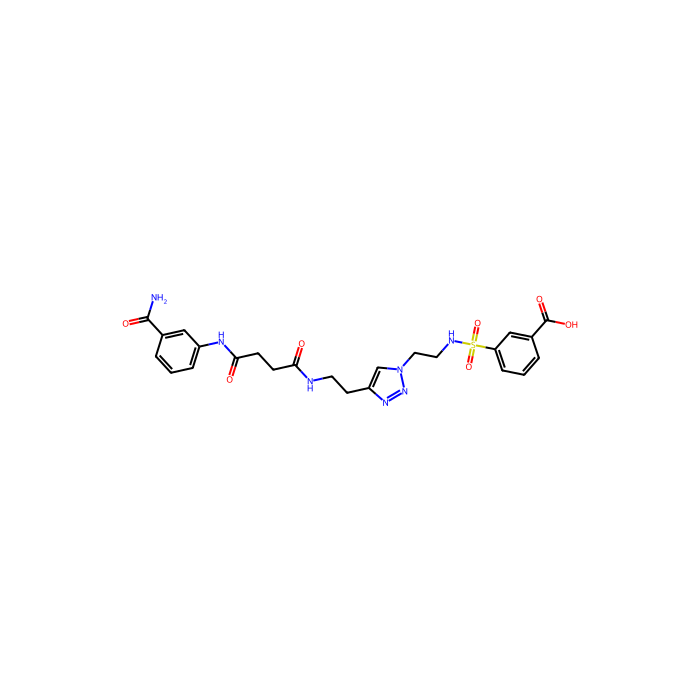
PARP14 inhibitor (IC50= 490 nM). Exhibits ~ 24- and 18-fold selectivity for PARP14 over PARP1 and TNKS1, respectively. Binds both the nicotinamide and adenine sites on PARP14. Inhibits PARP14 and induces apoptosis in HepG2 and RPMI-8226 in cancer cellsin vitro.
Determine the necessary mass, volume, or concentration for preparing a solution.
Dilution Calculator
Determine the dilution needed to prepare a stock solution.
Reconstitution Calculator
리뷰
고객 리뷰
Application Protocols
No validated, item-specific application protocols are provided in the Product Data. The following are general starting points for protein handling; optimize for the specific H10 material once its specifications are known.
Basic reconstitution (if lyophilized; general):
Gently add cold buffer (e.g., PBS or HEPES, pH 7.2–7.4) to achieve the desired concentration; allow to sit on ice for 10–15 min with gentle mixing. Avoid vigorous vortexing.
ELISA/coating (if applicable):
Coat microplates with 1–10 µg/mL protein in carbonate–bicarbonate buffer (pH 9.6), 2–16 h at 4 °C; block with 1–5% BSA.
SDS-PAGE/Western blot:
Load 0.1–2 µg per lane depending on detection; reduce/boil as appropriate; transfer to PVDF and probe with validated antibodies/ligands.
SPR/BLI binding assays:
Immobilize via amine coupling (pH scouting 4.0–5.5) or capture-tag strategies; run kinetic injections at 25 °C in HEPES-buffered saline with surfactant.
These are literature-based, non-item-specific suggestions. For confirmed, product-validated protocols (e.g., tested dilutions, positive controls), please refer to the CoA/Spec Sheet.
Biological Roles
Item-specific biological function, origin, and target are not provided. The following summarizes general biological roles of proteins (literature; not item-specific) to contextualize potential research applications.
Functional diversity:
Enzymes catalyze biochemical reactions with high specificity and rate enhancement; kinetics described by Michaelis–Menten or more complex models.
Structural proteins (e.g., cytoskeletal elements) provide mechanical support and organization.
Transport/binding proteins shuttle metabolites and ions or mediate selective ligand binding.
Regulatory proteins (transcription factors, signaling adaptors) control gene expression and pathways.
Activity depends on pH, ionic strength, cofactors (metal ions, nucleotides), and post-translational modifications.
Folding and stability are governed by hydrophobic effect, hydrogen bonding, salt bridges, and disulfide bonds.
Experimental implications:
Functional assays should mimic physiological pH and salt, and include necessary cofactors.
Protein–protein and protein–ligand interactions can be quantified via SPR/BLI, ITC, fluorescence anisotropy, and MS-based approaches.
For the precise biological role of H10, consult the CoA/Spec Sheet or related literature keyed to the provided CAS/CID identifiers.
Buffer Applications
No item-specific buffer formulation is provided. The following protocols are general, literature-based guidance for handling proteins and should be adapted to the specific H10 material upon review of its CoA/Spec Sheet.
Common working buffers:
PBS (1×): 137 mM NaCl, 2.7 mM KCl, 10 mM phosphate, pH 7.4. Widely used for storage and assays.
Tris-buffered saline (TBS): 25–50 mM Tris, 150 mM NaCl, pH 7.5–8.0. Avoid for NHS-ester coupling due to Tris amines.
HEPES buffer: 10–50 mM HEPES, 150 mM NaCl, pH 7.2–7.5. Low interference in metal-dependent systems.
Additives (as needed):
Glycerol (5–10%) for freeze–thaw resilience; 0.01–0.05% Tween-20 to reduce surface adsorption; 0.1 M L-arginine to suppress aggregation; DTT/TCEP if reduced thiols are required (avoid with maleimides).
pH and ionic strength:
Maintain pH within ±0.2 units of target; adjust ionic strength (100–300 mM NaCl) to balance solubility and activity.
Filtration and sterility:
Filter buffers through 0.22 µm membranes; work aseptically if long-term storage at 2–8 °C is planned without preservatives.
Always verify compatibility with the specific protein, downstream assays, and any conjugation chemistry.
Green Alternatives
While “green alternatives” typically address organic solvents and hazardous reagents, for protein reagents the sustainability focus shifts to buffer selection, formulation, and logistics.
Greener choices (general; not item-specific):
Buffer systems: Favor HEPES or MOPS over phosphate in processes where phosphate discharge is regulated; avoid volatile amines where indoor air quality is a concern.
Preservatives: Where possible, use minimal effective concentrations and select readily biodegradable options; consider single-use aliquots to avoid biocide use.
Formulation: Utilize lyophilization with benign excipients (e.g., trehalose, sucrose) to enable refrigerated rather than frozen shipment/storage, reducing energy demand when compatible.
Cold chain: Optimize order bundling to reduce transport frequency; validated ice packs vs. dry ice when the product is stable at −20 °C rather than −80 °C.
Tradeoffs:
Lower preservative use may shorten open-vial stability; compensate with aliquoting and sterile technique.
Lyophilization can induce structural stress; requires empirical optimization of excipients and reconstitution protocols.
Implement sustainability within the constraints of maintaining protein integrity and experimental reproducibility.
Pharmaceutical Uses
No clinical or therapeutic claims are made. This product is for research use only.
Research/formulation context (general; not item-specific):
Proteins are employed as analytical standards, process development surrogates, or formulation excipients carriers in early-stage research.
Pre-formulation screens often evaluate pH (5–8.5), buffers (histidine, acetate, citrate, phosphate, Tris, HEPES), ionic strength, and stabilizers (sugars, polyols, amino acids) to map stability space (DSF, DSC).
Aggregation and particle formation are monitored by SEC, DLS, MFI, and subvisible particle assays.
For conjugate development, proteins may be assessed for conjugation chemistries (NHS–amine, maleimide–thiol) and drug-to-protein ratio by UV/MS.
Compliance considerations:
Any use in manufacture or quality control requires defined specifications and validated methods; consult the CoA/Spec Sheet for available quality attributes.
Not tested to pharmacopeial standards unless explicitly stated on the CoA; no such statements are provided in the Product Data.
Physical Properties
Item-specific physical property specifications are not provided for this product. Where helpful, general literature ranges for proteins are listed for experimental planning only.
Item-specific data (from Product Data):
Appearance: Not specified for this item; refer to CoA/Spec Sheet.
Molecular Weight: Not specified for this item; refer to CoA/Spec Sheet.
Molecular Formula: Not specified for this item; refer to CoA/Spec Sheet.
General protein literature values (not item-specific):
Physical state: Typically supplied as a lyophilized solid or aqueous buffer solution; colorless to off-white.
Solubility: Highly dependent on sequence and pI; many globular proteins are soluble in physiological buffers (e.g., PBS, Tris, HEPES) with 150–300 mM salts; some require additives (e.g., glycerol, 0.01–0.1% nonionic detergents) to avoid aggregation.
pI range (typical): ~4–10 (sequence-dependent); solubility minimum often near the pI.
Stability: Often improved at low temperature (≤4 °C) and with stabilizers (e.g., sugars, polyols, BSA as carrier for dilute solutions).
Denaturation temperatures (Td): Highly variable (often 40–80 °C), sensitive to buffer, pH, ionic strength, and cofactors.
Aggregation tendency: Promoted by extremes of pH, elevated temperature, freeze–thaw cycling, air–liquid interfaces, and mechanical shear.
Note: For any critical parameters (e.g., exact MW, concentration, formulation, excipients), consult the product’s CoA/Spec Sheet.
Quality and Grades
Item-specific grade/purity (from Product Data):
Grade/Purity: Not specified for this item; refer to CoA/Spec Sheet.
Interpreting typical protein product grades (general guidance; not item-specific):
Research grade: Suitable for most biochemical assays, method development, and discovery research. Specifications commonly include identity (e.g., MS, sequence), purity by SDS-PAGE/HPLC, and residual contaminants (host-cell proteins/DNA, endotoxin) when applicable.
Recombinant vs. native: Recombinant proteins may include tags (His, GST, Fc) influencing purity and formulation; native proteins may have heterogeneous PTMs.
Endotoxin levels: Critical for cell-based assays; values are reported in EU/mg or EU/µg. If relevant, confirm on CoA.
Activity assays: Where applicable (enzymes, cytokines), units and assay conditions are defined on CoA/Spec Sheet.
Stabilizers/excipients: Sugars (trehalose, sucrose), polyols (glycerol), salts, and carrier proteins can enhance stability; confirm composition on the label/CoA before sensitive applications (e.g., MS, coupling chemistry).
Practical recommendations:
Request and review the CoA/Spec Sheet for exact purity, identity methods, buffer composition, and any preservatives.
Match grade to use case: cell culture and receptor assays often require low endotoxin and preservative-free formulations.
Reaction and Applications
Item-specific application claims are not provided. Below are general research applications for proteins, offered as literature-based guidance (not item-specific).
Analytical/biophysical:
SDS-PAGE/Western blot for identity/purity; SEC-MALS, AUC, DLS for oligomeric state and aggregation.
Circular dichroism (CD) or DSF to assess secondary structure/stability; ITC/SPR/BLI for binding thermodynamics/kinetics.
Chemical biology and labeling:
Conjugation via lysine ε-amines (NHS-esters, isothiocyanates) or cysteine thiols (maleimides, haloacetyl reagents); site-specific approaches include sortase, click chemistry (azide/alkyne via noncanonical AAs), and enzymatic tags (BirA, SNAP/CLIP).
Functional assays:
Enzymes: activity measurements under optimized pH/temperature/cofactor conditions.
Binding proteins: ELISA, pull-downs, co-IP, or cell-based readouts.
Practical tips (general):
Maintain protein on ice/4 °C, use protease inhibitors if working from biological sources, and minimize freeze–thaw.
For difficult solubility, screen buffer pH (6–8.5), salt (50–500 mM), additives (glycerol, arginine), and gentle mixing; avoid vigorous vortexing.
Note: For specific, validated applications and activity claims, consult the item’s CoA/Spec Sheet; none are provided in the Product Data.
Reaction Conditions
No item-specific reaction conditions are provided. The following are general, literature-based conditions for common protein conjugation and handling reactions; adapt to your specific H10 material after reviewing its CoA/Spec Sheet.
NHS-ester labeling (Lys):
Buffer: 50 mM HEPES or PBS, pH 7.4–8.3 (avoid Tris/amine buffers).
Temperature: 4–25 °C; shorter times at room temperature (15–60 min), quench with Tris or glycine.
Stoichiometry: 2–20 eq reagent per accessible Lys; monitor to avoid overlabeling.
Maleimide–thiol coupling (Cys):
Buffer: pH 6.8–7.2 (phosphate/HEPES); include 1–5 mM EDTA to chelate metals.
Reduction (if needed): Brief treatment with TCEP (0.5–5 mM) at pH 7; remove excess prior to coupling.
Time/Temp: 15–120 min at 4–25 °C.
EDC/NHS carboxyl activation:
Buffer: MES, pH 5.0–6.0 (amine-free); activate 5–15 min, then react with amine partner at pH 7–8.
Analytical checks:
Assess modification by UV–Vis shifts, SDS-PAGE band shift, intact MS/peptide mapping, and functional assays (ELISA/SPR).
Yields and degrees of labeling are system-dependent; typical average degrees of substitution range from 1–5 labels/protein for controlled conjugations.
Safety and Handling
Follow standard laboratory precautions for handling proteinaceous materials. This product is for research use only.
Item-specific hazard data (from Product Data):
GHS Classification / Pictograms / Signal Word / H-Statements: Not specified for this item; refer to SDS.
General safety guidance (literature; not item-specific):
PPE: Use lab coat, gloves (e.g., nitrile), and safety glasses. Avoid inhalation of powders/aerosols; handle lyophilizates in a fume hood or biosafety cabinet if dusting is possible.
Hygiene: Avoid skin/eye contact. Wash thoroughly after handling. Do not eat, drink, or smoke in lab areas.
First aid (general): If inhaled—move to fresh air; if on skin—wash with soap and water; if in eyes—rinse cautiously with water for several minutes; if ingested—rinse mouth and seek medical advice. Always consult the SDS for authoritative instructions.
Incompatibilities: Strong oxidants, strong acids/bases can denature proteins; avoid organic solvents or extremes of pH unless required by protocol.
Environmental precautions: Prevent release to drains where biologically active macromolecules are restricted; follow institutional disposal practices.
Special risks: Proteins may be biologically derived; treat as potential biohazard if source is not fully characterized. Minimize freeze–thaw cycles to avoid aggregation/Activity loss.
Always defer to the product SDS and institutional EHS guidance for risk assessment.
Solvent Selection
This product is a protein; classic organic solvent selection paradigms are generally not applicable. Instead, focus on aqueous buffer systems suited to protein stability and function.
Item-specific solvent guidance:
Not specified for this item; refer to CoA/Spec Sheet for the supplied buffer or lyophilized excipients.
General buffer considerations for proteins (literature; not item-specific):
Common buffers: PBS (pH ~7.2–7.4), Tris (pH 7–9), HEPES (pH 6.8–8.2). Choose buffer near the protein’s functional pH but away from its pI to reduce aggregation.
Ionic strength: 100–300 mM total salts often improve solubility and reduce nonspecific interactions.
Additives: 5–10% glycerol, 0.01–0.05% nonionic detergents (Tween-20, Triton X-100) or 0.1 M arginine can mitigate aggregation; check compatibility with downstream assays.
Organic cosolvents: Generally avoided; if required (e.g., for hydrophobic domains), keep <10% and evaluate stability empirically.
Quick comparison (general):
PBS: isotonic, good for storage and routine assays; phosphate can interfere with some metal-coupled chemistries.
Tris: strong buffering near neutral to basic pH; amines can interfere with NHS-ester couplings.
HEPES: zwitterionic, minimal metal/amine interference; excellent for live-cell work.
Not specified for this item; refer to CoA/Spec Sheet.
General guidance for proteins (literature; not item-specific):
If supplied lyophilized, reconstitute with cold, sterile buffer (e.g., PBS or HEPES, pH ~7.2–7.4) to the recommended concentration. Allow complete dissolution on ice with gentle mixing; avoid foaming.
If supplied in solution, keep at 2–8 °C for short-term use; for long-term storage, aliquot and freeze at −20 °C or −80 °C depending on stability. Include 5–10% glycerol to mitigate freeze–thaw stress when compatible.
Minimize freeze–thaw cycles by aliquoting; thaw on ice and mix gently.
Do not store in frost-free freezers due to temperature cycling; use dedicated laboratory freezers. Protect from light if chromophores are present.
Verify buffer composition (salts, preservatives, stabilizers) on the CoA to ensure compatibility with downstream assays (e.g., coupling chemistries, cell assays).
Always consult the product label and CoA/Spec Sheet for definitive instructions specific to the H10 lot you receive. For research use only.
Structure and Identity
A research-use protein material listed as “H10.” Item-specific structural identifiers are largely not provided; general protein considerations are summarized below.
Item-specific identifiers (from Product Data):
Product Name: H10 (SKU: H288586)
CAS: 2084811-68-5
PubChem CID: 122707115
InChIKey: 228866 (as provided)
Category: Protein (研究/实验用; Category Path indicates “蛋白质”)
Molecular Formula: Not specified for this item; refer to CoA/Spec Sheet.
Molecular Weight: Not specified for this item; refer to CoA/Spec Sheet.
SMILES: Not specified for this item; refer to CoA/Spec Sheet.
General/protein literature notes (not item-specific):
Proteins are polymers of amino acids linked by peptide (amide) bonds with defined primary sequence and potential higher-order structure (secondary, tertiary, quaternary).
Typical features include ionizable side chains, potential post-translational modifications (e.g., glycosylation, phosphorylation), and disulfide bonds (Cys–Cys) in oxidizing environments.
In lieu of structural depictions, proteins are commonly identified by their amino-acid sequence, isoelectric point (pI), and apparent mass by SDS-PAGE/MS.
2D/functional description (generic):
Linear backbone of –NH–CH(R)–CO– repeating units with side-chain functionality R varying per residue; termini are N-terminus (–NH2/–NH3+) and C-terminus (–COOH/–COO−).
Synthetic Utility
As a protein material, H10 is not a classic small-molecule building block. Nevertheless, proteins can serve as functional components or substrates in chemical biology and bioconjugation workflows. The points below are general literature guidance (not item-specific):
Functional groups accessible for chemistry:
Lysine ε-amines and N-terminus: acylation (NHS-esters), isothiocyanate labeling, aldehyde capture after N-terminal transamination.
Carboxylates (Asp/Glu, C-terminus): EDC/NHS coupling under mildly acidic conditions.
Tyrosines: diazonium or enzymatic (tyrosinase) modifications; click handles via noncanonical amino acids.
Retrosynthetic/biotechnological value:
As enzymes, proteins catalyze transformations (hydrolysis, oxidations, ligations) under mild, aqueous conditions with high selectivity.
As affinity ligands, proteins can be immobilized on solid supports (NHS-activated resins) to capture targets.
Practical considerations:
Buffer components (Tris, primary amines) can quench NHS esters; prefer HEPES/PBS for coupling.
Control pH 7.0–7.5 for maleimide–thiol chemistry; avoid excess reducing agents unless required.
Validate conjugation by SDS-PAGE, LC–MS, and functional assays.
Target Specificity
Item-specific biological target, epitope, and species reactivity are not provided in the Product Data.
Target/epitope: Not specified for this item; refer to CoA/Spec Sheet.
Species reactivity/host: Not specified for this item; refer to CoA/Spec Sheet.
Clone/isotype (if antibody): Not specified for this item; refer to CoA/Spec Sheet.
Without these details, no claims about specificity or cross-reactivity can be made. Please consult the CoA/Spec Sheet or contact technical support with the SKU (H288586) for updated information.
자주 묻는 질문
What is the purity of this product, and how is it determined?
This product is supplied at ≥98% purity, determined by HPLC. Lot-specific values are stated on the Certificate of Analysis.
How should this product be stored?
Store at ?20 °C. Freezer storage is required to maintain the specified shelf life.
How is this product shipped?
This product ships in an insulated container with ice pads. Unpack on arrival and transfer it to the storage condition stated above.
What are the CAS number, molecular formula and molecular weight?
The CAS Number is 2084811-68-5, the molecular formula is C??H??N?O?S, and the molecular weight is 557.58 g/mol. InChIKey MUOMSHSMJCWQFH-UHFFFAOYSA-N.
What documentation is provided?
Available product documentation, including Certificates of Analysis (COA), Safety Data Sheets (SDS), and specification sheets, is shown in the product document area. Document availability and access follow the current site policy.
Products are supplied to verified businesses, institutions, and qualified professionals for research and development use only. Not for use in humans, animals, diagnosis, or therapy.