등급 & 순도Moligand™?Moligand™ — Aladdin's line of ligands and bioactive small molecules. Use for receptor, pathway, and binding studies needing defined small-molecule tools.10 mM in DMSO
Haloprogin is a potent antifungal agent. Haloprogin has activity against dermatophytes, Candida spp and a limited number of Gram-positive bacteria.
사양
사양 및 순도
Moligand™, 10 mM in DMSO
보관 조건
Store at -80°C
배송
Dry ice packs + Cold packs
이 제품은 콜드 체인 배송이 필요합니다.지상 및 기타 경제 서비스는 사용할 수 없습니다.
등급
Moligand™
작업 유형
INHIBITOR
제품 특성
ALogP
4.6
이름과 식별자
이성체 SMILES
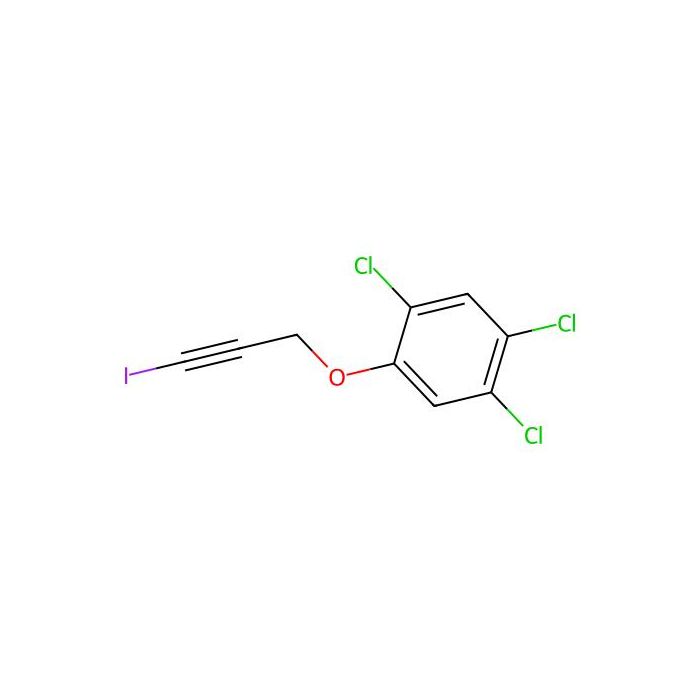
C1=C(C(=CC(=C1Cl)Cl)Cl)OCC#CI
분자량
361.39
고급 데이터
인증서(CoA, COO, BSE/TSE 및 분석 차트)
C of A & Other Certificates(BSE/TSE, COO):
Analytical Chart:
화학 및 물리적 특성
녹는점(°C)
113 °C
솔루션 계산기
Molarity Calculator
Determine the necessary mass, volume, or concentration for preparing a solution.
Dilution Calculator
Determine the dilution needed to prepare a stock solution.
Reconstitution Calculator
리뷰
고객 리뷰
Application Protocols
No tested application protocols are provided in the Product Data for this item.
General research-use guidance (not product specifications):
Stock solution preparation: dissolve in anhydrous DMSO to 10–50 mM. Vortex and sonicate briefly to ensure homogeneity. Filter through 0.2 µm PTFE if particulates remain.
Biochemical/cell assays: serially dilute stocks into assay buffer or culture medium to the desired concentration range while keeping final DMSO ≤1–2% v/v. Include vehicle controls and, where applicable, positive/negative reference compounds.
Prepare 2x compound solutions in assay medium; mix 1:1 with standardized inocula to achieve final test concentrations.
Incubate per organism-specific conditions; measure OD600 or end-point viability at defined time points.
Evaluate precipitation visually or by light scattering; repeat with adjusted solvent if needed.
Analytical confirmation: verify concentration by UV/LC if the assay requires exact dosing; correct for adsorption losses by using low-bind plastics and minimizing headspace.
Note: These are generalized laboratory practices intended to aid experimental planning; they are not validated protocols for this specific item.
Biological Roles
Contextual, literature-based overview (not product specifications; no clinical claims):
Historical use: Haloprogin is described in the literature as a legacy topical antifungal agent. In research settings, it has served as a reference compound to probe fungal susceptibility and membrane-associated stress responses.
Putative modes of action (literature): The precise molecular target has not been definitively established; reports suggest that polyhalogenated aromatic ethers can disrupt membrane integrity, perturb energy metabolism, and induce oxidative stress in fungi. These effects may reflect nonspecific physicochemical interactions rather than a single well-defined target.
Chemical biology implications: Due to expected high lipophilicity, haloprogin can partition into lipid bilayers, enabling studies of membrane perturbation thresholds, efflux pump responses, and adaptive transcriptional programs in yeast and filamentous fungi.
Off-target considerations: In eukaryotic cells, hydrophobic, halogen-rich small molecules may affect mitochondrial function or ion homeostasis at higher concentrations (literature generalization). Appropriate counterscreens and cytotoxicity evaluations are recommended.
Tool-compound usage: Researchers may leverage haloprogin in comparative panels with azoles, polyenes, and echinocandins to map orthogonal resistance mechanisms and stress signatures, while recognizing that its mechanism may be pleiotropic.
Note: The above points summarize general, peer-reviewed observations about related chemotypes and haloprogin’s reported research use; they are not item-specific claims.
Buffer Applications
This compound is not a buffering agent and is not used to control pH. Accordingly, classic buffer-system recipes (e.g., phosphate, HEPES, Tris) are not applicable.
Practical notes for assay buffers (general guidance):
Use standard biological buffers (e.g., HEPES, PBS, MOPS) compatible with your cell or enzyme system.
Keep final DMSO concentration low (typically ≤1–2% v/v) to maintain buffer properties and biological viability.
If precipitation occurs upon dilution, pre-dilute the DMSO stock into warm buffer containing protein or serum (if biologically acceptable) or add a minimal amount of solubilizing excipient.
For any pH-sensitive studies, choose buffers that maintain target pH across the assay temperature range and confirm that the buffer does not interact with hydrophobic analytes (e.g., via inclusion complexes) unless intentionally used.
Green Alternatives
For assay preparation and method development involving haloprogin, choice of solvent and workflow can materially reduce environmental impact.
Greener handling strategies (general guidance):
Prefer DMSO/water systems over chlorinated solvents for dissolution and analytical sample prep when feasible.
If synthesis or purification of analogs is undertaken, consider greener media such as 2-methyltetrahydrofuran (2-MeTHF) or Cyrene in place of traditional ethers/DMF where compatible.
Use microscale reactions and high-throughput experimentation to minimize solvent consumption.
Implement closed-vial operations and solvent recycling where permitted.
Comparison of common options (general; not product specifications):
DCM/chloroform: excellent solvency for halogenated aromatics but high environmental/health burden.
Ethyl acetate or 2-MeTHF: lower toxicity/impact; may offer adequate solubility for formulation steps.
Supercritical CO2 (for purification): potential alternative to reduce organic solvent usage in certain separations.
Trade-offs:
Greener solvents may reduce solubility; pre-screen solubility at target concentrations to avoid precipitation in assays.
Some green solvents (e.g., Cyrene) have higher viscosity and distinct UV cutoffs affecting analytics; adjust methods accordingly.
Bottom line: Start with DMSO for stocks and greener, low-toxicity solvents for any ancillary operations; reserve chlorinated solvents for cases where no viable alternative meets performance requirements.
Pharmaceutical Uses
No therapeutic, diagnostic, or clinical claims are made for this catalog item. It is provided strictly for research use only.
Contextual, literature-based information (not product specifications):
Haloprogin has been historically described as a topical antifungal agent. In modern research environments, it may be employed as a reference control or comparator compound in formulation screening and preformulation studies (e.g., solubility enhancement, vehicle effects) strictly for laboratory investigation.
Formulation roles in research: As a lipophilic small molecule, it can serve as a model compound for evaluating solvent systems (DMSO, ethanol, glycols), cyclodextrin inclusion, or lipid-based delivery in nonclinical experiments.
Pharmacopeial status: Not specified for this item; refer to CoA/Spec Sheet and relevant pharmacopeias if needed for method development.
Compliance note: Any evaluation in dosage-form-like matrices should remain within nonclinical laboratories and follow institutional safety and waste management policies.
Physical Properties
Item-specific specifications are not provided for this listing; consult the CoA/Spec Sheet for definitive values.
Not specified for this item:
Molecular weight, molecular formula, melting point, boiling point, density, refractive index, logP, pKa, UV/Vis characteristics, water content, residual solvents
Literature/general information for context (not product specifications):
Physical state: typically an organic solid or low-melting solid for many halogenated aryl ethers (literature generalization)
Solubility profile: poor aqueous solubility expected; often soluble in high-boiling polar aprotic solvents (DMSO, DMF) and moderately in chlorinated and aromatic solvents (literature)
Lipophilicity: high logP is typical for polyhalogenated aromatics, supporting membrane partitioning (literature)
Practical implications (general guidance):
For biochemical screening, prepare concentrated stocks in anhydrous DMSO; dilute into assay buffer as needed while keeping final DMSO ≤1–2% v/v to minimize matrix effects.
Warm gently and vortex/sonicate to aid dissolution; avoid heating above anticipated degradation thresholds. Filter if necessary through PTFE membranes.
Important: Do not treat these literature notes as specifications. For regulated or quantitative work (e.g., mass-balance, stability-indicating methods), rely on the item’s CoA and SDS.
Quality and Grades
Grade/Purity (item-specific): Moligand™. This designation indicates suitability for small-molecule screening libraries and chemical biology applications where identity, purity, and stability are controlled to support assay reproducibility. Exact purity threshold, stabilizers, and analytical limits are Not specified for this item; refer to CoA/Spec Sheet.
What Moligand™ typically entails (general explanation):
Emphasis on confirmed structure and batch-to-batch consistency using orthogonal analytical methods (e.g., LC-MS, NMR, HPLC/UPLC purity).
Impurity profile minimized to reduce assay artifacts; low residual solvents favored. UV transparency and fluorescence background may be considered for HTS.
Packaging optimized for microplate-friendly or small-aliquot handling to reduce freeze–thaw cycles and adsorption losses.
Implications for users:
For screening and SAR: expect reliable solubility behavior in DMSO and trace-water environments; nonetheless, verify solubility at planned top concentrations.
For quantitation (LC-MS): consult CoA for exact purity and any counter-ions/solvates; use internal standards to account for matrix effects.
Stabilizers/inhibitors: Not specified for this item; refer to CoA/Spec Sheet.
Documentation:
Request batch CoA, NMR, LC-MS chromatograms, and residual solvent analysis as required by your QC workflow.
Reaction and Applications
This catalog item is offered as a research compound (Moligand™) rather than a synthetic reagent; it is primarily used for biochemical screening, probe development, and as a reference compound in antifungal mechanism studies.
Manufacturer Applications (verbatim/expanded): Not provided beyond research-use designation. Typical research applications include assay development, comparative profiling in fungal growth inhibition studies, and benchmarking in membrane-perturbation or stress-response pathways (literature context; not product specifications).
For synthetic chemistry users (general):
If structural analog generation is desired, haloprogin’s halogenated aryl ether core (literature) can be a platform for diversification by cross-coupling or nucleophilic substitution, provided positions remain reactive. Reaction planning should be based on confirmed structure from CoA/literature.
Handling in reactions: Its lipophilicity favors nonpolar or polar aprotic media (toluene, THF, DMF). Avoid strong nucleophiles that may cleave aryl–O bonds unless that transformation is intended.
Assay-focused practices:
Prepare and characterize DMSO stocks by LC-MS to confirm identity and stability over storage.
Include vehicle controls and solubility checks to avoid false negatives/positives due to precipitation or colloid formation.
Note: No medical/clinical use is implied; all uses are restricted to research in appropriate laboratory settings.
Reaction Conditions
Because this product is supplied as a research compound for screening rather than a reagent, there are no item-specific reaction-condition recommendations.
General guidance relevant to handling lipophilic, halogenated aromatics in synthesis (literature; not product specifications):
Solvents: toluene, THF, DMF, or dioxane for cross-couplings; DMSO or DMF for nucleophilic aromatic substitutions.
Temperatures: 25–120°C depending on transformation; use sealed tubes or microwave irradiation for difficult couplings; monitor to prevent decomposition.
Catalysts/additives: Pd(0/II) complexes with phosphine or NHC ligands for cross-couplings; Cu co-catalysts where applicable (e.g., Ullmann-type ether/amide couplings). Bases such as K3PO4, Cs2CO3, or NaOtBu are common.
Workup/purification: due to high lipophilicity, normal-phase silica with nonpolar gradients (hexanes/EtOAc or hexanes/MTBE) or reverse-phase prep-HPLC may be required. Beware of tailing; add small amounts of amine modifier if protonation states cause streaking.
For assay stock preparation:
Dissolve in anhydrous DMSO to a convenient concentration (e.g., 10–50 mM), verify by LC-MS, and store frozen in aliquots to avoid multiple freeze–thaw cycles.
Safety and Handling
Safety details specific to this item are not provided in the Product Data. Always review the SDS before use.
GHS information (for this item): Not specified for this item; refer to CoA/Spec Sheet and SDS.
Signal word: Not specified for this item; refer to CoA/Spec Sheet.
H-statements, pictograms, classification: Not specified for this item; refer to CoA/Spec Sheet.
General safety guidance for halogen-rich, lipophilic research compounds (literature/general):
Potential hazards: organic solvent-soluble irritancy; may cause skin/eye/respiratory irritation; avoid aerosolization and inhalation.
PPE: laboratory coat, nitrile gloves, and splash goggles as minimum. Use in a certified fume hood when weighing, dissolving, or transferring powders/solutions.
Incompatibilities: strong oxidizers and strong bases/acids may induce degradation; avoid prolonged light and heat exposure.
First aid (overview; follow SDS protocols):
Skin: wash with soap and water; remove contaminated clothing.
Eyes: rinse cautiously with water for several minutes; seek medical attention if irritation persists.
Inhalation: move to fresh air; obtain medical advice if symptoms occur.
Ingestion: rinse mouth; do not induce vomiting; seek medical attention.
Waste: collect in halogenated organic waste stream; comply with institutional and local regulations.
Special handling for assay stocks:
Prepare and open DMSO stocks in a hood; wipe exterior surfaces to remove residues. Employ amber vials to reduce photodegradation risk.
Solvent Selection
As a hydrophobic, halogenated small molecule, haloprogin is generally handled as concentrated DMSO stocks for biochemical screening.
Item-specific solvent specs: Not specified for this item; refer to CoA/Spec Sheet.
Primary stock solvent: DMSO (anhydrous) for 10–50 mM stocks; ensure complete dissolution via brief sonication.
Secondary solvents: DMF, acetonitrile, and ethanol can be used depending on downstream application; chlorinated solvents (DCM, chloroform) and aromatics (toluene) often dissolve halogenated aromatics well for synthetic manipulations.
Aqueous handling: limited intrinsic solubility; use cosolvent strategies (DMSO ≤1–2% v/v in final assay), surfactants at low ppm if compatible with the biology, or cyclodextrin carriers where appropriate.
Polarity and miscibility: Expect high lipophilicity; DMSO/water mixtures may precipitate on dilution—pre-dilute DMSO stocks with buffer containing protein/serum if permitted to mitigate crash-out.
Comparison snapshot (general):
DMSO: best solvating power, assay-compatible in small percentages; hygroscopic.
DMF: similar solvency; less favored in bioassays due to cytotoxicity.
ACN/EtOH: moderate solvency; more volatile; often used for HPLC sample prep.
Tip: Filter final working solutions through 0.2 µm PTFE if particulate forms after aqueous dilution.
Storage and Reconstitution
Item-specific conditions (from Product Data):
Storage: Store at -80°C.
Shipping: Dry ice packs + Cold packs.
Additional handling recommendations (general best practices for small-molecule screening compounds):
Upon receipt, keep sealed at -80°C. Allow containers to equilibrate to room temperature in a desiccator before opening to prevent moisture condensation.
If supplied as a solid: subdivide into single-use aliquots under dry, inert conditions when possible. Protect from light.
If supplied pre-dissolved: maintain frozen aliquots; avoid repeated freeze–thaw cycles.
Reconstitution: prepare concentrated stocks in anhydrous DMSO. Record exact weight/volume to enable retrospective concentration verification.
Stability: Not specified for this item; refer to CoA/Spec Sheet. For working solutions, use promptly or store at -20°C to -80°C, protected from light, and minimize exposure to ambient humidity.
Container materials: use amber glass vials or low-bind polypropylene tubes compatible with DMSO; PTFE-lined caps are recommended.
Labeling and traceability:
Document lot number, preparation date, solvent, and concentration on each aliquot. Retain a frozen analytical sample for LC-MS re-check if long-term studies are planned.
Research use only.
Structure and Identity
Haloprogin is a legacy, halogen-rich small molecule used as a research tool compound in antifungal mechanism studies.
Item-specific identifiers (from Product Data):
SKU: H1498509
Product name: Haloprogin
CAS: 777-11-7
PubChem CID: 3561
Grade: Moligand™ (screening-library grade)
Not specified for this item; refer to CoA/Spec Sheet:
Literature identity (for contextual reference; not item specifications):
Compound class: polyhalogenated aromatic ether with an alkynyl substituent reported in historical antifungal agents.
Structural features (general):
Aromatic ring heavily substituted by halogens (chlorine) (literature)
Ether linkage connecting an aryl and an alkenyl/alkynyl fragment (literature)
Lacks stereocenters; expected to be achiral (literature)
2D structure in words (literature): A chlorinated phenyl ring bearing an ether substituent that links to a short unsaturated carbon chain; multiple ring chlorines increase lipophilicity and metabolic stability.
Note: Where precise line notations (SMILES, InChIKey) and exact formula are required for registration or informatics, consult the CoA/SDS for this specific catalog item or authoritative chemical databases by the provided CAS and CID.
Synthetic Utility
This listing is positioned as a research tool compound rather than a general-purpose reagent; nonetheless, literature context about its scaffold can inform analog synthesis and SAR studies.
Scaffold features (literature): polyhalogenated aryl ether bearing a short unsaturated side chain. The halogens modulate electronics and reactivity; the ether linkage is a potential handle for cleavage or substitution under appropriate conditions.
Potential transformations (general):
Cross-coupling at aryl halide positions (if present and accessible): Suzuki–Miyaura, Buchwald–Hartwig (after halide–amine coupling), or Sonogashira (to elaborate alkynyl motifs).
O-dealkylation or ether exchange under Lewis acids or strong nucleophiles to access phenolic intermediates.
Electrophilic aromatic substitutions are typically deactivated by multiple halogens; metal–halogen exchange/opening strategies may be favored instead.
Application in probe development: The lipophilic, halogen-rich core can be diversified to tune permeability, potency, and metabolic stability. Caution: ensure that modifications do not induce pan-assay interference (PAINS) or colloidal aggregation; use orthogonal assays.
Note: Execute any synthetic plans based on confirmed structural data (from CoA or authoritative databases linked to CAS 777-11-7) to avoid misassignment.
Target Specificity
Item-specific biological target information is not provided in the Product Data.
Literature context (not product specifications):
A single, well-defined molecular target for haloprogin has not been conclusively established. Reports describe broad antifungal activity with indications of membrane perturbation and cellular stress induction rather than tight-binding inhibition of a specific enzyme.
For users requiring target-resolved studies:
Consider unbiased profiling (chemogenomic screens, CRISPR/Bar-seq in yeast) and orthogonal biophysical assays to explore putative interactions.
Employ counterscreens for colloidal aggregation and redox cycling to exclude assay artifacts.
Conclusion: No validated, item-specific target specificity data are available; consult primary literature if a target-based hypothesis is essential for your project.
자주 묻는 질문
What is Moligand??
Moligand? is one of Aladdin Scientific's premium product lines, formulated for high-purity applications across multiple workflows. Compared to standard grades in the same workflow, Moligand? products typically offer tighter specifications, more rigorous QC, and stronger lot-to-lot consistency.
How should this product be stored?
Store at ?80 °C. Ultra-low temperature storage is required to maintain the specified shelf life.
How is this product shipped?
This product ships frozen with dry ice and cold packs. Unpack on arrival and transfer it to the storage condition stated above; handle dry ice with insulated gloves in a ventilated area.
What are the CAS number, molecular formula and molecular weight?
The CAS Number is 777-11-7, the molecular formula is C9H4Cl3IO, and the molecular weight is 361.39 g/mol.
What documentation is provided?
Available product documentation, including Certificates of Analysis (COA), Safety Data Sheets (SDS), and specification sheets, is shown in the product document area. Document availability and access follow the current site policy.
등급 선택에 도움이 필요하신가요?
당사의 등급 선택 가이드는 카탈로그의 모든 변형 제품에 대해 순도, 안정제 상태 및 용도 적합성을 다룹니다.
Products are supplied to verified businesses, institutions, and qualified professionals for research and development use only. Not for use in humans, animals, diagnosis, or therapy.