Store at -20°C Ice chest + Ice pads 출고. 정확한 사양은 로트별 COA를 확인하세요.
📋
품질 문서
SDS, COA, 데이터시트, 사양서를 다운로드할 수 있습니다. 로트별 COA는 로트 번호 조회를 통해 확인할 수 있습니다.
📚
문헌적 근거
크로마토그래피, 유기 합성 및 교차 커플링 반응 분야의 동료 심사 논문 0편에서 인용되었습니다.
개요
Information
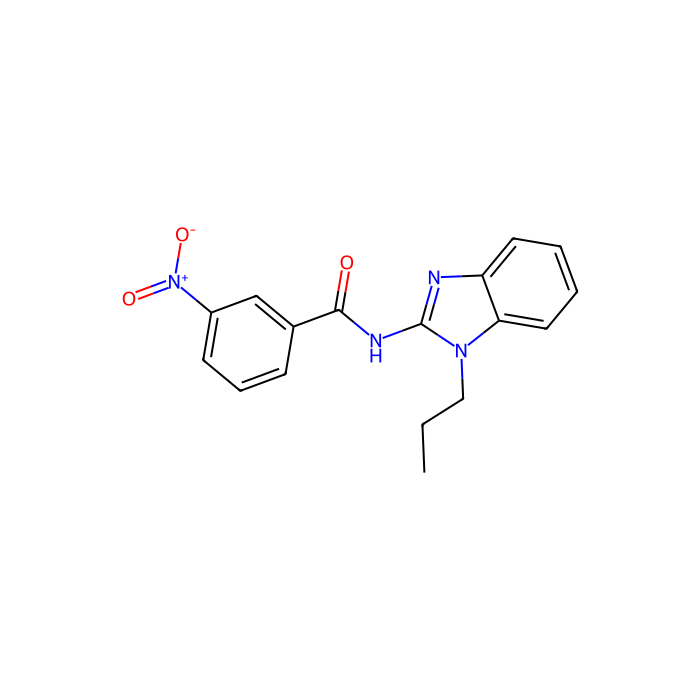
HS-243 HS-243 is a highly potent interleukin-1 receptor-associated kinase (IRAK) inhibitor with IC50 of 24 nM, 20 nM and 0.5 μM for IRAK-1, IRAK-4 and TAK1, respectively.
HS-243 has exquisite selectivity toward both IRAK-1 (IC50 = 24 nM) and IRAK-4 (IC50 = 20 nM), with only minimal TAK1-inhibiting activity (IC50 = 0.5 μM). Using HS-243 and takinib, we evaluates the consequences of cytokine/chemokine responses after selective inhibition of IRAK-1/4 or TAK1 in response to lipopolysaccharide challenge in human rheumatoid arthritis fibroblast-like synoviocytes. HS-243 specifically inhibits intracellular IRAKs without TAK1 inhibition and these kinases have distinct, nonredundant signaling roles.
HS-243 is a highly potent interleukin-1 receptor-associated kinase (IRAK) inhibitor with IC50 of 24 nM, 20 nM and 0.5 μM for IRAK-1, IRAK-4 and TAK1, respectively.
This compound belongs to the class of organic compounds known as benzimidazoles. These are organic compounds containing a benzene ring fused to an imidazole ring (five member ring containing a nitrogen atom, 4 carbon atoms, and two double bonds).
External Descriptors
Not available
1. Djoumbou Feunang Y, Eisner R, Knox C, Chepelev L, Hastings J, Owen G, Fahy E, Steinbeck C, Subramanian S, Bolton E, Greiner R, and Wishart DS. ClassyFire: Automated Chemical Classification With A Comprehensive, Computable Taxonomy. Journal of Cheminformatics, 2016, 8:61.
Determine the necessary mass, volume, or concentration for preparing a solution.
Dilution Calculator
Determine the dilution needed to prepare a stock solution.
Reconstitution Calculator
리뷰
고객 리뷰
Application Protocols
No tested applications or protocols are provided in the Product Data for HS-243.
General handling protocols (not item-specific):
Stock preparation: Weigh the material quickly in a low-humidity environment. Dissolve in anhydrous DMSO to a convenient concentration (e.g., 10–50 mM) if solubility allows. Vortex and sonicate briefly if needed. Filter through 0.2 µm PTFE for particulate removal.
Plate-based assays: Dispense DMSO stocks using calibrated positive-displacement pipettes. Keep final DMSO constant across wells (≤0.5–1% v/v typical). Include vehicle-only controls and, if applicable, a known positive control.
LC–MS analysis: Prepare 0.1–1.0 mg/mL solutions in ACN:H2O (1:1) with 0.1% formic acid as a starting point, adjusting to compound ionization behavior (ESI+/−). Use low-adsorption vials.
Stability checks: Store working aliquots at −20 °C. Avoid repeated freeze–thaw; monitor by HPLC for degradation.
These are general, non–item-specific suggestions. For any validated, product-specific application parameters, consult the CoA/Spec Sheet or contact technical support with your lot number.
Biological Roles
No biological function, pathway association, or target information is provided in the Product Data for HS-243. As listed, it is a research-use-only small molecule.
General considerations (not item-specific):
If HS-243 is employed as a chemical probe in your lab, define and document the intended target and mechanism using primary literature or internal data. Validate activity with orthogonal assays and concentration–response analysis, and confirm compound identity/purity before drawing biological conclusions.
For cellular assays, evaluate cytotoxicity and off-target effects independently of putative on-target activity. Keep DMSO or other vehicle at a constant, assay-tolerable percentage across all conditions.
For ADME method development (not clinical use), determine logD, solubility, and plasma protein binding using standardized kits to contextualize in vitro outcomes.
Note: This product is for research use only and is not intended for diagnostic or therapeutic applications. Any biological role attributable to HS-243 must be established by the end user with appropriate controls and documentation.
Buffer Applications
HS-243 is not a buffering agent, and no buffer-system use is indicated in the Product Data.
Practical notes (general; not item-specific):
When diluting small-molecule DMSO stocks into aqueous buffers (e.g., PBS, HEPES, Tris), add the stock slowly with mixing to avoid local supersaturation and precipitation.
Maintain constant vehicle concentration across control and treated samples. Typical vehicle levels are ≤0.5–1% v/v DMSO in most biochemical and cell-based assays, subject to assay tolerance.
If precipitation persists, consider adding a small amount of co-solvent (ethanol) or non-ionic surfactant compatible with your assay, and pre-warm buffer to 25–37 °C if acceptable.
For true buffering needs, select established systems (HEPES pH 6.8–8.2, MOPS pH 6.5–7.9, Tris pH 7–9) independent of HS-243, as HS-243 itself is not intended to control pH.
Green Alternatives
In the absence of compound-specific solubility/compatibility data, greener handling focuses on solvent selection and waste minimization rather than substitution of the molecule itself.
Greener solvent strategies (general; not item-specific):
Prefer ethanol, ethyl acetate, 2-propanol, or water-based systems where feasible over chlorinated or high-toxicity dipolar aprotics.
For LC methods, use water–acetonitrile gradients when compatible; ACN typically offers lower toxicity and easier solvent recovery than MeOH for large-scale use.
For stock solutions, consider high-purity ethanol or PEG 300/400 co-solvent systems for biochemical assays if DMSO must be reduced (subject to assay tolerance and compound solubility).
Comparison (general guidance):
DMSO vs ethanol: DMSO dissolves broader chemotypes but is less renewable and more persistent; ethanol is renewable, lower toxicity, but may solubilize fewer hydrophobes and can affect some enzyme assays.
DMF/NMP vs Cyrene/PC/MeTHF: For synthetic steps (if applicable), evaluate greener dipolar alternatives (e.g., Cyrene, propylene carbonate) or bio-based ethers (2-MeTHF) subject to the compound’s stability and solubility.
Operational greening:
Miniaturize assays to reduce solvent consumption.
Use capped, low-dead-volume reservoirs to minimize evaporative loss.
Consolidate compatible waste streams for energy-efficient disposal.
Note: Select greener options only after confirming the compound’s stability/reactivity profile in the chosen medium (assess by LC–MS before routine use).
Pharmaceutical Uses
No pharmacopeial status, excipient function, or formulation role is provided for HS-243 in the Product Data. The product is designated for research use only and is not suitable for human or veterinary use.
General R&D context (not item-specific):
In preclinical research settings, small molecules like HS-243 may be used as reference materials or internal standards in method development and analytical qualification (non-clinical), once structure and purity are verified.
For formulation screening in vitro (not for administration), common vehicles include DMSO stocks further diluted into aqueous buffers, or co-solvent systems such as ethanol/PEG 400/saline for physicochemical characterization.
If stability data become available, forced-degradation studies (acid/base, oxidative, thermal, photolytic) can inform impurity tracking for analytical methods.
Compliance note:
This material is not produced under GMP and has no approval for clinical applications. Do not use for compounding, diagnostic procedures, or any therapeutic purpose.
Physical Properties
Item-specific physicochemical specifications are not included in the Product Data.
Appearance: Not specified for this item; refer to CoA/Spec Sheet.
Melting point: Not specified for this item; refer to CoA/Spec Sheet.
Boiling point: Not specified for this item; refer to CoA/Spec Sheet.
Density: Not specified for this item; refer to CoA/Spec Sheet.
Solubility: Not specified for this item; refer to CoA/Spec Sheet.
logP/logD: Not specified for this item; refer to CoA/Spec Sheet.
pKa: Not specified for this item; refer to CoA/Spec Sheet.
Refractive index: Not applicable for a solid; if liquid, not specified; refer to CoA/Spec Sheet.
General laboratory guidance (literature/practice; not item-specific):
Small-molecule screening compounds are commonly supplied as solids, frequently reconstituted in anhydrous DMSO to prepare concentrated stock solutions (e.g., 10–50 mM), then diluted into assay buffers containing ≤1% DMSO.
If water solubility is unknown, begin with a tiered solubility screen: DMSO → DMF → ethanol → 1:1 DMSO:water or aqueous buffer with surfactant (e.g., 0.01–0.05% Tween-20) as appropriate for your assay.
For chromatographic method development, determine UV–vis absorption empirically after reconstitution to select detection wavelengths; avoid assuming UV cutoffs without data.
Note: For authoritative, lot-specific physical data, rely on the CoA and SDS.
Quality and Grades
Grade/Purity: Not specified for this item; refer to CoA/Spec Sheet.
Interpretation and best practices (general guidance for small-molecule library products):
When a numeric purity is not specified on the label, consult the lot-specific CoA for assay/purity method (e.g., HPLC/UPLC area %, GC, qNMR) and residual solvent profile. If you require UV transparency for analytical work, request a chromatogram or UV scan.
For structure-sensitive work (SAR, probe development), consider confirming identity/purity by orthogonal methods (HPLC–MS, 1H/13C NMR). Ask for water/volatile content if relevant to mass-balance calculations.
Stabilizers: Not indicated for this item. If stability is a concern, store under inert atmosphere and desiccation as a general precaution for heteroatom-rich molecules.
Lot-to-lot consistency: Verify lot number on vial against CoA to ensure traceability. Request impurity profiling where necessary for regulated analytical use (non-clinical only).
What the grade implies (context):
“Research use only” materials are not produced under GMP and are unsuitable for human/clinical use. They are intended for discovery research, screening, and method development. If your workflow is GLP-regulated, confirm documentation sufficiency (CoA, SDS, traceability) with QA.
Reaction and Applications
Manufacturer applications are not provided in the Product Data. HS-243 is cataloged within a small-molecule/compound library; accordingly, its primary use is expected to be in discovery research rather than as a stoichiometric reagent.
General research applications (not item-specific):
Chemical biology and screening: Use as a member of a screening set for target identification, assay development, or SAR hypothesis generation. Confirm identity and purity prior to hit follow-up.
Reference/analytical standard: After structure confirmation, can serve as a retention time/response factor standard in LC–MS or as a comparator in orthogonal bioassays.
Method development: Useful for testing extraction efficiency, sample preparation recovery, or plate handling procedures where a non-endogenous small molecule is needed.
Practical tips (general):
Prepare concentrated DMSO stocks (e.g., 10–50 mM) if solubility allows; filter (0.2 µm PTFE) if particulate is observed. Record exact concentration gravimetrically or by qNMR when necessary.
For plate-based assays, limit DMSO carryover to ≤0.5–1.0% v/v and include vehicle controls. Pre-wet pipette tips with DMSO stocks to improve volumetric accuracy.
For stability assessment, perform small-scale stress tests (ambient light vs foil-wrapped; room temperature vs 4 °C; air vs N2) and monitor by HPLC–PDA–MS to identify decomposition pathways prior to long assays.
Note: Do not infer a biological mechanism or target without consulting primary literature or the CoA/SDS for HS-243.
Reaction Conditions
No reaction condition guidance specific to HS-243 can be provided without structural or functional-group information.
General method-development guidance for small molecules (not item-specific):
Solubility and medium: Begin with anhydrous DMSO or DMF to dissolve substrates for small-scale tests. If basic/nucleophilic groups are suspected, ensure exclusion of moisture and CO2.
Temperature and atmosphere: Use inert atmosphere (N2/Ar) and mild heating (25–60 °C) for solution stability assessments. For light-sensitive compounds, protect from ambient light.
Catalysts/reagents: Select conditions only after functional groups are confirmed. For example, aryl halides might undergo Pd-catalyzed cross-coupling; carbonyls may participate in reductive amination; acids/alcohols may be esterified under Steglich conditions. Do not assume applicability without structure.
Monitoring: Employ LC–MS and TLC where feasible; validate with 1H NMR. Run mass balance and impurity profiling to detect degradation vs conversion.
Until the definitive structure is confirmed (e.g., via CID 4800865 and CoA), avoid committing material to synthetic transformations or stressors that may compromise integrity.
Safety and Handling
GHS classification and hazard statements are not provided in the Product Data for HS-243.
Signal word: Not specified for this item; refer to SDS.
GHS hazard statements/pictograms: Not specified for this item; refer to SDS.
General laboratory safety guidance (not item-specific — follow your institutional EHS and SDS):
PPE: Lab coat, safety glasses, and appropriate chemically resistant gloves (e.g., nitrile). Handle in a fume hood to avoid inhalation of dusts/aerosols and to contain solvent vapors during reconstitution.
Avoid exposure: Prevent skin/eye contact and ingestion. Minimize aerosol formation when weighing powders. Use clean, dry tools to avoid cross-contamination and moisture uptake.
Incompatibilities: Unknown for this item. As a precaution, segregate from strong oxidizers, strong acids/bases, and ignition sources until specific data are reviewed.
First aid (general): If inhaled—move to fresh air; skin contact—wash with soap and water; eye contact—rinse cautiously with water for several minutes; ingestion—rinse mouth and seek medical advice. Always consult the SDS for definitive instructions.
Spill response: Avoid dust formation, collect with inert absorbent, and dispose according to local regulations. Decontaminate surfaces with suitable solvent/cleaner compatible with the compound and lab surfaces.
Waste: Dispose of as organic laboratory waste per local regulations. Avoid drain disposal.
Always defer to the product SDS for authoritative hazard, handling, and transport information.
Solvent Selection
Without a disclosed structure, solvent choice should follow a pragmatic solubility and compatibility screen tailored to your downstream assay or synthesis.
DMSO (anhydrous) is typically first-line for discovery compounds due to broad solvency and assay compatibility at ≤1% v/v in biological buffers.
Secondary solvents when needed (general):
DMF, NMP for challenging solubility (synthesis/analytical use); ethanol or isopropanol for less polar analytes; acetonitrile for LC injections; minimal water with co-solvent for aqueous assays.
Aqueous workup considerations (general):
If precipitation occurs upon dilution from DMSO to buffer, add with vigorous mixing, warm gently (≤37°C if assay-permissible), or use co-solvents/surfactants (e.g., 0.01–0.05% Tween-20) after confirming assay tolerance.
Polarity class: Not specified for this item; infer only after reviewing structure (CID 4800865) or measuring solubility/partitioning experimentally.
Small comparison (general; not item-specific):
DMSO vs DMF: DMSO is more biocompatible at low % but has higher UV background <270 nm; DMF has lower viscosity and different UV profile but is less favored in cell assays.
Ethanol vs ACN: Ethanol is more biocompatible; ACN is preferred for LC–MS due to volatility and low viscosity.
Recommendation: Establish a solubility ladder (DMSO → DMF → ethanol → ACN) and document achievable stock concentrations before committing to assay plate maps or analytical runs.
Storage and Reconstitution
Item-specific storage and shipping conditions (from Product Data):
Storage: Store at −20 °C.
Shipped in: Ice chest + ice pads.
Additional item-specific details:
Appearance: Not specified for this item; refer to CoA/Spec Sheet.
Stabilizers: Not specified for this item; refer to CoA/Spec Sheet.
General reconstitution guidance (not item-specific; verify compatibility with your assay):
Allow vial to equilibrate to room temperature in a desiccator before opening to minimize moisture condensation.
Prepare concentrated stock in anhydrous DMSO when solubility permits. Record the exact mass and final volume for traceability. If necessary, determine concentration by UV–vis or qNMR after confirming extinction coefficient/standard.
Aliquot stocks into low-adsorption, airtight microtubes to avoid repeated freeze–thaw cycles. Typical aliquot sizes are matched to single experimental uses.
Storage of solutions: For many small molecules, −20 °C (or −80 °C for more labile chemotypes) and protection from light are prudent. Monitor for precipitation or degradation before use.
Always defer to the lot-specific CoA and SDS for any additional storage precautions, stability data, and reconstitution recommendations.
Research Use Note: For research use only.
Structure and Identity
Overview: HS-243 (SKU: H414466) is listed in our small-molecule/compound library category. Item-specific structural descriptors are largely not provided in the product data.
CAS: 848249-10-5 (item-specific)
PubChem CID: 4800865 (item-specific)
InChIKey: 163575 (item-specific; note: format appears truncated—verify against CoA/SDS or PubChem)
SMILES: Not specified for this item; refer to CoA/Spec Sheet.
Molecular formula: Not specified for this item; refer to CoA/Spec Sheet.
Molecular weight: Not specified for this item; refer to CoA/Spec Sheet.
Structural features (general note):
Specific ring systems, heteroatoms, functional groups, and stereochemistry cannot be detailed because a structural representation (SMILES/InChI) is not provided in the Product Data. Consult the CoA, SDS, or the referenced CID for definitive structure.
2D structure description:
Not available in the Product Data. If structural confirmation is required for your workflow (e.g., docking, SAR, or LC–MS method development), retrieve the structure using CAS 848249-10-5 or CID 4800865 from a primary database and confirm via CoA.
Identity verification recommendations (general best practice):
Cross-check CAS, lot number, and label data with CoA.
Optional orthogonal checks: HRMS for exact mass, 1H/13C NMR for identity, and HPLC/UPLC for purity once structure is confirmed from primary sources.
Synthetic Utility
Specific functional groups and reactivity cannot be described because no structural information is provided in the Product Data for HS-243. Consequently, the compound is not positioned here as a general synthetic reagent or building block.
General considerations if derivatization is intended (not item-specific):
Obtain the definitive structure (e.g., from CoA or CID 4800865) and assess functional handles (halogens, nitriles, amines, acids, alcohols) to plan diversification via cross-coupling, amidation, SNAr, or reductive amination as applicable.
Confirm stability toward moisture, air, and light prior to multistep manipulations. Run small-scale compatibility tests with common coupling reagents (EDC/HOBt, HATU, COMU) or metal catalysts as appropriate once functionalities are known.
For analytical tracking, develop an LC–MS method with two orthogonal stationary phases (e.g., C18 and phenyl-hexyl) to distinguish close-in-polarity impurities that often arise in late-stage functionalization.
Because HS-243 is offered as a research library compound rather than a generic reagent, its primary value is as a discrete chemical entity for screening or as a reference standard, not as a broadly useful synthon—unless structural analysis indicates otherwise.
Target Specificity
No target, pathway, or enzyme/receptor specificity is provided in the Product Data for HS-243.
Target/epitope/clone/isotype: Not applicable; this product is a small molecule, not an antibody or biologic.
User guidance (general; not item-specific):
If HS-243 is used as a putative probe, independently verify target engagement using orthogonal biochemical and biophysical methods (e.g., enzymatic assays, thermal shift, SPR, or cellular target engagement techniques) and include appropriate negative/positive controls.
Document the exact lot, stock concentration, and assay conditions to ensure reproducibility across experiments and collaborators.
All specificity claims must be established by the end user with primary data; none are implied by this catalog listing.
Products are supplied to verified businesses, institutions, and qualified professionals for research and development use only. Not for use in humans, animals, diagnosis, or therapy.

 D23061635