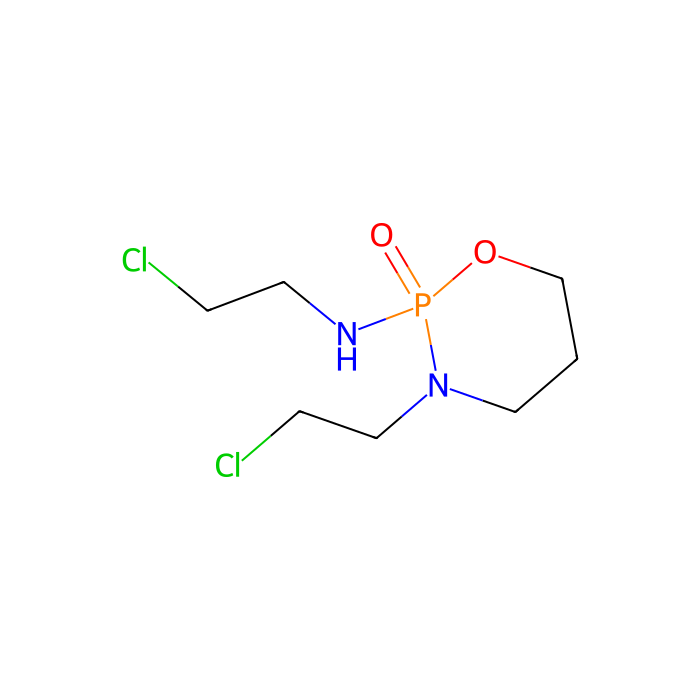
Ifosfamide - Moligand™, pharmaceutical grade , CAS No.3778-73-2

CAS: 3778-73-2 Cat. No.: I123381 분자식: C7H15Cl2N2O2P 분자량: 261.09 EC 번호: 223-237-3
주문 가능
등급 & 순도 Moligand™ ? Moligand™ — Aladdin's line of ligands and bioactive small molecules. Use for receptor, pathway, and binding studies needing defined small-molecule tools. Pharmaceutical grade ? Pharmaceutical grade — purity and documentation suitable for drug applications. Use for API/excipient work requiring pharma-level quality and traceability.
Synonyms
Ifosfamide [USAN:USP:INN:BAN:JAN]|Ifosfamidum (INN-Latin)|IFEX (TN)|Ifosfamida [INN-Spanish]|IFOSFAMIDE (USP MONOGRAPH)|Ifosphamide|Isophosphamide|N-(2-Chloraethyl)-N'-(2-chloraethyl)-N',O-propylen-phosphorsaureester-diamid [German]|IFOSFAMIDE [EP IMPURITY]|Iphosphamide|I-Phosphamide|MJF 9325|3-(2-Chloroethyl)-2-[(2-chloroethyl)amino]tetrahydro-2H-1,3,2-oxazaphosphorine 2-oxide|Ifomida|2H-1,3,2-Oxazaphosphorine, 3-(2-chloroethyl)-2-((2-chloroethyl)amino)tetrahydro-, 2-oxide|Holoxan|IFOSFAMIDE [VANDF]|IFOSFAMIDE [EP MONOGRAPH]|(2-CHLORO-ETHYL)-[(R)-3-(2-CHLORO-ETHYL)-2-OXO-2LAMBDA5-[1,3,2]OXAZAPHOSPHINAN-2-YL]-AMINE|IFOSFAMIDE [MART.]|Naxamide|IFOSFAMIDE [WHO-DD]|N-(2-Chloroethyl)-N'-(2-chloroethyl)-N',O-propylenephosphoric acid diamide|N-(2-Chloraethyl)-N'-(2-chloraethyl)-N',O-propylen-phosphorsaureester-diamid|Tronoxal|2,3-(N,N(sup 1)-Bis(2-chloroethyl)diamido)-1,3,2-oxazaphosphoridinoxyd|ISOPHOSPHAMIDE (IARC)|Isophosphamide,(S)|Seromida|Ifosfamidum [INN-Latin]|3-(2-Chloroethyl)-2-((2-chloroethyl)amino)perhydro-2H-1,3,2-oxazaphosphorineoxide|IFOSFAMIDE (EP IMPURITY)|Ifosfamide (JAN/USP/INN)|starbld0001221|N,N-Bis(beta-chloroethyl)-amino-N',O-propylene-phosphoric acid ester diamide|Ifosfamide - Bio-X|Asta Z-4942|Cyfos|Isoendoxan|Iso-Endoxan|N,3-Bis(2-chloroethyl)tetrahydro-2H-1,3,2-oxazaphosphorin-2-amine 2-oxide|Iphosphamid|Ifosfamida|isosfamide|MJF-9325|ifomide|2H-1,3,2-Oxazaphosphorin-2-amine, N,3-bis(2-chloroethyl)tetrahydro-, 2-oxide|IFOSFAMIDE [INN]|IFOSFAMIDE [USP MONOGRAPH]|ISOPHOSPHAMIDE [IARC]|3-(2-chloroethyl)-2-((2-chloroethyl)amino)-1,3,2-oxazaphosphinane 2-oxide|Ifolem|(R)-3-(2-chloroethyl)-2-((2-chloroethyl)amino)-1,3,2-oxazaphosphinane 2-oxide|3-(2-Chloroethyl)-2-(2-chloroethylamino)tetrahydro-2H-1,3,2-oxaazaphosphorin 2-oxide|Iso Endoxan|3-(2-Chloroethyl)-2-[(2-chloroethyl)amino]perhydro-2H-1,3,2-oxazaphosphorineoxide|ASTA Z 4942|IFOSFAMIDE [JAN]|3-(2-chloroethyl)-2-[(2-chloroethyl)amino]-1,3,2lambda5-oxazaphosphinan-2-one|ifosfamide|IFOSFAMIDE (USP-RS)|IFOSFAMIDE [HSDB]|Ifsofamide|Intermediate of Ifosfamide|Isofosfamide|IFO-Cell|IFOSFAMIDE [MI]|Ifosfamidum|1,3,2-Oxazaphosphorine, 3-(2-chloroethyl)-2-((2-chloroethyl)amino)tetrahydro-, 2-oxide|Ifex|Ifosfamide; (RS)-N,3-bis(2-chloroethyl)-1,3,2-oxazaphosphinan-2-amine 2-oxide|N-(2-Chloroethyl)-N'-(2-chloroethyl)-N',O-propylene phosphoric acid ester diamide|Holoxane|Ifosfamida (INN-Spanish)|ISOCYCLOPHOSPHAMIDE|N,3-Bis(2-chloroethyl)-1,3,2-oxazaphosphinan-2-amine 2-oxide|3-(2-Chloroethyl)-2-((2-chloroethyl)amino)perhydro-2H-1,3,2-oxazaphosphorine oxide|Ifosfamid A|IFOSFAMIDE (EP MONOGRAPH)|Holoxan 1000|Ifosfamid|IFOSFAMIDE [USP-RS]|Ifoxan|Ifosfamide Sterile
Storage
Store at 2-8°C
Shipped In
Wet ice
★
크기
USA
독일 (EU)*
가격
수량
50mg
I123381-50mg
3 재고 있음
—
US$20.90
250mg
I123381-250mg
3 재고 있음
—
US$38.90
1g
I123381-1g
3 재고 있음
—
US$94.90
5g
I123381-5g
1 재고 있음
—
US$285.90
Enter a quantity for the sizes you want to add.

사양

동의어
Ifosfamide [USAN:USP:INN:BAN:JAN] | Ifosfamidum (INN-Latin) | IFEX (TN) | Ifosfamida [INN-Spanish] | IFOSFAMIDE (USP MONOGRAPH) | Ifosphamide | Isophosphamide | N-(2-Chloraethyl)-N'-(2-chloraethyl)-N',O-propylen-phosphorsaureester-diamid [German] | IFOSFAMIDE [EP IMPURITY] | Iphosphamide | I-Phosphamide | MJF 9325 | 3-(2-Chloroethyl)-2-[( Show more
사양 및 순도
Moligand™, pharmaceutical grade
생화학 및 생리적 메커니즘
Ifosfamide is a prodrug that must be transformed by cytochrome P450 to the biologically active component. It is used as an antineoplastic agent in cancer chemotherapy, but ifosfamide is more likely to cause renal toxicity than cyclophosphamide. .Structural analogue of Cyclophosphamide ( Asc 1240 ). Increases iNOS expression. Increases caspase-3 and 9 expression. Shows antitumor effects in vivo.
보관 조건
Store at 2-8°C
배송
Wet ice
이 제품은 콜드 체인 배송이 필요합니다.지상 및 기타 경제 서비스는 사용할 수 없습니다.
등급
Moligand™, 제약 등급
참고
Wherever possible, you should prepare and use solutions on the same day. However, if you need to make up stock solutions in advance, we recommend that you store the solution as aliquots in tightly sealed vials at -20°C. Generally, these will be useable for up to one month. Before use, and prior to opening the vial we recommend that you allow your product to equilibrate to room temperature for at least 1 hour. Toxic, refer to SDS for further information. Need more advice on solubility, usage and handling? Please visit our frequently asked questions (FAQ) page for more details.
제품 특성
ALogP
0.9
이름과 식별자
Pubchem Sid
Pubchem Sid Url
https://pubchem.ncbi.nlm.nih.gov/substance/504750699
SMILES
C1CN(P(=O)(OC1)NCCCl)CCCl
IUPAC Name
N,3-bis(2-chloroethyl)-2-oxo-1,3,2λ5-oxazaphosphinan-2-amine
InChIKey
HOMGKSMUEGBAAB-UHFFFAOYSA-N
InChI
1S/C7H15Cl2N2O2P/c8-2-4-10-14(12)11(6-3-9)5-1-7-13-14/h1-7H2,(H,10,12)
이성체 SMILES
C1CN(P(=O)(OC1)NCCCl)CCCl
WGK 독일
3
RTECS
RP6050000
대체 CAS
3778-73-2
NSC 번호
109724
MeSH 용어
Asta Z 4942;Holoxan;Ifosfamide;Iphosphamide;Iso Endoxan;Iso-Endoxan;Isofosfamide;Isophosphamide;NSC 109,724;NSC 109724;NSC-109,724;NSC-109724;NSC109,724;NSC109724
분자량
261.09
Reaxy-Rn
5802893
Reaxys-RN_link_address
https://www.reaxys.com/reaxys/secured/hopinto.do?context=S&query=IDE.XRN=5802893&ln=

고급 데이터

Taxonomic Classification

Taxonomy Tree

KingdomOrganic compounds
SuperclassOrganoheterocyclic compounds
분류Oxazaphosphinanes
SubclassIsofamides
Intermediate Tree Nodes Not available
Direct ParentIsofamides
Alternative Parents Phosphoric monoester diamides  Oxacyclic compounds  Azacyclic compounds  Organopnictogen compounds  Organooxygen compounds  Organonitrogen compounds  Organochlorides  Organic oxides  Hydrocarbon derivatives  Alkyl chlorides  
Molecular FrameworkAliphatic heteromonocyclic compounds
Substituents Isofamide - Phosphoric monoester diamide - Organic phosphoric acid derivative - Organic phosphoric acid amide - Azacycle - Oxacycle - Alkyl chloride - Hydrocarbon derivative - Organic oxide - Organopnictogen compound - Organooxygen compound - Organonitrogen compound - Organochloride - Organic oxygen compound - Organohalogen compound - Organic nitrogen compound - Alkyl halide - Aliphatic heteromonocyclic compound
설명This compound belongs to the class of organic compounds known as isofamides. These are oxazaphospholanes containing the isofamide skeleton. Isofamide is a heterocyclic compound made up of a 1,3,2-oxazaphospholane, where the phosphorus atom is part of a phosphodiamide group, and the oxazaphospholane is substituted by two haloalkyl chains.
External Descriptors ifosfamides
3D 구조
상호 작용 화학 구조 모델


관련 대상(인간)
PDE5A Tclin Phosphodiesterase 5A (5113 Activities)
Activity TypeRelationActivity valueUnitsAction TypeJournalPubMed IddoiAssay Aladdin ID
EGFR Tclin Epidermal growth factor receptor erbB1 (33727 Activities)
Activity TypeRelationActivity valueUnitsAction TypeJournalPubMed IddoiAssay Aladdin ID
CA2 Tclin Carbonic anhydrase II (17698 Activities)
Activity TypeRelationActivity valueUnitsAction TypeJournalPubMed IddoiAssay Aladdin ID
ESR1 Tclin Estrogen receptor alpha (17718 Activities)
Activity TypeRelationActivity valueUnitsAction TypeJournalPubMed IddoiAssay Aladdin ID
HMGCR Tclin HMG-CoA reductase (2475 Activities)
Activity TypeRelationActivity valueUnitsAction TypeJournalPubMed IddoiAssay Aladdin ID
NR3C1 Tclin Glucocorticoid receptor (14987 Activities)
Activity TypeRelationActivity valueUnitsAction TypeJournalPubMed IddoiAssay Aladdin ID
INSR Tclin Insulin receptor (5558 Activities)
Activity TypeRelationActivity valueUnitsAction TypeJournalPubMed IddoiAssay Aladdin ID
PGR Tclin Progesterone receptor (8562 Activities)
Activity TypeRelationActivity valueUnitsAction TypeJournalPubMed IddoiAssay Aladdin ID
ADRB2 Tclin Beta-2 adrenergic receptor (11824 Activities)
Activity TypeRelationActivity valueUnitsAction TypeJournalPubMed IddoiAssay Aladdin ID
CHRM2 Tclin Muscarinic acetylcholine receptor M2 (10671 Activities)
Activity TypeRelationActivity valueUnitsAction TypeJournalPubMed IddoiAssay Aladdin ID
ADRB1 Tclin Beta-1 adrenergic receptor (6630 Activities)
Activity TypeRelationActivity valueUnitsAction TypeJournalPubMed IddoiAssay Aladdin ID
HTR1A Tclin Serotonin 1a (5-HT1a) receptor (14969 Activities)
Activity TypeRelationActivity valueUnitsAction TypeJournalPubMed IddoiAssay Aladdin ID
ADRA2A Tclin Alpha-2a adrenergic receptor (9450 Activities)
Activity TypeRelationActivity valueUnitsAction TypeJournalPubMed IddoiAssay Aladdin ID
AR Tclin Androgen Receptor (11781 Activities)
Activity TypeRelationActivity valueUnitsAction TypeJournalPubMed IddoiAssay Aladdin ID
CHRM1 Tclin Muscarinic acetylcholine receptor M1 (12690 Activities)
Activity TypeRelationActivity valueUnitsAction TypeJournalPubMed IddoiAssay Aladdin ID
ACE Tclin Angiotensin-converting enzyme (1423 Activities)
Activity TypeRelationActivity valueUnitsAction TypeJournalPubMed IddoiAssay Aladdin ID
DRD2 Tclin Dopamine D2 receptor (23596 Activities)
Activity TypeRelationActivity valueUnitsAction TypeJournalPubMed IddoiAssay Aladdin ID
GABRA1 Tclin GABA receptor alpha-1 subunit (399 Activities)
Activity TypeRelationActivity valueUnitsAction TypeJournalPubMed IddoiAssay Aladdin ID
MAOA Tclin Monoamine oxidase A (11911 Activities)
Activity TypeRelationActivity valueUnitsAction TypeJournalPubMed IddoiAssay Aladdin ID
CNR1 Tclin Cannabinoid CB1 receptor (20913 Activities)
Activity TypeRelationActivity valueUnitsAction TypeJournalPubMed IddoiAssay Aladdin ID
DRD1 Tclin Dopamine D1 receptor (9720 Activities)
Activity TypeRelationActivity valueUnitsAction TypeJournalPubMed IddoiAssay Aladdin ID
DRD4 Tchem Dopamine D4 receptor (7907 Activities)
Activity TypeRelationActivity valueUnitsAction TypeJournalPubMed IddoiAssay Aladdin ID
ACHE Tclin Acetylcholinesterase (18204 Activities)
Activity TypeRelationActivity valueUnitsAction TypeJournalPubMed IddoiAssay Aladdin ID
PTGS1 Tclin Cyclooxygenase-1 (9233 Activities)
Activity TypeRelationActivity valueUnitsAction TypeJournalPubMed IddoiAssay Aladdin ID
SLC6A2 Tclin Norepinephrine transporter (10102 Activities)
Activity TypeRelationActivity valueUnitsAction TypeJournalPubMed IddoiAssay Aladdin ID
HRH2 Tclin Histamine H2 receptor (5428 Activities)
Activity TypeRelationActivity valueUnitsAction TypeJournalPubMed IddoiAssay Aladdin ID
ADRA1D Tclin Alpha-1d adrenergic receptor (4171 Activities)
Activity TypeRelationActivity valueUnitsAction TypeJournalPubMed IddoiAssay Aladdin ID
HTR1B Tclin Serotonin 1b (5-HT1b) receptor (2801 Activities)
Activity TypeRelationActivity valueUnitsAction TypeJournalPubMed IddoiAssay Aladdin ID
HTR2A Tclin Serotonin 2a (5-HT2a) receptor (14758 Activities)
Activity TypeRelationActivity valueUnitsAction TypeJournalPubMed IddoiAssay Aladdin ID
HTR2C Tclin Serotonin 2c (5-HT2c) receptor (11471 Activities)
Activity TypeRelationActivity valueUnitsAction TypeJournalPubMed IddoiAssay Aladdin ID
AVPR2 Tclin Vasopressin V2 receptor (2912 Activities)
Activity TypeRelationActivity valueUnitsAction TypeJournalPubMed IddoiAssay Aladdin ID
ADORA1 Tclin Adenosine A1 receptor (17603 Activities)
Activity TypeRelationActivity valueUnitsAction TypeJournalPubMed IddoiAssay Aladdin ID
AGTR1 Tclin Type-1 angiotensin II receptor (5176 Activities)
Activity TypeRelationActivity valueUnitsAction TypeJournalPubMed IddoiAssay Aladdin ID
CALCR Tclin Calcitonin receptor (2215 Activities)
Activity TypeRelationActivity valueUnitsAction TypeJournalPubMed IddoiAssay Aladdin ID
SLC6A4 Tclin Serotonin transporter (12625 Activities)
Activity TypeRelationActivity valueUnitsAction TypeJournalPubMed IddoiAssay Aladdin ID
ADRA1A Tclin Alpha-1a adrenergic receptor (8359 Activities)
Activity TypeRelationActivity valueUnitsAction TypeJournalPubMed IddoiAssay Aladdin ID
PTGS2 Tclin Cyclooxygenase-2 (13999 Activities)
Activity TypeRelationActivity valueUnitsAction TypeJournalPubMed IddoiAssay Aladdin ID
HRH1 Tclin Histamine H1 receptor (7573 Activities)
Activity TypeRelationActivity valueUnitsAction TypeJournalPubMed IddoiAssay Aladdin ID
ADRA1B Tclin Alpha-1b adrenergic receptor (2912 Activities)
Activity TypeRelationActivity valueUnitsAction TypeJournalPubMed IddoiAssay Aladdin ID
OPRM1 Tclin Mu opioid receptor (19785 Activities)
Activity TypeRelationActivity valueUnitsAction TypeJournalPubMed IddoiAssay Aladdin ID
DRD3 Tclin Dopamine D3 receptor (14368 Activities)
Activity TypeRelationActivity valueUnitsAction TypeJournalPubMed IddoiAssay Aladdin ID
AVPR1A Tclin Vasopressin V1a receptor (5412 Activities)
Activity TypeRelationActivity valueUnitsAction TypeJournalPubMed IddoiAssay Aladdin ID
OPRD1 Tclin Delta opioid receptor (15096 Activities)
Activity TypeRelationActivity valueUnitsAction TypeJournalPubMed IddoiAssay Aladdin ID
OPRK1 Tclin Kappa opioid receptor (16155 Activities)
Activity TypeRelationActivity valueUnitsAction TypeJournalPubMed IddoiAssay Aladdin ID
HTR3A Tclin Serotonin 3a (5-HT3a) receptor (3366 Activities)
Activity TypeRelationActivity valueUnitsAction TypeJournalPubMed IddoiAssay Aladdin ID
SLC6A3 Tclin Dopamine transporter (10535 Activities)
Activity TypeRelationActivity valueUnitsAction TypeJournalPubMed IddoiAssay Aladdin ID
GRIN1 Tclin Glutamate (NMDA) receptor subunit zeta 1 (122 Activities)
Activity TypeRelationActivity valueUnitsAction TypeJournalPubMed IddoiAssay Aladdin ID
KCNH2 Tclin HERG (29587 Activities)
Activity TypeRelationActivity valueUnitsAction TypeJournalPubMed IddoiAssay Aladdin ID
HTR4 Tclin Serotonin 4 (5-HT4) receptor (2068 Activities)
Activity TypeRelationActivity valueUnitsAction TypeJournalPubMed IddoiAssay Aladdin ID
CACNA1C Tclin Voltage-gated L-type calcium channel alpha-1C subunit (766 Activities)
Activity TypeRelationActivity valueUnitsAction TypeJournalPubMed IddoiAssay Aladdin ID
관련 대상(비인간)
Agtr2 Angiotensin II type 2 (AT-2) receptor (803 Activities)
Activity TypeRelationActivity valueUnitsAction TypeJournalPubMed IddoiAssay Aladdin ID
ampC Beta-lactamase AmpC (62480 Activities)
Activity TypeRelationActivity valueUnitsAction TypeJournalPubMed IddoiAssay Aladdin ID
Mc4r Melanocortin receptor 4 (1205 Activities)
Activity TypeRelationActivity valueUnitsAction TypeJournalPubMed IddoiAssay Aladdin ID
Ltc4s Leukotriene C4 synthase (1 Activities)
Activity TypeRelationActivity valueUnitsAction TypeJournalPubMed IddoiAssay Aladdin ID
Sigmar1 Sigma opioid receptor (160 Activities)
Activity TypeRelationActivity valueUnitsAction TypeJournalPubMed IddoiAssay Aladdin ID
Npy1r Neuropeptide Y receptor type 1 (8 Activities)
Activity TypeRelationActivity valueUnitsAction TypeJournalPubMed IddoiAssay Aladdin ID
Cckar Cholecystokinin A receptor (90 Activities)
Activity TypeRelationActivity valueUnitsAction TypeJournalPubMed IddoiAssay Aladdin ID
Pde4d Phosphodiesterase 4D (4 Activities)
Activity TypeRelationActivity valueUnitsAction TypeJournalPubMed IddoiAssay Aladdin ID
Nos2 Nitric oxide synthase, inducible (3573 Activities)
Activity TypeRelationActivity valueUnitsAction TypeJournalPubMed IddoiAssay Aladdin ID
Mapk1 MAP kinase ERK2 (650 Activities)
Activity TypeRelationActivity valueUnitsAction TypeJournalPubMed IddoiAssay Aladdin ID
Hdac6 Histone deacetylase 6 (222 Activities)
Activity TypeRelationActivity valueUnitsAction TypeJournalPubMed IddoiAssay Aladdin ID
Galc Galactocerebrosidase (11 Activities)
Activity TypeRelationActivity valueUnitsAction TypeJournalPubMed IddoiAssay Aladdin ID
Mmp9 Matrix metalloproteinase 9 (38 Activities)
Activity TypeRelationActivity valueUnitsAction TypeJournalPubMed IddoiAssay Aladdin ID
Mus musculus (284745 Activities)
Activity TypeRelationActivity valueUnitsAction TypeJournalPubMed IddoiAssay Aladdin ID
Rattus norvegicus (775804 Activities)
Activity TypeRelationActivity valueUnitsAction TypeJournalPubMed IddoiAssay Aladdin ID
L1210 (27553 Activities)
Activity TypeRelationActivity valueUnitsAction TypeJournalPubMed IddoiAssay Aladdin ID
P388 (20296 Activities)
Activity TypeRelationActivity valueUnitsAction TypeJournalPubMed IddoiAssay Aladdin ID
P388/ADR (1216 Activities)
Activity TypeRelationActivity valueUnitsAction TypeJournalPubMed IddoiAssay Aladdin ID
rep Replicase polyprotein 1ab (378 Activities)
Activity TypeRelationActivity valueUnitsAction TypeJournalPubMed IddoiAssay Aladdin ID
Plasma (328 Activities)
Activity TypeRelationActivity valueUnitsAction TypeJournalPubMed IddoiAssay Aladdin ID
Glra2 Glycine receptor (1745 Activities)
Activity TypeRelationActivity valueUnitsAction TypeJournalPubMed IddoiAssay Aladdin ID
작용 메커니즘
인증서(CoA, COO, BSE/TSE 및 분석 차트)
C of A & Other Certificates(BSE/TSE, COO):
Analytical Chart:

Find and download the COA for your product by matching the lot number on the packaging.

1 results found

Lot NumberCertificate Type날짜항목
J1909021J1909021Certificate of AnalysisJul 17, 2023 I123381
화학 및 물리적 특성
녹는점(°C)42 °C
분자량261.079 g/mol
XLogP30.900
Hydrogen Bond Donor Count1
Hydrogen Bond Acceptor Count4
Rotatable Bond Count5
Exact Mass260.025 Da
Monoisotopic Mass260.025 Da
Topological Polar Surface Area41.600 Ų
Heavy Atom Count14
Formal Charge0
Complexity218.000
Isotope Atom Count0
Defined Atom Stereocenter Count0
Undefined Atom Stereocenter Count1
Defined Bond Stereocenter Count0
Undefined Bond Stereocenter Count0
The total count of all stereochemical bonds0
Covalently-Bonded Unit Count1
Citations of This Product
솔루션 계산기
리뷰

고객 리뷰

Application Protocols

Specific, validated application protocols (e.g., WB, IHC, IF, FC) are not applicable to this small-molecule compound and are not provided in the Product Data. For general use in research:

  • Stock solution prep (general):

    • Weigh quickly, minimizing ambient humidity exposure.
    • Dissolve to 10–100 mM in dry DMSO; vortex and sonicate briefly if needed.
    • Aliquot to single-use vials under inert gas if long-term storage of stocks is necessary; freeze.
  • Aqueous working solutions:

    • Dilute DMSO stock into buffer or media immediately prior to use; typical final DMSO ≤0.5–1%.
    • Prepare fresh; discard remaining solution at end of experiment as cytotoxic waste.
  • Analytical calibration:

    • Prepare calibration levels freshly from a primary standard; verify linearity and stability; use isotope-labeled internal standards if available.

Always adapt to your institution’s cytotoxic handling SOPs and consult the lot-specific CoA/SDS.

Biological Roles

Biochemical context (literature; no clinical claims): Ifosfamide is an oxazaphosphorine prodrug that requires metabolic activation to generate bifunctional electrophiles capable of DNA crosslinking.

  • Activation pathways (general literature):

    • Primarily bioactivated by hepatic cytochrome P450 enzymes (notably CYP2B6 and CYP3A families) via 4-hydroxylation to yield intermediates that decompose to the active aziridinium-forming species (commonly termed “isophosphoramide mustard” in the literature), which alkylates DNA at N7-guanine sites.
    • Side-chain dechloroethylation can produce chloroacetaldehyde, associated with off-target reactivity; quantification of this metabolite is a frequent focus in ADME/tox workflows.
  • Molecular interactions:

    • DNA crosslink formation proceeds via intramolecular cyclization to aziridinium ions followed by nucleophilic attack on DNA bases; crosslinks impede replication and transcription, triggering DNA damage responses.
    • Glutathione-dependent conjugation pathways and aldehyde dehydrogenase participate in detoxification or modulation of active species.
  • Research utilities:

    • Model substrate for P450 phenotyping, inhibition/induction studies, and transporter impact assessments (indirect effects on uptake/distribution in cellular systems).
    • Tool compound to benchmark DNA damage markers (e.g., γH2AX) and to evaluate efficacy of repair pathway modulators in cell-based assays.
  • Note: Exact biotransformation rates and species dependence vary; verify conditions with your biological system of interest.

Buffer Applications

Not a buffering agent. Ifosfamide does not function as an acid/base buffer. However, buffers are often used to dissolve and stabilize the compound in research assays.

  • Practical dissolution buffers (general guidance):

    • Near-neutral phosphate or HEPES buffers (pH 7.2–7.6) to limit base-catalyzed degradation.
    • Isotonic saline or PBS for biological compatibility; prepare immediately before use.
    • Avoid strongly alkaline buffers; minimize metal-catalyzed oxidation by using high-purity water and passivated glassware.
  • Tips:

    • Prepare concentrated stocks in dry DMSO and dilute into buffered media just prior to dosing.
    • For stability studies, maintain consistent ionic strength and pH; document temperature and time-in-solution.
Green Alternatives

Green chemistry considerations center on handling, solvent choice, and waste minimization rather than substituting the active compound.

  • Why substitution is not applicable:

    • Ifosfamide is a target analyte/standard/reference compound; replacing it would defeat the experimental objective. Green chemistry should instead optimize the workflow.
  • Greener practice options (general):

    • Prefer water or aqueous buffers for dilutions when compatible with stability and assay sensitivity.
    • Use micro-scale preparations and on-demand freshly made solutions to reduce waste of cytotoxic material.
    • Choose lower-toxicity organic solvents (ethanol, isopropanol) where feasible in place of halogenated solvents; avoid chlorinated solvents in routine prep.
    • Implement closed systems and absorbent pads to prevent environmental release; segregate cytotoxic waste for high-temperature incineration.
  • Comparative solvent impact (general guidance):

    • DMSO: high solvency, low volatility, favorable worker exposure profile; disposal still required as cytotoxic waste when contaminated.
    • Acetonitrile vs methanol: methanol often preferred on EHS grounds; adjust LC methods to maintain resolution.
  • Process improvements:

    • Automate dosing with positive-displacement systems to minimize handling.
    • Apply DoE to minimize the number of runs/samples required for robust data.
    • Utilize validated quench/stabilization protocols to reduce repeat experiments due to degradation.
Pharmaceutical Uses

Context (no therapeutic claims): Ifosfamide is a well-known active pharmaceutical ingredient (API) in the oxazaphosphorine class. The information below focuses on formulation and analytical considerations relevant to research and development workflows.

  • Formulation considerations (general literature):

    • Frequently handled as a sterile, lyophilized solid for reconstitution with water-for-injection or saline in pharmaceutical settings; in research, non-sterile lab-grade reconstitution is typical.
    • Solutions are sensitive to pH and temperature; prepare immediately before use to minimize degradation.
    • Container compatibility: aqueous solutions are commonly prepared in glass or cyclic olefin polymer vials; verify adsorption and leachables for quantitative work.
  • Reference/analytical uses in pharma R&D:

    • System suitability and calibration standard for LC–UV/LC–MS methods quantifying parent and metabolites in preclinical matrices.
    • Stability-indicating methods: forced degradation under acid/base, oxidative, thermal, and photolytic conditions to validate specificity.
  • Compliance notes for this catalog item:

    • Grade listed as Moligand™, Pharmaceutical grade; not released for human administration by Aladdin. End-users are responsible for determining suitability for any regulated use and for obtaining/consulting the lot-specific CoA and SDS.
  • Pharmacopeial status: Consult current pharmacopeias for monograph details; not specified for this item.

Physical Properties

Item-specific specifications are limited in the current Product Data. Values below are provided only as general literature guidance and are not specifications for this catalog item.

  • Item-specific (from Product Data):

    • Appearance: Not specified for this item; refer to CoA/Spec Sheet.
    • Molecular weight: Not specified for this item; refer to CoA/Spec Sheet.
    • Storage: 2–8°C (see Storage & Reconstitution tab for details)
  • Literature/general properties (not item specifications):

    • Typical molecular formula: C7H15Cl2N2O2P; MW ~261.1 g/mol
    • Physical state: crystalline solid (commonly handled as solid or as lyophilized material)
    • Solubility: sparingly to moderately soluble in water; readily soluble in polar aprotic solvents (e.g., DMSO) and mixed aqueous-organic media; saline and buffered aqueous systems often used for dissolution in bioassays
    • LogP (estimated, literature): low to moderate due to polar phosphoramide and chloroethyl groups
    • pKa: does not possess strongly ionizable groups; behaves as a neutral polar molecule over physiological pH; hydrolysis/activation is pH- and enzyme-dependent
    • Hygroscopicity: can absorb moisture; aqueous stability depends on pH and temperature (decomposition via hydrolysis and intramolecular cyclization)
  • Practical notes (general):

    • Prepare fresh aqueous solutions when possible; avoid prolonged exposure to elevated temperatures or alkaline pH that can accelerate decomposition.
    • Verify solubility and concentration by analytical methods (e.g., UV, LC) appropriate to the intended use.
Quality and Grades

Grade: Moligand™, Pharmaceutical grade (as listed in Product Data).

  • What this means for this item:

    • Pharmaceutical grade indicates the material is manufactured and controlled to quality attributes consistent with use as a reference standard or research tool aligned with pharmacopeial/industry expectations (e.g., identity confirmation, high assay, controlled impurities). It is not released for human or veterinary administration by Aladdin.
    • Moligand™ line: curated small-molecule and compound library entries intended for screening, mechanistic studies, and method development, with traceability via SKU and lot documentation.
  • Typical controls and documentation (general, consult lot CoA):

    • Identity: orthogonal ID (e.g., NMR/LC–MS/IR) and CAS/PubChem cross-reference.
    • Purity/assay and impurity profile: Not specified for this item; refer to CoA/Spec Sheet.
    • Residual solvents, water content, and elemental impurities: Not specified for this item; refer to CoA/Spec Sheet.
  • Stabilizers/format:

    • Stabilizer content or presence: Not specified for this item; refer to CoA/Spec Sheet.
    • Appearance/form: Not specified for this item; refer to CoA/Spec Sheet.
  • Practical implications:

    • For quantitative studies (e.g., method validation, metabolism assays), always document lot-specific purity and correct concentrations accordingly.
    • For light/moisture-sensitive materials, minimize exposure during weighing and solution prep; consult CoA/SDS for any special handling notes.
Reaction and Applications

This compound is primarily a research reference/biological tool compound rather than a synthetic reagent.

  • Not typical as a solvent or general-purpose reagent; instead, it is used to:

    • Support biochemical studies of oxazaphosphorine activation and DNA-alkylation mechanisms (bioactivation to electrophilic species; comparative studies versus cyclophosphamide).
    • Serve as a positive control in analytical method development (e.g., LC–MS quantification in plasma/matrix surrogates; metabolite identification including chloroacetaldehyde and isophosphoramide mustard in enzyme systems).
    • Evaluate cytochrome P450-mediated metabolism (notably CYP2B6, CYP3A isoforms in literature) in microsomes, hepatocytes, and recombinant enzyme panels.
  • Practical research tips:

    • Maintain near-neutral pH and cool temperatures during sample prep to limit non-enzymatic degradation.
    • Include stabilizers/scavengers (e.g., semicarbazide for aldehydes) in analytical workflows only when compatible with detection.
    • Use freshly prepared calibration standards; employ isotopically labeled internal standards when available for quantitative LC–MS/MS.
  • If a chemical transformation is required (derivatization for analytics):

    • Carbonyl-trapping reagents and nucleophiles may be used downstream to capture labile metabolites for improved detectability; validate specificity carefully.
  • Note: For synthetic organic transformations or named-reaction chemistry, Ifosfamide is not commonly employed as a building block or reagent.

Reaction Conditions

Not applicable as a general reagent. This product is not typically used to run synthetic transformations. However, the following general handling conditions support research workflows involving solution preparation and stability assessment.

  • Solution preparation (general guidance):

    • Solvent: dry DMSO for concentrated stocks; water/PBS/HEPES for immediate-use aqueous solutions.
    • Temperature: keep cool (2–8°C) during preparation when feasible; avoid prolonged exposure to >25°C in aqueous media.
    • pH: maintain near-neutral; avoid strongly basic conditions that accelerate degradation.
  • Analytical method conditions (literature examples, not specifications):

    • LC–MS: reversed-phase C18; mobile phase water + 0.1% formic acid and acetonitrile/methanol gradient; detect parent and metabolites with ESI+.
    • Stability testing: incubations at 25–37°C in buffer or biological matrices with time-course sampling; include matrix blanks and internal standards.
  • Expected behavior (general):

    • Aqueous degradation over time; enzyme-rich matrices enhance biotransformation. Use immediate analysis or stabilize/derivatize as appropriate.
  • Note: No yield/kinetic data are specified for this item; consult primary literature for system-specific rates.

Safety and Handling

Caution: Ifosfamide is a cytotoxic alkylating agent. Apply containment and controls appropriate for antineoplastic/oncology compounds.

  • Item-specific (from Product Data):

    • Research Use: For research use only
    • GHS/Signal word/H-statements/Pictograms: Not specified for this item; refer to SDS.
  • Literature-based hazards (not item specifications; consult SDS for authoritative data):

    • Classified as a hazardous, cytotoxic, mutagenic substance; may cause genetic defects; suspected/known carcinogenic hazard; may cause reproductive toxicity.
    • Target organs (occupational exposure): bone marrow, kidneys, CNS; can cause irritation to skin, eyes, and respiratory tract.
  • Engineering controls and PPE (best practice):

    • Handle in a certified chemical fume hood or containment isolator suitable for cytotoxics.
    • Wear double chemotherapy-rated gloves, lab coat/gown, and eye/face protection; use disposable sleeve covers if splash risk.
    • Use closed-transfer systems or luer-lock syringes with venting filters when preparing solutions.
  • Incompatibilities and stability (general):

    • Avoid strong bases and prolonged exposure to alkaline pH, which can accelerate decomposition.
    • Avoid oxidizing agents and strong nucleophiles that may react with chloroethyl moieties.
  • First-aid overview (general guidance; defer to SDS):

    • Skin/eye contact: immediate decontamination with copious water for ≥15 min; remove contaminated clothing.
    • Inhalation: move to fresh air; seek medical attention.
    • Ingestion: rinse mouth; do not induce vomiting; seek medical attention.
  • Waste: Collect as hazardous cytotoxic waste; segregate and incinerate in accordance with institutional and local regulations.

Solvent Selection

Ifosfamide is a polar, neutral small molecule; dissolution strategy depends on assay needs and stability.

  • General miscibility profile (literature-informed):

    • Water and buffered saline: typically affords workable concentrations; prepare fresh to limit hydrolysis.
    • Polar aprotics (DMSO, DMF): good solubility; useful for concentrated stocks; dilute into aqueous media just prior to use.
    • Alcohols (EtOH, i-PrOH): moderate solubility; consider for analytical sample prep.
  • Practical solvent choices:

    • Screening/biology workflows: 10–100 mM stocks in dry DMSO; final assay DMSO ≤0.5–1% (v/v) to protect cell systems while maintaining solubility.
    • Aqueous dosing: dissolve in water, saline, or appropriate buffer (near-neutral pH); avoid strong base; use immediately after preparation.
    • Chromatography: water–acetonitrile or water–methanol mobile phases (acidic modifiers like 0.1% formic acid commonly used for LC–MS detection of parent/metabolites).
  • Comparison notes:

    • DMSO vs water: DMSO maximizes solubility and shelf-life of the stock but requires careful dilution to minimize biological interference; water offers the cleanest matrix but reduced stability over time.
  • Tip: Filter (0.2 µm PTFE or PVDF) only if needed; adsorption losses are generally low but can occur—validate recovery for quantitative work.

Storage and Reconstitution

Item-specific storage (from Product Data):

  • Store at 2–8°C.

  • Shipped on wet ice.

  • Container and environment:

    • Keep tightly closed in the original container. Protect from moisture and excessive heat. Handle in a designated area for cytotoxic compounds.
  • Reconstitution and solution stability (general guidance; not item specifications):

    • DMSO stocks: prepare at 10–100 mM in anhydrous DMSO; aliquot and store at −20°C to −80°C, protected from light. Thaw on ice; avoid repeated freeze–thaw by using single-use aliquots.
    • Aqueous solutions: prepare immediately before use in water, saline, or neutral buffer; keep on ice during setup and use within the working day where possible.
    • Filtration: if sterile solutions are required, filter through a low-protein-binding 0.2 µm membrane under containment.
  • Stability notes:

    • Aqueous degradation is accelerated at elevated temperature and alkaline pH. Maintain neutral pH and cool temperatures to extend usability during experiments.
  • Documentation:

    • Record preparation date, solvent, concentration, and storage conditions on each aliquot. Refer to the lot-specific CoA for any additional storage or stability details.
  • Disposal:

    • Treat all unused material, solutions, and disposables as cytotoxic waste; follow institutional and local regulations for segregation and incineration.
Structure and Identity

Quick ID. Ifosfamide (CAS 3778-73-2) is a small-molecule oxazaphosphorine alkylating agent, supplied as part of Aladdin’s Moligand™ pharmaceutical-grade library for research use.

  • Item-specific (from Product Data):

    • SKU: I123381
    • Product name: Ifosfamide
    • CAS: 3778-73-2
    • PubChem CID: 3690
    • InChIKey: 126916 (as provided)
    • Molecular formula: Not specified for this item; refer to CoA/Spec Sheet.
    • Molecular weight: Not specified for this item; refer to CoA/Spec Sheet.
    • SMILES: Not specified for this item; refer to CoA/Spec Sheet.
  • Literature structural identifiers (for reference only; not item specifications):

    • Common IUPAC name (literature): 3-(2-chloroethyl)-2-[(2-chloroethyl)amino]-2-oxo-1,3,2-oxazaphosphinan-2-oxide (oxazaphosphorine framework with 2-chloroethyl substituents)
    • Typical molecular formula (literature): C7H15Cl2N2O2P
    • Typical molecular weight (literature): ~261.1 g/mol
  • Key structural features (general description):

    • Five-membered cyclic phosphoramide (1,3,2-oxazaphosphorine) bearing a pentavalent phosphorus center (P=O) within a ring containing O and N heteroatoms.
    • Two 2-chloroethyl substituents pendant from the cyclic phosphoramide framework (one on the ring N and one exocyclic), characteristic of bifunctional alkylators.
    • No defined stereocenters; exists as a single constitutional isomer distinct from its isomeric analog cyclophosphamide.
  • 2D structural description (words): A P(V)=O center is part of a five-membered O–C–N–C–P ring; the exocyclic P–N and/or ring N bear 2-chloroethyl arms, furnishing two β-chloro substituents capable of intramolecular activation and DNA crosslinking (biochemical context).

Synthetic Utility

Not typically employed as a synthetic building block. Ifosfamide is the target compound itself rather than a reagent/intermediate in general organic synthesis.

  • When encountered in synthesis (literature context):

    • It appears as the product of cyclization and phosphorylation steps constructing the 1,3,2-oxazaphosphorine ring from appropriate 2-chloroethyl amine/diol precursors.
    • Downstream derivatizations are mainly for analytical purposes (e.g., derivatizing labile metabolites for detection), not for diversification chemistry.
  • Retrosynthetic note (general):

    • Disconnection approaches typically trace back to phosphoramide formation (P(V) reagents) and intramolecular ring closure on O/N heteroatoms.
  • Practical takeaway:

    • For synthetic chemists, Ifosfamide serves more as a reference standard for method validation or as a comparator in structure–activity studies of oxazaphosphorine analogs than as a reagent in transformations.
Target Specificity

Not applicable. This product is a small-molecule compound, not a biological affinity reagent (e.g., antibody, inhibitor with a single defined protein target in an in vitro binding sense). Ifosfamide exerts broad biochemical reactivity after metabolic activation, alkylating nucleophilic sites in biomacromolecules. For mechanistic details, see Biological Roles.

자주 묻는 질문

What is Moligand??
Moligand? is one of Aladdin Scientific's premium product lines, formulated for high-purity applications across multiple workflows. Compared to standard grades in the same workflow, Moligand? products typically offer tighter specifications, more rigorous QC, and stronger lot-to-lot consistency.
What does pharmaceutical grade mean?
pharmaceutical grade refers to material produced and controlled to meet the requirements of pharmaceutical manufacturing and regulated workflows. Depending on the specific designation (GMP, RUO, Bio-medical, Injection grade, etc.), this may include controlled manufacturing environments, validated processes, audit-ready documentation and traceability.
How should this product be stored?
Store at 2–8 °C. Refrigerated storage is required to maintain the specified shelf life.
How is this product shipped?
This product ships chilled on wet ice. Unpack on arrival and transfer it to the storage condition stated above.
What are the CAS number, molecular formula and molecular weight?
The CAS Number is 3778-73-2, the molecular formula is C7H15Cl2N2O2P, and the molecular weight is 261.09 g/mol. InChIKey HOMGKSMUEGBAAB-UHFFFAOYSA-N.
What documentation is provided?
Available product documentation, including Certificates of Analysis (COA), Safety Data Sheets (SDS), and specification sheets, is shown in the product document area. Document availability and access follow the current site policy.

Shall we send you a message when we have discounts available?

Remind me later

Thank you! Please check your email inbox to confirm.

Oops! Notifications are disabled.